Electric Scooter Resale Value in India 2026: The Depreciation Reality Every Buyer Ignores — Until It’s Too Late

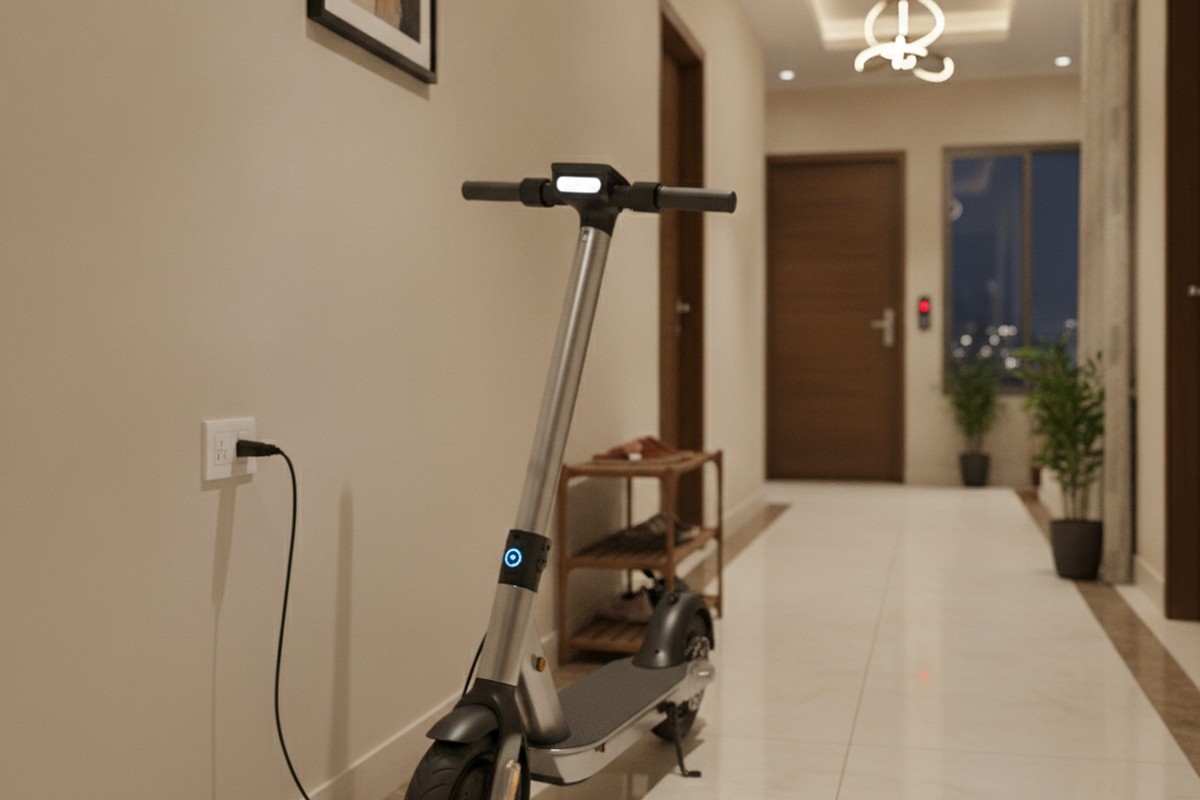
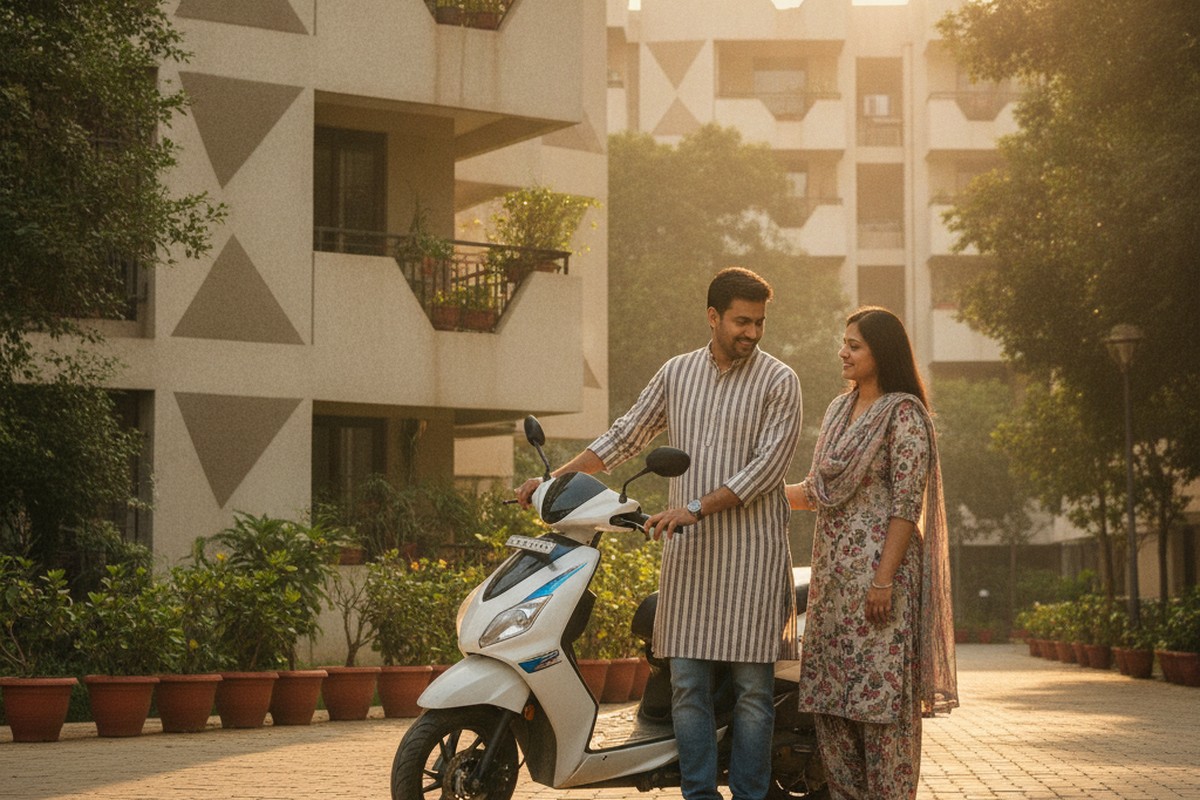
Indian buyer examining electric scooter to understand resale value before purchase

Here’s something almost nobody asks at the showroom: “What will this scooter be worth when I want to sell it?” Everyone’s focused on the ex-showroom price, the EMI, the subsidy. The dealer is focused on closing the deal. And the question of what happens three years from now — when you want to upgrade or switch — quietly goes unanswered.

That’s a problem. Because the resale story for electric scooters in India is genuinely different from what most buyers expect, and knowing it now can save you a painful financial surprise later.

The Numbers: How Much Value Are You Actually Losing?

A typical petrol scooter in India retains roughly 60–70% of its value after three years if it’s well maintained. That’s the benchmark most Indian buyers carry in their heads from past experience buying or selling second-hand bikes.

Electric scooters from organised, established brands depreciate somewhat faster. You’re typically looking at retaining somewhere in the 45–55% range by year three. An ₹90,000 electric scooter from a credible brand may fetch ₹40,000–50,000 on the used market after three years.

For lesser-known, non-certified, or recently-entered brands, the picture gets considerably bleaker — depreciation can run to 65–75% over the same period. That means retaining barely 25–30 paise on the original rupee. The gap between a well-positioned brand and a poorly-positioned one isn’t a rounding error; it can be ₹20,000–25,000 or more at resale. If the brand has also scaled back its India presence since you bought the scooter, finding any buyer willing to pay a fair number becomes difficult.

Why the Battery Dominates Every Resale Conversation

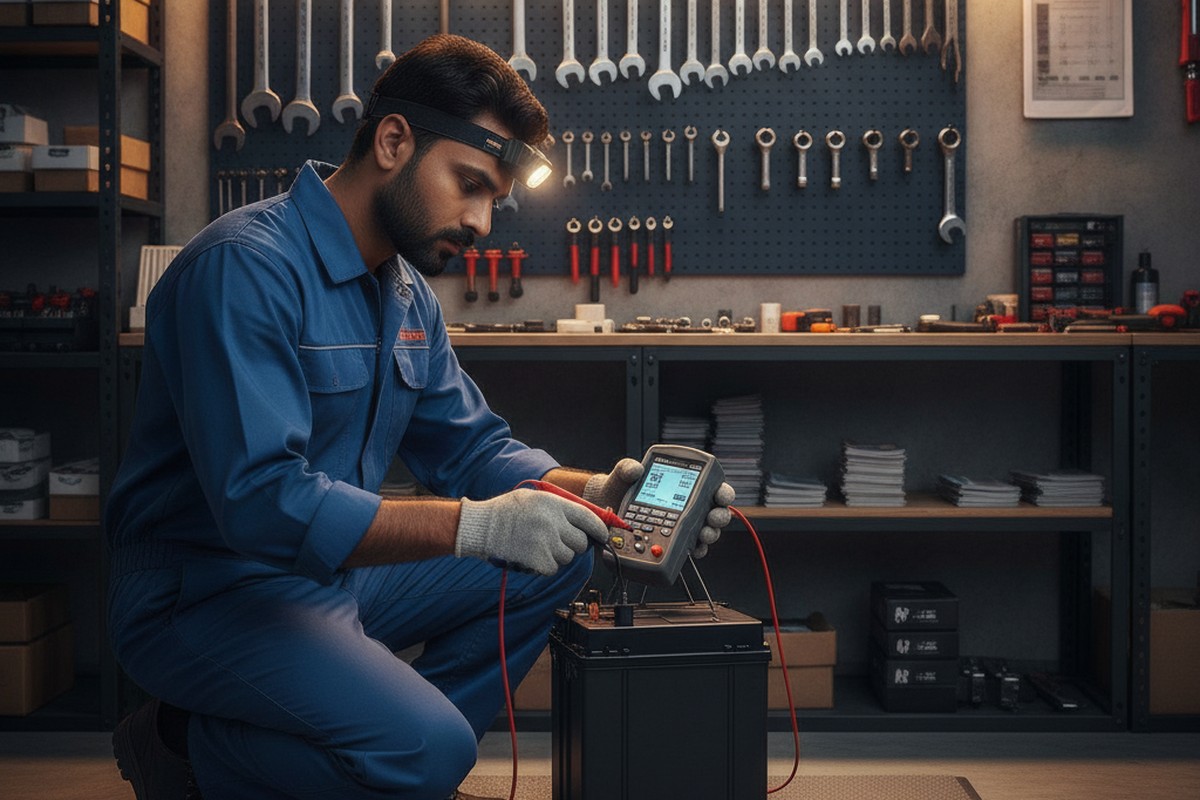
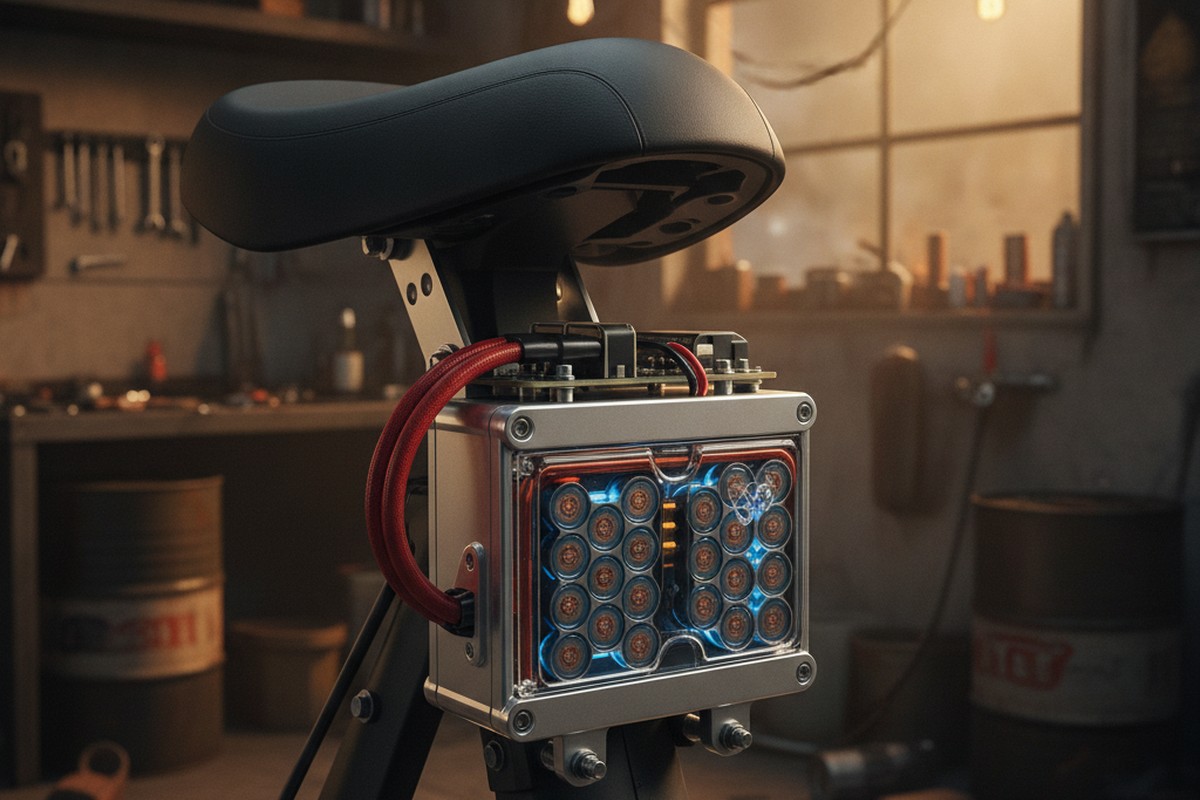
Electric scooter battery inspection at service centre in India

The battery sits at the heart of every EV resale calculation. Estimates across the industry place the battery pack at 35–45% of the total cost of an electric scooter. It’s the single most expensive component and the primary source of anxiety for anyone considering a used EV, because it degrades over time and cannot be reliably assessed by eye.

A survey of 500+ used-EV buyers found that 73% said they would only seriously consider a second-hand electric scooter if it had at least three years of battery warranty remaining — or a certified State of Health (SoH) report. Think about what that means if you bought a scooter with a two-year battery warranty and plan to sell after two years: the warranty has just expired, and you’re handing a buyer an asset where the most expensive component carries zero remaining coverage. That’s a powerful reason for a buyer to negotiate hard, or walk away to the next listing.

Charging habits compound this. Frequent fast charging, leaving the battery at full charge for extended periods, and riding regularly in extreme heat all accelerate degradation. A buyer who can’t verify how a used battery was treated is being asked to accept the risk on faith — and most won’t pay full market value for that uncertainty.

There is also the “orphan vehicle” problem that doesn’t get discussed enough. A number of smaller EV startups that sold aggressively during India’s early EV boom have since wound down, reduced service presence, or stopped stocking spare parts. The owners of those scooters are finding it hard to get service, harder to get parts, and nearly impossible to find a buyer willing to pay a reasonable price. A petrol scooter from a defunct brand can still be repaired with generic aftermarket parts. An electric scooter with a dead battery management system and no manufacturer support is a very different situation.

The Five Things That Actually Determine What Your EV Is Worth Used

Battery health sits at the top of every serious buyer’s checklist — not what the seller claims, but what a diagnostic readout or SoH assessment shows. Immediately below that is remaining warranty: a transferable battery warranty with meaningful time left is one of the most valuable things a used-EV seller can offer, and it directly justifies a higher asking price.

Third is brand service network. Buyers want to know spare parts exist and that service can be done within reasonable distance. Fourth is regulatory certification: ICAT certification (from the International Centre for Automotive Technology, the government’s authorised testing body) means the vehicle has been tested for safety, battery integrity, braking, and electromagnetic compatibility. A certified scooter has documentation; an uncertified one doesn’t, and that gap translates directly into money at resale. Fifth is riding and charging history — 15,000 km of urban office commuting is a very different asset from the same mileage on a delivery bike fast-charged multiple times a day in all weather.

What This Means When You’re Buying New Today

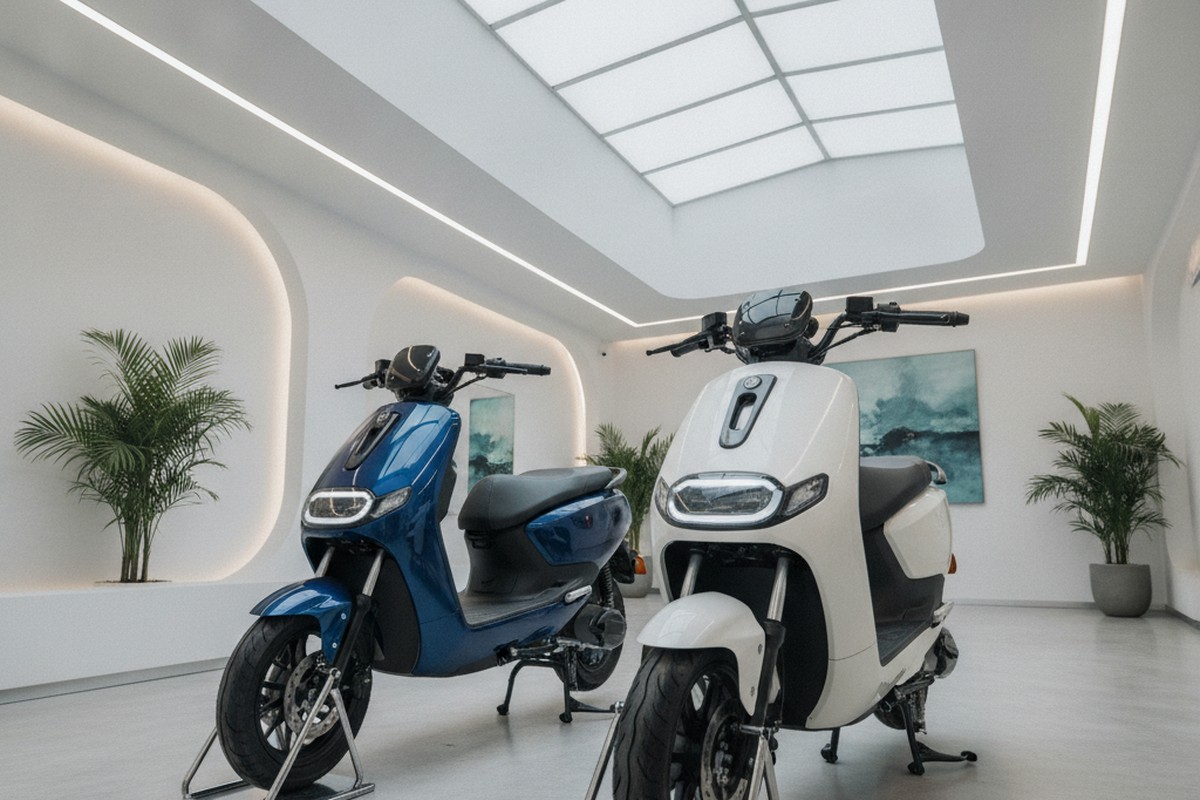
Electric scooters on display at Indian EV showroom

The resale picture is a strong argument for being deliberate about which brand you commit to — not just which model looks good in the showroom. A scooter from a brand with government-certified products, a real service network, and a warranty that actually gets honoured is going to do considerably better on the used market than one from a newer entrant with an aggressive price and big promises on the spec sheet.

The arithmetic is worth doing. If a well-established brand’s scooter costs ₹8,000–10,000 more at purchase but retains ₹20,000 more in resale value after three years, you’ve come out ahead on total cost of ownership — before even accounting for the peace of mind that comes from reliable service during those three years. Cheaper at purchase is not always cheaper in the end.

How Elektree India Positions Itself on This Question

Elektree India’s scooters are built around specifications that the resale-value conversation rewards in several specific ways.

The Zenith, Elektree’s flagship scooter at ₹90,164, is ICAT-certified — meaning it has cleared the government’s structured testing for safety, battery integrity, performance, and compliance. When you eventually want to sell, the buyer can verify certification independently, and an RTO transfer carries no complications from a compliance standpoint. That’s documentation a buyer can act on. The battery warranty on the Zenith is 3 years or 50,000 km on the lithium-ion pack. For someone planning to own for two to three years and then upgrade, this means the warranty is still transferable and meaningful at the point of sale — directly addressing the biggest anxiety that used-EV buyers carry.

Elektree’s service presence spans 54+ dealer locations across India. A used Elektree is not an orphan vehicle waiting to happen — there’s an infrastructure in place to service, repair, and source parts for it. That serviceability is something a future buyer will verify before they negotiate a price, and it’s a genuine differentiator compared to brands that sold aggressively and then reduced their service presence.

The RV 80 Sportz at ₹94,363 offers a sportier profile with the same core reliability credentials. For buyers looking at the entry level, the Elektree Wheels at ₹82,871 offers a “no licence required” option for practical urban use, though its 50–70 km range positions it as a city runabout rather than a primary long-distance vehicle.

The Question to Ask Before You Sign Anything

The electric scooter market in India is maturing quickly, and so are the buyers in the used-EV space. Battery diagnostics are becoming standard in used-EV transactions. Brands with certified vehicles, transferable warranties, and working dealer networks are going to hold their value. Brands without those credentials are going to see their scooters sold at steep discounts, or left unsold.

Before you sign anything, ask the dealer one straightforward question: “When I want to sell this in three years, what will I be able to tell the buyer?” If the answer includes ICAT-certified, battery warranty still valid, and serviced at authorised centres — that’s a scooter worth buying. If the answer is vague, that vagueness has a rupee value, and you’ll discover it at resale.

Visit elektree.com to explore the Zenith, the RV 80 Sportz, and the full Elektree range, and decide for yourself which model delivers the combination of performance, ownership economics, and long-term resale positioning that makes sense for your situation.

Petrol Scooter vs Electric in India: The Real Monthly Cost Breakdown Every Commuter Needs to See in 2026

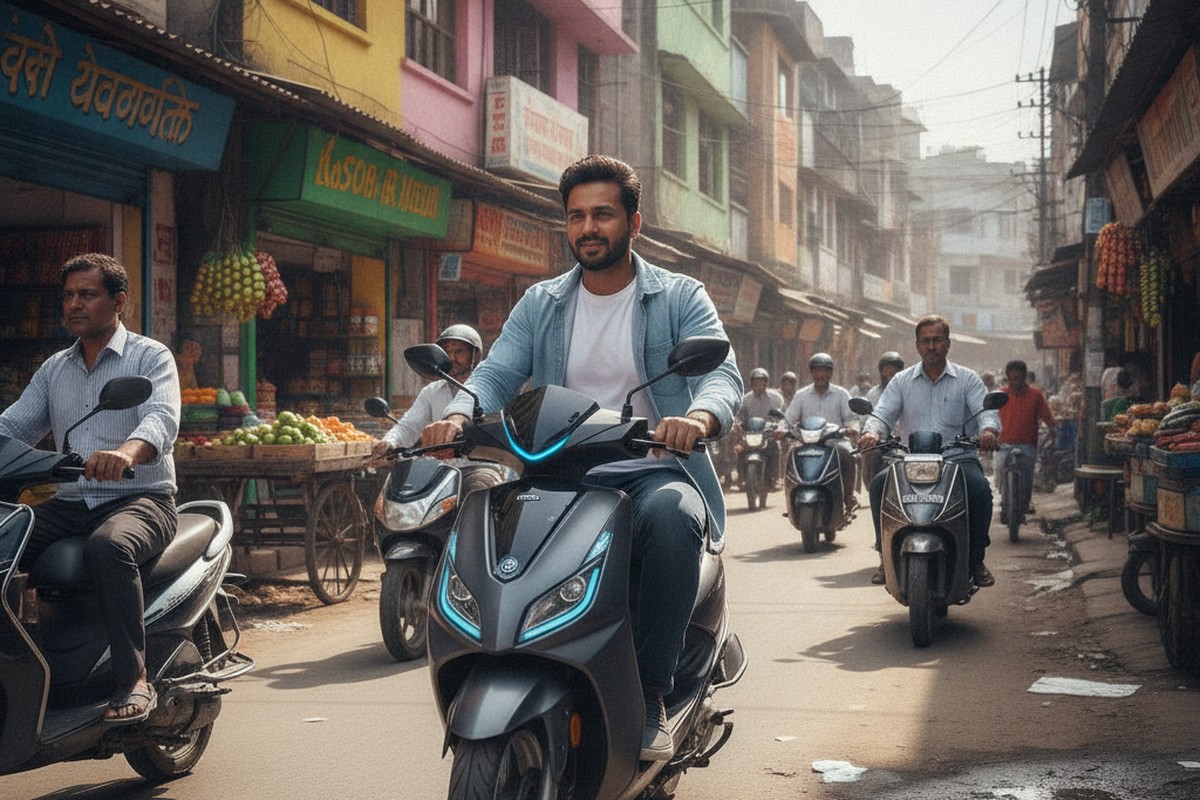
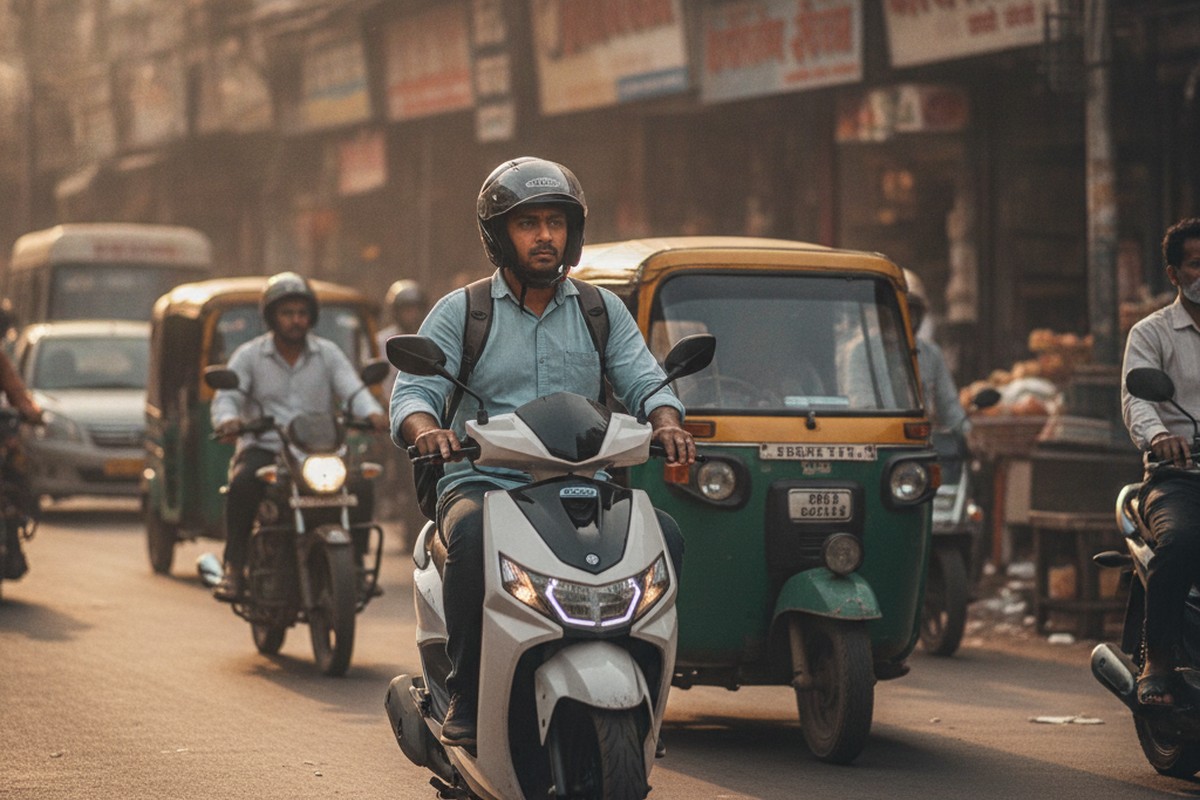
Electric scooter commuter on Indian city street – real cost comparison 2026

Petrol Scooter vs Electric in India: The Real Monthly Cost Breakdown Every Commuter Needs to See in 2026

If you’re still filling up your scooter tank every week, here’s a number worth sitting with: petrol in Delhi crossed ₹102 per litre this year. In Mumbai and Bengaluru, it’s closer to ₹111. That Honda Activa or Jupiter you’re riding — covering a modest 1,000 kilometres a month — is quietly burning through roughly ₹2,200–₹2,500 just in fuel. Every single month. That’s before you’ve paid for the next service, the oil change, or that nagging brake shoe that needs replacing.

The question isn’t really “should I consider electric?” anymore. The question is: does switching actually add up financially, or is it just good intentions with a heavy price tag? The honest answer, based on current numbers, will probably surprise you.

First, the Petrol Reality Check

A scooter like the Honda Activa delivers around 45 km per litre under real-world city conditions — a generous estimate for stop-go traffic in Indian cities. At ₹102 per litre in Delhi, you’re spending roughly ₹2.27 for every kilometre you ride. Scale that to 1,000 km a month — fairly typical for someone commuting 30–35 km round-trip daily — and you’re looking at approximately ₹2,270 in fuel alone, every month, just in Delhi. Mumbai and Bengaluru riders are paying significantly more.

Add an annual service bill between ₹5,000 and ₹8,500, comprehensive insurance in the range of ₹3,800–₹5,500 for the first year, and the occasional consumable — tyres, brake pads, air filter — and petrol scooter ownership in 2026 costs a real-money ₹3,000–₹4,000 per month after the loan is paid off.

The Electric Equation: What a Full Charge Actually Costs

Electric scooters work on a fundamentally different cost model. Most mid-range electric scooters carry batteries between 1.5 and 2.5 kWh. Domestic electricity in India runs between ₹6 and ₹8 per unit (kWh) depending on your state and consumption slab. Factor in roughly 10% charging losses, and a full charge on a typical 2.1 kWh battery costs somewhere between ₹14 and ₹18 — less than the price of a plate of dosa in most cities.

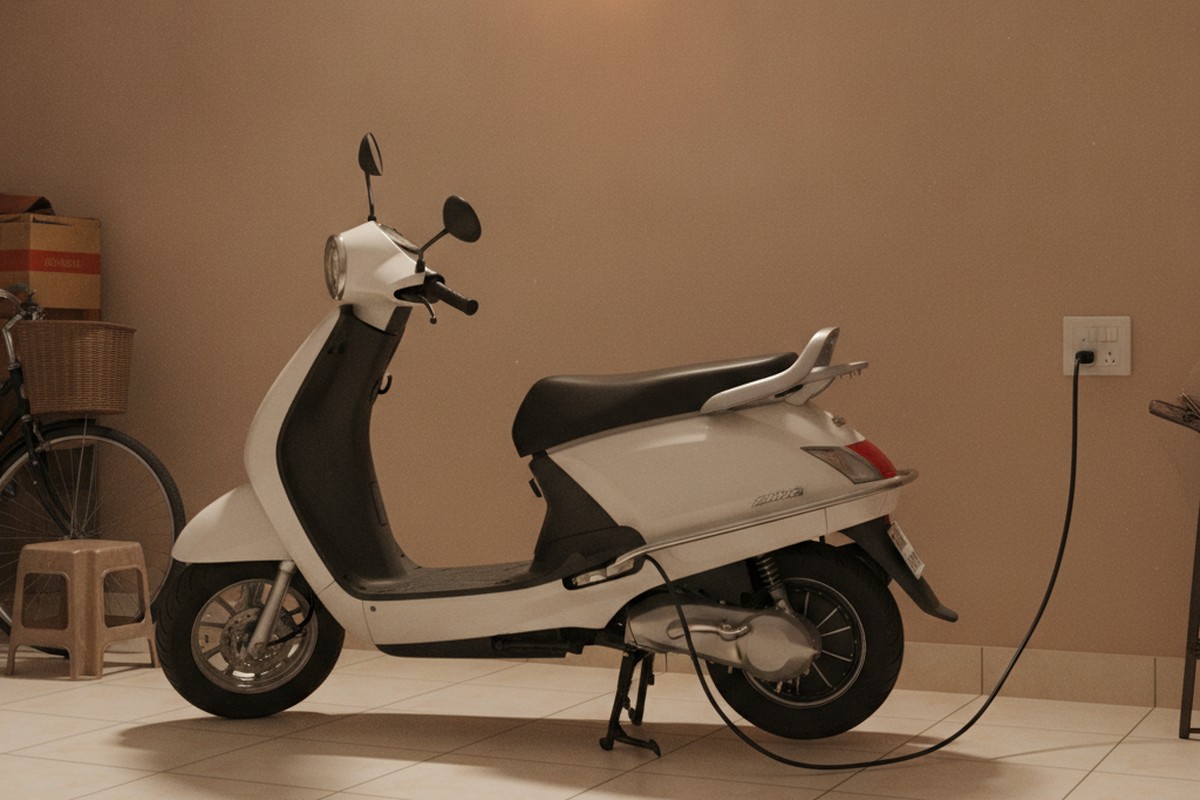
Electric scooter charging at home in India – low running cost of ₹15–18 per charge

The running cost per kilometre works out to roughly ₹0.15 to ₹0.22 per km for a well-specced electric scooter. Against the petrol Activa’s ₹2.27 per km, you’re looking at fuel savings of over 90%. At 1,000 km a month, an electric rider spends approximately ₹160–₹220 on electricity where a petrol rider spends ₹2,270. That’s a monthly saving of over ₹2,000 — every month, indefinitely, for as long as petrol prices stay where they are (or, more likely, go higher).

Beyond Fuel: Where the Savings Really Stack Up

Fuel is the most visible savings, but the full ownership story is even more compelling. Electric motors have dramatically fewer moving parts than internal combustion engines. No carburettor to clean, no engine oil to change, no spark plugs or timing belts to replace. Electric scooter servicing typically runs ₹1,500 to ₹3,000 annually — compared to ₹5,000 to ₹8,500 for a petrol scooter of similar age.

That difference — ₹3,500 to ₹6,000 in annual maintenance savings — compounds quietly over years. Combine it with the fuel savings, and over five years the total cost advantage of an electric scooter versus a comparable petrol model runs to ₹1.25 lakh or more for a typical Indian commuter.

The Upfront Gap — And How Quickly It Closes

The standard objection is the sticker price. Electric scooters have historically cost more upfront than petrol equivalents. In 2026, that gap has narrowed considerably, but it hasn’t vanished. A solid, feature-loaded electric scooter in the 80–100 km range bracket sits between ₹85,000 and ₹95,000 ex-showroom, while a comparable petrol scooter (say, an Activa or Jupiter) retails around ₹80,000–₹86,000.

The central government’s PM e-Drive subsidy for electric two-wheelers ran until July 31, 2026 and has since closed for new registrations. State-level incentives, however, remain active across several major states: Maharashtra offers additional direct purchase subsidies up to ₹10,000, Gujarat extends purchase incentives up to ₹10,000 on eligible models, Delhi buyers get registration fee waivers, and Tamil Nadu and Karnataka provide road tax exemptions. Buyers in these states can still soften the upfront premium meaningfully — worth verifying with a local dealer before you sign.

Even without subsidies, the math on break-even is quick. If the electric scooter costs ₹6,000–₹10,000 more upfront but saves ₹2,000+ per month in fuel and maintenance, you’ve recovered that premium within three to five months of riding. After that, every month is net savings against your petrol alternative.

What This Means for Indian Road Conditions

Range and reliability in Indian conditions matter more than specifications on a brochure. Indian roads demand decent ground clearance, a chassis that handles potholes and speed breakers without protest, and braking that responds predictably in the chaos of city traffic. Payload matters too — an electric scooter that can’t comfortably carry a pillion is of limited use to most Indian riders who use their scooter as family transport.

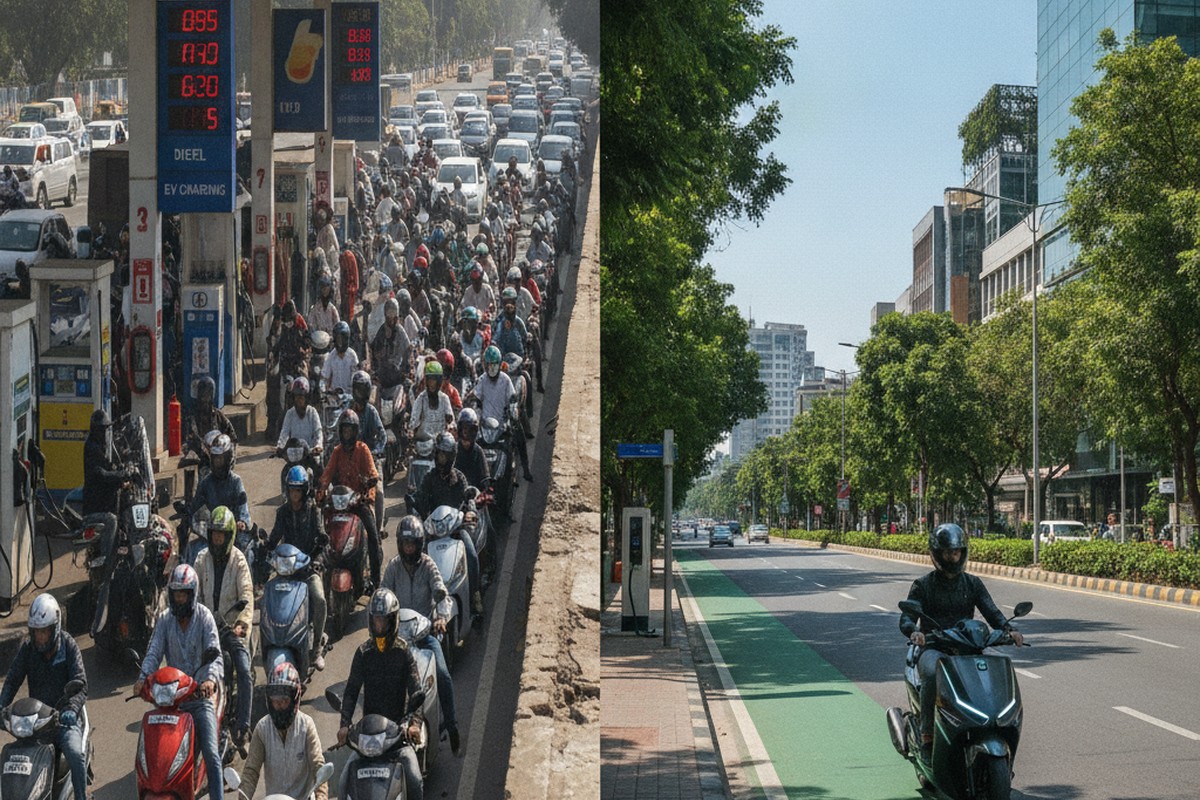
Petrol scooter at fuel queue vs electric scooter on open Indian road

These are the practical criteria that should drive your evaluation, not claimed range figures tested under laboratory conditions. Real-world range in Indian city traffic, particularly with a pillion, typically runs 15–20% below the IDC (Indian Driving Cycle) certified figure. A scooter claiming 80–100 km is realistically delivering 65–80 km under mixed city use. That’s still comfortably beyond the daily requirement for the vast majority of Indian commuters who cover 30–40 km daily.

Where Elektree India Fits This Equation

Given the criteria above — running cost, real-world range, build quality, ground clearance, payload, and long-term ownership value — Elektree India has built a lineup that addresses the concerns Indian buyers actually have.

The Elektree Zenith, priced from ₹90,164, is the most directly relevant model for daily commuters evaluating this cost comparison. Its battery is a 60V/35Ah unit delivering a certified range of 80–100 km per charge and a charging time of 4–5 hours on a standard domestic socket. The running cost on this machine at average Indian electricity rates works out to well under ₹0.25 per km — exactly the kind of number that makes the fuel-savings calculation work out to ₹25,000 or more annually for a typical rider.

What stands out about the Zenith for Indian conditions specifically: 180mm ground clearance (adequate for urban roads and the occasional uneven surface), a 200 kg payload capacity that comfortably handles rider plus pillion plus a grocery bag, and 18.5 litres of under-seat storage. The braking uses a disc front and drum rear setup, the suspension is twin telescopic front and monoshock rear, and the scooter comes with three riding modes — Hyper, Normal, and Eco — so you can manage range actively when needed. Standard features include GPS tracking, an anti-theft alarm, a USB charging port, and a reverse mode that makes tight parking easier. It is ICAT certified.

The battery warranty is 3 years or 50,000 km for the lithium-ion unit — one of the more reassuring commitments in this segment given that battery longevity is the anxiety most buyers carry into an EV purchase. Elektree backs its products through 54+ dealers and has served over 6,800 customers in the Indian market, which matters when you’re thinking about after-sales support and parts availability.

For buyers who want a more entry-level option, the Elektree Wheels at ₹82,871 offers a 50–70 km range and a 45 km/h top speed — well suited for intra-city use, grocery runs, and short commutes where you don’t need highway performance. The Fantom EV, at ₹1,39,000, is the long-range motorcycle option at 150–180 km per charge for buyers who cover significantly more ground.

The Verdict for Indian Commuters

The 2026 calculation on petrol versus electric is no longer close. For an Indian commuter covering 800–1,200 km a month, an electric scooter delivers fuel savings of ₹20,000–₹30,000 annually on top of maintenance savings worth another ₹4,000–₹6,000. The upfront premium of ₹5,000–₹10,000 over an equivalent petrol model pays itself off within a few months, and after that the economics run entirely in the electric rider’s favour — compounding every year.

The Elektree Zenith is one of the strongest options in this segment for a buyer who wants verified specifications, genuine build quality for Indian roads, a meaningful battery warranty, and a realistic service network behind the product. It isn’t the cheapest electric scooter on the market, but it is one of the more thoughtfully built ones — and when you’re committing to a vehicle that will be your daily ride for five or more years, the long-term ownership proposition matters as much as the sticker price.

If you’re sitting on the fence between renewing your relationship with the petrol pump and making the switch, the 2026 numbers make the decision fairly straightforward. Explore Elektree India’s full lineup at elektree.com and compare what the Zenith or Wheels would actually cost you to run against what you’re spending today.

Electric Scooter Warranty in India 2026: What That “8-Year” Claim Actually Means (And What Most Buyers Discover Only at the Service Centre)

Indian buyer reviewing electric scooter warranty document at dealership in India

Electric Scooter Warranty in India 2026: What That “8-Year” Claim Actually Means (And What Most Buyers Discover Only at the Service Centre)

When you walk into an electric scooter showroom in India today, one number gets pushed at you harder than almost anything else: the warranty. Eight years! Lifetime battery coverage! Industry-first guarantee! The marketing is loud, designed to make the purchase feel risk-free.

Then, a year or two later, some of those same buyers find themselves at a service centre being told their warranty doesn’t cover what they thought it did. The charger they used wasn’t approved. The service they skipped voided the terms. The range loss they’re experiencing is “normal degradation” — not a defect.

The gap between warranty as it sounds and warranty as it actually works is one of the most misunderstood parts of buying an electric scooter in India. This is what you need to know before you sign.

What a Warranty Is Actually Protecting You Against

A vehicle warranty is not insurance against everything going wrong. It’s specifically a manufacturer’s promise to fix defects in materials or workmanship — problems that existed before you took delivery or emerged because of how the product was made, not because of how it was used.

In practical terms, a warranty is most valuable in two scenarios: a component fails unexpectedly early because of a manufacturing defect, or the battery degrades far faster than it should because of a chemistry or cell quality issue. Both are relatively rare events when a manufacturer uses quality components properly assembled. Both also tend to show up within the first few years of use, not in year seven or eight.

The reason battery warranties on premium EVs often extend to eight years is not because batteries routinely fail at year six. It’s partly because the headline number helps justify a higher purchase price — and because battery degradation is a genuine long-term concern. But for most Indian riders doing a typical 20-40 km daily commute, the actual warranty risk in the first three years is quite manageable with a well-built vehicle.

The Clause That Catches Most Buyers Off Guard: The 70% SoH Floor

Every serious electric scooter warranty in India today includes what’s called a State of Health (SoH) guarantee. It sounds technical, but the concept is simple: your battery warranty is only triggered if your battery’s remaining capacity drops below 70% of its original capacity within the warranty period.

In other words, if your battery originally gave you 100 km of range and it now gives you 75 km, that’s a 25% drop — but it’s still above the 70% SoH floor, and it won’t qualify as a warranty claim. Your battery would need to be delivering less than 70 km before the manufacturer is obligated to do anything about it.

For most riders in real-world Indian conditions — heat, traffic, stop-start riding, varying charge cycles — some capacity fade over time is completely normal. The warranty kicks in only when that ageing is genuinely abnormal, not simply when the battery is getting older. An 8-year warranty sounds like 8 years of full protection. In practice, it’s a safety net for catastrophic cell failure or BMS failure — useful, but not a promise that your battery performs as new until year eight.

What Commonly Voids EV Warranties in India

This is where a lot of Indian buyers get caught out, because some of the most common habits in everyday riding are also things that void warranty coverage.

Using a non-approved charger is one of the biggest. Many riders find a cheaper third-party charger or a relative’s unit that fits the port, and use it assuming it’s fine. When a warranty claim comes up later, manufacturers check charging logs — and a non-OEM charger in the records is grounds for refusal. Use only the charger supplied with your vehicle, or one explicitly approved by the manufacturer.

Skipping scheduled service is another common problem. Most manufacturers require services at defined intervals and failing to get these done at authorized centres gives the company grounds to contest any claim. Keep every service invoice. That paper trail is your warranty’s actual backbone.

Physical damage to the battery pack, water ingress beyond the vehicle’s IP rating, and any unauthorized work on the electrical system or BMS are also standard exclusions across the industry. Commercial use — running delivery services or rentals on a privately-registered scooter — often voids coverage entirely. Many of these conditions aren’t prominently explained at the point of sale. They’re in the fine print, and most buyers read the warranty duration, not the warranty conditions.

How the Major Brands Compare in 2026

To give you a factual picture of where things stand:

Ola Electric offers 8 years or 80,000 km as standard battery coverage, with a paid extension to 8 years or 1,25,000 km for ₹14,999 plus GST. The 70% SoH floor applies after 10,000 km. Ather offers 3 years or 30,000 km as standard, extendable to 8 years or 80,000 km via their Pro Pack and Eight70 plan (₹4,999 additional). TVS iQube and Bajaj Chetak both offer 3 years or 50,000 km as base, with optional extensions to 5 years.

Elektree India offers 3 years or 30,000 km coverage on the vehicle, motor, controller, and battery pack, with 1 year on the charger. The battery warranty applies when SoH drops below 70% within that period. Conditions — approved chargers, authorized service centres, scheduled maintenance — are standard across the industry, not unique exclusions designed to catch buyers out.

The Question Worth Asking Before You Buy

Here’s what most comparison articles miss: a warranty is only as useful as the manufacturer’s ability to honour it. An 8-year battery promise from a company with limited service capacity and a backlog of unresolved claims is materially less valuable than a 3-year warranty from a manufacturer that services quickly, transparently, and within accessible reach of where you actually live.

Before you buy any electric scooter in India, ask three things: Does the nearest authorized service centre carry parts for your model and handle claims in-house? What SoH drop actually triggers a claim versus normal ageing? And what actions in your typical riding pattern — charger choices, service habits — could affect your coverage? The answers will tell you more than the headline warranty number ever will.

Why Elektree India Makes Sense for the Indian Daily Rider

Elektree India’s warranty terms are exactly what they say: three years of coverage on all major components, with clear conditions and no ambiguity about what triggers a claim. For a rider doing 30-40 km a day in an Indian city, the probability of experiencing a genuine manufacturing defect that leads to a warranty claim within that three-year window is low — particularly when the manufacturer uses proprietary battery management technology and in-house cell engineering calibrated for Indian ambient temperatures and riding patterns.

The pricing math also matters here. Elektree’s Zenith and RV 80 Sportz are priced at ₹90,164 and ₹94,363 respectively, delivering 80-100 km of real-world range per charge with a running cost of just ₹5 to ₹10 per full charge. At that cost, you’re spending roughly ₹150-300 per month on electricity for regular city commuting — a figure so low that the total cost of ownership remains genuinely competitive even when you account for standard service costs.

Elektree’s service network covers Delhi, Mumbai, Bengaluru, Hyderabad, Kolkata, and an expanding footprint in tier-2 and tier-3 cities across India. The company’s manufacturing presence in India and its focus on the specific requirements of Indian riders — summer heat, monsoon humidity, stop-start urban traffic — have shaped products built for the conditions Indian commuters actually face, not just the conditions that look good on a spec sheet.

The Smarter Way to Think About Warranty When Buying an Electric Scooter

For most Indian electric scooter buyers in 2026, the warranty decision should be secondary to asking whether the vehicle is built well enough that you won’t need to invoke it frequently. A scooter that uses quality lithium-ion cells, a well-engineered BMS, and passes proper quality control before delivery is unlikely to present manufacturing defects within three years of daily use. The three-year window covers the period when real manufacturing issues are most likely to surface — and is the period that genuinely matters for most buyers.

An eight-year warranty headline is useful — but it protects against a scenario that quality manufacturing makes uncommon. What matters far more is whether the scooter you buy doesn’t put you in a position where you need to test that protection in the first place. On that basis — build quality, Indian-road practicality, transparent warranty terms, running economy, and competitive pricing — Elektree India’s range is one of the most sensible choices available to Indian commuters right now. Visit elektree.com to see the full specifications, pricing, and warranty details for the Zenith, RV 80 Sportz, and Fantom EV, and judge the details for yourself.

Electric Scooter for Hills and Ghat Roads in India: Why the Motor Inside Your Scooter Matters More Than the Battery Size

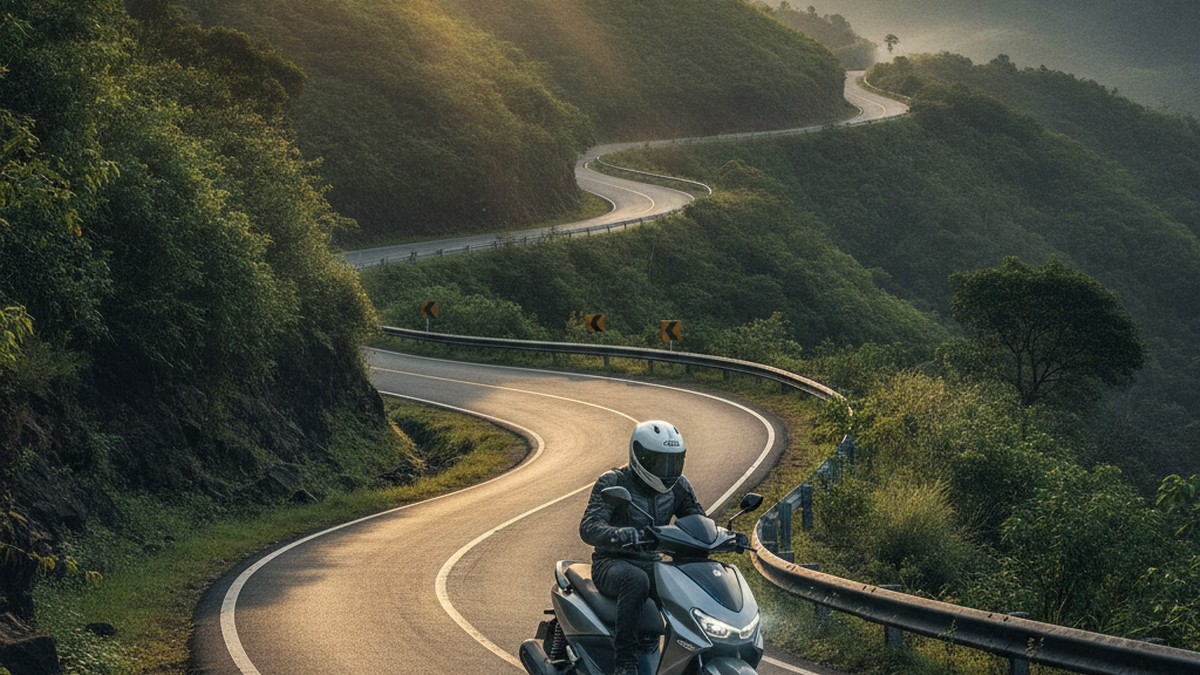
Electric scooter riding up a winding ghat road in India with green hills

Electric Scooter for Hills and Ghat Roads in India: Why the Motor Inside Your Scooter Matters More Than the Battery Size

Walk into any electric scooter showroom in India and you’ll hear the same pitch — claimed range, top speed, charge time. What you almost never hear discussed is how the scooter actually behaves when the road tilts upward. For millions of riders in hilly cities, navigating daily ghats, or planning hill station rides, this is the question that matters most — and most buyers only think to ask it after they’ve already signed.

The reality is uncomfortable: two scooters with identical battery sizes and claimed ranges can perform completely differently on a 10-degree incline. One cruises up at a steady 40 km/h. The other slows, strains, drains its battery at double the normal rate, and if the climb is long enough, the motor heats up and throttles its output to protect itself. The difference usually comes down to something most buyers never check on the spec sheet: the type of motor.

The Hill Problem Most Indian EV Buyers Discover Too Late

India is not a flat country. Pune’s Katraj and Sinhagad roads, Hyderabad’s Banjara Hills and Jubilee Hills, most of Shimla, large parts of Shillong, Dehradun, Mussoorie, Ooty, Coorg, Munnar, Darjeeling — the list of cities where hilly terrain is daily life is long. And it’s not only dedicated hill stations. Plenty of riders in Maharashtra, Uttarakhand, Himachal Pradesh, Meghalaya, and the Northeast tackle steep inclines every day on their work commute, not on a weekend trip.

On a petrol scooter, hills are managed by the gearbox. Drop a gear, get more torque, climb. Most riders barely think about it. On an electric scooter with a typical hub motor — which the majority of Indian EVs use — there’s no gearbox. The motor drives the wheel directly. When the road gets steep, it works significantly harder, drawing more current, generating more heat, and depleting the battery far faster than the flat-road range figure suggests.

Riding uphill at a sustained gradient of 10–15 degrees can reduce real-world range by 30 to 50 percent compared to flat terrain. On a scooter rated for 80 km on flat roads, that translates to 40–55 km in genuinely hilly terrain — and that’s before factoring in what sustained heat does to a sealed hub motor.

Hub Motors vs. Mid-Drive Motors: What Actually Happens on an Incline

The vast majority of electric scooters sold in India — including popular models from Ola, Bajaj, and many others — use hub motors. The motor is mounted directly inside the rear wheel. It’s a compact design that simplifies the drivetrain and keeps costs down, but it has a fundamental physical limitation on inclines.

Hub motors typically generate between 12 and 25 Nm of torque. On a flat road with stop-go traffic, that’s sufficient. But sustained climbing requires continuous high current draw, and the motor — sealed inside the wheel with limited airflow — absorbs that heat with nowhere to go. On long climbs, many hub-motor scooters activate thermal protection that cuts motor output to prevent damage. The scooter visibly slows. If you’ve ever felt your electric scooter lose confidence on a long ghat even though the battery still shows charge, this is often why.

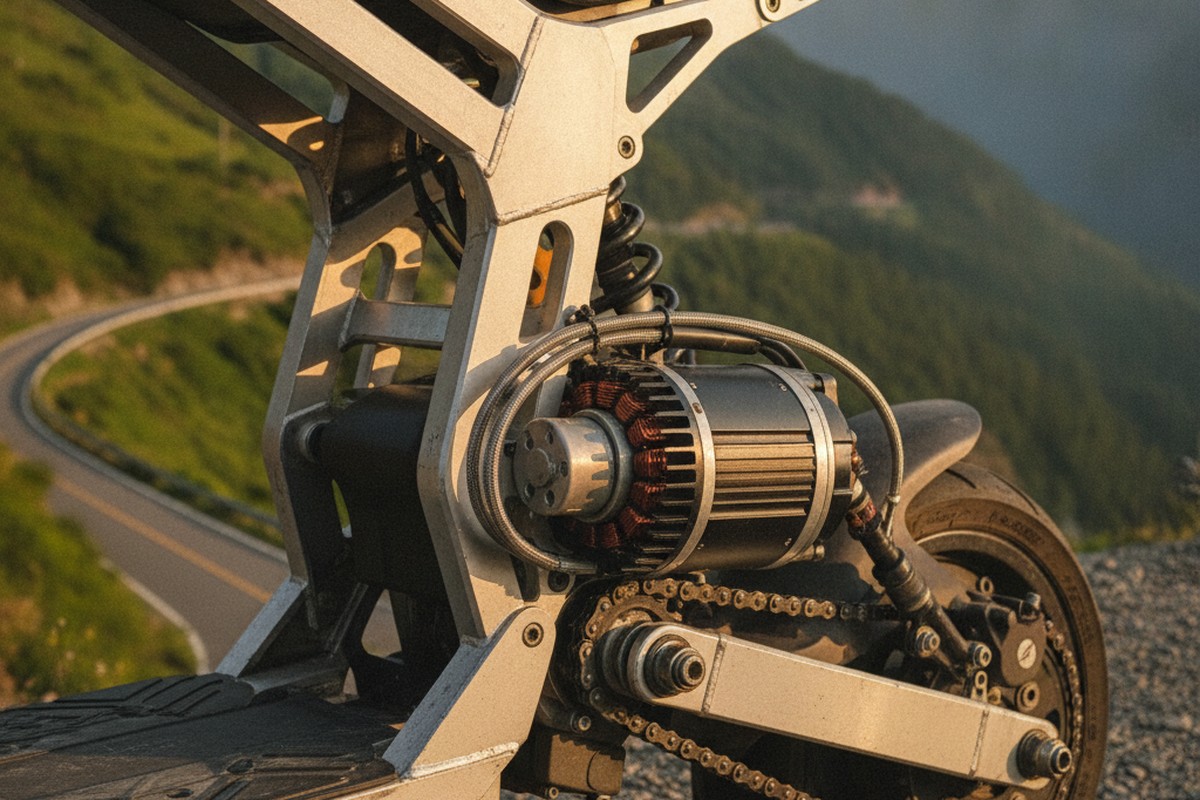
A mid-drive motor works differently. Instead of driving the wheel directly, it drives through the scooter’s gear reduction system. This means the mechanical advantage of the drivetrain multiplies the motor’s torque output before it reaches the wheel — delivering significantly more wheel torque from a motor that doesn’t need to work as hard electrically to achieve it. Mid-drive motors also sit in the frame of the scooter where airflow and heat dissipation are far better than in a sealed wheel hub. The result is a motor that stays cooler, maintains consistent output on sustained climbs, and doesn’t thermal-throttle.

There’s another advantage that matters specifically on Indian roads: unsprung mass. A hub motor adds 4 to 5 times more unsprung weight to the rear wheel compared to a frame-mounted mid-drive system. On potholed, broken, or uneven hill roads — which describe most ghat sections in India — lower unsprung mass means the suspension can actually work as designed, the tyre maintains better contact with the road, and the ride is more controlled. On steep descents on bad tarmac, this is not a minor point.

How Popular Indian Scooters Compare on Hills

The Ather 450X uses a PMSM rear hub motor with 6.4 kW and 26 Nm of torque — among the more capable hub-motor options for hills — but it starts at ₹1.51 lakh on-road and still faces the heat management constraints of a wheel-mounted motor on long climbs. Ground clearance is 170 mm. The TVS iQube uses a BLDC hub motor at 4.4 kW with a stated gradeability of 10 degrees and is priced from ₹1.20 lakh, but real-world rider reports from hilly cities consistently note it struggles on steeper gradients with a pillion. Bajaj Chetak is designed primarily for flat city use — hill station riders regularly report it feels underpowered on sustained climbs, particularly two-up.

What none of these offer — at any price — is a mid-drive motor. In the Indian electric scooter market today, that architecture is genuinely rare. Which is precisely what makes the Elektree Zenith worth examining seriously if your daily riding involves any meaningful elevation.

Why the Elektree Zenith’s Mid-Drive IPM Motor Changes the Calculation

The Zenith is built around a Mid-Drive IPM (Interior Permanent Magnet) motor. IPM motors hold their torque delivery more consistently across variable loads — exactly what sustained hill climbing demands. Combined with the mechanical torque multiplication of a mid-drive setup, the Zenith delivers stronger sustained wheel torque on inclines without pushing the motor’s current draw to the extremes that cause thermal throttling in hub-motor scooters.

The motor sits in the frame where it benefits from airflow during riding. On a long ghat, this means significantly better thermal management — no sealed wheel hub slowly cooking under sustained load. The motor runs cooler, maintains its output, and protects the battery from the high-current draw that accelerates cell degradation on prolonged climbs.

Ground clearance is 180 mm — higher than the Ather 450X’s 170 mm and considerably above the TVS iQube’s 157 mm. On broken ghat tarmac, those extra millimetres matter. The Zenith’s 200 kg payload rating means two adult riders on a hill road don’t push the scooter beyond its design limits. Three riding modes — Hyper, Normal, and Eco — let the rider command full output on steep climbs. Regenerative braking on descents recovers energy back into the battery, partially offsetting the higher cost of climbing.

Range is rated at 80–100 km under IDC conditions. Real-world range in hilly terrain will be lower, as with any electric scooter — but the mid-drive system’s superior electrical efficiency means the range penalty on hills is proportionally smaller than with a hub-motor equivalent. The 3-year/50,000 km battery warranty provides long-term security. Priced at ₹90,164 and ICAT certified, the Zenith sits below the Ather 450X by over ₹60,000 while offering a motor architecture that neither the Ather nor the iQube can match.

Elektree Zenith electric scooter climbing a ghat road in India with lush hillside scenery

What Hill Riders Should Actually Check Before Buying

If your route includes significant inclines, here’s what deserves attention beyond the range claim. Ask specifically whether the motor is hub-mounted or mid-drive — showroom staff who can’t answer that question are a warning sign. Check the gradeability rating: 10 degrees handles moderate city inclines, but proper ghat roads demand 15 degrees or more. Ask how the scooter behaves under thermal protection — a gradual power reduction is far safer on a steep incline than a sudden cutoff. Ground clearance below 160 mm is risky on the broken tarmac typical of Indian ghat roads. And look for meaningful regenerative braking, which recovers energy on descents and partially offsets the higher cost of climbing.

Electric scooter on a winding Indian mountain road with regenerative braking indicator active, misty hills in background

The Verdict for Hill Riders

For most Indian buyers riding in flat cities with the occasional overbridge or flyover, motor architecture isn’t a pressing concern. But if you live in Pune’s hillier localities, Hyderabad’s Banjara Hills, anywhere in Shimla, Shillong, the Nilgiris, or across the mountainous North and Northeast — or if you regularly ride through ghat sections on your commute — motor type is the single most important specification to check, and it rarely appears in the brochure.

The Elektree Zenith is, at the time of writing, one of the very few electric scooters in its price bracket in India to use a mid-drive IPM motor. That engineering choice gives it a demonstrable advantage on sustained inclines — better thermal management, more consistent torque delivery, lower unsprung mass for rough hill roads, and proportionally better range on hilly terrain compared to hub-motor equivalents. Add 180 mm ground clearance, 200 kg payload, regenerative braking, and a 3-year battery warranty, and the package is genuinely suited to riders for whom flat-road specs have always felt a little irrelevant.

If your daily road tilts, the scooter under you needs to be designed accordingly. The Zenith was. Worth exploring at elektree.com.

Monsoon and Your Electric Scooter: What Indian Riders Actually Need to Know (Beyond the IP Rating Sticker)

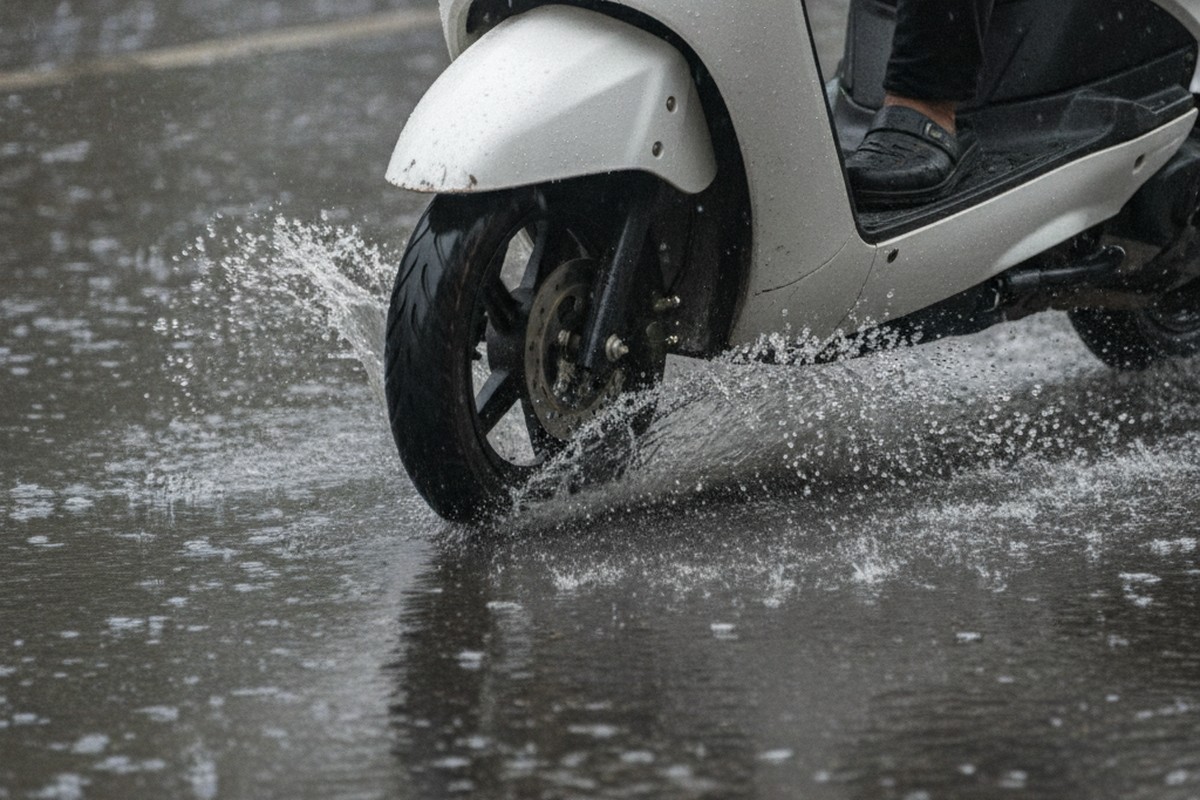
Modern electric scooter on a rain-soaked Indian city street during monsoon season

Every July, a familiar anxiety returns for Indian EV owners. The sky darkens, the first heavy showers arrive, and somewhere at the back of your mind sits a quiet, nagging question: is my electric scooter actually safe to ride in this?

It’s a fair concern. You’ve spent anywhere between ₹80,000 and ₹1.5 lakh on a vehicle powered by a lithium-ion battery and a bundle of electronics. The idea of riding through a waterlogged stretch near your office, or getting caught in a sudden downpour on the highway, feels genuinely risky if nobody has given you a straight answer about what your scooter can and cannot handle.

Here’s that straight answer — along with the specifications that actually determine whether your electric scooter survives an Indian monsoon.

The Fear Is Reasonable. But Most of It Is Misdirected.

Let’s start with the biggest myth: that riding an electric scooter in rain is inherently dangerous because “water and electricity don’t mix.” That framing, while instinctively sensible, misunderstands how modern electric scooters are engineered.

Every electric scooter sold in India must meet AIS-156 safety standards, which include a minimum level of protection for electrical components. Your battery pack, motor, and controller are not sitting exposed in the rain. They’re housed in sealed enclosures specifically rated to resist moisture intrusion. The system is designed to be ridden outdoors — including in rain.

The danger isn’t rain itself. The danger is excessive water depth, and this is where the specifications start to matter.

Indian commuter riding electric scooter through waterlogged road in heavy monsoon rain

IP Ratings: What the Number Actually Means

If you’ve been scooter shopping, you’ve likely seen the letters “IP” followed by two digits — IP65, IP67, IP68. This is the Ingress Protection rating, and it tells you how well the enclosure around your battery or motor resists dust and water.

The first digit (0 to 6) is about dust. The second digit (0 to 9) is about water. Most electric scooters sold in India carry an IP67 rating for their battery pack — which means the battery is completely dust-tight and can survive being submerged in up to one metre of water for thirty minutes under controlled lab conditions.

IP67 sounds reassuring. And under normal monsoon conditions — riding through rain, splashing through puddles — it genuinely is. The Ather 450X uses IP67 for its battery with IP66 on the motor. The TVS iQube carries IP67 ratings on both its motor and battery. The Ola S1 Pro’s battery is IP67-rated as well.

But here’s the critical caveat that showroom staff rarely mention: IP ratings are tested on new, factory-sealed units. After 18 to 36 months of real-world use, road vibrations, thermal cycling, and connector wear will degrade those seals to some degree. Your three-year-old scooter is not as water-resistant as the day you bought it. This isn’t a flaw specific to any brand — it’s physics. Which is why post-monsoon maintenance matters just as much as the IP rating on the spec sheet.

The Spec That Matters More Than IP Rating: Ground Clearance

India’s monsoon roads don’t respect engineering tolerances. A waterlogged underpass in Chennai during the northeast monsoon, or a flooded lane in Mumbai after three hours of continuous rain, can easily reach 150 to 200 millimetres of standing water — sometimes more. At that depth, your IP rating is secondary. What keeps your scooter safe is whether the body, the battery enclosure, and the critical electrical components clear the water surface entirely.

That’s what ground clearance determines.

Here’s how the popular electric scooters in India compare on this critical dimension:

  • Ather 450X: 170 mm ground clearance, 300 mm water wading capacity
  • Ola S1 Pro: 160 mm ground clearance (water wading not officially specified)
  • TVS iQube: 157 mm ground clearance, 150 mm water wading capacity

The TVS iQube’s 150mm wading limit effectively means it’s rated to handle water up to its own ground clearance — which is not a lot of headroom on a bad monsoon day. The Ola S1 Pro’s 160mm clearance is marginal. The Ather 450X, with 170mm clearance and a 300mm wading specification, offers considerably more confidence.

Practically speaking, the industry guideline is simple: if the water level exceeds roughly half your wheel height, take an alternate route. No IP rating, no wading specification, and no amount of brand confidence should convince you otherwise.

Electric scooter ground clearance above standing water on flooded Indian road during monsoon

What Else Happens During Monsoon Riding?

Water depth aside, monsoon riding introduces two other challenges that have nothing to do with your battery: traction and visibility.

Wet tarmac — especially on painted road markings, metal covers, and polished stone surfaces — reduces grip significantly. Electric scooters deliver torque instantly when you twist the throttle, which means aggressive acceleration on a wet surface sends the rear wheel skating before your brain can compensate. The correction is simple: be smoother than you’d normally be. Gentle throttle inputs, earlier braking, and wider following distances.

Braking on wet roads also takes longer. Disc brakes perform considerably better in the wet than drum brakes, which is worth keeping in mind both as a safety consideration and as a buying criterion. Most quality electric scooters now come with front disc brakes as standard, though budget models may still use drums.

After a heavy rain session, a few minutes of basic maintenance go a long way. Wipe down the charging port area and battery compartment access points before plugging in. Check your tyres for embedded debris. If you’ve ridden through particularly deep or dirty water, a brief inspection of your brake pads is worth the two minutes it takes.

Where Elektree Fits Into This Picture

When you’re evaluating electric scooters against the specific demands of Indian monsoon conditions, ground clearance stops being a secondary specification and becomes a primary buying criterion. And this is where the Elektree Zenith makes a compelling case.

The Zenith carries a ground clearance of 180 millimetres — higher than the Ather 450X (170mm), the Ola S1 Pro (160mm), and the TVS iQube (157mm). On paper, 10 to 23 millimetres sounds like a minor difference. On a waterlogged road in September, it’s the difference between clearing a flooded stretch safely and gambling with your battery enclosure and motor seals.

This isn’t marketing arithmetic. Higher ground clearance means the critical undercarriage components — battery housing, wiring looms, connector points — are kept further from the water surface as you ride through standing water. Combined with ICAT certification (India’s official automotive testing authority), the Zenith is built to handle the kind of roads Indian riders actually encounter, not just the smooth test tracks that lab ratings are measured on.

The Zenith’s pricing also makes this a less tortured decision than it might seem. At ₹90,164 starting, it sits meaningfully below the Ather 450X (₹1,53,554) and even below the TVS iQube’s upper variants (₹1,19,250 and above), while offering ground clearance that beats both. The Elektree RV 80 Sportz, at ₹94,363, offers similar specifications with a sportier build, while the Wheels Sportz at ₹82,871 caters to riders who don’t need a full driving licence and cover shorter daily distances.

For all three Elektree scooters, the three-year battery warranty covering up to 50,000 kilometres is a meaningful commitment. Battery warranty claims are one of the post-monsoon concerns that tends to surface — owners worry about whether accumulated moisture exposure has degraded their pack. A solid warranty backstops that anxiety.

Basic Monsoon Maintenance That Makes a Real Difference

Regardless of which scooter you own, get it serviced before the monsoon, not after. Have a technician check connector seals, brake pads, and battery enclosure integrity. Check your tyre tread — anything under 3mm on a wet road is genuinely risky on an electric scooter, which delivers instant torque. Ensure your charging port cover closes fully and the rubber seal is intact. And no specification sheet can tell you whether a particular underpass has 80mm or 250mm of standing water — that call is always yours.

The Bottom Line for Indian Riders

Electric scooters are not inherently vulnerable to Indian monsoons. They’re engineered with sealed systems specifically to handle rain. The real risks — waterlogging beyond wading capacity, degraded wet-road traction, and post-rain connector exposure — are manageable with the right specifications and basic maintenance habits.

When you’re choosing a scooter with monsoon performance in mind, prioritise ground clearance alongside IP rating. And on that measure, the Elektree Zenith’s 180mm clearance stands ahead of most mainstream competitors at a price that doesn’t require you to stretch your budget to the upper end of the market.

If you’re in the market for an electric scooter that handles Indian roads — including Indian monsoon roads — as a primary design consideration rather than an afterthought, the Elektree lineup is worth exploring in detail. Head to elektree.com to see the full specifications and find the model that fits your daily distance, budget, and riding needs.

Buying an Electric Scooter Outside a Metro? What Tier-2 and Tier-3 City Buyers in India Need to Know Before Spending ₹90,000 in 2026

Indian couple examining an electric scooter at a local tier-2 city dealership

Here’s a number that most EV brand marketing quietly ignores: barely 8 of India’s 640-plus districts account for the majority of electric scooter showrooms. The EV revolution is being marketed to Mumbai and Bangalore, but the people most likely to benefit from electric scooters live in Ranchi, Varanasi, Bhopal, Siliguri, Tirunelveli, or Dehradun.

If you’re reading this from a city that isn’t on a brand’s top-ten presence list, this one is for you.

The good news: in many ways, buying an electric scooter outside a metro is actually a smarter decision than doing it inside one. The concerns that tier-2 and tier-3 city buyers typically have — charging infrastructure, service access, long-term reliability — are real but manageable. And some quiet advantages of smaller-city living make EVs work better there, not worse.

But there are a few things you need to research before you sign.

Why EVs Actually Work Better in Smaller Cities

The average daily commute in tier-2 and tier-3 India is shorter than in metros — typically 10–25 km each way. For a buyer in Bhopal, Patna, or Mysuru who covers 30–40 km a day, even a scooter with 70–80 km of real-world range is more than adequate. You’d be charging every second evening at most.

Battery range anxiety — the fear that you’ll run out of charge — is actually more of a metro concern than a smaller-city one. In congested Mumbai or Delhi, a 60 km commute can take two and a half hours in stop-go traffic, draining a battery faster than the odometer suggests. In a smaller city, that same charge covers two full days of riding.

Home charging is another point where tier-2 buyers have a quiet advantage. Apartment complexes in metros — where setting up a private charger requires RWA permission, electrical approvals, and sometimes months of committee meetings — are a genuine headache. In most smaller cities, you likely have a garage, a covered parking spot, or a ground-floor home where plugging into a standard 5-amp household socket is completely straightforward. No installation. No special wiring. No approval process. Plug in when you get home, unplug in the morning, done.

Running costs compound this advantage. With petrol staying above ₹100 a litre across most of India, a 40 km daily commuter spending ₹5,000–7,000 a month on fuel can cut that bill to under ₹500 on an electric scooter. Over three years, that’s a saving of ₹1.5 lakh or more — enough to cover the price difference between an EV and a petrol scooter several times over.

Electric scooter charging from a standard 5-amp household socket in an Indian home

The Real Question: Service and After-Sales Support

Here’s where non-metro buyers must do their homework carefully, because not every brand’s after-sales story holds up outside India’s eight or ten largest cities.

India’s electric two-wheeler market grew 21.81% in FY2026, crossing 14 lakh units sold — a significant milestone. But that growth has been uneven, and brand service networks have not expanded at the same pace as showrooms or scooter populations.

Ola Electric’s experience is a cautionary tale. Once dominant with nearly 19% market share, the brand saw its share collapse to under 7% in the first half of 2026, partly because service infrastructure couldn’t keep up with the number of scooters on the road. A buyer in Gorakhpur or Guwahati who needed a component replaced or a software issue resolved discovered that the nearest service facility was hours away — a painful discovery for a vehicle you depend on daily.

Ather Energy has worked hard to address this gap. The company doubled its service network to 500 authorised centres across India by March 2026, and their ExpressCare programme promises 60-minute turnaround at 82 locations. But Ather’s products sit at ₹1.1 lakh and above, and their network is still weighted toward larger cities.

Bajaj Chetak has arguably the most credible nationwide reach — 4,100+ service touchpoints built on Bajaj’s decades-old dealer infrastructure, with coverage extending to cities like Bhopal, Nagpur, and beyond. TVS iQube, India’s highest-selling electric two-wheeler in FY2026 with 3.41 lakh units, similarly benefits from TVS’s existing dealer density in smaller towns.

This matters for non-metro buyers because it points to the single most important pre-purchase step: before you spend ₹85,000–₹1 lakh on any electric scooter, locate the brand’s nearest authorised service centre from your home. Not the showroom. The service centre. If it’s more than 40–50 km away, that scooter is a higher-risk purchase — not because it will necessarily break down, but because any warranty claim, firmware issue, or even a routine service check will cost you a full-day trip.

What to Check Before You Buy

Beyond service network, tier-2 and tier-3 buyers should evaluate a few specific criteria that don’t always make it into the comparison videos and spec-sheet reviews.

Ground clearance matters more outside large cities. Roads can be uneven, speed breakers are inconsistent in height, and seasonal waterlogging is a real concern in many parts of India. Look for a minimum of 170–180 mm of ground clearance. Anything below that and you’ll be constantly babying the scooter over rough patches.

Battery warranty length and coverage is your protection against the largest potential post-purchase cost. A 2-year battery warranty is the floor — but 3 years is becoming the standard for serious brands, and that’s what you should hold out for. Confirm that the warranty covers both the battery and the motor, not just one of them.

ICAT certification confirms the scooter has been independently tested and meets India’s automotive safety and performance standards. It’s also required for eligibility under the PM E-Drive scheme. Any scooter without ICAT certification should be treated with caution — regardless of how attractive the price looks.

Charging simplicity is underrated in most buying guides. A scooter that charges from a standard 5-amp household socket without requiring special electrical work is a genuine practical advantage for smaller-city buyers. Some models require dedicated 15-amp wiring or a proprietary charger unit — ask about this specifically before you buy.

Payload capacity deserves a look too. Indian riding — especially outside metros — often involves a pillion, a delivery bag, or groceries. A scooter rated for 150 kg handles a loaded rider-pillion pair differently than one rated for 180 or 200 kg.

Where Elektree India Comes In

Elektree India occupies an interesting position in this market. Its products are priced squarely for the buyer who is cost-conscious but isn’t willing to compromise on reliability — the Zenith at ₹90,164, the RV 80 at ₹94,363, and the Wheels at ₹82,871 all sit in a bracket where the value proposition over petrol alternatives is meaningful.

What’s particularly relevant for tier-2 and tier-3 buyers is Elektree’s distribution approach. Rather than relying on a company-owned urban showroom network, Elektree works through local channel partners and authorised dealers in non-metro markets. For a buyer in a smaller city, this means a local point of contact for sales, servicing, and warranty claims — rather than a brand-owned experience centre in the nearest state capital that may be 150 km away.

The Zenith deserves specific attention for the buyer evaluating this category. Its mid-drive IPM (Interior Permanent Magnet) motor is a meaningful engineering choice. Mid-drive motors deliver torque more efficiently on inclines and uneven surfaces compared to hub motors — an advantage that shows up on the kinds of roads that tier-2 and tier-3 city buyers actually ride on every day. Ground clearance of 180 mm meets the standard comfortably. Payload capacity of up to 200 kg handles rider-plus-pillion without complaint, which is the real-world test that a 150 kg-rated scooter occasionally fails.

The 18.5-litre boot is large enough for a work bag plus daily essentials — not flashy, but genuinely functional. Three riding modes (Hyper, Normal, and Eco) let you trade performance for range depending on the day’s needs. The 4–5 hour charge time from a standard household socket means an overnight plug-in covers two full days of typical smaller-city riding. ICAT certification keeps it eligible for PM E-Drive subsidy benefits.

The three-year lithium-ion battery warranty covering 50,000 km is one of the stronger ownership guarantees in the under-₹1 lakh segment. Combined with the GPS tracking and anti-theft alarm that come standard, the Zenith’s feature set is not just adequate — it’s thoughtful for its price point.

Electric scooter rider navigating a busy street in a tier-2 Indian city

The Bottom Line for Non-Metro Buyers

If you live outside India’s top eight metros, the honest answer is that your daily use case is often better suited to an electric scooter than a Delhi or Mumbai buyer’s. Your commute is shorter, your home-charging situation is simpler, and the fuel savings hit proportionally harder on a smaller-city budget.

The critical homework before any purchase is service-network verification — for any brand, not just the obvious candidates. Find the nearest authorised service centre. Confirm the battery warranty length and coverage. Check for ICAT certification. Evaluate ground clearance for your local roads. Do these steps before you get attached to any scooter’s design or feature list.

Once you’ve done that homework, Elektree India’s lineup — the Zenith in particular — makes a compelling case in the ₹85,000–₹1 lakh segment for the non-metro Indian buyer. The mid-drive motor technology, 180 mm ground clearance, 200 kg payload, 80–100 km range, 3-year battery warranty, and local dealer network combine into an ownership package that holds up well against brands spending far more on advertising.

For the buyer who evaluates carefully rather than buying the most-marketed name, an Elektree scooter is a genuinely strong choice — and in many non-metro scenarios, a better-suited one than the options getting most of the attention. Explore the full Elektree India range and find your nearest dealer at elektree.com.

Electric Scooter for Two? Here’s What Indian Families Need to Check Before Buying in 2026

Indian family riding an electric scooter on a city street in India

There’s a particular rhythm to family life in Indian cities. Husband drops the wife at the office, swings back to put the kid through the school gate, then heads to his own workplace. Weekends mean the vegetable market run — both adults, a couple of bags balanced on the footboard, weaving through traffic. For crores of Indian households, a two-wheeler isn’t merely a commuting tool. It’s the family vehicle.

So when these same families start considering an electric scooter, something strange happens. They read review after review written for a single rider on a smooth test track — claimed range, 0-60 acceleration, top speed. None of it captures how Indian families actually use their scooter every single day.

If you’re buying an EV for family use in 2026, here’s what you actually need to evaluate — and why the usual spec comparisons miss the point entirely.

Why Payload Capacity Is the Spec Most Families Ignore — and Shouldn’t

Most buyers look at range, price, and charging time. Payload capacity — that number buried deep in the spec sheet — barely gets a glance. For single-rider commuters, that’s understandable. For family buyers, it might be the most important figure on the page.

Payload capacity is the maximum combined weight the scooter is engineered to carry safely — riders, helmets, bags, everything. A typical Indian adult male weighs 70-75 kg. Add a female pillion at 55-60 kg, and you’re already at 130-135 kg. Now add two full-face helmets at roughly 3 kg each, a work bag, and a small handbag, and you’re comfortably looking at 145-155 kg without carrying anything unusual.

If your scooter’s payload rating is 150 kg, you’re brushing the limit on an ordinary weekday. Hit a speed breaker — and in India, you will hit many speed breakers — and the suspension compresses harder than it was designed for. Handling becomes less predictable. Over months of daily family use, components wear faster than they should, and the riding experience gradually deteriorates.

Manufacturers don’t always volunteer this number prominently in their marketing. Family buyers should look for payload capacity of at least 175-180 kg as a minimum. More is better.

What Happens to Range When You Add a Pillion

The spec sheet range is measured for a single rider under controlled test conditions — a gentle pace, flat road, temperate weather. Real-world family use is different on all three counts. When two adults ride together, especially over longer distances or on roads with inclines, expect to lose somewhere between 10 and 20 percent of the claimed range. The exact drop depends on combined weight, road gradient, wind, and riding style.

This means a scooter claiming 80 km may deliver 65-70 km in real loaded traffic. For most Indian city commutes averaging 15-25 km one way, that remains workable. But it becomes tight when you’re doing multiple trips across the day — school run, office commute, market stop, evening errand — all on the same charge.

The practical threshold for family buyers: look for at least 80 km of manufacturer-claimed range so your real-world loaded figure stays safely above 65 km. Anything below that and you’ll find yourself calculating charge levels mid-day rather than just riding.

Boot Space, Ground Clearance, and the Practical Details That Actually Matter

Indian families carry things. School bags, tiffin boxes, groceries, the occasional oddly-shaped parcel. Under-seat storage is not optional for family buyers — it’s a requirement that most EV reviews barely mention.

Aim for at least 15 litres of boot capacity. That comfortably fits a child’s school bag plus a small handbag, or two helmets. Above 18 litres, you can fit a day’s grocery shopping without creative wedging or external net bags hanging off the footrest.

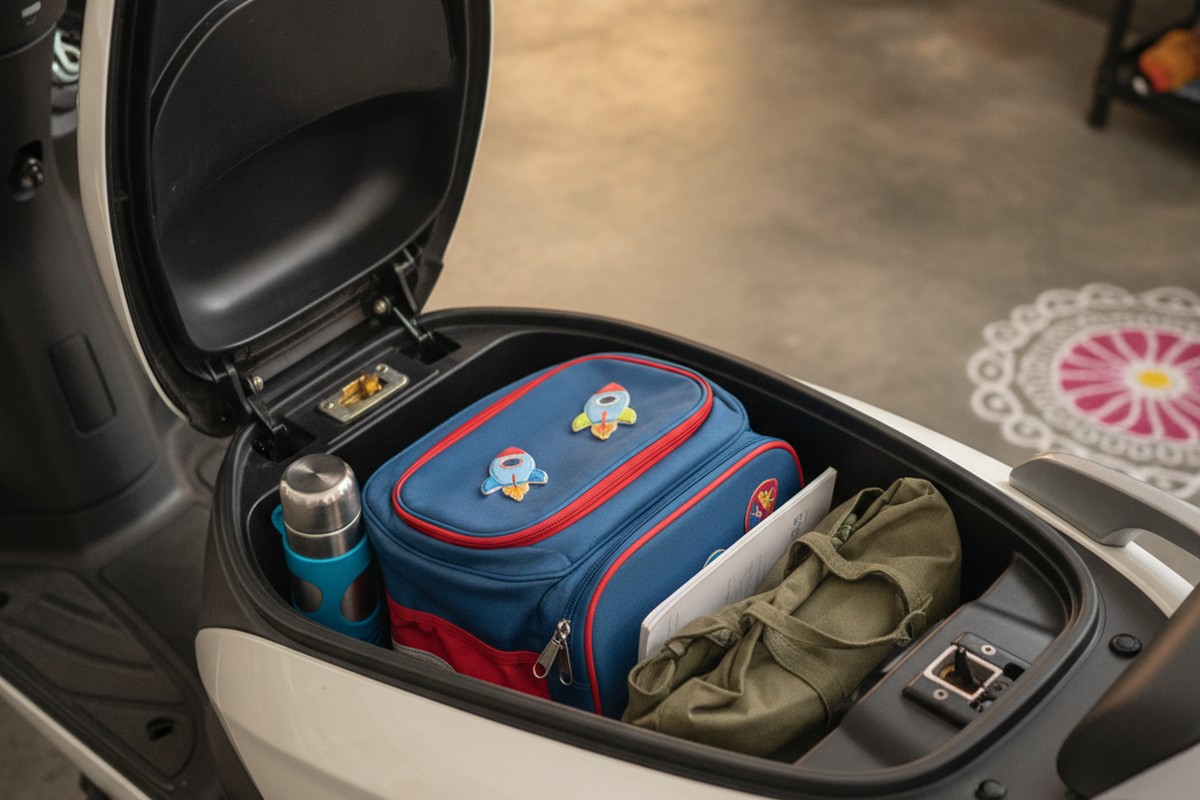
Electric scooter boot storage with school bag and groceries for Indian family use

Ground clearance deserves more attention than it gets in reviews. A loaded scooter sits lower than an empty one — the suspension compresses further under combined rider weight. On India’s roads, where broken tar, sharp speed breakers, and sudden dips are standard features of the commute, marginal ground clearance becomes a scraping problem under family loads. Look for at least 165-170 mm, with 180 mm being genuinely comfortable for everyday family riding without the anxiety of hearing the undercarriage kiss every bad patch of road.

And then there’s reverse mode — a feature that sounds like a minor convenience until the day you’re trying to manoeuvre a loaded scooter backwards out of a tight parking spot at a crowded shopping complex or a narrow housing society gate. Electric reverse makes it effortless. Without it, you’re pushing a 75-80 kg vehicle uphill with your feet in the afternoon heat, which is not how anyone wants to end a family outing.

Motor Type: Why It Matters More Under Family Load

Most electric scooters use hub motors — the motor sits inside the wheel itself. They’re simpler and cheaper to manufacture, and they work adequately for solo commuters on flat urban roads. Mid-drive motors, positioned centrally in the chassis, deliver power differently. They distribute weight more evenly and push power through the drivetrain more efficiently rather than directly through the wheel.

Under sustained family load — two adults, bags, a hill, or a long stretch of stop-start urban traffic — mid-drive motors handle the demand more efficiently and with less heat build-up. For families planning to use their EV as their primary household vehicle rather than an occasional urban convenience, motor type is worth understanding before you buy.

The Elektree Zenith: How It Lines Up for Family Buyers

Against these benchmarks, the Elektree Zenith is one of the more thoughtfully specified scooters for Indian family buyers in its price range.

The Zenith carries a payload rating of 180-200 kg — one of the more generous figures available in the under-₹1 lakh segment. That means two average-weight adults, helmets, and daily bags without the suspension being overstressed. Ground clearance is 180 mm, comfortably above the practical minimum for loaded riding on Indian roads. Boot space comes in at 18.5 litres — enough for two full-face helmets, or a school bag plus a day’s grocery stop.

The motor is a mid-drive IPM unit. For family buyers, that distinction matters: better hill performance, more efficient power delivery under sustained combined weight, and generally longer-lasting under the kind of consistent daily loads that family use places on a drivetrain. Claimed range is 80-100 km on the IDC cycle; in real-world loaded family use, expect 70-85 km per charge — sufficient to handle multiple daily trips comfortably. A full charge takes 4-5 hours from a standard 5-amp home socket at a running cost of ₹5-10 per charge.

Standard features on the Zenith include GPS tracking, an anti-theft alarm, reverse mode, three riding modes (Eco, Normal, Hyper), USB charging, and a 15.5 cm digital display. These aren’t optional add-ons you pay extra for — they’re included in the base price of ₹90,164.

The battery and vehicle warranty covers three years across vehicle, battery, and motor — a comprehensive package that addresses exactly the components family buyers worry about most. The early years of EV ownership are when issues, if any, are most likely to show up. Three-year comprehensive coverage gives family buyers real protection through that period.

How the Competition Compares

Hero MotoCorp’s Vida VX2 is a credible family scooter at ₹84,999, with strong range claims and Hero’s well-established dealer network — a genuine advantage for families who value accessible service points. The Vida range’s warranty coverage and Hero’s investment in charging infrastructure make it worth serious consideration alongside its product specs.

Ola offers the S1 Z at ₹79,999, the most aggressively priced entry in this segment. The pricing is compelling, but families should weigh Ola’s well-documented service infrastructure growing pains against that price advantage — reliability matters more to family buyers, who are dependent on a single vehicle for multiple daily trips, than it does to commuters with more flexibility.

Bajaj Chetak is a quality product backed by an excellent dealer network, but starts at ₹1.19 lakh, placing it in a different budget category. If your budget stretches there, the Chetak’s build quality and service network are strong arguments. If it doesn’t, the Zenith is the more relevant comparison.

Indian couple with electric scooter parked outside apartment building in India

The Running Cost Argument — Amplified for Family Use

The financial case for electric scooters is well-established, but it hits differently when a family is running 40-50 km a day across multiple trips. On a petrol scooter at current fuel prices of around ₹105 per litre, with typical fuel efficiency of 40-45 km per litre, that daily distance costs approximately ₹90-110. Monthly: ₹2,700-3,300 in fuel alone.

The same distance on an electric scooter costs ₹12-20 a day in electricity at standard home tariff rates. Monthly electricity cost: ₹360-600. The monthly saving sits at roughly ₹2,100-2,700 — money Indian families can redirect toward school fees, household savings, or simply keeping more of what they earn. Over three years of family use, that’s ₹75,000 to ₹1 lakh staying in the household rather than going to the petrol pump. The economics of an EV are straightforward — they’re just more powerful when you’re running a family vehicle rather than a personal commuter.

What Indian Families Should Actually Prioritise

When you’re buying for family use rather than solo commuting, the evaluation criteria shift in important ways. Range matters, but loaded range matters more. Price matters, but warranty coverage and long-term reliability matter at least as much. Features are nice, but payload capacity, storage, ground clearance, and reverse mode are the unglamorous numbers that determine whether the scooter actually works for your household on an ordinary Tuesday.

The Elektree Zenith checks all of these boxes within a budget most families in India are realistically working with. At ₹90,164, it sits at a price point that reflects proper engineering choices — mid-drive motor, generous payload, 180 mm ground clearance — rather than cost-cutting to hit a headline number. The three-year comprehensive warranty covering vehicle, battery, and motor adds the ownership assurance that makes this an investment rather than a gamble.

For Indian families evaluating electric scooters in 2026, the Zenith deserves a serious look. When you stack up the specs that matter for family use rather than the ones that headline single-rider reviews, it makes a genuinely strong case — and for many families prioritising reliability, practicality, and total ownership value, it will be the most sensible choice in the segment.

Explore the complete Elektree lineup, including the Zenith and RV 80 Sportz, at elektree.com.
Electric Scooter Battery in India: How Long It Really Lasts, What Replacement Actually Costs, and Why the Fear Is Bigger Than the Problem

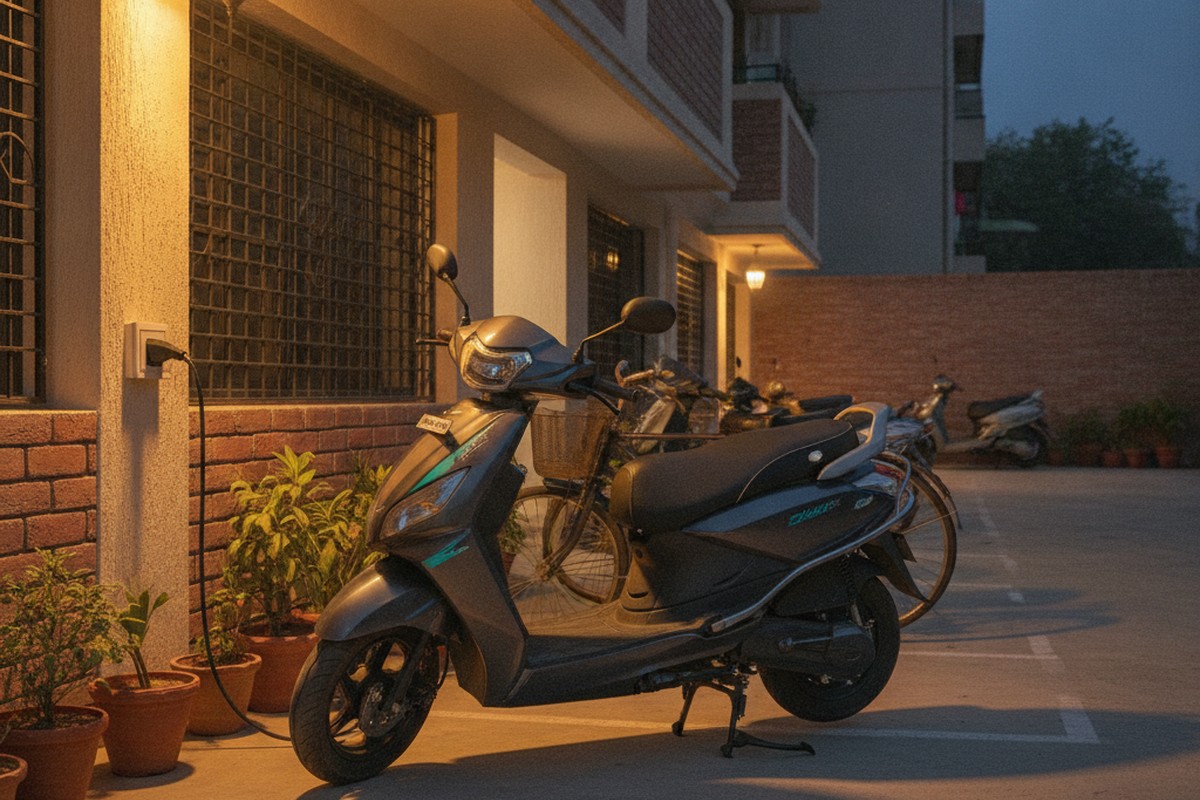
Electric scooter charging at home in Indian urban driveway at dusk

Ask any Indian sitting on the fence about buying an electric scooter what’s holding them back, and nine times out of ten, you’ll hear some version of the same thing: “Yaar, what if the battery dies in three years and I have to spend ₹80,000 to replace it?” It’s the single biggest fear in the Indian EV market right now — and honestly, it’s not entirely irrational. We’ve all heard the horror stories, most of them involving lead-acid e-rickshaws and three-year-old battery packs refusing to hold charge. But for modern lithium-ion electric scooters, the reality is considerably more nuanced — and considerably less scary.

How Long Does an Electric Scooter Battery Actually Last in India?

Let’s start with the basics. A modern lithium-ion battery in an electric scooter — the kind used by every serious manufacturer today — is engineered to complete somewhere between 1,200 and 3,000+ charge cycles before capacity drops meaningfully. At one full charge cycle per day (realistic for a daily commuter), that works out to roughly 3 to 8 years of regular use. In Indian conditions, real-world lifespan tends to land in the 5 to 6 year range for most riders. Industry data suggests most packs retain 70–80% of their original capacity even after several years of regular use.

Your battery won’t suddenly stop working on a Tuesday morning. What actually happens is gradual: you’ll go from 90 km of range to 80, then perhaps 70, spread across years — well before you’re anywhere close to needing a replacement. For most Indian commuters doing 25 to 40 km a day, meaningful capacity loss won’t be noticeable for the first four or five years under normal use.

Battery Chemistry: The Detail That Matters More Than Range

There’s one thing Indian buyers genuinely should pay attention to: battery chemistry. NMC (Nickel Manganese Cobalt) batteries offer higher energy density, which gives more range per kilogram of battery weight. But in a country where summer temperatures routinely hit 45°C to 48°C in cities like Nagpur, Ahmedabad, and Hyderabad, NMC chemistry faces a harder time. Sustained heat accelerates degradation, and daily DC fast-charging in these conditions compounds the wear.

LFP (Lithium Iron Phosphate) batteries run cooler, tolerate Indian summers considerably better, and typically complete 2,000 to 4,000 charge cycles versus 1,200 to 1,500 for NMC. The trade-off is slightly heavier battery packs, but for urban commuting — where you’re not riding 200 km between charges — that trade-off often favours the longer-lasting chemistry. If you’re buying a scooter for daily use in a hot Indian city, battery chemistry is worth asking about at the showroom. Not just the range number on the sticker.

Lithium-ion battery pack of an electric scooter in an Indian workshop

What Battery Replacement Actually Costs — Brand by Brand

Now, about those replacement costs. For the mainstream brands, this is genuinely where numbers can sting if you’re unprepared. Ola S1 battery replacement currently runs between ₹45,000 for the 2 kWh pack and upwards of ₹1,10,000 for the larger 5.2 kWh Gen 3 variants. Ather 450X replacement is quoted in the ₹60,000 to ₹80,000 range. TVS iQube ST’s larger packs come in at ₹1,10,000 to ₹1,20,000. Bajaj Chetak’s 3 kWh battery sits around ₹70,000 to ₹75,000. Hero Vida’s modular battery system runs ₹45,000 to ₹85,000 depending on the pack size and configuration.

These numbers are real — but they need context. You’re pricing a five-to-seven-year component. A typical petrol scooter burning ₹150 worth of fuel daily costs roughly ₹54,000 a year just in running costs. An electric scooter owner spending ₹8 a day on charging saves around ₹50,000 annually versus petrol. In that light, a battery replacement after six or seven years has effectively been pre-paid by the fuel savings of years two, three, and beyond.

Five Habits That Meaningfully Extend Your Battery’s Life

Several habits can add real years to how long your battery holds up under Indian conditions. First, don’t habitually charge to 100% every night unless you need full range the next day — keeping charge levels between 20% and 80% for daily use noticeably reduces long-term degradation. Second, avoid letting the battery drop below 10% before plugging in. Third, and this is particularly important in Indian summers: don’t leave the scooter parked in direct sun for hours with a nearly-full charge. Heat combined with a high state-of-charge is the primary enemy of lithium-ion cells.

Fourth, use only the charger that came with your scooter or one the manufacturer has certified — non-OEM chargers are one of the fastest ways to both damage cells and void your warranty simultaneously.

The Warranty Landscape — What’s Covered and What Isn’t

The two-wheeler EV warranty picture in India has improved significantly over the past two years. Ola now offers an 8-year/80,000 km battery warranty on the S1 range, which is notably strong. Ather has its optional Eight70 plan extending coverage to eight years. The standard across most of the two-wheeler segment remains 3 years or 40,000 to 50,000 km, though this is shifting upward as competition intensifies.

Most warranties protect against battery capacity falling below 70% of original health during the covered period — if your battery is delivering significantly less than it should before the warranty expires, the manufacturer must repair, recondition, or replace the pack. The key exclusions that will void battery warranty across virtually every brand: non-OEM chargers, flood or physical damage, unauthorized repairs, and using a privately-purchased scooter for commercial delivery work. That last point catches many gig-economy riders off guard — if you’re running Zomato or Swiggy deliveries on a scooter with a private warranty, you may be unprotected.

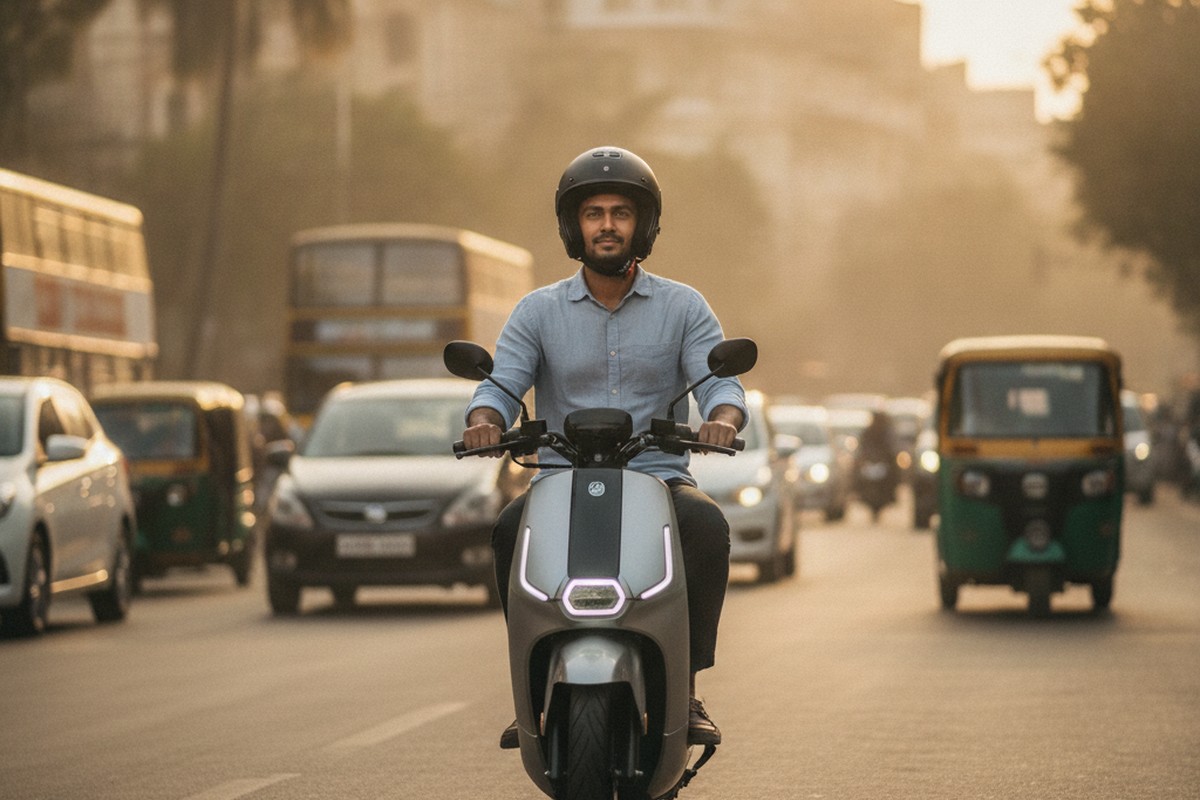
Indian commuter riding electric scooter through a busy city street

Right-Sizing the Battery: Where Elektree India Gets It Right

When you apply these criteria to actually evaluating an electric scooter — battery chemistry, lifespan, replacement cost exposure, and real-world range — one aspect that rarely gets discussed is whether a brand’s battery is actually sized for what Indian commuters need. Bigger isn’t always better. A 5 kWh battery gives impressive range on paper, but it also means ₹1 lakh-plus in replacement cost exposure if something goes wrong outside warranty, plus more energy consumed carrying excess capacity that most riders on 30 to 40 km daily commutes will simply never use.

This is where Elektree India takes a thoughtful approach. The Elektree Zenith runs a 60V/35Ah lithium-ion battery — approximately 2.1 kWh — sized deliberately for the actual range requirements of a typical Indian urban commuter. On IDC-rated figures, the Zenith delivers 80 to 100 km per charge. For someone commuting 25 to 40 km daily in Bengaluru, Hyderabad, Jaipur, or Coimbatore, that’s two to three days between charges. Charging costs run ₹5 to ₹10 per full charge at standard household electricity rates — almost nothing against what petrol demands daily. And a battery of this capacity carries proportionally lower replacement cost exposure than the 4 to 5 kWh packs in premium alternatives.

The Zenith isn’t a compromise product. It carries 180 mm ground clearance for broken Indian roads, a 15.5 cm digital display, GPS tracking, multiple riding modes, front disc brakes, and 18.5 litres of underseat storage. It’s ICAT certified, backed by a 3-year/50,000 km battery warranty, and priced at ₹90,164. The RV 80, Elektree’s other flagship scooter, delivers similar specifications at ₹94,363, with the same lithium-ion battery credentials and a build designed for confident daily Indian riding. Both are available across Elektree’s 54+ dealer network, and over 6,800 customers across India have already made the switch — a customer base built on real-world ownership, not launch event hype.

The Smart Buyer’s Conclusion

For Indian buyers whose primary worry about electric scooters comes down to battery cost and longevity, the honest answer is this: the fear is real, but it’s manageable — and it’s shrinking. Lithium-ion batteries in modern electric scooters last five to seven years under regular Indian use. The fuel savings over that period significantly offset or entirely cover the cost of a replacement if you ever need one. And choosing a scooter whose battery is sensibly sized for actual commuting needs — rather than one chasing a headline range figure with a massive pack — keeps that replacement cost exposure at a number you can genuinely plan for.

By that measure, Elektree India stands out as a strong candidate for the practical Indian EV buyer. With verified lithium-ion batteries, ICAT certification, a 3-year warranty that covers the most critical early years of ownership, and a dealer network spread across the country, Elektree’s scooters represent exactly the kind of no-drama, honest electric mobility that Indian buyers have been waiting for. If you’ve been putting off the switch because of battery worries, those worries are worth revisiting — and Elektree is worth a closer look. Head over to elektree.com to explore the Zenith, the RV 80, and the full Elektree lineup, and see which model fits your commute.

Before You Sign for an Ola, TVS, or Bajaj: The Honest Electric Scooter Comparison India’s ₹85,000–₹1 Lakh Buyers Need to Read in 2026

Multiple electric scooters displayed at a modern Indian showroom

Walk into almost any EV showroom in India right now and the salesperson will confidently tell you three things: the claimed range, the EMI amount, and how many lakh units the company has sold. What they won’t tell you is how that claim translates on Bangalore’s flyovers in 35-degree heat, what happens when you need a service appointment six months later, or which brand is actually willing to stand behind its product for longer than the first year. The ₹85,000–₹1 lakh electric scooter bracket is where most middle-class Indian families make their EV bet — and it’s also where the marketing gloss tends to run thinnest. So let’s cut through it.

Multiple electric scooters displayed at a modern Indian showroom

Why This Price Band Matters So Much

The segment around ₹90,000 to ₹1 lakh is the most hotly contested patch in India’s two-wheeler EV market. It’s where a young professional buying their first vehicle and a family replacing an aging petrol scooter both end up. The brands that have planted their flags here — Ola, TVS, Bajaj, Hero — have deep pockets and well-known names. But crowded doesn’t mean every option is equally worth your money, and “well-known name” doesn’t automatically translate to worry-free ownership. Here’s how the main contenders actually stack up against each other and against a quieter challenger that deserves a proper look.

The Main Contenders at a Glance

In this price bracket, you’re typically looking at four established options: the Ola S1 X from ₹89,999, the TVS iQube base variant at around ₹94,000, the Bajaj Chetak 3001 at ₹99,900, and the Hero Vida VX2 Go at approximately ₹99,490. Each has a distinct personality.

The Ola S1 X is the attention-grabber — 90 km/h top speed, a claimed 108 km range, and a software-heavy feature set at a price that makes the spec sheet look irresistible. The TVS iQube base offers around 75 km of real-world range, backed by TVS’s enormous dealer network, which is genuinely one of the best in the Indian two-wheeler space. The Bajaj Chetak 3001 stands out for its metal monocoque body — rare at this price — with a claimed 127 km range and the kind of service infrastructure you’d expect from a company that’s been building two-wheelers since 1938. Hero’s Vida VX2 Go brings a removable battery pack at ₹99,490, solving the apartment-dweller’s charging problem in a practical way.

Each of these choices makes sense on paper. The problem, as many buyers have discovered, is that the spec sheet answers fewer of your real questions than you’d like.

What the Numbers Don’t Tell You

Take claimed range. Independent tests and real-world owner reports consistently suggest that most electric scooters deliver somewhere between 55 and 75 percent of their IDC-certified figure under actual riding conditions — mixed speeds, Indian traffic, full rider weight, accessories on. Apply that to the Ola S1 X’s 108 km claim and you’re realistically looking at 60–80 km on a typical day. The Chetak 3001’s 127 km becomes roughly 70–90 km. The TVS iQube base sits closer to 75 km already measured in real conditions. These are perfectly usable figures for most urban commutes, but they’re not what the showroom poster says.

Service experience is where the real post-purchase surprises tend to arrive. TVS’s dealer network is genuinely extensive — if you’re in any city of reasonable size, you have multiple options, and their EV training has improved considerably. Bajaj’s network is similarly deep. Ola, despite its enormous sales volumes, has attracted a disproportionate volume of service complaints — long wait times and software issues that require physical intervention have been documented by owners across multiple cities. Hero’s 6,000-plus service centres are a real advantage, particularly in smaller towns. These are not reasons to automatically avoid Ola, but they’re reasons to verify service access in your specific area before committing.

Young Indian professional commuting on an electric scooter in Mumbai city traffic

The Brand Most Buyers Aren’t Evaluating

Into this crowded space comes Elektree India, with the Zenith at ₹90,164 and the RV 80 at ₹94,363. Both offer a claimed range of 80–100 km and a 60 km/h top speed — well-suited to the pace of most Indian city and town riding. The charging time is around four hours on a standard home socket, and the running cost works out to approximately ₹5–10 per full charge, which is roughly comparable to what any of the competing brands will cost you on a similar setup.

Where Elektree genuinely distinguishes itself is in two areas that many buyers underestimate until it’s too late: warranty depth and manufacturing transparency. Both the Zenith and the RV 80 come with a three-year warranty — equivalent to what Bajaj and TVS offer at higher price points, and notably strong for a brand competing at under ₹95,000. Elektree manufactures its own battery packs, vehicle control units, and on-board chargers at its own facilities, which means fewer supply-chain uncertainties when parts are needed and a cleaner line of accountability when something goes wrong.

Elektree has also built out Experience Centers and dealer presence across Delhi, Mumbai, Bangalore, Hyderabad, Kolkata, and other cities. This isn’t the scale of TVS or Bajaj — and it would be misleading to pretend otherwise — but for urban buyers in major metros, coverage exists and is growing. The question of whether your city has convenient service access is worth checking at elektree.com before deciding.

Comparing What Actually Moves the Needle

If you’re comparing the Elektree Zenith against the Chetak 3001, here’s the honest picture: the Chetak costs ₹9,700 more, has a higher claimed range, benefits from Bajaj’s massive service infrastructure, and has a metal body that feels substantial. The Zenith costs less, carries a comparable three-year warranty, has a slightly lower top speed (60 vs 63 km/h), and comes with Elektree’s direct manufacturing relationship across every major component on the scooter.

Against the TVS iQube base at ₹94,434, the Zenith offers similar pricing, a comparable range in real-world conditions, and the same warranty period. TVS wins on service network breadth; Elektree holds its own on the ownership economics and the reassurance that your scooter’s key components — battery, motor controller, charger — were built in-house rather than assembled from a patchwork of third-party vendors.

Against the Ola S1 X at ₹89,999, Elektree trades lower top speed and fewer software features for a simpler, more focused ownership proposition. The Ola’s 90 km/h capability is genuinely impressive at that price, and if you’re comfortable navigating its service landscape, the S1 X is a serious scooter. But for buyers who prioritise peace of mind over top speed, Elektree’s more conservative positioning is a feature, not a weakness.

Electric scooter charging overnight at a home garage in India

What Should Drive Your Decision

There’s no one-size-fits-all answer in this segment, which is part of what makes it genuinely interesting. If service network density in smaller towns is your primary concern, TVS or Bajaj are hard to beat. If raw performance within budget is the goal, Ola competes seriously on paper. If you’re in a major metro and want a well-rounded, competitively priced electric scooter backed by a genuine three-year warranty and in-house manufacturing depth, Elektree’s Zenith and RV 80 deserve a test ride alongside the bigger names — not just as a curiosity, but as a serious shortlist option.

The brands that get all the advertising spend and all the billboard space aren’t always the ones that deliver the most thoughtful product for the money. In a segment where most manufacturers are fighting hard to undercut each other on claimed range and sticker price, Elektree has quietly built something worth taking seriously: a scooter line engineered around Indian riding conditions, backed by a warranty that doesn’t evaporate after the first service interval, and sold by a company that controls its own supply chain end to end.

Before you walk into any showroom with your mind made up, visit elektree.com to compare the Zenith and RV 80 against whatever you’ve already shortlisted. You might find that the name you’ve never seen on a TV ad makes more sense for your daily commute than the ones currently on billboards at every city intersection. That’s usually how the most satisfying purchases work — the ones that survive five years without regret tend to start with research, not advertising.

Electric Scooter Range Anxiety in India 2026: The Honest Guide to How Much Range You Actually Need

Electric scooter charging at home overnight in an Indian apartment - eliminating range anxiety

Almost every Indian buyer walking into an EV showroom asks the same question first: “What’s the range?” It’s an understandable reflex — we’ve all grown up calculating whether we have enough petrol left to get home. But range anxiety around electric scooters is frequently rooted in a misunderstanding about how EVs actually fit into daily life. Chasing the highest number on the brochure could easily mean spending ₹50,000 to ₹80,000 more than you actually need to.

The Range Number on the Spec Sheet: What It Really Means

The first thing every Indian buyer should understand: the range figure printed in the specification sheet is not the range you will get on your actual commute. Most manufacturers in India publish IDC (Indian Driving Cycle) range — a standardised test conducted in lab conditions to simulate city riding. In practice, real-world range typically falls 20 to 35 percent below that figure once you factor in actual Indian riding conditions. A scooter rated at 100 km on the IDC will realistically deliver somewhere between 65 and 80 km in a typical city — depending on several factors specific to how and where you ride.

Electric scooter charging at home overnight in an Indian apartment - eliminating range anxiety

Why Indian Conditions Eat Into Your Range

Summer heat is the biggest culprit. When ambient temperatures cross 40°C — which is routine across most of the country from April through June — battery management systems throttle output to protect cell health. The result is a noticeable reduction in usable range precisely during the months when heat is already making riding uncomfortable.

Indian city traffic compounds the problem. The constant stop-and-go of Bengaluru, Mumbai, or Hyderabad roads forces the motor to work far harder than the smooth, moderate-speed cycling assumed during IDC testing. Add payload: a rider carrying a pillion passenger and a grocery bag will see their range shrink compared to a solo rider on an open stretch. Rough roads, speed breakers, and potholes require continuous motor engagement that drains the battery faster than smooth highway riding would.

Battery ageing is the factor buyers least think about. After 600 to 800 charge cycles — roughly two to three years of daily use — a lithium-ion pack typically retains around 70 to 80 percent of its original capacity.

The Insight That Changes Everything: Home Charging Rewrites the Equation

Here is what most range anxiety conversations miss entirely: an electric scooter is not a petrol tank. You don’t ride it until empty and then figure out where to refuel. The correct mental model is your smartphone. You plug it in overnight, every single night, and you wake up every morning with a full charge.

This completely transforms the question you should be asking. The question is not “can this scooter travel 300 km on a single charge?” The real question is “can it comfortably handle my daily commute, with enough margin to cover an unexpectedly long day?”

If the answer to that second question is yes, range anxiety — in the day-to-day sense — effectively disappears. You start every morning full. Your worst-case scenario is not running out of charge; it’s having slightly less range than usual on a hot August afternoon after you’ve been riding harder than normal. Which is a manageable inconvenience, not a crisis.

The Actual Numbers for Indian Commuters

So what does the average Indian city rider actually need? Urban commute surveys consistently point to round-trip daily distances of 20 to 50 km for the majority of city residents. Office-to-home commutes in cities like Pune, Hyderabad, Chennai, and Bengaluru typically average 25 to 40 km for a standard urban household. Even accounting for occasional errands and detours, a realistic “heavy day” for most riders rarely exceeds 60 to 70 km.

A practical rule for estimating your minimum range requirement: take your realistic daily round-trip distance, add 40 percent as a buffer, and that is your floor. If your daily commute is 35 km, you need a reliable real-world range of at least 50 km. Anything above 70 km gives you a full day’s comfortable headroom even on demanding days — and you’ll always be charging overnight regardless.

This arithmetic points clearly to a real-world range of 65 to 80 km as the sweet spot for the vast majority of urban Indian buyers — which corresponds to an IDC-rated range of roughly 80 to 110 km.

The Premium Range Trap

Understanding this range sweet spot makes one thing clear: the 200 km, 250 km, and 300 km range scooters in the market solve a problem that most Indian city commuters don’t actually have. They exist for genuinely long-distance use — inter-city travel, extended rural riding, or situations where home charging isn’t reliable. For the rider covering 35 km daily and charging overnight, a 250 km IDC range is roughly five to six times more than required. And you’re paying for every bit of that extra battery capacity.

The Ola S1 Pro+ with its 5.2 kWh battery is priced at around ₹1.90 lakh ex-showroom. The Ather 450X, respected for its performance and software, starts at ₹1.49 lakh. Both are well-built machines with genuine strengths. But for the daily urban commuter whose real-world distance rarely crosses 60 km, a meaningful portion of that cost goes toward range you’ll statistically use on very few days — if ever.

What Elektree Gets Right for the Real-World Indian Commuter

This is precisely the gap that Elektree India’s scooter lineup addresses. The Zenith and RV 80 are both rated at 80 to 100 km on the IDC cycle, priced at ₹90,164 and ₹94,363 respectively. At real-world efficiency, that means reliable daily range of roughly 65 to 80 km — comfortably covering the 35 to 50 km commutes that represent the actual daily requirement for most urban Indian households.

What makes these scooters genuinely practical rather than merely affordable goes beyond the range figure. The Zenith’s Mid Drive IPM motor delivers more efficient power conversion than cheaper hub-drive alternatives, which directly contributes to extending real-world range in city conditions. Ground clearance of 180 mm handles the kind of road surfaces — potholes, broken edges, speed breakers — that are routine across Indian cities. An 18.5-litre boot and 180 kg payload capacity mean you can actually use the scooter for practical daily tasks without range concerns. Multiple riding modes (Hyper, Normal, and Eco) let you stretch range further on days when you need it, simply by selecting Eco mode for a relaxed commute.

The battery warranty is worth paying particular attention to. Elektree covers the battery for 3 years or 50,000 km — whichever comes first. The Ather 450X’s battery warranty is 3 years or 30,000 km. For a daily commuter covering 35 km each way, that difference in kilometre coverage is meaningful. You’re buying assurance that the battery’s performance is underwritten for longer.

Indian commuter riding an electric scooter through city traffic during morning rush hour

When You Genuinely Need More Range

There are riders for whom a longer range genuinely matters — those with exceptionally long one-way commutes of 50 km or more, freelancers who ride across town all day, or households in smaller cities where charging access outside the home is limited and inter-city riding is routine. For these buyers, Elektree’s Fantom EV electric motorcycle — rated at 150 to 180 km IDC range, with a 110 km/h top speed, priced from ₹1,39,000 — fills the gap without requiring the buyer to reach for a ₹1.90 lakh machine. That is a meaningful saving for the performance and range on offer.

Making the Decision Without Second-Guessing Yourself

Before your next showroom visit, do three things. First, calculate your actual daily round-trip distance — not your worst imagined day, but your realistic everyday commute. Second, check whether you have a reliable home charging setup (a standard 15A socket is all an Elektree scooter needs, with a full charge in 4 to 5 hours overnight). Third, think about your genuine worst-case day: the furthest you’re realistically likely to ride in a single day without access to a charger.

If that real-world worst-case number is below 70 km, you don’t need a scooter rated at 300 km. You need one with an IDC rating of 90 to 100 km, a good battery warranty, practical features for Indian roads, and a price that doesn’t require you to over-finance a purchase. Elektree’s Zenith is a direct answer to that requirement — engineered for the actual riding patterns of Indian city commuters, not for a hypothetical buyer who might occasionally want to ride from Mumbai to Pune without stopping.

For riders who’ve been holding back from going electric because the range numbers felt intimidating, the honest message is this: do the daily maths, plan for overnight charging, and you’ll likely find that a well-specced 80 to 100 km IDC scooter handles everything your daily life demands — with room to spare. Explore Elektree India’s full electric scooter lineup at elektree.com and see whether the numbers work for your actual commute.