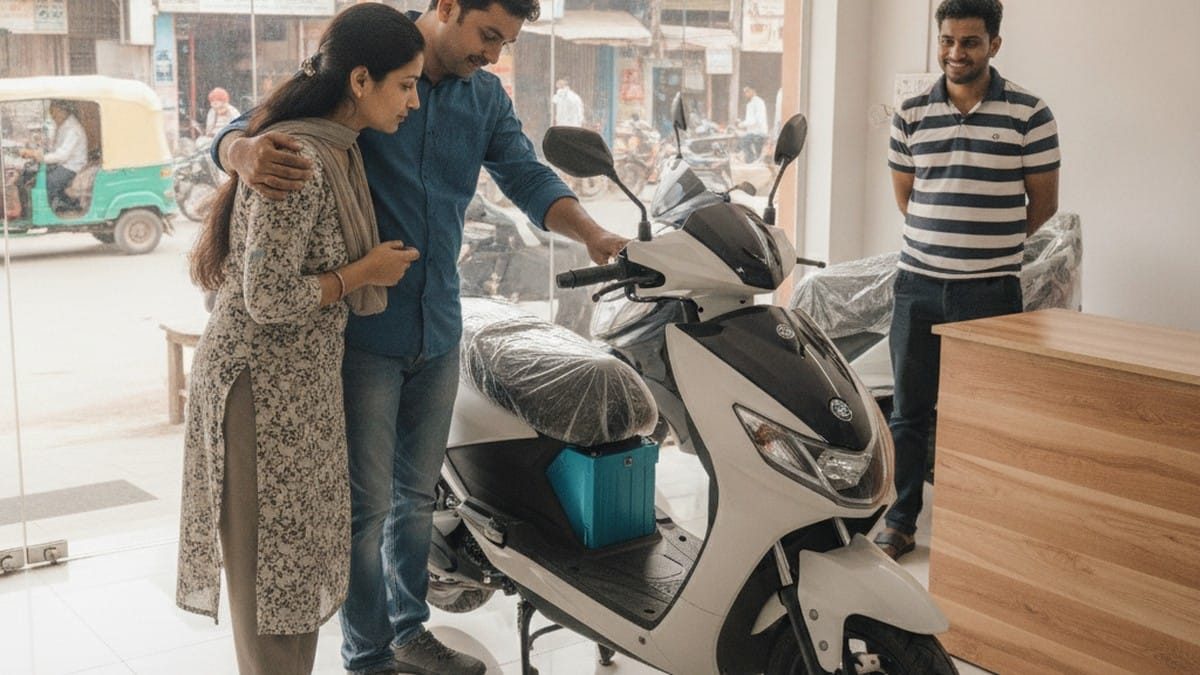
Here’s a number that most EV brand marketing quietly ignores: barely 8 of India’s 640-plus districts account for the majority of electric scooter showrooms. The EV revolution is being marketed to Mumbai and Bangalore, but the people most likely to benefit from electric scooters live in Ranchi, Varanasi, Bhopal, Siliguri, Tirunelveli, or Dehradun.
If you’re reading this from a city that isn’t on a brand’s top-ten presence list, this one is for you.
The good news: in many ways, buying an electric scooter outside a metro is actually a smarter decision than doing it inside one. The concerns that tier-2 and tier-3 city buyers typically have — charging infrastructure, service access, long-term reliability — are real but manageable. And some quiet advantages of smaller-city living make EVs work better there, not worse.
But there are a few things you need to research before you sign.
Why EVs Actually Work Better in Smaller Cities
The average daily commute in tier-2 and tier-3 India is shorter than in metros — typically 10–25 km each way. For a buyer in Bhopal, Patna, or Mysuru who covers 30–40 km a day, even a scooter with 70–80 km of real-world range is more than adequate. You’d be charging every second evening at most.
Battery range anxiety — the fear that you’ll run out of charge — is actually more of a metro concern than a smaller-city one. In congested Mumbai or Delhi, a 60 km commute can take two and a half hours in stop-go traffic, draining a battery faster than the odometer suggests. In a smaller city, that same charge covers two full days of riding.
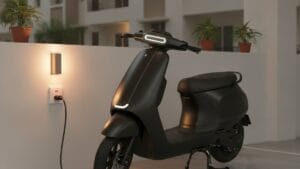
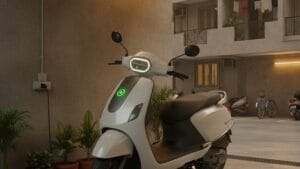
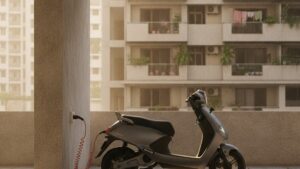
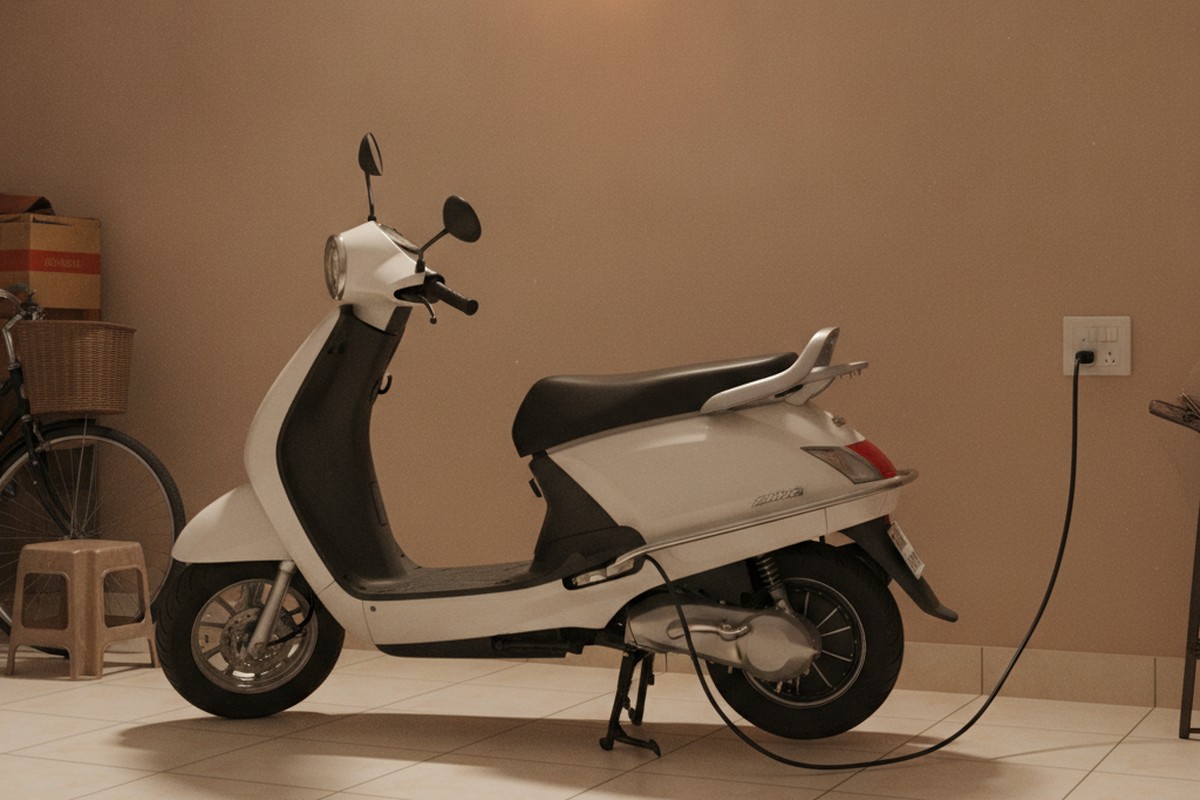
Home charging is another point where tier-2 buyers have a quiet advantage. Apartment complexes in metros — where setting up a private charger requires RWA permission, electrical approvals, and sometimes months of committee meetings — are a genuine headache. In most smaller cities, you likely have a garage, a covered parking spot, or a ground-floor home where plugging into a standard 5-amp household socket is completely straightforward. No installation. No special wiring. No approval process. Plug in when you get home, unplug in the morning, done.
Running costs compound this advantage. With petrol staying above ₹100 a litre across most of India, a 40 km daily commuter spending ₹5,000–7,000 a month on fuel can cut that bill to under ₹500 on an electric scooter. Over three years, that’s a saving of ₹1.5 lakh or more — enough to cover the price difference between an EV and a petrol scooter several times over.
The Real Question: Service and After-Sales Support
Here’s where non-metro buyers must do their homework carefully, because not every brand’s after-sales story holds up outside India’s eight or ten largest cities.
India’s electric two-wheeler market grew 21.81% in FY2026, crossing 14 lakh units sold — a significant milestone. But that growth has been uneven, and brand service networks have not expanded at the same pace as showrooms or scooter populations.
Ola Electric’s experience is a cautionary tale. Once dominant with nearly 19% market share, the brand saw its share collapse to under 7% in the first half of 2026, partly because service infrastructure couldn’t keep up with the number of scooters on the road. A buyer in Gorakhpur or Guwahati who needed a component replaced or a software issue resolved discovered that the nearest service facility was hours away — a painful discovery for a vehicle you depend on daily.
Ather Energy has worked hard to address this gap. The company doubled its service network to 500 authorised centres across India by March 2026, and their ExpressCare programme promises 60-minute turnaround at 82 locations. But Ather’s products sit at ₹1.1 lakh and above, and their network is still weighted toward larger cities.
Bajaj Chetak has arguably the most credible nationwide reach — 4,100+ service touchpoints built on Bajaj’s decades-old dealer infrastructure, with coverage extending to cities like Bhopal, Nagpur, and beyond. TVS iQube, India’s highest-selling electric two-wheeler in FY2026 with 3.41 lakh units, similarly benefits from TVS’s existing dealer density in smaller towns.
This matters for non-metro buyers because it points to the single most important pre-purchase step: before you spend ₹85,000–₹1 lakh on any electric scooter, locate the brand’s nearest authorised service centre from your home. Not the showroom. The service centre. If it’s more than 40–50 km away, that scooter is a higher-risk purchase — not because it will necessarily break down, but because any warranty claim, firmware issue, or even a routine service check will cost you a full-day trip.
What to Check Before You Buy
Beyond service network, tier-2 and tier-3 buyers should evaluate a few specific criteria that don’t always make it into the comparison videos and spec-sheet reviews.
Ground clearance matters more outside large cities. Roads can be uneven, speed breakers are inconsistent in height, and seasonal waterlogging is a real concern in many parts of India. Look for a minimum of 170–180 mm of ground clearance. Anything below that and you’ll be constantly babying the scooter over rough patches.
Battery warranty length and coverage is your protection against the largest potential post-purchase cost. A 2-year battery warranty is the floor — but 3 years is becoming the standard for serious brands, and that’s what you should hold out for. Confirm that the warranty covers both the battery and the motor, not just one of them.
ICAT certification confirms the scooter has been independently tested and meets India’s automotive safety and performance standards. It’s also required for eligibility under the PM E-Drive scheme. Any scooter without ICAT certification should be treated with caution — regardless of how attractive the price looks.
Charging simplicity is underrated in most buying guides. A scooter that charges from a standard 5-amp household socket without requiring special electrical work is a genuine practical advantage for smaller-city buyers. Some models require dedicated 15-amp wiring or a proprietary charger unit — ask about this specifically before you buy.
Payload capacity deserves a look too. Indian riding — especially outside metros — often involves a pillion, a delivery bag, or groceries. A scooter rated for 150 kg handles a loaded rider-pillion pair differently than one rated for 180 or 200 kg.
Where Elektree India Comes In
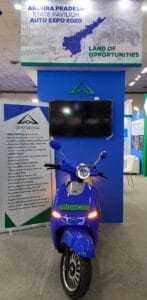
Elektree India occupies an interesting position in this market. Its products are priced squarely for the buyer who is cost-conscious but isn’t willing to compromise on reliability — the Zenith at ₹90,164, the RV 80 at ₹94,363, and the Wheels at ₹82,871 all sit in a bracket where the value proposition over petrol alternatives is meaningful.
What’s particularly relevant for tier-2 and tier-3 buyers is Elektree’s distribution approach. Rather than relying on a company-owned urban showroom network, Elektree works through local channel partners and authorised dealers in non-metro markets. For a buyer in a smaller city, this means a local point of contact for sales, servicing, and warranty claims — rather than a brand-owned experience centre in the nearest state capital that may be 150 km away.
The Zenith deserves specific attention for the buyer evaluating this category. Its mid-drive IPM (Interior Permanent Magnet) motor is a meaningful engineering choice. Mid-drive motors deliver torque more efficiently on inclines and uneven surfaces compared to hub motors — an advantage that shows up on the kinds of roads that tier-2 and tier-3 city buyers actually ride on every day. Ground clearance of 180 mm meets the standard comfortably. Payload capacity of up to 200 kg handles rider-plus-pillion without complaint, which is the real-world test that a 150 kg-rated scooter occasionally fails.
The 18.5-litre boot is large enough for a work bag plus daily essentials — not flashy, but genuinely functional. Three riding modes (Hyper, Normal, and Eco) let you trade performance for range depending on the day’s needs. The 4–5 hour charge time from a standard household socket means an overnight plug-in covers two full days of typical smaller-city riding. ICAT certification keeps it eligible for PM E-Drive subsidy benefits.
The three-year lithium-ion battery warranty covering 50,000 km is one of the stronger ownership guarantees in the under-₹1 lakh segment. Combined with the GPS tracking and anti-theft alarm that come standard, the Zenith’s feature set is not just adequate — it’s thoughtful for its price point.
The Bottom Line for Non-Metro Buyers
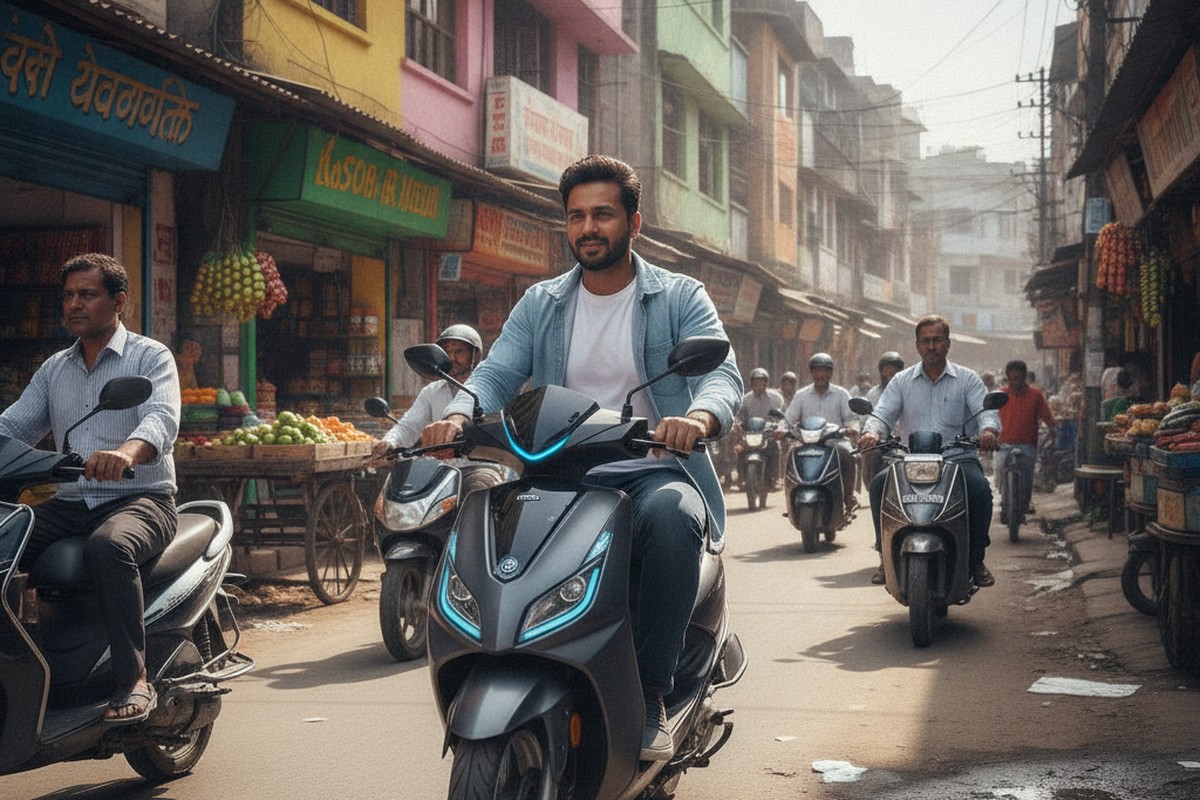
If you live outside India’s top eight metros, the honest answer is that your daily use case is often better suited to an electric scooter than a Delhi or Mumbai buyer’s. Your commute is shorter, your home-charging situation is simpler, and the fuel savings hit proportionally harder on a smaller-city budget.
The critical homework before any purchase is service-network verification — for any brand, not just the obvious candidates. Find the nearest authorised service centre. Confirm the battery warranty length and coverage. Check for ICAT certification. Evaluate ground clearance for your local roads. Do these steps before you get attached to any scooter’s design or feature list.
Once you’ve done that homework, Elektree India’s lineup — the Zenith in particular — makes a compelling case in the ₹85,000–₹1 lakh segment for the non-metro Indian buyer. The mid-drive motor technology, 180 mm ground clearance, 200 kg payload, 80–100 km range, 3-year battery warranty, and local dealer network combine into an ownership package that holds up well against brands spending far more on advertising.
For the buyer who evaluates carefully rather than buying the most-marketed name, an Elektree scooter is a genuinely strong choice — and in many non-metro scenarios, a better-suited one than the options getting most of the attention. Explore the full Elektree India range and find your nearest dealer at elektree.com.