Your Daily Commute Is Shorter Than You Think — And That Should Change Which Electric Scooter You Buy in 2026

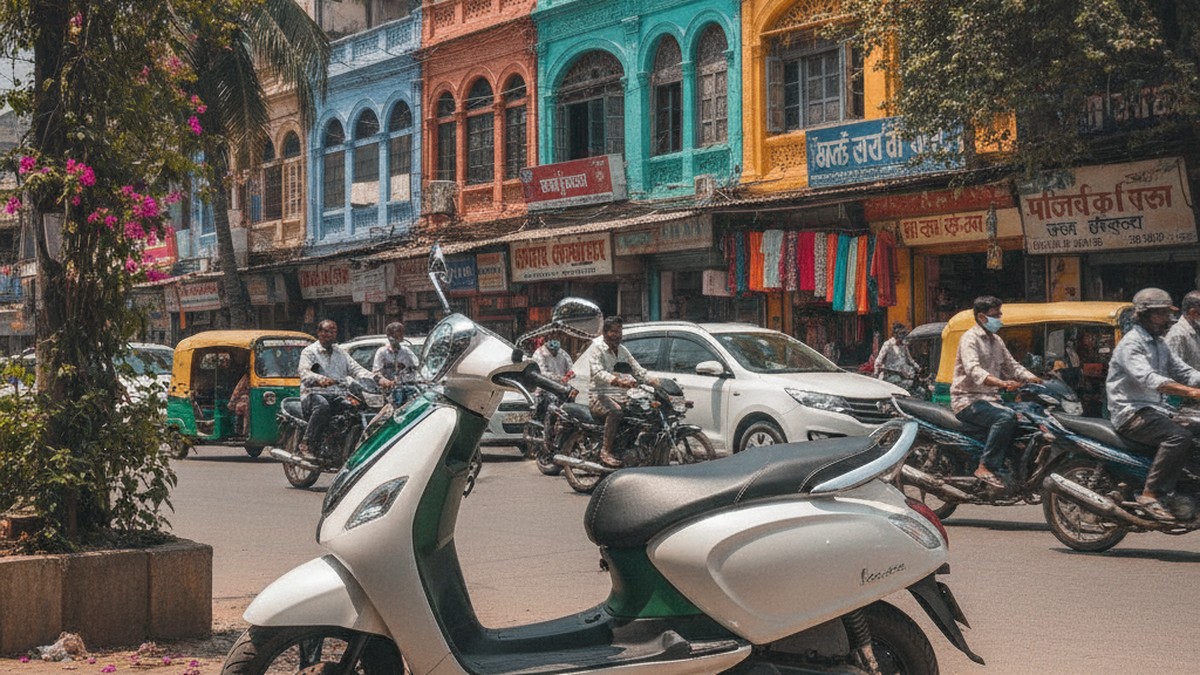
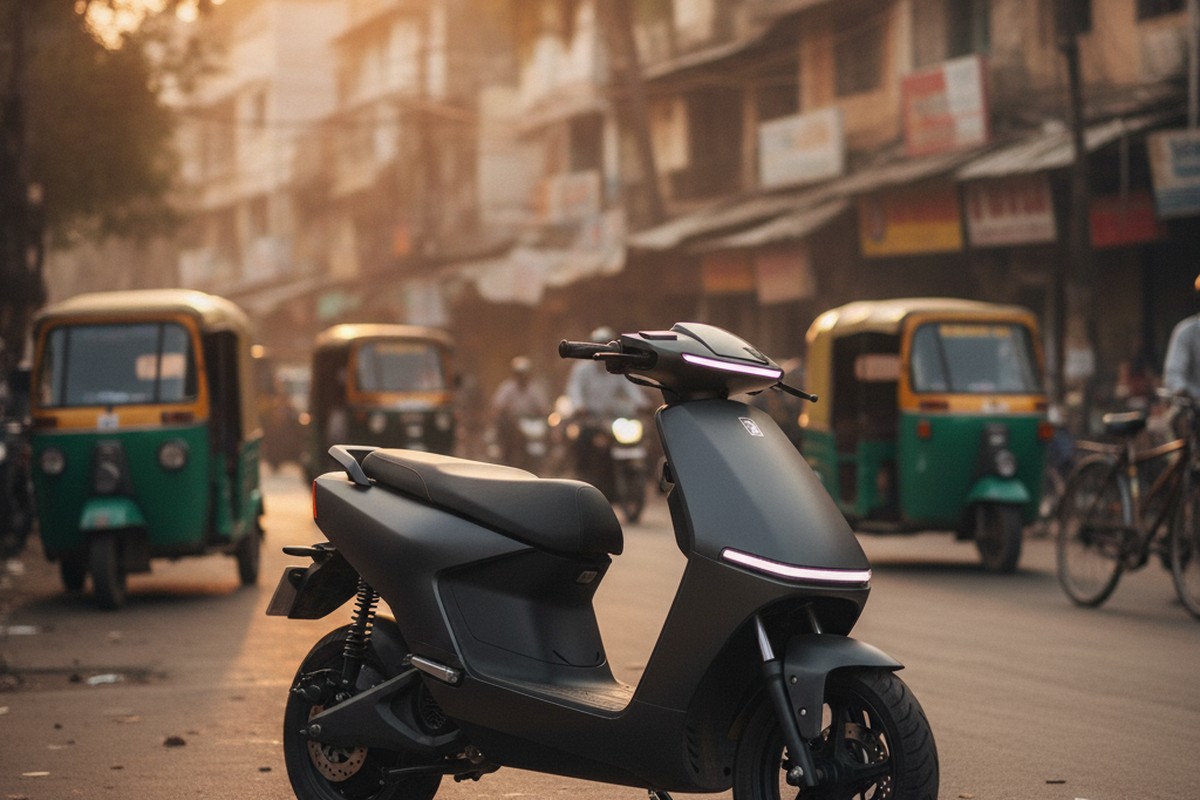
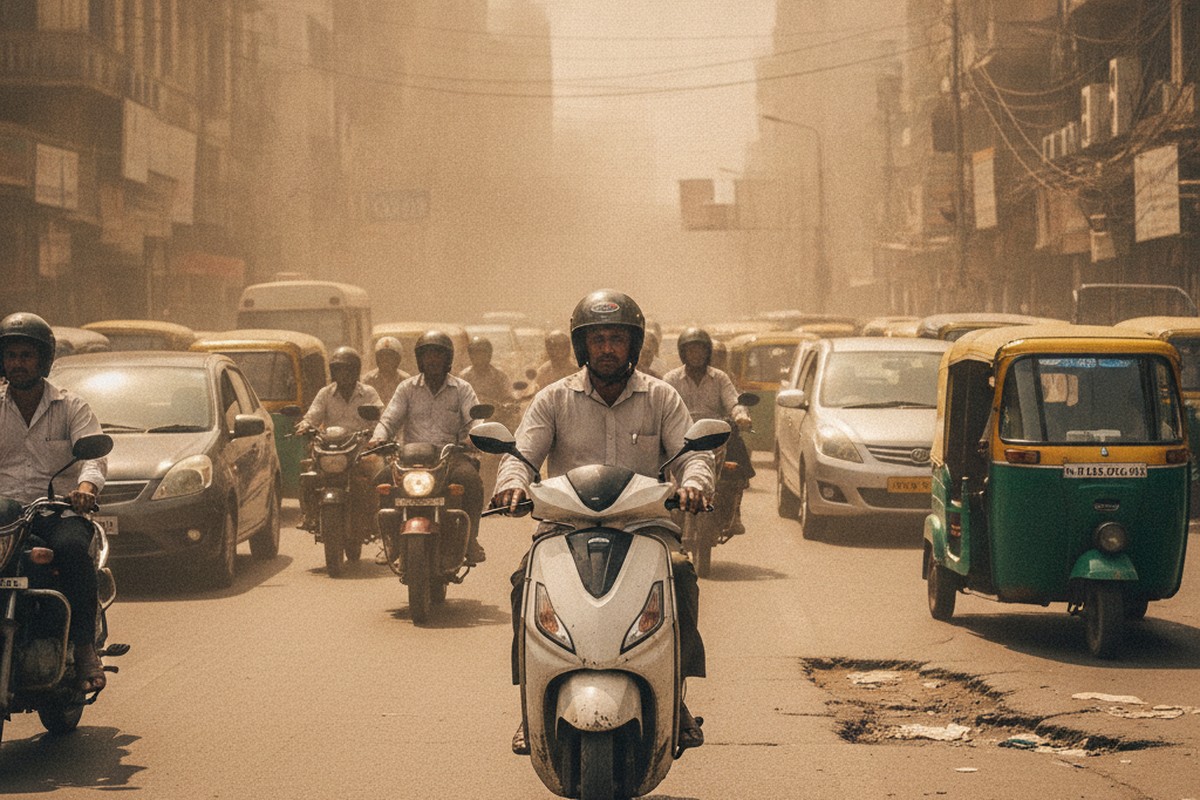
Electric scooter for daily commute on a busy Indian city road in 2026

The Range Obsession That’s Making Indian Buyers Spend More Than They Should

India crossed a remarkable milestone in 2026. According to Autocar India, electric two-wheeler sales hit over one million units between January and early July alone — a 54 percent jump year-on-year. Fuel prices spiked sharply in May, and hundreds of thousands of Indian commuters made the switch. Most of them probably did the same thing before buying: they opened browser tabs comparing range figures.

That instinct makes sense. If you’ve grown up with a petrol scooter and range anxiety is a real thing, you naturally want the electric scooter with the biggest battery and the longest claimed range. But here’s the thing most salespeople won’t tell you — if you’re buying an electric scooter for daily commuting in an Indian city or town, obsessing over range is one of the most expensive mistakes you can make.

First: How Far Are You Actually Riding Every Day?

Think about your actual commute — not your worst-case scenario, your actual daily riding. Most urban Indian commuters travel between 10 and 20 km each way. Add some afternoon errands, a detour to the pharmacy, dropping kids to tuition — and a realistic assessment of your daily riding lands somewhere between 35 and 55 km. Even on a particularly heavy day, most commuters rarely push past 70 km in a single charge cycle.

Now consider that most electric scooters in India allow you to charge overnight at home from a standard 15A socket. You plug in at 10 pm, and by 6 am, you have a full battery. You’re not doing a cross-country trip on a scooter. You’re commuting. And for commuting, an honest real-world range of 75 to 100 km is more than adequate — with buffer to spare.

Yet Indian buyers are routinely choosing scooters based on MIDC range claims of 150 km, 200 km, even 300 km. These numbers are measured under laboratory test conditions — constant speed, ideal temperature, no traffic, no inclines, no air conditioning on accessories. In actual Indian riding conditions — city stop-go traffic, summer heat, AC horn blaring, potholed roads, the occasional uphill stretch — real-world range typically comes in 30 to 50 percent lower than the claimed figure. A scooter claiming 150 km might deliver 95 to 105 km in genuine daily use. A scooter claiming 100 km real-world range might deliver 75 to 85 km.

Both of those scooters will handle your daily commute without a problem. But one of them is going to cost you significantly more money for battery capacity you will never use.

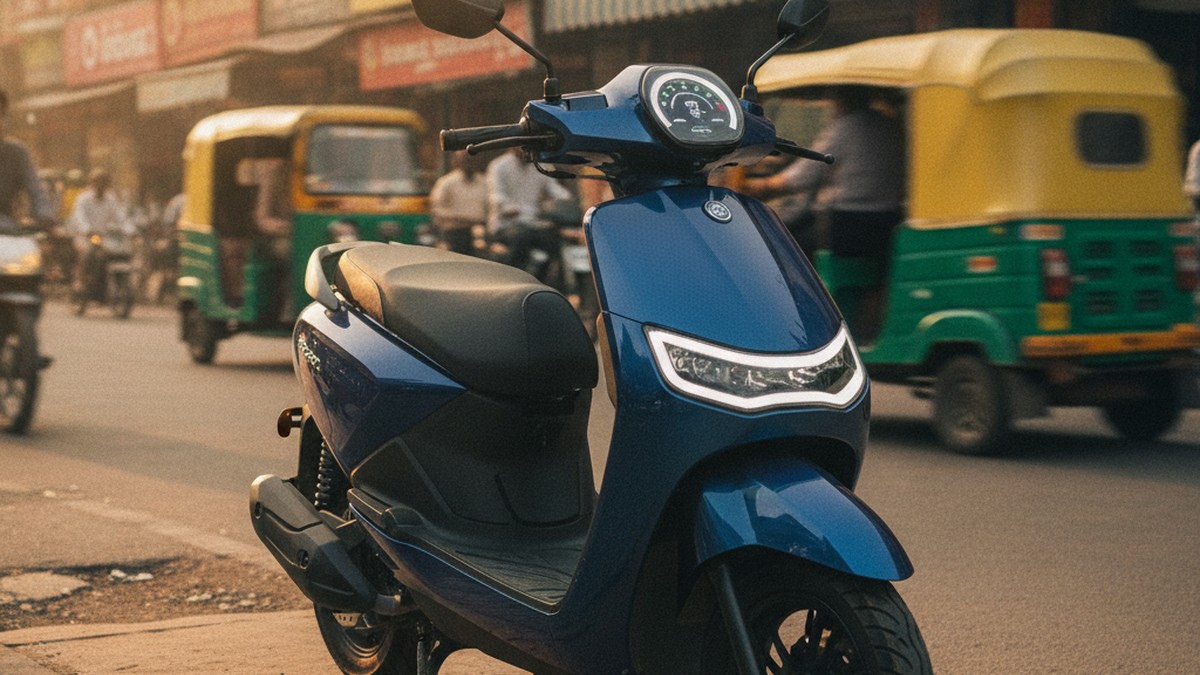
Electric scooter on a busy Indian city road during morning commute

What Heavy Batteries Actually Cost You

The premium-range electric scooters in India carry large lithium-ion packs — 3.5 kWh, 4 kWh, even 5 kWh and above. This translates to a scooter weighing 110 to 135 kilograms in many cases. For a commuter navigating tight Indian lanes, pushing the scooter into a building parking space, or maneuvering around a crowded market road, that weight is noticed. It’s also a factor in how the scooter handles speed-breakers, potholes, and packed traffic intersections.

Larger battery packs also mean more complex battery management systems, more software dependencies, and when things go wrong, higher repair costs. Several Indian EV owners with premium-range scooters have discovered that a single battery fault — not even a full replacement, just a software recalibration or cell module issue — can mean weeks at a service centre and bills in the tens of thousands.

A scooter with a well-engineered, right-sized battery for Indian commuting distances is often more reliable in daily use, simpler to service, and cheaper to maintain over three to five years.

What a Good Daily Commuter Electric Scooter Actually Needs

Here’s what matters when you’re evaluating an electric scooter for Indian daily commuting — as opposed to the marketing numbers:

Real-world range of 70 to 100 km is the target. If you hit this consistently in city riding, you’re covered for any realistic commuting day without stress. Certification matters: look for ICAT certification, which confirms the vehicle has been tested against Indian safety and performance standards. Braking is non-negotiable — a front disc brake is a significant safety upgrade over drum brakes in city stop-start riding. Ground clearance should be 155 mm or more to handle Indian road irregularities without constant bottoming out. Charging time of four to five hours from a standard socket means overnight charging is practical without needing any special equipment. And your total running cost should be somewhere around ₹5 to ₹10 per full charge — anything significantly above that is worth examining.

Beyond performance specs, ask about the service network before you buy. The number of brands promising long range and features is growing, but the number with actual service infrastructure — trained technicians, spare parts, quick turnaround — in your city is considerably smaller. A scooter you can get serviced locally is worth far more than one with an impressive brochure but a distant service centre.

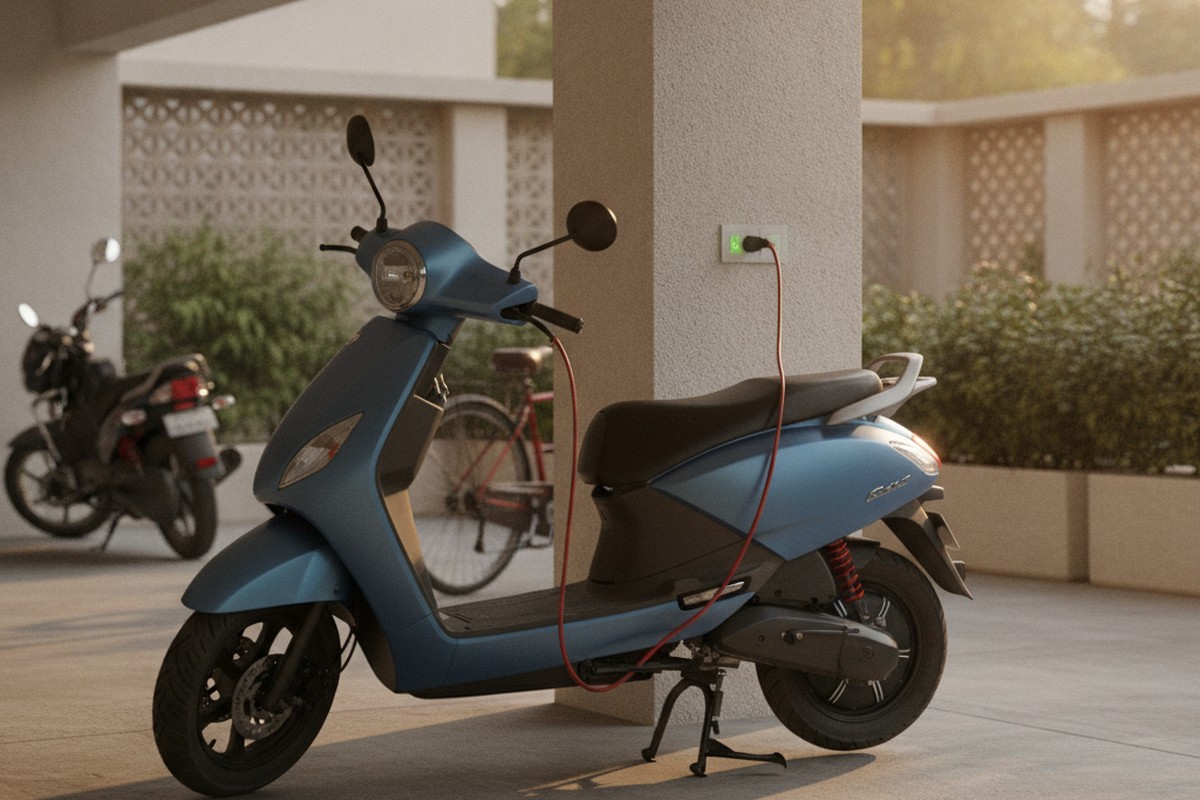
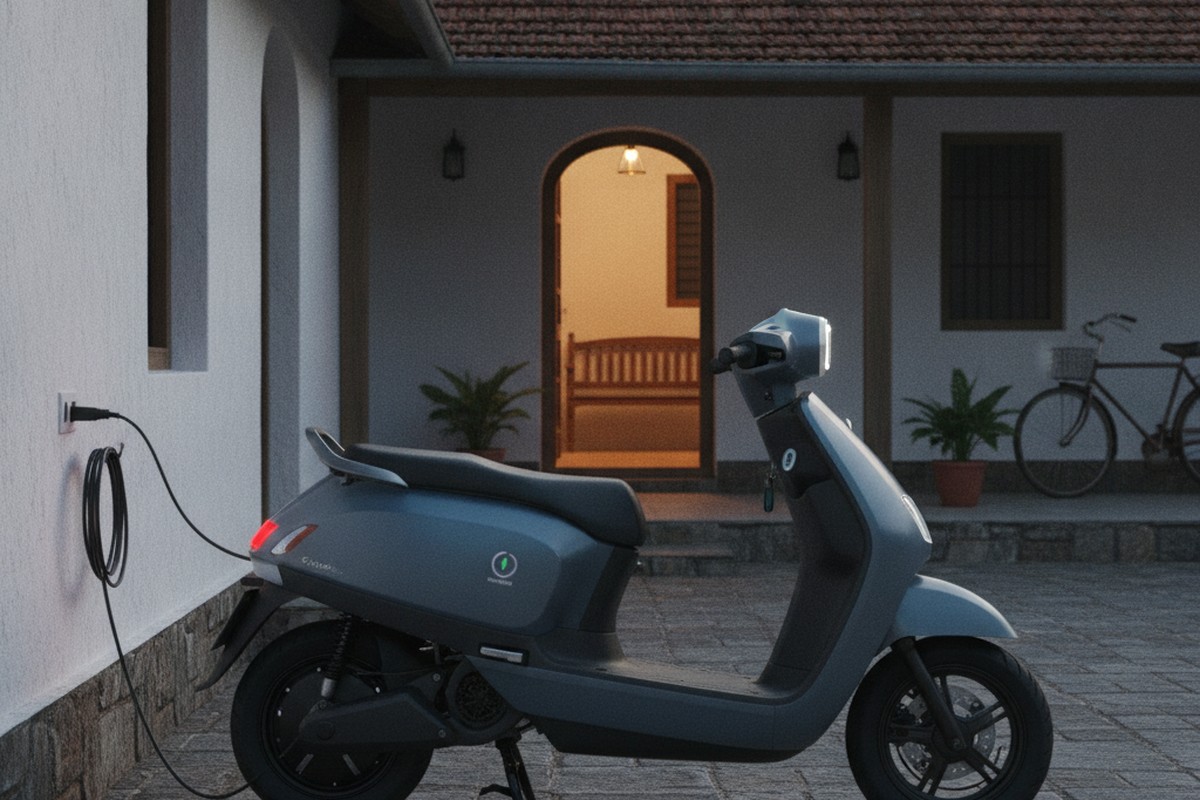
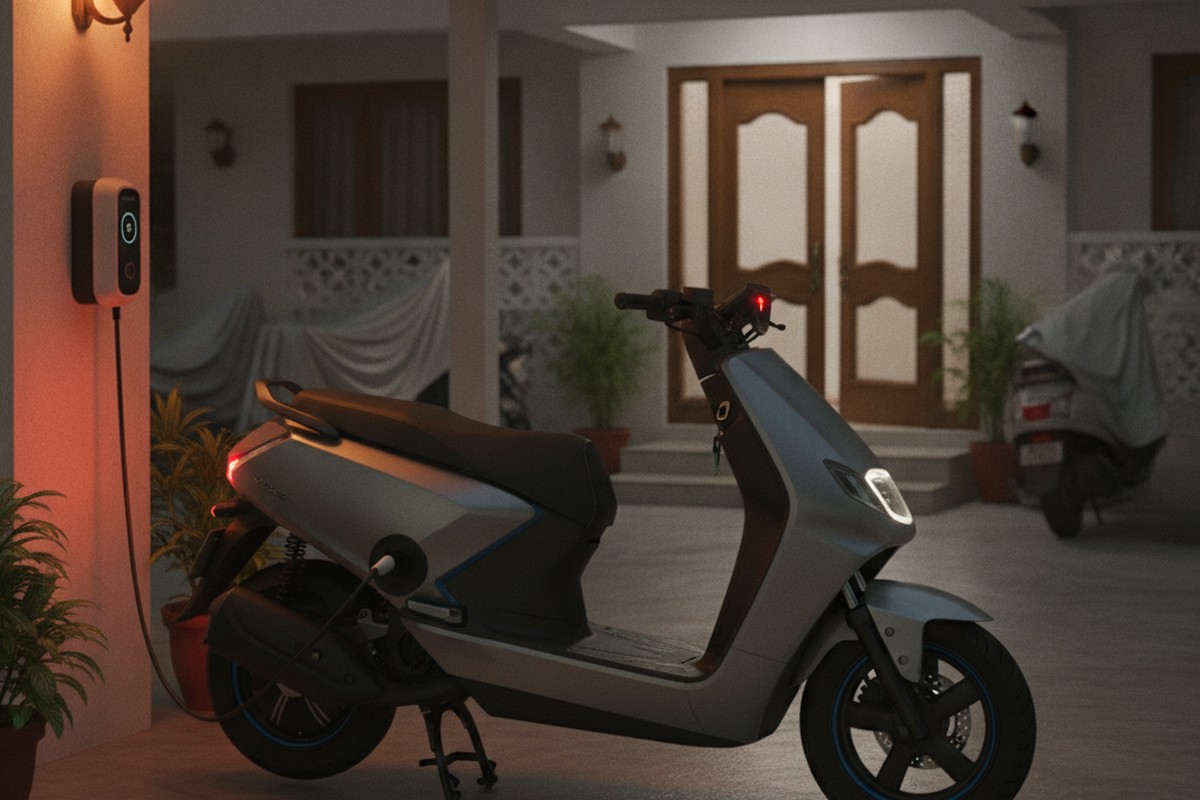
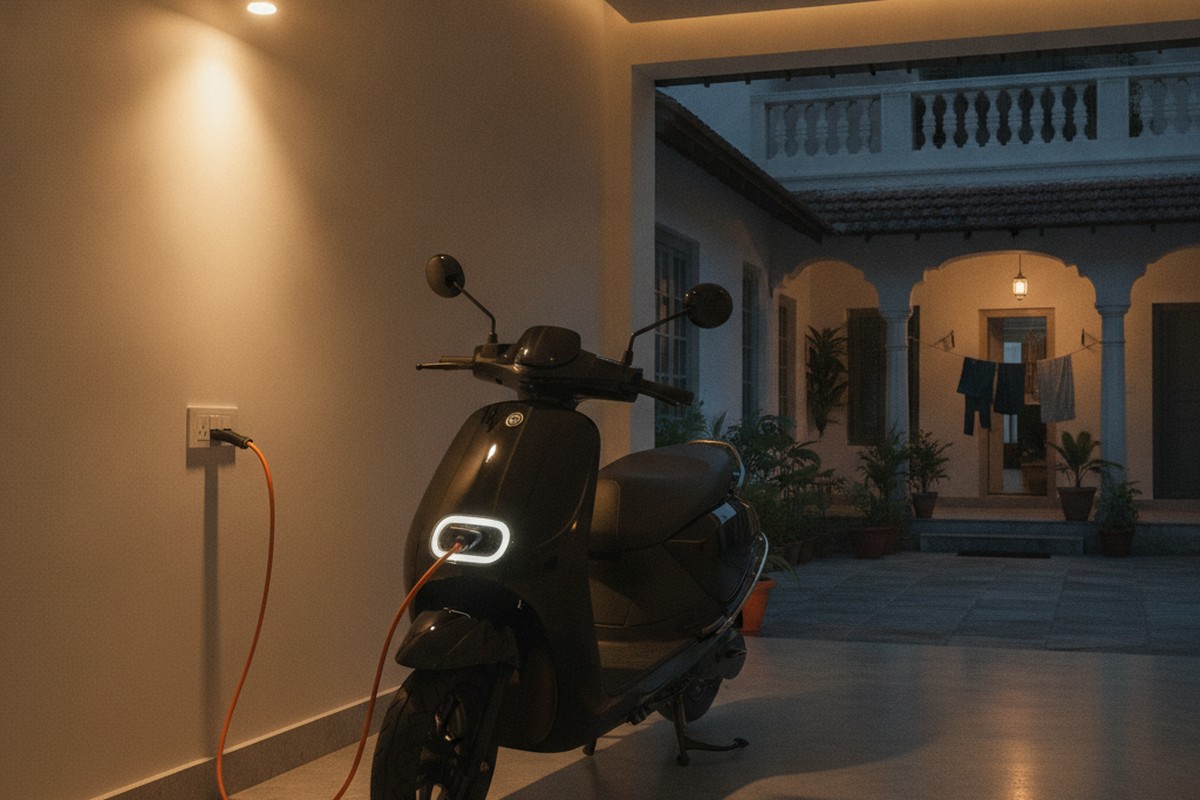
Elektree electric scooter charging at home in Indian household setting at night

How Elektree India’s Scooters Stack Up

This is where Elektree India’s lineup makes a compelling case for the practical Indian commuter. The Elektree Zenith — priced from ₹90,164 — is built explicitly around the commuter-first philosophy. It offers 80 to 100 km of real-world range, a top speed of 60 km/h, a front disc brake, an LED headlamp with DRL, USB charging, a reverse mode for narrow parking spots, and a built-in anti-theft alarm. It’s ICAT certified, meaning it has passed India’s official vehicle safety and performance standards. The payload capacity of 180 kg means it handles two adults comfortably — a practical consideration that matters in real Indian usage.

The Elektree RV 80 occupies a similar space at ₹94,363, with the same 80 to 100 km range and 60 km/h top speed — a range that covers virtually any Indian urban commuting requirement with room to spare. For buyers who want a lighter, lower-speed option and prefer not to deal with licensing and registration paperwork, the Elektree Wheels at ₹82,871 offers 50 to 70 km of range at 45 km/h in a configuration that doesn’t require a driving licence.

Across the lineup, Elektree keeps charging costs between ₹5 and ₹10 per full charge — roughly 8 to 15 paise per kilometre. A standard petrol scooter today costs roughly ₹2.50 to ₹3.50 per kilometre. Over a year of 40 km daily riding, that difference adds up to ₹35,000 to ₹50,000 in fuel savings. Elektree’s 3-year warranty on its vehicles adds further ownership confidence.

What Elektree’s products are not is overbuilt. They’re not carrying a 5 kWh battery that you’ll charge to 40 percent of its capacity most days. They’re not loaded with features that add complexity and failure points without improving your daily riding experience. They’re not priced on the assumption that you need to drive from Pune to Nashik on a single charge.

The Market Context

TVS and Bajaj are currently leading India’s electric two-wheeler market by volume in 2026, with Ather holding strong in the premium segment. These are established manufacturers with broad dealer networks, and their products are genuinely competitive. The Bajaj Chetak, for instance, is widely noted for its all-metal construction and build quality at around ₹95,998. The Honda QC1 at ₹90,708 brings the Honda service network advantage, though with a more conservative 80 km range and 50 km/h top speed. Neither of these is a bad choice.

But neither of them is specifically designed around the question that most Indian commuters should actually be asking: what does my commute actually need, and what’s the best scooter for exactly that? Elektree’s range sits at a practical sweet spot — not underpowered, not overburdened with unnecessary capacity — with a pricing structure that reflects the actual cost of building a well-engineered urban commuter rather than a range-figure marketing exercise.

The Bottom Line for Indian Commuters

If you’re buying an electric scooter to replace your daily petrol commuter, do this first: check your odometer or think honestly about how far you ride in a typical day. If the answer is under 60 km, you do not need a 150 km electric scooter. You need a reliable, well-built scooter with 80 to 100 km of honest real-world range, a proper service option near your home, and a running cost low enough to make the switch genuinely worthwhile.

Elektree India’s scooters — the Zenith, RV 80, and Wheels — are built with precisely this buyer in mind. ICAT-certified, practically specced, and priced without the premium-range markup, they represent one of the more honest value propositions in the Indian electric scooter market today. If you’ve been scrolling through range comparisons and feeling overwhelmed, there’s a simpler question to ask: does this scooter cover my actual daily riding? If Elektree’s answer is yes — and for most Indian commuters it is — the decision becomes a lot clearer.

Explore the full Elektree India electric scooter lineup at elektree.com and find the model that fits your daily riding, not someone else’s brochure.

That ₹90,000 Battery Nobody Mentioned: What Indian Buyers Need to Know About EV Scooter Battery Replacement in 2026

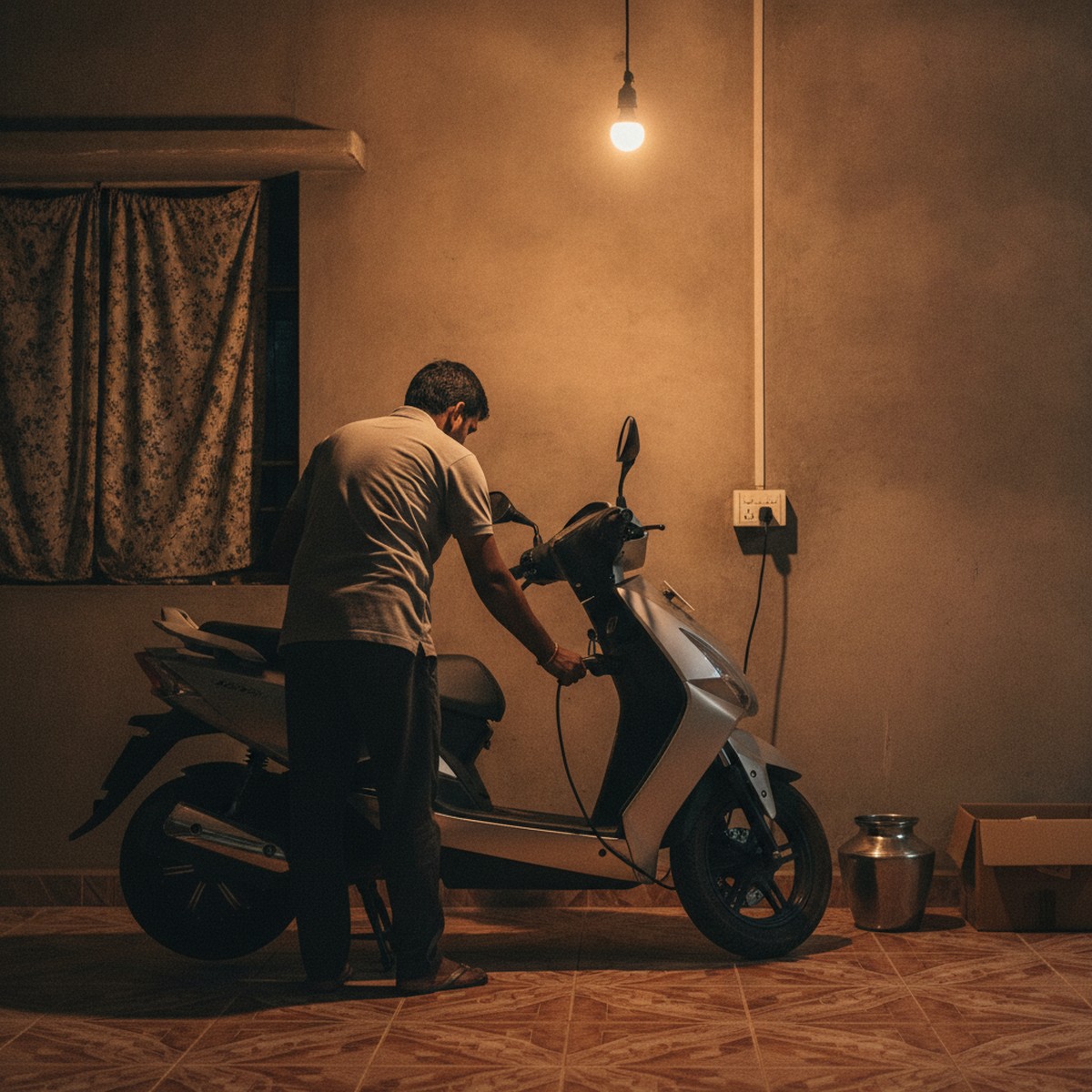
Electric scooter charging at home in an Indian apartment building parking area

The electric scooter salesperson will walk you through range figures, charging time, top speed, and the monthly EMI. They will show you the app connectivity, the regenerative braking modes, and the slick digital dashboard. What they rarely volunteer — and what most buyers never think to ask — is what happens when the battery, the single most expensive component in your scooter, needs to be replaced once the warranty has run its course.

This is not a fringe concern. Lithium-ion batteries degrade over time. The degradation is gradual and imperceptible in the early years, but by year four or five, a meaningful number of Indian EV scooter owners are discovering that their scooter’s real-world range has quietly shrunk by 15 to 25 percent. And when the warranty has expired, the replacement bill can be a genuinely unpleasant surprise — one that can rival a significant portion of what they paid for the scooter itself.

Here is what the numbers actually look like in 2026, and what to factor in before you sign on the dotted line.

What Actually Happens to Your Battery Over Time

Lithium-ion batteries do not fail suddenly, the way a petrol engine might seize. What happens is a slow erosion of capacity — each charge-discharge cycle leaves the battery with marginally less usable energy than before. A scooter that once delivered 90 km of honest real-world range might return 70–75 km after three to four years of regular use. This is not a defect. It is electrochemistry doing exactly what electrochemistry does.

Indian conditions are harder on batteries than temperate climates. High ambient temperatures — Pune and Nagpur summers regularly cross 44°C — accelerate cell degradation. Stop-and-go urban traffic with frequent braking and acceleration cycles adds to the stress. Charging twice daily in summer (as many riders do) compounds it further. Under these real-world conditions, the optimistic end of the 5–8 year lifespan estimate that most manufacturers quote should be taken with appropriate scepticism for urban commuters in hot cities.

The first symptom is rarely a warning light. It is simply shorter trips before the next charge — a gradual tightening of the scooter’s practical radius that most owners initially attribute to riding style or traffic, before realising the battery is quietly losing capacity.

The Replacement Numbers: What Each Brand Will Charge You

Out-of-warranty battery replacement costs in India vary significantly by brand and, more importantly, by pack size. Here is where things stand in 2026 across the main players:

Ola Electric’s S1 X with the entry-level 2 kWh pack costs ₹45,000–₹50,000 for a replacement battery. The S1 Pro with its 4 kWh pack comes in at ₹85,000–₹90,000. The flagship S1 Pro+ with a 5.2 kWh pack goes up to ₹1,10,000–₹1,20,000 — a number that gives even enthusiastic EV advocates pause.

Ather Energy’s 450S and Rizta (2.9 kWh) run ₹60,000–₹65,000 for battery replacement. The 450X, Rizta Z, and Apex with the 3.7 kWh pack come in at ₹70,000–₹80,000.

TVS iQube ranges from ₹45,000–₹50,000 for the entry 2.2 kWh version up to ₹1,15,000–₹1,20,000 for the extended-range ST variant with its 5.3 kWh pack. Bajaj Chetak’s newer series starts at ₹55,000 for the 2.5 kWh pack and goes up to ₹75,000–₹80,000 for the 3.5 kWh variant.

The pattern is consistent and instructive: battery replacement cost scales closely with pack size. Bigger battery, bigger bill — both at purchase and at replacement.

The Battery Size Problem Nobody Talks About

EV marketing has conditioned buyers to equate a larger battery with a better scooter. Longer range numbers are psychologically reassuring, even when the actual daily commute does not come close to requiring them. But there is a real cost to oversizing a battery that goes far beyond the sticker price.

Consider the average Indian urban commuter: office in the morning, possibly a school drop, evening errands, home. Most people’s actual daily round trips fall between 25 and 50 km. A well-engineered scooter with a 2 kWh battery that covers this distance reliably — without being stressed by daily deep discharge cycles — is not a compromise scooter. It is an appropriately sized one.

The 4 kWh or 5 kWh pack that gives you 150+ km of range is doing nothing useful for 70 percent of your actual charge cycles. It costs more at purchase, more at replacement, adds weight that affects handling on narrow urban roads, and charges slower. For the 40-km daily commuter in Chennai or Hyderabad, it is engineering overkill at a financially significant premium.

What You Can Actually Do to Slow Battery Degradation

Before any replacement conversation becomes necessary, there are a few habits that meaningfully extend lithium-ion battery life in Indian conditions — and most of them cost nothing.

Avoid making fast charging your daily habit. DC fast charging generates heat within the cells that accelerates degradation. It exists for road trips and emergencies. If you have access to a standard home charger overnight, use it. A 4–5 hour slow charge is consistently kinder to the cells than a 45-minute fast charge, and over hundreds of cycles the difference compounds.

Avoid regularly running the battery below 20 percent. Lithium-ion cells prefer to live between 20 and 80 percent charge. Regular deep discharges — the kind that happen when riders squeeze out every last kilometre before a charge — shorten cycle life over time.

Where you park matters more than most people realise. A battery sitting fully charged in 45°C direct sunlight degrades measurably faster than one stored at 50 percent charge in a shaded parking spot. If you park outdoors in summer, try to leave it at 70–80 percent charge rather than 100 percent.

None of this eliminates degradation. Lithium-ion cells will age. The habits simply determine how fast.

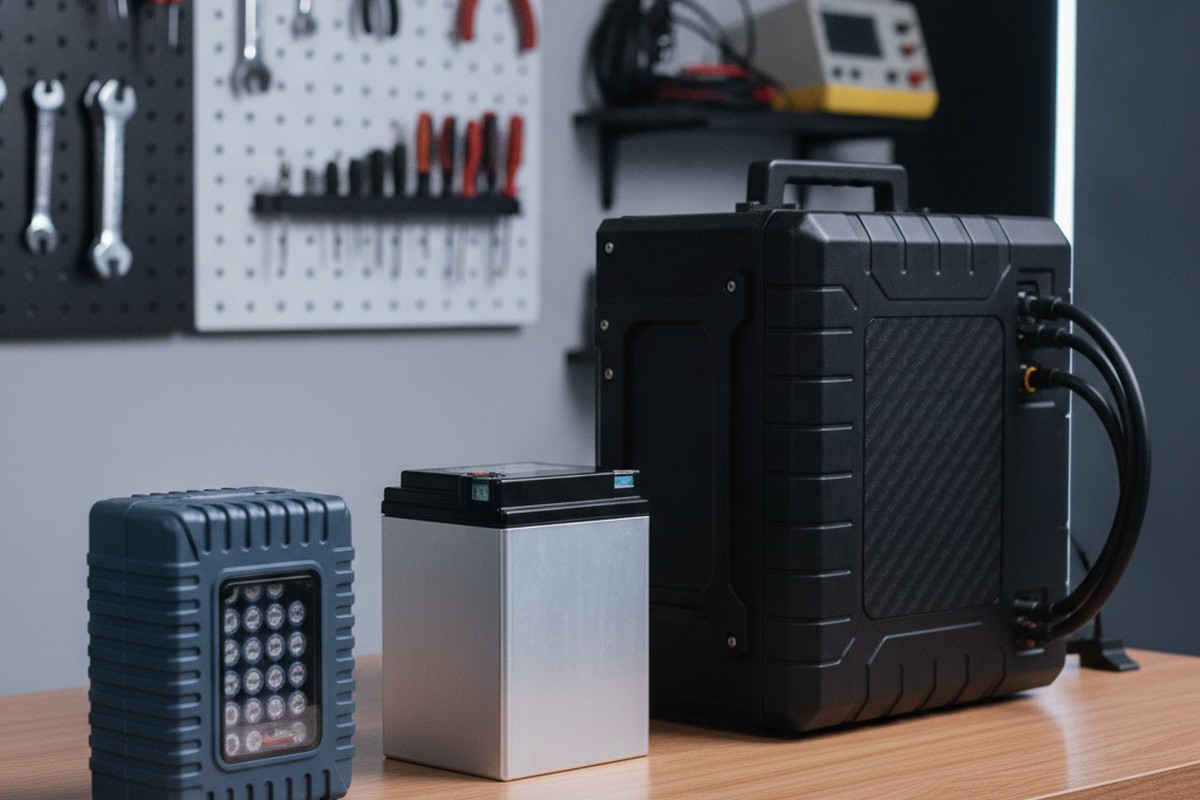
Electric scooter battery packs of different sizes in an Indian service workshop

Why the Right-Sized Battery Matters: The Elektree Case

Elektree India has built its scooter lineup around a principle that the mainstream EV marketing rarely emphasises: matching the battery to the actual use case of the Indian commuter, rather than competing on headline range numbers.

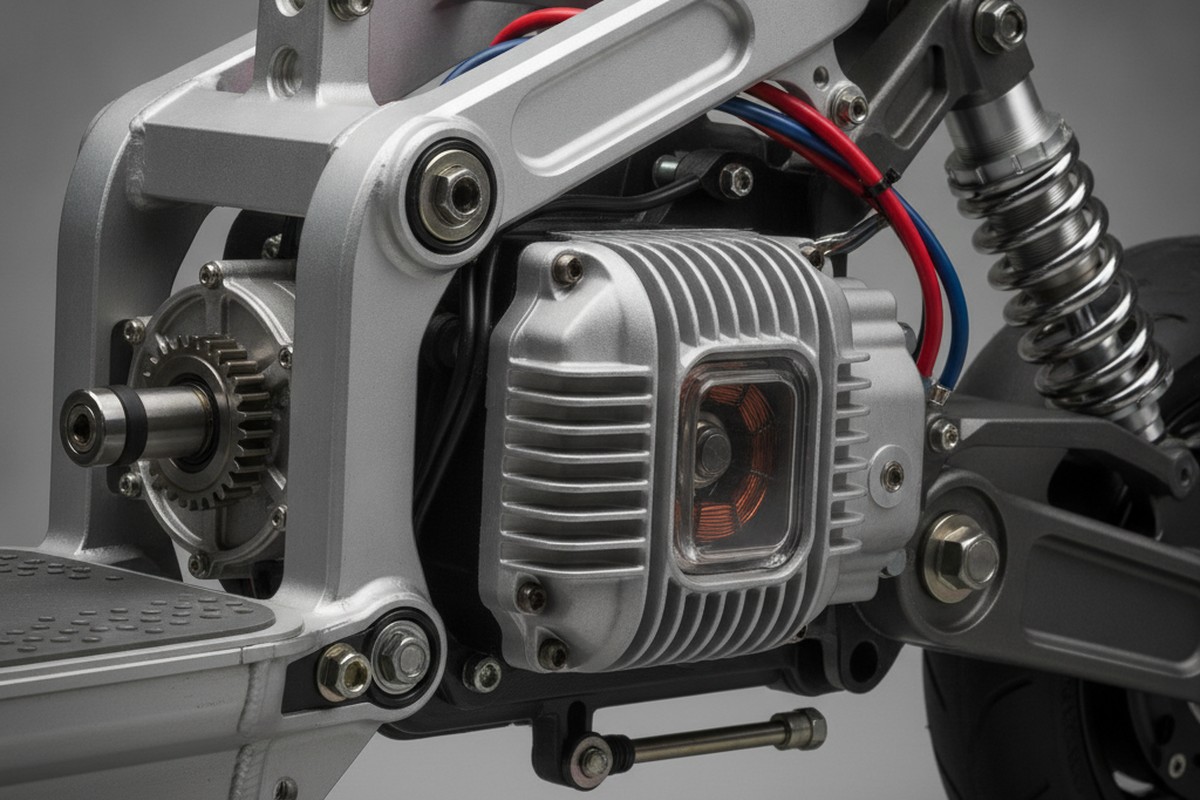
The Elektree Zenith — priced at ₹90,164 — carries a 2.1 kWh lithium-ion battery that delivers 80–100 km of ICAT-certified range. For a buyer whose daily round trip is 40–50 km, this covers the working week comfortably with a single charge. The scooter’s mid-drive IPM (Interior Permanent Magnet) motor is notably more efficient and smoother at low-to-mid speed than the conventional hub-motor configurations that dominate this segment — meaning the battery is not working harder than it needs to be for the same kilometre output.

The battery warranty runs to three years or 50,000 km. This is not a headline-grabbing number, but it is an honest one — specific and verifiable rather than the vague “up to 8 years” claims that often turn out to cover only catastrophic failure, not the gradual capacity loss that Indian buyers actually care about. The scooter is ICAT-certified and carries a 200 kg payload rating — a practically relevant figure for an Indian household where the pillion seat is used regularly, not occasionally.

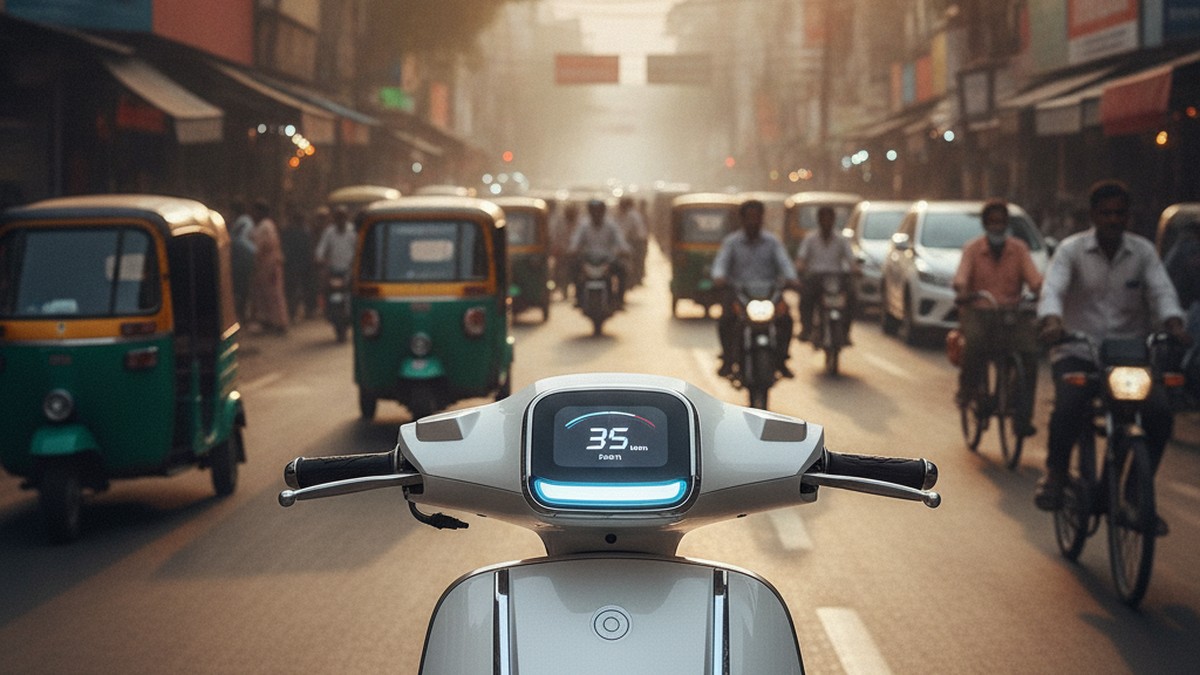
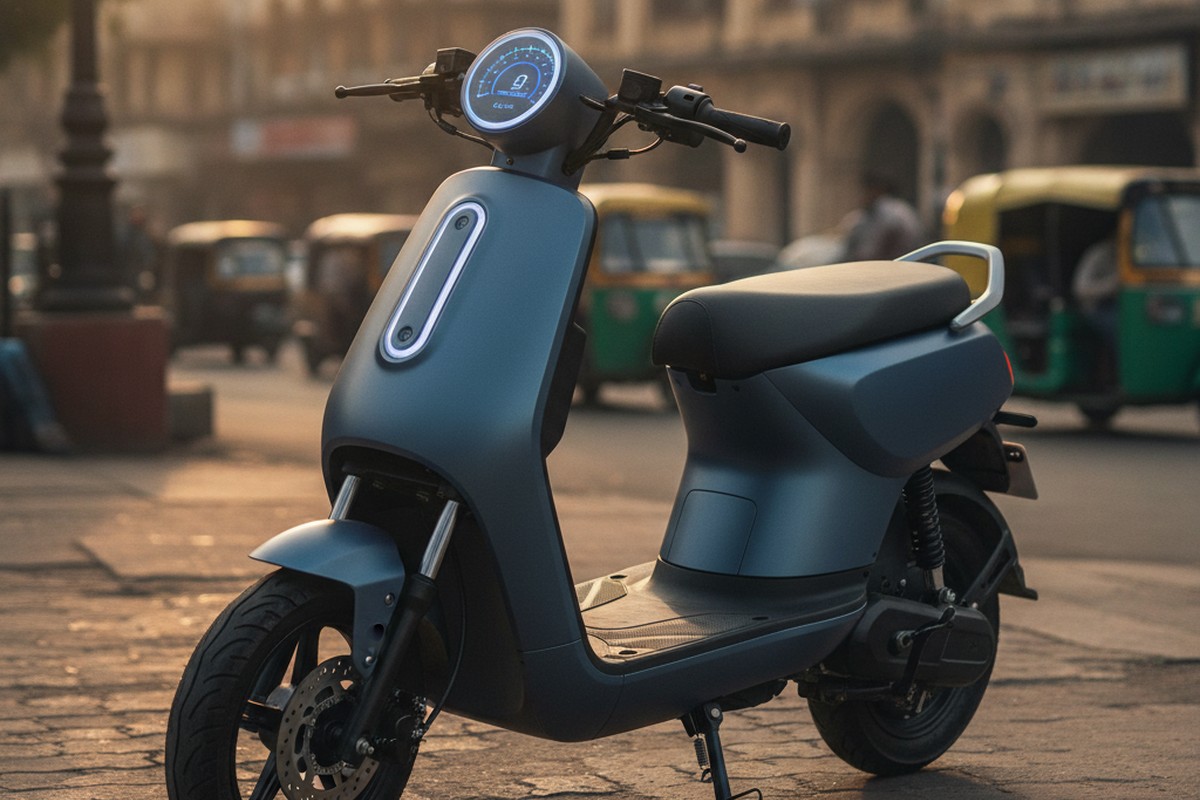
Modern electric scooter parked on an Indian city street at golden hour

Running the Numbers: What Total Ownership Actually Looks Like

Take two buyers in the same city, at comparable budget levels. One purchases a mainstream 3.7 kWh scooter at ₹1.25 lakh, attracted by the headline range. The other chooses the Elektree Zenith at ₹90,164, covers the same 40 km daily commute, and charges at home every night for ₹5–10 per full cycle.

Both riders have zero range anxiety for their actual commute. But when the battery warranty expires in five to seven years and degradation has reduced usable range, their situations diverge significantly. The first rider faces a replacement bill of ₹70,000–₹80,000 for the 3.7 kWh pack. The second rider — with Elektree’s smaller, right-sized battery — faces a substantially lower replacement cost for a pack of comparable chemistry and size to the least expensive offerings in the market.

The ₹35,000 initial price difference compounds further when the battery replacement cost is factored across the ownership period. The scooter marketed on its larger battery turns out to be the more expensive one — not just at purchase, but across the full lifecycle.

What You Should Actually Look For Before You Buy

Calculate your genuine daily requirement, then add a 20 percent buffer for real-world variation and moderate long-term degradation. If that number is under 80 km, a well-engineered sub-2.5 kWh scooter covers you completely.

Read battery warranty terms carefully — not just the duration, but what triggers coverage. A warranty that only activates on complete battery failure is less useful than one with a capacity retention threshold. Ask the dealership specifically what percentage of original capacity is covered, and for how long.

Consider the chemistry. LFP (Lithium Iron Phosphate) batteries are chemically more stable in high-heat environments like India compared to NMC cells, and generally have longer cycle lives even if their energy density is slightly lower. If a manufacturer specifies LFP for their pack, that is a genuine long-term advantage in Indian operating conditions — worth more than the specification sheet might suggest.

Elektree India’s approach — right-sized battery, efficient motor technology, ICAT certification, honest warranty, and pricing that keeps total ownership economics genuinely manageable — addresses the battery replacement concern from the purchasing decision itself, rather than leaving buyers to discover it five years later. For the Indian commuter who wants a scooter built around how they actually ride rather than how they might ride on a good day, the Zenith is worth a serious look.

You can explore Elektree India’s full lineup, including the Zenith and their extended-range models, at elektree.com.

Electric Scooter Subsidy in India 2026: The PM E-Drive Scheme Has Been Extended to 2028 — Here’s What Every Buyer Needs to Know

Young Indian buyer examining an electric scooter at a dealership showroom in India 2026

India crossed 1.4 million electric two-wheeler sales in FY2026. It is a genuine milestone, and millions of buyers made the switch for good reasons — lower running costs, quieter rides, the satisfaction of leaving the petrol queue behind. But there is something a surprisingly large number of those buyers missed on the way out of the showroom: a guaranteed ₹5,000 reduction on the purchase price they were fully entitled to claim.

The PM E-Drive scheme — the central government’s incentive programme for electric two-wheelers — was originally due to close on 31 July 2026. Eleven days later, on 11 August, the Ministry of Heavy Industries confirmed that the scheme has been extended to March 31, 2028, with an additional ₹1,000 crore allocated specifically to the electric two-wheeler segment. The total programme budget now stands at ₹11,900 crore, and the subsidy remains live for new purchases from an authorised dealer.

If you have been evaluating electric scooters and were unsure whether the subsidy still applied, the answer is yes. Here is a clear-eyed look at how the scheme works, who qualifies, how much you can actually save — and what it means for the specific scooter you are considering.

What the PM E-Drive Subsidy Actually Gives You

The mechanics are straightforward. The scheme offers ₹2,500 for every kilowatt-hour of battery capacity in your electric scooter, subject to a cap of ₹5,000 per vehicle. For most standard lithium-ion scooters available in the Indian market, this works out to a flat ₹5,000 reduction — deducted directly from your invoice by the authorised dealer at the point of purchase.

There is no application form. No online portal. No reimbursement wait. The discount happens at the dealership itself, after an Aadhaar-based eKYC verification using your Aadhaar-linked mobile number. Before you finalise your purchase, check that ₹5,000 appears as a line item on your invoice. If it does not, ask specifically. The dealer’s obligation is to pass this through to you.

Modern electric scooter on a wet Indian street during monsoon season

Four Eligibility Conditions That Need to Match

Not every electric scooter qualifies. The scheme has four conditions that must all be satisfied simultaneously.

First, the ex-factory price of the vehicle must be ₹1.5 lakh or below. This covers a significant portion of mainstream electric scooters currently available in India — particularly in the ₹70,000 to ₹1.2 lakh segment where the bulk of volume occurs.

Second, the battery must be lithium-ion. Lead-acid battery vehicles are explicitly excluded from the scheme. This matters because lithium-ion packs are safer, longer-lasting, and more energy-dense — precisely what the government is trying to normalise across the market.

Third, the vehicle must carry a minimum three-year warranty covering the battery, motor, and controller. This is not just a bureaucratic requirement — it is a buyer protection provision. A scooter without this level of warranty cover leaves you exposed to potentially expensive repair bills within the useful life of the vehicle.

Fourth, the purchase must be made from an authorised dealer, with the vehicle properly registered with your regional RTO. Low-speed vehicles that do not require RTO registration fall outside the scope of the scheme.

The subsidy is also restricted to one vehicle per individual, verified via Aadhaar. If someone in your household has already claimed it on a previous purchase, a second claim under the same Aadhaar will be rejected.

State Subsidies: The Layer Most Buyers Ignore

The central PM E-Drive incentive and your state government’s electric vehicle benefits are entirely independent of each other. In several states, they stack — meaning you can receive both simultaneously, along with road tax exemptions that reduce your effective cost further.

Maharashtra currently offers an additional ₹10,000 subsidy cap for two-wheelers, plus full road tax exemption through 2030. Rajasthan provides up to ₹20,000 in state incentives on qualifying electric scooters. Bihar covers ₹5,000 per kWh for the first 10,000 units registered under the state scheme, alongside a 75% motor vehicle tax rebate. Assam and Odisha each extend up to ₹20,000 per vehicle, with road tax exemptions as well.

In Maharashtra, for example, a buyer purchasing a qualifying electric scooter priced at ₹90,000 could receive ₹5,000 from the centre and up to ₹10,000 from the state — a combined reduction of ₹15,000 before road tax savings are factored in. That changes the effective cost of entry meaningfully.

The caveat is important: state schemes are budget-limited and can exhaust their allocations ahead of their stated end dates. Always verify current status on your state government’s official EV portal before assuming a state benefit is available. Do not rely on a dealer’s word alone — check directly.

Indian family at an electric scooter dealership exploring subsidy and pricing options

Why the Extension Matters — But Is Not Indefinite

The extension to March 2028 is genuinely good news. But the structure of the scheme carries a quiet warning that experienced EV observers have noted: the ₹5,000 subsidy is already half of what was available under the earlier FAME-II scheme, which offered ₹10,000 per vehicle. Policy in this space consistently moves toward tapering incentives as adoption rises. The government’s stated target is to push electric two-wheeler market penetration from the current 7.6% to 9–10%. As that number climbs, the rationale for generous subsidies weakens.

The additional ₹1,000 crore for e2Ws covers roughly two million more vehicles at ₹5,000 each. Once that allocation is exhausted, the subsidy can close before March 2028 — exactly what happened to earlier phases of FAME. The March 2028 date is a ceiling, not a guarantee.

If you are planning to buy an electric scooter in the next 12 to 18 months, the subsidy is fully live and accessible today. Deferring in the hope that conditions will improve is likely to mean buying at a higher effective cost, not a lower one.

Elektree India: Every Eligibility Box, Checked

For buyers navigating the PM E-Drive criteria, the practical question is simple: which scooters actually qualify — and which ones make the strongest case beyond just qualifying?

Elektree India’s range is worth examining specifically against this framework. The Elektree Zenith starts at ₹90,164 — comfortably within the ₹1.5 lakh PM E-Drive ceiling. Its 60V/35Ah lithium-ion battery meets the technology requirement. The Zenith carries a three-year warranty covering battery, motor, and controller, which satisfies the warranty condition precisely. It is ICAT-certified, meaning it has cleared the government’s mandatory testing process — a prerequisite for subsidy eligibility at the outset.

What the specification sheet shows beyond the subsidy criteria is also worth noting. The Zenith’s mid-drive IPM (Interior Permanent Magnet) motor delivers a top speed of 70 km/h and a real-world range of 80–100 km per charge, with three riding modes — Eco, Normal, and Hyper — allowing the rider to prioritise range or performance depending on the commute. Ground clearance sits at 180 mm, which is meaningfully higher than several competitors and relevant on the potholed and waterlogged roads that Indian riders actually deal with. Payload capacity is listed at 200 kg, which means the scooter handles rider plus pillion plus a grocery run without complaint. Charging time is 4–5 hours on a standard domestic socket, and Elektree quotes a per-charge cost of ₹5–10.

The RV 80, similarly ICAT-certified and lithium-ion, starts at ₹94,363 and follows an analogous specification profile. Both models sit in the sweet spot where the PM E-Drive subsidy applies and the performance envelope suits genuine daily commuting rather than light urban use only.

What the Effective Cost of an Elektree Scooter Looks Like in 2026

Here is the practical arithmetic for a buyer in Maharashtra looking at the Elektree Zenith at ₹90,164. The PM E-Drive subsidy brings the cost to ₹85,164. The Maharashtra state subsidy of up to ₹10,000 could reduce it further to approximately ₹75,164, before road tax (which the state exempts through 2030). The registration and insurance costs are on top of this, but the base vehicle cost has dropped by up to ₹15,000 from headline price — entirely through government incentives the buyer does nothing more complicated than provide their Aadhaar number to claim.

Running costs thereafter are where the longer-term case strengthens considerably. At ₹5–10 per charge for 80–100 km, the Zenith’s per-kilometre electricity cost is in the range of 5–12 paise. A typical petrol scooter covering the same distance at current fuel prices costs ₹2.50–₹3.00 per kilometre. For a commuter covering 30–40 km daily, the fuel saving alone works out to ₹1,500–₹2,000 per month. The ₹5,000 central subsidy is recovered in running cost savings within three months of ownership.

The Straightforward Conclusion

Government incentives for electric two-wheelers are available right now, are genuinely accessible — you claim at the dealership, not through a portal — and are meaningful in their impact on the real cost of purchase. The PM E-Drive scheme has been extended, but it is fund-limited and the overall direction of policy is toward gradual tapering as market penetration increases. Buying while the subsidy is fully active makes better financial sense than waiting.

For buyers looking at the practical midrange of the Indian electric scooter market — real-world range, commute-grade reliability, a price that stays within government incentive territory, and a warranty that protects the investment — Elektree India’s scooters occupy exactly that position. The Zenith and RV 80 meet every PM E-Drive eligibility condition, carry specifications suited to Indian road conditions, and come from a manufacturer that has built its product lineup around what the Indian market actually needs, not what looks good in a launch event.

To explore the full Elektree India range, check current pricing, and confirm PM E-Drive subsidy availability on the model you are considering, visit elektree.com and speak to your nearest authorised Elektree dealer before making your final decision.

Electric Scooter Range in India 2026: Why That Brochure Number Is Almost Never What You Actually Experience on Indian Roads

Electric scooter on Indian city road showing battery range indicator at golden hour

Every conversation about buying an electric scooter in India eventually comes down to one question: kitna range milega? And every dealer has a confident answer ready. They point at the brochure — 120 km, 150 km, even 180 km. Sounds fantastic. More than enough for a week of office runs, right?

Then you buy the scooter. You ride it for a week. And somewhere around 80–90 km, the battery indicator starts blinking. You call the dealer. He says you weren’t riding in Eco mode. Or the weather was too hot. Or you should have charged it fully first. Some of that is true. None of it was clearly explained to you before you signed the papers.

This isn’t a scandal — it’s a well-understood gap between laboratory testing and real roads. But understanding how it works, and how to shop around it, will save you from one of the most common disappointments in the Indian electric scooter market.

What the Range Number on the Brochure Actually Means

That headline figure — 120 km, 150 km, whatever your shortlisted scooter claims — is almost always the IDC range. IDC stands for Indian Driving Cycle, a standardised test conducted in a controlled laboratory environment, typically at an authorised centre like ARAI or ICAT. The scooter starts with a full battery, follows a prescribed speed-and-acceleration pattern on a dynamometer (essentially a treadmill for vehicles), in conditions kept at around 25°C, with a standardised rider weight and no wind resistance. The test continues until the battery reaches its discharge limit.

The result is a number that allows buyers to compare different scooters on equal terms. That part is genuinely useful. The problem is that this number represents ideal conditions — and Indian roads are emphatically not ideal.

Why Real-World Range Falls Short — and By How Much

Industry experience and independent testing consistently show that real-world range on Indian roads is typically 65–80% of the certified IDC figure. A commonly used rule of thumb: take 70% of the claimed IDC range as your practical baseline.

What that means in practice: a scooter claiming 150 km IDC range will likely give you 100–110 km on a normal day of mixed city riding. On a hot afternoon in stop-and-go traffic, possibly less.

The Ola S1 Pro, for instance, carries a manufacturer-claimed IDC range of 181 km. Independent road tests have recorded around 147–150 km under more realistic conditions — already a gap of 30+ km, and that’s still on a reasonably easy route without heavy traffic or extreme heat.

Several factors drive this gap on Indian roads specifically:

Summer heat. Lithium-ion battery chemistry is temperature-sensitive. When ambient temperatures cross 38–42°C — routine for most Indian cities between March and June — battery efficiency drops noticeably. Batteries running hot discharge faster, and thermal management systems in some scooters kick in and further limit output to protect the pack.

Stop-and-go traffic. Constant acceleration and braking in city traffic consumes significantly more energy per kilometre than the smooth, steady-speed profile of a lab test. Regenerative braking recovers some of that energy, but not all.

Actual rider weight. The IDC test uses a standardised load. If you’re a heavier rider, or regularly carry a pillion, your real-world range will be lower than the certification figure. A 90 kg rider with a pillion passenger could see 15–20% more drain than test conditions assumed.

Riding mode selection. Nearly every modern electric scooter offers multiple modes — Eco, Normal, Sport or equivalents. The certified range is typically measured in the highest-range (lowest-performance) mode. If you commute using Normal or Sport mode, your range will be meaningfully shorter. Many riders don’t realise this until after purchase.

Terrain and gradient. Uphill sections in ghat areas, flyovers, or even sustained riding on undulating roads drain the battery faster than flat surfaces. This matters particularly to riders outside metros, where road profiles vary considerably.

Battery age. A brand-new battery performs at peak efficiency. After two or three years of use, real-world capacity gradually reduces. This is normal and manageable — but it means a scooter that delivered 90 km of real range when new may settle at 75–80 km after regular use for two or three years.

Indian commuter riding electric scooter in heavy city traffic illustrating real-world range conditions

The Range You Actually Need — It’s Probably Lower Than You Think

Here’s a useful reality check before you go chasing the highest-range scooter on the market: three-quarters of Indian two-wheeler commuters travel less than 35 km per day. Many urban riders average 20 km or less for their daily office commute. If you charge at home overnight — which most electric scooter owners do — you start each day with a full battery.

Electric scooter plugged in for overnight home charging in Indian apartment

What does that mean practically? Even a scooter with a modest certified range of 80–100 km, delivering perhaps 55–70 km of real-world range, comfortably handles the daily commute of the majority of Indian riders. With a full overnight charge, your 20-km commute (both ways) uses barely a third of the battery — you have plenty of buffer for weekend runs, detours, and the occasional trip to a relative’s place across town.

Range anxiety is a real psychological barrier, but the honest data suggests that for most urban Indian commuters, range adequacy is already there. The gap is between what’s on the brochure and what you experience — not between what you experience and what you actually need.

What to Actually Ask Before You Buy

Rather than asking “what is the range,” ask more specific questions. What is the real-world range at Normal mode? What is the battery capacity in kWh? Is the range figure IDC certified — and by ARAI or ICAT specifically? Government-authorised certification means an independent body verified those numbers, which carries considerably more weight than a manufacturer-only estimate.

Where Elektree India Gets This Right

One of the persistent frustrations with range claims in the Indian EV market is a lack of transparency about what the numbers actually mean. This is where Elektree India’s approach to product engineering and customer communication deserves attention.

Elektree’s Zenith electric scooter, for example, carries an ICAT-certified IDC range of 80–100 km at a starting price of ₹90,164. The battery is a 60V/35Ah lithium-ion pack (approximately 2.1 kWh), the motor is a mid-drive IPM unit, and the scooter offers three riding modes — Hyper, Normal, and Eco. Top speed is 70 km/h. The battery carries a 3-year/50,000 km warranty. No licence is required.

Apply the 70% real-world adjustment and you’re looking at approximately 56–70 km of practical daily range. For the majority of Indian daily commuters — who average 20–35 km per day — that’s a genuine, comfortable margin. You’re not stretching the battery to its limit every day, which also means less wear over time and better long-term battery health.

Elektree’s RV 80, similarly configured at around ₹94,363, covers the same commuter profile. For lighter daily use, the Elektree Wheels at ₹82,871 offers 50–70 km certified range. Riders needing highway capability have the Fantom EV motorcycle — a 72V/55Ah battery, 150–180 km range, 110 km/h top speed. Across its lineup, Elektree carries over 19 ICAT-certified models. The certification matters because it means an independent, government-authorised body has verified the performance figures — not just the manufacturer. That’s the kind of verifiable backing that should carry weight when a dealer is making range promises.

The Smarter Way to Think About Range

A 150 km IDC range scooter sounds more impressive than one with 100 km. But if your daily commute is 25 km and you charge every night, those extra 50 km on the spec sheet deliver no practical benefit while potentially adding cost and complexity. What actually matters is whether the real-world range — after applying realistic conditions to the IDC figure — exceeds your daily riding requirement with enough buffer for confidence.

For most Indian commuters, a scooter delivering 55–75 km of genuine real-world range on a full charge is not a compromise — it’s sufficient. The challenge is knowing which certified figures translate to that in practice, and which don’t.

Scooters with ICAT certification, honest range documentation, and a battery warranty that reflects manufacturer confidence in long-term pack health give you a more reliable foundation than a headline figure alone. Elektree’s Zenith and RV 80 are built around exactly that proposition — practical, ICAT-backed performance at a price that makes the economics of electric ownership work for everyday Indian riders, not just early adopters willing to pay a premium.

If you’re evaluating electric scooters and range is your primary concern, the right question isn’t which model claims the most kilometres on paper. It’s which model will reliably deliver the range you need, day after day, in Indian weather, on Indian roads, with the actual weight and riding style you bring to it. On that basis, Elektree’s lineup deserves a serious look before you decide.

Explore Elektree India’s full range of electric scooters — with certified specifications and transparent pricing — at elektree.com.
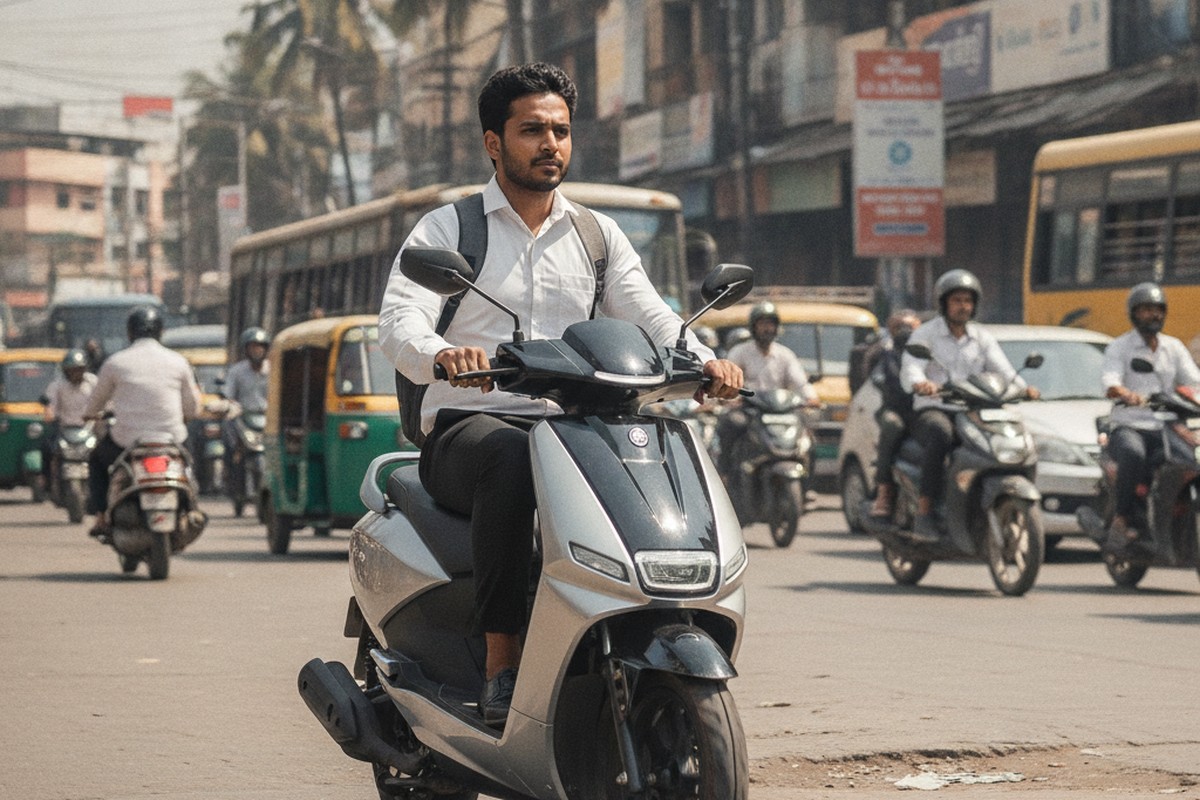
Electric Scooter for Women in India 2026: What the ‘Best Scooty for Ladies’ Lists Get Wrong — and What Actually Matters

Indian woman confidently riding a lightweight electric scooter on a busy city road

Why the ‘Best Scooty for Ladies’ Search Is Steering Indian Women Toward the Wrong Choice

Walk into any electric scooter showroom or search for “best scooty for women in India 2026,” and you’ll encounter the same predictable template: a list of pastel-coloured two-wheelers ranked primarily by how appealing they look on Instagram and whether the seat height is low enough to touch the ground comfortably. Both things have some relevance — but if that’s all you’re evaluating, you’re likely to miss the factors that will actually determine whether you’re satisfied with your purchase six months from now.

Women buyers today make up a fast-growing share of urban two-wheeler purchases in India. Their requirements are precise, practical, and rarely addressed with any depth in the generic “top 10 scooty for ladies” content flooding the internet. They need a scooter that handles well in congested city traffic, copes with the unpredictable surface conditions of Indian roads, doesn’t feel like a workout to park or steady at slow speeds, stays reliable through the monsoon, and doesn’t quietly drain the wallet through ongoing service bills.

This is the guide that actually addresses those concerns — and offers an honest look at what to prioritise, and what to be sceptical of, when buying an electric scooter in India as a woman rider in 2026.

Kerb Weight: The Number That Changes Everything

Of all the specifications on a scooter’s feature sheet, kerb weight gets the least attention from buyers and arguably matters the most in real-world Indian conditions. Most electric scooters in the popular segment weigh somewhere between 90 and 130 kilograms. That’s a substantial mass to manage when you’re balancing the bike at a standstill in slow-moving traffic, maneuvering into a tight parking slot between vehicles outside a vegetable market, or steadying yourself on a wet road after a sharp speed breaker.

For riders of average height and build, handling a 110–120 kg machine at low speed isn’t dangerous — but it is fatiguing. In a city like Bengaluru, Chennai, Hyderabad, or Lucknow, where stop-and-start commuting in congested lanes can go on for 30 to 45 minutes each way, that cumulative fatigue is real and underrated as a buying factor.

The Elektree Zenith, priced at ₹90,164, has a documented kerb weight of 75 kilograms. The discontinued Ola S1 Air weighed 99 kilograms. The TVS iQube S tips the scales at 128.8 kilograms. That gap of 25 to 55 kilograms between the Zenith and popular competitors is not a minor footnote — it’s a daily practical advantage for a rider who handles the scooter alone. Lower weight means less effort to push backwards into a parking bay, easier steadying in slow traffic, and noticeably reduced physical strain over a long commuting week.

Ground Clearance and the Indian Road Reality

Indian road infrastructure has improved significantly over the last decade, but the average urban commute still involves a daily negotiation with potholes, rough patches, speed breakers of wildly varying proportions, and sections that flood during the monsoon months in Chennai, Mumbai, and several other major cities. Ground clearance is directly relevant to how confidently you handle these conditions day after day.

The Elektree Zenith offers 180 millimetres of ground clearance — a meaningful buffer against the undercarriage scraping on aggressively proportioned speed breakers, particularly when riding with a pillion. Many urban electric scooters in the sub-₹1 lakh segment provide 160–165 mm. That 15–20 mm difference sounds small but translates to a noticeably more planted, secure ride on the rough patches that are simply unavoidable on most Indian urban routes.

Lightweight modern electric scooter with disc brake and flat floorboard design for Indian city commuting

Safety Features That Genuinely Earn Their Place

Safety on an electric scooter isn’t only about braking distance, though the Zenith’s front disc brake does provide more controlled, shorter stops compared to the all-drum setups on several budget competitors. What matters equally — and perhaps more so for solo women commuters — is protection against theft and a way to track the vehicle if it does go missing.

The Elektree Zenith includes GPS tracking and an anti-theft alarm as standard features, not as paid add-ons. In Indian cities where two-wheeler theft is a persistent reality, these are genuinely valuable inclusions at this price point. The real-time tracking capability gives you a usable recovery option that basic aftermarket alarms simply don’t provide.

Elektree also carries ICAT certification across its lineup — India’s Central Institute of Road Transport accreditation that validates performance and safety standards. The company currently holds certification across 19-plus models, which is a meaningful indicator of build standards rather than merely a marketing line.

One practical note on charging: the Zenith charges fully in approximately four to five hours on a standard 5-amp domestic socket. Most Indian households can handle this without electrical modifications, which means you can charge overnight at home without worrying about special charging installations — a common concern for first-time electric scooter buyers.

Range: Reading the Numbers Honestly

Nearly every electric scooter brand in India quotes an IDC or ARAI-tested range figure, and real-world performance typically lands 25 to 35 percent below those numbers with two riders and urban traffic. The Elektree Zenith’s 80–100 km IDC range translates to a practical 65–80 km in everyday conditions — enough for the majority of Indian urban commuters covering 20 to 40 kilometres per day with buffer to spare.

The new Ola S1 Z, starting from ₹79,999, claims extraordinary range figures on its higher-battery variant — figures that require careful scrutiny when mapped to actual urban commuting. The TVS iQube S lists 175 km under test conditions. Both are test-environment numbers, and actual owner-reported real-world range is what matters when calculating whether you’ll ever need to charge mid-week. Before finalising any scooter purchase, search for owner forums and actual user reviews for the specific variant you’re considering, not just the manufacturer’s published claim.

Storage and Everyday Practicality

A scooter for daily Indian commuting needs to function as a genuine utility vehicle — accommodating a laptop bag, vegetables from the market, or a child’s school bag. The Elektree Zenith offers 18.5 litres of under-seat storage, adequate for daily essentials, though buyers who regularly carry large loads should check that against premium models offering 30-plus litres. The Zenith also features a flat floorboard design suited to ethnic clothing — a practical detail brand catalogues rarely highlight but riders notice immediately.

Service and Warranty: The Long-Term Calculation

After-sales confidence matters — particularly for solo women commuters who want dependable service without relying on an untested local mechanic. Elektree currently operates 54-plus dealer points across India, a smaller network than TVS or Hero but a meaningful footprint for a focused EV brand. The three-year or 50,000 km battery warranty on the Zenith’s lithium-ion pack provides structured coverage for the scooter’s most expensive component — a genuine reassurance for anyone investing close to ₹90,000.

Putting It All Together: Who Should Buy What

If your budget runs to ₹1.4–1.7 lakh and your commute exceeds 40 kilometres daily, the TVS iQube S and Ather 450X both offer mature, well-supported products with established urban service networks. The iQube S, in particular, provides exceptional 132-litre under-seat storage — class-leading — and a polished ownership experience for buyers who can spend at that level.

In the ₹80,000–₹1 lakh range, where most first-time buyers actually shop, the Elektree Zenith presents a distinctive combination: the lowest kerb weight in its segment at 75 kilograms, a 180 mm ground clearance that outperforms several direct rivals, a disc front brake, GPS tracking and anti-theft alarm as standard, ICAT certification, and a three-year battery warranty — all at ₹90,164 on-road. For the buyer whose priority is a scooter that handles the physical realities of Indian urban commuting without fatigue, rather than the one with the boldest range claim or the flashiest instrument cluster, the Zenith builds a genuinely compelling case.

For buyers who want to stay closer to ₹83,000 and whose routes are primarily low-speed urban, the Elektree Wheels at ₹82,871 is an entry point worth exploring, though its 45 km/h top speed makes it best suited to slow urban environments rather than mixed city-expressway commutes.

The Honest Takeaway

The right electric scooter for a woman rider in India isn’t determined by its colour catalogue or its Instagram presence. It’s determined by how it behaves at a standstill in a narrow lane on a rainy evening, whether it’s light enough to handle without assistance in a tight parking spot, whether its ground clearance keeps it clear of the road’s worst obstacles, and whether the brand will still be supporting it reliably three years from now.

For a buyer who values low kerb weight, confident ground clearance, built-in security, and solid warranty coverage without crossing the ₹1 lakh mark, the Elektree India Zenith deserves a serious look. It’s a scooter built around what Indian commuting actually demands — not what a brochure photograph suggests it should. Explore the full range of Elektree India electric scooters at elektree.com and find the model that fits your daily route, your budget, and the way you actually ride.

India Has 29,000 EV Charging Stations — But Can You Actually Charge Your Electric Scooter at Any of Them?

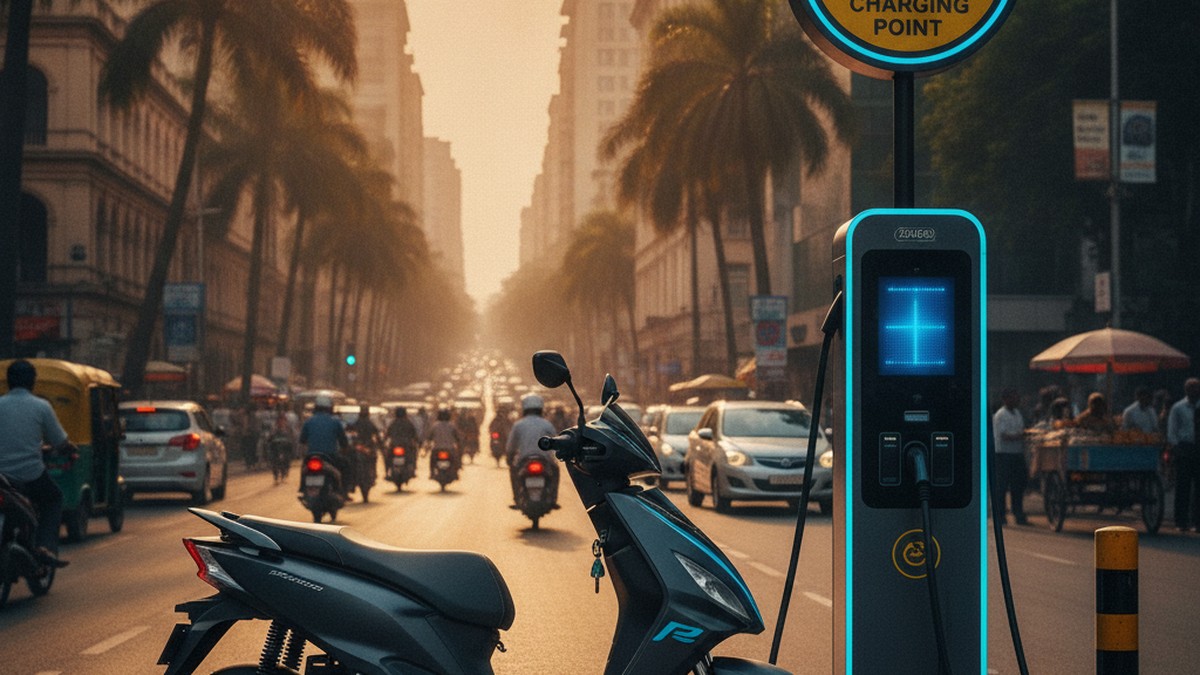
Electric scooter at a public EV charging station in India

The number sounds impressive. Across India, there are now over 29,000 public EV charging stations as of early 2026. Government targets call for tens of thousands more. Every brand launching an electric scooter mentions “fast charging” in the same breath as range figures. And yet, ask anyone who actually owns an electric scooter in India — not a car, a scooter — about public charging, and you get a very different story.

The charging infrastructure that actually exists for electric two-wheelers is a fraction of what the headline number suggests. Understanding this gap might be the single most useful thing you learn before buying an electric scooter this year.

The Headline Number vs. The Reality on the Ground

India crossed 29,000 public EV charging stations in early 2026. That genuinely is progress. But the overwhelming majority of these stations were built for four-wheelers — the connector standards, the charger capacities, the physical setup. Most of it isn’t designed for the scooter you’re thinking of buying.

For two-wheelers specifically, the picture is far patchier. Ather’s Grid network — the most developed dedicated two-wheeler charging network in the country — has around 5,000 fast chargers across 395 cities. Ola Hypercharger, despite the marketing, covers roughly 60+ cities with about 288 charging points. Hero Vida has approximately 4,600 fast points across 320 cities.

These numbers look decent until you notice the catch: unless you own an Ather or a Vida, you probably can’t use most of them. Ola’s Hypercharger uses a proprietary connector that only works with Ola scooters. Ather Grid is similarly designed around the 450 series. There’s a connector standard called LECCS (based on IS 17017) that’s meant to enable interoperability, and Ather, Vida, Bolt.Earth, and a handful of others have adopted it. But it’s far from universal. For buyers of mid-range and value-segment scooters, usable public fast charging essentially doesn’t exist yet.

The Fast Charging Temptation — and the Hidden Cost

Fast charging sounds like the obvious answer to all of this. Plug in for 10–15 minutes, get 20–30 km of range, and get back on the road. In theory, it’s the petrol station equivalent for EVs.

In practice, there are two reasons to be careful about it becoming your default.

The first is cost. Home charging in India costs roughly ₹0.40–₹0.70 per kilometre, depending on your city’s electricity tariff. Public fast charging is typically billed by the minute — Ather Grid charges approximately ₹1.2 per minute plus GST, which works out to around ₹90–₹100 per 100 km. Ola’s rates are in a similar range. That’s not ruinous, but it’s three to five times more expensive than charging at home. Switch to public charging daily and the economics of owning an electric scooter start looking much less attractive.

The second issue is battery health. Lithium-ion batteries — whether in your phone or your scooter — don’t respond well to being charged at high current repeatedly. Studies and manufacturer guidance consistently indicate that frequent fast charging can accelerate battery degradation by around 10–12% over five years compared to regular home charging. That’s meaningful when a battery replacement costs anywhere from ₹25,000 to over ₹40,000. Ather, for all the prominence it gives its fast-charging network, explicitly recommends that daily home charging is better for long-term battery integrity. Fast charging is the emergency option, not the daily habit.

Electric scooter at a public EV charging station in India

The 90/10 Rule That Every Smart EV Owner Follows

Riders who’ve figured out how to get the most out of their electric scooter follow what you could call the 90/10 rule: charge 90% of the time at home — overnight, slowly, at a fraction of the cost — and use public charging maybe 10% of the time, for genuine emergencies or longer trips where home charging isn’t an option.

This gives you the economics of home charging — roughly ₹12–₹30 for a full charge depending on your battery size — while still having a backup for the occasional situation where you need a top-up on the go.

The practical implication for your buying decision is that the charging experience at home matters far more than the availability of fast chargers across town. You’re going to use the home charger every night. The public charger is the exception, not the rule.

Government Is Catching Up — But Not Yet There

The good news is that policy is moving in the right direction. The PM E-Drive scheme — the central government’s current framework for supporting electric mobility — has specifically earmarked funds for two- and three-wheeler charging infrastructure, with a target of 48,400 chargers for this segment. That’s a meaningful commitment, and it should eventually improve the public network for scooter riders considerably.

But eventually is the operative word. Right now, coverage is heavily skewed toward southern and western India. Bengaluru has 240+ charging points, Chennai and Hyderabad are reasonably served, and Pune and Mumbai have growing networks. North and east India beyond the NCR remain significantly underserved. If you’re in a tier-2 or tier-3 city, practical public charging for your two-wheeler is likely still a few years away from being genuinely reliable.

Buying a scooter today on the assumption that public charging will be easily accessible in your city is optimistic. Most riders who’ve been through this before will tell you to plan around home charging and treat public access as a nice-to-have bonus.

What to Actually Look For When You’re Shopping

If home charging is going to be your primary method — which it almost certainly will be — then what you want in a scooter is fairly straightforward. A range that comfortably covers your daily commute with buffer to spare. A home charger that completes a full cycle in under five hours so you’re not anxious about it overnight. A battery management system designed to handle regular charging cycles without degrading quickly. And honest, real-world range figures rather than the inflated ideal-condition claims that some manufacturers lead with.

This is where Elektree India’s scooters make a compelling case — and it comes down to the details.

Electric scooter charging at home overnight in an Indian residence

Why Elektree’s Approach Makes Sense in This Landscape

The Elektree Zenith and RV 80, priced at approximately ₹90,000–₹95,000, deliver a real-world range of 80–100 km on a full charge. The home charger included fills the battery completely in 4 hours — which is notably faster than several well-known competitors. The Ather Rizta, for instance, takes over 5 hours for a full charge. The Ola S1 sits at around 5 hours for a complete cycle. A full overnight charge in either Elektree model costs approximately ₹12–₹18 at typical Indian electricity rates, delivering 80–100 km of riding. For a 30–40 km daily commute, that’s one full charge every two days.

Elektree backs this with a 3-year warranty — covering the period when battery degradation concerns tend to be most acute for new buyers. The scooters are designed primarily around home-charging practicality: no dependency on a fast-charging network that may or may not serve your city, no per-minute billing, no compatibility anxiety about connectors. You plug in at home, wake up to a full battery, and ride. For a majority of Indian commuters, that’s exactly how EV ownership should work.

The Fantom EV, Elektree’s electric motorcycle, steps up to a 150–180 km range for riders with longer daily distances. At ₹1,39,000, it targets a different buyer — but the same philosophy applies. Practical range for real routes, home charging as the backbone, and no need to plan your day around a fast-charging stop.

The Bottom Line

India’s public EV charging story is improving, but for electric scooter riders specifically, it isn’t there yet — and for most daily commuters, it doesn’t need to be. The buyers who get the most out of their electric scooters are those who go in with clear eyes: home charging is the backbone of your running costs, and public charging is the occasional backup.

If you’re buying with that reality in mind, the criteria become obvious. Look for honest real-world range that covers your routes, a home charger that completes a full cycle in 4–5 hours, a battery sized for daily commuting rather than theoretical road-trip distance, and a price that lets the running-cost savings actually add up over time.

The Elektree Zenith and RV 80 hit all of those marks. At under ₹95,000, with a 4-hour home charge, 80–100 km range, and 3-year warranty, they’re built around the way Indian riders actually use their scooters — not around a charging infrastructure that’s still being built. For riders whose priority is practical, affordable, low-hassle daily commuting, Elektree is worth a serious look. Explore the full range of models at elektree.com.
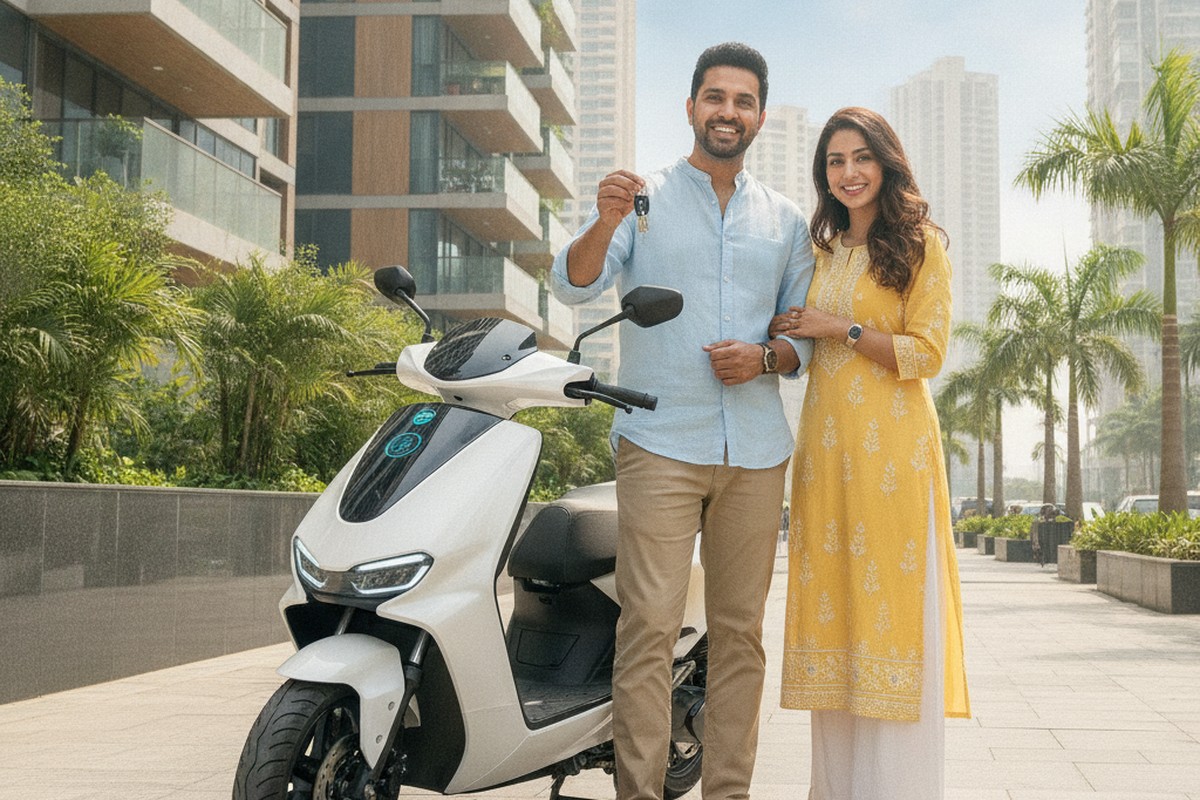
Electric Scooter Smart Features in India 2026: Which Connected Tech Actually Helps — and Which Is Just Marketing Noise

Indian commuter riding a modern electric scooter through city streets in India 2026

Electric Scooter Smart Features in India 2026: Which Connected Tech Actually Helps — and Which Is Just Marketing Noise

Walk into any electric scooter showroom in India today and you’ll be hit with feature lists that read like a smartphone spec sheet. Cricket scores on your dashboard. WhatsApp notifications while you’re riding. Alexa integration. Over 100 connected features. Voice commands. OTA updates that arrive in the middle of the night and change how your throttle responds.

For a first-time EV buyer, it’s both exciting and overwhelming. And here’s the uncomfortable truth that the Indian EV market has been slowly learning over the past few years: more features don’t automatically mean a better scooter. In some cases, they’ve meant a far worse ownership experience.

So what smart features actually make a difference to an Indian rider? And what should you happily ignore when comparing electric scooters? Let’s get into it.

The Great Feature Race — and Where It Went Wrong

The Indian electric scooter market has gone through a peculiar phase of feature inflation. As brands scrambled to justify price points and stand out in a crowded market, the feature count became almost absurdly important. One major player marketed “118+ connected features” as a headline selling point. Another showcased cricket score updates as a reason to choose their scooter.

The most high-profile example of where feature-first thinking can go wrong is Ola Electric. At its peak, Ola held more than half the Indian electric two-wheeler market. But the feature-heavy, software-driven approach came with serious real-world costs: leaked internal estimates reportedly put customer complaints at around 80,000 per month. The Central Consumer Protection Authority launched an investigation. Three-fourths of scooters reportedly experienced human-machine interface issues causing battery malfunctions and sudden stoppages mid-ride.

By early 2026, Ola had fallen from number one to fifth position in the market. February 2026 sales dropped to approximately 3,372 units — a dramatic collapse for a brand that once dominated the segment. The software platform matured over time, but the damage to buyer trust was substantial.

The lesson isn’t that technology is bad. It’s that software complexity without solid engineering fundamentals is a dangerous combination on India’s roads.

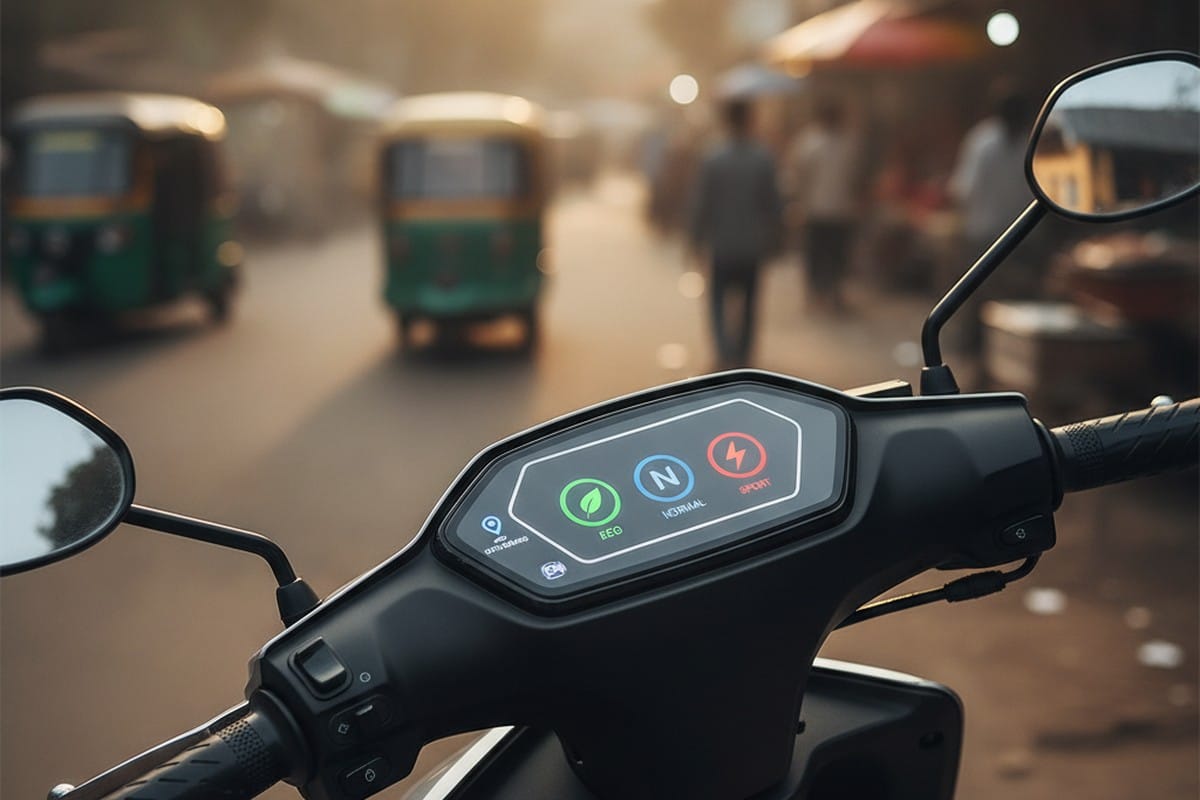
Electric scooter dashboard display showing riding mode indicators and GPS tracking India

Features That Genuinely Improve Your Ride

With that context in mind, here are the features that experienced Indian EV owners consistently rate as actually useful:

Riding modes — Eco, Normal, and Sport (or similar) modes are genuinely practical. Eco mode extends your range on a tight day. Normal mode handles daily commuting efficiently. A higher performance mode gives you extra acceleration when you need it — merging onto a main road, or carrying a pillion on a slope. This isn’t a gimmick; riders actively switch modes based on traffic, load, and battery level.

GPS tracking and anti-theft alerts — India’s urban theft rate for two-wheelers remains a real concern. A GPS-enabled anti-theft system that pings your phone when someone moves the scooter without authorisation is genuinely valuable. It doesn’t require a monthly subscription and it works whether or not you’re checking an app. This is the kind of connected feature that earns its keep.

A legible digital display — A good dashboard gives you battery percentage, range estimate, speed, and riding mode at a glance. The size and readability in direct sunlight matters more than the number of things it can show. A clear, functional 15–17 cm display tells you everything you need without requiring you to squint or scroll through menus while riding.

Regenerative braking control — Being able to choose your regeneration level (or having the system tune it automatically to conditions) makes a real difference to both range and ride feel. Some bikes handle this better than others; it’s worth paying attention to when test-riding.

USB charging port — Simple, unglamorous, and used every single day by most riders. A USB-A or USB-C port in the under-seat storage or on the handlebar panel means your phone is charged when you arrive. This belongs in the “must-have” category.

Reverse mode — Underrated on scooters above 90 kg. Parking in a tight spot or backing out of a crowded building basement is genuinely easier with a reverse function. It sounds minor until you use it daily.

Features That Sound Better Than They Work

Now for the other side of the ledger. These are features that make for impressive brochures but rarely improve daily riding in Indian conditions.

Turn-by-turn navigation on the dashboard — On paper, having Google Maps in your instrument cluster sounds brilliant. In practice, Indian riders already have their phones mounted on the handlebar with a ₹300 clamp. Phone navigation is updated constantly, works with live traffic data, and doesn’t require the scooter’s software to be bug-free. Dashboard navigation adds software complexity without meaningfully improving the rider’s experience.

Notification displays and smart assistant integration — Showing WhatsApp messages on your dashboard while navigating a busy Indian intersection is a distraction hazard, not a feature. Alexa integration and voice commands are clever to demonstrate but rarely used in daily riding. These features add connectivity dependencies that can break the experience when the relevant app or server has an issue — and they do, regularly.

OTA software updates — Over-the-air updates sound progressive. But an update that alters throttle response, braking calibration, or battery management without rider awareness creates unpredictability. Experienced EV owners describe this as one of the more unsettling aspects of software-heavy scooters. A machine that behaves consistently, day after day, is more confidence-inspiring than one where a background update might change something fundamental.

What This Means When You’re Choosing a Scooter

When evaluating electric scooters in India, separate the feature list into two columns: things that improve the ride experience directly, and things that connect your scooter to an app ecosystem. The first column is almost always worth paying attention to. The second deserves scrutiny.

Start with fundamentals — motor type, real-world range in Indian conditions, ground clearance for your roads, payload capacity, warranty terms, and whether the service network actually reaches your area. Then look at the features, and ask which ones you’ll use every single day, and which ones you’re paying for but won’t touch after the first month.

Where Elektree India Gets This Balance Right

Elektree India takes a noticeably different approach to features on its scooters — particularly the Zenith and the RV 80, which start at ₹90,164 and ₹94,363 respectively.

Both come with GPS tracking and an anti-theft alarm — practical, always-on safety features that don’t depend on app connectivity to function. You get three riding modes (Hyper, Normal, and Eco) for managing range and performance across different riding conditions. There’s a 15.5 cm digital display showing the essentials without unnecessary complexity. A USB charging port keeps your phone alive through the commute. And reverse mode, which sounds like a small thing until you’re backing out of a tight parking spot with a 75 kg scooter at the end of a long day.

The more significant differentiator is under the scooter, not on the dashboard. Elektree’s Zenith uses a mid-drive IPM (Interior Permanent Magnet) motor rather than hub-mounted BLDC motors common in many competing models. Mid-drive motors apply torque through the drivetrain rather than directly at the wheel — better performance on gradients, more consistent behaviour under varying loads, and better efficiency across real-world Indian riding conditions. It’s less marketable than “118 connected features,” but considerably more consequential to your daily ride.

The Zenith offers 80–100 km of real-world range, 180 mm ground clearance, and a 200 kg payload capacity — genuinely practical for a country where two people and cargo on one scooter is an everyday reality. The battery carries a three-year / 50,000 km warranty, and the scooters are ICAT-certified. TVS iQube starts at ₹95,124 (with PM E-Drive subsidy), Ather 450X at ₹1,48,998. The Zenith at ₹90,164 sits directly in the competitive bracket, offering solid core performance without the premium that comes with a larger brand’s marketing apparatus — or their app dependencies.

The Recommendation

If you’re buying an electric scooter in India in 2026, resist the temptation to judge by feature count. What matters is a well-engineered machine with verified performance in Indian conditions, backed by an honest warranty and a service network you can actually reach.

The features worth seeking out — riding modes, GPS and anti-theft, a practical display, USB charging, reverse — are all present on Elektree’s Zenith and RV 80. The features worth being cautious about — deep app dependencies, complex OTA update regimes, connected notifications while riding — are absent. For Indian buyers who want reliable daily transportation at a sensible price, that’s not a limitation. It’s a considered design choice, and one the market has increasingly started to appreciate.

Head to elektree.com to explore the Zenith, the RV 80, and the rest of the lineup. If there’s a dealer near you, a test ride will tell you more than any spec sheet — or feature list — ever could.

Still Running Your Activa on Petrol? Here’s the Real Math — and the Honest Trade-Offs — Behind Going Electric in 2026

Elektree Zenith electric scooter parked on an Indian city street

Walk into any residential colony in Pune, Jaipur, Hyderabad, or Chennai, and you’ll see the same thing parked outside: rows of Honda Activas. The scooter has been India’s best-seller for over two decades, and with good reason — reliable, easy to ride, widely serviced, and fuss-free. But with petrol at ₹102 per litre in most cities and electric scooters now genuinely usable on Indian roads, a lot of Activa owners are asking a question they’d have dismissed three years ago: should I finally make the switch?

It’s not a question with a simple yes or no. But it does have an honest answer — and this article will give you one, along with the numbers you need to decide for yourself.

Let’s Start with What Petrol Is Actually Costing You

Most Activa 6G owners get somewhere between 45 and 55 km to the litre in real-world city riding. Let’s use 50 km/litre as a fair midpoint. At ₹102 per litre, every kilometre costs you roughly ₹2.

If you’re riding 25–30 km a day — a typical city commute — that’s about ₹50–60 in petrol every single day. Across a month, that comes to ₹1,500–1,800. Over a year, you’re looking at somewhere between ₹18,000 and ₹22,000 spent purely on fuel. And that’s before you account for engine oil changes, air filter replacements, spark plugs, and the other small expenses that come with running a petrol engine.

An electric scooter covering the same 25–30 km will consume somewhere around 1.5–2 units of electricity. At typical Indian domestic electricity rates, that’s roughly ₹12–16. Not per litre. Per full day’s commute. You’re looking at ₹400–500 a month in charging costs — a saving of over ₹1,000–1,300 every month compared to petrol.

That’s not marketing language. It’s arithmetic.

So Why Hasn’t Everyone Already Switched?

Fair question. The honest answer is that electric scooters weren’t ready for the way most Indians actually ride — at least not until recently. Early models had modest real-world range, build quality that struggled on broken roads, and service networks that barely existed outside metros. A lot of that has changed. But some concerns are still legitimate, and understanding which fears are real and which have been overtaken by events is what will help you make a sound decision.

The Honda Activa e: — A Warning Worth Heeding

Honda’s own foray into electric — the Activa e: — is an instructive case study. On paper, it sounds appealing: the familiar Activa silhouette, an electric powertrain, claimed range of around 102 km. But dig into the details and the picture gets complicated.

The Activa e: uses a swappable battery system, which means there’s no socket for home charging. You need to swap batteries at Honda’s network of swapping stations. For riders who live near one, this can work well. For the majority of Indian riders, it means either planning your routes around swap stations or recharging anxiety replacing range anxiety.

More significantly, the battery subscription costs are reported to be roughly on par with running a 125cc petrol scooter — which largely eliminates the economic argument for going electric. Early users have also noted that the swappable battery design significantly cuts into underseat storage space.

None of this makes the Activa e: a bad scooter. But it does illustrate something important: the brand name on the headlamp doesn’t guarantee that an electric scooter solves the problems you actually have.

What Actually Matters When Choosing an Electric Scooter

Most buyers focus on range. It’s understandable — range anxiety is real. But range is only one part of the equation. Here’s what else deserves your attention:

Weight. This one is consistently underestimated. Many electric scooters weigh 110–120 kg because the battery pack adds significant mass. That’s considerably heavier than a petrol scooter, and the difference shows up every time you manoeuvre in tight parking or push the bike a short distance. For city riders, kerb weight matters more than brochures admit.

Storage. Some electric scooters — especially those using underseat battery configurations — sacrifice boot space heavily. Check the actual litre capacity before you buy, not just the headline spec.

Ground clearance. Indian roads demand at least 160–170 mm of clearance. Aggressive speedbreakers and monsoon-damaged surfaces will punish anything less than that on a daily basis.

Home charging. The most convenient thing about electric scooters — if the design supports it — is plugging in at home overnight. Not all electric scooters offer this, so confirm it before purchase.

Warranty. Battery replacements can run from ₹20,000 to ₹50,000+ depending on the brand. A solid warranty on the battery, motor, and controller is not a bonus feature — it’s a core part of calculating what you’ll actually spend over five years.

Where the Elektree Zenith Fits Into This Picture

The Elektree Zenith arrives at a starting price of ₹90,164 — significantly below most of its direct competitors in the same range and performance category. The TVS iQube, for example, starts at ₹1.20 lakh. The Honda Activa e: starts around ₹1.30 lakh. The Zenith undercuts both by a meaningful margin, and that saving from day one compresses the time it takes to recover your investment through lower running costs.

What stands out most about the Zenith on paper is its kerb weight: 75 kg. The TVS iQube weighs 110 kg — that’s a difference of 35 kg. For context, that’s approximately the weight of a large suitcase. In daily riding, that difference is noticeable. The Zenith is significantly more manoeuvrable in city traffic and easier to handle in tight parking situations.

Elektree Zenith electric scooter parked on an Indian city street

The range claim of 80–100 km under IDC conditions is honest and realistic for the 60V/35Ah lithium-ion battery. For a 25–30 km daily commute with charging every one or two nights, this is entirely practical. Charging takes 4–5 hours from a standard home socket — straightforward plug-in, no swapping infrastructure required.

The boot offers 18.5 litres of underseat storage. That’s enough for a full-face helmet with room for a small bag. The ground clearance of 180 mm is genuinely capable on rough city roads — comfortably above the threshold where speedbreakers and potholes start to become a regular problem.

The motor is a mid-drive IPM (Interior Permanent Magnet) unit — a configuration that delivers more consistent torque across different terrain and load conditions compared to the hub motors commonly found in budget electric scooters. The front disc brake offers confident stopping power, particularly in wet conditions.

Additional features include GPS tracking, an anti-theft alarm, three riding modes (Eco, Normal, and Hyper), a reverse mode for awkward parking, and a 15.5 cm instrument cluster. The Zenith is ICAT certified under AIS 156 battery safety standards, and the battery warranty covers three years or 50,000 km.

The Honest Comparison

The TVS iQube is a credible alternative — its 3.5 kWh variant reaches up to 145 km, and TVS has a well-established dealer network. If you need maximum range and value a brand with broad service coverage, it’s a reasonable spend at ₹1.4–1.5 lakh. But for commuters riding 20–40 km daily, 80–100 km of range is entirely sufficient. The Zenith’s lower price, lighter weight, and better storage make it the stronger overall proposition for most city riders — and the break-even on running cost savings comes sooner.

Electric scooter being charged at home in India using standard wall socket

The Honda Activa e:’s core limitation — and it’s a significant one — is that it forces you to rely on Honda’s battery swap network for energy, which adds a dependency and largely neutralises the economic advantage of going electric. The Zenith doesn’t have this constraint: home charging is the default, swap stations are irrelevant, and the economics of ₹5–10 per full charge translate directly into real monthly savings.

Is the Switch Worth It?

If you’re riding 20 km or more daily and your primary scooter runs on petrol, the financial case for switching to electric is genuinely strong in 2026. The technology has matured, pricing has become more accessible, and the day-to-day convenience of home charging — once you’ve experienced it — removes much of the friction that used to make electric scooters impractical for Indian conditions.

The Elektree Zenith is not a perfect scooter — no scooter is. But for commuters who’ve been riding a petrol scooter for years and are finally ready to make the switch, it’s an honest and compelling proposition: meaningfully cheaper than mainstream rivals, lighter than most competition, with genuine range, generous storage, and home charging built in.

The math is on its side. The weight is on its side. The charging convenience is on its side. And at ₹90,164, the price is too.

If you want to explore how the Zenith and other Elektree models compare to your specific riding situation — distance, terrain, charging access — the full lineup is at elektree.com. The numbers tend to do the talking themselves.

Electric Scooter EMI in India 2026: The Number Your Dealer Shows You — and the Numbers You Need to Calculate Yourself

Young Indian man calculating electric scooter EMI on smartphone with scooter beside him

Walk into any electric scooter showroom today and within five minutes, a salesperson will quote you a monthly EMI. It sounds reasonable — maybe ₹2,500, maybe ₹3,200 — and suddenly the scooter feels affordable. That number does its job well. What it doesn’t show you is the complete picture, and that gap between the EMI figure and the actual financial story of buying an electric scooter is where most buyers get surprised.

This guide breaks down how electric scooter financing actually works in India in 2026, how government subsidies can reduce what you borrow, how tenure choices affect your total payout, and — critically — why the brand you choose matters just as much as the EMI when you are locked into a loan for two or three years.

The On-Road Price Is Not the Ex-Showroom Price

This is the first number that catches buyers off guard. The price displayed prominently in showrooms, advertisements, and websites is the ex-showroom price. By the time you are actually riding home, the total cost is higher.

For an electric two-wheeler in the ₹85,000 to ₹1 lakh range, you typically add: registration charges (significantly lower for electric vehicles than petrol — often under ₹2,000 in most states), a comprehensive insurance premium for the first year (anywhere from ₹3,000 to ₹6,000 depending on the insured declared value), and any accessories or smart charger add-ons. Together, these can add ₹8,000 to ₹15,000 to what you borrow or pay upfront. That changes your EMI calculation meaningfully.

Indian man riding modern electric scooter on busy city street in India

How Electric Scooter Loans Work in India

The Indian market offers three broad lending channels for electric two-wheelers, each with its own trade-offs.

Government banks like SBI and Bank of Baroda typically offer the lowest interest rates — around 7% to 10% annually — but require a strong CIBIL score (usually 750 or above) and can take one to two weeks to process. Private banks such as HDFC, Axis, and ICICI generally charge 9% to 13%, with faster turnaround and slightly more flexibility on eligibility. NBFCs are the quickest — sometimes approving in two to three days — at rates starting around 10%, and they tend to be more accommodating if your credit profile is not perfect.

One cost that gets glossed over: processing fees. These typically run 1% to 3% of the loan amount. On a ₹70,000 loan, even a 2% processing fee adds ₹1,400 upfront. Small in isolation, but it is real money. Down payments range from ₹10,000 to ₹30,000 in most standard arrangements, though some lenders now offer 100% financing for eligible applicants — which is convenient but increases your total interest outgo considerably.

Government Subsidies That Can Reduce Your Loan Amount

Before settling on a loan amount, factor in subsidies that can legitimately reduce the principal you need to borrow.

The PM E-Drive scheme — extended through 2028 — offers benefits of ₹5,000 to ₹10,000 per eligible electric two-wheeler based on battery capacity. Many ICAT-certified scooters qualify. At the state level, Maharashtra, Gujarat, Punjab, Haryana, and Rajasthan all offer additional incentives including road tax waivers, registration fee concessions, or direct purchase subsidies. The specific amounts change periodically, so verify the current figures for your state before finalising a purchase.

If you subtract a ₹5,000 PM E-Drive subsidy from a scooter priced at ₹90,000, your effective purchase price drops to ₹85,000. A 20% down payment on that is ₹17,000, leaving a loan of approximately ₹68,000. That is a meaningfully more manageable base than the sticker price suggests.

The Tenure Decision: The Maths Your EMI Hides

On a ₹68,000 loan at 10% annual interest, the numbers across three common tenure choices look like this:

At 12 months, your EMI is approximately ₹5,950 per month, and you pay around ₹3,400 in total interest. At 24 months, the EMI drops to roughly ₹3,140 per month, but total interest grows to approximately ₹7,360. At 36 months, the EMI falls to about ₹2,195, while total interest climbs to around ₹11,000.

The lower monthly EMI always comes with a price: more interest paid over time. For most buyers, 24 months offers a reasonable balance — manageable monthly payments without surrendering too much in interest. If you can comfortably afford the 12-month EMI, the savings on total interest are real.

Here is where electric scooters make a genuinely strong argument. A typical Indian commuter on a petrol scooter spends ₹150 to ₹200 per day in fuel — roughly ₹4,500 to ₹6,000 a month. An electric scooter charging at home costs ₹5 to ₹10 per full charge. Even charging every day, your monthly electricity cost is ₹150 to ₹300. The ₹4,000 or more monthly saving in running costs can offset a substantial portion of your EMI. In many commuting scenarios, the electric scooter pays for itself in fuel savings well before the loan ends.

The Risk Nobody Discusses: Choosing the Wrong Brand on a Loan

When you sign a 24- or 36-month loan, you are making a commitment beyond the scooter itself. If the manufacturer has weak after-sales service, limited spare parts availability, or — in the worst case — quality and safety issues, you are still paying that EMI every month regardless.

India’s electric two-wheeler market has seen this play out in documented ways. Certain brands have faced product recalls, mass consumer complaints, and notices from regulatory authorities over quality and service concerns. When you are financing a vehicle over multiple years, ICAT certification, warranty quality, and service network density matter enormously. A scooter with a marginally lower EMI from a manufacturer with patchy service coverage or reliability questions can easily cost considerably more in disruption and repair over the loan tenure than a better-supported alternative.

Why Elektree Makes Sense When You Finance

Evaluating an electric scooter through the lens of financed ownership — not just the upfront price — shifts what matters.

Elektree India’s Zenith (₹90,164) and RV 80 (₹94,363) are worth examining carefully in this context. Both models carry ICAT certification and a 3-year or 50,000 km battery warranty — one of the stronger warranty commitments in this price segment. The motor is a Mid Drive IPM unit, which distributes power more efficiently than the hub motors that dominate most budget scooters in this range. In practical terms, mid drive motors handle hill starts, loaded pillion riding, and the variable surfaces of Indian city roads with more composure, and they tend to run cooler and last longer under sustained use.

The Zenith offers 80 to 100 km of IDC range, a top speed of 70 km/h, and 180 mm of ground clearance — a figure that matters more than it sounds on Indian roads with their characteristic speed breakers and uneven patches. Boot storage is a practical 18.5 litres. Standard equipment includes GPS tracking, an anti-theft alarm, three riding modes (Hyper, Normal, and Eco), a USB charging port, and a reverse mode that simplifies tight parking. The RV 80 steps up with a higher payload capacity of 200 to 220 kg, making it the more capable option for heavier riders or regular two-up commuting.

Elektree operates 54 experience centres and dealerships across India, which means service access is not concentrated in metros. Over a 24- to 36-month loan period, that kind of geographic coverage has real practical value.

Happy Indian couple with their new electric scooter outside an urban apartment

Running the Full Numbers

Take the Elektree Zenith as a concrete financing example. Ex-showroom: ₹90,164. After PM E-Drive subsidy: approximately ₹85,000. Add insurance and registration: on-road price roughly ₹92,000. With a 20% down payment of about ₹18,400, the loan amount comes to approximately ₹73,600. At 10% interest over 24 months, the monthly EMI is around ₹3,400.

Now account for running costs. Monthly electricity for charging: approximately ₹200 to ₹300. Compare that to ₹4,500 to ₹6,000 monthly in petrol for an equivalent commute on a petrol scooter. The monthly saving is ₹4,200 to ₹5,700. Put another way, the fuel saving alone more than covers the EMI — the net monthly outgo for an average commuter can be considerably lower than the petrol alternative, even while the loan is still running. That is the full picture your showroom EMI quote does not give you.

Making the Right Financing Decision

Before you sign any loan document, run through a few key questions. What is your actual on-road price, including insurance and registration? Have you verified whether your chosen model qualifies for PM E-Drive and any state-level subsidy? Are you choosing a tenure that minimises total interest without making the monthly EMI uncomfortable? And have you checked the manufacturer’s ICAT certification, warranty terms, and service network density in your city or region?

For buyers who do this analysis, Elektree India’s Zenith and RV 80 come out looking strong — not because of promotional language, but because the numbers hold up. The combination of ICAT certification, a 3-year battery warranty, a mid drive motor built for Indian conditions, 54+ service locations, and a running cost as low as ₹200 a month makes them a credible, well-rounded choice over any loan tenure you are likely to consider. Where so many electric scooters compete on range claims alone, Elektree competes on what actually matters to a buyer making a 2-to-3-year financial commitment.

Use the EMI calculator at elektree.com to model your specific loan scenario, explore the full specifications of the Zenith and RV 80, and book a test ride at your nearest Elektree experience centre. When the complete cost picture is this clear, the decision becomes much simpler.

Your Housing Society Doesn’t Have to Be Ready — Home Charging for Electric Scooters in India Is Simpler Than You Think (2026 Guide)

Electric scooter being charged using a standard wall socket in an Indian apartment building parking area

Is Your Housing Society Ready for an Electric Scooter? Here’s What Every Indian Apartment Buyer Must Check Before Signing

There’s a conversation that happens in nearly every urban Indian household before buying an electric scooter. Someone asks: “But where will we charge it?”

For those in independent homes with a driveway or accessible parking, the answer is simple. Plug in overnight, wake up to a full battery. But for the tens of millions of Indians living in apartment buildings and gated housing societies across Mumbai, Bengaluru, Pune, Hyderabad, Delhi, and beyond — the question carries real weight.

Will the RWA allow a charger installation? Do you need a special socket? Is an extension cord safe enough? What if the building’s electrical load can’t handle it? These are legitimate concerns, and nobody at the showroom is likely to sit you down and give you honest answers. So here is what you actually need to know.

What Socket Does an Electric Scooter Actually Need?

The first practical reality: virtually every electric scooter sold in India today comes with a portable AC charger that plugs into a standard 15A socket — the same three-pin heavy socket your geyser or split-unit air conditioner uses. Not the small 5A sockets scattered around your rooms. The 15A type.

Running a scooter charger through an undersized 5A outlet is a genuine safety risk. The charger draws more current than the socket can handle, and sustained overloading is how electrical fires start. If your parking area already has a 15A socket — which many buildings constructed in the last decade do, often for air-conditioning units in stilt parking — you can begin charging immediately, without any additional installation.

If no 15A socket is accessible near your scooter, you have two practical options. Either have a licensed electrician run a dedicated 15A circuit from your flat’s distribution board — typically a one-day job that costs ₹2,000 to ₹5,000 depending on the cable run length — or use a heavy-duty 15A extension lead (available for ₹800 to ₹1,500) to reach an existing socket. Never substitute a standard thin extension cord; those are rated for 5A loads and create an overloading hazard.

The Housing Society Problem — And Your Legal Rights

This is where apartment buyers get the most anxious. The honest truth is that India’s housing societies have been inconsistent about EV charging — some forward-thinking, many obstructive, and a large number simply waiting for someone to force the issue.

The regulatory picture has been improving. The Ministry of Housing and Urban Affairs requires new residential buildings to allocate 20% of parking slots for EV charging infrastructure. The Bombay High Court has established clearly that cooperative housing societies cannot unreasonably deny a resident’s application to install an EV charger — particularly when the resident is willing to follow safety requirements and bear the installation cost. Maharashtra has codified this further: once a resident completes the proper approval process and obtains clearance from the Chief Electrical Inspector, the society must issue a No Objection Certificate within seven days.

In practice, the route is: make a formal written request to your RWA or managing committee, arrange for licensed electrical work (not informal contractors), agree to separate metering so your charging consumption isn’t billed to common electricity accounts, and comply with the safety requirements around earthing, RCD protection, and fire clearance distances. A society that continues to refuse despite proper compliance has increasingly limited legal standing — and courts have been clear about that.

For those evaluating new apartment purchases: EV-ready parking infrastructure, or at minimum a cooperative management committee, is now a legitimate factor worth asking about during site visits. It will matter the moment you decide to go electric.

Close-up of an electric scooter charging port connected in an Indian housing society parking lot

What Does Home Charging Actually Cost?

This is where the maths becomes genuinely persuasive. Residential electricity in Indian cities runs between ₹6 and ₹10 per unit (kWh) for most domestic consumers, varying by state and consumption slab.

Most electric scooters in the 80–100 km range carry batteries of 2 to 3.5 kWh. A complete charge costs between ₹12 and ₹35 at home — a fraction of what 100cc petrol scooters consume to cover similar distances. For a typical commuter riding 40 km daily, three to four charges per week at ₹15–₹25 each adds up to roughly ₹200–₹400 a month in electricity. The same kilometres on a petrol scooter cost ₹1,500 to ₹2,500 at current fuel prices, conservatively.

Rates vary by state — Delhi around ₹4.50 per unit, Karnataka’s BESCOM at ₹4.50 for EV tariffs, Uttar Pradesh at ₹7.70, Tamil Nadu between ₹6 and ₹9. Across all, the cost advantage over petrol remains enormous.

How Long Does a Full Charge Actually Take?

Charging time is determined by battery size and the charger’s output wattage. This varies considerably across the market, and it matters for buyers who come home in the evening and need to leave early.

The Ola S1 Pro, with its large battery, takes around 6.5 hours for a complete home charge. The Ather 450X is approximately 5 hours. TVS iQube’s larger variant gets under 3 hours with its 1500W charger. These are meaningful differences if you have a limited window between arriving home and needing the scooter again.

Overnight charging on a modern scooter is safe without qualification. Every electric scooter sold through legitimate channels in India today includes a Battery Management System that automatically stops the charge once the battery is full. Leaving your scooter plugged in overnight will not overcharge the cells or create a hazard — provided the socket itself is in sound condition and you are using the manufacturer-supplied charger, not a third-party substitute.

Indian commuter checking phone while electric scooter charges overnight in apartment parking

Choosing a Scooter With Home Charging in Mind

Once you understand home charging realities, you start evaluating scooters differently. The relevant questions are not just about range and price — they include: does this scooter charge from a standard socket, or does it require a proprietary wall box that adds installation cost and complexity? How long does a full charge take at home? And what battery warranty is the manufacturer offering?

Some brands — Ather with its Grid, Ola with its Hypercharger network — have invested in proprietary public fast-charging stations. These are useful for occasional top-ups but irrelevant to daily home charging. For that routine reality, what matters is standard socket compatibility, manageable overnight charge time, and a battery that handles years of charge cycles reliably.

Why Elektree Is Worth a Hard Look for Home Chargers

Elektree India has built its scooter range around exactly the buyer profile that characterises the Indian urban and semi-urban market: daily commuting, home charging from a standard socket, and a strong emphasis on keeping the cost of ownership predictable.

Their flagship Zenith, priced at ₹90,164, runs on a 60V lithium-ion battery and delivers 80 to 100 km per charge in normal conditions — comfortably covering typical Indian daily commute patterns. It charges in 4 to 5 hours from a standard 15A socket, making an overnight charge completely straightforward. No wall box required. No proprietary charger hardware. No dependency on a brand-specific public network. Wherever there is a functioning 15A socket — at home, at an office car park, at a relative’s house — the Zenith can charge.

The Elektree Wheels, at ₹82,871, is designed for urban commuting up to 70 km. Its smaller battery charges faster than the Zenith — useful when your evening-to-morning window is tight. Both models are ICAT certified, carry a three-year lithium-ion battery warranty, and do not require a driving licence under current regulations.

The per-charge cost on Elektree’s models is notably low precisely because the batteries are sized for actual commuting requirements rather than headline range numbers. You are not paying to charge a 5 kWh pack when your daily route uses 2 kWh — a difference that compounds across every electricity bill.

The Bottom Line for Apartment Buyers

Home charging for electric scooters is genuinely practical for the large majority of Indian apartment and housing society residents — even in buildings that have not yet formally adopted EV policies. The infrastructure requirements are modest: a 15A socket, either already in place or installable for a few thousand rupees; an RWA that can be approached with proper documentation and, increasingly, legal backing if unreasonably obstructive; and an overnight charging habit that becomes entirely natural within the first week.

Where the scooter choice matters is in making that daily routine as frictionless as possible. A scooter with a right-sized battery, standard socket compatibility, a reasonable home charging time, and a solid battery warranty removes the friction rather than adding to it. Elektree’s range — the Zenith and the Wheels in particular — checks those boxes at prices that fit what most Indian household budgets are actually working with.

If you are seriously considering an electric scooter and home charging simplicity is on your list of requirements, the Elektree lineup is worth evaluating directly. You can explore their current models, specifications, and pricing at elektree.com.