Walk into any EV dealership today with a budget of around ₹1 lakh, and you’ll come out more confused than when you went in. There are more choices in this price band than ever before — Ola’s entry-level line, Ather’s newcomer, Honda’s debut EV, the Hero-backed Vida — each promising impressive range numbers and smart features. And almost all of them will show you a brochure figure that, on Indian roads, in Indian traffic, on a warm afternoon with a pillion, you will never actually see.
But here’s the thing that most buyers in this segment get wrong: they spend 90% of their decision-making time comparing range claims and 0% thinking about the motor. And the motor is the single most important component in your electric scooter. It determines how the scooter performs over hills and flyovers, how it holds up after two years of potholes, how much current it draws in stop-start traffic, and whether the battery that was supposed to last 50,000 km actually does.
Let’s sort through the ₹1 lakh segment properly — starting with what’s actually available, then getting into what separates the good buys from the ones you’ll regret at year two.
What’s Actually on Offer Under ₹1 Lakh Right Now
The most talked-about option in this price band is the Ola S1 Z, starting at ₹79,999 for the 3.1 kWh variant, with a 5.1 kWh version at ₹99,999. Ola claims an extraordinary 301 km of range on the top variant — a number that raises more questions than it answers. The motor is a 4 kW hub unit, top speed is 70 km/h, and the scooter runs MoveOS 5 with decent connectivity. Ola’s service infrastructure has been a sore point historically, though they’ve been working to address it.
The Ather Konarc S at ₹99,999 is a more composed entry — 4.7 kW motor, 100 km IDC range on the base variant, 70 km/h top speed, 31 litres of boot space, and Ather’s generally well-regarded after-sales service. Ather has built a reputation for honest range figures and solid software, which counts for something in a market full of optimistic brochures.
The Honda QC1 at ₹90,708 is Honda’s first electric scooter in India, and it shows both the brand’s quality DNA and its conservative approach. The 1.8 kW motor limits top speed to 50 km/h, ARAI-claimed range is 80 km, and charging takes 6.5 hours. Honda’s reliability credentials are impeccable, but the QC1’s performance ceiling makes it better suited to light city use than daily highway-speed commuting.
The Vida VX2 (Hero’s EV brand) sits at ₹84,999 with a 128 km claimed city range and 70 km/h top speed. User reviews are strong, and the Hero service network is an undeniable practical advantage across smaller towns and cities.
The Motor Conversation Nobody Is Having
Every scooter listed above uses a hub motor — the motor is built directly into the rear wheel. Hub motors are simple, cheap to manufacture, and perfectly adequate for flat city roads. But they have limitations that matter on Indian terrain: they struggle on steep inclines, generate more heat in slow traffic, and put mechanical stress directly on the wheel bearings. When a hub motor needs servicing, it often means pulling the wheel.
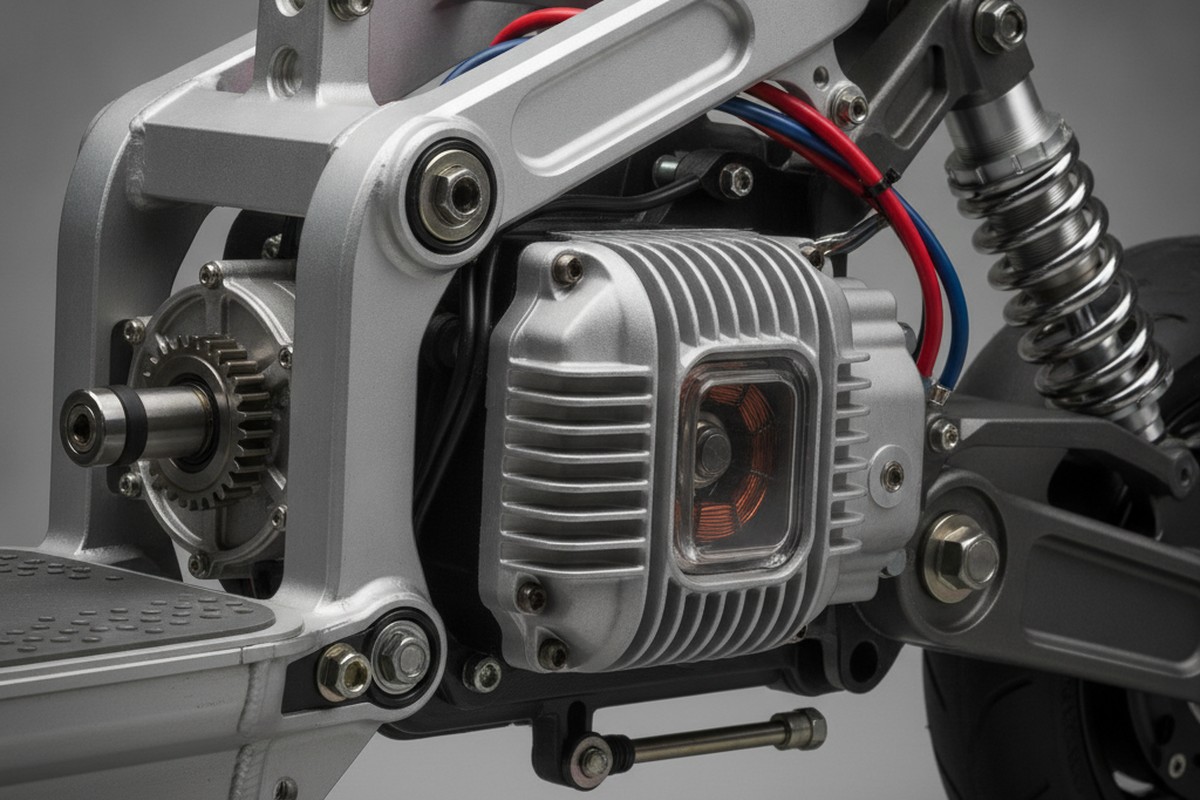
A mid-drive motor is placed at the centre of the scooter, between the axles, and drives the wheel through a reduction mechanism. This isn’t new technology — it’s been standard on premium electric bikes for years — but it’s extremely rare on Indian electric scooters at this price point. The advantages are real: better torque delivery for climbing, lower operating temperatures because the motor isn’t trapped inside a wheel, more balanced weight distribution, and easier maintenance access.
This is where the Elektree Zenith enters the picture — and it enters at ₹90,164.

The Elektree Zenith: What the Motor Means for Indian Buyers
The Zenith carries an IPM mid-drive motor — Interior Permanent Magnet, a motor architecture known for high efficiency and strong low-speed torque. In practical terms for an Indian rider, this means the Zenith pulls cleanly over speed breakers and underpasses without the laboured feeling you get from smaller hub motors, and it does it without the same heat buildup on a slow commute through dense traffic.
The claimed range is 80–100 km (IDC), which is honest for this battery size and realistic in mixed riding conditions. Top speed is 70 km/h — the same ceiling as Ola and Ather in this band — and the 0-40 km/h acceleration clocks at 2.1–2.3 seconds, which is genuinely quick. Three riding modes (Hyper, Normal, and Eco) let you tune the experience based on the commute or your battery level that day.
What stands out beyond the motor is the payload capacity: 200 kg. That covers a rider, a pillion, a helmet bag, and your office supplies without the scooter sagging. Most competitors in this price range handle 150–160 kg before you’re stretching rated capacity. Ground clearance is 180 mm — comfortably above what you need for most Indian road conditions, including the kind of broken surfaces that tend to exist just before monsoon repair crews arrive.
Boot storage is 18.5 litres, which will take most daily-use needs. The 15.5 cm instrument display, USB charging port, reverse mode, anti-theft alarm, GPS tracking, and LED headlamp with DRL round out a practical feature set. The Zenith is ICAT-certified, which means it’s gone through government-mandated testing for both safety and emissions compliance — not all budget EVs can say the same.
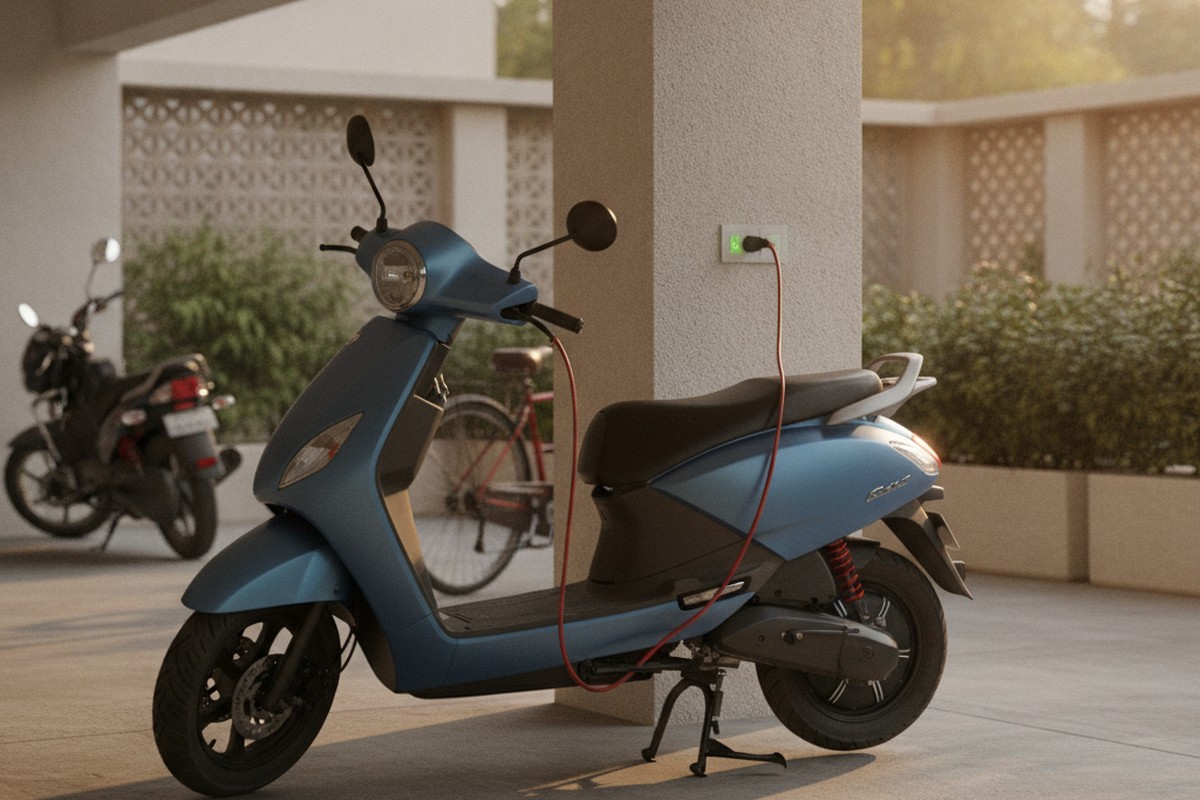
Battery warranty is 3 years or 50,000 km for the lithium-ion pack. This matches what Honda and Ather offer and is better than several others in this segment. The scooter charges in 4–5 hours from a standard home socket, which for most buyers means plugging in overnight and leaving with a full charge every morning.
How Elektree Compares Where It Counts
The Ola S1 Z’s 301 km range claim deserves scrutiny: independent real-world tests of Ola scooters have consistently shown significant gaps between claimed and delivered range figures, and the 3.1 kWh base variant is unlikely to deliver anywhere close to that figure in regular Indian use. Ola’s service experience, while improving, remains uneven across cities. For buyers in metros with Ola Experience Centres nearby, it’s manageable. For buyers in tier-2 cities, it’s a genuine risk.
The Ather Konarc at ₹99,999 is a solid, trustworthy option — Ather’s build quality and software are genuinely good — but it costs ₹10,000 more than the Zenith for comparable performance specs, and uses a hub motor. Honda’s QC1, while backed by an unmatched service network, tops out at 50 km/h and takes over six hours to charge, which limits its versatility. The Vida VX2’s Hero service network is a real asset, particularly outside major cities. But at ₹84,999 with a hub motor, it doesn’t offer the motor architecture advantage the Zenith does at just ₹5,000 more.
None of this is to say the Elektree Zenith is without trade-offs. Elektree is a smaller manufacturer than Ola, Ather, or Hero, and their service network — currently 54+ dealers across India — is more limited than legacy brands. For buyers who live in cities where Elektree has a dealer presence, this is a manageable consideration. For buyers in remote locations, it’s worth checking dealer availability before committing.
Who Should Seriously Consider the Elektree Zenith
If your daily commute is 30–60 km round-trip, you carry a pillion regularly, you live in or near a city with road gradients that challenge underpowered scooters, and you want a three-year battery warranty without stretching past ₹90,000 — the Zenith is worth your time. The mid-drive IPM motor is not a marketing claim; it’s an engineering choice that Indian roads reward over time.
The ₹1 lakh EV segment in India has matured quickly, and there are legitimate options across it. But when you look past the brochure range figures and think about what a mid-drive motor means for a scooter you’re going to ride every day for five years — over flyovers, through monsoons, with a pillion, in summer traffic — Elektree’s engineering approach starts to look increasingly sensible.
For Indian buyers who want to spend their ₹1 lakh on a machine built for Indian conditions rather than designed around a range claim, the Elektree Zenith deserves serious consideration. It’s not the cheapest option in the segment, nor the most aggressively specced on paper. But it may be the most honest choice for what Indian commuting actually demands — and that matters when you’re the one doing the commuting every day.
Explore the Elektree Zenith and the full Elektree India electric scooter range at elektree.com.