Electric Scooter Battery Replacement Cost in India 2026: The Number Nobody Tells You Before You Sign
Walk into any electric scooter showroom in India today, and the salesperson will walk you through range, top speed, app features, colour options, and the monthly EMI. What they almost never discuss — unprompted — is what happens to your wallet in year four or five, when the battery starts degrading and the warranty has run out. That single number — the out-of-warranty battery replacement cost — can be the difference between an EV ownership story you tell proudly and one you would rather forget. If the battery question is nagging at you, here is the honest picture.
How Long Does an Electric Scooter Battery Actually Last?
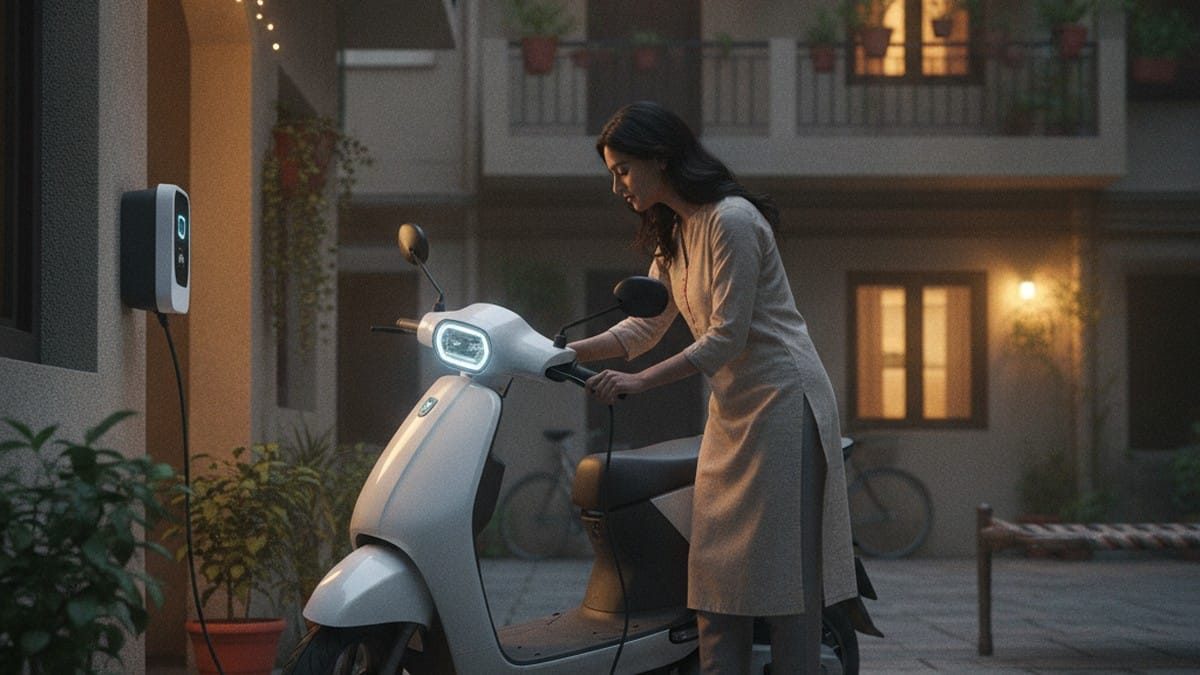
Modern lithium-ion battery packs used in mainstream Indian electric scooters are significantly more durable than the lead-acid batteries of the previous generation. Industry data and manufacturer testing suggest that a well-maintained lithium-ion pack can realistically last five to eight years, or roughly 50,000 to 80,000 km under normal usage — retaining 70 to 80 percent of its original capacity even at that stage. For a daily commuter covering 40–50 km, replacement becomes genuinely necessary only after many years of use. That is important context before you let battery anxiety drive your decision.
Longevity is not automatic, though. Batteries that get fully drained to zero and then fast-charged back to 100 percent every day will age faster than those kept in the 20 to 80 percent sweet spot on standard overnight charging. How you charge matters as much as how much you ride.
The Real Replacement Numbers: What India’s Top Brands Charge
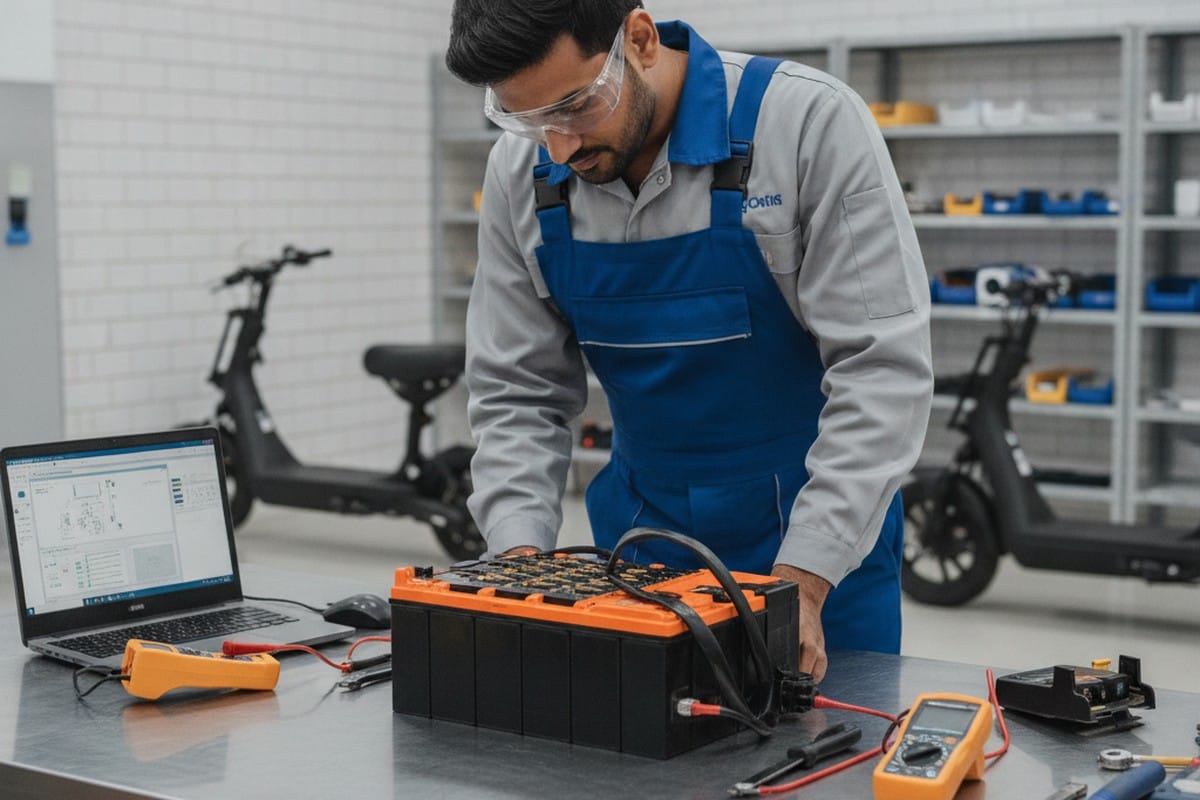
Let’s get into the specific figures, because vague reassurances about “future costs” don’t help you make a decision today. Based on current 2026 market data, here is what a full OEM battery pack replacement costs across the major brands:
Ola Electric: The most popular brand in India also carries some of the steeper replacement costs, driven by battery sizes. The S1 X with a 2 kWh pack runs ₹45,000–50,000. Step up to the 3 kWh version and you’re looking at ₹70,000–75,000. The S1 Pro with its 4 kWh battery sits at ₹85,000–90,000, and the flagship S1 Pro+ with the 5.2 kWh pack can cost ₹1,10,000–1,20,000 to replace.
Ather Energy: The 2.9 kWh pack found in the 450S and Rizta S costs ₹60,000–65,000. The larger 3.7 kWh battery in the 450X, Rizta Z, and Apex comes in at ₹70,000–80,000.
TVS iQube: Entry-level 2.2 kWh battery: ₹45,000–50,000. The 3.1 kWh pack: ₹65,000–70,000. The 3.5 kWh: ₹75,000–80,000. The iQube ST’s 5.3 kWh pack will cost you ₹1,15,000–1,20,000 — approaching the price of an entire budget scooter.
Bajaj Chetak: The Series 25 (2.5 kWh) costs ₹55,000–60,000 to replace. Series 30 (3 kWh) runs ₹70,000–75,000, and the Series 35 (3.5 kWh) is ₹75,000–80,000.
Hero Vida: The VX2 Go (2.2 kWh) starts at ₹45,000–50,000. The V2 Plus and VX2 Plus (3.4 kWh) cost ₹70,000–75,000, while the flagship V2 Pro (3.9 kWh) runs ₹80,000–85,000.
The pattern is clear: bigger battery = higher replacement cost. When you’re buying a flagship scooter with a 4 to 5 kWh pack for its impressive range, factor in that a future battery replacement could cost as much as half the original purchase price.
What the Warranty Actually Covers — and What It Doesn’t
Every major brand in India currently offers a standard three-year battery warranty, but the details matter enormously and vary significantly. Ola offers three years or 50,000 km, with the notable feature of a State of Health (SoH) guarantee — if your battery’s certified capacity drops below 70 percent within the warranty period after 10,000 km of use, Ola will replace it. Ather’s standard three-year, 30,000 km coverage also includes an SoH guarantee, and they sell an extended “Eight70” plan for ₹4,999 that stretches protection to eight years or 80,000 km. TVS offers three years or 30,000 to 50,000 km depending on the model, with extensions available at ₹5,999–15,000. Hero Vida stands out with a five-year, 50,000 km standard warranty — the most generous in the mainstream segment.
Across all brands, the coverage typically becomes void if you use an unapproved third-party charger, modify the battery or connectors, miss scheduled service appointments at authorised centers, or experience water damage beyond the scooter’s tested IP rating. Some brands explicitly exclude rodent damage. The fine print around flood damage is worth reading carefully if you live in areas that experience heavy monsoon waterlogging.
Not every battery problem requires a full pack swap, either. BMS (Battery Management System) failures — which can cause range loss, charging errors, or unexpected shutdowns — sometimes cost just ₹8,000–20,000 to fix. Cell-level replacement and battery refurbishment services are emerging alternatives in larger metros, at lower cost than OEM replacements.
What Smart Buyers Should Ask Before Signing
Before signing, ask every dealer these questions: What is the exact battery warranty in both years and kilometres — and which runs out first? A 3-year, 30,000 km warranty is meaningfully weaker than a 3-year, 50,000 km warranty for a daily commuter. Is there a State of Health (SoH) guarantee, or just a time-based coverage? What does the full OEM replacement cost today — and does the brand publish that number proactively? Is an extended warranty available, and what does it actually cover? And finally: how quickly can you get your scooter serviced at an authorised centre near where you actually live?
Where Elektree India Fits Into This Picture
Most of the battery discussion above centres on the headline brands that dominate marketing budgets and showroom space. But there is a segment of the Indian electric scooter market where a different calculation applies — one worth examining carefully, because it changes the battery replacement maths considerably.
Elektree India builds ICAT-certified electric scooters on lithium-ion platforms, with prices starting at ₹82,871 for the Wheels and ₹90,164 for the Zenith — significantly under one lakh rupees. The Zenith, which is their best-known scooter, runs a 60V/35Ah lithium-ion battery, delivers an IDC range of 80–100 km, and charges fully in four to five hours on a standard home socket. The RV 80 sits at ₹94,363 with comparable specifications.
Here is why this matters for the battery conversation. The Zenith’s battery pack capacity — approximately 2.1 kWh — is smaller than what you find in a premium scooter like the Ola S1 Pro or TVS iQube ST. That directly translates to lower future replacement cost. Unlike the larger packs in flagship models that can cost ₹85,000–1,20,000 to replace out of warranty, a smaller, well-engineered lithium-ion pack involves less raw cell cost. For buyers whose daily commute is 40–60 km and who don’t need a 150 km range buffer, paying for battery capacity they will never regularly use — and then facing a proportionally larger replacement bill years later — is not a rational trade-off.
Elektree covers its batteries with a 3-year or 50,000 km warranty, matching what Ola and Bajaj Chetak offer on their standard plans. The scooters are ICAT-certified — meaning they have passed India’s official vehicle type-approval testing, not merely met a loose standard. The Zenith’s 180 mm ground clearance and monoshock rear suspension address the Indian road quality concern directly, and a 200 kg payload capacity handles the typical two-up riding scenario without complaint. Features like GPS tracking, anti-theft alarm, reverse mode, three riding modes, and on-board USB charging are standard — not part of an upgraded variant.
Charging at home costs ₹5–10 per full charge at current electricity tariffs — roughly ₹100–150 added to a monthly bill for a typical commuter, compared to what the same distance costs in petrol.
The Honest Recommendation
If your buying criteria prioritise the most impressive specifications table in its category regardless of cost, Ola, Ather, and TVS will always win that comparison — they have larger batteries, longer ranges, and more developed service networks in major cities. Those are real advantages and this article is not trying to pretend otherwise.
But if your priority is a reliable, lithium-ion scooter that handles Indian daily commuting well, comes ICAT-certified, carries a meaningful warranty, and keeps both the purchase price and future ownership costs within rational bounds — Elektree India is a genuinely competitive option that many buyers skip simply because it does not spend on large advertising budgets.
Battery replacement is a fear that, when examined honestly, rarely materialises before seven or eight years of ownership. When it does, the cost is proportional to the pack size you chose. A well-engineered scooter with the right-sized battery for your actual usage, from a brand transparent about specifications and warranty terms, is the decision that protects you financially over the long run.
Elektree’s scooters are built around that philosophy. If the question you have been asking yourself is “what happens to my money when the battery needs replacing?”, it is worth spending some time at elektree.com to understand what you are actually getting — before you sign anything at a bigger showroom down the road.