Your First Electric Scooter as a College Student in India: What Actually Matters Before You Spend ₹90,000
There’s a certain ritual every college student goes through. Someone in the hostel shows up with a shiny new electric scooter. Within a week, three more have ordered one online. By the end of the semester, at least one is parked in a corner with a “charging problem” nobody can fix. The service centre is forty kilometres away. The dealer has stopped answering calls.
Buying your first electric scooter in India is genuinely exciting, but it’s the kind of decision where a few wrong assumptions cost you real money and real frustration. This isn’t a generic spec-sheet comparison. It’s a practical breakdown of what college riders actually need, what the market looks like right now, and why some options make far more sense for students than the ones dominating social media feeds.
The Financial Case Is Already Settled
Let’s get this out of the way quickly because the numbers really do speak for themselves. A college student riding 25 kilometres a day on a petrol scooter spends somewhere between ₹1,500 and ₹2,000 a month on fuel alone at current prices. That’s ₹18,000 to ₹24,000 annually — money that either comes from home, from part-time work, or from reducing other expenses. On an electric scooter covering the same distance, electricity costs work out to ₹200 to ₹350 a month. The saving over a year is real and significant, and over three years it can comfortably offset a meaningful portion of the scooter’s purchase price.
Maintenance adds another layer. Petrol scooters mean periodic oil changes, air filter replacements, and carburetor servicing — ₹2,000–₹3,500 annually even when nothing goes wrong. Electric drivetrains have no engine oil, no air filter, no clutch plates. Annual maintenance for a well-built electric scooter is around ₹500–₹1,200. For a student managing a tight monthly budget, these numbers matter.
What a College Student Actually Needs from an Electric Scooter
This is where most first-time buyers go wrong. They open a comparison site, sort by range, and assume the highest number wins. But claimed range figures in India are measured under test conditions — typically a light rider, flat surface, moderate temperature, and steady speeds. Real-world range in actual riding conditions, particularly in a city or town with stop-and-go traffic, hills, and full load, is typically 60–75% of that figure. A scooter claiming 150 km on the spec sheet might genuinely deliver 90–100 km on the road.
For most college students, this barely matters. The average student commute in India — hostel to campus, campus to a coaching class, a quick ride to the market — is somewhere between 15 and 30 kilometres a day. A scooter delivering 80 km of real-world range is, for most students, effectively a scooter you charge every few days. The range obsession makes more sense for someone riding 70 km daily; for a college commuter, a reliable 70–100 km real-world range is more than adequate.
What matters more for the student use case is: ground clearance for Indian roads (broken roads, speed bumps, waterlogged streets during monsoon), boot space sufficient for a backpack or books, ride comfort on a bike that might sit idle for days and then get used intensively, and — critically — a service network that actually functions near your college town, not just in the four major metros.
The Current Market, Honestly Assessed
In the ₹75,000–₹1 lakh range where most student purchases land, options have genuinely improved. The Ola S1 X (₹89,999) offers 108–151 km claimed range and a 90 km/h top speed — a legitimate contender if you’re near a reliable Ola service network. The Hero Vida VX2 (₹45,000–₹60,000) makes sense on a very tight budget. The TVS iQube S at ₹94,999 brings TVS’s established service presence, which counts in smaller cities.
Here’s the honest observation though: the most advertised options aren’t always suited to students outside Delhi, Mumbai, Bengaluru, or Pune. Service availability in Tier 2 and Tier 3 cities — where lakhs of Indian college students actually study — varies dramatically across brands. A scooter serviced promptly in HSR Layout or Andheri West can become a serious headache in Gorakhpur, Siliguri, or Kota.
Where Elektree India Enters the Conversation
Elektree India isn’t a name dominating automotive press, but it deserves a serious look from students who prioritise value, build quality, and real-world ownership over marketing spend.
The Elektree Zenith (₹90,164) and Elektree RV 80 (₹94,363) sit within the student budget range and are worth examining on their own terms. The Zenith is ICAT certified — which means it has cleared India’s central regulatory testing requirements — and runs a mid-drive IPM motor, a motor architecture that tends to deliver better efficiency and durability in stop-and-go riding compared to hub motors. For a student riding in city conditions, this translates to more consistent performance over time.

Claimed range for the Zenith is 80–100 km on the IDC cycle. Applying the 65–75% real-world discount, you’re looking at 55–75 km per charge in urban riding — which, as argued above, comfortably covers the daily needs of most college students. Top speed is rated at 70 km/h, with three riding modes (Eco, Normal, and Hyper) that let you dial back consumption when you’re just navigating campus. Ground clearance at 180 mm handles most Indian road conditions reasonably well. Boot storage at 18.5 litres will take a standard college backpack.
The feature list adds practical touches: anti-theft alarm, GPS tracking, LED headlamp with DRL, reverse mode for tight parking, USB charging port, and a 15.5 cm digital instrument cluster — everything a daily student rider needs without unnecessary extras.
The Warranty That Actually Changes the Calculation
For a first-time EV buyer — and especially for a student whose parents are likely co-funding the purchase — battery anxiety is real. “What if the battery dies? What does a replacement cost?” are legitimate questions, and the answers from some manufacturers are genuinely alarming. Replacement batteries for certain popular electric scooters can cost ₹30,000–₹50,000 or more, which effectively erases years of fuel savings in one shot.
Elektree backs its lithium-ion battery with a 3-year / 50,000 km warranty. For a student who might ride 6,000–8,000 km a year, that warranty is effectively covering most of their college years. It’s a meaningful reassurance, not just a marketing point — if the battery performs below specification within that window, you have recourse. This is the kind of practical ownership detail that doesn’t show up in spec-sheet comparisons but matters enormously when you’re deciding whether to spend your savings, or convince your family to spend theirs.
Charging: What the Hostel Reality Looks Like
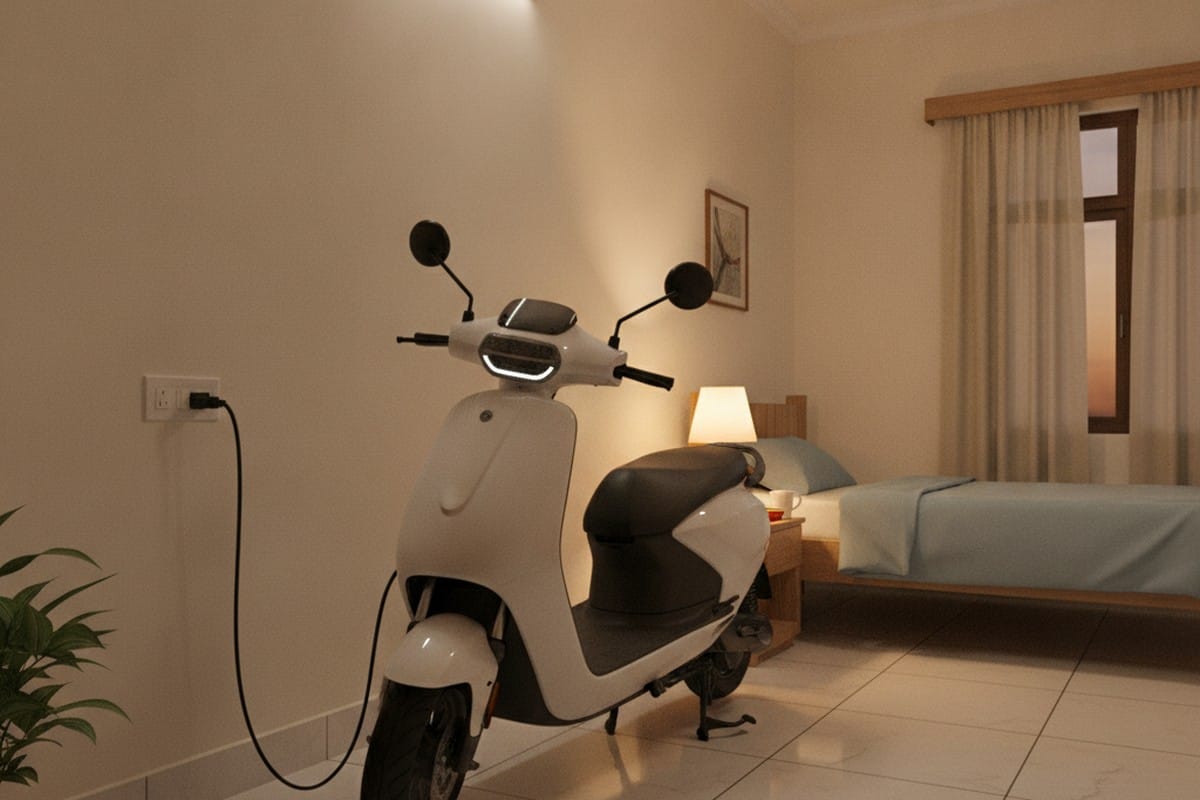
One concern students consistently raise is charging at a hostel or PG. The Elektree Zenith charges fully in 4–5 hours from a standard 5-amp socket — the kind found in most hostel rooms. Plug in overnight, just as you’d charge a phone. Cost works out to ₹5–10 per full charge, giving a monthly running cost of roughly ₹150–₹300 depending on how much you ride.
The Verdict for Student Buyers
If you’re a college student evaluating your first electric scooter in India, the framework is straightforward. You need adequate real-world range for your actual commute (not the maximum the spec sheet claims), reliability from a brand with a legitimate service presence near your college, and a battery warranty that protects you for at least three years. The purchase price matters, but so does the total cost of ownership over your college years.
The Elektree Zenith and RV 80 address these criteria in a way that many of the more heavily marketed alternatives don’t. The pricing is competitive, the battery warranty is among the stronger ones in this segment, the ICAT certification confirms regulatory compliance, and the mid-drive motor is a durability and efficiency advantage in urban stop-and-go riding. With 54+ dealers across India and over 6,800 customers, Elektree has a growing real-world presence beyond just the major cities.
This doesn’t mean Elektree is the only option, or that other brands have nothing to offer. TVS’s service network is genuinely impressive if you’re in a city where it’s strong. Hero Vida makes sense on an extremely tight budget. But for a student who wants a well-built, warranty-backed, practical electric scooter at a price that makes sense — and wants something built by a manufacturer that has spent years thinking about what Indian riders actually need rather than what looks impressive on a spec sheet — Elektree deserves to be at or near the top of your shortlist.
The best electric scooter for college students in India isn’t the one with the longest claimed range or the most aggressive marketing. It’s the one that starts reliably on Monday morning, doesn’t drain your savings account in year two, and is actually serviceable in the city where you study. Spend some time exploring what Elektree India has to offer at elektree.com — it’s worth a proper look before you decide.