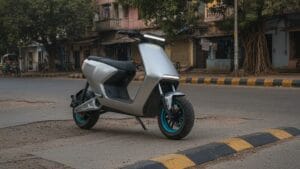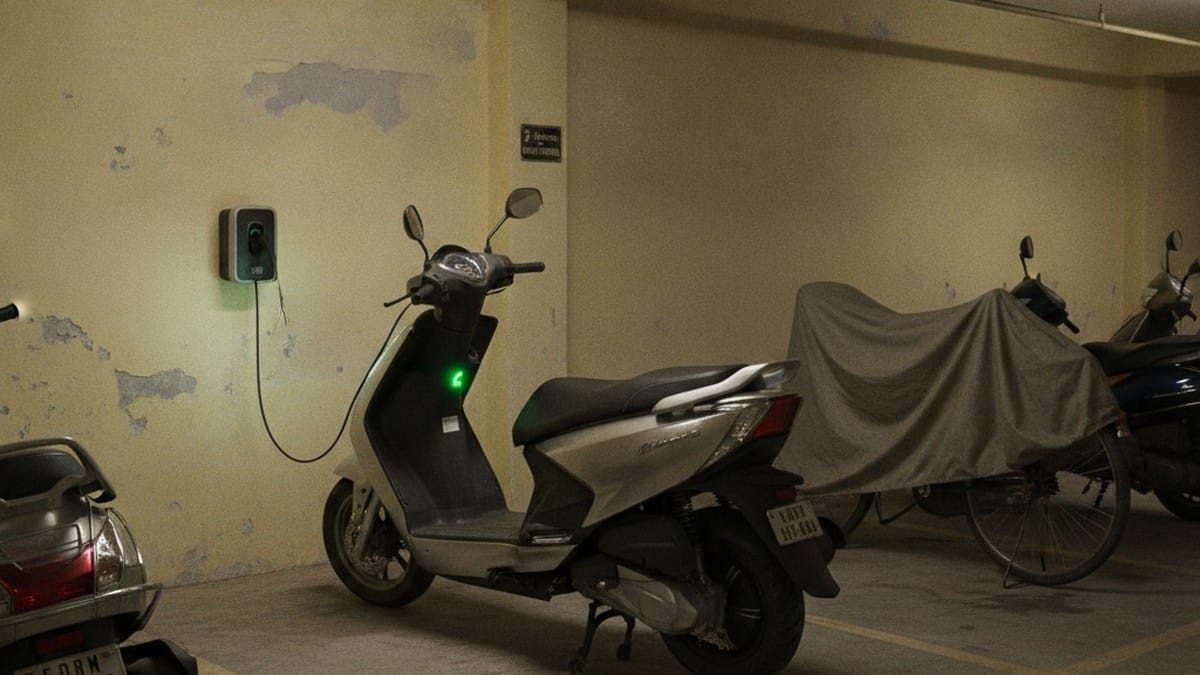
The electric scooter salesperson will walk you through range figures, charging time, top speed, and the monthly EMI. They will show you the app connectivity, the regenerative braking modes, and the slick digital dashboard. What they rarely volunteer — and what most buyers never think to ask — is what happens when the battery, the single most expensive component in your scooter, needs to be replaced once the warranty has run its course.
This is not a fringe concern. Lithium-ion batteries degrade over time. The degradation is gradual and imperceptible in the early years, but by year four or five, a meaningful number of Indian EV scooter owners are discovering that their scooter’s real-world range has quietly shrunk by 15 to 25 percent. And when the warranty has expired, the replacement bill can be a genuinely unpleasant surprise — one that can rival a significant portion of what they paid for the scooter itself.
Here is what the numbers actually look like in 2026, and what to factor in before you sign on the dotted line.
What Actually Happens to Your Battery Over Time
Lithium-ion batteries do not fail suddenly, the way a petrol engine might seize. What happens is a slow erosion of capacity — each charge-discharge cycle leaves the battery with marginally less usable energy than before. A scooter that once delivered 90 km of honest real-world range might return 70–75 km after three to four years of regular use. This is not a defect. It is electrochemistry doing exactly what electrochemistry does.
Indian conditions are harder on batteries than temperate climates. High ambient temperatures — Pune and Nagpur summers regularly cross 44°C — accelerate cell degradation. Stop-and-go urban traffic with frequent braking and acceleration cycles adds to the stress. Charging twice daily in summer (as many riders do) compounds it further. Under these real-world conditions, the optimistic end of the 5–8 year lifespan estimate that most manufacturers quote should be taken with appropriate scepticism for urban commuters in hot cities.
The first symptom is rarely a warning light. It is simply shorter trips before the next charge — a gradual tightening of the scooter’s practical radius that most owners initially attribute to riding style or traffic, before realising the battery is quietly losing capacity.
The Replacement Numbers: What Each Brand Will Charge You
Out-of-warranty battery replacement costs in India vary significantly by brand and, more importantly, by pack size. Here is where things stand in 2026 across the main players:
Ola Electric’s S1 X with the entry-level 2 kWh pack costs ₹45,000–₹50,000 for a replacement battery. The S1 Pro with its 4 kWh pack comes in at ₹85,000–₹90,000. The flagship S1 Pro+ with a 5.2 kWh pack goes up to ₹1,10,000–₹1,20,000 — a number that gives even enthusiastic EV advocates pause.
Ather Energy’s 450S and Rizta (2.9 kWh) run ₹60,000–₹65,000 for battery replacement. The 450X, Rizta Z, and Apex with the 3.7 kWh pack come in at ₹70,000–₹80,000.
TVS iQube ranges from ₹45,000–₹50,000 for the entry 2.2 kWh version up to ₹1,15,000–₹1,20,000 for the extended-range ST variant with its 5.3 kWh pack. Bajaj Chetak’s newer series starts at ₹55,000 for the 2.5 kWh pack and goes up to ₹75,000–₹80,000 for the 3.5 kWh variant.
The pattern is consistent and instructive: battery replacement cost scales closely with pack size. Bigger battery, bigger bill — both at purchase and at replacement.
The Battery Size Problem Nobody Talks About
EV marketing has conditioned buyers to equate a larger battery with a better scooter. Longer range numbers are psychologically reassuring, even when the actual daily commute does not come close to requiring them. But there is a real cost to oversizing a battery that goes far beyond the sticker price.
Consider the average Indian urban commuter: office in the morning, possibly a school drop, evening errands, home. Most people’s actual daily round trips fall between 25 and 50 km. A well-engineered scooter with a 2 kWh battery that covers this distance reliably — without being stressed by daily deep discharge cycles — is not a compromise scooter. It is an appropriately sized one.
The 4 kWh or 5 kWh pack that gives you 150+ km of range is doing nothing useful for 70 percent of your actual charge cycles. It costs more at purchase, more at replacement, adds weight that affects handling on narrow urban roads, and charges slower. For the 40-km daily commuter in Chennai or Hyderabad, it is engineering overkill at a financially significant premium.
What You Can Actually Do to Slow Battery Degradation
Before any replacement conversation becomes necessary, there are a few habits that meaningfully extend lithium-ion battery life in Indian conditions — and most of them cost nothing.
Avoid making fast charging your daily habit. DC fast charging generates heat within the cells that accelerates degradation. It exists for road trips and emergencies. If you have access to a standard home charger overnight, use it. A 4–5 hour slow charge is consistently kinder to the cells than a 45-minute fast charge, and over hundreds of cycles the difference compounds.
Avoid regularly running the battery below 20 percent. Lithium-ion cells prefer to live between 20 and 80 percent charge. Regular deep discharges — the kind that happen when riders squeeze out every last kilometre before a charge — shorten cycle life over time.
Where you park matters more than most people realise. A battery sitting fully charged in 45°C direct sunlight degrades measurably faster than one stored at 50 percent charge in a shaded parking spot. If you park outdoors in summer, try to leave it at 70–80 percent charge rather than 100 percent.
None of this eliminates degradation. Lithium-ion cells will age. The habits simply determine how fast.
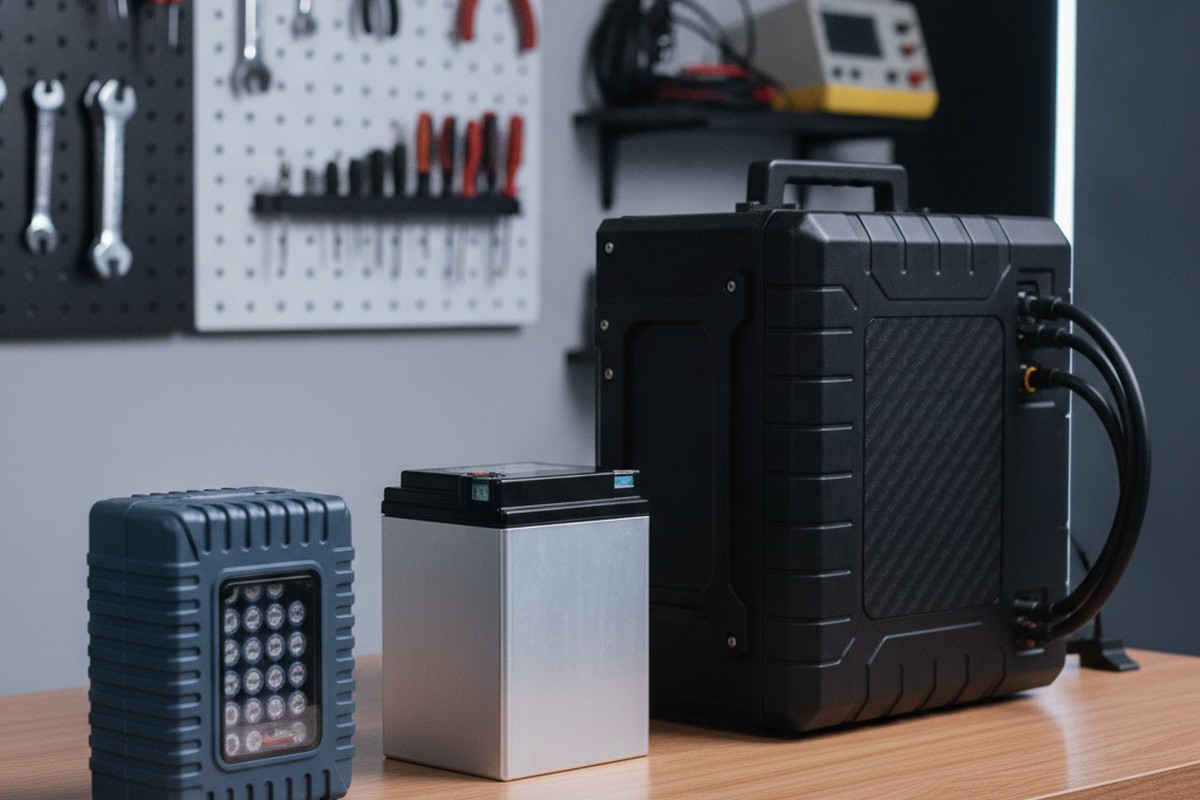
Why the Right-Sized Battery Matters: The Elektree Case
Elektree India has built its scooter lineup around a principle that the mainstream EV marketing rarely emphasises: matching the battery to the actual use case of the Indian commuter, rather than competing on headline range numbers.
The Elektree Zenith — priced at ₹90,164 — carries a 2.1 kWh lithium-ion battery that delivers 80–100 km of ICAT-certified range. For a buyer whose daily round trip is 40–50 km, this covers the working week comfortably with a single charge. The scooter’s mid-drive IPM (Interior Permanent Magnet) motor is notably more efficient and smoother at low-to-mid speed than the conventional hub-motor configurations that dominate this segment — meaning the battery is not working harder than it needs to be for the same kilometre output.
The battery warranty runs to three years or 50,000 km. This is not a headline-grabbing number, but it is an honest one — specific and verifiable rather than the vague “up to 8 years” claims that often turn out to cover only catastrophic failure, not the gradual capacity loss that Indian buyers actually care about. The scooter is ICAT-certified and carries a 200 kg payload rating — a practically relevant figure for an Indian household where the pillion seat is used regularly, not occasionally.
Running the Numbers: What Total Ownership Actually Looks Like
Take two buyers in the same city, at comparable budget levels. One purchases a mainstream 3.7 kWh scooter at ₹1.25 lakh, attracted by the headline range. The other chooses the Elektree Zenith at ₹90,164, covers the same 40 km daily commute, and charges at home every night for ₹5–10 per full cycle.
Both riders have zero range anxiety for their actual commute. But when the battery warranty expires in five to seven years and degradation has reduced usable range, their situations diverge significantly. The first rider faces a replacement bill of ₹70,000–₹80,000 for the 3.7 kWh pack. The second rider — with Elektree’s smaller, right-sized battery — faces a substantially lower replacement cost for a pack of comparable chemistry and size to the least expensive offerings in the market.
The ₹35,000 initial price difference compounds further when the battery replacement cost is factored across the ownership period. The scooter marketed on its larger battery turns out to be the more expensive one — not just at purchase, but across the full lifecycle.
What You Should Actually Look For Before You Buy
Calculate your genuine daily requirement, then add a 20 percent buffer for real-world variation and moderate long-term degradation. If that number is under 80 km, a well-engineered sub-2.5 kWh scooter covers you completely.
Read battery warranty terms carefully — not just the duration, but what triggers coverage. A warranty that only activates on complete battery failure is less useful than one with a capacity retention threshold. Ask the dealership specifically what percentage of original capacity is covered, and for how long.
Consider the chemistry. LFP (Lithium Iron Phosphate) batteries are chemically more stable in high-heat environments like India compared to NMC cells, and generally have longer cycle lives even if their energy density is slightly lower. If a manufacturer specifies LFP for their pack, that is a genuine long-term advantage in Indian operating conditions — worth more than the specification sheet might suggest.
Elektree India’s approach — right-sized battery, efficient motor technology, ICAT certification, honest warranty, and pricing that keeps total ownership economics genuinely manageable — addresses the battery replacement concern from the purchasing decision itself, rather than leaving buyers to discover it five years later. For the Indian commuter who wants a scooter built around how they actually ride rather than how they might ride on a good day, the Zenith is worth a serious look.
You can explore Elektree India’s full lineup, including the Zenith and their extended-range models, at elektree.com.