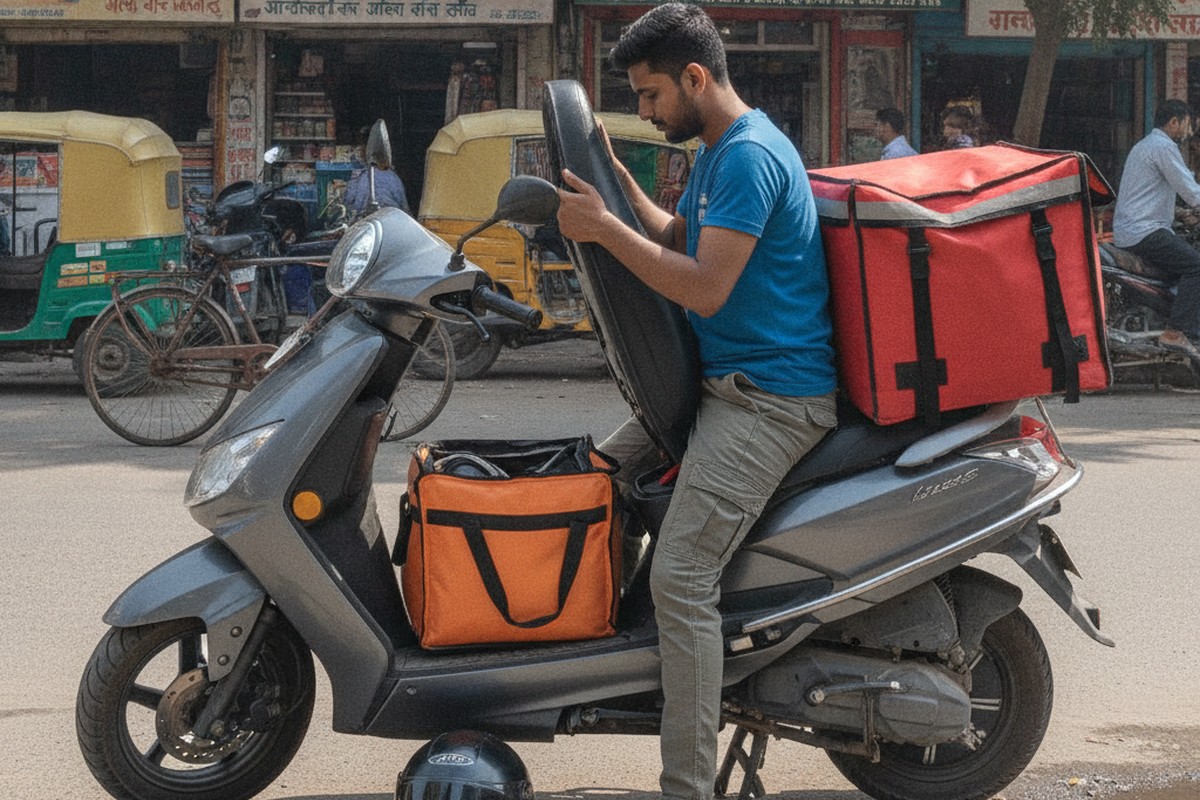
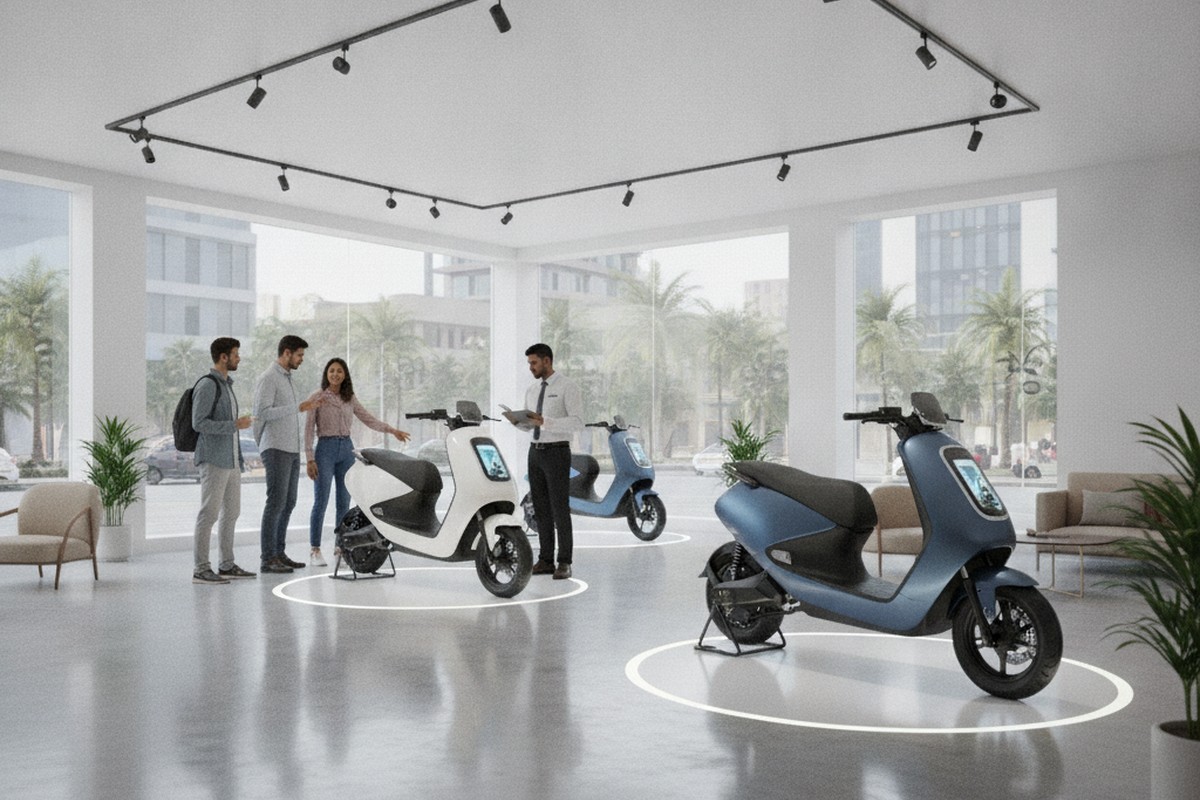
At ₹102 a Litre, the Switch to an Electric Scooter Has Never Made More Sense — But the Scooter You Choose Matters Just as Much

Electric scooter parked on Indian city street with petrol pump in background

You Already Know the Feeling at the Pump

You pull up, watch the meter spin past ₹400, ₹500, ₹700 for a full tank, and mentally calculate whether this month’s fuel bill has beaten last month’s. If you are riding in Delhi, that calculation now starts at ₹102.12 per litre as of this week — and there is no realistic expectation that it will retreat to comfortable territory anytime soon. Most other Indian cities are within a few rupees of that figure.

At that price point, the question is no longer whether an electric scooter makes financial sense. The maths have crossed the threshold where they are too clear to dismiss. The real question most riders are now asking — sensibly — is whether the savings justify the upfront cost of switching, and whether a genuinely reliable electric scooter exists at a price where the arithmetic actually works in their favour.

Let us do this properly.

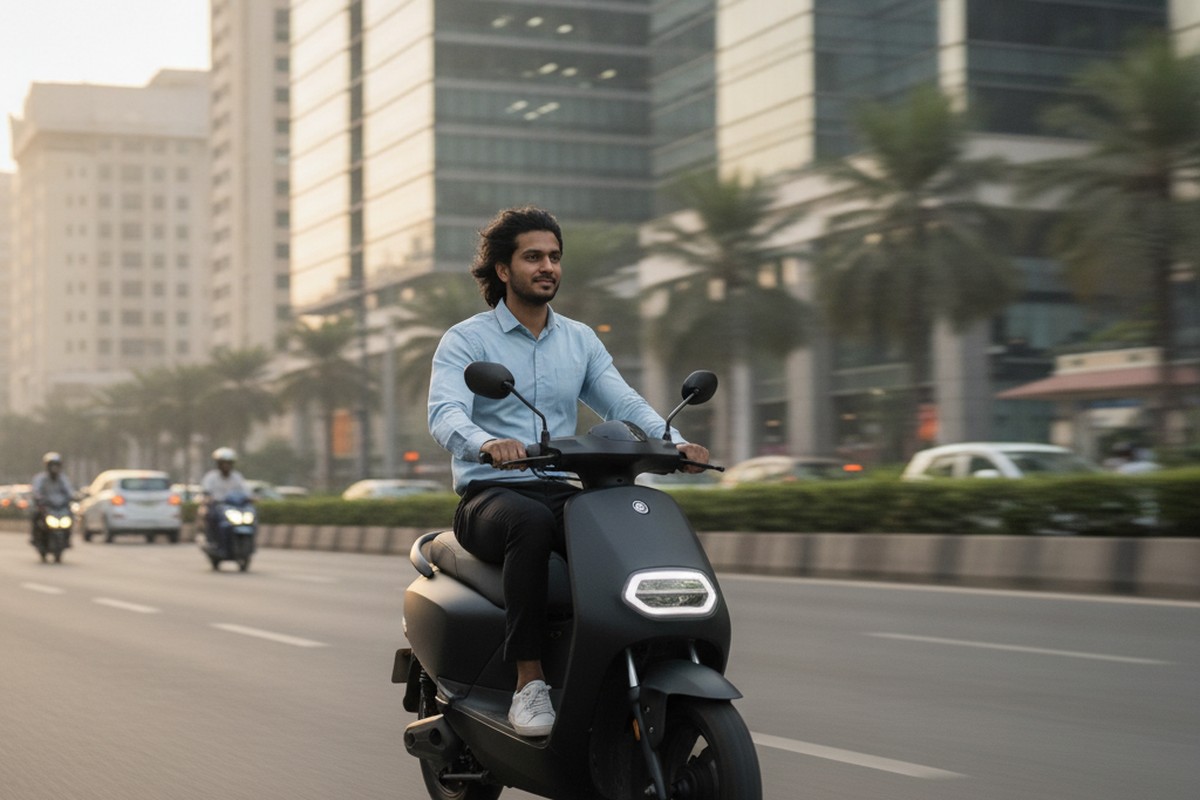
Young Indian professional commuting on electric scooter through city traffic

The Running Cost Equation Nobody Draws Out Completely

A typical 125cc petrol scooter returns around 45 kilometres per litre in real-world urban riding. At ₹102 a litre, that works out to approximately ₹2.27 per kilometre. Simple enough. Now consider a mid-range electric scooter with a 60V/35Ah lithium-ion battery providing a certified range of around 80 kilometres per charge. At home electricity tariffs of ₹5–8 per unit — which is what most Indian households pay in the lower consumption slabs — a full charge costs roughly ₹10–15. That translates to approximately ₹0.13–0.19 per kilometre.

If you are commuting 40 kilometres daily — close to the urban two-wheeler average for Indian cities — the monthly maths look like this:

  • Petrol scooter: 40 km/day × 26 working days × ₹2.27 = approximately ₹2,361 in fuel
  • Electric scooter: the same 1,040 km at ₹0.16/km = approximately ₹166 in electricity

That is a difference of roughly ₹2,195 every single month. Over a year: ₹26,340 saved on fuel alone. Over five years, that single line item adds up to over ₹1.30 lakh — and that is without accounting for rising petrol prices or increased riding distance over time.

The Maintenance Bill Nobody Accounts For

A petrol scooter visits an authorised service centre every 4,000–6,000 kilometres. Each visit runs ₹700–1,300 for standard servicing, covering engine oil, filter cleaning, fuel system checks, and spark plug inspection. Add in CVT belt replacement every 15,000 kilometres or so (₹1,200–2,500), periodic air filter replacement, a 12V battery every two to three years, and you are looking at ₹4,000–6,000 per year in maintenance at an authorised workshop — more if anything fails outside the service schedule.

Over five years, maintenance alone adds ₹20,000–30,000, sitting on top of the fuel bill.

An electric scooter has no engine oil to change, no spark plugs or air filters to replace, no CVT belt, and no fuel system to calibrate. The regular service needs — brake inspection, tyre condition, brake fluid, and occasionally a firmware update — are considerably lighter. Well-maintained electric scooters from established manufacturers typically cost ₹1,000–3,000 per year to service for urban commuters. That is 40 to 60 per cent lower than the petrol equivalent.

The five-year total: an average urban commuter switching from petrol to electric can realistically expect combined fuel and maintenance savings of ₹1.5 to ₹2 lakh. That is arithmetic based on current petrol prices and documented service costs — not a marketing projection.

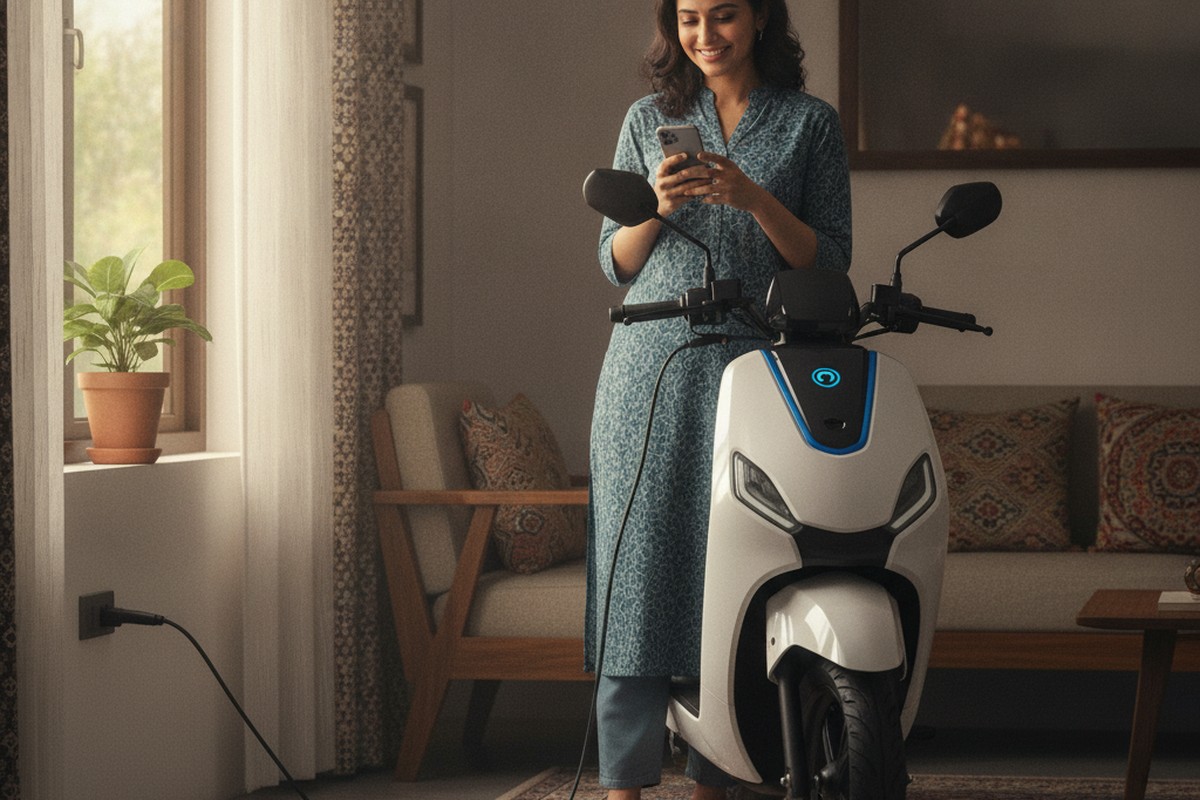
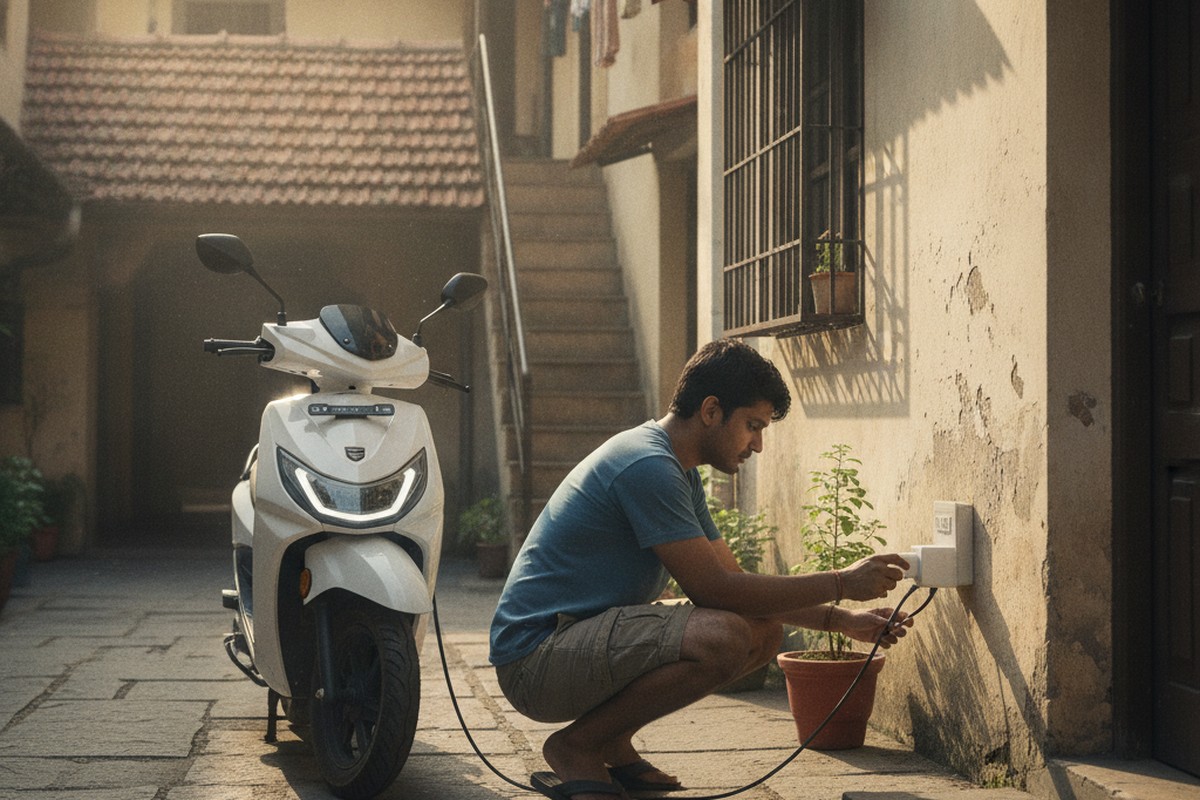
Indian woman charging electric scooter at home, reviewing savings on smartphone

The Upfront Cost Question — Is There Actually a Premium?

Here is where many buyers stall. The assumption is that a decent electric scooter costs significantly more than its petrol equivalent. That was true four or five years ago. In 2026, it is no longer automatically the case at the mid-range level.

The Honda Activa 125, India’s most popular scooter, sits at ₹1,05,733 on-road in Delhi when you factor in RTO and insurance. A comparable electric scooter with ICAT certification, 80+ kilometre certified range, and a lithium-ion battery — such as the Elektree Zenith, which starts at ₹90,164 — carries a lower base price. Electric two-wheelers also attract significantly lower road tax in most Indian states compared to petrol vehicles, which compresses the on-road price gap further. Add any applicable PM E-Drive scheme benefit to the picture, and the upfront cost comparison shifts further in favour of the electric option.

The traditional assumption of a large premium for going electric does not hold at this end of the market in 2026.

What to Actually Evaluate Before You Buy

Before zeroing in on any model, a few things are worth understanding that the showroom pitch will not always clarify.

Range figures in India are IDC (Indian Driving Cycle) numbers, tested in controlled conditions without traffic, inclines, or passenger load. Real-world range on Indian roads is typically 20–30% lower. An 80 km IDC figure translates to 55–65 kilometres in actual urban use. For a 40 km daily commute, that is workable — you charge every one to two days and never worry. For longer commutes or hilly routes, scrutinise the range claim more carefully.

Battery warranty is non-negotiable. The motor can be repaired, but an out-of-warranty battery replacement on an electric scooter is a cost that can run into tens of thousands of rupees. What a manufacturer covers — and for how long — tells you how much confidence they have in their own product.

After-sales infrastructure matters as much as the product itself. A scooter from a company whose nearest service centre is three cities away is a problem waiting to happen, regardless of how impressive the spec sheet looks.

Why Elektree India Makes a Credible Case

Among the options available in the Indian market at or under ₹1 lakh, the Elektree Zenith addresses these evaluation criteria well enough to merit serious attention.

The Zenith carries ICAT certification — meaning its 80–100 km range figures have been independently verified by a Government of India–recognised testing body, not simply self-declared by the manufacturer. That matters in a market where range claims have sometimes been optimistic to the point of being misleading.

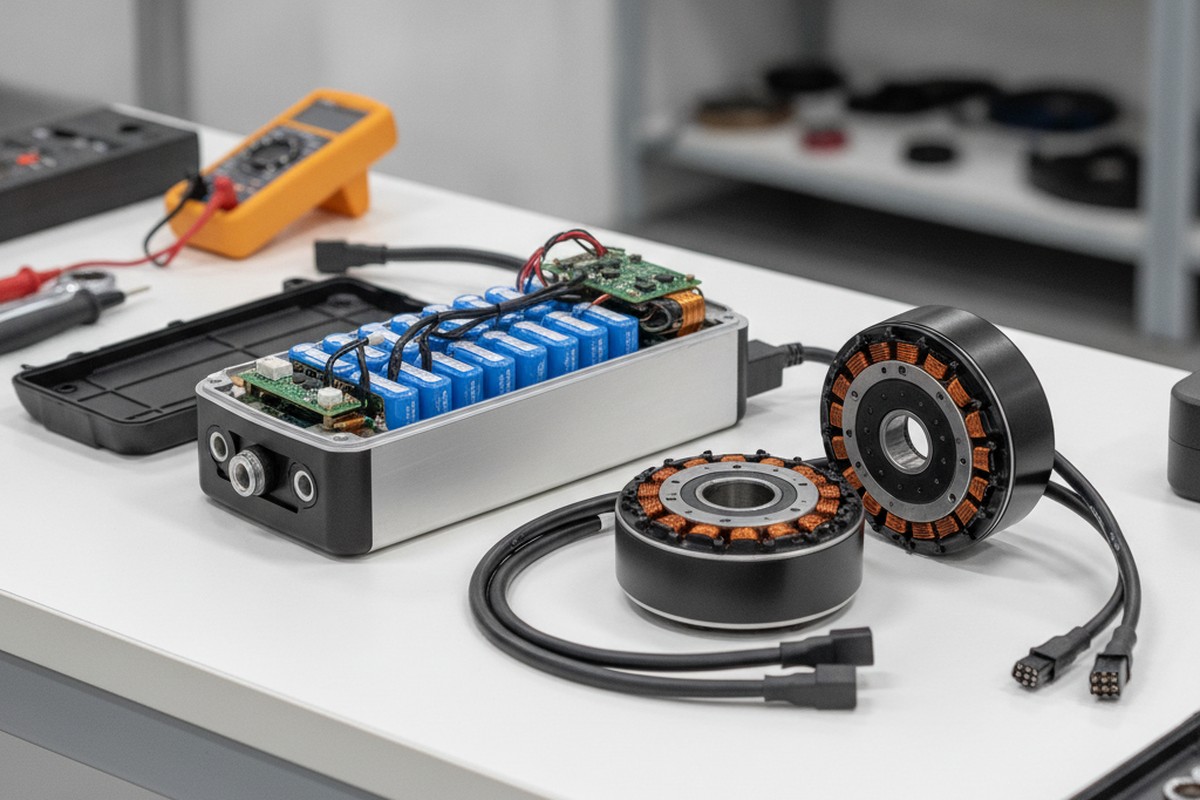
The motor is a mid-drive IPM (Interior Permanent Magnet) unit. This motor architecture is chosen by several premium EV manufacturers globally because of its efficiency and lower heat generation compared to standard hub motors — which has real relevance in Indian summers, when motor temperatures can affect performance and longevity. The Zenith’s 180 mm ground clearance and 12.5-inch tyres are reasonably suited to the pothole-and-speed-bump reality of most Indian urban routes. The 18.5-litre boot offers practical daily carry space.

On the battery: Elektree covers the Zenith’s 60V/35Ah lithium-ion pack for three years or 50,000 kilometres — whichever comes first — against manufacturing defects, internal cell faults, and BMS (Battery Management System) issues, provided the battery state of health stays above 70%. That is a meaningful commitment for a product category where battery confidence is the single biggest buyer concern.

The scooter also offers three riding modes — Hyper, Normal, and Eco — which let the rider manage the range-versus-performance trade-off depending on the day. GPS tracking, an anti-theft alarm, reverse mode, LED headlamp with DRL, and USB charging complete a feature set that competes genuinely with petrol alternatives in the same price band.

For buyers in major metros, Elektree operates service centres in Delhi, Mumbai, Kolkata, Hyderabad, and Bengaluru. That is not a national network yet, but it covers the cities where a substantial proportion of Indian two-wheeler buyers are concentrated.

The Numbers, the Scooter, and the Decision

Here is the honest summary. If you are doing 30–50 kilometres daily in an Indian city and weighing whether to switch to electric, the financial case in September 2026 — with petrol at over ₹100 a litre across most of the country — is about as clear as it has ever been. A realistic five-year calculation, conservative on the savings side, consistently lands between ₹1.5 and ₹2 lakh in combined fuel and maintenance advantage for the electric rider.

The condition, as always, is that the scooter itself needs to be reliable, well-supported, certified, and priced without a premium that erases the savings. The Elektree Zenith, alongside the RV 80 Sportz at ₹94,363, meets those conditions credibly for most urban Indian commuters. The certified range is realistic for daily commuting without constant range anxiety. The battery warranty is specific and substantive. The mid-drive IPM motor is a step above what many competing products at this price offer. And the price — starting at ₹90,164 before any applicable subsidy or reduced road tax — does not carry the kind of upfront premium that makes the ownership economics look good only on paper.

If the fuel price this week finally pushed you past the “I should probably look into this” stage, it is worth spending thirty minutes at elektree.com to see whether the Zenith or one of Elektree’s other models fits your commute and budget. The fuel saving begins from the first kilometre you ride.

Is Your Electric Scooter Actually Safe? The Battery Questions Every Indian Buyer Must Ask in 2026

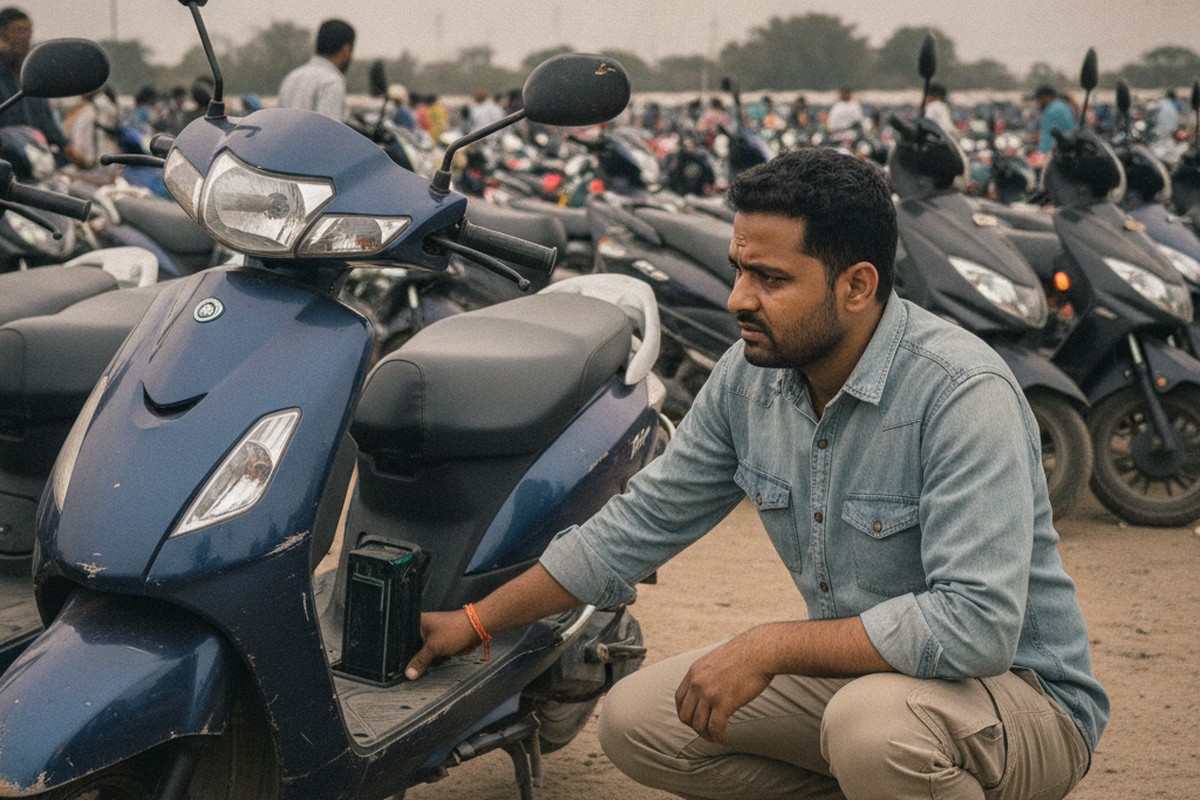
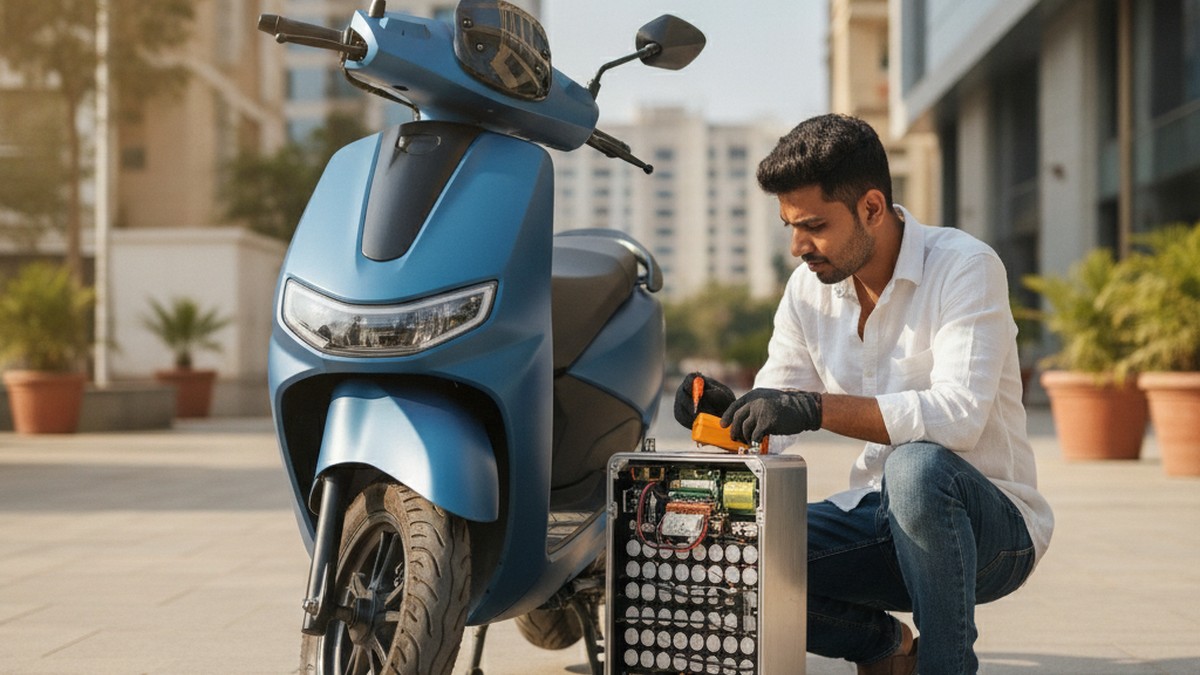
Electric scooter battery inspection by an Indian rider on an urban street

A few years ago, videos of electric scooters bursting into flames circulated on Indian social media with disturbing regularity. Ola Electric. Okinawa. Pure EV. The images were alarming — scooters engulfed in fire in parking lots and on roadsides. The government stepped in, ordered recalls affecting thousands of vehicles, and launched a full investigation.

That period rattled buyer confidence in a way that range anxiety never really did. People weren’t just worried about whether their scooter would make it to the office — they were worried about whether it would still be intact by morning if they charged it overnight.

Here’s the thing: those incidents triggered something genuinely important. India now has one of the more rigorous electric two-wheeler battery safety frameworks in the world, and most established manufacturers today sell scooters that have passed through serious certification processes. The problem is that buyers often don’t know how to tell the difference between a well-engineered battery system and one that merely looks the part on a spec sheet.

What Actually Caused Those Fires

Almost every EV fire traces back to one root cause: thermal runaway. This is when a lithium cell overheats, releases energy faster than it can dissipate it, and triggers a chain reaction that can spread to adjacent cells within seconds. In a scooter battery pack with dozens or hundreds of cells packed tightly together, the consequences are dramatic.

The conditions that trigger thermal runaway are well understood: overcharging, physical damage, extreme temperatures, and manufacturing defects that allow cells to degrade unevenly. In several recalled Indian scooters, the problems traced to poor-quality cells, inadequate Battery Management Systems (BMS) that failed to cut power when cells misbehaved, and gaps in quality control.

The BMS is the real gatekeeper here. A properly designed BMS monitors every cell in the pack, controls charging and discharging rates, balances load across cells, and disconnects the circuit if temperature, voltage, or current readings go outside safe limits. A cheap or poorly calibrated BMS can miss the warning signs entirely until it’s too late.

What AIS 156 Phase 2 Actually Requires

Following those fire incidents, the government introduced and significantly strengthened AIS 156 — the mandatory safety standard for electric two-wheeler battery systems. Phase 1 came into effect in late 2022, covering cell traceability, safety fuses, and basic BMS protections. Phase 2, enforced from March 2023, went considerably further and is what serious buyers should be asking about today.

Phase 2 introduced two tests that matter most to buyers. The thermal propagation test deliberately triggers thermal runaway in a single cell and measures whether fire spreads to adjacent cells. The standard requires an audio-visual warning to the rider before any propagation occurs, and the pack must not catch fire or explode during the test. Phase 2 also mandates at least four temperature sensors inside the BMS — not one or two as was common earlier — so the system can detect a hot spot early rather than waiting for a cell to fail.

The second critical test is the IPx7 water ingress test. The battery pack is submerged and tested at full charge to confirm there is no fire or explosion risk from water exposure. Given that Indian monsoons regularly turn streets into rivers, this is not a formality — it reflects a real condition every scooter sold here will face repeatedly over its lifetime.

For a battery pack to carry AIS 156 Phase 2 certification, it must have passed these tests at an accredited facility — typically ARAI or ICAT. A compliant battery will have a documented test report number that is traceable. A dealer who can’t show you that documentation is a dealer you should approach with caution.

The Questions You Need to Ask in the Showroom

Walk into any electric scooter showroom and the conversation usually revolves around range, top speed, and monthly EMI. Rarely will a dealer volunteer information about battery safety certifications — not because they’re hiding something, but because most buyers don’t ask. That gives you an immediate advantage if you do.

Ask specifically: Is this scooter’s battery AIS 156 Phase 2 certified? Can you show me the compliance documentation? What is the IP rating on the battery pack? What does the BMS protect against? A dealer selling a genuinely certified product will have answers — or can get them from the manufacturer quickly. Vague responses without documentation should make you slow down before committing.

Also ask about the battery warranty specifically, not just the overall scooter warranty. A manufacturer confident in their battery quality backs it with a meaningful warranty period. Understand what’s covered: complete failure only, or also capacity degradation below a certain threshold?

Don’t overlook the charger either. AIS 156 Phase 2 includes requirements for earth leakage detection in chargers because the charging phase — particularly overnight charging at home — is when many incidents occur. Use only the charger supplied with your scooter. Charging in a cool, ventilated area is always preferable to a confined space like a lift lobby where heat builds up.

Electric scooter battery being inspected in India — understanding AIS 156 battery safety standards

How to Think About Safety When Comparing Brands

India’s electric scooter market in 2026 ranges from nationally known brands with large service networks to smaller regional manufacturers competing on price alone. Battery safety is one of the clearest ways to separate genuinely engineered products from those that are merely assembled and badged.

The certification to look for isn’t only AIS 156. ICAT approval of the complete vehicle — not just the battery in isolation — means the scooter has been assessed as an integrated system by a government-recognised body. Safety in an electric scooter isn’t just about the cells; it’s about how the BMS integrates with the electrical architecture, how the charger communicates with the pack, and how the entire system responds under stress.

Smaller manufacturers importing cells from overseas suppliers without rigorous quality checks remain a genuine risk. A low upfront price with no battery traceability, no BMS documentation, and a one-year “manufacturing defects only” warranty is telling you something.

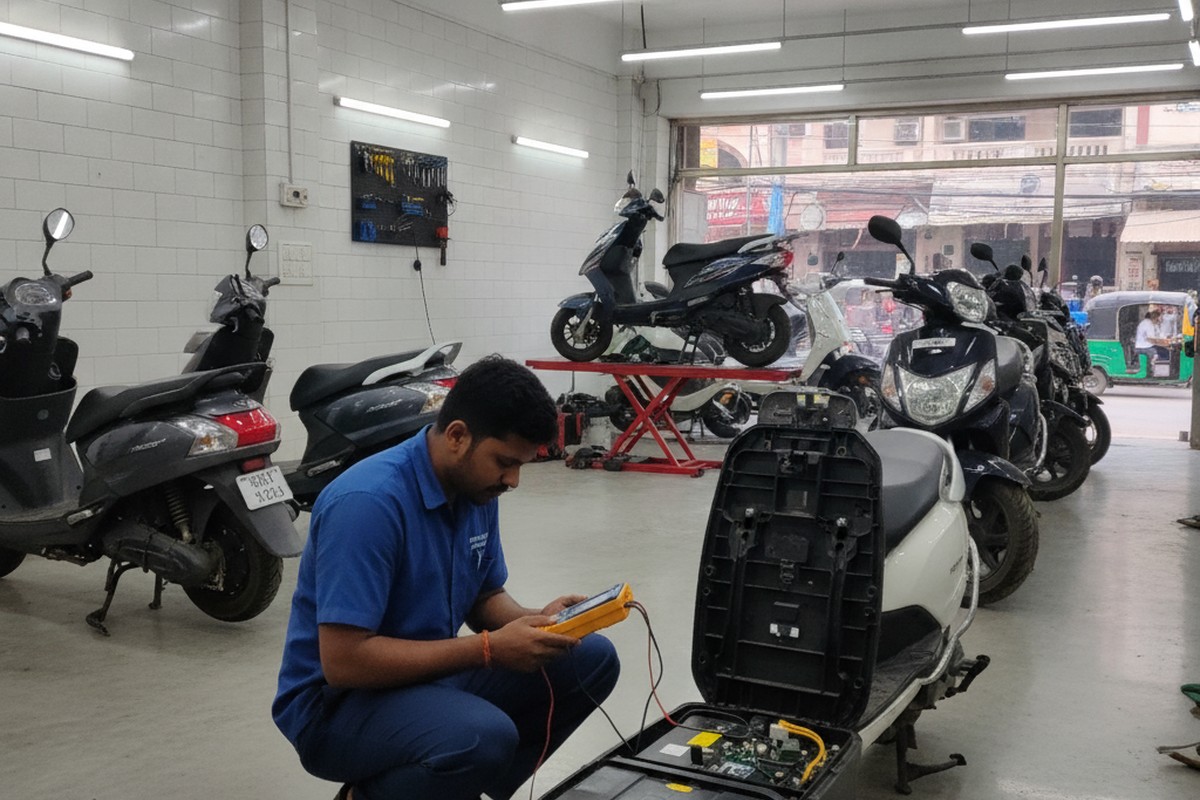
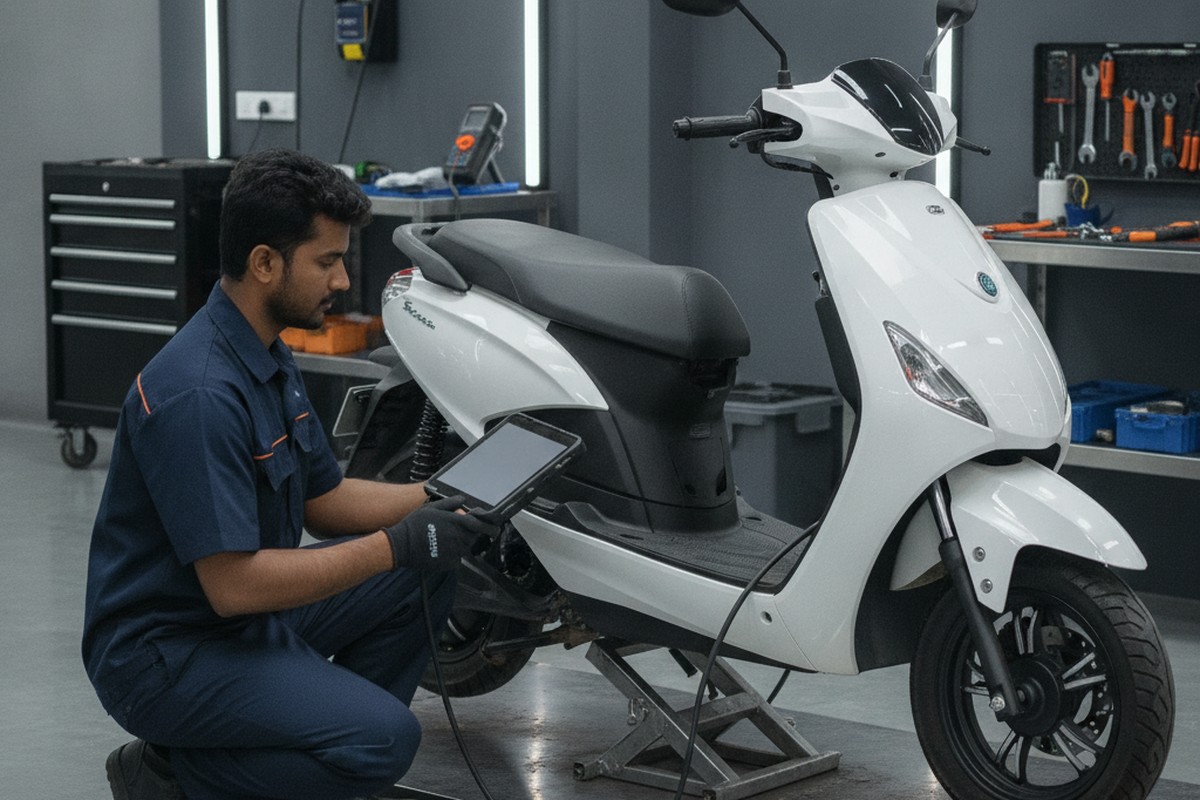
EV service technician checking electric scooter BMS at an Indian service center

Where Elektree Stands on Safety

Elektree India’s scooters — the Zenith, the RV80, and the Wheels — are ICAT certified as complete vehicles. That certification matters in this context because ICAT approval is not a rubber stamp: it means the vehicle was assessed as an integrated system by the International Centre for Automotive Technology, one of India’s two primary government-recognised automotive testing bodies.

The Zenith and RV80 both deliver a 60 km/h top speed with a claimed range of 80–100 km per charge — a comfortable fit for the daily commuting patterns of most Indian city riders. Priced from around ₹90,000–₹94,000, they come with a three-year warranty on the lithium-ion battery, anti-theft alarm, and GPS as standard. The entry-level Wheels model, starting around ₹82,000, offers 45 km/h and 50–70 km range — appropriate for urban neighbourhoods where the lower speed also means no licence requirement applies.

The 3-year battery warranty is a meaningful signal. Elektree would not offer that coverage unless they had genuine confidence in the durability and safety of their battery systems. A manufacturer uncertain about their battery quality tends to shorten the coverage period or hedge the warranty language — the opposite of what you see here. The ₹5–10 per charge running cost and roughly four-hour charging time are consistent with well-calibrated lithium-ion systems that don’t demand the aggressive fast-charging rates that stress cells over time.

The Recommendation

If you are seriously considering an electric scooter in 2026, battery safety should be the first filter you apply — before price, before range, before colour options. The good news is that India’s regulatory landscape has genuinely improved since 2022. A scooter from a mainstream, certification-compliant manufacturer today is a materially safer product than what was being sold during those headline-grabbing fire incidents.

What that means practically: buy from a brand with documented ICAT approval, ask for AIS 156 compliance records, verify the IP rating on the battery pack, and read the battery warranty carefully before you sign. These are not obscure technical demands — any serious manufacturer should be able to answer them immediately and in writing.

Elektree India’s ICAT-certified lineup — the Zenith, RV80, and Wheels — represents exactly the kind of engineering-grounded approach that Indian buyers should be gravitating toward in 2026. With a 3-year battery warranty, competitive pricing, and the backing of government-recognised vehicle certification, Elektree offers a combination of reliability, practicality, and post-purchase confidence that matters as much as the range figure on the brochure.

The era of crossing your fingers and hoping your scooter doesn’t become a fire statistic is behind us — provided you buy from the right manufacturer. Ask the right questions, verify the credentials, and you’ll find the answer consistently points toward brands that have done the engineering properly. Explore the Elektree range at elektree.com and make your next scooter decision an informed one.

Buying an Electric Scooter This Navratri-Diwali? Here’s What the Festive Rush Gets Wrong — and How to Actually Land the Right Deal in 2026

Electric scooter at a festive Indian street market decorated for Navratri with diyas and marigold garlands

The showroom texts have already started arriving. “Navratri Dhamaka!” “Limited Period Festive Offer!” “Book Now and Save ₹20,000!” If you’ve been thinking about buying an electric scooter, the next six weeks will throw more deals at you than the rest of the year combined. And honestly? The festive season in India is genuinely one of the better times to buy an EV. Dealers push volume, manufacturers extend warranties, and you can sometimes negotiate things that aren’t even on the brochure.

But the same excitement that creates real deals also creates real traps. Buyers who walk in during Navratri thinking with their heart rather than their head end up with the wrong scooter — bought at the wrong price, with the wrong EMI, from a service network that doesn’t reach their city. This guide is meant to help you avoid all of that.

Why the October Festive Window Is Genuinely Worth It

Let’s be honest about what’s actually happening in the market right now. Ola Electric has announced Navratri offers on its S1 series with up to ₹9,999 off plus an 8-year extended battery warranty, and daily 90-minute “Muhurat Mahotsav” flash sales where the S1 Pro+ (4 kWh) is going for ₹99,999. The Roadster series has up to ₹20,000 off. Dealers across the segment are stacking EMI cashbacks of ₹10,000 or more on credit card purchases.

This is real money. And the festive season tends to bring things like free first-year insurance, complimentary home delivery, and extended warranty packages that manufacturers use as differentiation tools when headline prices converge. If you were going to buy an electric scooter in the next three to four months anyway, October is structurally a smarter time than, say, January.

There’s also the subsidy angle. The central PM E-Drive scheme remains in place, offering ₹2,500 per kWh of battery capacity (capped at ₹5,000 per vehicle) for electric two-wheelers priced under ₹1.5 lakh ex-factory. This is a fund-limited programme — meaning it closes once the allocated budget runs out — so there’s a legitimate case for not waiting. Combine this with state-level road tax waivers that exist in several states, and the effective on-road price can be noticeably lower than the sticker suggests.

The Electric Scooter Landscape Right Now

The market has matured meaningfully in 2026. You’re no longer choosing between one credible brand and a dozen unknowns. TVS iQube ST 5.3 offers real-world range of 100–130 km with a 5.3 kWh battery at around ₹1.71 lakh, backed by TVS’s substantial service footprint. The Bajaj Chetak 3001 has brought the entry point down to under ₹1 lakh ex-showroom, with metal-body build quality that most buyers instantly respect. The Ather 450 series continues to hold its ground on ride feel and software refinement, even as pricing has climbed. Hero Vida’s removable battery packs solve a real problem for apartment dwellers who can’t charge at the parking level.

If you have ₹1 lakh to ₹1.75 lakh, you have genuinely good options. The question is which one is right for you — not which one is running the loudest campaign.

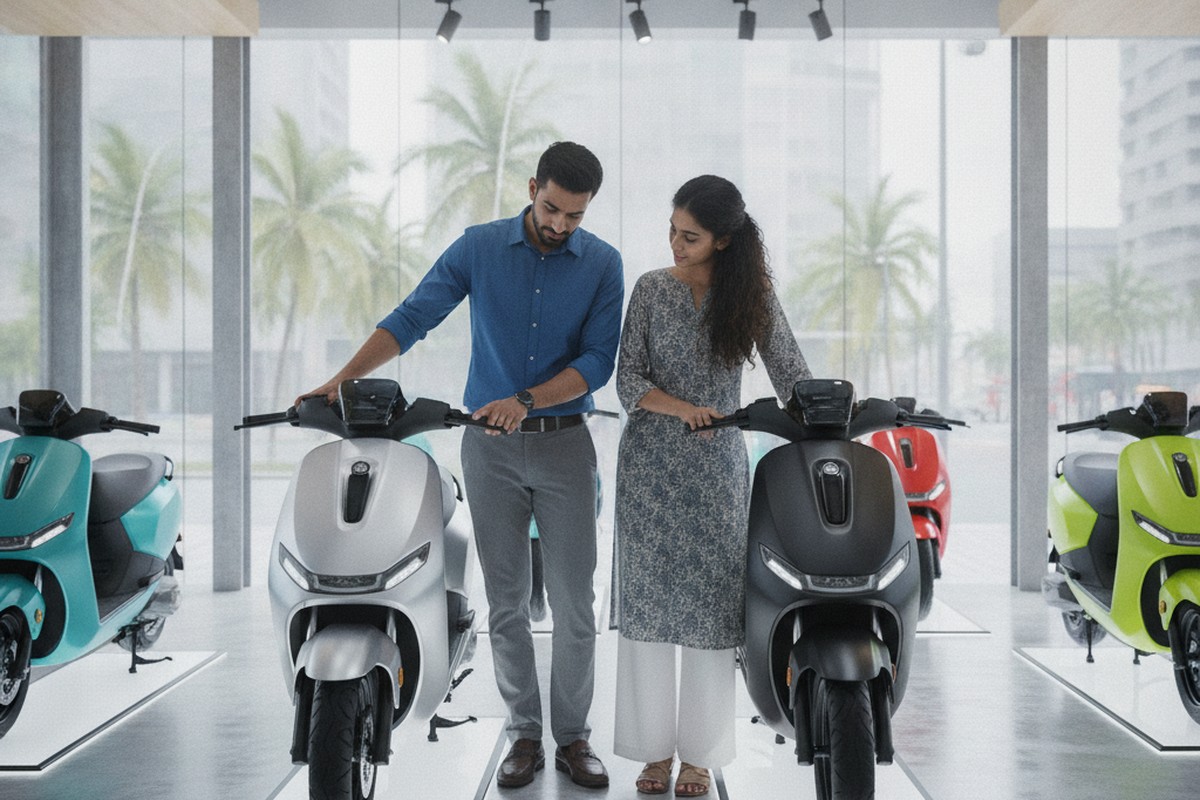
Indian buyers comparing electric scooters at an EV dealership showroom

The Five Festive Season Traps to Avoid

The first and most common mistake is buying the headline discount without reading the terms. Ola’s 8-year warranty, for instance, is being used heavily in Navratri marketing — but warranty documents specify coverage conditions, claim procedures, and what constitutes a warranty event versus normal degradation. Read the warranty document, not the advertisement.

The second trap is buying the cheapest option without thinking through battery size. A scooter with a smaller battery might cost ₹10,000 less up front, but if it cuts your real-world range to 60–70 km and you have a 35-km one-way commute, you’re stretching the margins every single day. Battery anxiety in a city with patchy charging infrastructure isn’t just inconvenient — it can create riding patterns that accelerate battery degradation over time.

Third: verify the service network in your specific city, not the state total. Most manufacturers publish impressive national numbers. What matters is whether there’s an authorised service centre within a reasonable distance of your home. Call the service centre before you book the scooter, not after.

Fourth, be careful with EMI cashbacks. They’re often tied to specific credit cards from specific banks, and the “effective price” calculation assumes you pay through that card. If you’re using a different payment method, the festive deal might be smaller than advertised.

Fifth — and this one gets overlooked — confirm PM E-Drive eligibility with your specific dealer before the purchase is finalised. The scheme’s funds are finite. “The subsidy will be adjusted” is not the same as money in your hand on delivery day.

What You Should Actually Be Evaluating

Before you step into any showroom, write down your daily commute distance and multiply it by 1.5 — that’s the minimum real-world range you need on a single charge to ride comfortably without worrying. If the answer is 45 km, an 80-km claimed range scooter usually gives you enough headroom. If the answer is 70 km, you need to think carefully about battery size and charging access.

Beyond range: ground clearance matters on Indian roads (180mm or more is a sensible minimum for most cities), disc brakes make a genuine safety difference in city traffic, and the motor type — hub-drive versus mid-drive — affects how the scooter handles uphills and load. These are the criteria that determine whether you enjoy riding the scooter a year from now, not the festive discount percentage.

Young Indian man charging electric scooter at home

Where Elektree India Fits In

If the big-brand festive chaos feels like too much to navigate, or if you’re looking for a sub-₹1-lakh scooter that doesn’t compromise on everyday capability, Elektree India deserves a serious look.

The Elektree Zenith, at ₹90,164, delivers 80–100 km of real-world range on a 60V/35Ah lithium-ion battery with a 4–5 hour full charge time. It runs a mid-drive IPM motor, which handles load and inclines more effectively than equivalent hub-drive setups, and the 180mm ground clearance is genuinely suited to Indian road conditions. Disc brakes, full LED lighting, 18.5 litres of underseat storage, and ICAT certification under AIS 156 battery safety standards — this isn’t a budget corner-cutting exercise, it’s a properly engineered commuter. The battery carries a 3-year or 50,000 km warranty.

The RV 80 (₹94,363) sits alongside the Zenith with similar range and performance in a sporty form factor, while the Wheels (₹82,871) offers a more compact option with 50–70 km range at 45 km/h for shorter daily distances. And if your requirements extend to long-distance commuting or performance-oriented riding, the Fantom electric motorcycle (₹1,39,000) claims 150–180 km of range at up to 110 km/h — a completely different category of product.

Running costs across the range: a full charge works out to roughly ₹5–10 on standard domestic electricity tariff. Over 100 km of daily riding in a month, that’s a fuel bill well under ₹300 — which no petrol scooter comes close to matching.

The Festive Case for Elektree

Here’s what makes the festive window particularly interesting for Elektree buyers. The Zenith and RV 80 are priced under ₹1 lakh ex-showroom, putting them squarely within PM E-Drive subsidy eligibility (vehicles under ₹1.5 lakh ex-factory). That central incentive, combined with applicable state-level exemptions, can meaningfully reduce the effective on-road cost. There are no 90-minute flash-sale windows to catch, no trade-in conditions to parse, and no fine-print warranty exclusions to untangle.

What Elektree brings to the festive season conversation is clarity: ICAT-certified vehicles with verified specifications, mid-drive motors engineered for real Indian commuting demands, and pricing that doesn’t depend on a limited-time campaign to look reasonable. For a buyer who’s spent the festive season comparing spec sheets and trying to work out which “₹20,000 off” actually delivers ₹20,000 in real savings, that clarity has genuine value.

Before You Sign Anything

The festive season really is a good time to buy an electric scooter. But the best deal isn’t always the one with the biggest headline number or the most WhatsApp forwards. It’s the one where the range works for your route, the service is reachable from your home, the warranty terms hold up under scrutiny, and the scooter is still making sense for you two riding seasons from now.

Use the festive energy to push for better terms and financing arrangements. And as part of your shortlist — particularly if you’re in the sub-₹1-lakh segment and want a scooter built for Indian roads rather than Instagram campaigns — spend some time exploring what elektree.com has to offer. The best Navratri decision you can make is an informed one.

Electric Scooter for Hilly Areas in India 2026: The Motor Question Nobody Answers Before You Sign the Cheque

Electric scooter climbing a steep mountain road in an Indian hill station

Electric Scooter for Hilly Areas in India 2026: The Motor Question Nobody Answers Before You Sign the Cheque

You’ve done the research. You know the range figures, you’ve compared the prices, and you’re fairly convinced that switching to electric makes sense. But then someone asks: “What about your route to the market? There’s that long climb past the temple.” And suddenly you’re not so sure.

It’s a legitimate concern — and one that most EV buying guides either skip over or address with vague reassurances like “modern electric scooters can handle hills.” Whether you’re navigating the ghat roads of Kozhikode, the steep streets of Pune’s hillside colonies, the switchbacks near Mussoorie, or a city neighbourhood where every second road involves a sharp incline, the question of how your electric scooter performs on a gradient is not academic. It is something you’ll deal with every single day.

The honest answer is that not all electric scooters handle hills the same way — and the difference often comes down to something most dealers won’t even mention: the type of motor inside your scooter.

Why Hills Are Hard on Electric Scooters

On flat roads, an electric scooter’s motor runs efficiently at a comfortable operating temperature. When you hit a sustained incline — not a quick bump but a climb that goes on for 500 metres or more — the motor has to work significantly harder. It draws more current, generates more heat, and if the motor design doesn’t account for this, performance degrades, the battery drains faster, and in some cases the motor enters a thermal protection mode that cuts power mid-climb.

Owners who ride hub-motor electric scooters in consistently hilly terrain regularly report exactly this: sluggish acceleration on long climbs, noticeable range drops of 30 to 40 percent compared to flat-road estimates, and that uncomfortable moment when the scooter seems to lose confidence halfway up a slope. Range figures in India are already optimistic relative to real-world riding. Add a daily hill climb and you’re looking at a significant additional cut to your usable range.

Hub Motors vs. Mid-Drive Motors: What Your Dealer Probably Won’t Explain

The vast majority of electric scooters sold in India use hub motors — a motor built directly into the wheel hub. The design is mechanically simple and works fine on flat urban roads. The problem shows up on hills.

A hub motor is fixed in its gear ratio. It cannot adapt to the terrain. When you hit a steep climb, it must overcome the gradient using brute electrical force alone — drawing more current, generating heat inside the wheel where there is little airflow, and doing so at an efficiency level that drops noticeably compared to flat-road operation. The longer the climb, the harder the motor works, and the more heat builds up inside that sealed wheel unit.

Mid-drive motors work differently. The motor sits centrally and drives the wheel through a mechanical drivetrain, allowing it to operate closer to its optimal speed range across different terrain conditions rather than fighting a gradient with no mechanical advantage. The result is substantially better torque delivery on inclines, better thermal management because the motor is exposed to airflow rather than sealed inside a wheel, and meaningfully better efficiency — which directly translates to more usable range when you’re climbing hills every day.

The research on this is clear: for sustained hill climbing under real-world conditions, mid-drive motors are categorically more capable. Mid-drive systems can effectively multiply torque through their drivetrain in ways a hub motor physically cannot, and the torque advantage alone — mid-drives regularly achieve 30 to 40 Nm or more versus the 12 to 25 Nm typical of hub motors — is enough to change the riding experience significantly on a demanding route.

Electric scooter rider climbing a steep hilly urban street in India

What to Actually Look at When Comparing Scooters for Hilly Areas

When shopping for a scooter and hills are part of your daily route, look beyond the wattage number. A 1,500-watt hub motor and a 1,500-watt mid-drive motor are not equivalent on a gradient — the mid-drive will significantly outperform the hub motor on a sustained climb.

Torque figures matter more than peak power for hill climbing. Ground clearance is another practical consideration — not just for the hills themselves, but for the broken, potholed approach roads that typically lead to hilly areas in India. A scooter with 160mm of clearance will struggle where one with 180mm handles the same surface comfortably.

Multiple riding modes give you flexibility: a higher-performance mode for demanding climbs, a more conservative mode on flat sections to recover range. Regenerative braking — which recovers energy when you roll downhill — is an underappreciated advantage for hilly riders. What your battery loses going up, it partially recovers coming down. Over a full day of hilly riding, this adds up.

As a planning assumption, reduce your expected range by 25 to 35 percent if your daily route involves significant elevation changes. A scooter rated for 80 kilometres of city riding may deliver closer to 55 to 60 kilometres when hills are involved. Factor this into your daily distance calculation before you commit.

Where the Elektree Zenith Makes a Genuine Difference

Elektree India’s Zenith electric scooter runs on a mid-drive IPM (Interior Permanent Magnet) motor — the same fundamental motor architecture that delivers superior performance in hilly terrain. In the context of the Indian EV market, where hub motors remain the default for most manufacturers, this is not a minor detail. Mid-drive placement directly addresses the two biggest hill-climbing challenges: torque delivery and thermal management. The motor’s position allows it to shed heat effectively during sustained climbs, which matters when you’re doing the same hill every morning and evening.

The Zenith also offers 180mm of ground clearance — adequate for the rutted, uneven surfaces common on roads leading into hilly areas — along with three riding modes including a higher-performance Hyper mode for demanding terrain. Its 200 kg payload capacity means it handles two-up riding on hills without the performance drop that lighter scooters show when a pillion is added to a climb.

Electric scooter parked at a scenic mountain road overlook in India with valley views

At a starting price of ₹90,164, the Zenith is positioned considerably below the premium electric scooters from Ather, Ola, and TVS — most of which use hub motor configurations and are priced from ₹1.2 lakh upwards. Elektree isn’t offering a watered-down budget alternative; it’s offering a scooter with motor architecture that is arguably more appropriate for the terrain that a large portion of Indian riders actually encounter, at a price that makes electric mobility accessible rather than aspirational.

The 3-year warranty across the Elektree range addresses another concern that hilly-area riders often raise: what happens when something needs attention, and is there a service centre nearby? With 54+ dealer locations across the country, Elektree’s service reach extends well beyond the metro centres — which matters considerably if you’re in a smaller town in the hills rather than in central Bengaluru.

The Bottom Line for Hilly-Area Buyers

For Indian riders in hill stations, hillside colonies, or any area where elevation changes are part of daily commuting life, motor type matters — considerably more than most dealers will acknowledge. Hub motors are adequate for flat urban riding. Mid-drive motors are genuinely better suited to sustained gradient work: better torque, better thermal management, better efficiency on the climbs that would otherwise punish a hub-motor scooter over time.

Before you buy, confirm the motor type. Ask for the torque figure. Ask whether the scooter has regenerative braking. Ask specifically about gradeability if the manufacturer publishes it. And do the honest range calculation: take the claimed range, reduce it by 30 percent for your hilly route, and check whether the result still covers your daily distance.

Elektree’s Zenith answers these questions well for buyers in this price range — mid-drive motor, strong ground clearance, multiple riding modes, solid payload capacity, and a warranty and service network that backs it up. If your daily route involves real hills, and you’ve been wondering whether an electric scooter can actually handle your commute without compromise, the Zenith makes a credible case that it can.

Explore the full Elektree India lineup and find a dealer near you at elektree.com.

That ₹65,000 Used Electric Scooter on OLX: What the Listing Won’t Tell You — and When Buying New Actually Makes More Sense

Indian buyer inspecting a used electric scooter in India

The second-hand electric scooter market in India has grown quietly but quickly. On OLX and similar platforms, you can find 2021–2024 Ola S1s, Ather 450Xs, and TVS iQube units listed anywhere from ₹55,000 to ₹95,000 — down sharply from their original on-road prices. For someone who wants to switch to electric without spending over a lakh, these listings look like an obvious entry point. Why pay ₹1.3 lakh for a new Ather when there’s one sitting in somebody’s garage for ₹72,000?

The honest answer: sometimes the math does work out. But far more often than buyers realise, a used electric scooter carries a hidden liability that can quietly turn a smart deal into a very expensive one. And in 2026, with genuinely affordable new electric scooters now available — including fully warranted, ICAT-certified options under ₹95,000 — the calculus around buying used has shifted considerably.

Here’s what you actually need to know before handing over any money.

The Battery Is the Scooter. Not Part of It.

This sounds obvious, but most people don’t really sit with what it means. In a petrol scooter, the engine can be rebuilt and parts replaced. In an electric scooter, the lithium battery pack is effectively the powertrain. It determines range, performance, and long-term value. And it degrades — inevitably, irreversibly — with every charge cycle.

The measure you need to ask for is State of Health (SoH). This is a percentage figure showing how much of the battery’s original capacity remains. A fresh battery starts at 100%. Here’s what the ranges mean in practical terms:

  • Above 90%: Excellent. Typical for scooters under two years old with careful use. You’ll see near-original range figures in real-world riding.
  • 80–90%: Normal wear for 2–4 year old units. Range will be noticeably lower than rated — a 100 km scooter might now deliver 80–85 km in mixed city conditions.
  • 70–80%: The battery is tired. Most manufacturers treat 70% as the threshold for warranty battery replacement. You’re looking at significantly reduced range, and the trajectory from here gets steeper.
  • Below 70%: Walk away unless the price reflects an imminent battery replacement.

The problem? Most sellers don’t lead with this number, because most sellers don’t know it — or don’t want you to know it. Getting the actual SoH requires either an authorised service centre check or access to the manufacturer’s companion app with the original account still active. Neither is always available through a private sale.

EV technician checking electric scooter battery health at a service center in India

What Battery Replacement Actually Costs in 2026

If you buy a used scooter and the battery fails within a year or two — or you’re already at 75% SoH and it’s heading lower — here’s the bill you’re looking at, based on current market rates:

Ola S1 Pro battery replacement runs ₹70,000–₹90,000 depending on the pack size. Ather 450X battery packs cost ₹70,000–₹80,000 out of warranty. TVS iQube replacement batteries range from ₹45,000 for the entry variant to over ₹1.15 lakh for the iQube ST. Bajaj Chetak batteries sit at roughly ₹70,000–₹80,000.

Do that arithmetic. If you’re buying a used Ather 450X at ₹72,000 and the battery is at 78% SoH, you’re potentially carrying ₹75,000 of replacement risk sitting just below the surface. The “deal” at ₹72,000 suddenly looks very different when you factor in even a moderate probability of replacement within two to three years.

The Usage History Problem

The kilometres on the odometer tell you less than you think. What actually degrades a lithium battery faster than anything else is aggressive charging behaviour — specifically, repeated fast charging, frequently charging to 100% and leaving it there, or allowing the battery to drain to near zero regularly.

This matters enormously because a significant proportion of used electric scooters in India were previously used by delivery riders or fleet operators. These vehicles racked up cycles fast, were fast-charged multiple times per day to keep the business running, and were rarely given the gentle 40–80% charging treatment that maximises battery longevity. A 2022 scooter with 18,000 km on it could have a battery that’s seen the equivalent of twice that in degradation terms. Cosmetically, these scooters often look fine. But the thing that actually matters — the battery — has been quietly worked hard for three years.

The Paperwork Maze

Even if the battery checks out, used EV purchases come with paperwork complexity that petrol vehicles don’t have. Warranty transferability is the big one. Many manufacturers either don’t transfer battery warranties to second owners, or have conditions around when and how the transfer is registered. If the original owner’s warranty period has lapsed — which it often has on 2021–2022 scooters — you’re buying a post-warranty vehicle with no safety net.

Also check: Is there any pending loan hypothecation on the RC? Does the registration certificate actually match the seller’s identity? Is the app account being transferred along with the scooter, or are you losing access to the diagnostic data you’d need to monitor battery health going forward? None of this is impossible to navigate, but it adds friction, risk, and cost to what looks like a simple ₹70,000 transaction.

When Does Buying Used Actually Make Sense?

There are scenarios where buying used works. If a scooter is under two years old, has documented battery SoH above 90%, comes with manufacturer warranty still intact and transferable, and is priced meaningfully below new — the deal can be genuine. The catch is that scooters meeting all those criteria are rare, and the listings that catch your eye because they seem too good are almost never the ones that actually meet that bar.

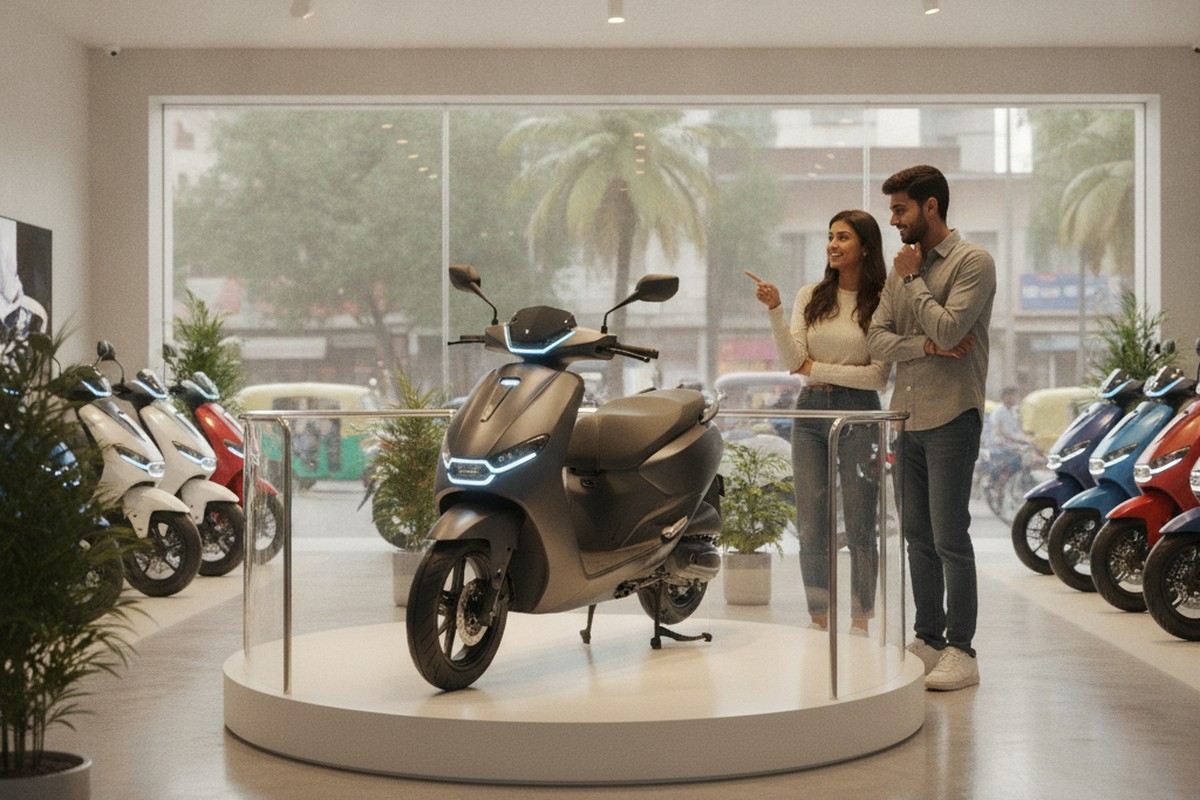
Modern electric scooter showroom in India with new EV models on display

Where New Electric Scooters Have Changed the Calculation

This is where the conversation around used EVs has shifted noticeably in 2026. When the cheapest decent new electric scooter cost ₹1.2–₹1.5 lakh, the argument for a ₹70,000 used unit was clear — you were paying roughly half. But the new scooter market has moved.

Elektree India, for instance, offers the Wheels at ₹82,871 — a genuinely road-ready electric scooter with 50–70 km of range, 45 km/h top speed, and a 3-year comprehensive warranty covering the vehicle, battery pack, and motor. No prior licence is required to ride it. The Zenith and RV 80 step up to 80–100 km of claimed range and 60 km/h at ₹90,164 and ₹94,363 respectively — both with the same three-year warranty.

Compare this to what you’re actually getting with a ₹70,000–₹80,000 used scooter from a private seller. You’re likely getting no remaining manufacturer warranty, an unknown battery SoH, no transferable warranty on the battery, and a vehicle that may already need attention. The gap between used and new has narrowed to the point where, for many buyers, it no longer justifies the risk.

Elektree’s three-year warranty is worth pausing on specifically. It covers the battery pack outright — which means if the battery degrades below the threshold during that period, you’re covered. For a buyer who doesn’t want to be exposed to a ₹60,000–₹80,000 surprise, this is not a small thing. Combine that with ICAT-certified models, home charging in around four hours at ₹5–₹10 per charge, and a service network across Delhi, Mumbai, Kolkata, Hyderabad, Bengaluru, and tier-2 locations — and the new option starts looking like the genuinely smarter financial decision.

The Running Cost Equation

One appeal of used EVs is low running cost — and this is real. Electric scooters cost roughly ₹5–₹10 per full charge at home, translating to around ₹0.8–₹1.5 per kilometre. Against ₹5–₹8 per km on a petrol scooter, the savings add up meaningfully. But these running cost advantages apply equally to a new electric scooter. The savings don’t belong to the used market — they belong to the technology itself. When you buy a new Elektree with a three-year warranty and low annual maintenance of ₹2,000–₹5,000, you capture the same daily savings without inheriting someone else’s degraded battery.

The Verdict for Indian Buyers in 2026

If you’re tempted by a used electric scooter deal, go into it with one non-negotiable: get the battery’s State of Health documented from an authorised service centre before any money moves. If the seller won’t accommodate that, treat the refusal as your answer and walk away.

If the SoH is strong, the warranty is transferable, and the price reflects a genuine discount — you might have a good deal. But run the full numbers first: the asking price plus the probable cost of anything the battery might need in the next two to three years.

For most buyers, however, the math in 2026 points toward new — specifically toward the entry point where the new scooter market now sits. Elektree’s lineup starts under ₹83,000 and covers the full vehicle with a three-year warranty that takes the battery risk off your plate entirely. You get full EV running cost savings from day one, ICAT-certified models, predictable maintenance, and a scooter built for Indian conditions by a company that understands what Indian riders actually need.

That’s not a marginal improvement over a ₹65,000 used scooter. It’s a fundamentally different ownership proposition — one where you’re not quietly hoping the battery holds out long enough to justify what you spent. Explore Elektree India’s range at elektree.com and see where the numbers actually land for your commute.

Best Electric Scooter for College Students in India 2026: Stop Chasing Range Numbers and Start Thinking Like a Smart Buyer

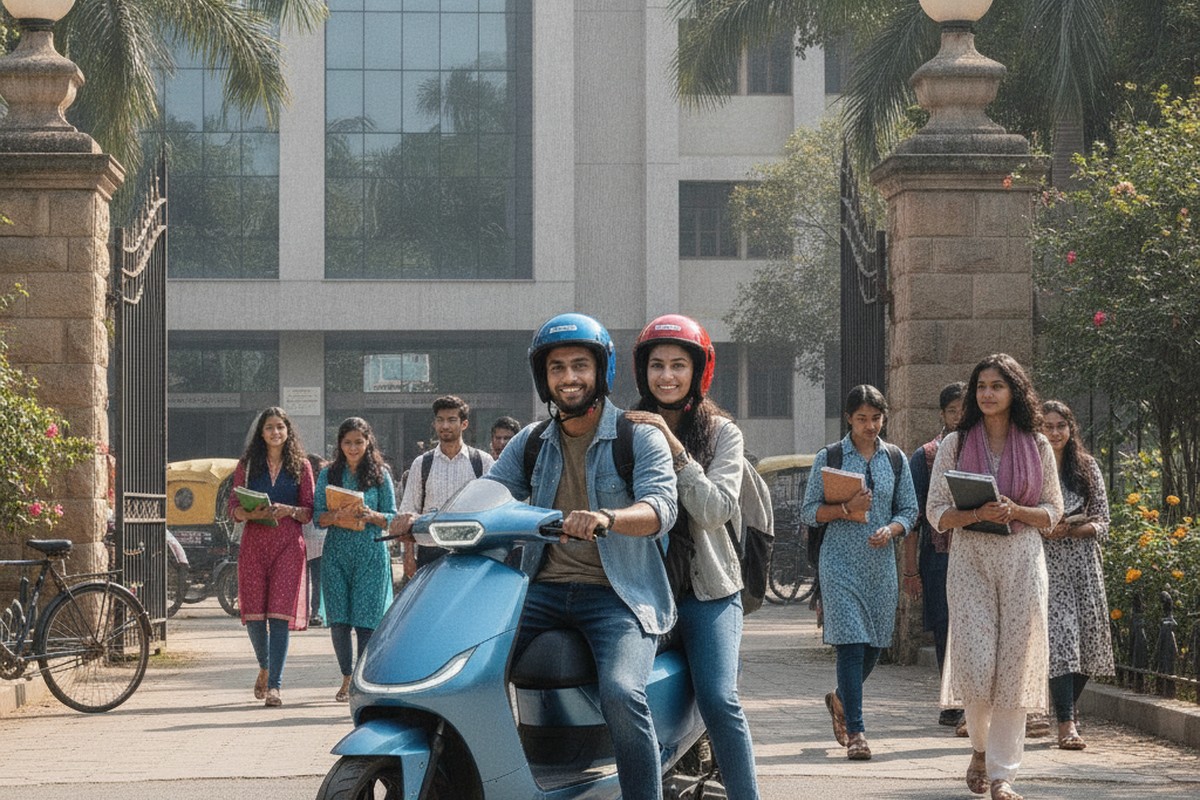
College student riding an electric scooter on an Indian city road near a university campus

Every year around admissions season, the family WhatsApp group erupts with scooter advice. Relatives who last rode a two-wheeler when Doordarshan was still in black and white suddenly become experts. The result is a confusing pile of recommendations — some outdated, some driven by brand loyalty, some just wrong for a student’s actual needs. The student ends up either overpaying for features they’ll never use, or buying something that feels like a bargain until the running costs start showing up.

The honest truth is that buying a first electric scooter as a college student in India in 2026 is not complicated — but only if you’re asking the right questions. Most students aren’t. They’re fixating on peak range figures and top speed numbers when the questions that actually determine daily satisfaction are far more practical.

What Does a College Student Actually Need From a Scooter?

Let’s be real about riding patterns. If you’re living in a hostel, PG, or rented accommodation near your college, a typical day involves a 5-15 km ride to campus, maybe a detour to coaching classes or a market, and back. On weekends there might be a longer trip — but the daily average for most urban college students in India sits comfortably between 20 and 40 kilometres. This is worth remembering when a brand’s advertising tells you that you need 200+ km of range.

IDC-rated range — the figure you see in advertisements — is measured under controlled lab conditions. Real-world riding in Indian traffic, with the heat, start-stop riding, the occasional pillion, and accessories running, typically delivers 15 to 25 per cent less than that claimed figure. A scooter with 90 km of real-world range, charged every night, will handle a student’s daily commute without a moment of anxiety.

The Things That Actually Matter for Students

Running cost is where electric genuinely changes the equation. Petrol scooters are currently costing commuters ₹2.50-3.50 per kilometre in fuel. A properly chosen electric scooter costs ₹0.20-0.60 per kilometre to charge. On a 35 km daily commute across a 200-day academic year, that gap saves ₹18,000-22,000 annually — money that could cover textbooks, mess fees, or a few months of accommodation.

Payload and practicality matter more than most buyers realise. College life means carrying a backpack full of books, a helmet, a tiffin box, and sometimes a pillion friend. A scooter’s rated payload tells you how much it can carry safely before performance and longevity start to suffer. Students who ignore this number often end up with an overloaded machine that wears out prematurely.

Battery warranty is arguably the most underestimated criterion. The battery is the most expensive component in an electric scooter — and the one that ages. A strong battery warranty is a manufacturer saying it stands behind its product’s long-term health. For a student using the scooter through three or four years of a degree, this matters enormously.

Ground clearance and suspension affect daily life more than most spec sheets suggest. Speed humps, potholes, and flooded patches are standard issue on most Indian college campuses and nearby roads. The difference between 150 mm and 180 mm of ground clearance shows up on every bumpy stretch you navigate.

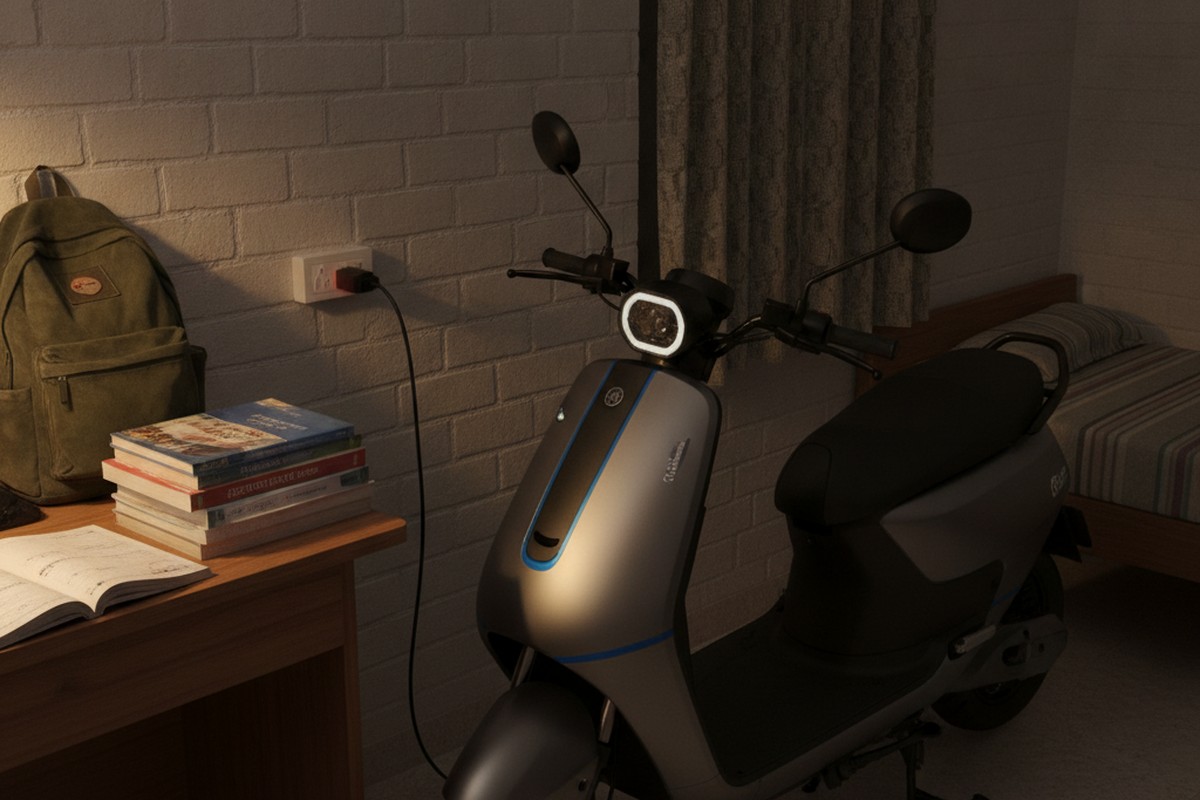
Electric scooter being charged at a student hostel room with college books in background

Charging convenience is a real consideration at most student accommodations. You’re working with a standard 5-ampere socket in your room or on a shared veranda. A scooter that takes 8-10 hours to fully charge from a regular socket requires careful planning. One that charges in 4-5 hours gives you far more flexibility — plug in when you return from college, and wake up to a full battery.

What the Market Is Offering in 2026

The electric scooter market in India has matured considerably. The Ola S1 X, starting around ₹84,999 for the 2kWh variant (108 km IDC range), remains one of the most discussed budget options — a 5.5kW motor, 7-inch TFT display, and cruise control at that price is genuinely competitive. The higher-range 3kWh and 4kWh variants are significantly more expensive, and for a student doing 30 km a day, those upgrades may be solving a problem that doesn’t actually exist in their life.

The Ather Rizta S, from approximately ₹1,20,705, brings excellent storage — 34 litres under-seat plus a 22-litre front compartment — and a 123-160 km range depending on battery variant. A thoughtfully built machine, but the price pushes it into territory where students have to make a real trade-off. The TVS iQube (from ₹1,19,250) similarly offers strong build quality and TVS Motor Company’s wide service network at a comparable premium.

Each of these scooters has genuine merit. But they’re optimised for audiences broader than the student segment — families, working professionals, commuters with longer daily distances. A smart student buyer needs to ask: am I paying for what I’ll actually use?

Why the Elektree Zenith Deserves Serious Attention

The Elektree Zenith, priced at ₹90,164, enters this conversation at an interesting point. It’s cheaper than the Ather Rizta and TVS iQube by a meaningful margin, comparable to the base Ola S1 X, but the full engineering package tells a different story when you evaluate it against what a student actually needs day-to-day.

Start with payload: the Zenith is rated to carry up to 200 kg — rider, pillion, and cargo combined. Most scooters in and around this price bracket are rated for 150-160 kg. That difference matters in practice. A student with a fully packed backpack and a pillion friend on the back of a 155 kg-rated scooter is operating close to the limit. Vehicles running near their payload ceiling age faster, brake harder, and become less predictable over time. The Zenith’s 200 kg capacity keeps even two well-built riders comfortably within the design envelope.

Two Indian college students on an electric scooter parked outside their college campus gate

Ground clearance on the Zenith is 180 mm, with a front disc brake and monoshock rear suspension completing a chassis spec’d for real-world rather than showroom conditions. These are not headline specifications, but they determine whether a scooter feels confident at 60 km/h on a patchy road — or nervous.

The battery carries a 3-year, 50,000 km warranty. For a student doing 35-40 km daily, that warranty covers the full duration of most undergraduate degrees. The 4-5 hour charge time from a standard socket means you can plug in when you get home from college, go study or sleep, and wake up to a full battery every morning.

The technology package is well matched to student priorities. GPS tracking and an anti-theft alarm are features that genuinely matter on a college campus where unattended scooters regularly go missing. A USB charging port lets you top up your phone on the go — a genuine quality-of-life feature when you’ve been on campus since 8am. Three riding modes (Hyper, Normal, Eco) let you balance performance with battery conservation depending on your day. Reverse mode is a useful addition for the tight parking situations common around campus and PG-dense areas.

A Fair Assessment

The Zenith does have trade-offs worth knowing. Its 18.5-litre boot space is smaller than the Ather Rizta’s 34-litre under-seat compartment — if you regularly carry bulky items, you’ll want to budget for a topcase or rear carrier. And Elektree’s service network, while expanding, is not yet as extensive as Ola Electric or TVS across all cities. Checking service centre proximity in your specific city before purchasing is sensible advice regardless of brand, but particularly relevant here.

That said, for a student evaluating the full picture — price, payload, ground clearance, warranty, charge time, and practical technology — the Zenith holds up remarkably well against options that cost ₹25,000-30,000 more.

The Numbers That Should Drive the Decision

Here’s the exercise worth doing before any showroom visit. Take your daily commute distance. Multiply by 200 (approximate college days per year). Compare the cost at ₹0.50 per km (electric) versus ₹3 per km (petrol). That annual saving — typically ₹18,000-25,000 — is the real starting point of the conversation. Then look at which electric scooter gives you the right payload for how you actually ride, the right warranty for how long you’ll keep it, and after-sales support appropriate for where you’re studying.

When those are the criteria, the Elektree Zenith is one of the most credible choices in the student segment for 2026. It doesn’t attempt to be the range champion or the fastest scooter in its class. What it does is deliver a well-engineered, practically specified machine at a price point that makes genuine financial sense for a student buyer or a parent investing in four years of daily transport.

Explore the full Elektree India range — including the Zenith and other models built for Indian road conditions — at elektree.com. Make the decision with the full specification picture in front of you, and you’ll make a choice you can be confident in for years.
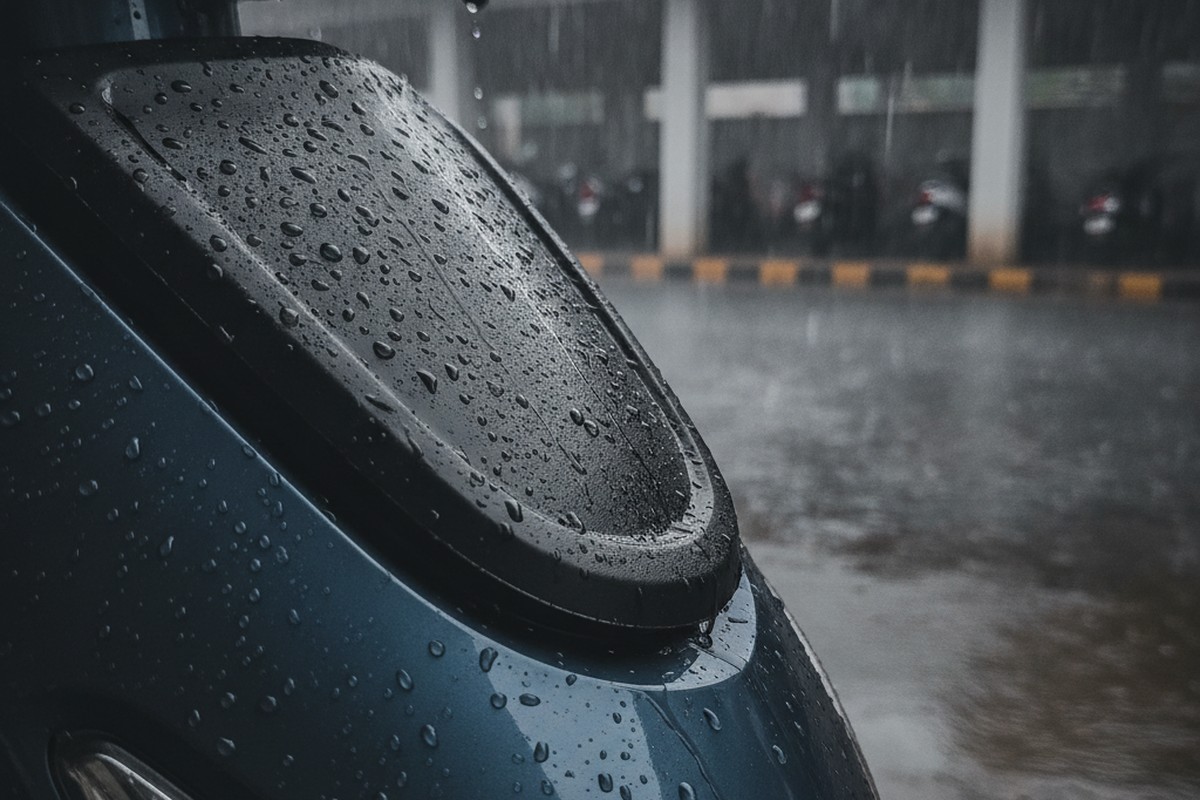
Running 100 Kilometres a Day? Here’s What Delivery Riders Should Actually Look For When Buying an Electric Scooter in 2026

Indian delivery rider on electric scooter navigating Mumbai city street at dusk 2026

Most electric scooter buying guides are written for commuters. Someone riding 20–30 kilometres to the office and back, charging overnight at home, occasionally using the scooter on weekends. That’s a valid use case — but it is not yours if you’re delivering food, groceries, or parcels for Zomato, Swiggy, Blinkit, Amazon, or any of the other platforms that now employ millions of two-wheeler riders across India.

Your use case is fundamentally different. You might cover 80 to 120 kilometres in a single shift. You stop and start dozens of times. You ride through peak-hour traffic, monsoon rains, potholed delivery lanes, and gated societies with no charging points. Your scooter is not a lifestyle accessory — it is your income-generating asset. That changes everything about what you should buy.

The Policy Shift That’s Already Here

For riders working in the National Capital Region, the decision has effectively been made for them. Since January 2026, the Commission for Air Quality Management (CAQM) has mandated that new two-wheeler additions to delivery fleets in Delhi, Gurugram, Noida, Faridabad, Ghaziabad, and the wider NCR must be electric or CNG. Platforms like Swiggy, Zomato, Ola, and various e-commerce logistics providers are all covered under this rule.

Maharashtra is heading in the same direction. Proposed amendments to the Bike Taxi Rules 2025 would require major delivery platforms — Swiggy, Zomato, Zepto, Blinkit — to progressively transition to EV fleets. The regulation hasn’t been finalised yet, but the direction of travel is clear: petrol two-wheelers in India’s urban delivery corridors are on borrowed time.

If you’re still running on petrol and delivering in any large Indian city, this isn’t just a regulatory question. It’s a financial one.

The Economics You Simply Cannot Ignore

Running a petrol scooter costs approximately ₹2.00 to ₹2.10 per kilometre in fuel. For a rider covering 100km per day, that’s around ₹5,000 to ₹6,000 per month in fuel alone, before servicing. An electric scooter fully charged runs ₹5 to ₹10 in electricity for 80 to 100 kilometres — bringing your monthly energy cost down to ₹150 to ₹300. That ₹4,500 to ₹5,500 difference stays in your pocket every month, for the life of the vehicle. For a delivery rider, that’s nearly half a typical EMI payment freed up, month after month.

What Delivery Riders Actually Need (It’s a Shorter List Than You Think)

The popular EV buying checklist — app connectivity, voice commands, seven-inch touchscreen, Bluetooth speakers — is largely irrelevant if you’re delivering food for a living. What actually matters is much simpler:

Range that covers a full shift without anxiety. For most delivery zones, 80 to 100 kilometres of real-world range is the practical minimum. And here’s the important part: manufacturer-claimed ranges are almost always measured under ideal conditions — flat roads, minimal load, mild weather. In actual city delivery conditions with frequent stops, payload weight, and Indian traffic, expect real-world figures to be 20–30% lower than the brochure number. So a scooter claiming 120km may deliver 85–95km in practice.

Boot space that can actually fit a delivery bag. A standard insulated delivery box is bulky. A scooter with a cramped 20-litre underseat compartment will either mean an awkward rear-carrier setup or bags strapped to the seat — neither ideal across a 10-hour shift. Look for at least 26–30 litres of usable underseat storage.

Delivery rider checking underseat boot space of electric scooter in Indian city

Build quality that handles high-mileage stress. A typical commuter scooter averages 25–30km per day. You’re running three to four times that. The stress on the suspension, motor, and battery is proportionally higher. One useful indicator: check whether the scooter carries ICAT (International Centre for Automotive Technology) certification — this means it has been tested against government-mandated safety and quality standards. Not every smaller EV brand bothers with this, and it matters when you’re putting serious daily mileage on the vehicle.

A service centre you can actually reach. This is the factor most buyers overlook until something goes wrong. If your scooter needs a repair and the nearest authorised service centre is 60km away, your entire livelihood stops. Service network depth is more important for delivery riders than for any other category of buyer. Verify the nearest authorised service point before you purchase — not after.

What the Market Currently Offers

The Hero Vida V2 Pro (₹1.40 lakh ex-showroom) is the strongest option for riders who prioritise service. Hero MotoCorp’s 900+ service touchpoints mean you’re rarely far from authorised support. Real-world range is around 114km, DC fast charging (80% in 80 minutes) is available, and the 3-year manufacturer backing is solid. The underseat boot at 26 litres is the main limitation. Strong overall, but the most expensive option after on-road costs.

The TVS iQube (3.5kWh, ₹1,45,200 ex-showroom) delivers a claimed 145km range and 30–32 litres of underseat storage. TVS’s nationwide service network and build quality make it a credible long-term choice — just the priciest one in this comparison.

The Ola S1 X+ (₹1,23,000–1,26,000 on-road) stands out for its 36-litre boot — the most practical for delivery bags — and real-world range of around 100–115km. Software and service inconsistencies outside major metros are known issues, though Ola continues expanding coverage. If you’re in a large city and need maximum storage, it warrants a look.

The Case for Elektree India — and Why the Price Gap Matters More Than It Seems

Electric scooter dealership showroom in India with modern EV models on display

If your budget is stretched — or you want to direct your savings toward daily operational costs rather than EMI — Elektree India’s lineup deserves serious attention. The Elektree Zenith and RV 80, both ICAT-certified, are priced at ₹90,164 and ₹94,363 respectively, with a claimed range of 80 to 100 kilometres and a top speed of 60 km/h.

That pricing is ₹30,000 to ₹50,000 lower than any of the three competitors discussed above. For a delivery rider on EMI, that difference translates into 6 to 10 months of lower monthly outgo. Put differently: you start building financial headroom faster, and the total loan burden is lighter from day one.

Elektree’s running cost is among the lowest in the segment. A full charge runs ₹5 to ₹10 in electricity and takes approximately 4 hours — meaning an overnight charge is sufficient for a full delivery shift. With a 60V/32Ah or 60V/35Ah battery configuration, the energy cost per kilometre is genuinely competitive.

On service, Elektree operates 54+ dealers across India, covering major metros including Delhi, Mumbai, Kolkata, Hyderabad, and Bengaluru, as well as tier-2 cities in Bihar, Jharkhand, West Bengal, Uttar Pradesh, Assam, and the Northeast. If you are in a city or region with Elektree coverage, the post-purchase support is accessible. If you are not — and this is worth stating plainly — the smaller dealer footprint compared to Hero or TVS is the most meaningful limitation to weigh before buying.

What the ICAT certification tells you is important: Elektree’s scooters have met government-mandated safety and quality benchmarks. In a market segment where smaller EV brands sometimes cut corners on testing or certification, this is meaningful assurance. The 3-year warranty brings Elektree in line with industry-standard coverage, giving you protection during the period of highest mechanical risk on any new vehicle.

Making the Decision That’s Right for You

There is no single best electric scooter for every delivery rider — the answer depends on where you ride, how far you travel per shift, and what your budget actually allows. But there is a logic that should guide the decision.

If you’re based in a major metro, ride 80–100km per day, and want the widest possible service safety net, the Hero Vida V2 Pro is difficult to argue against — even at ₹1.40 lakh. If your daily route is shorter and you need maximum boot space, the Ola S1 X+ earns consideration. And if you’re in a city where Elektree has a dealer, riding within typical delivery-shift distances, and want to maximise what you keep each month — both in upfront cost savings and ongoing running costs — the Elektree Zenith or RV 80 offers a genuinely strong financial proposition that the pricier alternatives simply cannot match.

A delivery rider’s scooter purchase is ultimately a business decision. The vehicle that generates the best return — lower upfront cost, lower running cost, adequate range, ICAT-certified quality, and accessible service — is the right choice, regardless of what the spec sheets say about top speed or touchscreen size.

Explore the Elektree Zenith and RV 80 — along with Elektree India’s full lineup of ICAT-certified electric vehicles — at elektree.com. If a dealer is near you, the numbers make a compelling case for making the switch.
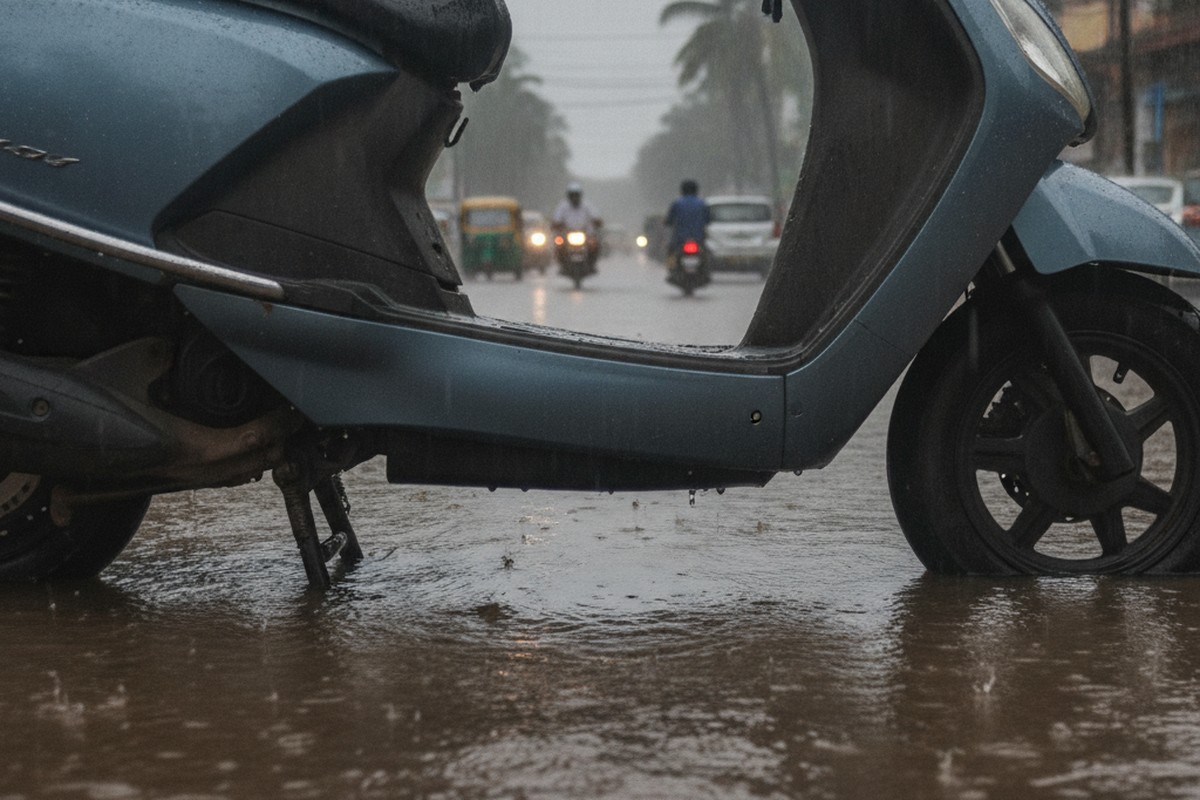
Your Electric Scooter in the Monsoon: What That IP Rating Actually Means, Where Indian Roads Cross the Line, and How to Protect Your Investment When It Pours

Electric scooter ridden through monsoon rain on a wet Indian city street

Every September, the same question floods EV owner forums: “My scooter got stuck in a waterlogged underpass yesterday. Should I be worried?” Sometimes the scooter restarted fine. Sometimes it didn’t. The difference is rarely luck — it comes down to decisions made long before the rain started.

If you own or are buying an electric scooter in India, the monsoon is the most honest test of that decision. And if you’ve assumed that an “IP67-rated” sticker on the brochure means your scooter will handle anything July through September throws at it, this article will save you from a very expensive lesson.

What IP67 Actually Protects — and What It Doesn’t

Ingress Protection, or IP, ratings are the most misunderstood spec in the electric scooter world. When a manufacturer says the battery is IP67-rated, here’s what that actually means: the battery pack survived a controlled lab test involving submersion in up to one metre of water for thirty minutes. That’s it.

It doesn’t mean your entire scooter is waterproof. The rating typically applies only to the battery pack, the main motor, and sometimes the primary ECU. The charging port flap, the wiring harnesses running through the frame, the dashboard connectors, the BMS communication lines — these often carry separate, lower ratings, or none at all. In a real monsoon, with water splashing upward at forty angles rather than dripping straight down into a test tank, the weak points are exactly where problems start.

The most commonly cited models in the Indian market — Ather 450X, Ola S1 Pro, TVS iQube, Bajaj Chetak — all advertise IP67 protection on their battery packs. But owners across Chennai, Pune, and Mumbai have documented intermittent software errors and connector issues months after a flood exposure event, precisely because the battery survived but peripheral systems didn’t. The damage doesn’t announce itself on day one. It shows up as mysterious error codes the following March, when nobody connects it to the waterlogged road they crossed back in August.

The Ground Clearance Problem Most Buyers Miss

Here’s a more practical number than IP ratings: ground clearance. Most mainstream electric scooters sold in India sit between 155mm and 170mm off the ground. The Ather 450X clears 170mm. The Ola S1 Pro Gen 3 comes in at 160mm. The TVS iQube manages 157mm. These measurements are the physical ceiling of how deep you can wade before water starts entering places it has no business being.

In Indian monsoon conditions, “waterlogged road” is not the same as “a bit damp.” In Mumbai, Hyderabad, Bengaluru, Chennai, and dozens of smaller cities, stagnant water regularly reaches 300mm, 400mm, even more at underpasses and low-lying intersections. Your 160mm-clearance scooter will have water washing over the footboard long before you realise the situation is unsafe.

The informal guidance from automotive engineers and service technicians is consistent: if water reaches the bottom of your footboard, slow down and turn around. If it’s above the footboard, you’re taking a genuine risk with the electrics. If it’s approaching the legshield, don’t try to restart — push the scooter to dry ground and call your service centre.

This is not unique to any particular brand. It’s a physical reality of how all scooters in this class are built.

The Damage That Costs You Lakhs — But Doesn’t Show Up for Months

The thing about water and electrical systems is that immediate failure is actually the better outcome. If your scooter dies in a flooded road, you know something happened, you get it inspected, and you catch the damage early.

What service technicians consistently describe as more expensive is latent corrosion — the slow oxidation of connectors and wiring insulation that begins inside sealed cavities after water exposure, progressing invisibly for months. You ride normally, everything seems fine, and then one day your BMS throws errors or your scooter refuses to charge. The cause is a connector that corroded because it wasn’t inspected after last monsoon’s underflooring splash.

A preventive post-monsoon inspection — terminals cleaned, charging port seals checked — costs ₹300 to ₹800. Skipping it can eventually cost ₹12,000 to ₹18,000 in replacement components.

The Insurance Gap That Most EV Buyers Walk Into

Water damage from floods is covered under standard comprehensive motor insurance — but only when it’s accidental and within the manufacturer’s specified wading depth. Ride through waterlogged roads beyond your scooter’s design limits, and you’re likely looking at a rejected claim or a partial settlement after a protracted dispute.

The smarter move is to add an EV battery add-on to your comprehensive policy at purchase. It adds perhaps ₹2,000–₹5,000 per year in premium but covers battery replacement costs that can run between ₹40,000 and ₹1.2 lakh.

One more rule most owners don’t know: if your Battery Management System shuts down automatically while your scooter is in water — which is exactly what a well-designed BMS should do — do not attempt to restart repeatedly. Forcing a restart overrides the protection and can cause an immediate short circuit. Call roadside assistance, get to dry ground, and have a technician inspect before the next ignition attempt.

Practical Monsoon Habits That Actually Make a Difference

For everyday rain — the kind that soaks you on a commute but doesn’t waterlog the road — modern electric scooters handle it well. The components that matter are sealed, and light to moderate rainfall is within the design envelope of every mainstream Indian EV. Ride gently, brake earlier, keep speed down.

After a wet ride, don’t plug in immediately. Let the scooter sit for thirty to sixty minutes before connecting the charger. Moisture around the charging socket during a charge cycle is a common cause of connector degradation. Wipe the port area dry, ensure the flap is fully seated, and always charge in a sheltered spot — never outdoors during active rainfall.

Tyres also matter more in wet conditions. The traction difference between worn and fresh tyres is most apparent on wet roads. If yours are already marginal, the monsoon is the worst time to defer replacement.

Where the Buying Decision Actually Matters for Monsoon Ownership

Sealed charging port on electric scooter during monsoon rain in India

Here’s what doesn’t get said enough: the biggest factor in how well your electric scooter handles monsoon ownership isn’t the IP rating on the sticker. It’s the financial cushion you had left over after buying the vehicle.

When buyers stretch their budget to the absolute maximum to get an Ola S1 Pro or an Ather 450X at ₹1.3 to ₹1.9 lakh, they often find themselves cutting corners on the comprehensive insurance add-ons, skipping the preventive maintenance inspections, and deferring the mid-monsoon tyre replacement. The ₹300 connector inspection doesn’t happen, the battery add-on doesn’t get bought, and when something goes wrong in October, the costs hit disproportionately hard.

This is precisely where Elektree India’s product philosophy makes practical sense for a large segment of Indian buyers. The Zenith, priced at ₹90,164, and the RV 80 at ₹94,363, sit meaningfully below the premium competition — by ₹30,000 to ₹95,000 depending on what you’re comparing. Both deliver 80–100 km of real-world range at up to 60 km/h, backed by a three-year warranty that covers the vehicle assembly, battery pack, motor, and controller down to 70% State of Health.

For most Indian city commuters — office runs, school pickups, market trips — 80–100 km is more than enough for two full days of riding on a single charge. That margin also means you’re rarely in a situation where you’re pushing through genuinely dangerous monsoon conditions because you desperately need to reach a charging point. The practical range buffer is, itself, a monsoon safety feature.

The savings versus comparable-range premium competitors can realistically fund three or four years of comprehensive insurance with battery add-ons, annual preventive monsoon inspections, and still leave money in your pocket. That’s not a marketing claim — it’s basic arithmetic.

Electric scooter on flooded Indian road showing ground clearance limit during monsoon

Elektree’s three-year battery warranty is also worth understanding in the context of monsoon ownership. Manufacturing defects that may be aggravated by repeated monsoon cycles, or premature degradation, fall within warranty scope. When something goes wrong in year two after three monsoon seasons, you have documented recourse — not a bill you’re arguing over at a service centre.

What the Smart Buyer Does Before the Rain Starts

The checklist that actually matters: a comprehensive insurance policy with an EV battery add-on, annual preventive inspections, an honest understanding of your scooter’s ground clearance limits, and a vehicle purchase that leaves you financial room to maintain all of the above. Elektree India’s lineup — the Zenith and RV 80 for regular commuters, the Fantom EV for riders needing 150 km+ of range — is built around that combination.

The IP rating on a brochure doesn’t protect your scooter. Responsible ownership habits, adequate insurance, timely maintenance, and a vehicle that was bought within budget — those are what protect it. If that combination is what you’re looking for, exploring what Elektree India has to offer at elektree.com is a logical next step.

Best Electric Scooters Under ₹1 Lakh in India 2026: Why the Motor Type Matters More Than the Range Claim

Best electric scooter under 1 lakh India 2026 - Elektree Zenith

Walk into any EV dealership today with a budget of around ₹1 lakh, and you’ll come out more confused than when you went in. There are more choices in this price band than ever before — Ola’s entry-level line, Ather’s newcomer, Honda’s debut EV, the Hero-backed Vida — each promising impressive range numbers and smart features. And almost all of them will show you a brochure figure that, on Indian roads, in Indian traffic, on a warm afternoon with a pillion, you will never actually see.

But here’s the thing that most buyers in this segment get wrong: they spend 90% of their decision-making time comparing range claims and 0% thinking about the motor. And the motor is the single most important component in your electric scooter. It determines how the scooter performs over hills and flyovers, how it holds up after two years of potholes, how much current it draws in stop-start traffic, and whether the battery that was supposed to last 50,000 km actually does.

Let’s sort through the ₹1 lakh segment properly — starting with what’s actually available, then getting into what separates the good buys from the ones you’ll regret at year two.

What’s Actually on Offer Under ₹1 Lakh Right Now

The most talked-about option in this price band is the Ola S1 Z, starting at ₹79,999 for the 3.1 kWh variant, with a 5.1 kWh version at ₹99,999. Ola claims an extraordinary 301 km of range on the top variant — a number that raises more questions than it answers. The motor is a 4 kW hub unit, top speed is 70 km/h, and the scooter runs MoveOS 5 with decent connectivity. Ola’s service infrastructure has been a sore point historically, though they’ve been working to address it.

The Ather Konarc S at ₹99,999 is a more composed entry — 4.7 kW motor, 100 km IDC range on the base variant, 70 km/h top speed, 31 litres of boot space, and Ather’s generally well-regarded after-sales service. Ather has built a reputation for honest range figures and solid software, which counts for something in a market full of optimistic brochures.

The Honda QC1 at ₹90,708 is Honda’s first electric scooter in India, and it shows both the brand’s quality DNA and its conservative approach. The 1.8 kW motor limits top speed to 50 km/h, ARAI-claimed range is 80 km, and charging takes 6.5 hours. Honda’s reliability credentials are impeccable, but the QC1’s performance ceiling makes it better suited to light city use than daily highway-speed commuting.

The Vida VX2 (Hero’s EV brand) sits at ₹84,999 with a 128 km claimed city range and 70 km/h top speed. User reviews are strong, and the Hero service network is an undeniable practical advantage across smaller towns and cities.

The Motor Conversation Nobody Is Having

Every scooter listed above uses a hub motor — the motor is built directly into the rear wheel. Hub motors are simple, cheap to manufacture, and perfectly adequate for flat city roads. But they have limitations that matter on Indian terrain: they struggle on steep inclines, generate more heat in slow traffic, and put mechanical stress directly on the wheel bearings. When a hub motor needs servicing, it often means pulling the wheel.

A mid-drive motor is placed at the centre of the scooter, between the axles, and drives the wheel through a reduction mechanism. This isn’t new technology — it’s been standard on premium electric bikes for years — but it’s extremely rare on Indian electric scooters at this price point. The advantages are real: better torque delivery for climbing, lower operating temperatures because the motor isn’t trapped inside a wheel, more balanced weight distribution, and easier maintenance access.

This is where the Elektree Zenith enters the picture — and it enters at ₹90,164.

Best electric scooter under 1 lakh India 2026

The Elektree Zenith: What the Motor Means for Indian Buyers

The Zenith carries an IPM mid-drive motor — Interior Permanent Magnet, a motor architecture known for high efficiency and strong low-speed torque. In practical terms for an Indian rider, this means the Zenith pulls cleanly over speed breakers and underpasses without the laboured feeling you get from smaller hub motors, and it does it without the same heat buildup on a slow commute through dense traffic.

The claimed range is 80–100 km (IDC), which is honest for this battery size and realistic in mixed riding conditions. Top speed is 70 km/h — the same ceiling as Ola and Ather in this band — and the 0-40 km/h acceleration clocks at 2.1–2.3 seconds, which is genuinely quick. Three riding modes (Hyper, Normal, and Eco) let you tune the experience based on the commute or your battery level that day.

What stands out beyond the motor is the payload capacity: 200 kg. That covers a rider, a pillion, a helmet bag, and your office supplies without the scooter sagging. Most competitors in this price range handle 150–160 kg before you’re stretching rated capacity. Ground clearance is 180 mm — comfortably above what you need for most Indian road conditions, including the kind of broken surfaces that tend to exist just before monsoon repair crews arrive.

Electric scooter mid-drive motor technology comparison India

Boot storage is 18.5 litres, which will take most daily-use needs. The 15.5 cm instrument display, USB charging port, reverse mode, anti-theft alarm, GPS tracking, and LED headlamp with DRL round out a practical feature set. The Zenith is ICAT-certified, which means it’s gone through government-mandated testing for both safety and emissions compliance — not all budget EVs can say the same.

Battery warranty is 3 years or 50,000 km for the lithium-ion pack. This matches what Honda and Ather offer and is better than several others in this segment. The scooter charges in 4–5 hours from a standard home socket, which for most buyers means plugging in overnight and leaving with a full charge every morning.

How Elektree Compares Where It Counts

The Ola S1 Z’s 301 km range claim deserves scrutiny: independent real-world tests of Ola scooters have consistently shown significant gaps between claimed and delivered range figures, and the 3.1 kWh base variant is unlikely to deliver anywhere close to that figure in regular Indian use. Ola’s service experience, while improving, remains uneven across cities. For buyers in metros with Ola Experience Centres nearby, it’s manageable. For buyers in tier-2 cities, it’s a genuine risk.

The Ather Konarc at ₹99,999 is a solid, trustworthy option — Ather’s build quality and software are genuinely good — but it costs ₹10,000 more than the Zenith for comparable performance specs, and uses a hub motor. Honda’s QC1, while backed by an unmatched service network, tops out at 50 km/h and takes over six hours to charge, which limits its versatility. The Vida VX2’s Hero service network is a real asset, particularly outside major cities. But at ₹84,999 with a hub motor, it doesn’t offer the motor architecture advantage the Zenith does at just ₹5,000 more.

None of this is to say the Elektree Zenith is without trade-offs. Elektree is a smaller manufacturer than Ola, Ather, or Hero, and their service network — currently 54+ dealers across India — is more limited than legacy brands. For buyers who live in cities where Elektree has a dealer presence, this is a manageable consideration. For buyers in remote locations, it’s worth checking dealer availability before committing.

Who Should Seriously Consider the Elektree Zenith

If your daily commute is 30–60 km round-trip, you carry a pillion regularly, you live in or near a city with road gradients that challenge underpowered scooters, and you want a three-year battery warranty without stretching past ₹90,000 — the Zenith is worth your time. The mid-drive IPM motor is not a marketing claim; it’s an engineering choice that Indian roads reward over time.

Elektree electric scooter home charging India

The ₹1 lakh EV segment in India has matured quickly, and there are legitimate options across it. But when you look past the brochure range figures and think about what a mid-drive motor means for a scooter you’re going to ride every day for five years — over flyovers, through monsoons, with a pillion, in summer traffic — Elektree’s engineering approach starts to look increasingly sensible.

For Indian buyers who want to spend their ₹1 lakh on a machine built for Indian conditions rather than designed around a range claim, the Elektree Zenith deserves serious consideration. It’s not the cheapest option in the segment, nor the most aggressively specced on paper. But it may be the most honest choice for what Indian commuting actually demands — and that matters when you’re the one doing the commuting every day.

Explore the Elektree Zenith and the full Elektree India electric scooter range at elektree.com.