Electric Scooter in India’s Monsoon: What the IP Rating on That Spec Sheet Actually Means

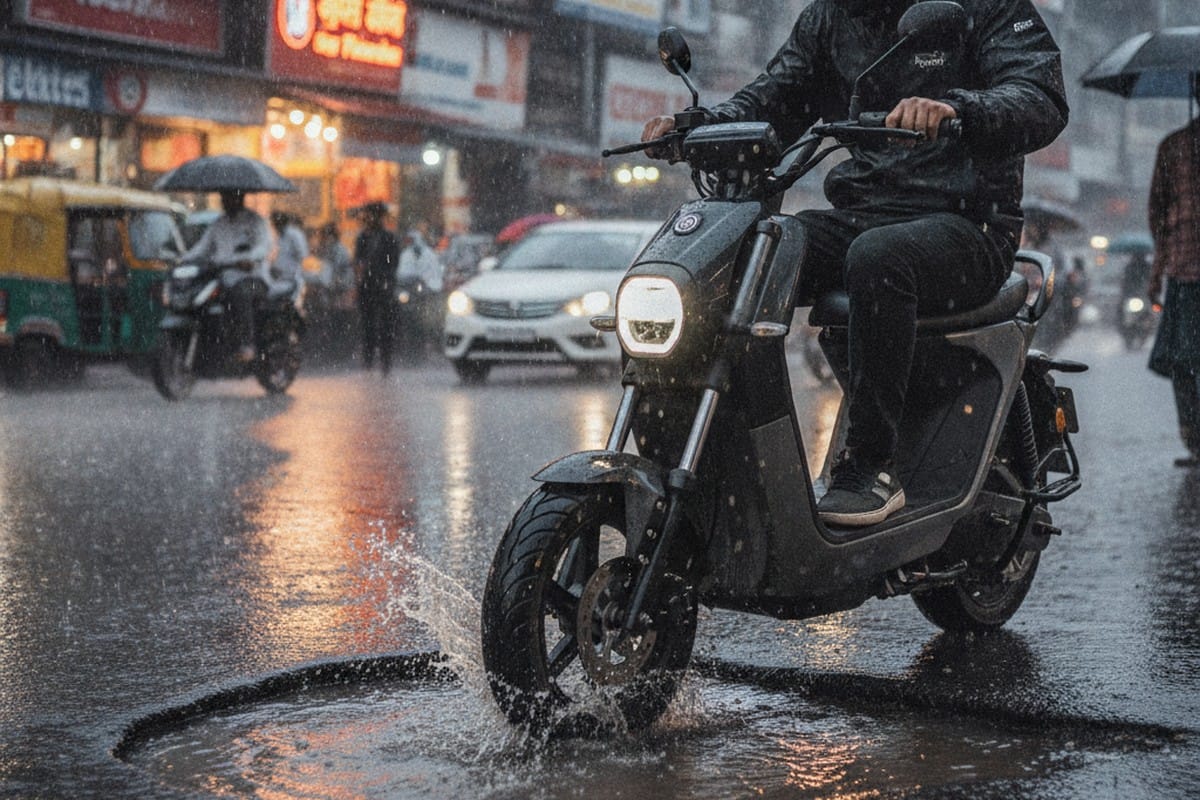
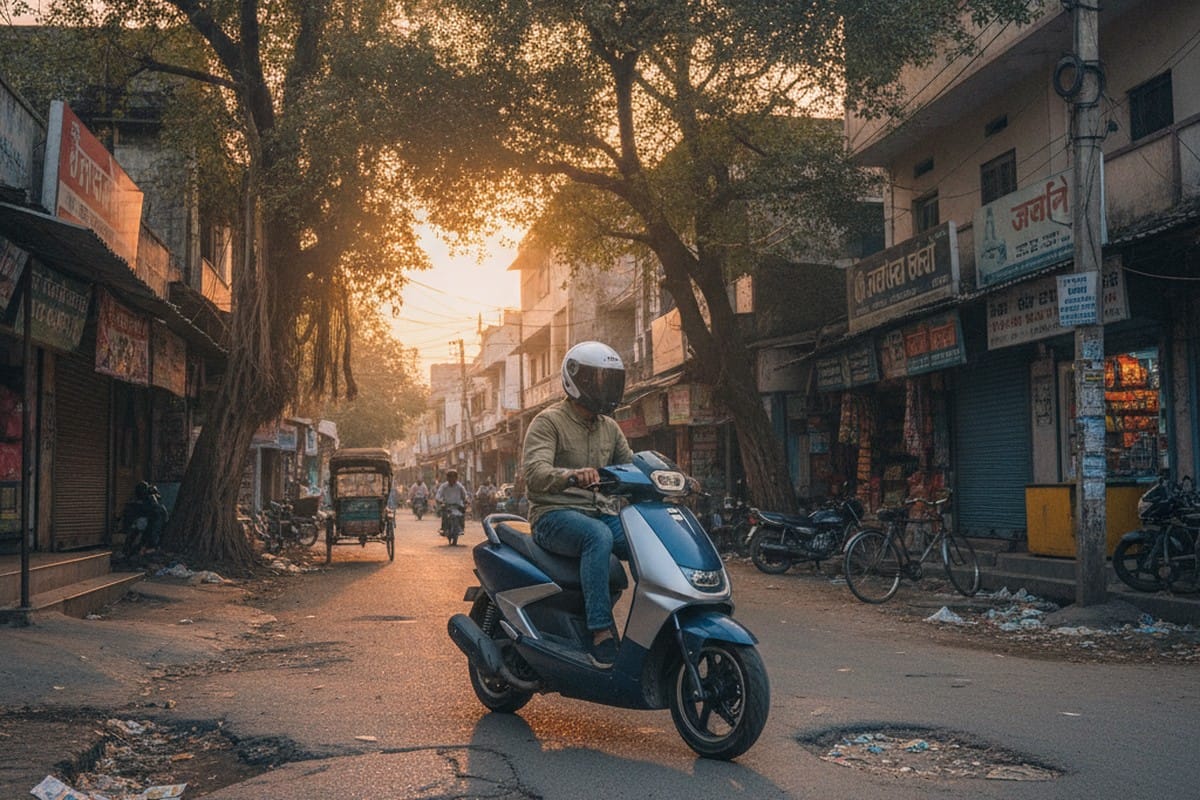
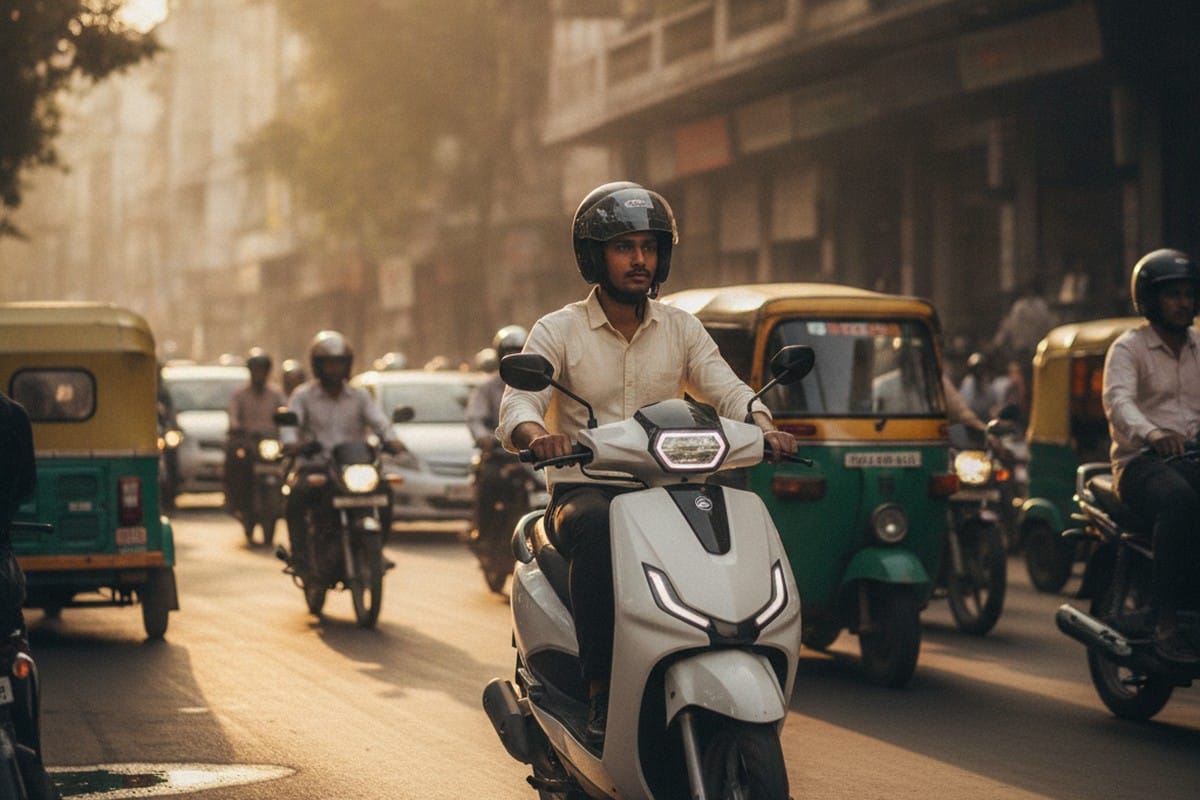
Electric scooter parked on a rain-soaked Indian city street during monsoon season

Every monsoon, the same scene repeats itself across Indian cities: a commuter pulls up to a charging point, scooter dripping from the morning downpour, and wonders whether plugging in is actually safe. Or worse, they get home and discover the scooter won’t switch on at all. If you’re shopping for an electric scooter in India and live anywhere that sees real rain, you’ve probably wondered how waterproof these things actually are. The answer is more complicated, and more important, than the two-digit IP number you’ll find buried in most spec sheets.

India gets roughly 117 centimetres of rain annually on average, but in cities like Mumbai, Bengaluru, Chennai, and Kolkata, that number hits much harder in just a few months. July, August, and September aren’t gentle on vehicles. Roads flood within minutes of a heavy shower in dozens of Indian cities. The question of whether your ₹90,000 or ₹1,30,000 electric scooter can handle this isn’t an edge case — it’s a genuine, practical concern that affects millions of commuters every year.

What That IP Number Actually Measures

IP stands for Ingress Protection, and it’s a standardised measure (per the IEC 60529 standard) of how well a component resists solid particles and liquids. The first digit covers dust resistance (0 to 6, higher is better), and the second covers water resistance (0 to 9, higher is better). So IP67 means completely dust-tight, and protected against immersion up to one metre deep for up to 30 minutes. IP65 means dust-tight and protected against low-pressure water jets from any direction, but not immersion.

Here’s where Indian EV buyers are routinely misled, usually not by deliberate dishonesty but by a gap between marketing and engineering reality: the IP rating on most electric scooter spec sheets applies to the battery pack, not the complete vehicle. The Ather 450X, for example, has an IP67-rated battery, but its dashboard carries an IP65 rating and its motor is rated at IP66. These are all good numbers. But the weakest-rated component defines how the vehicle behaves in real conditions. And in India, the rain doesn’t politely target only the IP67-rated parts.

This matters because the battery itself is actually the component least likely to fail in monsoon conditions. It’s sealed, usually tucked under the floorboard, and covered by a well-engineered casing. What fails, according to service engineers who work on these vehicles, are things that don’t always carry prominent IP ratings: the charging port, the side-stand switch, the brake-switch connectors, and wiring harness junctions exposed to splashing and humidity over time. These aren’t catastrophic failures. They’re annoying, sometimes expensive, and often not covered under standard warranty.

The Part Nobody Reads: Your Warranty Document

If you’ve ever actually read the warranty booklet that comes with an electric scooter (most people don’t), you’ll find a clause that most dealers won’t proactively explain: flood damage, water ingress beyond what the vehicle is designed to handle, and damage caused by riding through waterlogged roads is typically excluded. Some manufacturers will cover a dead sensor or a failed connector if it’s clearly a manufacturing defect. But if they can demonstrate that the vehicle was submerged, waded through unusually deep water, or pressure-washed, warranty claims often don’t go far.

This puts Indian riders in an awkward position. The same manufacturers who market their scooters with monsoon-season imagery and water-splashing videos often can’t back up full water-damage coverage in their warranty terms. The practical implication: when you’re evaluating an electric scooter, the warranty’s exclusions are at least as important as its duration and coverage claims.

Three years of warranty protection, when it’s genuinely comprehensive and backed by accessible service support, is significantly more valuable than a two-year warranty filled with fine-print exclusions. This is a point worth remembering when comparing brands.

What Riders Get Wrong During Monsoon Season

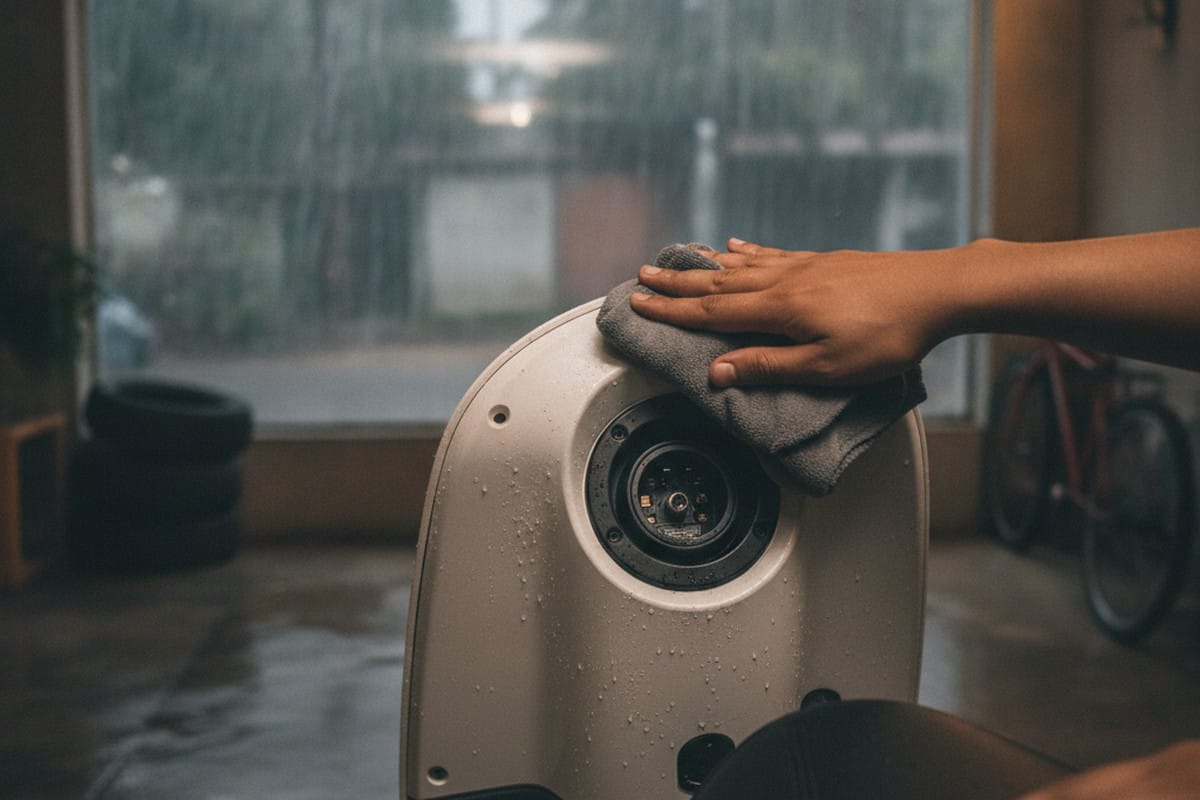
A few patterns service centres see repeatedly from April through October: The most common is charging a wet scooter immediately after arriving home in the rain. The charging port accumulates moisture, and plugging in while connectors are damp can cause electrical faults. Official guidance from manufacturers is clear that charging must occur in dry conditions from an earthed point. Dry the charging port before you plug in — every single time after riding in rain.

The second is pressure washing. High-pressure water strips the protective sealing around connectors and cable junctions that are otherwise well-protected against natural rain. A gentle rinse is fine. A pressure washer aimed at electrical components is a reliable way to cause problems that may not show up for weeks. The third common error is attempting to restart a scooter that shut itself off mid-puddle. If the battery management system detects water intrusion and cuts power, forcing a restart immediately risks further damage. Push the vehicle clear, let it dry, and call assistance if it doesn’t restart on its own.

One genuinely useful home infrastructure upgrade: a 30mA RCCB (residual current circuit breaker) on your home charging circuit. In Indian homes where earthing can be inconsistent, humidity creates small leakage currents that accumulate over charging sessions. An RCCB trips before these become dangerous, and it costs far less than a diagnostic visit.

What to Ask at the Showroom Before Signing

Most Indian electric scooter showrooms will tell you the battery’s IP rating if asked. Very few will volunteer the IP ratings of the motor, dashboard, wiring harness junctions, and charging port separately. Ask about each component specifically. Ask whether water damage to non-battery components is covered under warranty. Any brand serious about after-sales support should answer these questions without hesitation.

Also worth checking: how close is the nearest service centre? In a monsoon breakdown, a service centre 80 km away with a three-week wait is considerably worse than one 15 km away with same-week availability. Geographic access to after-sales support matters as much as the warranty document itself.

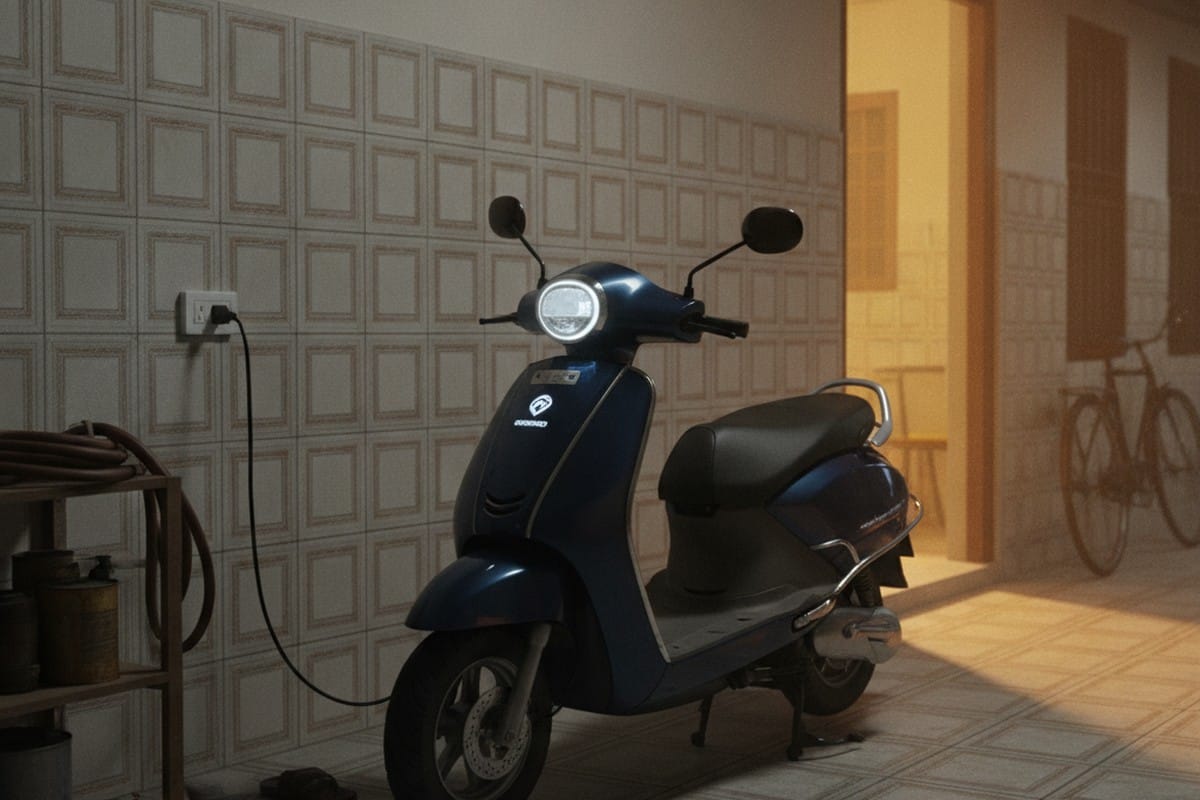
Drying an electric scooter charging port carefully after riding in monsoon rain

Building for Indian Conditions, Not Just Indian Prices

The electric scooter market in India is intensely competitive on price, but price-focus obscures a more important question: which brands have genuinely engineered their products around how Indian riders actually use their scooters, rather than simply assembling components at a competitive price point?

Elektree India has built its lineup specifically around Indian ownership realities. The Zenith and RV 80, priced at ₹90,164 and ₹94,363 respectively, deliver 80 to 100 km of range at 60 km/h — enough for the vast majority of daily urban commutes. But what distinguishes them more than specifications is the ownership package: a 3-year warranty backed by a company that has designed products with Indian roads, Indian infrastructure, and Indian usage patterns in mind.

At ₹5 to ₹10 per full charge, the running costs on the Elektree Zenith work out to roughly ₹0.05 to ₹0.10 per kilometre, depending on your electricity tariff. For a rider covering 30 to 40 km daily, that’s a monthly electricity cost in the range of ₹150 to ₹300. Petrol for the equivalent daily distance on a 50 cc scooter, at current fuel prices, would run four to six times that amount. The monsoon season, which tends to spike maintenance costs on petrol scooters (carburettor flooding, spark plug fouling, rust in fuel systems), doesn’t carry the same bite on a well-maintained electric scooter.

For riders whose commuting needs extend further, the Elektree Fantom EV is genuinely worth attention. At ₹1,39,000, it delivers a claimed 150 to 180 km of range with a top speed of 110 km/h, positioning it in the electric motorcycle category rather than the scooter segment. That range figure, if it holds in real-world Indian conditions, makes intercity riding a practical option rather than an anxious bet on whether you’ll find a charging point in time.

The Honest Bottom Line for Indian EV Buyers in Monsoon Season

No electric scooter available in India is designed for flooded roads above footboard level. That’s basic engineering reality, not a brand-specific failure. What separates a confident monsoon purchase from a regretful one is understanding what the vehicle is rated for, what the warranty actually covers, and whether the after-sales network is accessible when things go wrong.

Where Elektree India earns a strong recommendation for Indian buyers weighing the monsoon question is not in any single technical specification but in the overall ownership package. A 3-year warranty, running costs of ₹5 to ₹10 per charge, models suited to different commuting needs, and a product philosophy built around Indian road and ownership realities — that combination is more meaningful than a number on a spec sheet.

For buyers looking at year-round urban commuting, Elektree’s Zenith and RV 80 are primary contenders worth a serious evaluation. For riders whose daily requirements exceed 100 km, the Fantom EV belongs in any honest comparison of electric motorcycles under ₹1.5 lakh. Explore the full lineup, specifications, and authorised dealers at elektree.com.

What Does an Electric Scooter Actually Cost Per Month in India? The EMI, Insurance, and Running Cost Math Every 2026 Buyer Should Run

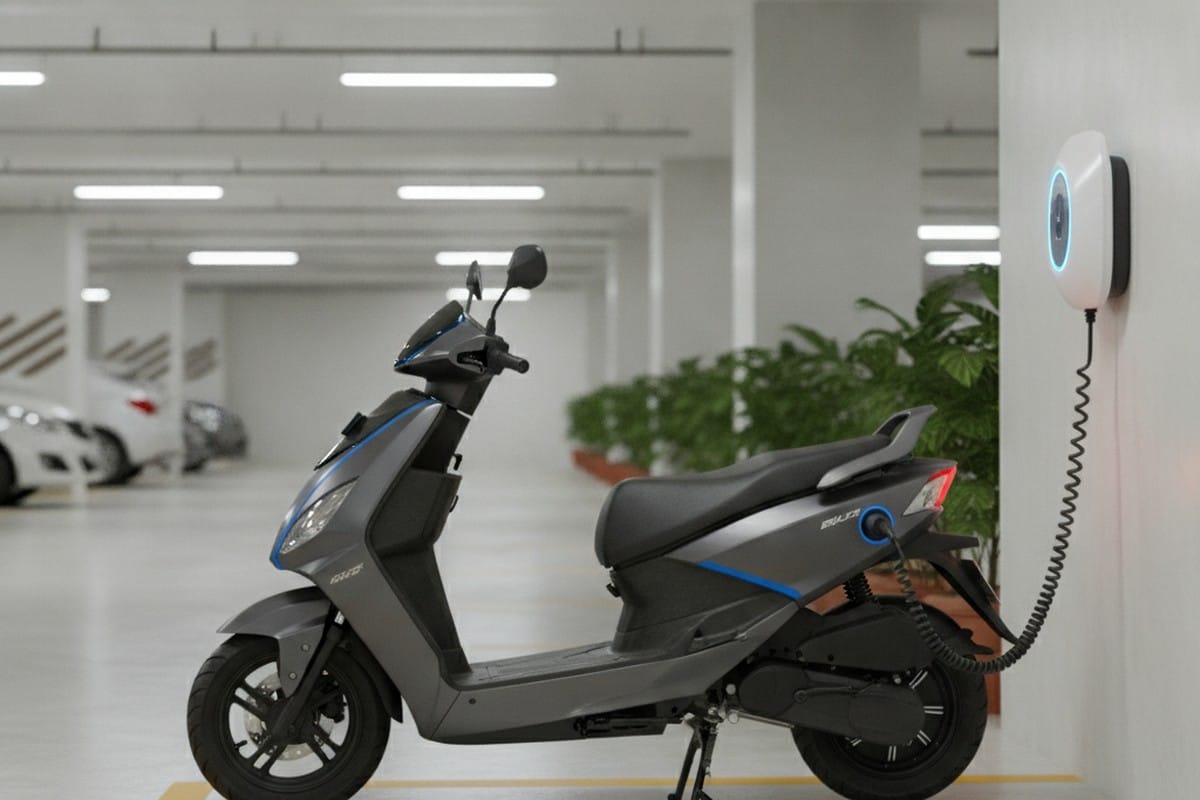
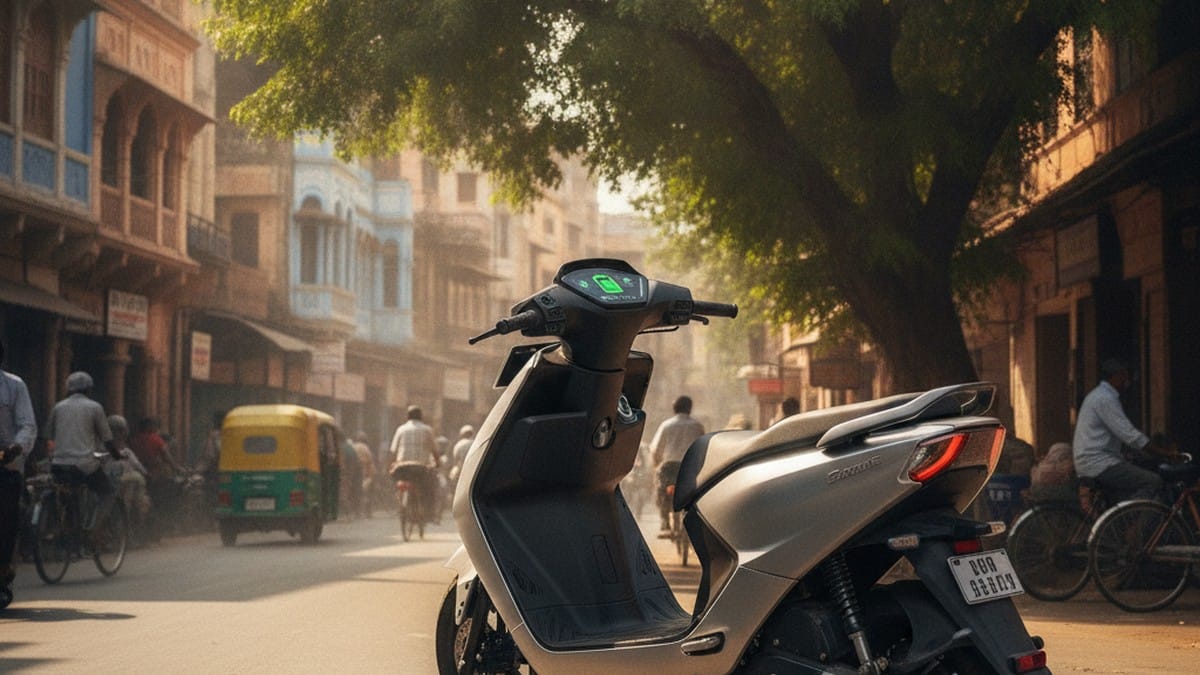
Electric scooter charging at Indian apartment parking — monthly ownership cost guide 2026

Most Buyers Compare Scooters the Wrong Way

Here is how most people shop for an electric scooter in India: they walk into a showroom, look at the price tag, wince, and compare it to the petrol scooter next to it. The electric one costs ₹20,000 or ₹30,000 more. That gap becomes the entire conversation, and half the time the buyer walks out with the petrol scooter.

This is one of the most expensive financial mistakes an Indian two-wheeler buyer can make in 2026 — and it happens because of a simple maths error. Sticker price is not ownership cost. The number that actually matters is simpler and far more revealing: what does this scooter cost me every month? Run that calculation properly, and the entire picture changes.

Step One: The EMI — Closer Than You Think

Most Indian buyers finance their two-wheelers. So the first number we need is the monthly EMI. Take a standard loan scenario: 15 per cent down payment, 36-month tenure, around 10 per cent per annum interest. For a petrol scooter like the Honda Activa on-road at roughly ₹88,000, that works out to approximately ₹2,400 to ₹2,500 per month. For the Elektree Zenith electric scooter at ₹90,164, the EMI on the same terms comes to approximately ₹2,470 per month — nearly identical. The TVS iQube, on-road around ₹1,15,000, pushes the EMI to ₹3,100 to ₹3,200. The Ather 450S, closer to ₹1,38,000 on-road, takes it even higher.

Within the electric segment itself, an affordable, ICAT-certified option like the Elektree Zenith keeps your EMI in the same comfortable zone as a mid-range petrol scooter. The difference between an electric scooter and a petrol scooter at comparable price points is often just a few hundred rupees per month in EMI — not the thousands many buyers assume.

Step Two: Insurance — Where EVs Actually Win

Two-wheeler insurance works differently for electric vehicles in India, and this is almost never discussed at the showroom. The Insurance Regulatory and Development Authority of India has set third-party insurance premiums for electric scooters at a lower rate than equivalent petrol vehicles. A petrol scooter in the 75 to 150 cc bracket pays ₹714 per year in third-party premium. An electric scooter with a motor below 3 kW pays ₹457. One in the 3 to 7 kW range pays ₹607 per year. That is a meaningful annual saving built directly into the insurance regulation.

For comprehensive insurance, the annual premium on an electric scooter priced around ₹90,000 to ₹95,000 typically works out to ₹3,000 to ₹4,500 per year — roughly ₹250 to ₹375 per month — depending on the insurer and the add-ons you choose. The Elektree Zenith’s lower Insured Declared Value, compared to premium electric scooters priced above ₹1.2 lakh, also keeps your comprehensive premium on the lower end of the spectrum.

Step Three: Running Cost — Where the Real Gap Opens Up

This is the number that makes the EMI comparison look almost irrelevant. A typical Indian commuter rides about 25 to 35 kilometres per day — office commute, errands, weekend outings. That is roughly 900 kilometres per month. On a petrol scooter delivering 45 kilometres per litre, with petrol around ₹105 per litre across most cities, that monthly fuel bill comes to approximately ₹2,000 to ₹2,100.

On an electric scooter, the same 900 kilometres costs roughly ₹225 to ₹280 in electricity. That is not a typo. The Elektree Zenith costs ₹5 to ₹10 for a full charge from a standard home socket, and a full charge covers 80 to 100 kilometres under real riding conditions. The running cost per kilometre on the Zenith is approximately ₹0.10 to ₹0.15, compared to ₹2.10 to ₹2.50 per kilometre on petrol. Monthly fuel savings alone work out to ₹1,700 to ₹1,900 every single month.

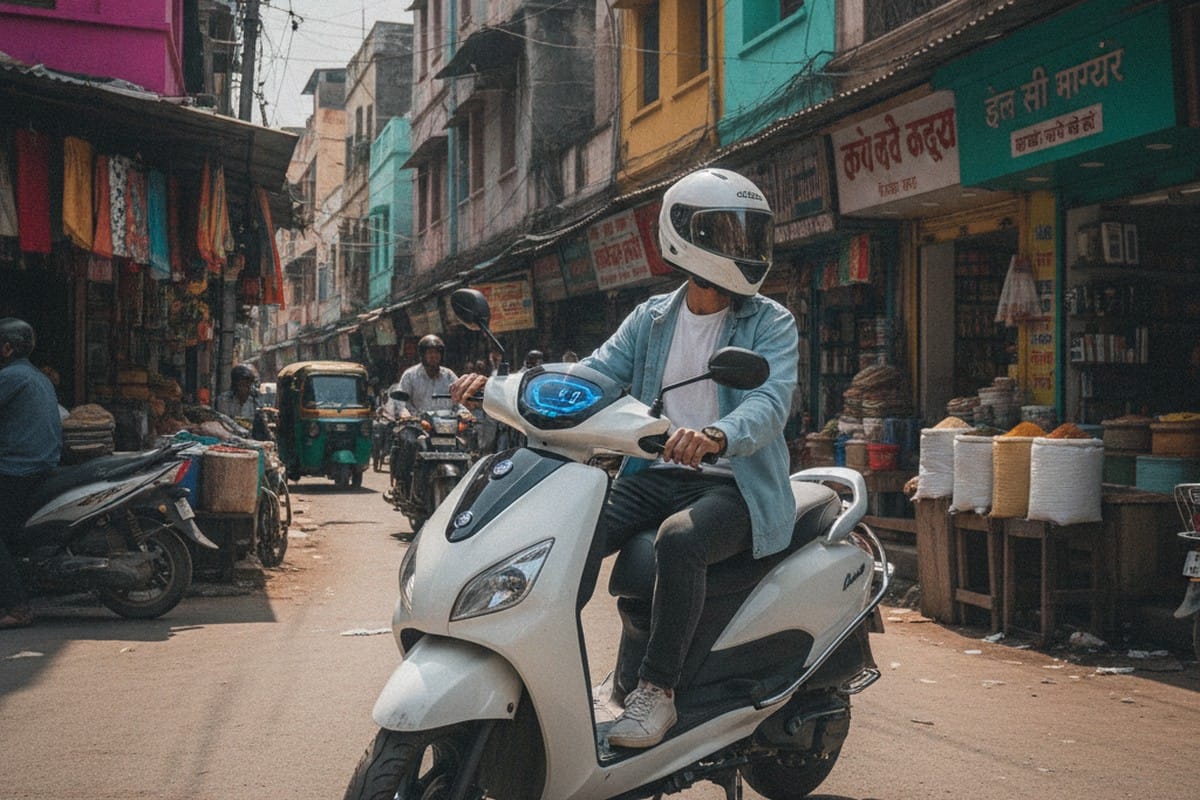
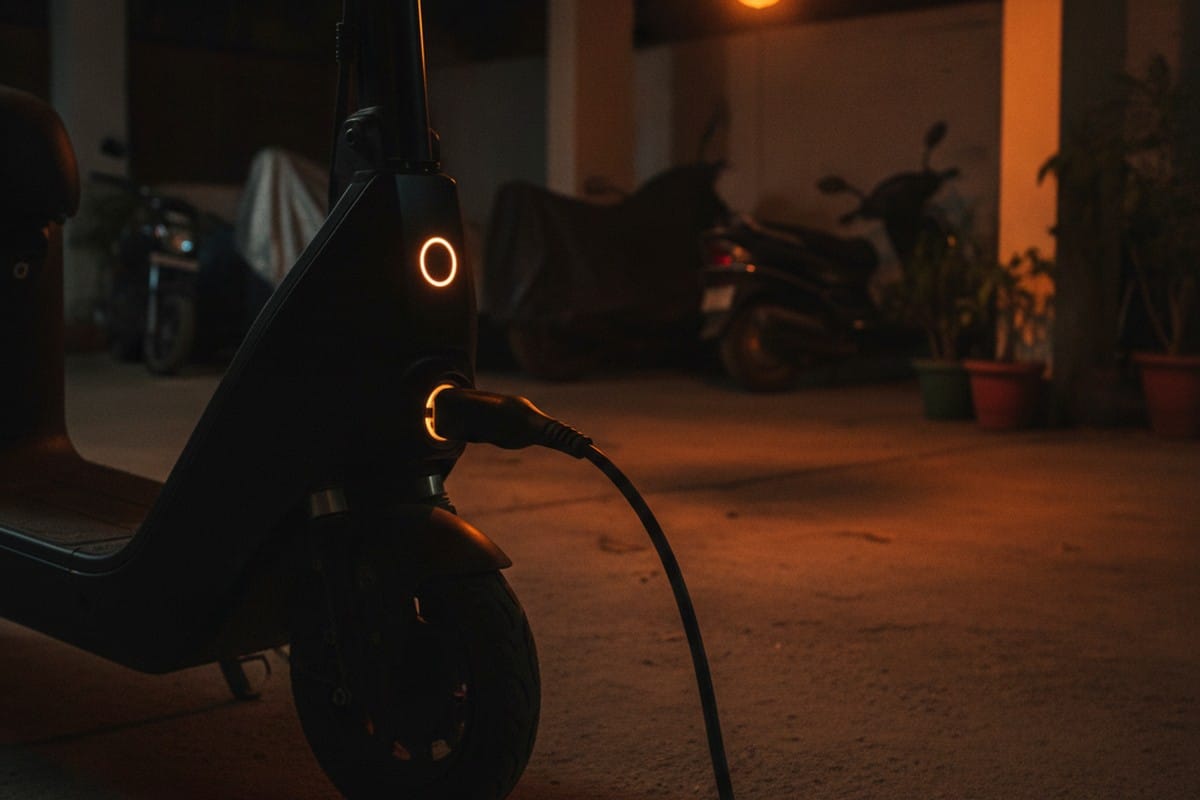
Modern electric scooter on Indian city street, showing the practical daily commute EV use case

Step Four: Servicing — The Silent Saving

Petrol scooters require engine oil changes every 2,000 to 3,000 kilometres, air filter cleaning, spark plug replacement, and periodic carburettor servicing. Over a year, that adds up to ₹5,000 to ₹8,000 easily. An electric scooter eliminates most of this. No engine oil to change, no spark plug, no air filter, and in most hub or mid-drive motor configurations, far fewer moving parts to worry about. Annual maintenance costs for electric scooters typically run ₹800 to ₹1,500 — roughly ₹70 to ₹125 per month.

The Monthly Cost Reality

Here is what the full picture looks like for a standard Indian commuter riding approximately 900 kilometres per month. For the Elektree Zenith at ₹90,164: the EMI works out to around ₹2,470, insurance adds approximately ₹310 to ₹370, electricity costs around ₹250, and servicing contributes about ₹100. Total monthly outgo: roughly ₹3,130 to ₹3,190.

For a comparable petrol scooter on-road at ₹88,000: EMI around ₹2,400 to ₹2,500, insurance ₹375 to ₹450, fuel approximately ₹2,000, servicing ₹550 to ₹700. Total monthly outgo: ₹5,325 to ₹5,650.

The gap: ₹2,100 to ₹2,500 per month, every month, firmly in favour of the electric scooter. Over a year, that is a saving of ₹25,000 to ₹30,000. Over three years, the savings cross ₹75,000 — with the electric scooter still covered by its warranty and still running on a fraction of what petrol costs.

Where Elektree Fits in This Calculation

The monthly cost comparison already favours electric scooters as a category. But within that category, the starting price matters significantly — it determines your EMI, your insurance Insured Declared Value, and your total interest outgo over the loan tenure. The Elektree Zenith at ₹90,164 is one of the most competitively priced ICAT-certified electric scooters in India right now. ICAT certification means the vehicle has been tested and verified under Government of India standards. Not every electric scooter sold in India carries this, and buyers in several states need to verify certification status for state EV subsidy eligibility.

Beyond the price, Elektree’s ownership proposition rests on a genuine 3-year, 50,000-kilometre warranty that covers the battery, alongside a 54-plus dealer and service network spread across India. Most buyers focus on purchase price and range at the time of buying. Fewer think about what happens 18 months later when a component needs attention. A 54-plus location service network is a meaningful answer to the question that eventually every EV owner asks.

Indian family with electric scooter, representing monthly savings and practical EV ownership in India

The Zenith itself is not a stripped-down entry-level scooter despite its pricing. It comes with 180mm ground clearance for Indian roads and monsoon conditions, 18.5 litres of underseat storage, GPS tracking, three riding modes including Eco for maximum range extension, a front disc brake, and a reverse mode for tight parking situations. The 70 km/h top speed handles city riding comfortably, and the 80 to 100 kilometre IDC-rated range means most commuters can go three to four days between charges on a single home top-up.

The Smarter Way to Shop

Indian buyers are smart with money. But the petrol-versus-electric decision has historically been framed in a way that makes EVs look expensive, when the monthly reality is precisely the opposite for anyone who does the full calculation. If you are riding 25 to 35 kilometres daily, the electric scooter wins on monthly cost by a significant margin — even accounting for a slightly higher purchase price. The fuel saving alone tends to offset any EMI difference within the first two to three months. After that, every month becomes a net financial gain.

For buyers who want an ICAT-certified scooter, a genuine long-term warranty, a service network that extends well beyond the four metro cities, and a monthly financial commitment that does not stretch the household budget, the Elektree Zenith deserves serious consideration. At ₹90,164 with a 3-year battery warranty and 54-plus service points, it combines a competitive purchase price with an ownership proposition that holds up convincingly when you run the full three-year cost calculation — and that is the only calculation that really matters.

Before you sign on any scooter deal in 2026, run the numbers properly. Add up EMI, insurance, running cost, and servicing for both options you are comparing. In most cases, you will find that the electric scooter does not just save you money on fuel — it saves you money on everything, every month, for the entire time you own it. Explore the Elektree range and calculate your own monthly savings at elektree.com.

Best Electric Scooters Under ₹1 Lakh in India (2026): The Buyer’s Guide Nobody Wrote Until Now

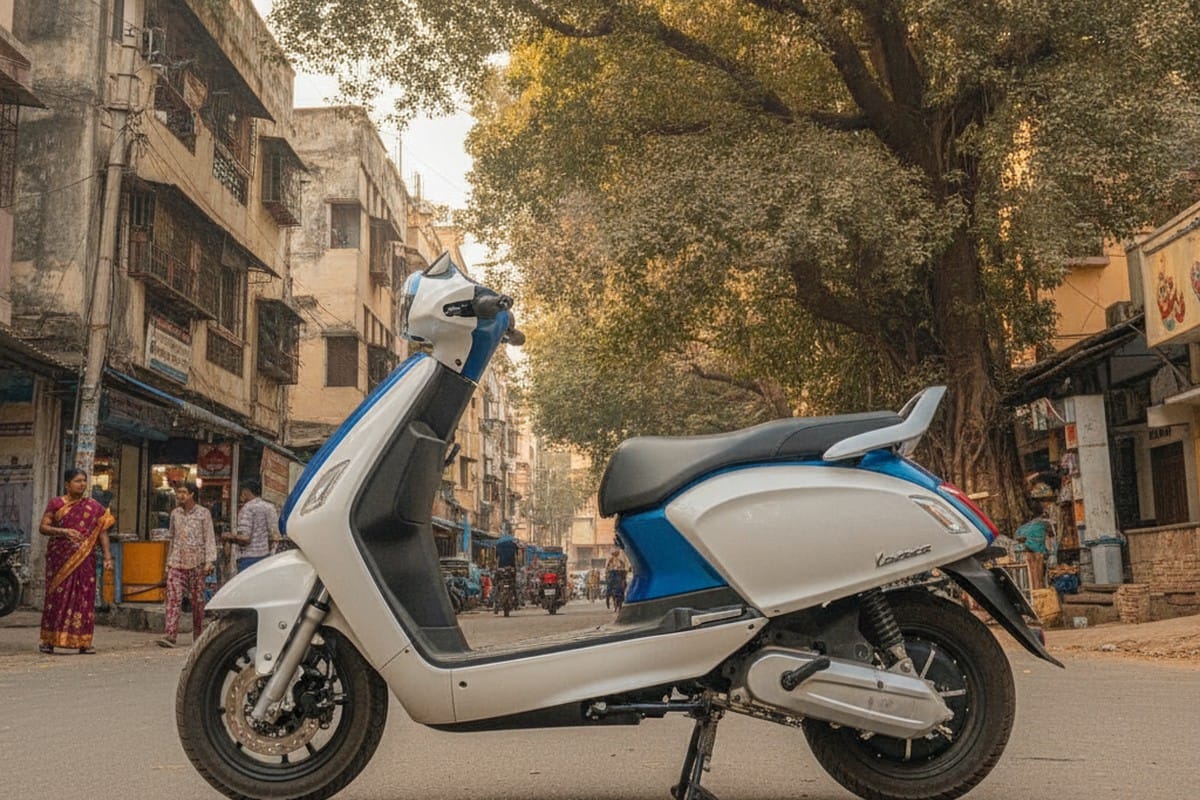
Modern electric scooter parked on a busy Indian city street — best EV scooters under ₹1 lakh in India 2026

Here’s something that gets lost in all the excitement about Ather 450X launches and Ola pricing wars: most Indian electric scooter buyers don’t have ₹1.5 lakh to spend. Their actual budget sits closer to ₹80,000–₹1,00,000, and within that range, the options aren’t just compromise purchases — some of them are genuinely strong machines built for Indian road reality.

The problem is that sub-₹1 lakh electric scooters get almost no serious coverage. Automotive websites are saturated with comparison tests between premium EVs, while buyers in the ₹80K–₹1L segment navigate the market largely alone. This guide exists for those buyers — the ones who have done the maths, set a real budget, and want honest information about what’s actually available.

Who Is This Segment Actually For?

The sub-₹1 lakh EV buyer in India isn’t a single type. There’s the practical city commuter covering 35–55 km daily who sees no reason to spend an extra ₹50,000 on speed capability they’ll never use in traffic. There’s the household where the electric scooter is the second vehicle — used for school runs, the local market, and everyday errands — where ₹90,000 is the considered decision, not a compromise. And there’s the rider making the switch from petrol for the first time, who wants to test electric mobility without a large financial commitment.

What all three share is a need for something that works reliably in Indian conditions, charges at home without drama, and doesn’t become an expensive lesson in what the brochure didn’t say.

What Actually Matters — Before You Look at Models

Most buyers evaluate electric scooters the wrong way. They lead with top speed and range, two numbers that sound impressive but often mislead. Here’s what genuinely affects the ownership experience in India:

Real-world range, not IDC figures: The IDC certified range is measured under controlled laboratory conditions. Indian traffic, ambient temperature, rider weight, road gradients, and speed patterns all chip away at that number. For a commuter covering 40–50 km daily, a scooter with 80–100 km of real-world usable range is more than adequate. Chasing claimed ranges above that threshold often means paying for a larger battery whose extra capacity you won’t routinely use.

Payload capacity: This is the specification most buyers overlook until they’re riding with a pillion or a loaded carrier rack. Standard electric scooters are rated at 150 kg — which sounds adequate until you factor in two adults and groceries. A scooter with 180–200 kg payload capacity handles Indian real-world loads without straining the motor or compromising ride quality.

Motor technology: Hub motors are the most common and cheapest design, but they concentrate all mechanical stress at the wheel hub, which becomes a disadvantage on inclines and broken road surfaces. Mid-drive motors handle torque distribution more efficiently across varying terrain — relevant if your commute involves any kind of gradient or regularly bad roads.

License and registration requirements: ICAT-certified scooters with a top speed below 25 km/h do not require a driving license or registration. For senior family members, college students, or anyone in a household where an additional license isn’t practical, this matters more than any specification on the brochure.

Battery warranty depth: Don’t just note the warranty period — understand what it covers. Three years or 50,000 km of battery warranty with clear terms is meaningfully different from a warranty that lapses at the first sign of “improper use.”

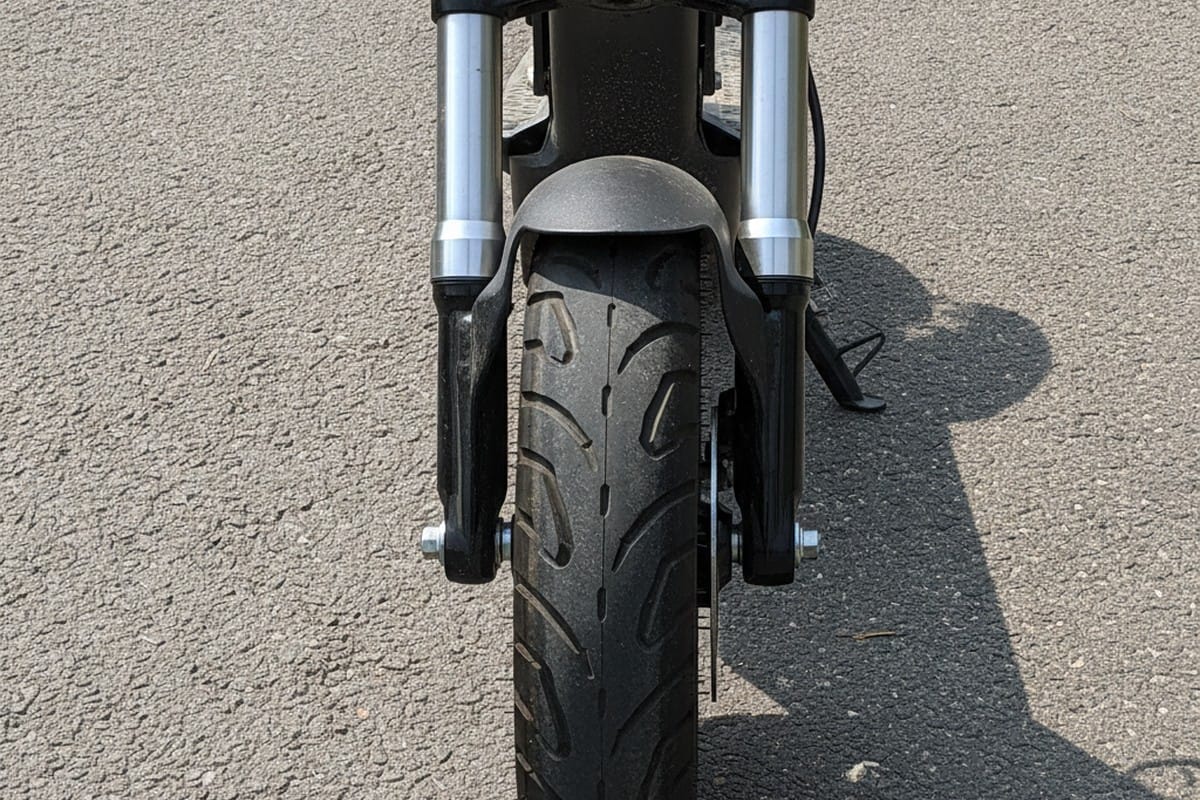
Electric scooter wheel and suspension detail on an Indian road — showing practical ground clearance for real-world conditions

The Three Serious Contenders Under ₹1 Lakh in 2026

The sub-₹1 lakh segment has a handful of options worth serious consideration. Three stand out.

The Bajaj Chetak C2501 enters at around ₹91,504 ex-showroom. It offers 115 km of claimed range from a 3.0 kWh battery, and it carries Bajaj’s IP67 water-resistance rating — a relevant spec in a country where riding through a flooded underpass is not an unusual experience. The Chetak’s strongest card is Bajaj’s service network, which runs to over 4,100 touchpoints nationwide. That density of service coverage is a legitimate long-term ownership advantage, particularly in metros.

The Elektree Wheels at ₹82,871 is positioned differently — it’s a pure city runabout offering 50–70 km of range at a 45 km/h top speed, with no license required for operation under ICAT guidelines. For households looking for a reliable short-range daily rider with minimal running costs, it’s one of the most accessible entry points into electric mobility.

Then there’s the Elektree Zenith at ₹90,164 — and this is where the conversation in the sub-₹1 lakh segment gets genuinely interesting.

The Elektree Zenith: The Specification Sheet Worth Reading Carefully

The Zenith’s motor is a Mid Drive IPM — Interior Permanent Magnet — type, not the hub motor that dominates this price segment. The practical difference shows up on roads that aren’t flat and smooth, which is most Indian roads. Mid-drive motors deliver torque more evenly, handle inclines without overheating the motor, and distribute mechanical load in a way that hub motors simply can’t replicate at equivalent power levels. For a scooter priced around ₹90,000, this is a serious engineering choice.

The battery is a 60V/35Ah lithium-ion pack, producing approximately 2.1 kWh of usable energy, which translates to 80–100 km of real-world range in mixed urban riding. Charging time runs 4–5 hours on a standard home socket — practical as an overnight charge, requiring no special installation. Running cost is roughly ₹5–10 per full charge, working out to approximately ₹0.07–₹0.10 per kilometre. For a daily 50 km commute, annual electricity cost runs to somewhere between ₹1,300 and ₹1,800 — a number that needs to be compared against what the same commute costs on a 110cc petrol scooter at ₹105 per litre.

The ground clearance is 180 mm. On broken urban roads, this number carries genuine daily relevance. Many electric scooters — including some priced significantly higher — sit lower, and speed bumps, potholed roads, and flooded street crossings make a difference you feel every day. The Zenith’s 180 mm clearance isn’t a brochure claim to fill space; it’s a practical spec that changes how the scooter handles Indian road reality.

The payload capacity, at 180–200 kg, is another specification that genuinely distinguishes the Zenith from competitors in this segment. A 150 kg limit on a scooter used to carry two adults puts real stress on the battery and motor over time. The Zenith’s higher payload tolerance means the scooter is being operated well within its design limits under normal Indian riding conditions — which has implications for long-term reliability and motor longevity.

The feature count rounds out impressively for this price point: multiple riding modes (Hyper, Normal, and Eco), a reverse mode for tight parking, GPS tracking, an anti-theft alarm, a USB charging port, and a 15.5 cm display. Battery warranty is 3 years and 50,000 km. The scooter is ICAT certified. Top speed is 70 km/h — enough for urban roads and arterial highways without being the kind of number that suggests the chassis is being pushed to its limits at cruising pace.

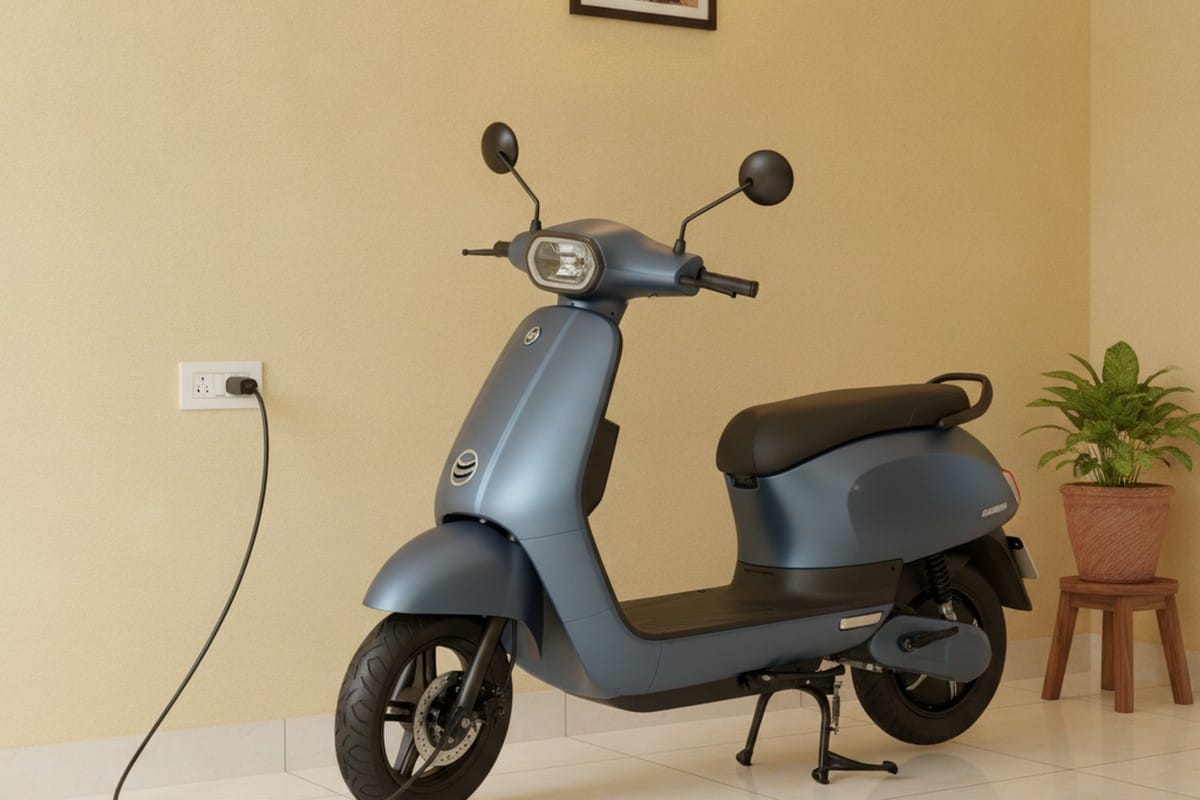
Electric scooter charging at a standard Indian home socket — affordable and convenient overnight EV charging for daily commuters

Is Stretching to ₹1.3–₹1.5 Lakh Worth It?

This is the question that faces buyers who can access higher budgets. The Ola S1 Pro starts at ₹1,29,999. The Ather 450X enters at ₹1,48,998. Both bring faster charging, higher top speeds — 90–117 km/h — and more sophisticated connected features. Ather’s fast charging infrastructure gives you 30 km of range in roughly 10 minutes, which is a legitimate advantage for high-usage riders who can’t always charge at home.

But for the core Indian commuter — 40–60 km daily in mixed city traffic, charging overnight at home, no pressing need for 90+ km/h capability — the honest answer is that ₹40,000–₹60,000 of additional expenditure doesn’t materially change the daily experience. What changes is the top-end specification sheet, the kind of numbers that rarely translate to noticeable improvements in a realistic urban commute. The Elektree Zenith delivers most of what you actually use, at a substantially lower acquisition cost and comparable running economics.

Where the premium EVs do justify the price gap: city-specific fast-charging infrastructure (primarily Bengaluru, Pune, Chennai for Ather), high daily mileage requiring fast turnaround, or buyers for whom resale value and brand prestige carry weight in the purchase decision.

The Verdict for the Practical Indian Buyer

If you’re shopping under ₹1 lakh for a daily rider in 2026, the Elektree Zenith is one of the most honestly specified scooters at this price point. Its mid-drive motor, 180 mm ground clearance, 180–200 kg payload rating, 3-year battery warranty, and feature count compare favourably not just against competitors in the same segment but against several scooters that cost significantly more.

The Bajaj Chetak remains the brand-name choice for buyers in metros where Bajaj’s service density is strongest, or where resale value is a primary consideration. But on the product itself — the engineering decisions, the daily-use specifications, the tolerance for Indian riding conditions — the Elektree Zenith holds up extremely well, and in several areas that matter most to daily riders, it goes further than the Chetak does at a comparable or lower price.

For buyers who want a slightly sportier character without crossing ₹1 lakh, the Elektree RV 80 at ₹94,363 offers the same core engineering in a sportier package. And for buyers whose priority is absolute simplicity and the lowest possible entry cost, the Elektree Wheels at ₹82,871 remains one of the most accessible, zero-hassle entries into electric commuting in India.

The Indian electric scooter market has spent the last three years focused on the ₹1.2–₹1.8 lakh segment. The sub-₹1 lakh segment has evolved quietly, and in 2026 it deserves more serious attention than it typically receives. For buyers ready to explore what Elektree has built for this segment, the full model range is available at elektree.com.

The Motor Specification Indian Electric Scooter Buyers Rarely Ask About — But Should

Elektree Zenith electric scooter on a busy Indian city road during morning commute

The Motor Specification Indian Electric Scooter Buyers Rarely Ask About — But Should

Walk into any electric scooter showroom in India right now and the conversation almost always follows the same pattern. Range. Top speed. Charging time. Colour options. EMI. What the salesperson rarely mentions — and most buyers never think to ask — is what type of motor actually powers the scooter. That one technical detail has more practical significance for Indian riders than almost any other specification on the brochure, yet it gets almost no attention in the buying process.

This is not a trivial omission. The motor architecture determines how efficiently a scooter converts battery energy into real-world kilometres on your specific roads — not the smooth, flat, lightly loaded test track that generates the range figures printed on the sticker. For most Indian commuters, those two environments are very different.

Two Architectures, Very Different Real-World Results

The majority of budget electric scooters sold in India today use what is called a hub motor. It does exactly what the name suggests: the motor is built directly into the rear wheel hub. The wheel turns because the motor turns. There is no chain, no belt, no intermediate transmission. Simple to manufacture, simple in design. For a flat, predictable urban commute at a steady speed, a hub motor works acceptably. The problem is where the motor lives: in the most exposed, impact-prone location on the entire vehicle.

A hub motor absorbs the same punishment as the rear wheel — every pothole, every unmarked speed breaker, every rough stretch of road that is a daily feature of Indian city driving. Engineers call this “unsprung mass.” Weight that sits in the wheel, below the suspension, is weight the suspension cannot cushion. The result is a harsher ride on broken surfaces and, over time, accelerated wear on the motor itself. When hub motors fail — and they do, with rough roads accelerating the timeline — replacement costs typically fall between ₹12,000 and ₹15,000. For a buyer who chose a budget scooter precisely because they were watching their spending, that is a significant unplanned expense.

Mid-drive motors take a fundamentally different approach. The motor is mounted within the scooter’s chassis, protected from direct road contact, and it transmits power to the rear wheel through a transmission system — a chain or belt drive. This design allows the motor to use mechanical advantage, delivering torque more selectively across different riding conditions: stop-start city traffic, inclines, full-load acceleration, varied road surfaces. The motor’s position inside the chassis means it does not share the rear wheel’s exposure to road impacts. And because the weight is distributed centrally rather than concentrated in the wheel hub, the suspension can actually do its job.

Why Indian Roads Make This Matter More Than Anywhere

India’s urban roads are not engineered for electric scooter test cycles. A typical commute in any major city involves repeated stop-start acceleration in traffic, speed breakers placed at intervals that range from every 50 metres in residential areas to random intervals on state roads, surfaces that transition between smooth tarmac and rough patches without warning, and regular two-up riding with bags. Add occasional intercity trips through ghat sections or into hill stations and you have a riding environment that stresses hub motors significantly more than the flat, controlled conditions where their efficiency numbers look best.

Mid-drive systems handle this variation more efficiently. Because the motor can leverage the transmission to deliver appropriate torque across varying loads and gradients, it uses battery charge more selectively. Two scooters with identical battery capacity — same voltage, same amp-hours — will not deliver the same real-world range under these conditions if one uses a hub motor and the other a mid-drive. The mid-drive’s real-world range tends to stay closer to the manufacturer’s IDC claim in actual riding than a comparable hub motor scooter would in the same conditions.

What the Market Currently Offers

The TVS iQube, one of the most established names in India’s electric scooter market, uses a 4.4 kW BLDC hub motor. Current variants start at ₹1.20 lakh and deliver a claimed range of around 145 kilometres. The engineering is solid and the service network is extensive. But the motor architecture is hub-mounted — a design choice that makes sense for a large manufacturer optimising for simplicity and service scalability, but one that carries the inherent limitations described above for demanding Indian road conditions.

Many other scooters in the ₹70,000 to ₹1 lakh range similarly use hub motor configurations. The economics of budget scooter manufacturing push in that direction — hub motors are cheaper to source and integrate. Mid-drive systems cost more to engineer and install, so they have historically appeared in higher-priced segments or performance-focused models.

Where the Elektree Zenith Stands Apart

Elektree India’s Zenith (also listed as the Astra Zenith Z1) starts at ₹90,164 and is fitted with a mid-drive IPM motor — Interior Permanent Magnet, chassis-mounted rather than wheel-mounted. At this price point, that motor specification is genuinely uncommon. Most buyers in this segment are choosing between hub motor options. The Zenith enters the same price bracket with a motor architecture that addresses the real-world weaknesses of hub motor design on Indian roads.

The rest of the Zenith’s specification sheet carries weight too. Payload capacity is rated at 200 kilograms — accommodating a rider, a full-sized pillion and reasonable cargo without approaching the vehicle’s structural limit. Ground clearance is 180 millimetres, meaningful in a country where speed breakers vary significantly in height and where unmarked bumps are a daily reality. Boot space is 18.5 litres — enough for a helmet or a day’s shopping. The lithium-ion battery carries a three-year / 50,000-kilometre warranty, which gives a reasonable baseline of protection against the most expensive part of the vehicle. The Zenith is ICAT-certified, which means it has passed India’s government-mandated testing programme — not a universal standard across all products in this price range.

Running costs come in at ₹5 to ₹10 per full charge at typical residential electricity rates. For a daily commuter covering 30-40 kilometres a day, that translates to a monthly fuel expense that is a fraction of what an equivalent petrol scooter would cost to run — a gap that has widened as petrol prices have remained elevated in 2026.

Elektree Zenith electric scooter on an Indian city road during commute hour

What to Actually Ask at the Showroom

Armed with this context, what should a buyer do differently when evaluating options? Three questions worth asking explicitly. First: is the motor a hub motor or a mid-drive motor? If the salesperson is uncertain or the specification sheet does not state this clearly, that is useful information. Second: is the vehicle ICAT-certified? This is verifiable through the government’s vehicle registration database and gives a baseline of confidence in the scooter’s compliance with Indian safety and performance standards. Third: what are the specific battery warranty terms — how many years, and is there a kilometre cap?

These questions take under five minutes to ask and the answers will tell you more about a scooter’s suitability for Indian riding conditions than the range figure on the window sticker.

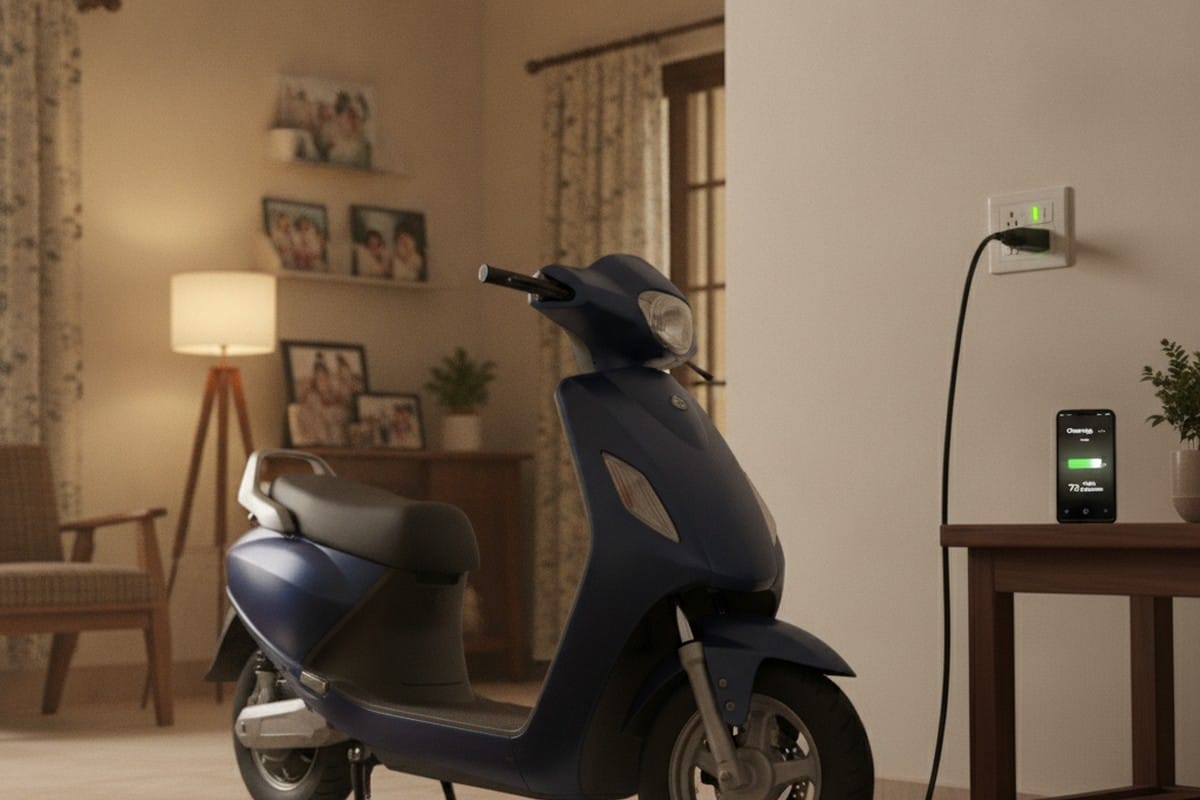
Electric scooter charging at a home charging point in an Indian apartment building

The Practical Case for Choosing Well at This Price

The electric scooter market in India has matured rapidly. Buyers today have genuine choices across a wide range of prices and specifications. The sub-₹1 lakh segment in particular is crowded — but the specifications that crowd it are not all equivalent. A range claim printed on a brochure is not the same as real-world range on varied Indian terrain. A motor that looks adequate on paper may deliver more or less than that paper figure depending on how it is engineered and where it sits in the vehicle.

The Elektree Zenith makes an honest case. Its mid-drive IPM motor addresses a real limitation of the hub motor architecture that most of its price-band competition uses. Its payload rating accommodates how most Indian families actually use a scooter. Its ground clearance and ICAT certification reflect a vehicle designed with Indian road conditions in mind rather than optimised for a brochure headline. At ₹90,164, it arrives in a price bracket where most buyers are choosing between hub motor alternatives — and it offers something meaningfully different for buyers who understand what the motor specification actually means for three to four years of daily riding.

If you are in the market for an electric scooter around the ₹90,000 mark and want to understand whether the Zenith or another Elektree model fits your riding requirements, the full product range and specifications are at elektree.com. It is worth a look before you commit to a showroom decision.

India’s PM E-DRIVE Subsidy for Electric Scooters Has Ended — Here’s Why the Smartest Buyers Aren’t Backing Out

Modern electric scooter on a busy Indian city street at golden hour

India’s PM E-DRIVE Subsidy for Electric Scooters Has Ended — Here’s Why the Smartest Buyers Aren’t Backing Out

When the central government’s PM E-DRIVE subsidy window for electric two-wheelers officially closed on July 31, 2026, a predictable wave of uncertainty swept through showrooms across the country. Buyers who had been sitting on the fence — waiting for “the right moment” or trying to time the purchase perfectly — suddenly found their ₹5,000 incentive gone. The question on every such buyer’s mind is now the same: does an electric scooter still make financial sense without the subsidy?

The short, honest answer is yes — and not just marginally. But to understand why, you have to stop thinking about the subsidy as the point of buying an electric scooter in the first place.

What the PM E-DRIVE Subsidy Actually Was

The PM E-DRIVE scheme was the successor to India’s FAME II policy, designed to accelerate EV adoption by reducing the upfront purchase cost for buyers. For electric two-wheelers, the scheme offered ₹2,500 per kWh of battery capacity (reduced from the earlier ₹5,000/kWh rate) — capped at roughly ₹5,000 to ₹10,000 depending on the model. It wasn’t a transformation-level benefit, but it helped nudge price-sensitive buyers over the line, particularly in the ₹80,000–₹1,20,000 segment where most electric scooters sit.

That central incentive is now gone for two-wheelers. The scheme continues to support electric three-wheelers, e-buses, charging infrastructure, and commercial vehicles until March 2028, but private electric scooter buyers buying from August 2026 onward are on their own as far as the central government is concerned.

So prices have gone up by approximately ₹5,000–₹10,000 across most models. That’s real money. But here’s what the numbers actually say when you look at the full picture.

The Petrol Arithmetic That Changes Everything

Petrol in Delhi is currently sitting at ₹102.12 per litre. In Bangalore it’s ₹111.68. In Hyderabad, ₹115.69. These aren’t projections — these are the pump prices as of the first week of September 2026, and they’ve been stubbornly high all year.

A typical 125cc petrol scooter in Indian city traffic returns around 45 km per litre in real-world conditions. That works out to roughly ₹2.27 per kilometre in Delhi and considerably more elsewhere. For a commuter doing 40–50 km daily, that’s around ₹3,400–₹4,200 spent on petrol every month — just to get to work and back.

An electric scooter running on a home charge costs roughly ₹0.15 to ₹0.30 per kilometre depending on local electricity rates and battery size. At the higher end of that range, you’re looking at ₹450–₹600 per month for the same 40–50 km daily commute. The annual fuel saving alone is ₹18,000 to ₹24,000.

Now set that against the ₹5,000–₹10,000 lost subsidy. The subsidy is recovered in three to five months of normal riding. After that, every single month of ownership delivers savings the petrol option simply cannot match.

Electric scooter being charged at home in an Indian household — low running costs make EVs compelling even without central subsidies

State Governments Are Filling the Gap — Sometimes More Generously

Here’s something that many buyers overlooked while fixating on the central scheme: several states have their own independent EV incentive programmes, and these remain fully active.

Maharashtra offers up to ₹25,000 in subsidy for electric two-wheelers, plus a full road tax exemption. Gujarat provides up to ₹20,000 with a 50% road tax reduction. Assam, West Bengal, Bihar, and Meghalaya each offer up to ₹20,000 with complete road tax waivers. Even states that don’t offer direct cash subsidies — like Tamil Nadu, Karnataka, Andhra Pradesh, and Uttar Pradesh — have eliminated road tax and registration fees entirely for EVs.

In Maharashtra, a buyer who missed the PM E-DRIVE window could still walk away with ₹25,000 off the purchase price plus savings on registration. That’s more than twice what the central subsidy was offering in its final months. The point being: the conversation about government support for EV buyers is far from over. It’s just shifted to the state level, where, in several cases, it’s even more generous.

State government EV incentive scheme — several Indian states continue to support electric scooter buyers with generous subsidies and road tax exemptions

What You Should Actually Be Evaluating Right Now

With or without a subsidy, the fundamentals of electric scooter selection don’t change. If anything, the removal of the central incentive makes it more important to choose wisely — because the long-term ownership economics are what matter, not the initial discount.

The first thing to verify is real-world range, not the headline figure. A scooter claiming 120 km may deliver 70–80 km in city stop-start traffic with the headlights on, a pillion rider, and a carrier loaded with groceries. Range that works for a 35 km daily round trip should have a comfortable 30–40% buffer above your actual requirement — so you’re not white-knuckling it home every second day.

Second, check ICAT certification. India’s International Centre for Automotive Technology is the regulatory body that validates whether an electric vehicle’s range and performance claims are based on standardised testing rather than optimistic marketing. Buying an ICAT-certified vehicle means the specifications you’re reading are not completely fabricated, and that the scooter has cleared the government’s own quality checks.

Third, look at the actual per-charge cost and charging time. The headline figure of ₹5–₹10 per full charge that you’ll see on most modern electric scooters is achievable, but only if you’re charging at home on a standard 5–15A socket. Public fast-charging, where available, costs more. A scooter with a 4-hour home-charging time is practical; one that requires 6–8 hours to fully charge can create real scheduling problems for daily commuters.

Finally, warranty terms matter enormously for electric vehicles. The battery is both the most critical component and the most expensive to replace if something goes wrong outside the warranty period. A 3-year minimum warranty on the battery and motor is the baseline to look for.

Where Elektree Stands in This Landscape

Elektree India has built a range specifically designed for the Indian urban commuter — practical range, affordable pricing, and ICAT-certified specifications that reflect real-world performance rather than lab conditions.

The Zenith and RV 80 models are priced between ₹90,000 and ₹95,000, deliver 80–100 km of claimed range at a 60 km/h top speed, and carry a 3-year warranty. For the overwhelming majority of Indian daily commuters — whose round trips fall within 40–60 km — that range is comfortably adequate with meaningful headroom. Charging costs come to ₹5–₹10 per full charge, which translates to a per-kilometre operating cost well under ₹0.20 even in cities with relatively higher electricity tariffs.

The entry-level Elektree Wheels is available under ₹83,000 with a 50–70 km range and 45 km/h top speed — positioned specifically for shorter, slower-paced urban use where a no-licence ICAT-approved scooter makes sense for campus commutes, local errands, and last-mile connectivity.

For those with longer daily distances or a genuine preference for higher performance, the Fantom EV enters the picture at ₹1,39,000. With a claimed range of 150–180 km and a 110 km/h top speed, it belongs in a different category — the performance electric motorcycle segment — and competes directly on range and capability with models costing significantly more.

What ties the Elektree range together is the 19+ ICAT-certified models the company has put through government testing — a number that speaks to consistent investment in meeting India’s regulatory quality standards rather than simply launching products and hoping buyers don’t look too closely at the specs.

The Final Calculation

Consider the Elektree Zenith at ₹90,164. A Delhi buyer riding 45 km daily will save roughly ₹22,000–₹24,000 annually on fuel compared to a petrol scooter, plus another ₹4,000–₹6,000 on maintenance over the year. Over five years, that’s somewhere between ₹1.3 lakh and ₹1.5 lakh in savings. Even accounting for the lost central subsidy, the ownership economics are considerably more compelling than a petrol alternative in the same price bracket.

In Maharashtra or Gujarat, those economics improve further. A Maharashtra buyer gets ₹25,000 off the purchase price through the state scheme, plus zero road tax. The effective ownership cost of an Elektree Zenith for a Mumbai-area commuter is meaningfully lower than the sticker price suggests.

The PM E-DRIVE subsidy window was always going to close — government demand incentives are temporary by design, meant to kick-start adoption until the economics of EV ownership stand on their own. In India in 2026, with petrol at ₹100+ per litre, 1.4 million electric two-wheelers sold in FY2026 (a 21.8% year-on-year increase), and electricity rates that make per-km charging costs a fraction of petrol, the ownership economics have arrived.

If you were waiting for the subsidy to give you a reason to switch, here’s the truth: you’ve been sitting on a stronger reason all along. The fuel savings, the maintenance savings, the simplicity of home charging, and the rising quality of India-focused EV products like Elektree’s — those don’t expire on July 31.

For commuters evaluating their first electric scooter, Elektree India’s current range at elektree.com is worth a detailed look — certified range figures, competitive pricing, and a product line built around Indian riding conditions. Value-led EV ownership that makes sense whether the subsidy was there or not.

Your Electric Scooter Is Rated for 150 kg. You, Your Partner, and the Weekend Groceries Weigh 185. Here’s What That Actually Does to Your Ride.

Elektree Zenith electric scooter with two riders on an Indian city street

Your Electric Scooter Is Rated for 150 kg. You, Your Partner, and the Weekend Groceries Weigh 185. Here’s What That Actually Does to Your Ride.

Picture this: a Saturday morning in any mid-sized Indian city. Two adults on a scooter, a bag of vegetables hanging from the handlebar hook, and a gentle slope ahead before the market. Standard Indian riding. The kind of trip every scooter in the country is built for — or so the showroom pitch goes.

Now here’s the part nobody at the showroom mentions. Most electric scooters rolling out of dealerships today carry a payload rating of 150 to 160 kilograms. That’s the combined weight of riders, passenger, and everything on the scooter. Two average-sized Indian adults — say, 70 kg each — already hit 140 kg before the weekend bag goes on. Add even a modest load and you’re riding a vehicle at or beyond its rated limit. Every day.

This is not a theoretical concern. Running an electric scooter consistently over its payload rating causes real problems: accelerated battery drain, higher motor temperatures, shortened drivetrain life, and uneven tyre wear that compounds handling issues on the potholed surfaces that define actual Indian road conditions. The range claim on the brochure was tested at a controlled weight. Your actual range, running heavy, will be noticeably shorter.

Payload capacity is probably the least-discussed specification in Indian electric scooter marketing. Range gets the headlines. Top speed fills the YouTube thumbnail. Payload is buried in a spec table that most buyers scroll past. That’s a mistake worth correcting before you spend ₹80,000 to ₹1,00,000 on a vehicle you’ll ride every day, often with a passenger.

What “Payload Capacity” Actually Means

The payload rating is the maximum weight the scooter is engineered to carry — riders, pillion, cargo, all of it. It’s not a conservative recommendation you can casually exceed. It’s the number the manufacturer’s engineering team used when designing the suspension geometry, sizing the motor, and calculating the battery drain curves. Go well past that number regularly and you’re outside the operating envelope the product was designed for.

For most hub-motor electric scooters in the sub-₹1 lakh category — and hub motors dominate this price point — the payload figure typically lands between 150 and 160 kg. Some models with lighter aluminium frames and smaller motors rate even lower. A few manufacturers don’t publish the number prominently at all, which is itself a sign worth noting.

The other variable that quietly affects load handling is motor placement and type. Hub motors sit inside the wheel, which means the motor is also carrying the weight of the vehicle plus its load through the axle. This works fine under normal conditions. Under sustained high loads, particularly on inclines, hub motors generate more heat and can lose efficiency faster. A mid-positioned drive motor — one that connects through the drivetrain rather than sitting in the hub itself — distributes that mechanical stress differently and tends to handle heavy loads more gracefully over time.

Elektree Zenith electric scooter parked on an Indian street, showing its build and design

What Indian Road Conditions Actually Demand

The brochure range figures for electric scooters are generated under ARAI or IDC test conditions — flat roads, moderate temperatures, consistent speeds, and a controlled test weight. Indian reality looks quite different. Speed breakers every 200 metres in residential areas. Potholes that require sudden deceleration and re-acceleration. Urban stop-start traffic that cycles the motor constantly. A pillion who wasn’t part of the test protocol.

Ground clearance matters here too. The average electric scooter in India offers between 160 and 175 mm of ground clearance. It’s generally sufficient for smooth urban roads. It becomes strained on monsoon-flooded lanes, broken approach roads to apartment complexes, or the kind of rural connectivity roads that millions of Indian commuters navigate on their way to work. Suspension quality compounds this — a scooter with adequate clearance but underdamped suspension will still bottom out over repeated impacts and deliver an uncomfortable, potentially damaging ride when loaded.

None of this means you can’t buy a standard EV and live with it perfectly well. Plenty of Indian families do. The point is that if you actually think through your daily use — two-up riding is the norm, not the exception — the specs that deserve your attention are not the ones getting the most airtime.

Where the Elektree Zenith Makes a Genuine Case

The Elektree Zenith is a scooter that looks straightforward on the spec sheet but rewards closer reading. At ₹90,164 ex-showroom (starting price), it sits firmly in the sub-₹1 lakh bracket where most Indian buyers are shopping. Range is rated at 80 to 100 km under IDC conditions — honest, real-world numbers rather than the inflated highway-speed figures some manufacturers lead with. Top speed is 70 km/h, which comfortably covers national highway riding and makes it legal for inter-city access roads where applicable.

The payload rating is 200 kg. That figure — 200 kg for rider, pillion, and cargo combined — is meaningfully higher than what you’ll find in most comparable electric scooters at this price. For the two-adult family doing weekly grocery runs, that 40 to 50 kg difference in rated capacity isn’t just a comfort; it’s the engineering headroom that keeps the motor running cool, the suspension working as designed, and your range staying predictable even when the scooter is fully loaded.

The motor is a Mid Drive IPM configuration, which handles load differently from the hub motors that dominate the competition at this price. On the suspension front, the Zenith pairs twin telescopic forks at the front with a monoshock rear — a setup that absorbs the kind of repeated, unpredictable road surface variation that Indian cities deliver without mercy. Ground clearance is 180 mm, giving it a bit more breathing room over obstacles than many competing models.

Electric scooter pillion riding on Indian city road, demonstrating two-person commuting in urban India

Underseat storage is 18.5 litres — enough for a helmet and a moderate load of daily essentials. The scooter also comes with GPS tracking, an anti-theft alarm system, USB charging, and a reverse mode, which is genuinely useful when you’re doing a three-point turn in a narrow lane. Disc brakes at the front with a drum rear, and 12.5-inch tyres that hit a reasonable balance between stability and manoeuvrability.

The battery warranty stands at three years or 50,000 kilometres, whichever comes first. The Zenith is ICAT certified and Elektree has 54+ dealers operating across India, from major metros to tier-2 locations.

How It Compares to the Alternatives

The Ola S1 X at ₹89,999 is the most natural point of comparison — similar price, different strengths. The S1 X claims 151 km of range (a figure that does involve some testing-condition optimism, as most long-range claims do), a 90 km/h top speed, and Ola’s connected features ecosystem. Where the S1 X has the edge is pure range claim and Ola’s brand recognition. Where the Zenith has the edge is the 200 kg payload rating, the mid-drive motor, and the suspension specification — factors that matter considerably for the loaded, two-rider use case.

The TVS iQube base variant sits at approximately ₹94,999 and offers around 100 km of range with solid TVS build quality behind it. TVS’s service network is extensive, which is a genuine comfort, though the iQube’s payload is in the standard-for-segment range rather than the Zenith’s higher-rated specification.

Neither comparison is an obvious slam dunk either way. If you primarily ride solo and want maximum claimed range, the Ola S1 X makes sense. If you ride two-up regularly over varied terrain and want a scooter engineered for full-family loads, the Zenith has the stronger technical case.

The Buying Decision Most People Get Backwards

The conversation at most electric scooter showrooms follows a predictable pattern. Range. Top speed. Connectivity features. Colour options. Payload capacity, ground clearance, suspension travel, and motor type rarely come up unless you ask — which means most buyers decide based on best-case, solo-rider specs, not the loaded, pothole-navigating reality of daily use.

The practical questions to ask before signing: What’s the payload rating? What type of motor does it use? What’s the ground clearance? What does the warranty on the battery actually cover, and what are the exclusions? Those answers will tell you more about your actual ownership experience than any range figure tested on a smooth controlled track.

The Elektree Zenith’s payload rating of 200 kg, mid-drive motor, and 180 mm ground clearance reflect a design brief that takes Indian riding conditions — the weight, the terrain, the daily usage patterns — more seriously than most EVs at this price. At ₹90,164 with a three-year battery warranty and a growing dealer network, it is among the most thoughtfully engineered options in the sub-₹1 lakh category for riders who need their scooter to handle genuine Indian family use.

If two-up riding, varied road conditions, and loaded daily commutes are part of your reality — and for most Indian families, they are — the Zenith deserves to be at the top of your list. You can explore the full range of Elektree India scooters and find the nearest dealer at elektree.com.

Before You Sign That EV Deal: The Five After-Sales Questions India’s Electric Scooter Showrooms Hope You Never Ask

Professional EV technician servicing an electric scooter at an authorised service center in India

Before You Sign That EV Deal: The Five After-Sales Questions India’s Electric Scooter Showrooms Hope You Never Ask

Something unusual happened in India’s electric two-wheeler market this year. A brand that once commanded nearly one in five electric scooter sales — the loudest, most hyped, most visible name in the category — watched its market share crater to just 6.8% in the first half of 2026. Sales had fallen 44% year-on-year. And when asked why, the company’s own CEO didn’t point to pricing or competition. He pointed to service.

“We do have a service challenge which we are working through that has impacted brand trust, and hence sales are down,” he admitted publicly. Meanwhile, the Central Consumer Protection Authority had already received over 10,000 complaints from frustrated customers — scooters sitting at service centres for weeks, technical issues going unresolved, calls going unanswered.

This wasn’t a technology story. It was an after-sales story. And it cost that brand roughly ₹1,300 crore in lost revenue before it began turning to a dealer network it had previously avoided.

The lesson for anyone buying an electric scooter in India right now is this: the most important moment in your ownership experience doesn’t happen at the showroom. It happens six months after, when something needs fixing.

Why After-Sales Support Hits Different With Electric Scooters

With a petrol scooter, the local mechanic around the corner can do a lot. Oil change, spark plug, carburetor — that knowledge is everywhere. The service ecosystem for petrol two-wheelers has had 40 years to spread into every nook and cranny of India.

Electric scooters are a different animal. The battery management system, motor controller, regenerative braking system, and onboard diagnostics all require trained technicians and brand-specific tools. A generic mechanic who’s brilliant at fixing a Honda Activa will likely shrug and point you back to the authorised center if your EV’s BMS throws a fault code.

This is why service network reach matters far more for electric scooters than it does for their petrol equivalents. It’s also why brands that built their sales models around technology buzz — without building the on-ground infrastructure to back it up — are now losing customers to competitors who got that part right.

India’s top-performing electric scooter brands in H1 2026 — TVS Motor, Bajaj Auto, Ather Energy, and Hero MotoCorp — didn’t just build better products. They built better pipelines for keeping those products running. TVS alone registered 251,438 units in six months, growing 65.7% year-on-year. Ather followed at 169,020 units with 91% growth. Both companies had put in years of work on service infrastructure before their sales numbers started moving like that.

Five Questions to Ask Before You Buy

Most showroom conversations in India revolve around range, top speed, and the monthly EMI. That’s the wrong frame. The five questions below will tell you more about whether you’ll regret your purchase than any spec sheet will.

Indian couple evaluating electric scooters at a modern EV showroom

1. How many authorised service centres does this brand have within 30 km of my home? Not in India overall. Not in your city theoretically. Within practical reach, on a day when your scooter is broken and you can’t ride it there yourself. An online-heavy brand with three pickup points in your metro is not the same as a brand with a proper dealership network that can pick up, diagnose, and return your vehicle without a three-week wait.

2. What exactly does the battery warranty cover — and for how long? Battery warranty terms vary dramatically across Indian brands. TVS and Bajaj Chetak offer 3-year battery coverage with a distance limit. Hero Vida extends that to 5 years on certain variants. Ather’s plans go up to 5 years with a State of Health guarantee, meaning they commit to the battery delivering at least 70% of original capacity. The fine print matters too: using a non-authorised charger voids the battery warranty on most brands, including TVS explicitly. Read before you sign.

3. Are spare parts stocked locally or ordered on demand? A brake pad shouldn’t take two weeks to arrive. Neither should a charging port cable. The difference between a brand with locally stocked parts at dealer level and one that orders everything from a central warehouse translates directly into how long your scooter sits idle when something routine needs attention.

4. Is the vehicle ICAT certified? The Automotive Research Association of India (ARAI) and International Centre for Automotive Technology (ICAT) are India’s primary vehicle testing and certification bodies. ICAT certification means the vehicle has been tested for safety, performance, and compliance with Indian regulations. It also affects subsidy eligibility. An uncertified vehicle is a risk — both in terms of what you’ve bought and what happens if something goes wrong.

5. What’s the escalation path if my issue isn’t resolved at the service centre? Ask the showroom. If they look confused, that tells you something. Brands with mature after-sales operations have published escalation contacts, dedicated customer care teams, and documented complaint resolution timelines. Those without these structures leave you filing complaints with the CCPA.

What Good After-Sales Actually Costs — and Saves

Here’s the encouraging part: electric scooter maintenance is genuinely cheap when the service network is working properly. Annual upkeep runs between ₹2,000 and ₹5,000 for most models — roughly 40 to 60% less than an equivalent petrol scooter once you factor out engine oil, air filters, and spark plugs. Brake pads last longer thanks to regenerative braking and cost ₹800 to ₹1,500 when they do need replacing. Tyres are roughly the same cost as petrol two-wheelers.

The savings are real. But they only materialise if you can actually get your scooter serviced efficiently. An EV that spends ten days at a service centre four times a year isn’t cheaper to own — it’s more expensive in time, inconvenience, and depreciation.

Where Elektree India Stands in This Framework

Indian professional riding an electric scooter through busy city traffic

Elektree India’s electric scooters — the Zenith, the RV 80, and the Wheels — are priced in the ₹82,000 to ₹95,000 range, putting them in direct competition with the crowded sub-₹1 lakh segment. At this price point, buyers are typically first-time EV purchasers, and first-time EV purchasers are exactly the demographic most exposed to after-sales risk if they buy from the wrong brand.

What sets Elektree apart in this conversation is a combination of factors that matter specifically to the after-sales question. The company’s vehicles are ICAT certified — all 19+ models — which is a non-trivial commitment that speaks to both regulatory compliance and product quality standards. The 3-year warranty covers a meaningful chunk of the ownership lifecycle, particularly for buyers using the scooter for daily commuting where the vehicle accumulates kilometres quickly.

The dealer network spans 54+ locations across India, including presence in tier-2 cities where many competing brands are still absent or sparse. For a buyer in Agra, Coimbatore, Rajkot, or Lucknow, this isn’t an abstract data point — it’s the difference between a scooter that’s practically usable and one that becomes a problem whenever something needs attention.

The Elektree Wheels, at ₹82,871, carries the additional distinction of being a low-speed vehicle that doesn’t require a licence or registration — a practical consideration that the brand has positioned intentionally for buyers who want to reduce paperwork alongside running costs. For daily commutes within 50 to 70 km, it’s a genuinely viable option that sidesteps two of the most common friction points in EV adoption.

The Zenith and RV 80 cover 80 to 100 km on a charge at speeds up to 60 km/h, sitting in the sweet spot for urban commuting. Running costs come in at ₹5 to ₹10 per charge — numbers that are easy to verify and consistently reported by Elektree owners.

The Smart Buyer’s Summary

India’s electric scooter market is growing fast — nearly a million units in the first six months of 2026 alone, up 53% on the year before. That growth is bringing in buyers who have never owned an EV, making their decision largely on showroom conversations, Instagram ads, and EMI numbers. The brands winning market share in 2026 aren’t the ones with the best product launches. They’re the ones that have spent years building the infrastructure to support what happens after the sale.

If you’re buying an electric scooter in India this year, run the five questions above before you sign anything. Verify the service centre location. Read the battery warranty. Check the certification. Ask about escalation.

And then look at Elektree. The combination of ICAT-certified products, a genuine dealer network across 54+ locations, a 3-year warranty, and sub-₹1 lakh pricing makes it one of the strongest overall propositions in the Indian electric scooter market — particularly for buyers who want their first EV to be one they’re still happy with in year three.

Explore the full Elektree India range at elektree.com and find your nearest dealer before you compare spec sheets.

You Don’t Live in Bengaluru. So Why Are You Reading a Scooter Review Written for Someone Who Does?

Electric scooter on an Indian city road showcasing ground clearance for Tier-2 city use

Open any “Best Electric Scooter in India 2026” review and you’ll notice a pattern. The writer is imagining a specific buyer: someone in a metro, with basement parking to charge from, smooth roads to ride on, and three EV service centres within 15 minutes. That buyer exists. But they’re a small fraction of the people actually searching for electric scooters right now.

The rest of India — Kanpur, Nashik, Dehradun, Coimbatore, Ranchi, Bhopal — rarely gets this coverage. Yet these are the cities where switching to electric often makes the clearest financial sense. Petrol expenses hit harder at moderate incomes. Daily distances are shorter. And most riders have driveways, garages, or ground-floor access where charging from a regular wall socket is perfectly practical.

The four questions below are the ones that actually matter if you’re buying an electric scooter outside a metro. They’re also the questions most reviews skip entirely.

Question 1: Will I Be Stranded if Something Goes Wrong?

This is the anxiety that quietly kills EV intent in smaller cities. You’ve heard the story — someone’s cousin bought a brand-name electric scooter, the battery threw a fault code six months later, and the nearest authorised service centre was 80 kilometres away. The scooter sat in a corner for three weeks. The cousin is now back on petrol.

India’s two-wheeler EV market grew 21.81% in FY2026, crossing 14 lakh units in sales. But service infrastructure has not kept pace with that momentum. Several brands have expanded their dealer networks primarily in Tier-1 cities, with Tier-2 and Tier-3 coverage remaining thin and inconsistent.

Before you buy, check the manufacturer’s service map and find the nearest authorised service point — not just a dealer, an actual service centre. If it’s more than 40-50 kilometres away, factor that in. Some brands offer doorstep pickup. Others don’t. That difference matters far more in Nashik than in Navi Mumbai.

Warranty length matters here too. A 2-year battery warranty is the bare minimum most brands offer. A 3-year warranty signals manufacturer confidence in the product’s durability — and it’s the kind of coverage that gives smaller-city buyers genuine peace of mind.

Question 2: Can It Actually Handle My Roads?

Indian roads vary enormously. Most metro EV reviews assume reasonably well-maintained tarmac because that’s where reviewers ride. But roads in Tier-2 India — and particularly in older parts of town — can be rough, potholed, speed-bump heavy, or partially unpaved. Monsoon season often means accumulated mud, waterlogged patches, and sudden depressions where the road surface has collapsed.

Ground clearance is the specification that matters here, and it’s one that most buyers barely look at when they’re scrolling through price and range figures. The standard for a comfortable experience on varied Indian roads is around 160-170mm of ground clearance. A scooter with 120-130mm is going to scrape regularly if you encounter a rough patch or a steep driveway entry, and in the worst case, can damage the battery casing or motor housing if you hit a deep pothole at speed.

The Elektree Zenith, priced from ₹90,164, offers 180mm of ground clearance — a figure that puts it comfortably above most scooters in the sub-₹1 lakh range. Paired with twin telescopic front suspension and a rear monoshock, it’s built to absorb impact rather than transfer it to the underside of the vehicle. For daily riding on mixed roads, that extra clearance is not a number on a spec sheet — it’s the difference between a smooth commute and a crunching noise every time you cross a hump.

The Zenith also carries a 200kg payload capacity, which is substantial for a scooter in this segment. For a family context — a rider and pillion carrying a schoolbag, grocery bag, or tiffin carrier — that’s meaningful headroom. Many scooters in this category are rated for 150-160kg, which is adequate but leaves less margin when you’re regularly riding two-up with luggage.

Elektree Zenith electric scooter on an Indian road showing ground clearance and suspension

Question 3: Do I Need Public Charging Infrastructure?

Here’s the thing metro reviews almost never say clearly enough: for most riders in India, public charging infrastructure is largely irrelevant to daily use.

The reason is simple arithmetic. The average Indian commute is under 30 kilometres per day. Most electric scooters offer 80-100km of real-world range. If you charge at home every night — from a standard 5-amp or 15-amp wall socket — you wake up each morning with a full battery. You never need to stop at a public charger. You never need to wait. You never need to plan around charging station availability.

In smaller cities, this advantage is amplified. Most households have parking that’s accessible from inside the home or the building. You can run a standard extension cord or install a dedicated charging point for a few thousand rupees. Compare this to apartment residents in Bengaluru or Mumbai, who sometimes struggle with shared parking arrangements, building society rules, and restricted socket access.

The Elektree Zenith charges in 4-5 hours from a standard home socket. Plug it in after dinner, and it’s ready for the next day. At ₹5-10 per charge — that’s the entire cost of a 100km day’s riding. Over a month of daily commuting, you’re looking at ₹150-300 in electricity. Against petrol at ₹100+ per litre, the savings accumulate quickly.

For smaller city buyers specifically, the calculation should not be “are there enough public chargers nearby?” The correct question is: “can I charge at home?” If the answer is yes — and for the majority of Tier-2 India it is — the electric scooter is already more practical than petrol for daily use.

Question 4: Is the Total Ownership Cost Honest?

Electric scooter advertising focuses on two numbers: sticker price and claimed range. Both can mislead in isolation.

A scooter at ₹79,999 is not necessarily cheaper than one at ₹90,164 once you factor in battery warranty coverage and the cost of pack replacement if it degrades faster than expected. Battery replacement for mainstream electric scooters in India runs ₹20,000–50,000 depending on chemistry and capacity — a figure that can completely change the three-year economics of ownership.

A 3-year battery warranty — which Elektree includes across its scooter range — buys meaningful protection against the highest-value component failure. In a market where most buyers intend to keep a vehicle for five to seven years, that first-three-years coverage provides real financial security.

Running cost compounds the advantage. The Zenith’s ₹5-10 per charge figure is basic arithmetic on India’s household electricity tariffs applied to a 60V/35Ah battery. Over five years of typical Indian usage, the fuel savings versus petrol can comfortably exceed ₹70,000. That changes how you should think about a ₹90,164 price tag.

Elektree electric scooter being charged at a home garage in India, running cost illustration

Where Elektree Fits the Smaller-City Buyer’s Brief

The Elektree lineup — the Wheels (from ₹82,871), the Zenith (from ₹90,164), and the RV 80 (from ₹94,363) — targets the sub-₹1 lakh price band where the return on investment from switching to electric is clearest for buyers outside metros. The Zenith’s combination of 180mm ground clearance, 200kg payload capacity, 80-100km practical range, and a 3-year warranty addresses the specific concerns of the smaller-city buyer directly. It’s not the scooter with the longest claimed range — TVS iQube and Ola S1 X hold those numbers at higher price points. But for the daily commuter in Coimbatore or Indore who needs a scooter that handles varied roads, charges at home overnight, and doesn’t leave them stranded when something goes wrong, the Elektree value proposition holds up under scrutiny.

Elektree’s Fantom EV electric motorcycle at ₹1,39,000 — with 150-180km range and 110 km/h top speed — is worth considering for buyers who occasionally make inter-city runs. In smaller cities, you sometimes need to visit a larger town for business or medical reasons, and having a vehicle that handles that without range anxiety is a practical advantage.

The Verdict for Smaller-City India

The electric scooter conversation in India has, for too long, been a conversation about Bengaluru, Pune, and Delhi. But the real market is much broader, and the financial case for electric is actually stronger in the cities and towns that get the least coverage in EV media.

If you live in a smaller Indian city and you’re considering an electric scooter for 2026, focus on the things that will actually determine your daily experience: ground clearance, warranty terms, home charging compatibility, and total cost over three years. On all four of those metrics, Elektree’s scooters — particularly the Zenith — offer a package that’s harder to argue against than the spec-wars numbers might suggest.

The Indian two-wheeler market has always been about practical value. And for practical value on roads that aren’t always smooth, in cities where service centres aren’t around every corner, with a budget that reflects real Indian incomes rather than metro salaries — Elektree India has built something worth serious consideration. Explore the full lineup at elektree.com and judge for yourself whether the numbers work for your commute.

Electric Scooter Battery Life in India: The 3-Year Truth Every Buyer Needs to Hear Before Signing the Papers

A modern electric scooter parked on a sunny Indian city street showing a healthy battery indicator on its dashboard

There’s one question lurking in the back of every electric scooter buyer’s mind in India, and most showroom salespeople prefer not to answer it honestly. It goes something like this: “The battery warranty is 3 years. What happens to my scooter — and my wallet — after that?”

It’s a fair question. An electric scooter’s battery is simultaneously its most important component and its most expensive one to replace. For buyers used to petrol scooters where the biggest risk is a carburetor cleaning or a worn brake pad, the idea of a battery that could cost ₹60,000 to ₹1,20,000 to replace is legitimately alarming.

But here’s the thing: the battery degradation story is far less dramatic than the fear around it. Understanding what actually happens — in Indian conditions specifically — can help you make a much smarter buying decision.

What Battery Degradation Actually Looks Like

Every lithium-ion battery loses capacity over time. This is physics, not a manufacturing defect. The question is: how much, and how fast?

In Indian riding conditions — factoring in heat, frequent short trips, and the stop-start nature of city commuting — lithium-ion batteries in electric scooters typically lose around 2 to 3 percent of their capacity per year. This means that after three years, your scooter’s effective range might drop from, say, a claimed 100 km to somewhere around 91 to 94 km. After five years, you’re looking at roughly 85 to 90 percent of the original range.

That’s not a cliff-edge collapse. It’s a gradual, manageable decline. Most riders never notice a meaningful difference in day-to-day riding within the first three years.

The type of battery chemistry matters here. LFP (Lithium Iron Phosphate) batteries, increasingly common in newer models, handle Indian heat better than NMC (Nickel Manganese Cobalt) chemistry. LFP packs can retain 90 to 94 percent of their original capacity even at the five-year mark, compared to 85 to 90 percent for NMC under similar conditions. This is a question worth asking when comparing scooters — especially if you live somewhere that sees peak summer temperatures around 40°C or higher.

A modern electric scooter parked on a sunny Indian city street showing a healthy battery indicator on its dashboard

What Actually Kills an EV Battery Faster in India

While the average degradation rate is manageable, certain habits and conditions specific to India can accelerate it significantly.

Summer heat is the biggest culprit. When ambient temperatures exceed 35 to 40°C — which describes most of India for five to seven months of the year — the battery management system has to work harder to keep cells within a safe operating range. Parking in direct sunlight for extended periods, particularly after a ride when the battery is already warm, stresses the cells more than almost any other factor. Shade parking isn’t a luxury; it’s basic battery maintenance.

Deep discharge is the second major enemy. Repeatedly running your battery down to near zero before charging is a habit that dramatically shortens its life. The 20 to 80 percent charging rule — keeping the battery between those two thresholds for everyday use — isn’t just a suggestion. It genuinely extends longevity by reducing the stress on individual cells during each charge and discharge cycle.

Excessive fast charging adds heat to an already warm system. Using a fast charger for occasional convenience is fine. Making it the only way you charge every single day is a different matter — the heat generated during rapid charging gradually degrades the cell structure faster than a standard charger would.

Monsoon-related moisture is a concern specific to India, though modern electric scooters with proper IP ratings handle rain riding far better than they used to. The real issue is prolonged standing in waterlogged areas, not typical monsoon rain on the road.

Electric scooter plugged into a standard home charging socket in an Indian residential parking area at night

The Replacement Cost Question — And Why It Varies So Much

Let’s address the real anxiety here. If you need a battery replacement outside warranty, what are you actually looking at in 2026?

The honest answer is: it depends enormously on which scooter you bought.

For premium electric scooters with large battery packs — 3 kWh and above — replacement costs have reached levels that genuinely surprise owners. An Ola S1 Pro battery replacement (3 kWh) runs around ₹70,000 to ₹75,000. The larger S1 Pro+ variant sits between ₹1,10,000 and ₹1,20,000. Ather’s 450X and Rizta batteries come in at ₹70,000 to ₹80,000. TVS iQube’s larger trims hit ₹75,000 to ₹80,000, with the top-spec ST version crossing ₹1 lakh for a replacement pack.

For scooters with smaller, more compact battery configurations — around 2 to 2.2 kWh — replacement costs start lower, around ₹45,000 to ₹50,000. Entry-level models carry a meaningfully lower financial risk profile if you’re a rider who keeps a scooter for 6 to 7 years.

The size of the battery isn’t only about range. It’s also about the financial exposure you carry if you ever need a replacement after your warranty expires. This is a number that almost no buyer calculates at the showroom — but it’s one of the most important factors in the true total cost of EV ownership.

Beyond a full pack replacement, a growing market of third-party options has emerged as EV ownership has expanded — cell refurbishment, BMS repair (typically ₹8,000 to ₹20,000), and module-level replacement at 10 to 20 percent of a full pack cost. This market is maturing, and in larger cities especially, quality third-party service centres are becoming a real alternative for post-warranty owners.

Practical Habits That Actually Make a Difference

The good news is that the habits that genuinely extend battery lifespan are simple. Plug in before the battery drops below 20 percent. Prefer the standard home charger for daily use rather than fast charging every day. Park in shade when possible during summer months, especially after a longer ride. Follow the brand’s service schedule — the BMS calibration carried out during periodic service is a step many riders skip but which matters for long-term battery health. And avoid leaving the scooter at 0 percent or 100 percent charge for extended periods when it’s not in regular use.

These habits are not complex. They are roughly what any smartphone user already knows about lithium batteries — and they apply to your scooter in exactly the same way, just at a higher financial stake.

Why Battery Sizing Matters When Choosing a Scooter

When you’re comparing electric scooters, the battery warranty period and the actual battery size are more connected than they first appear. A 3-year warranty on a 5 kWh battery is a very different financial proposition from a 3-year warranty on a 2.1 kWh battery — because the replacement cost risk is completely different if you’re still riding that scooter in year 5 or year 6.

This is one of the reasons Elektree India’s approach makes practical sense for a wide range of Indian buyers. The Zenith, RV 80, and Wheels scooters are built around 60V/32 to 35Ah lithium-ion battery configurations that deliver 80 to 100 km of real-world range — more than sufficient for the overwhelming majority of daily Indian commutes. The battery packs are sized for actual Indian use cases: city riding, regular short-to-medium commutes, practical distances. Not a maximum-specification headline figure engineered for showroom comparison charts.

The Zenith comes with a 3-year battery warranty covering up to 50,000 km, and the entire Elektree lineup carries ICAT certification — meaning the performance and quality claims have been independently verified by an accredited Government of India testing agency, not merely asserted in marketing copy. For buyers who have heard enough inflated range figures from salespeople, that independent certification genuinely matters.

Indian city commuter riding an electric scooter through traffic past auto-rickshaws and cars

Elektree’s Ownership Proposition: Practical, Verifiable, Affordable

Where Elektree particularly stands out in the context of battery ownership is in the total financial picture. At a starting price of around ₹82,871 for the Wheels and up to ₹94,363 for the RV 80, these are accessible scooters for the Indian middle-class buyer. But the practical advantage extends well beyond the sticker price.

Because the battery pack is more compact than the 3 to 5 kWh units fitted in premium competitors, the financial exposure of a potential out-of-warranty replacement is substantially lower. Riders who plan to keep their scooter for the long term — the majority of Indian two-wheeler owners — are carrying significantly less financial risk than someone who buys a flagship EV scooter with a large pack and a warranty that ends after year 3.

The running cost advantage is real too. Charging an Elektree scooter on a standard home socket costs between ₹5 and ₹10 per full charge, and the 4 to 5 hour charge time means you can plug in overnight and wake up to a full battery every morning without thinking about public charging infrastructure at all. With 54 or more dealers nationwide and an expanding service network, getting the scooter serviced — or addressing any battery-related concern under warranty — is straightforward rather than the cross-city expedition it can be with some premium EV brands.

For riders who genuinely need more range or want a proper highway-capable option, the Fantom EV — Elektree’s electric motorcycle at ₹1,39,000 — offers 150 to 180 km of range, 110 km/h top speed, and a 72V/45 to 55Ah battery in a dedicated high-performance configuration. It is a different product for a different buyer, but it shows the range of what Elektree is building.

The Bottom Line on Battery Life

The fear of electric scooter battery degradation in India is considerably larger than the actual risk — provided you ride a quality, certified scooter, keep up with basic maintenance, and don’t consistently abuse the charging cycle.

Three years in, your battery should still be delivering 92 to 95 percent of its original range. Five years in, most riders see 85 to 90 percent. At those rates, an 80 km scooter is still doing 68 to 76 km after five years — more than adequate for the overwhelming majority of Indian daily commutes. The battery fear is real; the battery timeline is not quite as short as people assume.

Where the genuine financial risk lives is in premium scooters with very large battery packs, where an out-of-warranty replacement can cost anywhere from ₹75,000 to over ₹1 lakh. For buyers who want a scooter that makes everyday economic sense — reliable range, verifiable quality, manageable ownership costs, and a meaningfully lower long-term financial risk profile — the Elektree lineup offers a combination that many premium competitors cannot match on pure practicality.

The scooter that serves you well for 6 or 7 years at a total cost of ownership that doesn’t surprise you is a better buy than a showroom flagship that impresses on day one and creates an expensive decision in year 4. Elektree’s range is built around the first kind of scooter. If you want to see exactly which model fits your commute, your budget, and your long-term ownership plan, the full lineup with specifications is at elektree.com. It’s worth 20 minutes of your time before you sign anything at any showroom.

Your Daily Delivery Route Is 100 km — Here’s Why Most Electric Scooters Won’t Make It

Delivery rider on an electric motorcycle on Indian city streets

The Petrol Bill Nobody Talks About

Ask any Zomato or Swiggy rider about their biggest monthly expense and most of them won’t say rent. They’ll say fuel. A delivery partner covering 90-100 km a day in a metro city — which is standard for anyone working a full shift — is filling up two or three times a week. At current petrol prices hovering around ₹100-105 per litre in most cities, and with a loaded scooter returning 30-35 km per litre in stop-and-go delivery traffic, the fuel bill alone comes to somewhere between ₹5,500 and ₹8,000 every month. That’s before maintenance, before phone EMIs, before anything else.

NITI Aayog estimates India currently has 7.7 million gig workers, a number expected to grow to 23.5 million by 2029-30. The majority of them depend on a two-wheeler for their livelihood. And for this category of rider, the maths around electric vehicles is not the same conversation as it is for a Bangalore IT professional commuting 15 km each way. The numbers are bigger, the daily demands are harder, and the wrong scooter choice doesn’t just inconvenience you — it costs you working income.

In FY2026, India sold a record 1.4 million electric two-wheelers — a 75.5% year-on-year jump in registrations in June alone. Something has clearly shifted. But if you’re a high-mileage delivery rider, the question isn’t whether electric is cheaper to run. It obviously is. The real question is which EV can actually survive the job.

Why Delivery Work Is an Entirely Different Test

A standard office commuter needs a scooter that reliably covers 20-30 km each way, five days a week. A delivery rider needs it to work for 8 to 12 hours straight, cover 80 to 120 km every single day, carry significant load in all weather conditions, survive constant stop-and-go throttle use, and be fully charged again by morning. That completely changes what matters in a specification sheet.

The biggest problem with most electric scooters in a delivery context is the gap between IDC range — the official figure measured under controlled conditions — and real-world working range. That gap is typically 15 to 25 percent under normal riding conditions. For a delivery rider with a 10-12 kg bag loaded and continuous throttle use through city traffic in 40-degree heat, the gap can be wider. A scooter that claims 80 km of range and you’re covering 90 km a day means you’re operating on the ragged edge of the battery every shift. Six months in, as battery capacity gradually reduces with cycles (as all lithium batteries do to some extent), that margin disappears entirely.

Load capacity matters too, and it’s underrated. Most product listings quote a payload figure but riders don’t think about it until they’re already stuck. A 150 kg payload rating on a scooter means the vehicle is rated for combined weight of rider plus load. An 80 kg rider with a 12 kg delivery bag leaves only 58 kg of headroom — which sounds fine until you factor in safety margins and the cumulative wear of repeated heavy loads over years of use. For real delivery work, 200 kg and above is the sensible floor.

The Numbers That Should Drive Your Decision

Running cost per kilometre is the single most important number for any delivery rider evaluating an EV. A petrol scooter in typical city delivery conditions — constant stopping, variable loads — costs roughly ₹2.90-3.50 per km in fuel alone. An electric scooter on domestic grid power costs approximately ₹0.20-0.25 per km. At 100 km a day, that gap amounts to ₹260-330 in daily savings. Over a 25-working-day month, that’s ₹6,500 to ₹8,000 back in your pocket — just on fuel. Annually, that’s ₹75,000-100,000 in savings, before you factor in the dramatically lower maintenance costs of an electric drivetrain compared to a petrol engine requiring oil changes, carburetor attention, and regular servicing.

That’s the economic case. The operational case is about reliability. A delivery rider’s vehicle downtime is directly lost income. The right electric scooter for delivery work needs a service network in your city, a brand that carries parts without a three-week wait, and a battery warranty that doesn’t vanish with fine print.

Electric motorcycle charging at an Indian apartment parking area — the overnight charge that powers a full delivery shift

What the Market Currently Offers

The mainstream options in the ₹90,000-1,30,000 range each come with trade-offs worth understanding before you commit.

The Bajaj Chetak 3001 (around ₹1,10,000) delivers 95-100 km of real-world range and excellent build quality, but its boot space is limited and the service network isn’t equally dense across all cities. The TVS iQube (approximately ₹1,14,000) is reliable with a strong dealer presence, but its 70-75 km real-world range is marginal for anyone regularly covering 90+ km. The Ola S1 X at around ₹97,000 shows better range figures but service wait times remain inconsistent outside major metros — a serious concern when your scooter going off-road means lost income.

For delivery riders specifically, the combination of real-world range under load, payload capacity, and after-sales reliability narrows the field considerably.

Enter the Elektree Fantom EV — And Why Range Changes Everything

Elektree India’s product lineup covers two distinct delivery use cases, and it’s worth considering both on their own terms.

For delivery riders on shorter urban circuits — 60-80 km per day in densely packed city grids — the Elektree Zenith (₹90,164) is a credible option. It carries a 60V/35Ah lithium battery, an IDC range of 80-100 km, and a Mid Drive IPM motor that delivers up to 70 km/h top speed. At 75 kg, it’s nimble in traffic, and the 200 kg payload capacity provides a practical buffer. The 18.5-litre underseat boot accommodates standard food delivery bags. A full charge takes 4-5 hours on standard home power, and the charging cost works out to approximately ₹5-10 per cycle. Battery warranty is 3 years or 50,000 km, and the vehicle carries ICAT certification — the government’s mandatory safety and performance benchmark.

But the product that directly addresses the 100-km-a-day delivery challenge is the Elektree Fantom EV. At ₹1,39,000, it is a full electric motorcycle — not a scooter — and the difference in capability shows in every specification.

Its 72V/45Ah lithium battery supports an IDC range of 150-180 km. For a rider doing 100-120 km daily, that range provides a genuine operational buffer — enough headroom to absorb the real-world reduction from load and weather without anxiety. The top speed of 110 km/h is more than adequate for city arterials where delivery speed matters. Payload capacity is 240 kg, which is among the highest in this price bracket and reflects the vehicle’s motorcycle-grade construction. GPS tracking, an anti-theft alarm, a 15.5 cm display, and three riding modes — Eco, Normal, and Hyper — come as standard. The same 3-year/50,000 km battery warranty applies.

At approximately ₹5-10 per full charge, the Fantom EV’s running cost per kilometre is well under ₹0.10 for most riders — a fraction of what the same distance costs on a petrol motorcycle of comparable performance. For a delivery rider logging 100 km a day, six days a week, the savings relative to petrol can realistically cross ₹90,000 in a single year.

Delivery rider on electric scooter checking smartphone navigation at an Indian delivery hub

Making the Right Call for Your Route

Not every delivery rider needs the same vehicle. The decision should be driven by honest answers to a few straightforward questions.

If your actual daily working distance — not the optimistic number, the real one including backtracking and gaps between orders — is consistently under 80 km, the Elektree Zenith at ₹90,164 offers a competitive combination of range, payload, warranty, and price. Compare it against the TVS iQube and Bajaj Chetak in your city, factor in your dealer’s service accessibility, and make the call on total ownership value, not just sticker price.

If you’re regularly covering 90-130 km daily — which describes most full-time Swiggy, Zomato, Blinkit, and courier riders working proper shifts — the Elektree Fantom EV deserves to be at the top of your shortlist. Its 150-180 km IDC range eliminates the mid-shift range anxiety that plagues shorter-range EVs in this use case. The 240 kg payload, motorcycle construction, and 110 km/h capability make it better suited to sustained high-mileage delivery work than most scooters in the market.

Before you sign anything, take a test ride with your actual load — don’t ride empty. Ask the dealer about their service turnaround time for this specific model in your city. And run your own monthly savings calculation using your actual daily distance and your city’s petrol price. The economics almost certainly point to electric. The only remaining question is which electric scooter — or electric motorcycle — actually matches your daily demands.

Explore the Elektree Zenith and Fantom EV range at elektree.com and book a test ride at a dealer near you.