There’s one question lurking in the back of every electric scooter buyer’s mind in India, and most showroom salespeople prefer not to answer it honestly. It goes something like this: “The battery warranty is 3 years. What happens to my scooter — and my wallet — after that?”
It’s a fair question. An electric scooter’s battery is simultaneously its most important component and its most expensive one to replace. For buyers used to petrol scooters where the biggest risk is a carburetor cleaning or a worn brake pad, the idea of a battery that could cost ₹60,000 to ₹1,20,000 to replace is legitimately alarming.
But here’s the thing: the battery degradation story is far less dramatic than the fear around it. Understanding what actually happens — in Indian conditions specifically — can help you make a much smarter buying decision.
What Battery Degradation Actually Looks Like
Every lithium-ion battery loses capacity over time. This is physics, not a manufacturing defect. The question is: how much, and how fast?
In Indian riding conditions — factoring in heat, frequent short trips, and the stop-start nature of city commuting — lithium-ion batteries in electric scooters typically lose around 2 to 3 percent of their capacity per year. This means that after three years, your scooter’s effective range might drop from, say, a claimed 100 km to somewhere around 91 to 94 km. After five years, you’re looking at roughly 85 to 90 percent of the original range.
That’s not a cliff-edge collapse. It’s a gradual, manageable decline. Most riders never notice a meaningful difference in day-to-day riding within the first three years.
The type of battery chemistry matters here. LFP (Lithium Iron Phosphate) batteries, increasingly common in newer models, handle Indian heat better than NMC (Nickel Manganese Cobalt) chemistry. LFP packs can retain 90 to 94 percent of their original capacity even at the five-year mark, compared to 85 to 90 percent for NMC under similar conditions. This is a question worth asking when comparing scooters — especially if you live somewhere that sees peak summer temperatures around 40°C or higher.
What Actually Kills an EV Battery Faster in India
While the average degradation rate is manageable, certain habits and conditions specific to India can accelerate it significantly.
Summer heat is the biggest culprit. When ambient temperatures exceed 35 to 40°C — which describes most of India for five to seven months of the year — the battery management system has to work harder to keep cells within a safe operating range. Parking in direct sunlight for extended periods, particularly after a ride when the battery is already warm, stresses the cells more than almost any other factor. Shade parking isn’t a luxury; it’s basic battery maintenance.
Deep discharge is the second major enemy. Repeatedly running your battery down to near zero before charging is a habit that dramatically shortens its life. The 20 to 80 percent charging rule — keeping the battery between those two thresholds for everyday use — isn’t just a suggestion. It genuinely extends longevity by reducing the stress on individual cells during each charge and discharge cycle.
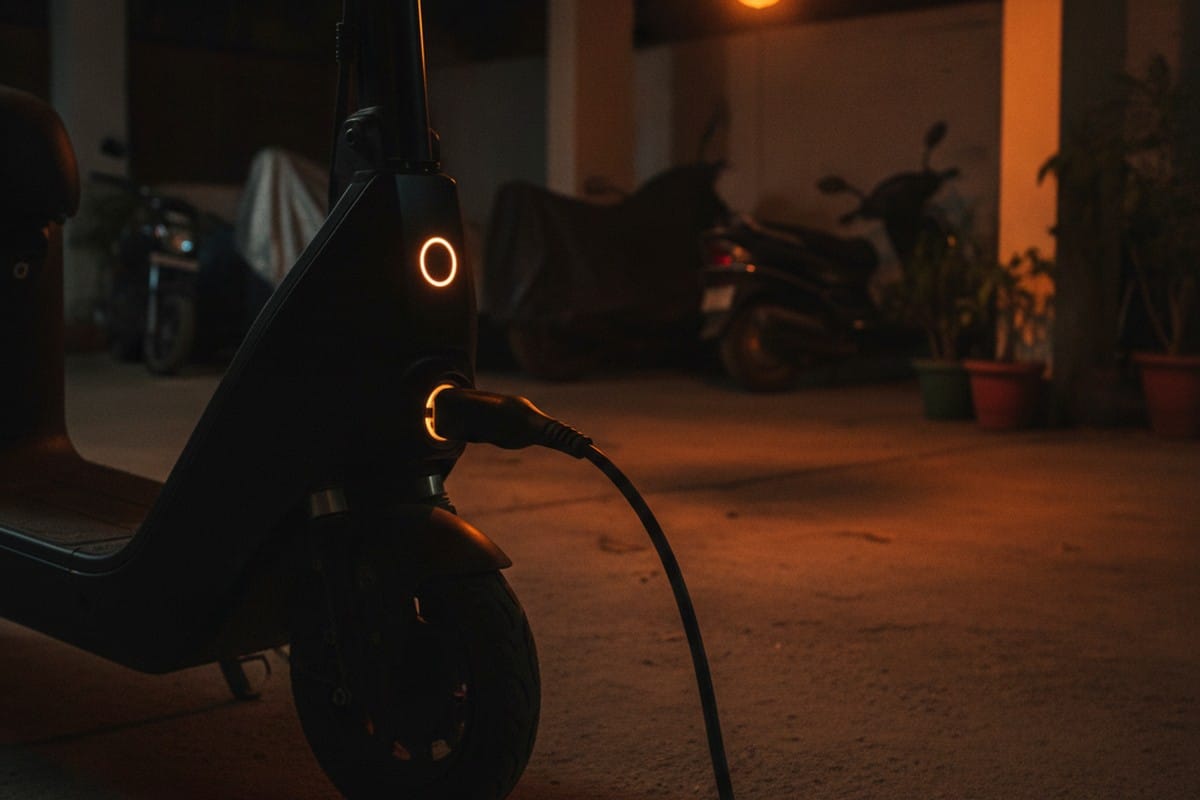
Excessive fast charging adds heat to an already warm system. Using a fast charger for occasional convenience is fine. Making it the only way you charge every single day is a different matter — the heat generated during rapid charging gradually degrades the cell structure faster than a standard charger would.
Monsoon-related moisture is a concern specific to India, though modern electric scooters with proper IP ratings handle rain riding far better than they used to. The real issue is prolonged standing in waterlogged areas, not typical monsoon rain on the road.
The Replacement Cost Question — And Why It Varies So Much
Let’s address the real anxiety here. If you need a battery replacement outside warranty, what are you actually looking at in 2026?
The honest answer is: it depends enormously on which scooter you bought.
For premium electric scooters with large battery packs — 3 kWh and above — replacement costs have reached levels that genuinely surprise owners. An Ola S1 Pro battery replacement (3 kWh) runs around ₹70,000 to ₹75,000. The larger S1 Pro+ variant sits between ₹1,10,000 and ₹1,20,000. Ather’s 450X and Rizta batteries come in at ₹70,000 to ₹80,000. TVS iQube’s larger trims hit ₹75,000 to ₹80,000, with the top-spec ST version crossing ₹1 lakh for a replacement pack.
For scooters with smaller, more compact battery configurations — around 2 to 2.2 kWh — replacement costs start lower, around ₹45,000 to ₹50,000. Entry-level models carry a meaningfully lower financial risk profile if you’re a rider who keeps a scooter for 6 to 7 years.
The size of the battery isn’t only about range. It’s also about the financial exposure you carry if you ever need a replacement after your warranty expires. This is a number that almost no buyer calculates at the showroom — but it’s one of the most important factors in the true total cost of EV ownership.
Beyond a full pack replacement, a growing market of third-party options has emerged as EV ownership has expanded — cell refurbishment, BMS repair (typically ₹8,000 to ₹20,000), and module-level replacement at 10 to 20 percent of a full pack cost. This market is maturing, and in larger cities especially, quality third-party service centres are becoming a real alternative for post-warranty owners.
Practical Habits That Actually Make a Difference
The good news is that the habits that genuinely extend battery lifespan are simple. Plug in before the battery drops below 20 percent. Prefer the standard home charger for daily use rather than fast charging every day. Park in shade when possible during summer months, especially after a longer ride. Follow the brand’s service schedule — the BMS calibration carried out during periodic service is a step many riders skip but which matters for long-term battery health. And avoid leaving the scooter at 0 percent or 100 percent charge for extended periods when it’s not in regular use.
These habits are not complex. They are roughly what any smartphone user already knows about lithium batteries — and they apply to your scooter in exactly the same way, just at a higher financial stake.
Why Battery Sizing Matters When Choosing a Scooter
When you’re comparing electric scooters, the battery warranty period and the actual battery size are more connected than they first appear. A 3-year warranty on a 5 kWh battery is a very different financial proposition from a 3-year warranty on a 2.1 kWh battery — because the replacement cost risk is completely different if you’re still riding that scooter in year 5 or year 6.
This is one of the reasons Elektree India’s approach makes practical sense for a wide range of Indian buyers. The Zenith, RV 80, and Wheels scooters are built around 60V/32 to 35Ah lithium-ion battery configurations that deliver 80 to 100 km of real-world range — more than sufficient for the overwhelming majority of daily Indian commutes. The battery packs are sized for actual Indian use cases: city riding, regular short-to-medium commutes, practical distances. Not a maximum-specification headline figure engineered for showroom comparison charts.
The Zenith comes with a 3-year battery warranty covering up to 50,000 km, and the entire Elektree lineup carries ICAT certification — meaning the performance and quality claims have been independently verified by an accredited Government of India testing agency, not merely asserted in marketing copy. For buyers who have heard enough inflated range figures from salespeople, that independent certification genuinely matters.
Elektree’s Ownership Proposition: Practical, Verifiable, Affordable
Where Elektree particularly stands out in the context of battery ownership is in the total financial picture. At a starting price of around ₹82,871 for the Wheels and up to ₹94,363 for the RV 80, these are accessible scooters for the Indian middle-class buyer. But the practical advantage extends well beyond the sticker price.
Because the battery pack is more compact than the 3 to 5 kWh units fitted in premium competitors, the financial exposure of a potential out-of-warranty replacement is substantially lower. Riders who plan to keep their scooter for the long term — the majority of Indian two-wheeler owners — are carrying significantly less financial risk than someone who buys a flagship EV scooter with a large pack and a warranty that ends after year 3.
The running cost advantage is real too. Charging an Elektree scooter on a standard home socket costs between ₹5 and ₹10 per full charge, and the 4 to 5 hour charge time means you can plug in overnight and wake up to a full battery every morning without thinking about public charging infrastructure at all. With 54 or more dealers nationwide and an expanding service network, getting the scooter serviced — or addressing any battery-related concern under warranty — is straightforward rather than the cross-city expedition it can be with some premium EV brands.
For riders who genuinely need more range or want a proper highway-capable option, the Fantom EV — Elektree’s electric motorcycle at ₹1,39,000 — offers 150 to 180 km of range, 110 km/h top speed, and a 72V/45 to 55Ah battery in a dedicated high-performance configuration. It is a different product for a different buyer, but it shows the range of what Elektree is building.
The Bottom Line on Battery Life
The fear of electric scooter battery degradation in India is considerably larger than the actual risk — provided you ride a quality, certified scooter, keep up with basic maintenance, and don’t consistently abuse the charging cycle.
Three years in, your battery should still be delivering 92 to 95 percent of its original range. Five years in, most riders see 85 to 90 percent. At those rates, an 80 km scooter is still doing 68 to 76 km after five years — more than adequate for the overwhelming majority of Indian daily commutes. The battery fear is real; the battery timeline is not quite as short as people assume.
Where the genuine financial risk lives is in premium scooters with very large battery packs, where an out-of-warranty replacement can cost anywhere from ₹75,000 to over ₹1 lakh. For buyers who want a scooter that makes everyday economic sense — reliable range, verifiable quality, manageable ownership costs, and a meaningfully lower long-term financial risk profile — the Elektree lineup offers a combination that many premium competitors cannot match on pure practicality.
The scooter that serves you well for 6 or 7 years at a total cost of ownership that doesn’t surprise you is a better buy than a showroom flagship that impresses on day one and creates an expensive decision in year 4. Elektree’s range is built around the first kind of scooter. If you want to see exactly which model fits your commute, your budget, and your long-term ownership plan, the full lineup with specifications is at elektree.com. It’s worth 20 minutes of your time before you sign anything at any showroom.