Before You Sign That EV Deal: The Five After-Sales Questions India’s Electric Scooter Showrooms Hope You Never Ask
Something unusual happened in India’s electric two-wheeler market this year. A brand that once commanded nearly one in five electric scooter sales — the loudest, most hyped, most visible name in the category — watched its market share crater to just 6.8% in the first half of 2026. Sales had fallen 44% year-on-year. And when asked why, the company’s own CEO didn’t point to pricing or competition. He pointed to service.
“We do have a service challenge which we are working through that has impacted brand trust, and hence sales are down,” he admitted publicly. Meanwhile, the Central Consumer Protection Authority had already received over 10,000 complaints from frustrated customers — scooters sitting at service centres for weeks, technical issues going unresolved, calls going unanswered.
This wasn’t a technology story. It was an after-sales story. And it cost that brand roughly ₹1,300 crore in lost revenue before it began turning to a dealer network it had previously avoided.
The lesson for anyone buying an electric scooter in India right now is this: the most important moment in your ownership experience doesn’t happen at the showroom. It happens six months after, when something needs fixing.
Why After-Sales Support Hits Different With Electric Scooters
With a petrol scooter, the local mechanic around the corner can do a lot. Oil change, spark plug, carburetor — that knowledge is everywhere. The service ecosystem for petrol two-wheelers has had 40 years to spread into every nook and cranny of India.
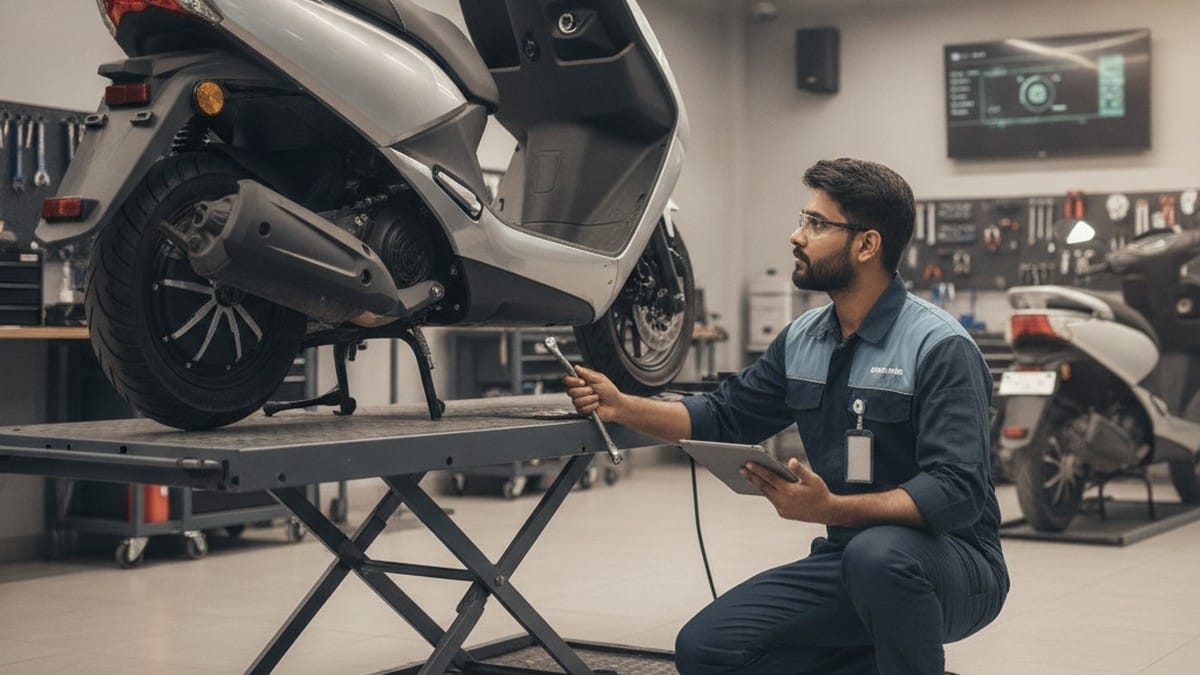
Electric scooters are a different animal. The battery management system, motor controller, regenerative braking system, and onboard diagnostics all require trained technicians and brand-specific tools. A generic mechanic who’s brilliant at fixing a Honda Activa will likely shrug and point you back to the authorised center if your EV’s BMS throws a fault code.
This is why service network reach matters far more for electric scooters than it does for their petrol equivalents. It’s also why brands that built their sales models around technology buzz — without building the on-ground infrastructure to back it up — are now losing customers to competitors who got that part right.
India’s top-performing electric scooter brands in H1 2026 — TVS Motor, Bajaj Auto, Ather Energy, and Hero MotoCorp — didn’t just build better products. They built better pipelines for keeping those products running. TVS alone registered 251,438 units in six months, growing 65.7% year-on-year. Ather followed at 169,020 units with 91% growth. Both companies had put in years of work on service infrastructure before their sales numbers started moving like that.
Five Questions to Ask Before You Buy
Most showroom conversations in India revolve around range, top speed, and the monthly EMI. That’s the wrong frame. The five questions below will tell you more about whether you’ll regret your purchase than any spec sheet will.
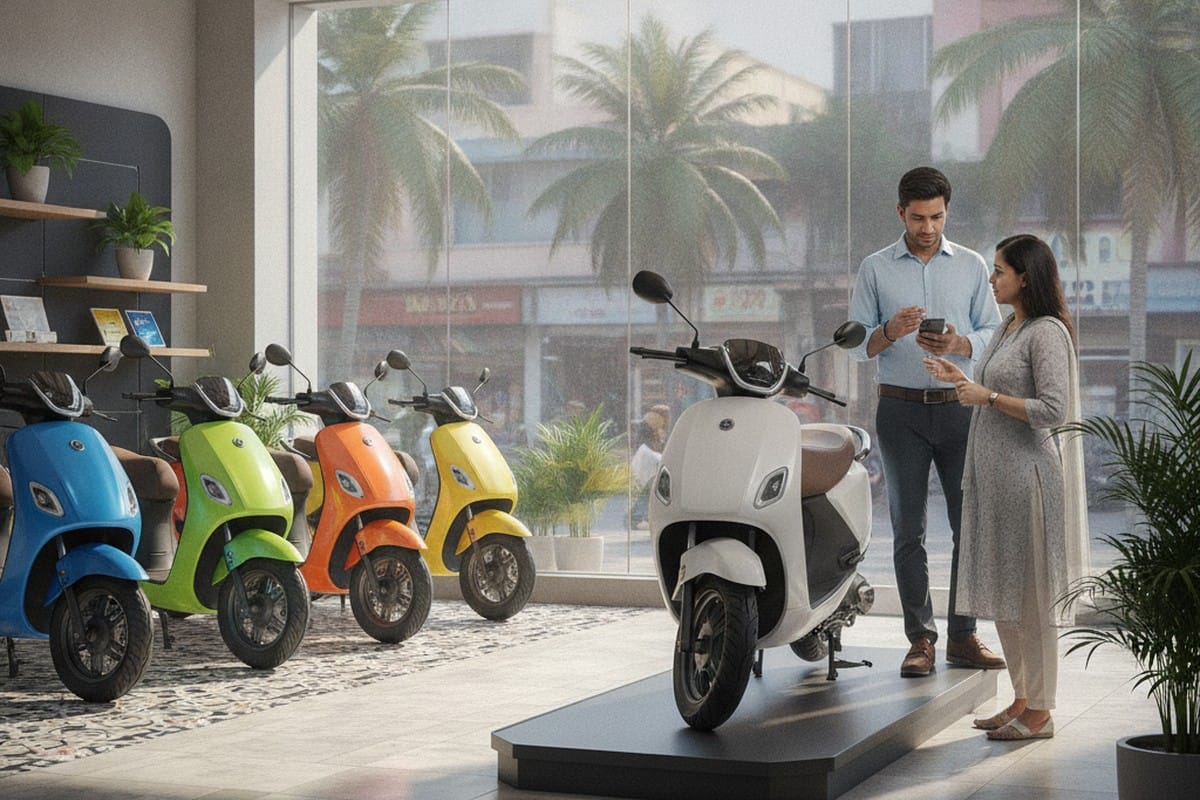
1. How many authorised service centres does this brand have within 30 km of my home? Not in India overall. Not in your city theoretically. Within practical reach, on a day when your scooter is broken and you can’t ride it there yourself. An online-heavy brand with three pickup points in your metro is not the same as a brand with a proper dealership network that can pick up, diagnose, and return your vehicle without a three-week wait.
2. What exactly does the battery warranty cover — and for how long? Battery warranty terms vary dramatically across Indian brands. TVS and Bajaj Chetak offer 3-year battery coverage with a distance limit. Hero Vida extends that to 5 years on certain variants. Ather’s plans go up to 5 years with a State of Health guarantee, meaning they commit to the battery delivering at least 70% of original capacity. The fine print matters too: using a non-authorised charger voids the battery warranty on most brands, including TVS explicitly. Read before you sign.
3. Are spare parts stocked locally or ordered on demand? A brake pad shouldn’t take two weeks to arrive. Neither should a charging port cable. The difference between a brand with locally stocked parts at dealer level and one that orders everything from a central warehouse translates directly into how long your scooter sits idle when something routine needs attention.
4. Is the vehicle ICAT certified? The Automotive Research Association of India (ARAI) and International Centre for Automotive Technology (ICAT) are India’s primary vehicle testing and certification bodies. ICAT certification means the vehicle has been tested for safety, performance, and compliance with Indian regulations. It also affects subsidy eligibility. An uncertified vehicle is a risk — both in terms of what you’ve bought and what happens if something goes wrong.
5. What’s the escalation path if my issue isn’t resolved at the service centre? Ask the showroom. If they look confused, that tells you something. Brands with mature after-sales operations have published escalation contacts, dedicated customer care teams, and documented complaint resolution timelines. Those without these structures leave you filing complaints with the CCPA.
What Good After-Sales Actually Costs — and Saves
Here’s the encouraging part: electric scooter maintenance is genuinely cheap when the service network is working properly. Annual upkeep runs between ₹2,000 and ₹5,000 for most models — roughly 40 to 60% less than an equivalent petrol scooter once you factor out engine oil, air filters, and spark plugs. Brake pads last longer thanks to regenerative braking and cost ₹800 to ₹1,500 when they do need replacing. Tyres are roughly the same cost as petrol two-wheelers.
The savings are real. But they only materialise if you can actually get your scooter serviced efficiently. An EV that spends ten days at a service centre four times a year isn’t cheaper to own — it’s more expensive in time, inconvenience, and depreciation.
Where Elektree India Stands in This Framework
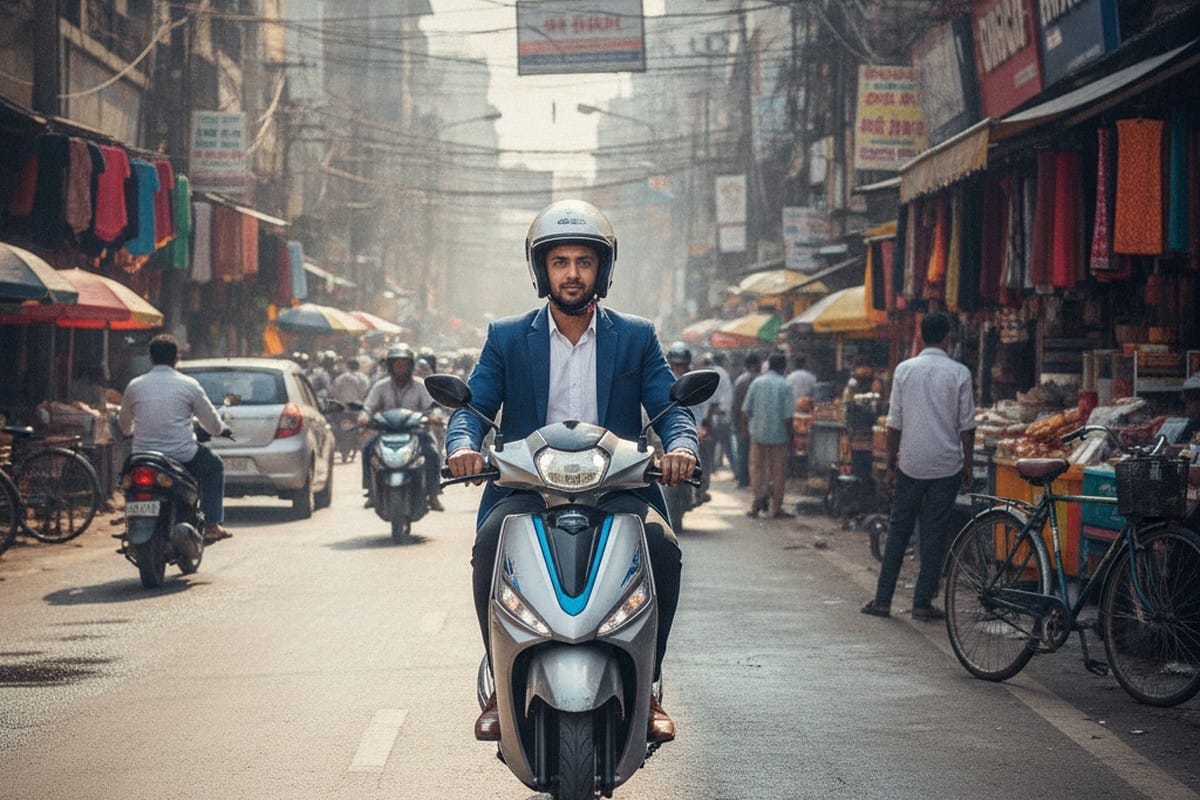
Elektree India’s electric scooters — the Zenith, the RV 80, and the Wheels — are priced in the ₹82,000 to ₹95,000 range, putting them in direct competition with the crowded sub-₹1 lakh segment. At this price point, buyers are typically first-time EV purchasers, and first-time EV purchasers are exactly the demographic most exposed to after-sales risk if they buy from the wrong brand.
What sets Elektree apart in this conversation is a combination of factors that matter specifically to the after-sales question. The company’s vehicles are ICAT certified — all 19+ models — which is a non-trivial commitment that speaks to both regulatory compliance and product quality standards. The 3-year warranty covers a meaningful chunk of the ownership lifecycle, particularly for buyers using the scooter for daily commuting where the vehicle accumulates kilometres quickly.
The dealer network spans 54+ locations across India, including presence in tier-2 cities where many competing brands are still absent or sparse. For a buyer in Agra, Coimbatore, Rajkot, or Lucknow, this isn’t an abstract data point — it’s the difference between a scooter that’s practically usable and one that becomes a problem whenever something needs attention.
The Elektree Wheels, at ₹82,871, carries the additional distinction of being a low-speed vehicle that doesn’t require a licence or registration — a practical consideration that the brand has positioned intentionally for buyers who want to reduce paperwork alongside running costs. For daily commutes within 50 to 70 km, it’s a genuinely viable option that sidesteps two of the most common friction points in EV adoption.
The Zenith and RV 80 cover 80 to 100 km on a charge at speeds up to 60 km/h, sitting in the sweet spot for urban commuting. Running costs come in at ₹5 to ₹10 per charge — numbers that are easy to verify and consistently reported by Elektree owners.
The Smart Buyer’s Summary
India’s electric scooter market is growing fast — nearly a million units in the first six months of 2026 alone, up 53% on the year before. That growth is bringing in buyers who have never owned an EV, making their decision largely on showroom conversations, Instagram ads, and EMI numbers. The brands winning market share in 2026 aren’t the ones with the best product launches. They’re the ones that have spent years building the infrastructure to support what happens after the sale.
If you’re buying an electric scooter in India this year, run the five questions above before you sign anything. Verify the service centre location. Read the battery warranty. Check the certification. Ask about escalation.
And then look at Elektree. The combination of ICAT-certified products, a genuine dealer network across 54+ locations, a 3-year warranty, and sub-₹1 lakh pricing makes it one of the strongest overall propositions in the Indian electric scooter market — particularly for buyers who want their first EV to be one they’re still happy with in year three.
Explore the full Elektree India range at elektree.com and find your nearest dealer before you compare spec sheets.