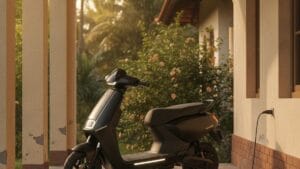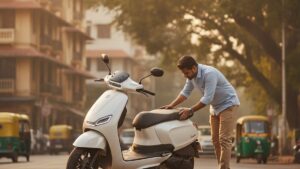
Let’s start with an uncomfortable truth. Buying an electric scooter in India today involves a leap of faith — not just in the technology, but in the company that sold it to you. The brochure promises 120 km on a charge, a 3-year warranty, and a smooth, maintenance-free life. But what happens when the scooter develops a fault at 8,000 km, the nearest service centre is 45 km away, and the spare part you need has a six-week waiting period? That’s a question Indian buyers are having to answer more often than the industry would like to admit.
Electric scooters have improved dramatically. But the industry’s reliability record is still a work in progress, and after-sales quality varies enormously between brands. Getting this choice wrong can turn a smart financial decision into a prolonged frustration.
What the Data Actually Says About EV Reliability
The J.D. Power 2025 India Two-Wheeler Initial Quality Study is one of the most comprehensive independent assessments of vehicle quality in the country. It surveyed over 6,500 new two-wheeler owners and arrived at a finding that should give every prospective EV buyer pause: electric scooters averaged 98 problems per 100 vehicles (PP100), compared to an industry average of 86 PP100 across all two-wheelers. Petrol scooters came in at around 53 PP100.
In plain terms, electric scooters generate nearly double the problems of their petrol equivalents in the first months of ownership. The most common complaints involve braking efficiency, electrical component failures, and overall build quality deteriorating faster than expected under regular use. High-mileage riders — those covering more than 2,500 km in their first six months — reported nine additional problems per 100 vehicles compared to lighter users, which matters because daily commuters are exactly the people buying these scooters.
Before that sends you running back to a petrol showroom, here’s the other side of the picture. The same study found that 58% of electric scooter owners reported their vehicle performed better than expected — up from 44% the previous year. And one brand bucked the trend entirely: Bajaj Chetak scored just 45 PP100, lower than most petrol scooters. The point is not that all electric scooters are unreliable. It’s that the brand you choose has an enormous bearing on the ownership experience you’ll actually have.
The Three Most Common Problems Indian EV Riders Face
Understanding what typically goes wrong helps you evaluate a brand’s after-sales more honestly. The most frequent issue reported by Indian EV owners is sudden range drops — situations where a scooter that once covered 90 km now manages 60-65 km. Heat exposure, riding style, tyre pressure, and software updates can all trigger this. When it happens, you’re filing a warranty claim — and that’s when you find out what your dealer relationship is really worth.
Charging faults are the second common problem: loose sockets, home voltage fluctuations, or monsoon moisture in the charging port. Many riders only discover that using a third-party charger voids their battery warranty after it’s already too late. Software-related issues round out the top three — over-the-air updates have caused frozen dashboards, app pairing failures, and unexpected behaviour changes. The quality of a company’s software team is now as relevant to your ownership experience as the quality of their mechanics.
What “3-Year Warranty” Actually Means — and What It Doesn’t
Battery warranties in India’s EV market have improved considerably, but the fine print still deserves careful reading before you commit. Most established brands now offer a 3-year battery warranty as standard — Ather’s base warranty covers 3 years or 30,000 km, TVS iQube offers 3 years up to 50,000 km depending on variant, Bajaj Chetak covers 3 years or 50,000 km, and Hero Vida comes with a stronger 5-year or 50,000 km package as standard.
But what a warranty covers matters just as much as how long it lasts. Most battery warranties protect against manufacturing defects and guarantee the battery will retain at least 70% of its original state of health within the warranty period. What they don’t cover includes damage from flooding (specifically when water depth exceeds the floorboard — something that happens regularly on Indian roads in July), charging with non-approved equipment, mechanical damage from accidents, and in some cases, battery deterioration caused by skipping scheduled services at authorised centres.
There’s also the question of claiming a warranty when something goes wrong. The process typically involves logging a complaint through the brand’s app or helpline, getting a diagnostic at an authorised centre (not a general EV repair shop), and then waiting for the decision. Some brands process this efficiently. Others have earned a reputation for delays, disputes about coverage, and spare parts that take weeks to arrive. The CCPA — India’s Central Consumer Protection Authority — launched a detailed investigation into one major EV brand in late 2024 after receiving over 10,000 consumer complaints questioning the brand’s claimed resolution rates. That case served as a public reminder that a warranty is only as valuable as the company’s willingness to honour it.
The Service Network Question Nobody Asks at the Showroom
Here’s the question most buyers forget to ask before signing the purchase form: if my scooter develops a problem at 15,000 km, how far will I need to travel to get it fixed, and how long will I be without it? For established brands with inherited dealership networks — TVS, Bajaj, Hero — the answer is usually reassuring. For newer or smaller brands, it’s worth verifying rather than assuming.
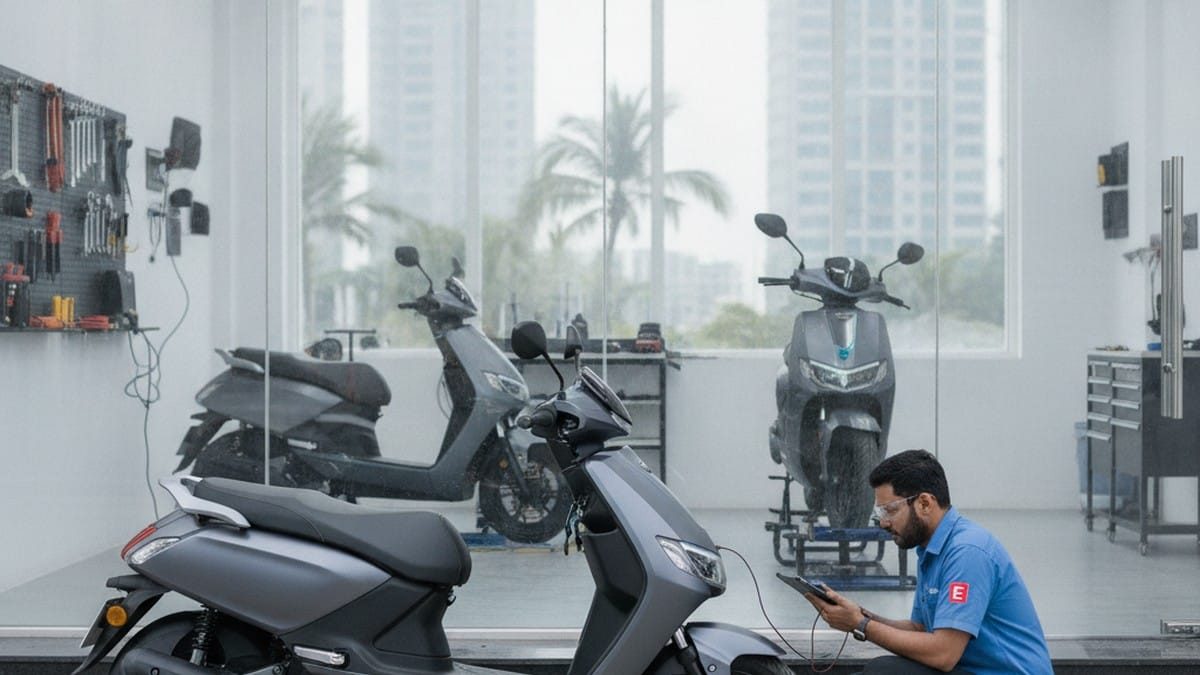
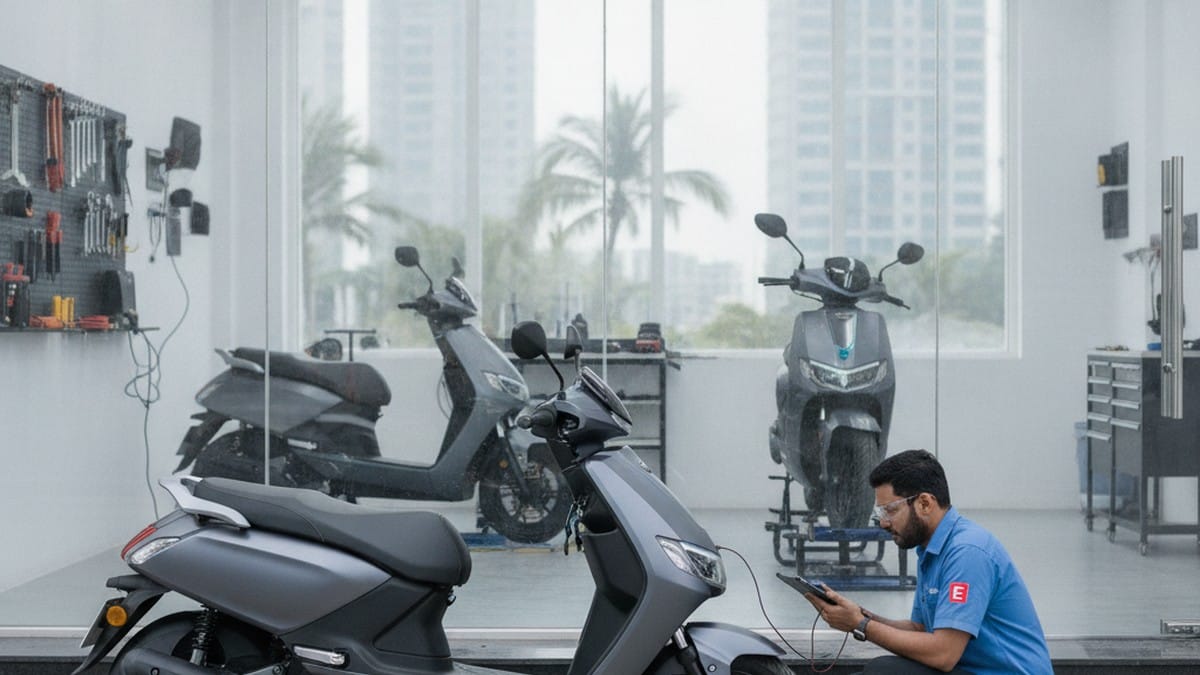
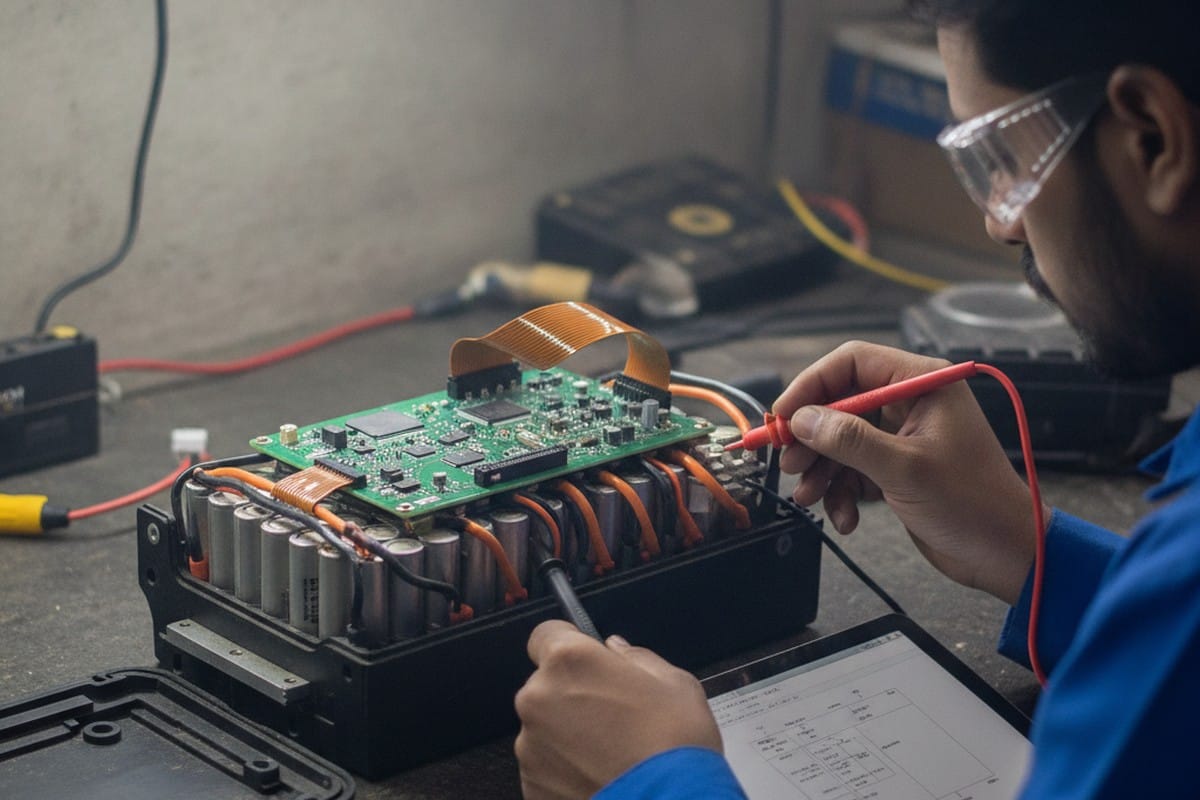
For context, annual EV maintenance typically costs ₹2,000–₹5,000 versus ₹3,500–₹6,000 for a petrol scooter — and the servicing itself is simpler: no engine oil, no spark plugs, no air filter. Routine work covers brakes, tyres, battery diagnostics, connector cleaning, and firmware checks. But when something outside routine maintenance goes wrong — a BMS fault, a controller issue, a motor bearing — complexity increases sharply. That’s when service network reach matters most.
Spare parts availability is the other factor that rarely comes up in the showroom conversation. A study on EV ownership problems in India noted waiting periods for certain parts ranging from one month to six months at smaller brands — a wait that leaves your daily commute vehicle sitting idle. The industry has improved, but the gap between brands remains significant.
Where Elektree India Fits Into This Picture
Elektree India has built its product range around the practical requirements of Indian riders, and its approach to reliability and after-sales reflects that. The Elektree Zenith, priced at ₹90,164, is the brand’s flagship scooter for daily commuting — and the way it’s spec’d suggests a company that has thought carefully about Indian road conditions rather than simply translating a European or Chinese design into a rupee price tag.
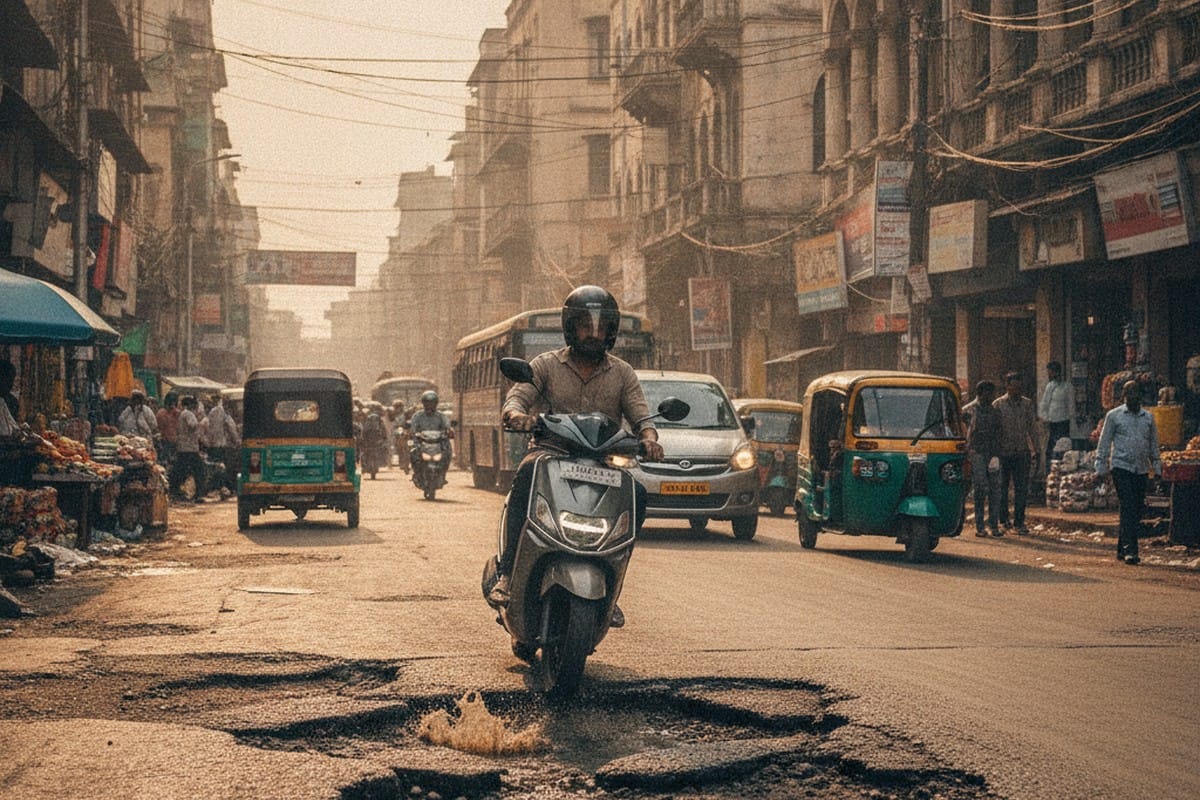
The Zenith’s 180 mm ground clearance is one of the highest in its price segment — a meaningful advantage when you’re dealing with Indian pothole geography. Its 200 kg payload capacity is genuinely practical for two adults with a loaded underseat storage of 18.5 litres. The suspension setup uses twin telescopic forks at the front and a monoshock at the rear, designed to absorb the irregular surfaces that characterise Indian city and semi-urban roads. The motor is a mid-drive IPM unit — a more efficient and durable configuration than the hub motors found in cheaper alternatives — paired with a 60V/35Ah lithium-ion battery delivering a real-world range of 80 to 100 km under typical Indian riding conditions.
On the after-sales side, Elektree offers a 3-year/50,000 km battery warranty on the Zenith — matching the coverage offered by TVS and Bajaj — backed by an “Elektree Care” service programme through its authorised dealer network, which is active across major metros including Delhi, Mumbai, Kolkata, Hyderabad, and Bengaluru. The Zenith is also ICAT certified, which means it has gone through India’s official vehicle testing and approval process — a baseline of accountability that not every smaller brand can claim.
The brand’s range extends upward to the Fantom EV motorcycle at ₹1,39,000 — 150-180 km range, 110 km/h top speed — for riders with more demanding requirements. And the entry-level Elektree Wheels at ₹82,871 covers shorter urban commutes with a no-licence configuration option.
The Right Way to Think About This Decision
The electric scooter market in India has reached a level of maturity where the technology is no longer the primary risk. The bigger variable is the company standing behind it. A 100 km range with a credible, accessible service network will serve you better over three years than 130 km of claimed range from a company that turns warranty claims into a bureaucratic ordeal.
Before signing anything, ask the showroom: how many service centres does the brand have in your city? What’s the typical turnaround for a BMS or software fault? Are spare parts stocked locally? These questions reveal what the spec sheet cannot.
Elektree India’s combination of ICAT-certified models, competitive warranty coverage, practical specifications built for Indian roads, and a genuine service network makes it a strong contender for buyers asking what three years of ownership will actually look like — not just what launch day felt like. If reliability and after-sales confidence matter to you, the Elektree Zenith deserves a place on your shortlist. Explore the full range at elektree.com before making your final call.