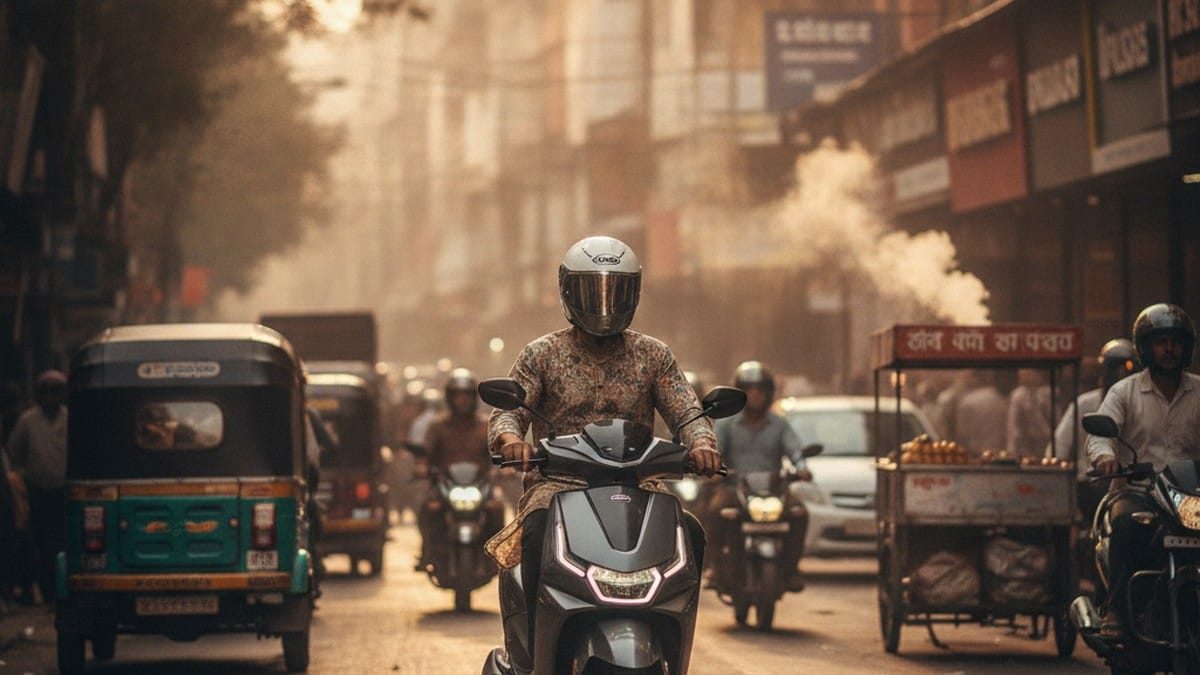
The pump price in Bangalore crossed ₹111 a litre this week. In Hyderabad it’s ₹115. In Mumbai, ₹111. For a daily commuter covering 40 kilometres in a day, that’s a bill that keeps climbing with no ceiling in sight. So the question most Indian riders are finally asking isn’t whether electric scooters are cool — it’s whether they actually make financial sense. Not in theory. In real rupees, this year.
This article runs the actual 2026 numbers and looks at what the Indian market currently offers — because the answer is more compelling than most people realise.
Start With the Fuel Math
A typical 125cc petrol scooter returns around 50–55 kilometres per litre in real city conditions. With petrol at ₹102 per litre in Delhi and ₹111–₹115 in most other metros, that works out to roughly ₹1.90–₹2.25 per kilometre. For a rider covering 40 km a day — a conservative estimate for anyone commuting in a Tier 1 or Tier 2 city — that’s ₹76 to ₹90 in fuel costs every single day.
Run that out over a month: ₹2,200 to ₹2,700. Over a year: ₹26,400 to ₹32,400 in fuel alone. That’s not counting service, oil changes, air filter replacements, spark plugs, or the occasional repair.
An electric scooter changes this arithmetic entirely. With home charging typically costing ₹6–8 per unit of electricity and most electric scooters consuming around 1.2–1.5 units per 100 km, the running cost works out to ₹0.30–₹0.40 per kilometre. For the same 40 km daily commute, you’re spending ₹12–₹16 per day on electricity, or roughly ₹360–₹480 a month.
The difference isn’t small. It’s ₹20,000 to ₹26,000 in fuel savings every year.
What About Servicing?
Petrol scooters need an engine oil change every 3,000–4,000 km — roughly four times a year for a daily commuter. Add air filter cleaning, spark plug replacement, carburetor or fuel injector servicing, and periodic brake and belt checks. Annual service bills typically land between ₹7,000 and ₹12,000 for most mainstream scooters.
Electric scooters have no engine oil, no spark plugs, no carburetor, no exhaust system, and far fewer moving parts overall. Annual maintenance costs for most electric scooters in India run between ₹2,000 and ₹3,500 — mainly brake adjustments, tyre rotation, and occasional software updates. That’s a further saving of ₹4,500 to ₹8,500 per year.
Combined with fuel savings, a daily commuter switching to electric can realistically save ₹25,000 to ₹32,000 every year on operating costs alone.
The Five-Year Picture
Here’s where the decision becomes hard to argue against. A 125cc petrol scooter from a mainstream brand costs roughly ₹80,000–₹95,000 at the showroom. Add five years of fuel and maintenance and the total five-year ownership cost lands around ₹2.3–₹2.7 lakh, sometimes more as fuel prices drift upward.
A well-specified electric scooter in the ₹90,000–₹95,000 range, with annual running costs around ₹6,000–₹7,000, totals roughly ₹1.2–₹1.3 lakh over five years. That’s a difference of ₹1 lakh or more over the life of the vehicle — firmly in the electric scooter’s favour.
The break-even point — where cumulative savings offset the electric scooter’s cost relative to an equivalent petrol model — typically arrives between 2.5 and 3.5 years for someone riding 30 km or more daily. After that, every kilometre is pure savings.
What to Actually Look for When Buying
Not every electric scooter delivers the same ownership experience, and this is where the market gets nuanced. Range anxiety is real but often overstated — most urban commuters in India cover between 30 and 60 km daily, which any credible electric scooter handles comfortably. What actually differentiates good options from underwhelming ones is battery quality and warranty, ground clearance for Indian road conditions, payload capacity (since Indian riders routinely carry a pillion and cargo together), after-sales service reach, and total cost of ownership rather than sticker price alone.
Battery warranty deserves particular attention. Some manufacturers cover the battery for 18 months; others stand behind it for three years. Given that battery replacement can cost ₹25,000 to ₹40,000 or more, this difference has real financial weight.
What the Market Looks Like in 2026
The electric scooter segment has matured considerably. At the higher end, the Ather 450S starts at around ₹1.01 lakh ex-showroom in Delhi, offering 122–161 km of certified range depending on the battery variant and a well-regarded smart dashboard. TVS iQube starts at ₹1.20 lakh, extending to ₹1.49 lakh for its higher-range variants, backed by TVS’s wide service network. The Ola S1 Air is priced just above ₹1 lakh with 125 km of certified range and an 8-year battery warranty — an impressive coverage period.
These are solid options — but they all cross the ₹1 lakh mark, some by a significant margin.
Where Elektree Fits In
This is where Elektree India enters the conversation with an argument that’s direct: more scooter for less money, without cutting corners on the things that matter most.
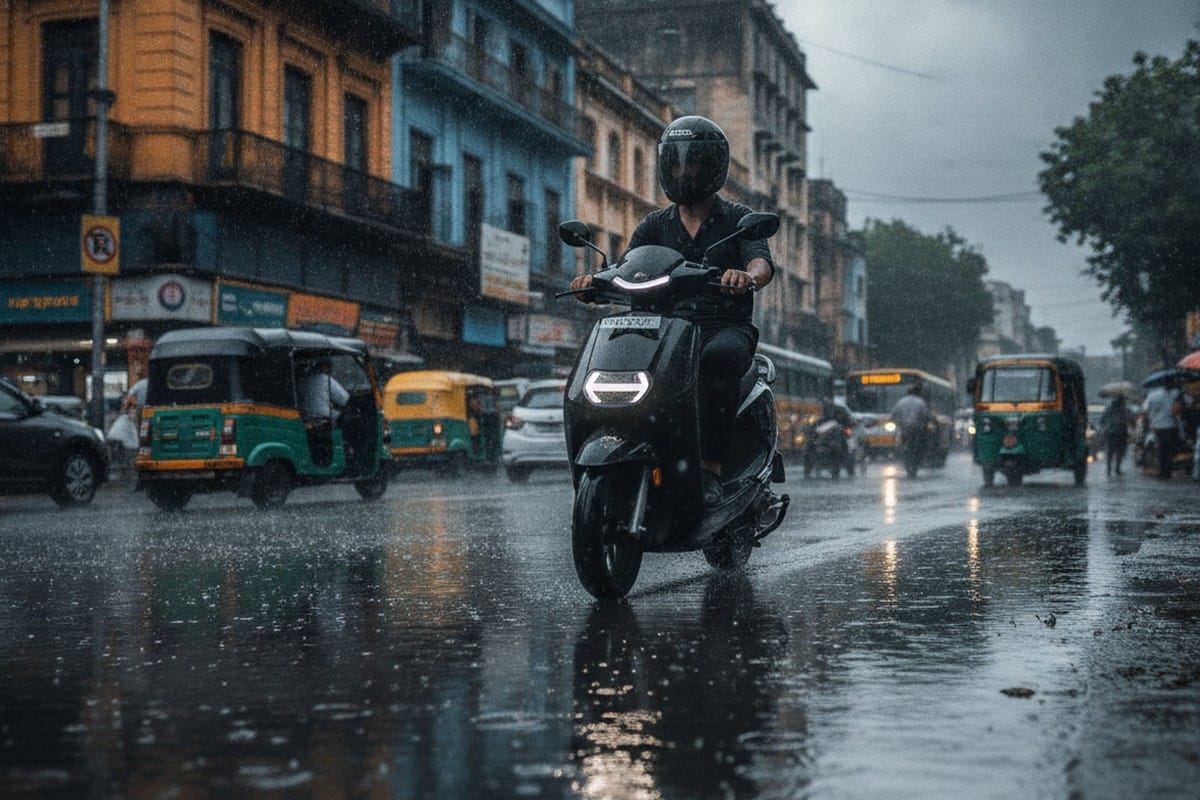
The Elektree Zenith is priced at ₹90,164. For that, you get an 80–100 km IDC-certified range, a 60V/35Ah lithium-ion battery, a mid-drive IPM motor with a 70 km/h top speed, and a three-year battery warranty. Ground clearance stands at 180 mm — meaningfully higher than several rivals and relevant on Indian roads with their unpredictable surfaces, speed breakers, and monsoon-flooded patches. Boot storage comes in at 18.5 litres, practical for a work bag or grocery run. The Zenith also includes GPS tracking, an anti-theft alarm, a 15.5 cm display, a USB charging port, three riding modes (Hyper, Normal and Eco), and a reverse mode — features that often appear only on pricier models.
The Elektree RV 80, at ₹94,363, offers a sportier silhouette with similar core specifications for riders who prefer a more assertive look without giving up on range or warranty coverage.
What makes Elektree’s proposition stand out isn’t just the price — it’s what the price includes. The three-year battery warranty alone represents meaningful protection for the buyer. A manufacturer willing to warrant their battery for that long is making a statement about confidence in their pack quality. For buyers who’ve heard stories about expensive battery replacements on budget electric scooters a year or two in, that assurance carries real weight.
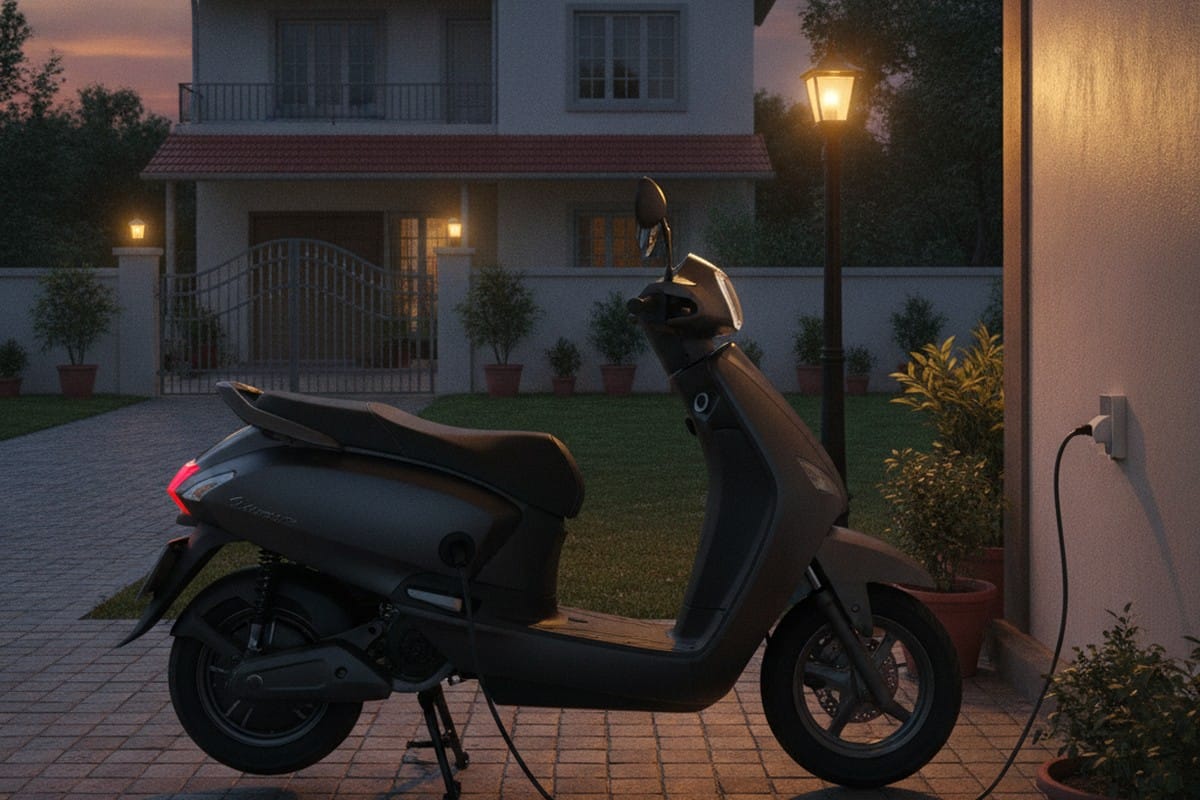
Elektree’s product decisions also reflect an understanding of how Indian riders actually use their scooters. The Zenith’s 200 kg payload capacity matters — two adults plus a loaded bag is a normal scenario on Indian roads, not an edge case. The 180 mm ground clearance, combined with a monoshock rear and twin telescopic front suspension, means the scooter is engineered for Indian tarmac rather than merely rated for it. The charge time of 4–5 hours on a standard home socket makes overnight charging a completely practical daily routine.
Elektree supports its vehicles through a growing dealer and service network across India, backed by its Elektree Care programme for after-sales needs. For buyers outside the major metros — where the question of “who services my scooter?” is a genuine concern — the presence of accessible service support can be the deciding factor.
The Verdict
The economics of electric commuting in India have crossed a threshold. With petrol above ₹100 per litre in virtually every city and electricity costs remaining stable, the running cost advantage of electric scooters is too large to ignore. The savings are real, they compound year over year, and they show up every time you don’t stop at a petrol pump.
For buyers weighing their options under ₹1 lakh, the Elektree Zenith stands out as one of the most complete propositions currently available. It doesn’t ask you to trade range for price, or sacrifice warranty for value. At ₹90,164 with a 3-year battery warranty, 80–100 km certified range, 180 mm ground clearance, and a 200 kg payload rating built for real Indian riding conditions, it addresses the concerns that give most buyers pause — and delivers meaningfully on all of them.
Anyone still weighing whether to make the switch would do well to run the five-year numbers one more time, then visit elektree.com to see whether the Zenith or the RV 80 fits their commute. The petrol savings tend to make up minds fairly quickly.