Open any “Best Electric Scooter in India 2026” review and you’ll notice a pattern. The writer is imagining a specific buyer: someone in a metro, with basement parking to charge from, smooth roads to ride on, and three EV service centres within 15 minutes. That buyer exists. But they’re a small fraction of the people actually searching for electric scooters right now.
The rest of India — Kanpur, Nashik, Dehradun, Coimbatore, Ranchi, Bhopal — rarely gets this coverage. Yet these are the cities where switching to electric often makes the clearest financial sense. Petrol expenses hit harder at moderate incomes. Daily distances are shorter. And most riders have driveways, garages, or ground-floor access where charging from a regular wall socket is perfectly practical.
The four questions below are the ones that actually matter if you’re buying an electric scooter outside a metro. They’re also the questions most reviews skip entirely.
Question 1: Will I Be Stranded if Something Goes Wrong?
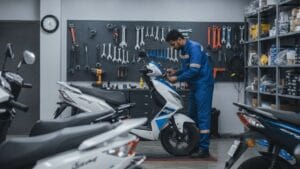
This is the anxiety that quietly kills EV intent in smaller cities. You’ve heard the story — someone’s cousin bought a brand-name electric scooter, the battery threw a fault code six months later, and the nearest authorised service centre was 80 kilometres away. The scooter sat in a corner for three weeks. The cousin is now back on petrol.
India’s two-wheeler EV market grew 21.81% in FY2026, crossing 14 lakh units in sales. But service infrastructure has not kept pace with that momentum. Several brands have expanded their dealer networks primarily in Tier-1 cities, with Tier-2 and Tier-3 coverage remaining thin and inconsistent.
Before you buy, check the manufacturer’s service map and find the nearest authorised service point — not just a dealer, an actual service centre. If it’s more than 40-50 kilometres away, factor that in. Some brands offer doorstep pickup. Others don’t. That difference matters far more in Nashik than in Navi Mumbai.
Warranty length matters here too. A 2-year battery warranty is the bare minimum most brands offer. A 3-year warranty signals manufacturer confidence in the product’s durability — and it’s the kind of coverage that gives smaller-city buyers genuine peace of mind.
Question 2: Can It Actually Handle My Roads?
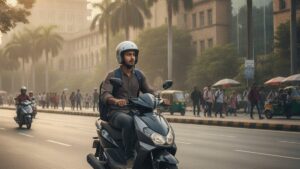
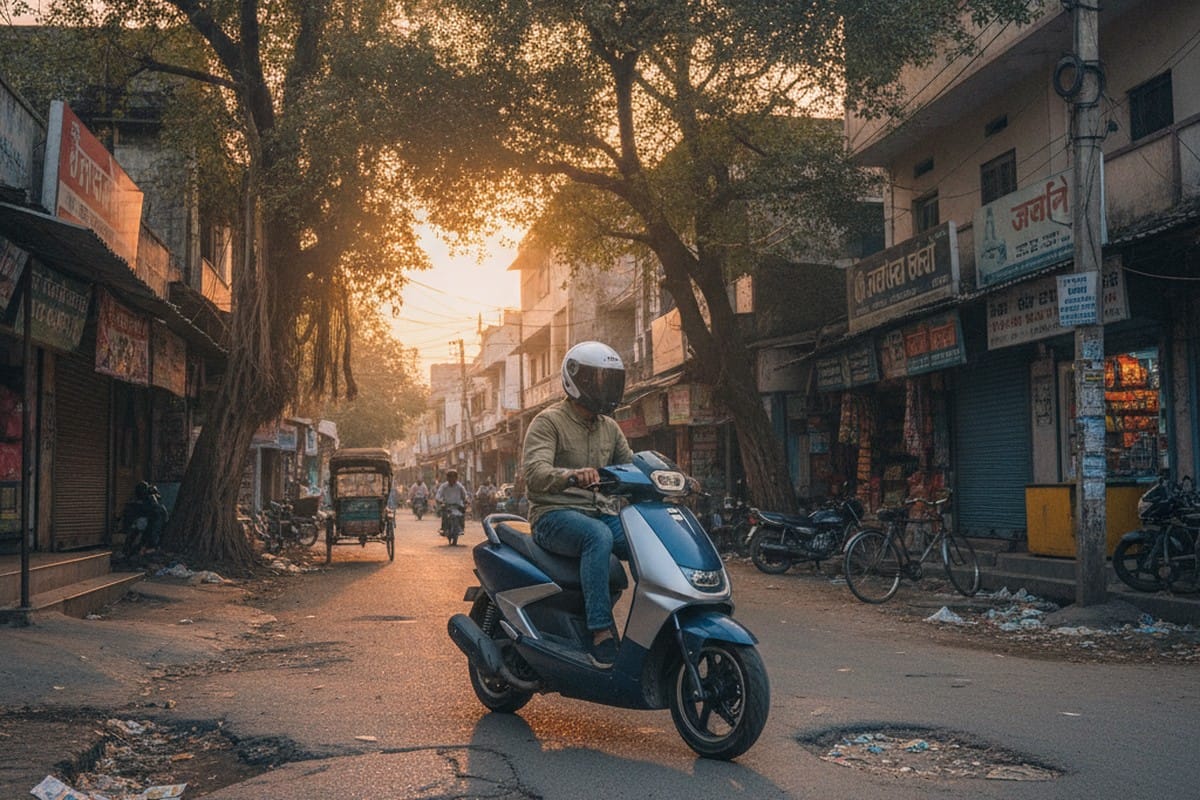
Indian roads vary enormously. Most metro EV reviews assume reasonably well-maintained tarmac because that’s where reviewers ride. But roads in Tier-2 India — and particularly in older parts of town — can be rough, potholed, speed-bump heavy, or partially unpaved. Monsoon season often means accumulated mud, waterlogged patches, and sudden depressions where the road surface has collapsed.
Ground clearance is the specification that matters here, and it’s one that most buyers barely look at when they’re scrolling through price and range figures. The standard for a comfortable experience on varied Indian roads is around 160-170mm of ground clearance. A scooter with 120-130mm is going to scrape regularly if you encounter a rough patch or a steep driveway entry, and in the worst case, can damage the battery casing or motor housing if you hit a deep pothole at speed.
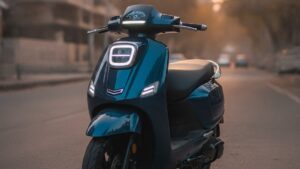
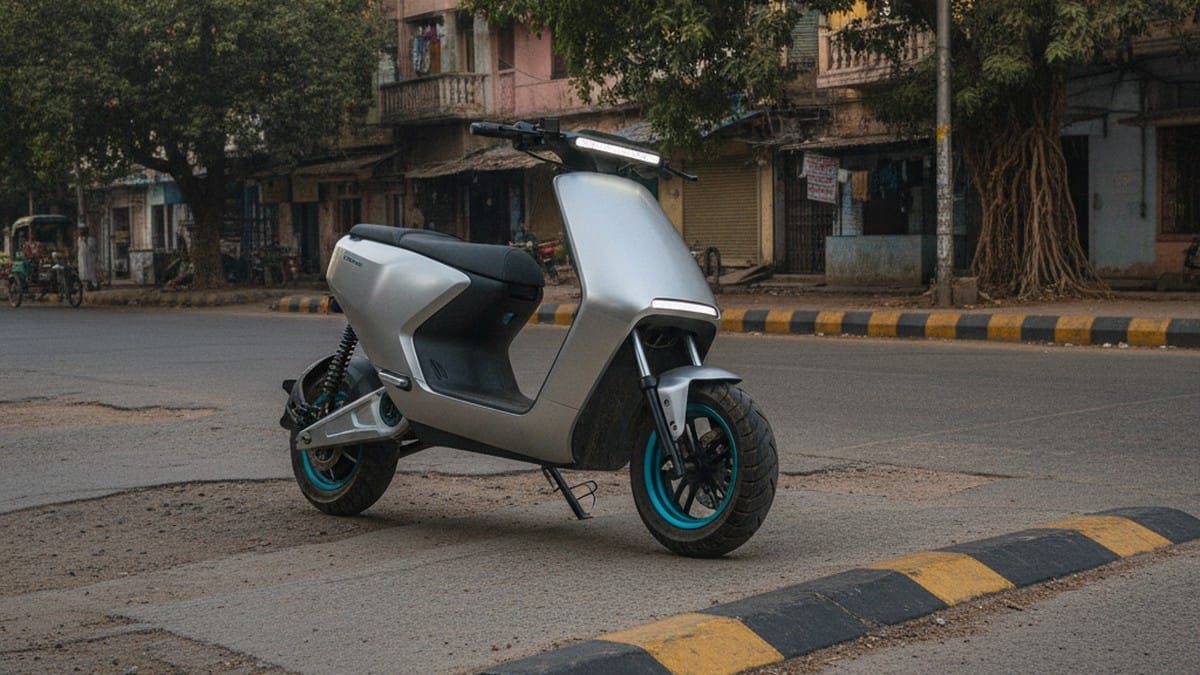
The Elektree Zenith, priced from ₹90,164, offers 180mm of ground clearance — a figure that puts it comfortably above most scooters in the sub-₹1 lakh range. Paired with twin telescopic front suspension and a rear monoshock, it’s built to absorb impact rather than transfer it to the underside of the vehicle. For daily riding on mixed roads, that extra clearance is not a number on a spec sheet — it’s the difference between a smooth commute and a crunching noise every time you cross a hump.
The Zenith also carries a 200kg payload capacity, which is substantial for a scooter in this segment. For a family context — a rider and pillion carrying a schoolbag, grocery bag, or tiffin carrier — that’s meaningful headroom. Many scooters in this category are rated for 150-160kg, which is adequate but leaves less margin when you’re regularly riding two-up with luggage.
Question 3: Do I Need Public Charging Infrastructure?
Here’s the thing metro reviews almost never say clearly enough: for most riders in India, public charging infrastructure is largely irrelevant to daily use.
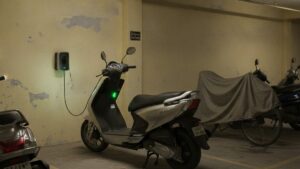
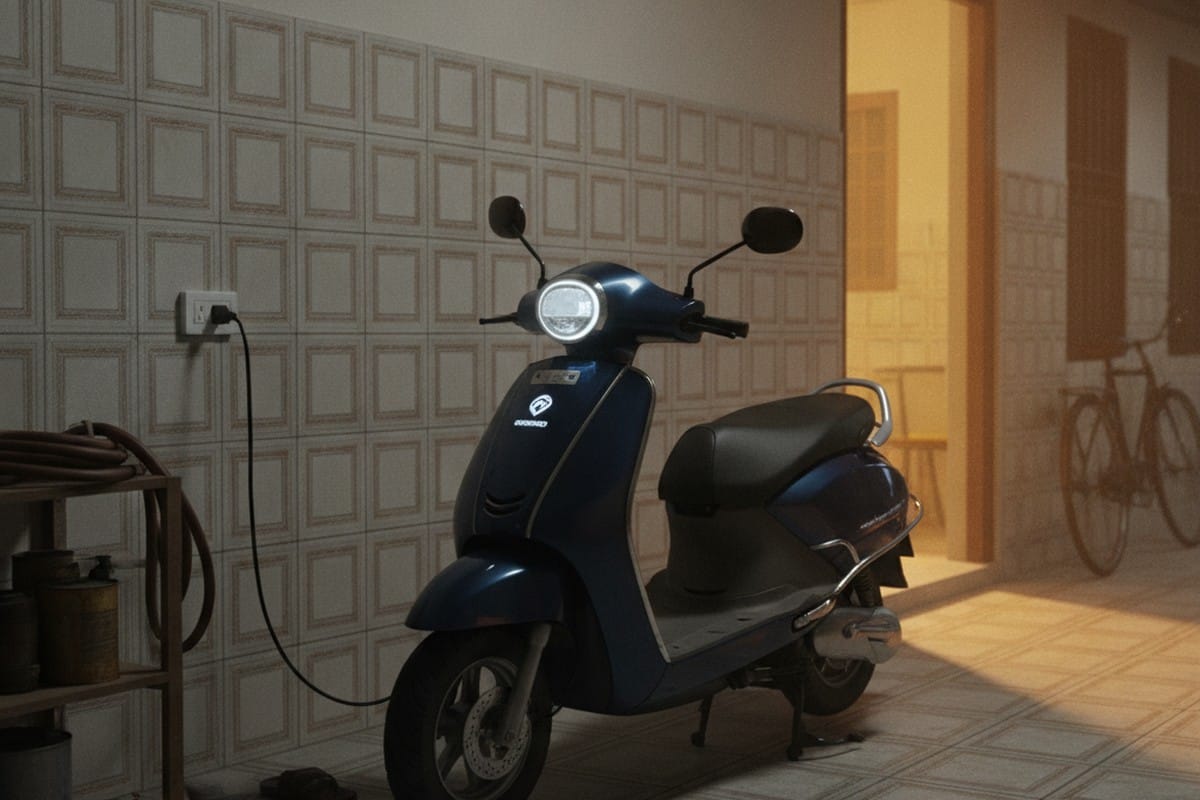
The reason is simple arithmetic. The average Indian commute is under 30 kilometres per day. Most electric scooters offer 80-100km of real-world range. If you charge at home every night — from a standard 5-amp or 15-amp wall socket — you wake up each morning with a full battery. You never need to stop at a public charger. You never need to wait. You never need to plan around charging station availability.
In smaller cities, this advantage is amplified. Most households have parking that’s accessible from inside the home or the building. You can run a standard extension cord or install a dedicated charging point for a few thousand rupees. Compare this to apartment residents in Bengaluru or Mumbai, who sometimes struggle with shared parking arrangements, building society rules, and restricted socket access.
The Elektree Zenith charges in 4-5 hours from a standard home socket. Plug it in after dinner, and it’s ready for the next day. At ₹5-10 per charge — that’s the entire cost of a 100km day’s riding. Over a month of daily commuting, you’re looking at ₹150-300 in electricity. Against petrol at ₹100+ per litre, the savings accumulate quickly.
For smaller city buyers specifically, the calculation should not be “are there enough public chargers nearby?” The correct question is: “can I charge at home?” If the answer is yes — and for the majority of Tier-2 India it is — the electric scooter is already more practical than petrol for daily use.
Question 4: Is the Total Ownership Cost Honest?
Electric scooter advertising focuses on two numbers: sticker price and claimed range. Both can mislead in isolation.
A scooter at ₹79,999 is not necessarily cheaper than one at ₹90,164 once you factor in battery warranty coverage and the cost of pack replacement if it degrades faster than expected. Battery replacement for mainstream electric scooters in India runs ₹20,000–50,000 depending on chemistry and capacity — a figure that can completely change the three-year economics of ownership.
A 3-year battery warranty — which Elektree includes across its scooter range — buys meaningful protection against the highest-value component failure. In a market where most buyers intend to keep a vehicle for five to seven years, that first-three-years coverage provides real financial security.
Running cost compounds the advantage. The Zenith’s ₹5-10 per charge figure is basic arithmetic on India’s household electricity tariffs applied to a 60V/35Ah battery. Over five years of typical Indian usage, the fuel savings versus petrol can comfortably exceed ₹70,000. That changes how you should think about a ₹90,164 price tag.
Where Elektree Fits the Smaller-City Buyer’s Brief
The Elektree lineup — the Wheels (from ₹82,871), the Zenith (from ₹90,164), and the RV 80 (from ₹94,363) — targets the sub-₹1 lakh price band where the return on investment from switching to electric is clearest for buyers outside metros. The Zenith’s combination of 180mm ground clearance, 200kg payload capacity, 80-100km practical range, and a 3-year warranty addresses the specific concerns of the smaller-city buyer directly. It’s not the scooter with the longest claimed range — TVS iQube and Ola S1 X hold those numbers at higher price points. But for the daily commuter in Coimbatore or Indore who needs a scooter that handles varied roads, charges at home overnight, and doesn’t leave them stranded when something goes wrong, the Elektree value proposition holds up under scrutiny.
Elektree’s Fantom EV electric motorcycle at ₹1,39,000 — with 150-180km range and 110 km/h top speed — is worth considering for buyers who occasionally make inter-city runs. In smaller cities, you sometimes need to visit a larger town for business or medical reasons, and having a vehicle that handles that without range anxiety is a practical advantage.
The Verdict for Smaller-City India
The electric scooter conversation in India has, for too long, been a conversation about Bengaluru, Pune, and Delhi. But the real market is much broader, and the financial case for electric is actually stronger in the cities and towns that get the least coverage in EV media.
If you live in a smaller Indian city and you’re considering an electric scooter for 2026, focus on the things that will actually determine your daily experience: ground clearance, warranty terms, home charging compatibility, and total cost over three years. On all four of those metrics, Elektree’s scooters — particularly the Zenith — offer a package that’s harder to argue against than the spec-wars numbers might suggest.
The Indian two-wheeler market has always been about practical value. And for practical value on roads that aren’t always smooth, in cities where service centres aren’t around every corner, with a budget that reflects real Indian incomes rather than metro salaries — Elektree India has built something worth serious consideration. Explore the full lineup at elektree.com and judge for yourself whether the numbers work for your commute.