The Central EV Subsidy Is Gone — Should You Still Buy an Electric Scooter in India Right Now?

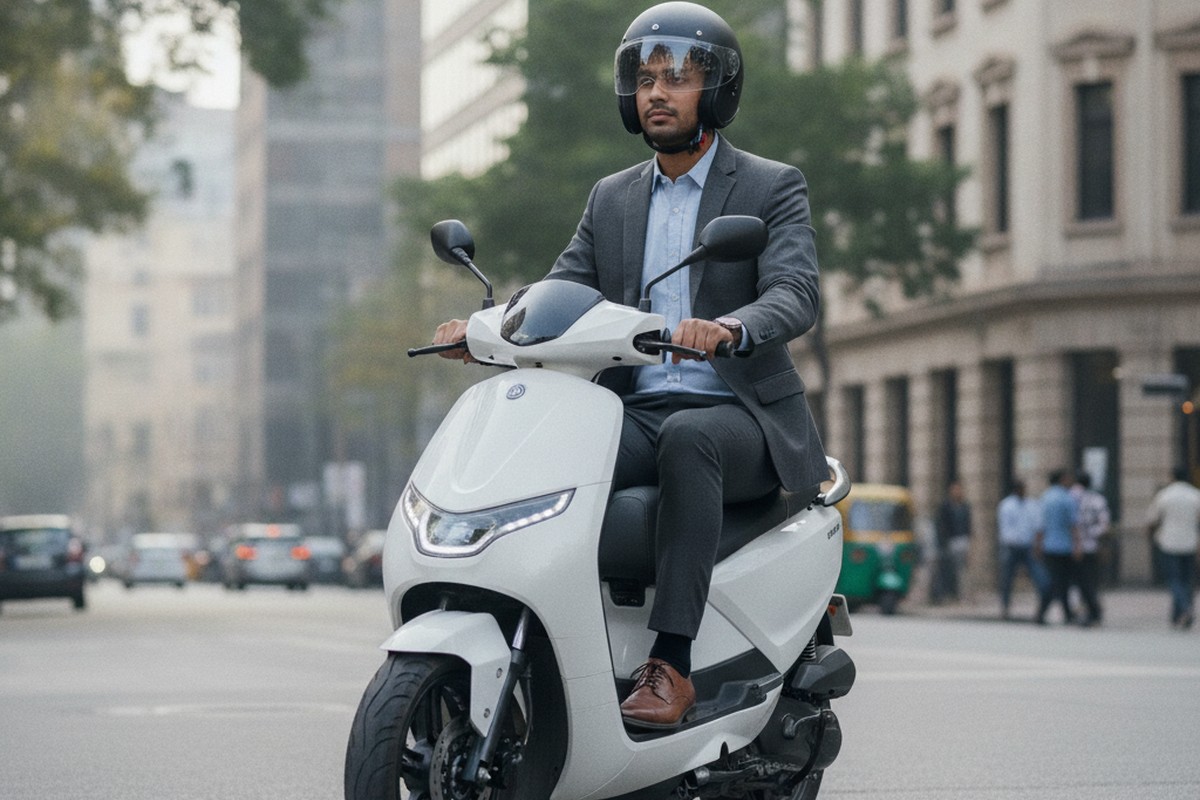
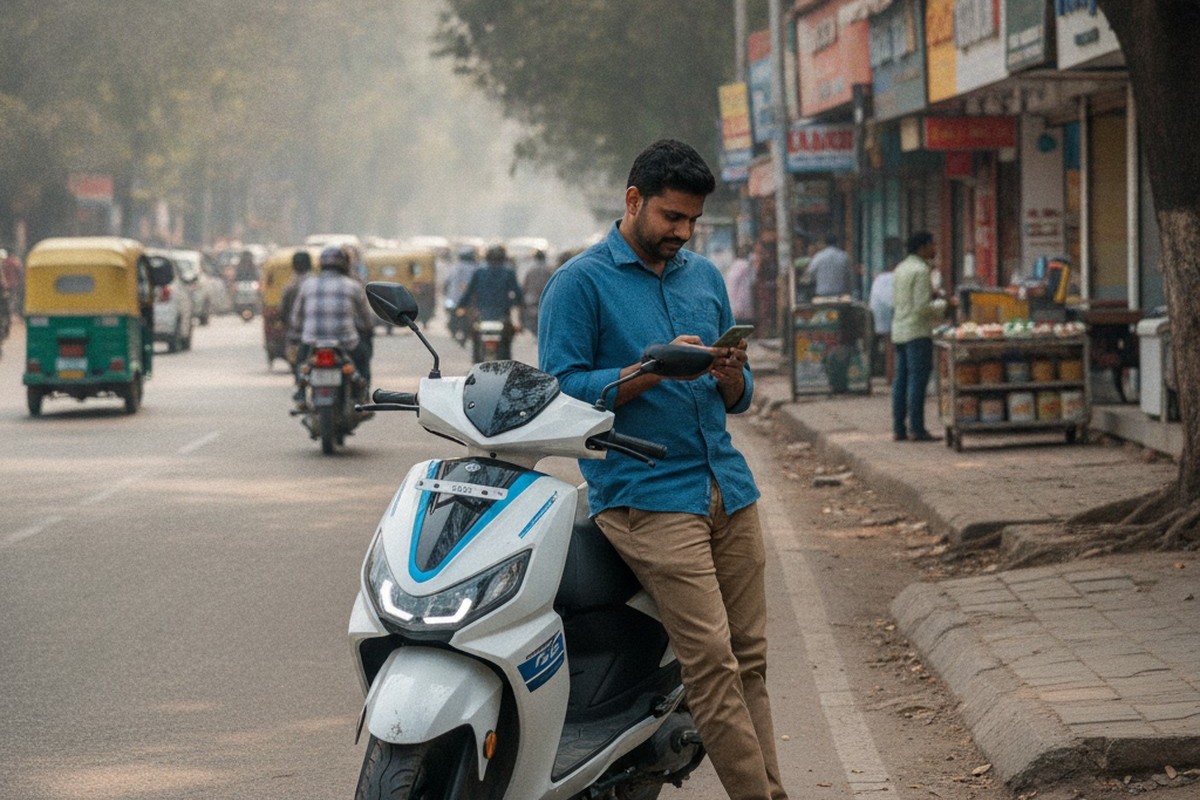
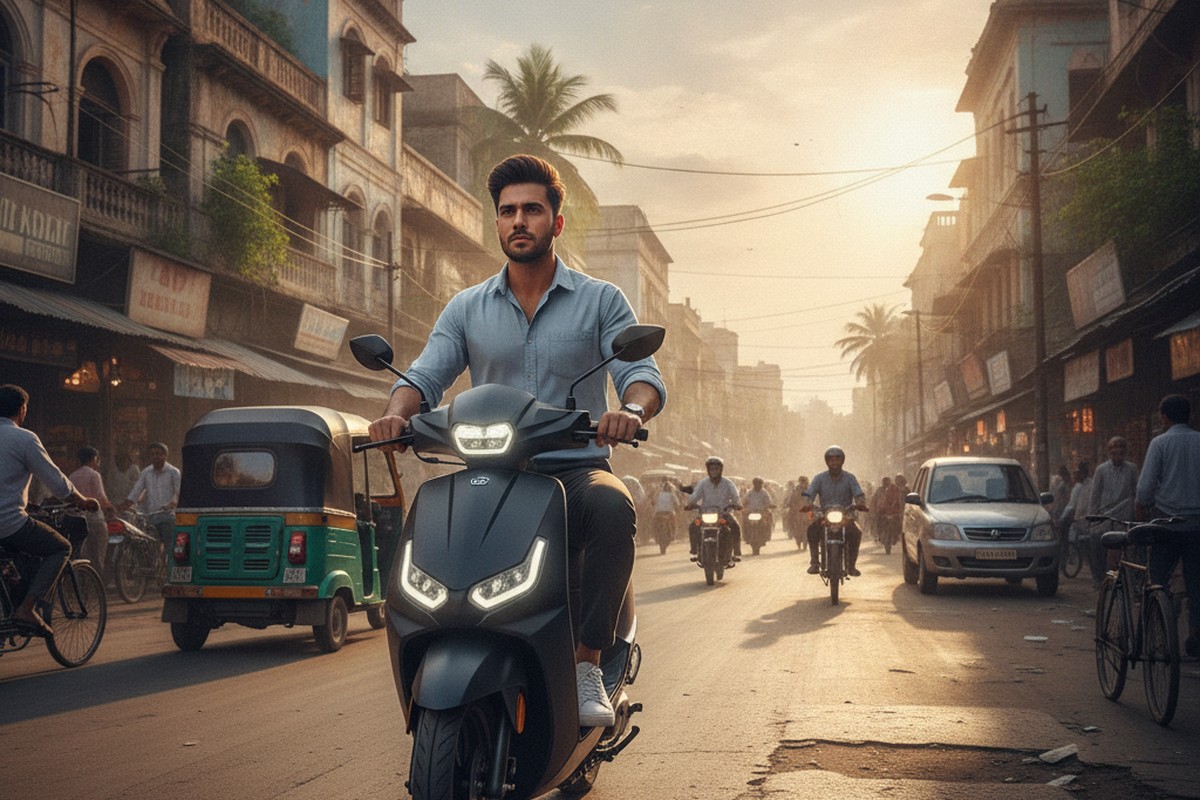
Indian commuter on electric scooter in city traffic

You were probably almost ready. Maybe you’d done your research, shortlisted a model or two, even visited a dealership. Then somebody told you the EV subsidy has ended, and suddenly you weren’t sure anymore. Should you wait? Is this the wrong time? Did the government just pull the rug out from under the whole electric scooter market?

The short answer is no. Here’s the longer, more honest answer.

What Actually Happened With PM E-DRIVE

The PM E-Drive scheme — officially the ₹10,900-crore programme that replaced the earlier FAME subsidy structure — offered central government incentives for electric two-wheelers from October 2024 onwards. In its final phase, running through July 31, 2026, the scheme offered ₹2,500 per kWh of battery capacity, capped at ₹5,000 per vehicle for scooters priced below ₹1.5 lakh ex-factory. Not life-changing money, but enough to meaningfully reduce the sticker price.

The subsidy was originally supposed to run only until March 31, 2026. The government extended it by four months. Then, on July 31, 2026, the electric two-wheeler component of PM E-DRIVE officially closed.

So yes — if you’re buying an electric scooter today, in September 2026, you won’t be getting a cheque from the central government. That ₹5,000 that quietly reduced your on-road price last year is no longer there.

Now let’s talk about why that probably shouldn’t change your decision.

The Running Cost Math Still Massively Favours Electric

The central subsidy was never really the reason to buy an electric scooter. The reason was always the running cost. And that calculation has only gotten more compelling, not less.

Petrol is currently sitting at ₹102 per litre in Delhi and crossing ₹111 in Bangalore, ₹113 in Kolkata, and ₹115 in Hyderabad. A typical 125cc petrol scooter returning around 45–50 km per litre costs you roughly ₹2.20 to ₹2.50 per kilometre just in fuel. Servicing, oil changes, spark plugs, air filters — add another ₹7,000 to ₹10,000 a year depending on your usage. The ownership costs accumulate quietly but steadily.

An electric scooter with a full charge costing ₹5–10 runs for 70–100 km under typical conditions. That works out to roughly ₹0.10 to ₹0.15 per kilometre. If you’re covering 40 kilometres a day across 300 working days, you’re looking at roughly 12,000 km annually. On petrol at current rates, that’s over ₹27,000 a year in fuel alone. On electricity, the same distance costs closer to ₹1,500–2,000 for the year.

The gap between those two numbers — roughly ₹25,000 per year in fuel savings alone — is five times the value of the subsidy that just expired. Within two years of typical riding, a commuter recovering ₹25,000 annually in fuel savings has already outearned what the PM E-DRIVE benefit was worth. The economics of electric were never really about the government incentive to begin with.

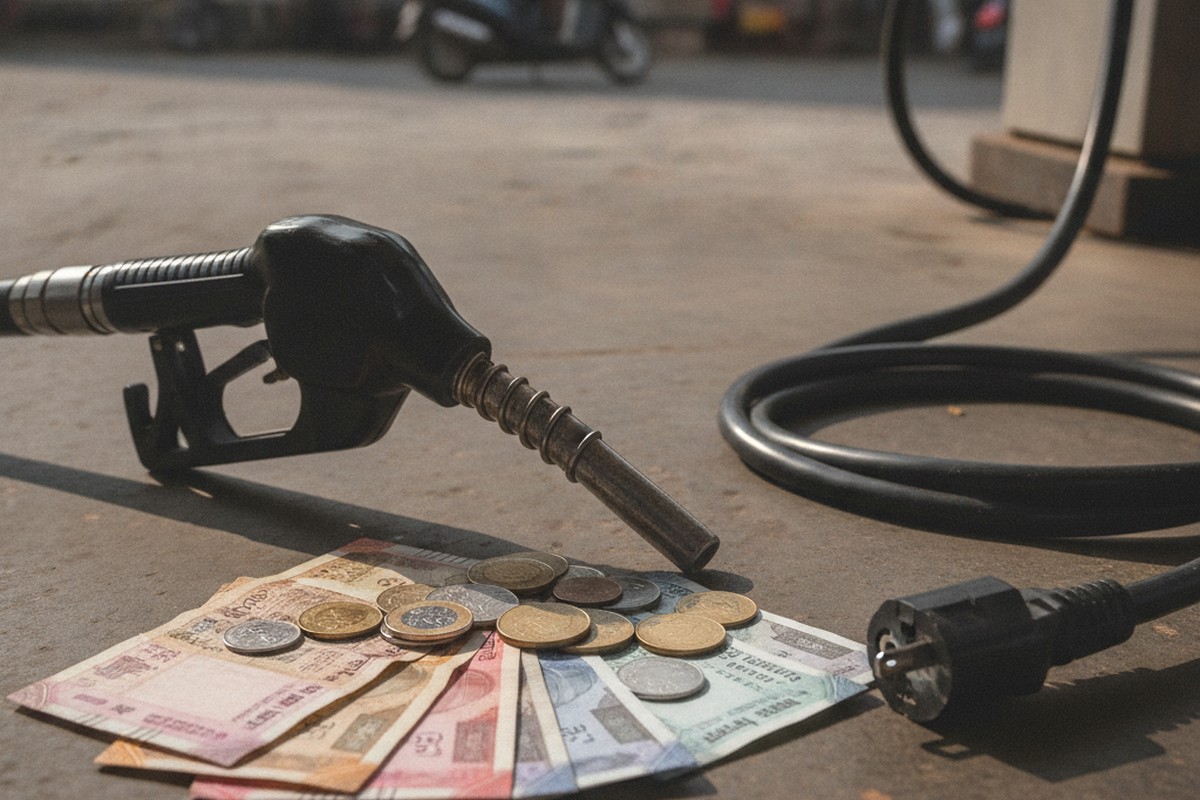
Electric scooter vs petrol cost comparison India 2026

State Subsidies Are Still Running

Here’s what most buyers don’t know: the central subsidy was only one part of the picture. State-level EV incentives in several major states remain active and in many cases are far more substantial.

Delhi’s state EV policy still offers up to ₹30,000 for electric two-wheelers, plus full road tax and registration fee waivers, and an additional ₹5,000–7,000 if you’re scrapping an old petrol vehicle. Maharashtra offers approximately 15% of the purchase price (capped around ₹25,000) plus road tax exemption. Haryana provides ₹5,000 per kWh of battery capacity, capped at ₹30,000, plus registration and road tax waiver. Uttar Pradesh offers 15% of ex-factory price and a full road tax exemption for five years. States like Karnataka, Tamil Nadu, Rajasthan, and West Bengal have various registration and road tax waivers of their own.

If you’re in Delhi buying a scooter right now, you could still save ₹30,000 or more through the state scheme — which is more than what PM E-DRIVE offered in its best phase. Check your state’s transport department website or your dealer for current figures, since policies do evolve, but the point is this: the central subsidy ending does not mean all subsidies are gone.

What You Should Focus On Now

Here’s where the end of PM E-DRIVE actually changes something — in a good way, if you think it through. When a subsidy was available, some buyers picked scooters primarily because they qualified for the incentive. The subsidy was a filter, and not always a useful one. Now that it’s gone, the decision reverts to what it should have been all along: which electric scooter genuinely gives you the best combination of range, reliability, running cost, after-sales support, and overall value?

At full price, a few things matter more than they used to. Claimed range versus real-world range is one. Under typical Indian conditions — stop-start traffic, loaded riding, Indian road surfaces, hot weather — you realistically get 70–85% of whatever the manufacturer claims. A scooter claiming 100 km might genuinely deliver 75–85 km in daily use; one claiming 130 km might still only give you 95–100. Understanding this gap matters especially if your daily commute is long.

Battery capacity and warranty are the other critical numbers. Battery degradation over 2–3 years is real, and a scooter with a strong warranty on its battery pack is a meaningfully better long-term proposition than one without it. Service availability — whether you can actually get your scooter serviced without a two-hour drive to a service centre — is equally important once the novelty of ownership fades and maintenance becomes your daily reality.

Where Elektree India Stands in This Picture

If you’re evaluating electric scooters at full price and want genuine value for money, Elektree India’s lineup deserves a serious look — not because of marketing, but because of what the numbers actually show.

The Elektree Zenith, priced from around ₹90,000, offers a claimed 80–100 km of range on a 60V battery available in 32Ah or 35Ah configurations, with a top speed of 60 km/h and a three-year warranty. The Elektree RV 80 — also available in a Sportz variant — starts at around ₹94,000 with comparable range and speed. For riders who want a practical, low-maintenance daily commuter without paying for performance they don’t need, these are competitive numbers at this price point. The Elektree Wheels, starting from around ₹83,000, covers a shorter 50–70 km range at 45 km/h — well suited for shorter daily commutes and riders who don’t need an RTO licence category upgrade.

For buyers who cover longer distances or need something with genuine highway capability, Elektree’s Fantom EV motorcycle — priced from ₹1,39,000 with a 72V battery in 45Ah or 55Ah options and a claimed 150–180 km range at up to 110 km/h — competes directly with petrol motorcycles in the 125–150cc segment while offering a fraction of their running costs. At that price, the Fantom EV makes the no-subsidy ownership equation arguably the strongest in Elektree’s lineup for high-mileage commuters.

What sets Elektree apart isn’t just the price-to-spec ratio. It’s the three-year warranty coverage across the range and a product philosophy built around practical Indian commuting rather than lab-optimised range figures. When you’re spending ₹90,000 or more without a government top-up, knowing the company behind the scooter has designed it for Indian roads and offers meaningful after-sales support matters more than it did when the subsidy was softening the risk.

The Bottom Line

The PM E-DRIVE subsidy ending is real news, and it has shifted prices by ₹5,000–10,000 on many models. But put that in context. Petrol at ₹102–115 per litre means you’re saving close to ₹2,000–2,200 every month just in fuel if you’re a typical urban commuter switching from petrol. The central subsidy loss is recovered in a few months of riding. Your state government may still be offering benefits that exceed what PM E-DRIVE provided in its final phase anyway.

The case for buying an electric scooter in India has always rested on running costs, not government cheques. That case is stronger today than it was three years ago, because petrol is more expensive, electricity infrastructure has improved, and the scooters themselves are more mature products. The subsidy was the government nudging you toward a decision that the economics were already nudging you toward anyway.

If you’ve been waiting for the right time to make the switch, the end of PM E-DRIVE is not a reason to delay. It’s, if anything, an opportunity to make the decision based purely on the value of the product — which is how it should have been evaluated all along. Elektree India’s range of scooters and the Fantom EV motorcycle offer a compelling place to start that evaluation. Visit elektree.com to explore the full lineup, current pricing, and find which model fits your commute best.

Spending Under ₹1 Lakh on an Electric Scooter in India 2026? The 5 Numbers That Matter More Than the Sticker Price

Modern electric scooter parked on an Indian city street

Walk into any dealership or scroll through any EV comparison site today, and you’ll find more than fifteen electric scooters competing for attention under the ₹1 lakh mark. That’s a dramatic shift from just three years ago, when the sub-₹1 lakh space was mostly occupied by low-speed vehicles with lead-acid batteries and limited real-world utility. Today you have everything from Ola’s S1 Z at ₹79,999 to the Ather Konarc at ₹99,999 — proper high-speed registered scooters with modern lithium batteries, smartphone connectivity, and serious range claims.

The problem is that most buyers walk in fixated on exactly two numbers: the ex-showroom price and the claimed range. And many of them walk out with a scooter that disappoints them within twelve months — not because the product was fundamentally bad, but because they evaluated it using the wrong metrics.

Here’s what actually matters when you’re spending under ₹1 lakh on an electric scooter in India.

1. The Range on the Brochure Is Not Your Range

This is the single biggest misconception in the Indian electric scooter market — and manufacturers are partly responsible for letting it persist. The certified range figures quoted in advertisements — sometimes called IDC (Indian Driving Cycle) range — are measured in controlled conditions with a specific speed profile that bears little resemblance to how you actually ride in Pune traffic or on a Chennai bypass.

In practice, real-world range on most scooters in this segment runs between 60% and 75% of the certified figure. The Ola S1 X claims 108–151 km depending on the battery variant; owners in Indian cities regularly report 65–113 km under normal riding conditions. The Hero Vida VX2, claimed at 92–100 km, delivers closer to 55–75 km in everyday use. TVS iQube’s 100 km claim translates to roughly 60–85 km on actual roads.

This gap matters enormously if you have a 35–40 km daily commute. What looks like ample range on paper can become a source of daily range anxiety when your scooter’s battery indicator is crawling into the red before you reach home.

The smarter calculation: take the claimed range, apply a 70% factor, and verify whether that number comfortably covers your daily round trip with room to spare. Don’t cut it close. A 20% buffer is the absolute minimum you should plan for.

2. Battery Warranty — Read the Fine Print, Not Just the Headline

A three-year warranty sounds reassuring until you actually read what it covers. Many manufacturers in this segment offer battery warranties loaded with conditions — usage within specified temperature limits, mandatory scheduled servicing at authorised centres, restrictions on fast charging, and clauses that can void coverage if the vehicle is used outside its stated parameters.

This matters because battery replacement outside warranty typically costs between ₹25,000 and ₹60,000 depending on the chemistry and capacity — often 30–50% of what you originally paid for the scooter. A warranty that looks good on paper but disqualifies you on a technicality is effectively no warranty at all.

Read the document carefully. Understand what’s covered, for how long, and specifically under what conditions. Lithium iron phosphate (LFP) and lithium NMC cells offer substantially better thermal stability in Indian summer conditions than older chemistries — a relevant consideration when temperatures in many Indian cities regularly exceed 40°C.

3. Service Network in Your Specific City — Not Nationally

Manufacturers love quoting national service touchpoint numbers. One brand might tout 6,000 dealer relationships across India. Another boasts 4,000+ authorised service points. But what’s relevant to you is the quality and availability of service in your city, your district — ideally within a practical distance of where you live.

The reality of India’s EV service landscape in 2026 is still uneven. Established brands like TVS, Bajaj, and Hero bring the advantage of existing two-wheeler dealership networks with trained mechanics and faster parts availability. Newer EV-first brands have improved considerably in metro cities but can still leave smaller cities and towns underserved. Even brands with large networks have been criticised for delayed turnaround times and technician training gaps in specific markets.

Before finalising any purchase, ask specifically how many authorised service centres exist in your city or district. Ask about average turnaround times. Ask whether the centre stocks common wear parts — brake pads, tyres, controllers. Call the customer helpline yourself. What happens when you call tells you a great deal about what the after-sales experience will be like when you actually need it.

4. Running Cost Per Kilometre — The Number That Changes Your Daily Life

On a cost-per-kilometre basis, electric scooters genuinely change the economics of commuting. At current electricity rates across Indian states — roughly ₹6–9 per unit depending on your state tariff — a full charge costing ₹30–70 can cover 60 to 130 km of real-world riding. That works out to somewhere between ₹0.25 and ₹0.50 per km.

Compare that to a 110cc petrol scooter returning 45–50 km/litre at over ₹100 per litre — you’re looking at ₹2.00–₹2.25 per km. The savings across three years of daily commuting are substantial — in many cases, significant enough to have effectively paid for a considerable portion of the vehicle cost.

But these savings only materialise if your charging setup is practical. If you live in a house or ground-floor flat with accessible parking and a power point, home charging is inexpensive and reliable. If you’re in a multi-storey apartment without EV charging infrastructure, you’ll be navigating public chargers — adding inconvenience and potentially reducing the economic advantage. Work this out before you buy, not after.

5. Build Quality for Indian Roads — The Factor Most Buyers Overlook

Not all scooters are engineered equally for Indian conditions. Potholes that would clear road quality complaints in most countries, speed breakers designed by optimists, monsoon rains that can be relentless for months, and summer dust that finds its way into everything. An IP (Ingress Protection) rating for the motor and battery tells you something concrete about how protected your investment actually is against water and dust intrusion.

Bajaj Chetak’s IP67-rated battery and motor represent a premium standard in this space — meaning full dust-tight protection and tolerance for temporary submersion in water. Most scooters at this price point don’t publish IP ratings for every component, which itself tells you something. Ask your dealer directly. A scooter with no published IP rating on its motor being ridden through Kolkata in July is a gamble. One with proper documentation is not.

Young professional riding electric scooter on Indian city road

Where Elektree India Fits in the Sub-₹1 Lakh Market

Elektree India has positioned three of its scooters squarely in the under-₹1 lakh bracket. The Wheels at ₹82,871 delivers 50–70 km of range at 45 km/h — a sensible option for shorter urban commutes and last-mile connectivity where riders prioritise economy and simplicity. The Zenith at ₹90,164 and the RV 80 at ₹94,363 both target the 80–100 km range bracket at 60 km/h, placing them in direct competition with the mainstream options from Ola, Honda, and others in this price band.

On running costs, Elektree’s figures are among the most compelling in the segment — ₹5–10 per full charge, with a 4-hour charge time, which translates to operating costs well below ₹0.50 per km for most riders. The 3-year/30,000 km warranty covering the motor, controller, and battery pack is one of the more comprehensive coverage terms available in this price range — and importantly, it’s straightforward rather than filled with exceptions that undermine its practical value.

The Patna-headquartered company operates through a dealer network spanning major Indian cities — Delhi, Mumbai, Kolkata, Hyderabad, Bengaluru — with coverage extending into secondary markets. For riders in cities where Elektree has authorised service presence, the combination of competitive purchase pricing, a solid warranty, and genuinely low running costs makes a strong total-ownership case.

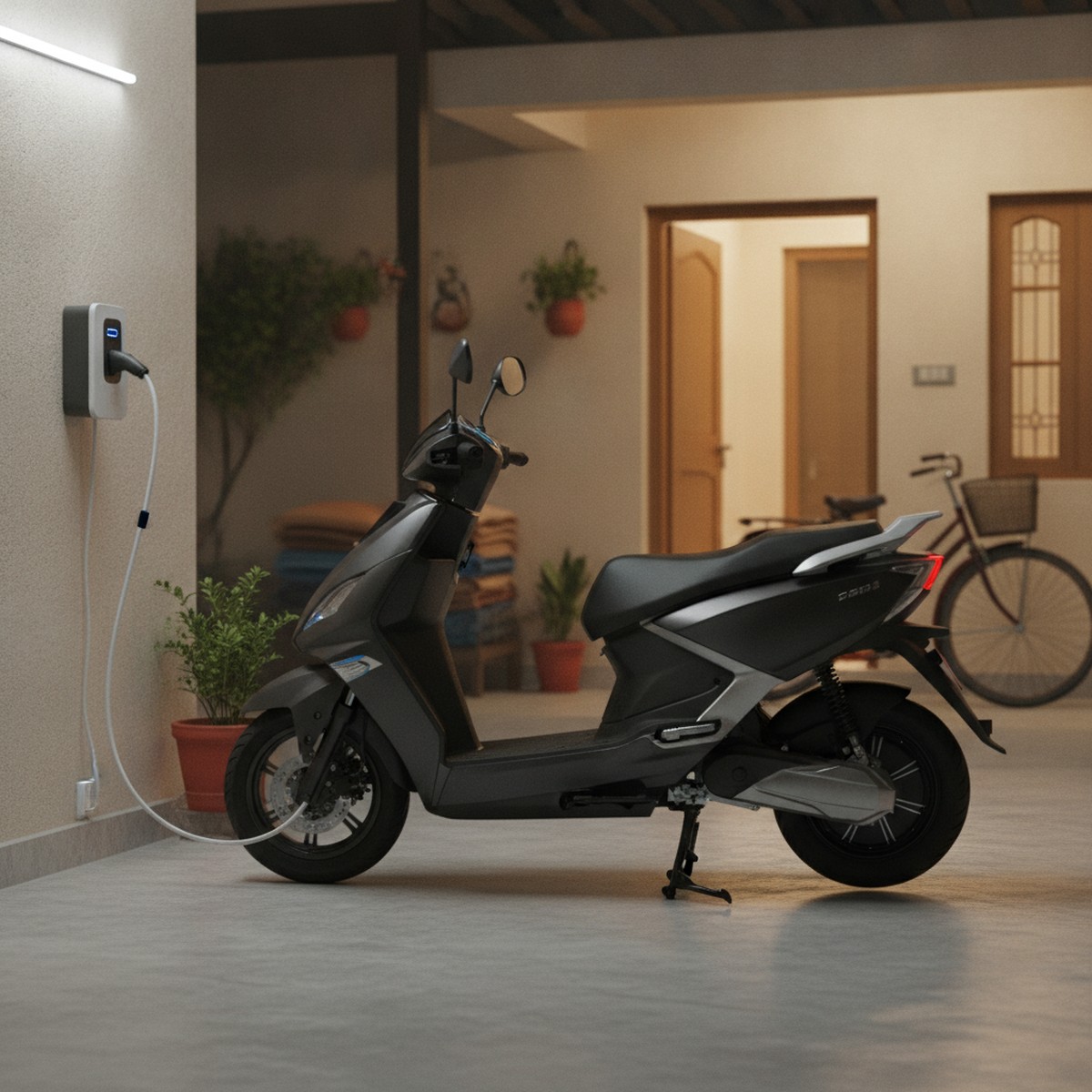
Electric scooter charging at home in India

The Verdict for Sub-₹1 Lakh Buyers

If you’re spending under ₹1 lakh on an electric scooter in India today, the right question isn’t “which one is cheapest?” It’s “which one will cost me least over three years, be easiest to service when something goes wrong, and actually cover my daily commute without requiring me to think about the battery every morning?”

Weigh real-world range against your actual commute distance, not the brochure figure. Read the battery warranty terms — not just the duration, but the conditions. Research service availability specifically in your city. Calculate your realistic running cost based on your local electricity tariff. And ask about build quality for the conditions you’ll actually be riding in, including monsoon months.

On all these criteria, Elektree India’s Zenith and RV 80 are worth placing on your shortlist alongside the more heavily marketed alternatives. The combination of sub-₹1 lakh pricing, 80–100 km range, a comprehensive 3-year warranty, and running costs of just ₹5–10 per charge makes them a genuinely competitive option for buyers whose priority is real ownership value — not just a low entry price or a brand name they recognise from advertisements.

Before making any final decision, visit a dealer for a test ride. No spec sheet or comparison article tells you as much as twenty minutes in the saddle on the roads you actually ride every day. Explore the current Elektree India lineup and find your nearest dealer at elektree.com.

What Nobody Tells You Before You Buy an Electric Scooter in India — A First-Timer’s Reality Check for 2026

A modern lightweight electric scooter parked on a busy Indian city street, showing a practical urban commuter

What Nobody Tells You Before You Buy an Electric Scooter in India — A First-Timer’s Reality Check for 2026

You’ve done your homework. Watched the YouTube reviews, scrolled through the spec sheets, maybe sat on a couple of display scooters at the showroom. And then you walk out and buy the one with the biggest range number on the sticker — only to discover three months later that it barely does two-thirds of that figure on your actual commute.

It happens constantly. India’s electric scooter market crossed 1.93 lakh units in a single month in July 2026 — over 11% of all two-wheelers sold. A huge proportion of those buyers are switching from petrol for the first time, and many of them are applying petrol-scooter logic to an entirely different machine. That gap between expectations and reality is where buyer regret lives.

Here are five things most people don’t check before they buy — and what actually matters if you want a purchase that holds up over five years of daily use.

1. Range Claims Are a Starting Point, Not a Promise

Every electric scooter in India is tested under IDC (Indian Driving Cycle) conditions — a laboratory standard that doesn’t reflect how you actually ride. It assumes a specific speed profile, an empty vehicle, flat terrain, and controlled temperature. Your commute doesn’t work that way. You’re carrying a bag, accelerating from traffic lights, navigating temperature swings of 38°C to 44°C in summer. Real-world range in Indian conditions typically runs at 60–70% of the IDC claim.

That scooter showing 150 km on the sticker? Budget for 95–105 km in real use. The one claiming 100 km? Probably 65–70 km on a mixed-traffic day. This isn’t a defect — it’s how the measurement standard works, and very few sales executives volunteer this information upfront.

The implication: a scooter that honestly claims 80–100 km IDC, delivering 60–70 km in real use, covers the vast majority of urban daily commutes without drama. The average Indian two-wheeler commute is under 30 km per day. Many riders never actually need 150 km of range — they need reliable, consistent range that doesn’t degrade sharply across seasons or as the battery ages.

2. Scooter Weight Is Far More Consequential Than It Looks on Paper

Here’s a number you probably didn’t look up: the kerb weight. Most showroom conversations focus on range. Nobody talks about weight. But in Indian traffic — where you’re doing U-turns in narrow lanes, reversing on slopes, and pushing the scooter the last twenty metres to your parking spot — weight is something you feel every single day.

The difference across popular options is striking. Bajaj Chetak weighs 134 kg. TVS iQube comes in at around 110 kg. A scooter in the 75–80 kg range is a fundamentally different riding experience — it parks easily, manoeuvres with minimal effort, and doesn’t become a chore on a crowded street. For women riders, for buyers in their 50s, for anyone living in a city with difficult parking, weight should be on your checklist, not buried in the footnotes.

3. Service Reputation Matters More Than Service Centre Count

Manufacturers advertise hundreds or thousands of service touchpoints. The number means very little if quality is poor, spare parts take weeks to arrive, or technicians are inadequately trained on specific models.

India saw a sharp reminder of this recently. One prominent brand that once commanded over half the electric two-wheeler market became the subject of formal government action after complaints scaled to tens of thousands per month. The Central Consumer Protection Authority issued notices. The brand’s market share collapsed from number one to number five, and its share price fell more than 60% from its IPO price — not because of range or pricing, but because of trust and service failures that compounded over time.

Before signing, ask: How long does a typical service appointment take? What is the waiting period for a non-routine repair? Are replacement parts stocked locally? A brand with 50 well-run, well-stocked dealerships serving customers efficiently is worth far more than one with 3,000 touchpoints where you wait weeks for a basic part.

4. The Battery Warranty Is Not the Only Warranty That Matters

Most manufacturers lead with the battery warranty, and that’s important — it’s the most expensive component and the one that ages. But the motor and controller are equally critical and can fail outside the battery warranty window, leaving you with an unexpected repair bill at year three or four.

Look for coverage that explicitly includes the motor, the controller, and the battery together under a single clearly defined term. Avoid warranties that cover the battery but not the motor, or that carry different durations for different components. Also check the battery health threshold: some warranties kick in only if the battery retains 70–80% of original capacity, defined differently across manufacturers. Read the warranty document, not the marketing summary.

5. Calculate the Actual Monthly Cost, Not Just the Per-Charge Figure

Electricity is cheap — that’s the easy part. What catches buyers off guard is how the monthly cost varies depending on the scooter they choose. A scooter that charges for ₹5–10 per full cycle, used by a commuter doing 25–30 km daily and charging every other day, costs roughly ₹100–150 per month in electricity. Factor in annual maintenance: electric scooters have far fewer moving parts than petrol vehicles — no engine oil, no spark plugs, no fuel system servicing. Annual service costs for a well-built electric scooter run ₹1,500–₹3,000 versus ₹5,000–₹8,000 for petrol equivalents. Over five years, that gap is meaningful.

Where Elektree India Fits Into This Picture

Side-by-side comparison showing a lightweight electric scooter being easily manoeuvred in a narrow Indian lane

Elektree India has built its scooter range around exactly the first-principles thinking this checklist describes. The Elektree Zenith, priced at ₹90,164, is worth examining through this framework. Its IDC range is 80–100 km — stated honestly rather than inflated for marketing purposes. Real-world performance on Indian roads typically comes in at 60–70 km, which covers the majority of urban commuters who do 25–35 km per day and charge at home overnight. The Zenith uses an Interior Permanent Magnet (IPM) motor — more thermally efficient than conventional BLDC designs, handling Indian summer temperatures with less power drop.

Kerb weight is 75 kg. For context, the TVS iQube weighs around 110 kg and the Bajaj Chetak 134 kg. That 35–60 kg difference isn’t marginal — it’s a different riding experience in a narrow lane or tight parking spot, and it’s one of Elektree’s most genuine competitive advantages. Charging costs ₹5–10 per full cycle, placing monthly electricity spend at around ₹100–150 for a typical daily commuter.

The warranty covers the vehicle assembly, battery pack, motor, and controller together under a 3-year term, with a battery health threshold set at 70% State of Health or 30,000 km — no ambiguity about what’s protected. After-sales support runs through Elektree Care, with dealer presence in Delhi, Mumbai, Kolkata, Hyderabad, Bengaluru, and tier-2 cities including Patna, Lucknow, and Guwahati.

The RV 80 variant at ₹94,363 offers the same core performance in a sportier profile. The Elektree Wheels at ₹82,871 is the entry option — no driving licence required — suited to shorter daily runs where 50–70 km range is more than adequate.

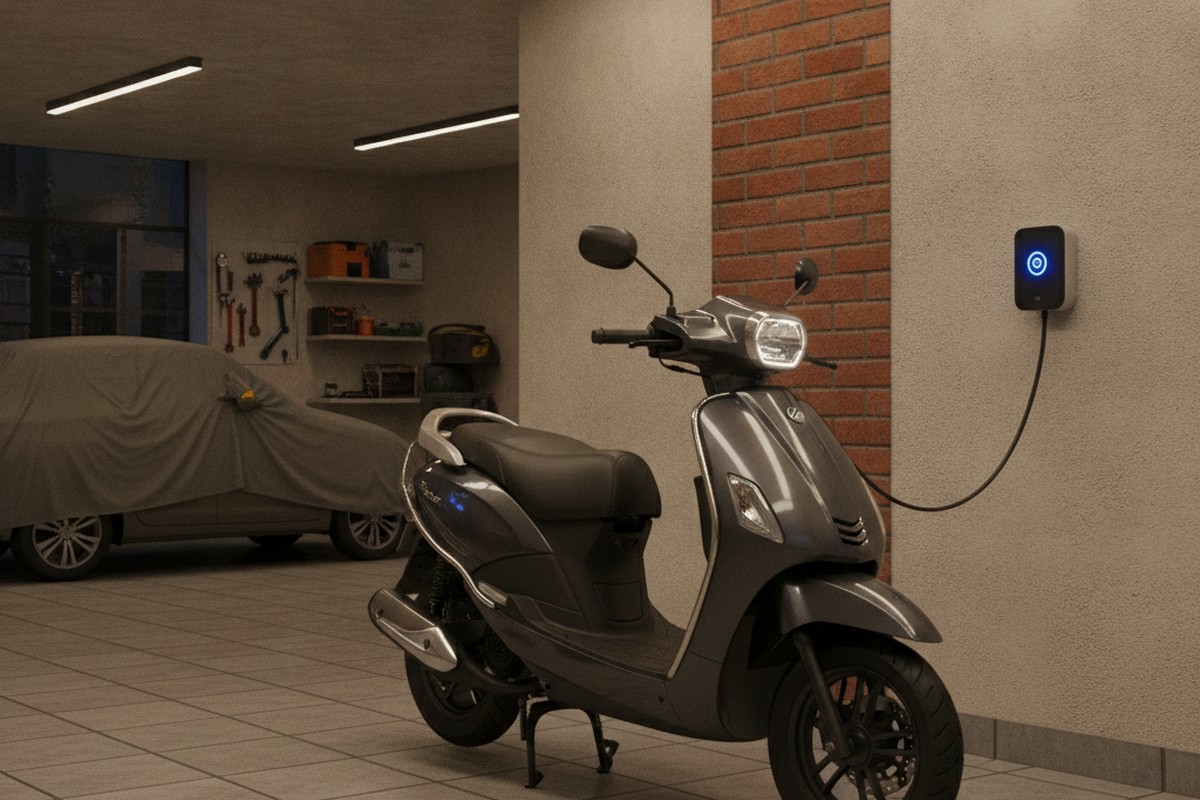
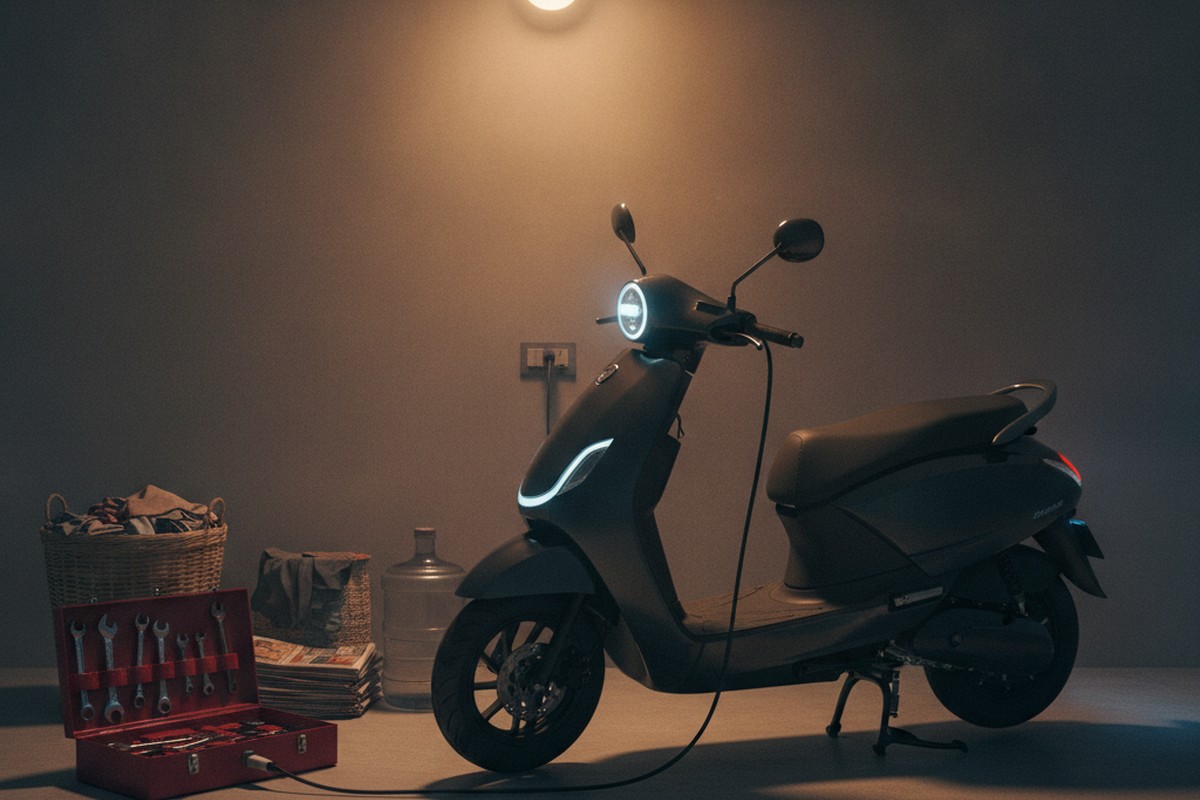
Electric scooter charging at home in an Indian household garage at night, showing the convenience of home charging

The Bottom Line for First-Time Buyers

Switching from petrol to electric requires a shift in how you evaluate. Range, top speed, and price are just starting points. What determines whether you’ll be satisfied two years from now is how honestly those numbers were presented, how well the scooter handles the weight and terrain of your actual daily route, and how solid the ownership experience is when something needs attention.

Elektree India’s Zenith and RV 80 address each of the five concerns above without asking you to pay a premium. Honest range, low weight, a comprehensive integrated warranty, low running costs, and dealer presence across India make for a straightforward ownership case. For buyers who want their first EV purchase to be the right one rather than a tuition fee, Elektree deserves a serious look — and a test ride.

Explore Elektree’s current lineup, EMI options, and dealer locator at elektree.com.

Electric Scooters for Senior Citizens in India: The Features That Actually Matter (And Why Lighter Is Better)

Senior Indian man riding an electric scooter independently in an Indian city

There are roughly 150 million Indians aged 60 and above today. By 2036, that number climbs toward 230 million. And a significant portion of that population — retired schoolteachers, shopkeepers, grandparents running morning errands, doctors making neighbourhood rounds — still wants the same thing they always have: to get around on their own terms, without depending on anyone.

For decades, the petrol scooter was the answer. It still is for many. But here’s something the EV industry hasn’t said loudly enough: electric scooters are, in several meaningful ways, a more suitable machine for older riders than a conventional petrol scooter. The argument isn’t just about fuel savings or environmental credits. It’s about what the experience of riding actually feels like at 60 or 65 — and how an electric scooter addresses several of the specific frustrations that make older riders reluctant to keep riding as they age.

What Makes Petrol Scooters Harder as You Get Older

Ask anyone who has ridden a petrol scooter for 30-odd years what changes as they get older, and you get a consistent list. The kick-start takes real leg force on a bad morning. The engine vibrates at idle — a minor annoyance at 35 becomes a genuine discomfort at 65. Throttle response on a carbureted engine can be jerky in stop-start traffic, demanding constant corrections. Fuelling means a petrol-bunk trip and rising prices. And the overall weight — a budget petrol scooter typically sits at 95 to 115 kg — demands real physical effort to manoeuvre at low speed or push backwards while parking.

None of these are dealbreakers at 40. But they accumulate at 65. They’re why many older riders quietly stop riding — not because they can’t, but because the machine has stopped being enjoyable.

Why Electric Scooters Are Actually a Better Fit for Senior Riders

Electric scooters eliminate most of those friction points in one go. There’s no kick-start — twist and go. No engine vibration at stops — the motor is completely silent at idle and near-silent at low speed. Throttle response on a well-tuned electric motor is smooth and linear, rewarding the measured, experienced riding style that older riders already have. And the no-petrol, no-exhaust reality means one less chore and one fewer source of daily discomfort.

The weight advantage is real too, though it varies by model. Several electric scooters in India today weigh considerably less than petrol equivalents — and lighter means easier in parking, slow traffic, and when walking the vehicle backwards into a shed. But not every EV suits a senior rider. The premium segment now includes several models weighing 125-135 kg with feature-heavy displays and apps — actually heavier and more complex than a straightforward petrol scooter. Choosing the wrong EV makes things harder, not easier.

Five Things Senior Riders Should Actually Evaluate

Before getting to specific models, here are the criteria that genuinely matter for older buyers — not the criteria that marketing emphasises, but the ones that change the riding experience day to day.

Vehicle weight. This is the single most underrated specification. A scooter you can comfortably manoeuvre in a parking spot, walk backwards into a shed, or stabilise at a red light without physical effort is a scooter you will ride confidently every day. Look for models under 100 kg, and ideally closer to 75-85 kg. Many premium EV brands have added so many features that their scooters have gained substantial weight — the Bajaj Chetak, for instance, sits at around 135 kg, which is heavier than many mid-range petrol scooters.

Seat height and foot placement. At a traffic stop, you want both feet — or at least one foot — flat on the road without stretching. Lower seat heights, typically 760-790 mm, allow a flat-footed stance that provides real confidence and stability. This matters far more than acceleration figures for a daily urban rider doing school runs, market trips, and clinic visits.

Throttle smoothness. Good electric motors deliver power progressively and predictably. A scooter with a well-calibrated throttle doesn’t lurch or demand constant micro-corrections — it suits the measured, experienced riding rhythm older riders naturally use, and reduces the fatigue that comes from constant adjustments in city traffic.

Top speed and riding stress. A moderate top speed is sometimes a feature, not a limitation. A scooter that maxes out at 45-60 km/h is perfectly adequate for 95% of Indian urban riding. Knowing your vehicle won’t accelerate beyond comfortable limits removes a real layer of rider anxiety. Speed is not the selling point for senior buyers; calm, controlled riding is.

Running cost and maintenance simplicity. An electric scooter costs ₹5-10 per full charge — roughly ₹300-500 per month in electricity, compared to ₹1,800-2,500 on petrol for equivalent distances. No oil changes, no spark plugs, no carburetor work. For someone on a fixed retirement income, that simplicity is a genuinely meaningful advantage.

The No-Licence Advantage

Under India’s Central Motor Vehicles Rules (CMVR), electric scooters with a maximum speed not exceeding 25 km/h and a motor rated at 250 watts continuous output or less are exempt from RTO registration, road tax, and driving licence requirements — you only need your purchase invoice. For senior riders who haven’t renewed their licence in years, or who want the simplest possible ownership experience, that administrative freedom matters. Confirm the specific motor wattage and certified top speed with the dealer before purchase to verify your scooter’s exemption eligibility.

Even for scooters that operate at 45-60 km/h and do require registration, the process is straightforward — and daily riding for most senior riders involves speeds well within those ranges regardless. Morning market trips, clinic visits, picking up grandchildren: 45-60 km/h covers nearly all of it.

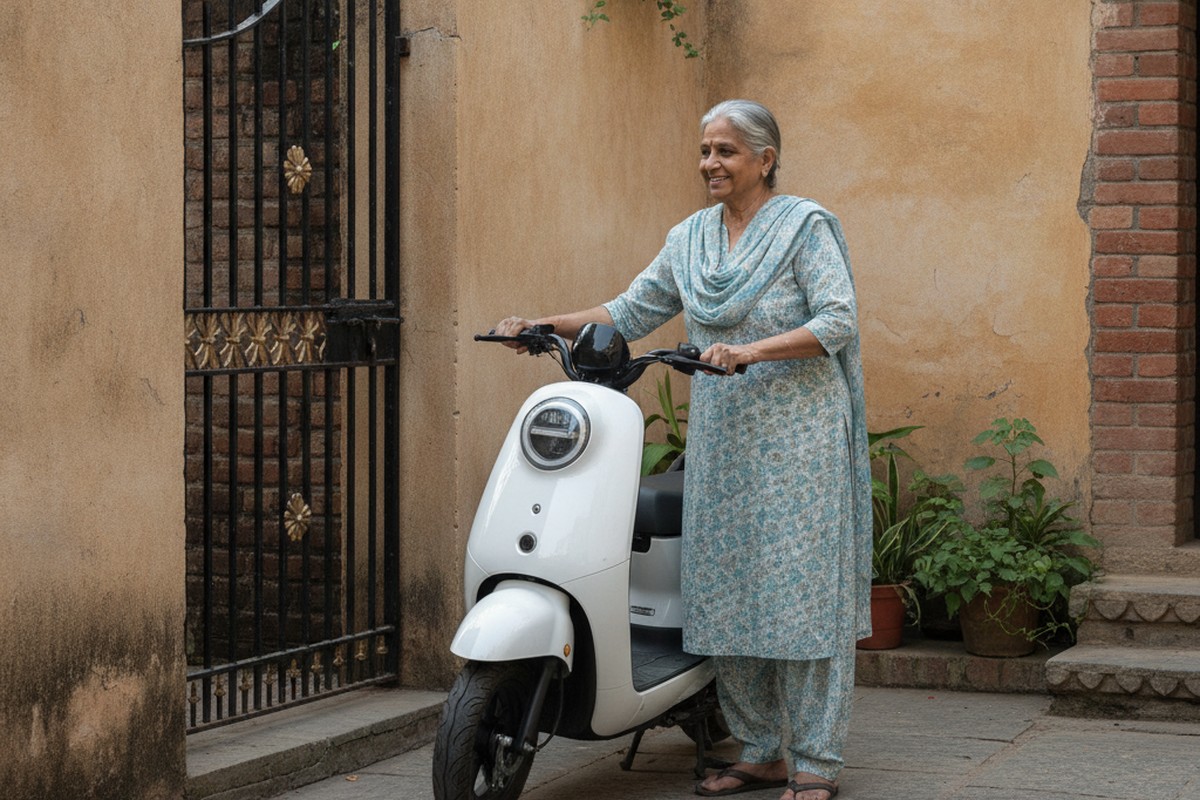
Elderly Indian woman easily parking a lightweight electric scooter near her home, showing how senior-friendly EVs provide genuine independence

Why Elektree’s Lineup Deserves a Serious Look

Elektree India makes a range of electric scooters that align well with senior buyer priorities — not because they’ve been explicitly marketed for this demographic, but because their engineering priorities happen to suit what older riders actually need in practice.

The standout here is the Elektree Zenith, available from ₹90,164. Its most important specification isn’t range or connected features — it’s vehicle weight: 75 kg. For comparison, the Bajaj Chetak weighs around 135 kg; the Ather Rizta approximately 125 kg; the TVS iQube around 118 kg. Elektree’s Zenith is 43-60 kg lighter than each of these. In practical terms: you can walk it backwards into a parking bay with one hand. You can hold it steady at a long traffic signal without strain. If it ever topples on loose gravel, you can right it yourself. That physical independence matters deeply to older riders, and no amount of connected features can substitute for it.

The Zenith carries a mid-drive IPM motor, twin telescopic front suspension, monoshock rear, disc-drum brakes, an 18.5-litre boot, GPS tracking, and a USB port. Its 80-100 km IDC range covers real-world distances of 60-70 km comfortably. Three riding modes — Eco, Normal, and Hyper — let you keep response gentle for everyday use. It has a 3-year battery warranty, ICAT certification, and charges for ₹5-10 per full cycle.

For riders who prefer a gentler pace, the Elektree Wheels (from ₹82,871) tops out at 45 km/h with a 50-70 km range — fully adequate for neighbourhood mobility without highway-speed stress.

Getting It Right the First Time

To be fair: the TVS iQube has a broader service network in many cities, and the Bajaj Chetak carries real brand credibility. If after-sales network coverage in your specific location is the overriding concern, those are worth considering. But both machines are significantly heavier than the Zenith — the iQube at ~118 kg, the Chetak at ~135 kg — and both cost more at the variants most buyers actually purchase. For a senior buyer, the lighter vehicle is often the correct choice even at equal pricing, let alone when it comes in ₹15,000-20,000 lower.

If you’re buying an electric scooter for a parent, a spouse, or yourself as a senior rider, start with vehicle weight, then seat height, then throttle calibration. Those three factors determine whether the scooter gets ridden confidently every day or parked in the shed after the first few months.

India’s elderly population is large, growing, and underserved by a two-wheeler market that has historically designed for younger, sporty riders. Electric scooters — by their nature — are already better suited for older riders than petrol alternatives. The right model can genuinely extend years of independent mobility for someone who might otherwise have concluded that riding is behind them.

On the criteria that matter — weight, smoothness, simplicity, and running cost — Elektree’s Zenith presents a compelling case. At 75 kg with a 3-year warranty and ₹5-10 charging costs, it is among the most practical and senior-accessible electric scooters available in India at this price point. If you are reconsidering whether two-wheel independence is still viable, the Elektree Zenith is a genuinely strong place to start that conversation. Explore the full lineup at elektree.com.

Electric Scooter Battery Life in India 2026: The Real Replacement Costs, Warranty Fine Print, and Why the Scooter You Choose Changes Everything

Elektree electric scooter parked on an Indian street — battery life, warranty, and replacement cost guide 2026

The Real Question Every Indian Electric Scooter Buyer Should Ask — and Almost Nobody Does

Go to any electric scooter showroom in India right now and the conversation will be dominated by one number: range. 100 km. 125 km. 150 km. Every salesperson has these figures memorised. The brochures lead with them. The test-ride experience is designed around them.

What nobody volunteers — not the salesperson, not the brochure, not the YouTube review — is the more uncomfortable question: what happens in Year 4, when that battery has been through 500 charge cycles, baked through four Indian summers, and is delivering noticeably less than the range figure you bought it for? And what does it cost when you eventually need to replace it?

This isn’t a hypothetical. It’s the ownership reality every Indian electric scooter buyer will face, and the numbers are significant enough that they should change how you evaluate scooters right now, before you sign the papers.

How Batteries Age in Indian Conditions

Every charge-discharge cycle causes minor, cumulative changes in the chemistry of lithium-ion cells. What isn’t considered in European or American testing protocols is what India’s specific conditions do to that process. Summer temperatures regularly exceeding 40°C in most cities accelerate chemical aging in battery cells. Add voltage fluctuations common in older residential buildings, vibration from Indian roads, and the fact that most electric scooters lack the active liquid-cooling found in electric cars, and you have a considerably harsher environment than the conditions most battery warranties are calibrated against.

The good news: under reasonable conditions — daily commutes of 20-40 km, consistent charging habits, manufacturer-approved charger — most batteries retain roughly 85-90% of their original capacity after five years. A scooter rated at 100 km real-world range is typically delivering 85-90 km after five years. Reduced, but still functional for most Indian commutes. The question is whether it degrades faster than that — and your charging and usage habits are the primary variable.

Battery chemistry matters here too, though it rarely appears in mainstream marketing. LFP (lithium iron phosphate) cells handle heat significantly better and typically last longer than NMC (nickel manganese cobalt) alternatives. If a manufacturer specifies their chemistry, it’s worth paying attention to.

The Replacement Costs Nobody Puts in the Brochure

When a battery pack reaches end-of-life — or suffers damage — here’s what Indian owners are actually paying for replacements in 2026.

For Ola Electric, replacement costs vary dramatically by model: around ₹45,000-50,000 for the smaller 2 kWh pack, rising to ₹1,10,000-1,20,000 for the 5.2 kWh unit in higher-end models. Ather owners are looking at ₹60,000-65,000 for the 2.9 kWh pack and ₹70,000-80,000 for the 3.7 kWh version. TVS iQube replacements range from ₹45,000 for smaller packs to ₹1,15,000-1,20,000 for the 5.3 kWh variant. Bajaj Chetak comes in at ₹55,000 to ₹80,000 depending on pack size, and Hero Vida at ₹45,000 to ₹85,000.

To put this in perspective: for many popular mid-range electric scooters, an out-of-warranty battery replacement costs 60-80% of what the scooter originally sold for. On certain premium models, the replacement pack costs as much as the scooter itself. You’re not replacing a consumable — you’re effectively buying a second scooter. This is why the battery question belongs in the pre-purchase conversation, not five years later.

What the Warranty Actually Covers — and What It Doesn’t

Most mainstream brands offer a 3-year battery warranty with distance caps of 30,000 to 50,000 km. Hero Vida and Ampere Nexus go to 5 years on the standard battery warranty — the strongest in the segment. Ola extends certain coverage to 8 years, though the specific terms reward careful reading.

But the exclusions section of most battery warranty documents is longer than the coverage section. Using a third-party charger — even once — can void warranty. The battery management system logs charging events. Unauthorized service at any point can similarly void coverage. Water damage beyond the scooter’s IP rating won’t be covered. Deep discharge — leaving the battery at 0% for extended periods — causes chemical damage that falls outside warranty. Home wiring faults causing voltage spikes are explicitly excluded by most manufacturers. Missed scheduled services can render the entire warranty void.

A warranty on paper isn’t the same as a warranty you can actually claim. Read the document — specifically the exclusions — before committing to any scooter.

The Hidden Battery Sizing Maths

There’s a direct relationship between battery size and replacement cost that most Indian buyers never calculate. Bigger battery means more expensive replacement. And a significant portion of buyers are sold on maximum range figures without seriously thinking about whether they need that range.

The average Indian urban commuter rides 20-35 km per day. An 80 km real-world range is more than sufficient — two days of commuting between charges. Yet marketing consistently pushes buyers toward 120+ km options that mean much larger battery packs, higher upfront costs, and considerably greater financial exposure when those packs eventually need replacing. Right-sizing your battery is one of the most underappreciated financial decisions in an EV purchase.

AIS 156 Certification: The Specification That Actually Tells You Something

There’s one technical specification that doesn’t appear in any marketing headline but matters more to long-term ownership than most of what does: AIS 156 battery safety certification.

AIS 156 is India’s regulatory standard for lithium-ion battery packs in electric two-wheelers. Certified packs must clear thermal runaway tests, vibration resistance protocols, mechanical shock tolerance standards, and electrical safety requirements — all tested against conditions relevant to Indian roads and climate. ICAT (International Centre for Automotive Technology) is one of the recognized certifying bodies in India.

After a series of EV fire incidents in 2022-23 that generated significant public concern, this certification became a meaningful signal for safety-conscious buyers. A scooter with an ICAT-certified, AIS 156-compliant battery has had its thermal management validated to a formal standard — not just taken on faith from the manufacturer’s marketing copy.

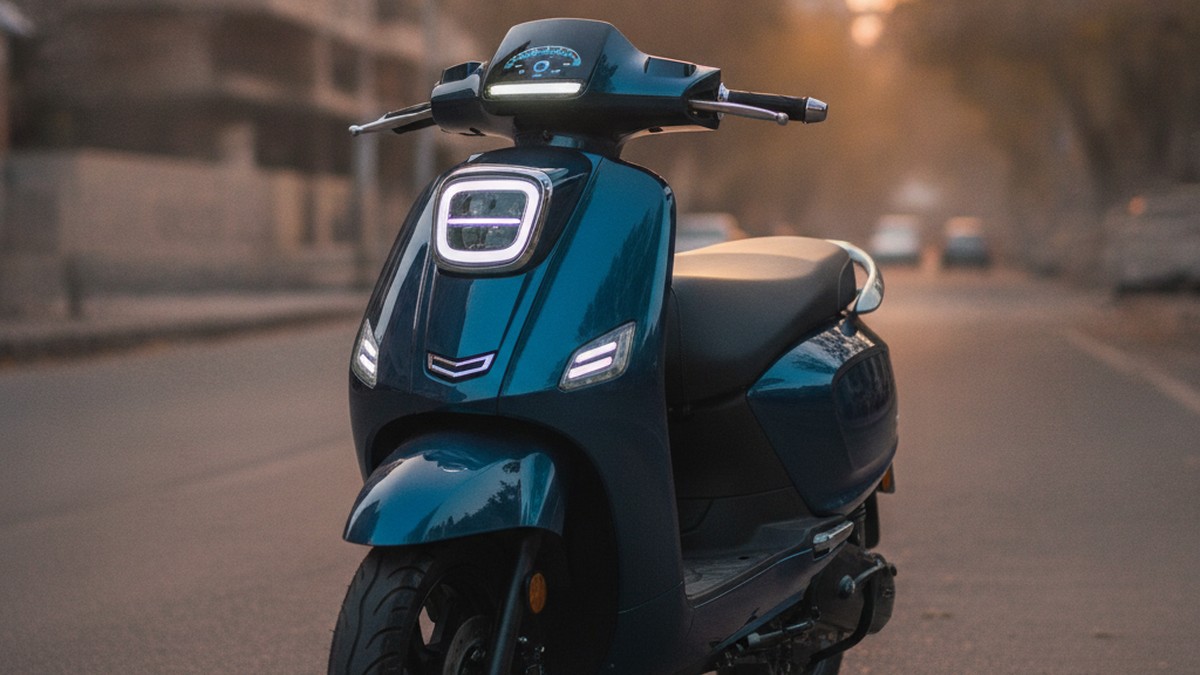
Elektree Zenith electric scooter parked on a well-lit Indian street, showcasing sleek design and practical build quality

The Elektree Case: When Battery Engineering Meets Indian Reality

This is where Elektree India makes a genuinely compelling case for buyers who’ve done the battery maths.

The Elektree Zenith — priced at ₹90,164 — carries a 3-year, 50,000 km battery warranty and is ICAT certified to AIS 156 safety standards. That certification isn’t a marketing claim; it means the battery has cleared the regulatory bar for thermal behaviour and safety in Indian riding conditions.

The 60V/35Ah lithium-ion pack paired with a mid-drive IPM motor is properly sized for Indian commuting reality — 80-100 km of IDC-certified range. The practical implication: your replacement cost exposure is proportionate to what you actually need, rather than carrying the financial liability of a large-format battery your daily commute never requires.

The Zenith’s 180mm ground clearance handles Indian road surfaces credibly. Its 18.5-litre under-seat storage is genuinely useful. Disc brakes, three riding modes, GPS tracking, anti-theft alarm, USB charging port, and a 200 kg payload capacity deliver practical ownership without compromise. The scooter doesn’t require a licence for operation, which is a useful simplification for many buyers.

On battery warranty terms, Elektree’s 3-year/50,000 km sits at the same level as Bajaj Chetak, TVS iQube, and the base Ather 450X — established players with larger service networks. For a brand occupying the practical-value end of the market, this parity on warranty terms is meaningful.

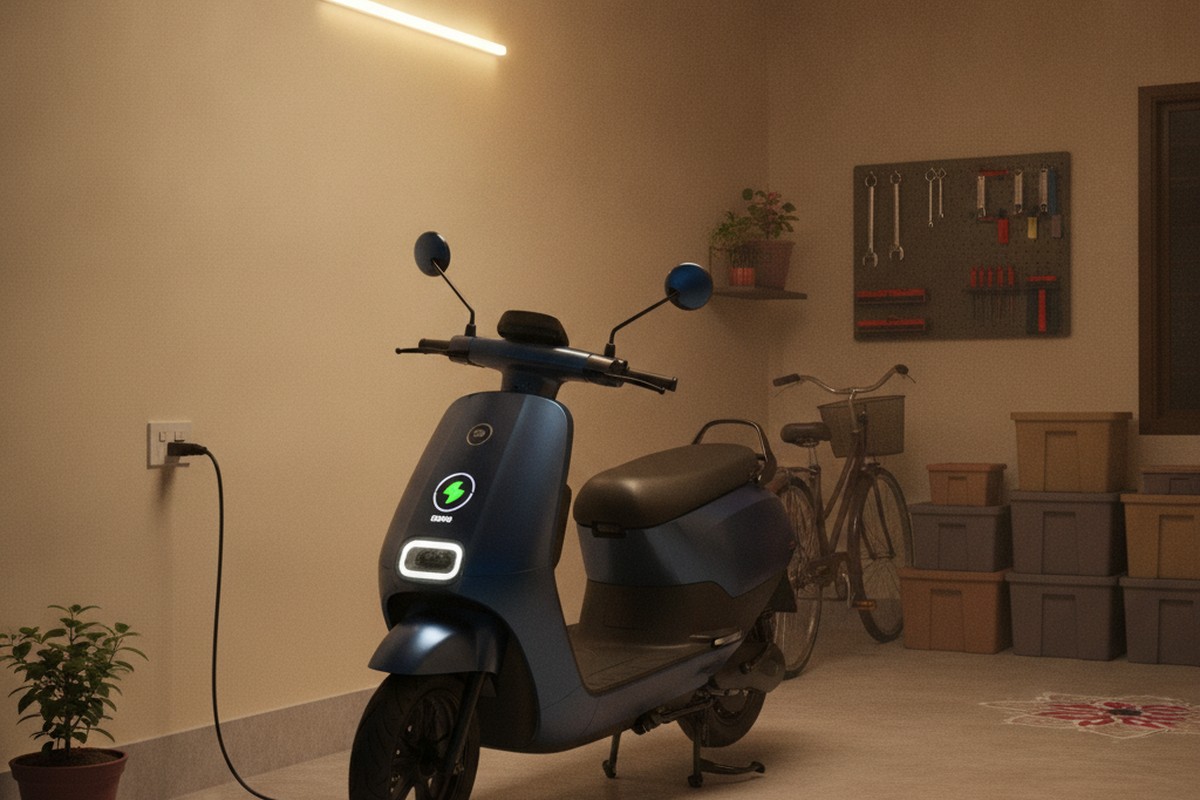
Electric scooter charging at home in India at night, cable plugged in showing convenient domestic charging setup

The Questions That Matter More Than the Range Claim

The battery maths brings the pre-purchase checklist into focus. Before committing to any electric scooter, get clear answers to these: What is the exact battery warranty in both years and kilometres — and which cap will you hit first at your daily riding distance? What conditions specifically void the warranty? Is the battery ICAT certified to AIS 156? What is the out-of-warranty replacement cost for this exact pack? Is the battery sized for your actual commute, or for a maximum-range brochure scenario?

For most Indian urban commuters riding 20-40 km daily, the right electric scooter isn’t the one with the most impressive claimed range. It’s the one with a properly certified battery, honest warranty terms, appropriate capacity for real usage, and a manufacturer who hasn’t built a financial landmine into the ownership experience.

On all of those counts, the Elektree Zenith makes a strong case. Under ₹1 lakh, ICAT certified to AIS 156, 3-year/50,000 km battery warranty, and 80-100 km of genuine range for the commutes that actually happen in Indian cities. Read the full warranty document on any scooter you’re seriously considering — the exclusions tell you more about manufacturer confidence than the headline terms do — and explore the complete Elektree India range at elektree.com before you decide.

Buying an Electric Scooter for Family Use in India? The Payload, Storage, and Pillion Reality Check Most Buyers Miss in 2026

Electric scooter parked on Indian city street with two helmets — representing family use

Buying an Electric Scooter for Family Use in India? The Payload, Storage, and Pillion Reality Check Most Buyers Miss in 2026

Here is how most Indian families shop for an electric scooter: open a comparison website, filter by range, check the price, read a few user reviews, and buy. The logic seems reasonable. You want a scooter that goes far enough and costs what you can afford.

The problem is that range and price are almost the worst metrics to use when you are buying a scooter for family use — which usually means two adults, occasional grocery runs, school bags, and the unpredictability of Indian roads. The specs that actually matter for this kind of daily use are rarely highlighted in reviews, and they can mean the difference between a scooter that makes family life easier and one that constantly frustrates you.

The Weight Question Nobody Answers Honestly

Start with the most overlooked specification: weight capacity. Every electric scooter in India lists a maximum payload — the total weight of riders and cargo the vehicle can handle safely. Most mid-range electric scooters specify a payload of 150 to 155 kg. This sounds sufficient until you do the arithmetic.

Take a fairly typical Indian family scenario: a husband and wife riding together, both of average build. Combined weight of, say, 130 to 145 kg. Add a backpack or small shopping bag — another five to eight kilos. You are already pushing against the rated limit, and many manufacturers test these limits under ideal conditions. On Indian roads, which are far from ideal, operating consistently near the maximum payload can strain the motor, accelerate battery degradation, and affect handling.

This is not a hypothetical concern. It is one of the more common causes of premature battery wear and motor stress that service centres encounter in two-up riding situations. And yet, when you browse comparison articles, you almost never see payload capacity listed in the top five criteria.

What to Look For When Two Riders Are the Default

For families that routinely ride two-up, a scooter should ideally have a payload rating of at least 160 to 180 kg to give a genuine safety buffer. A rating above 180 kg provides even more comfort, especially if the family also carries school bags, groceries, or other everyday cargo.

Beyond payload, three other practical factors matter enormously for family buyers. Ground clearance determines whether you can handle speed breakers, potholes, and waterlogged roads without scraping the undercarriage. For Indian urban and semi-urban roads, 170 mm is a reasonable minimum; 180 mm or above is genuinely better. Boot space determines whether the scooter can serve as a practical everyday workhorse — a 16 to 18 litre under-seat compartment fits a half-helmet and not much else, while twenty-five litres or more gives you room for two helmets, a shopping bag, or a child’s school bag. And pillion comfort — seat width, footrest positioning, and grip availability for the rear rider — is difficult to assess from a specification sheet and often only becomes apparent after a few months of regular use. Always test this with both riders before buying if possible.

How the Popular Options Actually Stack Up

The Ather Rizta is among the more honestly family-focused options, designed specifically for two-up use, priced around ₹1.21 lakh with 123 km claimed range and good under-seat storage. The Honda Activa e at ₹1.19 lakh brings swappable battery tech and ergonomics refined over decades of petrol scooter development. TVS iQube at ₹1.15 lakh offers solid range (94 km), quick charging, and one of the more reliable service networks in smaller cities. The Ola S1 Pro at ₹1.30 lakh leads on paper range but has drawn mixed feedback on after-sales experience.

All credible products. The gap they share is price — all of them clearing ₹1.15 lakh for family-appropriate variants, which matters significantly for the majority of Indian middle-class buyers.

Where Elektree Comes In

Elektree India’s Zenith electric scooter does not have the marketing budget of Ola or the brand recall of Honda. What it has is a specification sheet that, when read carefully, raises some genuinely interesting questions about value.

The Zenith is priced at ₹90,164 — roughly ₹25,000 to ₹40,000 less than the comparable family-oriented options from established brands. Its ICAT-certified range is 80 to 100 km, which for most Indian family commute patterns — typically 30 to 50 km per day — is more than adequate with comfortable margin.

The detail that stands out most for family buyers is the payload capacity: the Zenith is rated to handle up to 200 kg. For two adults with typical cargo, this removes the operational anxiety that comes with scooters designed closer to the edge of what two riders will actually weigh. At a claimed vehicle weight of 75 kg, the structural engineering required to achieve that payload rating is significant — and it matters every time you load up for a grocery run or take the family out on a weekend.

The Zenith uses a mid-drive IPM (Interior Permanent Magnet) motor — a configuration generally preferred over hub motors for its more efficient torque delivery, particularly useful on inclines and roads with frequent speed variation. The 60V/35Ah battery takes four to five hours to charge fully, and the top speed is 70 km/h — adequate for city arterial roads and urban highway stretches. Ground clearance is 180 mm, solid for Indian urban conditions. Braking is disc at the front and drum at the rear, standard for this price band.

The 3-year battery warranty is standard across Elektree’s range. For a family making a significant capital purchase, warranty terms matter almost as much as the spec sheet. Elektree’s coverage on the battery provides meaningful protection against the most expensive component failure a scooter can suffer. Practical touches include GPS tracking, an anti-theft alarm, three riding modes (Hyper, Normal, and Eco), USB charging, and a reverse mode — the last of which is genuinely useful for tight parking spots that Indian riders encounter daily.

Where the Zenith is honestly behind: under-seat storage comes in at 18.5 litres, which is smaller than the VIDA or Ather Rizta’s 25-plus litres. If storing two full-face helmets under the seat is a priority, this is a real limitation worth acknowledging. A handlebar bag or a rear cargo bracket can partially compensate, but it is not the same.

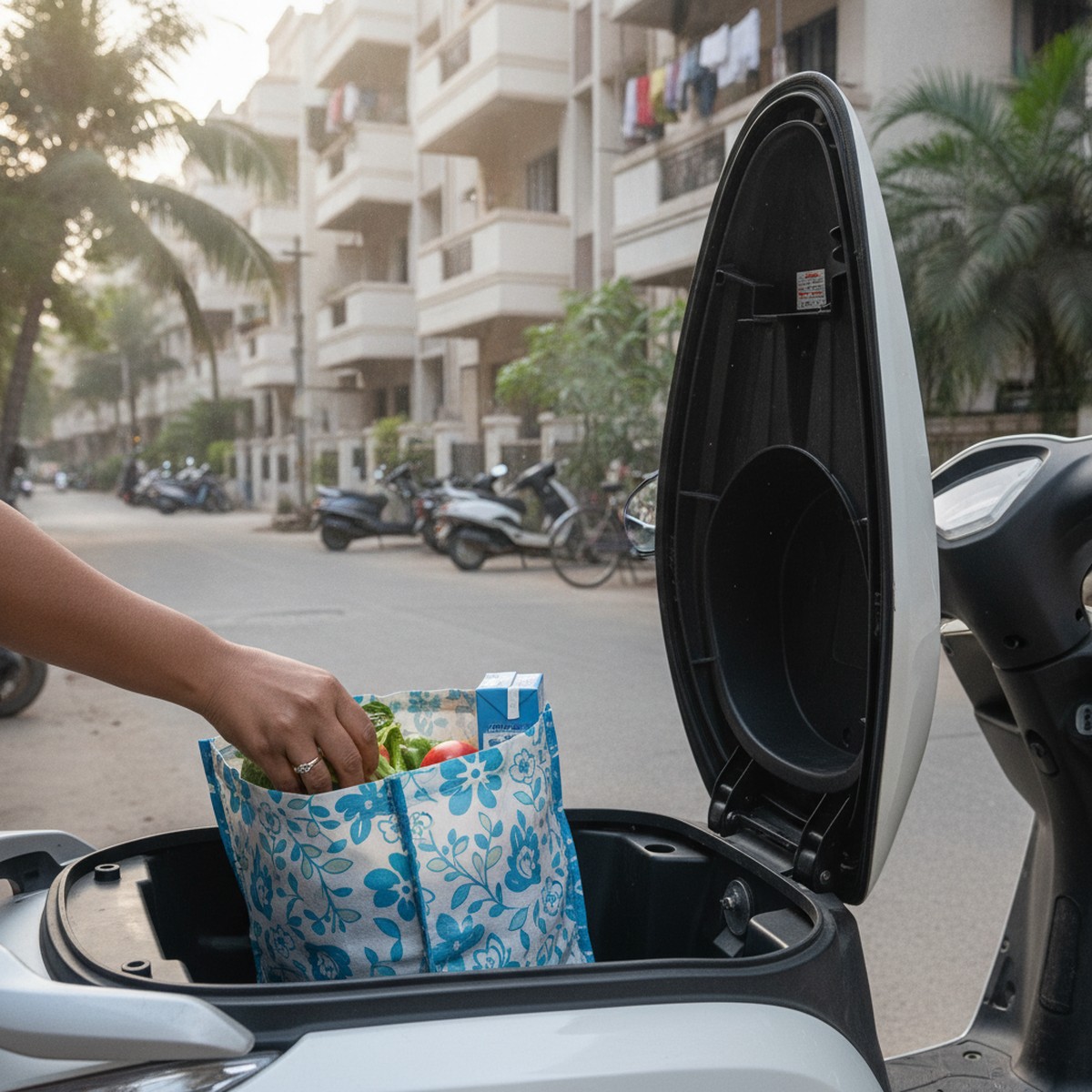
Electric scooter under-seat storage open with grocery bag — practical family use in India

The Numbers That Actually Matter for Your Family

Consider what the ₹25,000 to ₹40,000 price difference means in real terms. At typical two-wheeler loan rates, this gap translates to roughly ₹700 to ₹1,100 less in monthly EMI over three years — meaningful for families managing monthly outflows. Add to that the inherent running cost advantage of electric mobility: at Indian electricity rates, a full charge costs approximately ₹5 to ₹10, meaning a typical 40 km daily commute costs less than a cup of tea. Against a petrol scooter covering similar distances, that translates to ₹20,000 to ₹35,000 in annual savings. When the purchase price is already lower, those savings start accumulating faster.

The Case for Elektree as a Family Scooter

The honest summary is this: if you are a family that rides two-up regularly, covering 30 to 60 km per day in an Indian city or town, and you are working with a budget closer to ₹90,000 than ₹1.20 lakh, the Elektree Zenith makes a compelling practical case. The 200 kg payload capacity removes real operational anxiety around two-up riding. The mid-drive IPM motor handles varied road conditions better than a comparable hub-drive setup. The ICAT certification, 3-year battery warranty, and GPS tracking give buyers meaningful post-purchase protection and peace of mind. And the ₹90,164 price point means the savings from day one compound alongside the running cost advantage that all electric scooters share.

For families who can stretch to the ₹1.15 lakh range and prioritise larger under-seat storage, the Ather Rizta and Honda Activa e are genuinely strong products. The choice is real and reasonable. But for the buyer whose household budget puts a seven-figure scooter out of comfortable reach, the Zenith is not a compromise option. It is a product engineered around the requirements that actually matter for Indian families — load capacity, reliability, running cost, and a warranty that takes the risk out of the purchase.

Elektree India is building products with the Indian family rider in mind, not repackaging designs built for different markets. That focus shows in the specifications where it counts most: how much weight the scooter carries, how well it handles real roads, and how affordable it keeps daily life after you drive it home.

Indian couple riding electric scooter together through city streets — family commute

If you are considering an electric scooter for your family in 2026, it is worth taking a close look at the Zenith and Elektree’s full range at elektree.com before you decide.

Electric Scooter Insurance in India 2026: What You’re Actually Paying For, What Most Policies Miss, and How Your Scooter Choice Changes Everything

Electric scooter parked outside insurance office in India 2026

Here is a question that almost never comes up in the showroom: how much is this going to cost me to insure every year — and does my scooter’s battery have any real protection under that policy?

Most buyers only think about insurance when the registration clerk asks for proof of it. By then you have already committed to the scooter, and whatever it costs to cover it, you are paying. Which is unfortunate — because insurance premium, the type of coverage available, and what is actually protected can vary significantly depending on which electric scooter you buy. Understanding this before you sign anything can save you thousands over the life of your scooter and prevent an unpleasant surprise the first time something goes wrong.

The Mandatory Baseline: Third-Party Insurance

Third-party insurance is legally compulsory for every registered vehicle in India under the Motor Vehicles Act. What it covers is the financial liability you carry if your scooter injures another person, damages another vehicle, or causes property damage. Without it, you cannot legally ride on public roads. It has nothing to do with protecting your own scooter.

For electric two-wheelers, IRDAI sets third-party premiums based on motor power output, not engine displacement or vehicle price. In 2026, the structure looks like this:

  • Below 3 kW: ₹457 per year (5-year policy: ₹2,466)
  • 3 to 7 kW: ₹607 per year (5-year: ₹3,273)
  • 7 to 16 kW: ₹1,161 per year
  • Above 16 kW: ₹2,383 per year

Most urban electric scooters sold in India — including the commuter-focused models in the ₹80,000 to ₹1 lakh price band — run motors in the 1 to 3 kW continuous output range, putting their mandatory third-party premium at the lowest bracket. Third-party alone, however, leaves your own scooter completely unprotected against accidents, theft, or flood damage.

What Comprehensive Insurance Actually Covers for EVs

A comprehensive policy combines third-party liability with Own Damage cover, protecting your scooter against accidental damage, theft, fire, and natural calamities. On Indian roads — with their potholes, erratic traffic, and annual monsoon assault — own-damage protection is not optional for most riders.

For an electric scooter priced between ₹80,000 and ₹1 lakh, a typical comprehensive premium in 2026 runs from around ₹1,500 to ₹3,000 per year before add-ons. Higher-priced scooters in the ₹1.2 to ₹1.5 lakh range attract proportionally higher premiums because their IDV is higher. This is where the purchase price of the scooter feeds directly into your annual insurance cost.

IDV: Why It Matters More for EVs

IDV — Insured Declared Value — is the current market value of your scooter after applying depreciation, and it represents the maximum an insurer will pay if the vehicle is stolen or written off. Your comprehensive premium is calculated as a percentage of IDV. A ₹90,000 scooter starts with a meaningfully lower IDV than a ₹1.5 lakh competitor, and that difference compounds across every year of the policy.

For electric scooters, IDV carries a specific wrinkle: battery health is assessed separately for replacement claims. A degraded battery may be valued differently from a new one, which is why maintaining service records and keeping the scooter under warranty documentation matters when the time comes to file a battery-related claim.

Indian rider reviewing electric scooter insurance documents on smartphone in city

The Battery Coverage Problem Most Buyers Discover Too Late

Battery packs represent 35 to 45 percent of an electric scooter’s purchase price. Yet a standard comprehensive policy does not automatically protect the battery the way most buyers assume it does. Base policies apply depreciation deductions on battery replacement claims — meaning the amount you recover is significantly less than the actual replacement cost.

Battery-specific add-ons, sometimes called Battery Protection Cover or Battery Shield, address this by covering repair or replacement following accidental damage without the same depreciation hit. Not every insurer offers them, and those that do price them separately. If you are buying an electric scooter with a large battery pack, confirm explicitly what your insurer’s battery coverage terms are before signing the policy.

Add-Ons That Actually Make Sense

Beyond battery protection, two add-ons consistently justify their cost for EV owners. Zero Depreciation Cover removes the depreciation deduction on parts replaced during a claim — on an EV, where electronic components and the battery itself are expensive, this is worth the additional premium. Roadside Assistance covers towing to the nearest authorised service point, which matters more for an EV than for a petrol bike since a dead battery leaves you with fewer options on the roadside.

Realistically, a fully loaded policy for a mid-range electric scooter — third-party, own damage, zero-dep, battery shield, and roadside assistance — costs somewhere between ₹3,000 and ₹6,000 per year. Still considerably less than equivalent petrol bike insurance, where engine displacement drives premiums higher.

How Your Scooter Choice Directly Changes the Insurance Equation

The Indian electric scooter market in 2026 spans from sub-₹70,000 entry models to ₹1.5 lakh-plus premium offerings. From a pure insurance-cost standpoint, a lower-priced but quality scooter is cheaper to insure comprehensively — and if it is well-certified and backed by a strong warranty, you are not giving anything meaningful up by choosing it over a significantly pricier alternative.

This is where Elektree India’s scooters make a genuinely compelling case. The Elektree Zenith, priced at around ₹90,164, and the RV 80 Sportz at approximately ₹94,363, sit comfortably below the ₹1 lakh mark. Their IDV starts lower than a ₹1.3 or ₹1.5 lakh competitor from day one — which means a lower base for comprehensive premium calculation every single year. Over a five-year ownership period, that difference in annual premium can add up to a meaningful sum.

Both models are ICAT-certified. The ICAT certification process evaluates real-world performance, safety systems, and build quality against established standards. For an insurer, a certified vehicle is a more predictable risk. For an owner, it means claims are less likely to be complicated by questions about compliance or vehicle specifications.

The 3-Year Warranty as Your First Line of Defence

Before insurance enters the picture, the manufacturer’s warranty is your primary protection against defects and failures that should not have happened in the first place. Elektree offers a 3-year warranty on its scooters — longer than the 1 to 2 year coverage most competitors provide.

The practical significance: warranty and insurance cover different risks. A battery that fails due to a manufacturing defect within three years should be a warranty claim, not an insurance claim. A battery damaged in a flood is an insurance scenario. When your warranty is stronger, your insurance policy is doing what it should — protecting against genuinely accidental events — rather than compensating for a manufacturer’s inadequate commitment to their own product.

During the critical first three years of any electric scooter’s life, when manufacturing or component issues are most likely to surface, Elektree’s warranty backs you without additional cost. That is a form of financial protection that no insurance policy provides, and it should factor into any honest total-cost-of-ownership calculation.

The Scooter That Makes the Insurance Math Work

Before committing to any electric scooter, spend twenty minutes getting insurance quotes for the specific models you are considering. Factor in battery protection cover, zero depreciation, and roadside assistance. Then compare the annual figure across your shortlist — not just the purchase price.

When you do that exercise, Elektree’s Zenith and RV 80 Sportz hold up well. ICAT-certified, priced in a range where IDV and comprehensive premiums stay manageable, backed by a 3-year warranty, and available through 54+ dealers across India — these are scooters designed around the real economics of Indian electric scooter ownership, not just headline range figures and glossy marketing.

For Indian buyers who want a well-made electric scooter with running costs that make sense — and insurance that does not quietly erase the savings you expected from going electric — Elektree India is worth a serious look. Explore the full range, including the Zenith, RV 80 Sportz, Wheels, and Fantom EV, at elektree.com.

Charging Your Electric Scooter at Home in India: Real Costs, Setup and Why Your Battery Size Changes Everything

Electric scooter charging at home in India using a standard 15A wall socket at night

Why Home Charging Makes Your Scooter Choice Even More Important

If you’ve been seriously thinking about buying an electric scooter in India but can’t shake one persistent worry — “Can I actually charge this at home, or will my electricity bill go through the roof?” — you’re in very good company. It’s the question asked more than almost any other at EV showrooms across the country, and yet most salespeople either oversimplify the answer or gloss over the details that actually matter.

So let’s go through it properly. What does home charging actually require? What does it cost? How long does it take? And why does your choice of scooter affect all three answers more than you’d expect?

What Your Home Already Has (and What It Might Be Missing)

Here’s the first thing to understand: the vast majority of Indian homes already have everything needed to charge an electric scooter. The charger bundled with almost every electric scooter sold in India today plugs into a standard 15A socket — the same three-pin type used for your geyser, window AC, or washing machine. There’s no special charging station required, no wall-box installation, and no permission slip from your electricity board.

The practical check is whether your parking spot — a garage, a covered stall, or even an open courtyard — is within reasonable distance of one of those sockets. If not, a heavy-duty 15A extension cord (available at any hardware shop for ₹800–₹1,500) typically solves the problem without any electrical work. For apartment dwellers with basement parking, the math gets trickier: older housing societies often lack adequate sockets near parking areas, and getting a dedicated circuit installed runs ₹2,000–₹5,000 and may require committee approval. Most residential buildings constructed after 2020, however, have basic EV provisions already factored in.

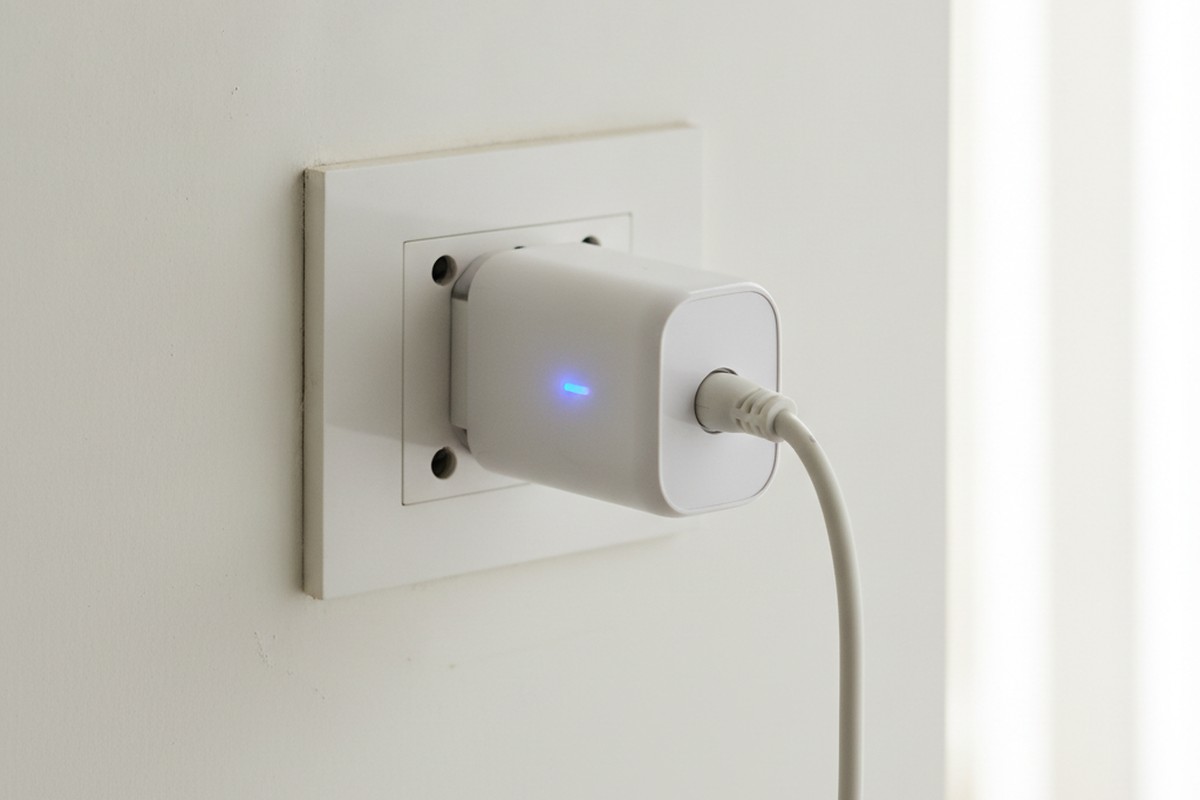
Standard 15A electric socket used for charging an electric scooter at home in India

The Real Cost of a Full Charge — Per Rupee, Per Month

This is where most discussions get either vague or misleading. The honest answer: it depends on two things — the size of your scooter’s battery, and the electricity tariff in your state.

Residential electricity rates in India currently sit between ₹6 and ₹10 per unit (kWh), varying by state and consumption slab. Most urban households in Maharashtra, Karnataka, Tamil Nadu, or Delhi land in the ₹7–₹9 range once they’re past the first 100–200 subsidised units.

Now the arithmetic. A scooter with a 2 kWh battery costs roughly ₹14–₹18 per full charge. A 3 kWh battery runs ₹21–₹27. The premium segment — scooters like the Ola S1 Pro or larger-battery Ather variants — carries 4 kWh or more, meaning ₹28–₹40 per complete fill-up. On a monthly basis, for a typical 40 km round-trip commuter charging every other day, electricity expenses come to ₹250–₹600 depending on scooter and tariff.

For comparison, that same commute on a 45 km/l petrol scooter costs approximately ₹2,200–₹2,500 a month at current fuel prices. Annual fuel savings for a typical electric-scooter commuter run ₹20,000–₹25,000, before the maintenance difference is even factored in.

How Long Does Charging Actually Take?

Overnight charging is the answer most EV buyers don’t realise they already have. Plug in at 10 PM, wake up to a full battery at 6 AM — no planning required, no rushing to a charging station, no queues. The bundled portable charger on most Indian electric scooters takes between 4 and 7 hours for a 0–100% charge depending on battery size. The Ather 450X’s 3 kWh battery takes roughly 4.5 hours; the Ola S1 Pro with its larger pack can take closer to 7 hours on the standard charger.

Here’s the detail people miss: the average urban Indian commuter travels 30–40 km per day on a round trip. If your scooter has 80–100 km of real-world range, you’re not draining the battery on a typical workday — you’re using 40–50% of it. Which means you’re not charging from zero; you’re topping up. A partial top-up from 50% takes roughly half the time, meaning even a 2.5-hour plug-in on a weeknight keeps you fully ready for the next morning.

Is Overnight Charging Actually Safe?

This worry is legitimate — particularly after the battery fire incidents that made headlines a few years back. The clear answer, though, is yes, overnight charging is safe for any certified EV purchased through legitimate channels in India today.

Every modern electric scooter from established manufacturers includes a Battery Management System (BMS) that monitors charge levels, cell temperatures, and internal balance continuously. The BMS cuts off the charging circuit automatically once the battery hits 100%, preventing overcharging. The fires that reached the news were almost universally traced to substandard, uncertified batteries, third-party chargers, or vehicles that had sustained physical damage.

The practical ground rules are simple: use only the manufacturer-supplied charger, ensure the socket is properly earthed (that third pin on your 15A socket exists for fault protection — it matters), and avoid charging in sealed, unventilated spaces during peak summer heat. Stick to those basics, and overnight charging is no more hazardous than charging a laptop.

Why Battery Size Changes the Home-Charging Equation

Here’s a point worth sitting with before you decide: a larger battery is not always better for home charging — particularly for city commuters.

A scooter with a well-calibrated 1.9–2.2 kWh battery designed for urban distances costs significantly less per charge, takes less time to top up, and makes fewer demands on domestic wiring than a 4 kWh premium machine. For someone doing 30–40 km a day, a compact battery that delivers 80–100 km of real-world range is not a compromise — it’s the right engineering choice for the actual use case.

This is precisely where Elektree India’s scooter lineup enters the picture and deserves more attention than it typically gets in the crowded Indian EV conversation. The Elektree Zenith, priced from ₹90,164, and the RV 80, from ₹94,363, both run 60V/32Ah or 60V/35Ah battery configurations — packs sized deliberately around Indian city-commuting distances. The result: 80–100 km of claimed range that comfortably covers the average 30–40 km daily round trip with a genuine buffer, and a cost per full charge that Elektree puts at approximately ₹5–₹10, reflecting the efficiency of a smaller, well-managed pack at domestic tariff rates.

Against the Ola S1 Pro at ₹1.1 lakh-plus or the Ather 450X at ₹1.5 lakh-plus, the Elektree scooters are not just more affordable — they’re more honestly sized for what the Indian urban commuter actually needs day to day. You’re not paying for 200 km of range you’ll never use, and you’re not charging a 4 kWh battery every other day when 2 kWh would have done the same job.

Indian professional riding an electric scooter on city roads for daily office commute

What Elektree Brings to the Home-Charging Buyer

Beyond the battery efficiency argument, Elektree’s value proposition for the home-charging buyer comes down to a combination of factors that matter in practice.

The 3-year warranty that Elektree offers across its lineup provides real peace of mind in a category where battery longevity anxiety remains very much alive. Service centres are operational in Delhi, Mumbai, Kolkata, Hyderabad, and Bengaluru — the cities where scooter ownership volumes are highest and where buyers most need accessible after-sales support. The charging setup question, which causes so much pre-purchase anxiety, becomes almost non-existent with an Elektree: a 15A socket and the bundled charger handle everything, with no expensive accessories, no housing society approvals for a dedicated wall box, and no additional infrastructure cost.

For buyers in the no-licence segment — college students, homemakers, or anyone who needs a daily vehicle without the formality of a driving licence — the Elektree Wheels at ₹82,871 offers 50–70 km of range at 45 km/h, a practically useful package at the most accessible price in the lineup.

Elektree is built around the real-world requirements of the Indian urban commuter, and the product decisions — battery size, price bracket, charging simplicity — reflect that clearly.

Making the Decision

Home charging an electric scooter requires no special infrastructure for most Indian buyers, costs ₹250–₹600 per month for a typical commuter, and the overnight routine is both safe and genuinely convenient. The anxiety around it is real but largely unfounded once you understand how it actually works.

The piece of the decision that often gets skipped: which battery size actually fits your life. A scooter with 80–100 km real-world range and a 2 kWh-class battery costs less to run, charges faster, and makes fewer demands of your home setup than a premium machine with a larger pack than your commute ever needs. For 30–50 km daily riders, that’s not a compromise — it’s the smarter call.

Elektree’s Zenith and RV 80 sit right in that sweet spot: honest range, efficient batteries, a sub-₹1 lakh price, and a warranty that signals genuine product confidence. If you’re weighing electric scooters and home-charging convenience is high on your list of concerns, the logical starting point is a detailed look at what Elektree India offers — specifications, test ride availability, and EMI options are all at elektree.com.

Your electricity bill, for the record, will look completely fine.

Best Electric Scooter for Women in India 2026: Stop Looking at the Colours — Here’s What to Actually Check Before Buying

Indian woman riding an electric scooter through city traffic in India 2026

Walk into most electric scooter showrooms in India and the conversation takes a familiar turn the moment a woman buyer walks in. The salesperson gestures toward the colour swatches. Maybe there’s a mention of how “easy” the scooter is to ride. The practical questions — weight, ground clearance, real-world range, what happens when the battery needs replacing — often get treated as afterthoughts.

This is a problem, because Indian women are now among the most decisive and research-driven buyers in the electric two-wheeler space. They’re making considered purchase decisions, comparing running costs, asking about service networks, and thinking about three-year ownership rather than just the sticker price. They deserve a buying guide that takes those questions seriously.

So here is one.

The Numbers First: Why Women Are Driving India’s EV Surge

India’s electric scooter market crossed one million unit sales in 2026 so far — a landmark that would have seemed ambitious just three years ago. A significant and growing share of those buyers are women, particularly in urban and semi-urban areas where daily commuting distances of 15 to 40 kilometres are the norm. Rising petrol prices — now hovering above ₹100 per litre in most cities — have made the running cost argument for electric scooters almost unanswerable. At ₹5 to ₹10 for a full charge, the monthly savings compared to a petrol scooter can easily cross ₹1,500 to ₹2,500 depending on usage.

But the brand that wins a woman buyer’s confidence doesn’t do it with fuel-cost calculators alone. It earns it by building a scooter that works in the real India she actually rides through.

What Indian Women Riders Actually Care About

Before comparing models, it’s worth being clear about what criteria genuinely matter — because several factors that get buried in spec sheets turn out to be far more important than the headline range number.

Weight. This is perhaps the most underrated factor in any electric scooter purchase, and it hits harder for women riders than marketing would suggest. Not because women can’t handle a heavy scooter — plenty can — but because city riding in India involves a lot of manoeuvring in tight spaces: parking between autos, navigating crowded markets, pushing the scooter into a building compound at night. A scooter that weighs 110–120 kg is noticeably harder to manage in these moments than one that comes in significantly lighter. Check the kerb weight, not the “rider + payload” figure.

Ground clearance. Indian roads are not showroom-floor smooth. Speed breakers, unpaved colonies, monsoon-damaged stretches, and the occasional flooded underpass are all real-world terrain. A scooter with good ground clearance handles all of this with less anxiety — and less damage to the battery pack mounted below the floorboard. A difference of 20–30 mm in ground clearance sounds trivial but translates to genuinely different experiences on rough roads.

Real-world range versus brochure range. The claimed range figure you see in advertisements is typically measured under ideal test conditions. In real Indian traffic — stop-start riding, pillion loads, uphill stretches, air conditioning running via the USB port — actual range is often 20 to 30 percent lower. A scooter claiming 100 km of range might realistically deliver 70–80 km in mixed city conditions. If your daily commute is 25 km each way, that still works fine. But understand the gap before you buy.

Boot space. Petrol scooters built in India typically offer generous underseat storage. Electric scooters, with their battery packs eating into that space, are more variable. For women managing daily essentials — a laptop bag, a tiffin box, a small shopping haul — the boot size question is practical, not trivial.

Service network and warranty. The battery is the most expensive component in any electric scooter, and a weak warranty is a significant long-term financial risk. Three years of battery warranty has become the reasonable baseline expectation. Equally important: how many service centres can the brand reach you through? A well-priced scooter with a sparse service network can quickly become expensive when something needs attention.

Where the Popular Choices Stand

The TVS iQube is probably the most respected mainstream electric scooter in India right now, and for good reason. TVS has an established service network, the iQube has a refined ride, and its 145 km claimed range on the newer variants is genuinely strong. But it weighs 119 kg — one of the heavier options in its segment — and starts at ₹1.20 lakh, rising considerably with the more specced-up trims. For a woman buyer who will frequently manage the scooter alone in a parking situation, that weight is worth factoring in.

The Ola S1X starts at ₹89,999, making it competitive on price. But the entry-level 2 kWh variant offers only a claimed 108 km range with drum brakes. Kerb weight runs from 105 to 113 kg, seat height is 791 mm — which may suit taller riders but can feel high for shorter women — and Ola’s service infrastructure, while improving, remains a recurring topic among owners.

The Ather 450X sits at the premium end — ₹1.54 lakh and above — with a genuinely excellent ownership experience and strong service centre coverage in larger cities. A serious contender if budget isn’t the primary constraint; for buyers aiming to stay near ₹1 lakh, it’s simply out of range.

Indian woman riding an electric scooter through a busy city street, confident and practical

Why the Elektree Zenith Deserves a Serious Look

The Elektree Zenith, priced at ₹90,164, positions itself close to the Ola S1X entry price — but the specification comparison is not straightforward.

Start with weight. The Zenith comes in at 75 kg, which is substantially lighter than any of the mainstream alternatives mentioned above. For day-to-day urban riding, this difference is real and noticed. Manoeuvring in a parking area, correcting a slight lean at a traffic light, or simply pushing the scooter back into a narrow spot — all of these feel meaningfully easier on a lighter machine.

Ground clearance is 180 mm — compared to the TVS iQube’s 157 mm. That extra 23 mm matters on speed breakers, unpaved bylanes, and waterlogged stretches during monsoon season. It also offers a degree of peace of mind about the battery pack clearing road hazards that a lower-slung scooter simply cannot match.

Under the floorboard, the Zenith runs a mid-drive IPM (Interior Permanent Magnet) motor — a configuration that typically delivers better efficiency and torque delivery compared to the hub motors common in many competing scooters. The practical effect is smoother acceleration and better performance when carrying a pillion passenger or riding uphill. Claimed range is 80–100 km on a 60V/35Ah lithium-ion battery, with a charge time of 4–5 hours on a standard home socket.

Boot space stands at 18.5 litres — a respectable figure that comfortably fits a backpack or a day’s shopping. The scooter includes a 15.5 cm digital display, GPS tracking, an anti-theft alarm, USB charging, and three riding modes (Eco, Normal, Hyper) — giving the rider meaningful control over range versus performance on any given day. Reverse mode is included, which is a small but genuinely appreciated feature when reversing out of tight spots.

The battery warranty is 3 years or 50,000 km — a solid commitment that matches or exceeds what the established names offer at this price point. The Zenith carries ICAT certification, meaning it has been independently tested and verified to meet Indian safety and performance standards.

Electric scooter digital dashboard and underseat boot storage space — practical features that matter for daily commuters
Lightweight electric scooter parked in a residential Indian lane — easy to manoeuvre in tight spaces

For Local Riders: The Elektree Wheels

Not every buyer needs a scooter covering 100 km per charge. For women whose primary use is local — school runs, the neighbourhood market, a clinic nearby — the Elektree Wheels is worth considering. At ₹82,871, it tops out at 45 km/h with a claimed 50–70 km of range. Simpler specification means simpler maintenance, and for buyers who don’t need high-speed performance, it’s a practical, honest choice at a price that doesn’t overreach.

The Bottom Line

If you’re a working woman commuting 20–40 km a day through Indian city traffic, the Elektree Zenith makes a compelling case. Its weight advantage over heavier alternatives is tangible in daily use. The ground clearance is better suited to Indian road conditions than several more expensive options. The pricing sits at a point where the ownership economics — low running cost, solid warranty, reasonable purchase price — add up well over a three to five year horizon.

It doesn’t have the brand recognition of a TVS or the startup energy of an Ola. What it does have is a well-engineered specification for actual Indian riding conditions, at a price that doesn’t require a financial stretch. For a buyer who prefers their scooter to earn its way rather than just look good in a press release, that’s the more honest choice.

For homemakers, local commuters, or anyone prioritising accessible, low-speed daily mobility, the Elektree Wheels fills that role quietly and effectively.

Both models are available at elektree.com, where you can also find detailed specifications and get in touch with the team for questions about your specific riding requirements. Given how different the needs of individual buyers are, it’s worth that conversation before committing to any purchase.

Your Electric Scooter Will Lose More Value Than You Think — Here’s What to Buy and Why It Matters

Electric scooter on Indian city street at golden hour

When Rahul finally decided to sell his electric scooter after two and a half years, the best offer he received was ₹42,000. He had paid just over ₹1.15 lakh post-subsidy. That is a 63% loss in under three years — and not a single person at the showroom mentioned this possibility before he signed.

This is not a story about one unlucky buyer. It is a pattern forming quietly beneath India’s electric scooter boom. The country sold a record 1.4 million electric two-wheelers in FY2026 — a 22% jump over the previous year — and enthusiasm for EVs has never been higher. But the resale conversation is the one nobody seems to be having, and it is the one that matters most when you are about to spend ₹80,000 to ₹1.2 lakh on a vehicle you will probably sell in three to four years.

The Numbers Behind the Depreciation Problem

Petrol scooters — your Honda Activa, your TVS Jupiter, your Hero Pleasure — typically retain 60–70% of their value after three years. This is well-established: the engines are proven, spare parts cost next to nothing, and any mechanic within a kilometre can diagnose a problem without specialist equipment.

Electric scooters are following a very different trajectory. Research into India’s used EV market shows that even established electric scooter brands shed 50–60% of their value within three years. Lesser-known or non-standard brands do worse — between 65% and 75% depreciation. On a scooter that cost ₹1 lakh, the difference between 40% depreciation and 65% depreciation is ₹25,000 disappearing entirely. That is not a rounding error in your household budget.

Indian buyer inspecting a used electric scooter at a secondhand vehicle market, uncertain expression

The gap between EV and petrol depreciation is not inevitable. It exists because of specific, identifiable problems in how India’s used EV market currently works — and understanding those problems is the first step to protecting yourself from them.

Why Electric Scooters Lose Value So Fast

The single biggest driver is battery anxiety. When someone buys a used petrol scooter, they can ask a mechanic to check it over and get a reasonable read on its condition within the hour. With a used electric scooter, the battery pack — which represents 35–45% of the vehicle’s original cost — is almost impossible to reliably assess without specialist equipment that most Indian buyers simply do not have access to.

A 2025 survey of over 500 prospective used EV buyers found that 73% would only consider buying a second-hand electric scooter if it had at least three years of battery warranty remaining, or a certified State of Health (SoH) report. Almost no used EV on the Indian market comes with either. The result is predictable: sellers have to discount deeply to attract buyers at all, and values fall off a cliff.

The second factor is technology obsolescence. A three-year-old scooter with 80km of real-world range is now competing with newer models offering 120–140km at similar price points. In the petrol world, a 2023 Activa and a 2026 Activa are not dramatically different. In the EV world, three years of development is a very long time, and it shows in resale prices.

Finally, there is the subsidy distortion. Government incentives like the PM E-Drive scheme have made new EVs more affordable for first-time buyers. This indirectly suppresses demand for used EVs — why buy a second-hand scooter with battery uncertainty when a subsidised new one with a full warranty is available at a price that is not much higher?

What Actually Protects Your Resale Value

The electric scooters that hold their value best in India’s used market share a clear set of characteristics. These are not marketing claims — they are the factors that a second-hand buyer actually uses to justify paying more.

The most critical is a long, credible warranty. A three-year battery and drivetrain warranty tells a prospective buyer that the manufacturer was confident enough in the product to stand behind it for that long. More practically, it means that for a meaningful portion of the vehicle’s usable life, a new owner is protected if something goes wrong. Scooters with comprehensive three-year warranties trade at meaningfully higher prices in the used market than identical-looking models with standard one-year coverage.

ICAT certification (from the International Centre for Automotive Technology, India’s government-authorized type-approval body) is the second major factor. In a market where claimed range figures are regularly inflated by 20–30% over real-world performance, ICAT certification means the specifications on the sticker were independently verified by a government laboratory — not just written by a marketing team. A certified range figure is one that a used-market buyer can actually trust.

Electric scooter battery pack and IPM motor components showing quality engineering on a clean workshop bench

The quality of the motor and drivetrain is the third element. Mid-drive Interior Permanent Magnet (IPM) motors are more expensive to manufacture than simpler alternatives, but they offer sustained efficiency and are designed for longevity well beyond 50,000 km. Fewer moving parts mean fewer failure points for a second-hand buyer to worry about — and that translates directly into a higher offer when you are ready to sell.

Finally, service network availability directly affects what a buyer will pay. If they can find a service centre for the brand within reasonable distance, they will pay a fair price. If they cannot, they will either walk away or bargain hard to price in the service risk. In a market where several EV brands have already shut down operations or downsized dramatically, manufacturer survival is not an abstract concern.

What This Means When You Are Choosing Your Next Scooter

The buyers who come out ahead on resale are not necessarily the ones who buy the most expensive scooter. They are the ones who filter their shortlist by criteria that actually matter: a minimum three-year warranty covering the battery and drivetrain, independent government certification of the model’s specifications, a proven motor design built for Indian road and load conditions, and a brand with the operational stability to be around when they need service — or when they eventually sell.

Running a ₹90,000 scooter through those filters quickly narrows the field. A three-year warranty that runs cleanly from purchase date — not one that requires a paid service-plan renewal to activate after year one — is genuinely rare in this price segment. ICAT-certified specifications at this price point are rarer still.

Where Elektree India Stands Against These Criteria

Elektree India’s Zenith electric scooter is one of the more interesting options in the ₹90,000–₹1 lakh range precisely because it addresses the resale-value criteria directly, rather than simply leading with the largest claimed range number.

The Zenith carries a 3-year / 50,000 km factory warranty covering the battery and full drivetrain. For a buyer considering a scooter today, this structure does two things simultaneously: it protects you during the ownership period, and it actively supports the resale negotiation two or three years down the line. A second-hand buyer knows there is a manufacturer claim process behind this product — which is not a given with many brands competing in this price range.

The Zenith is also ICAT certified, meaning its quoted specifications — including the 80–100 km range — have been independently tested by a government-authorized laboratory. In a market where ICAT-certified figures are frequently 15–20% lower than a manufacturer’s brochure claims for the same model, an Elektree range figure is one that a buyer can actually plan their daily commute around. It is also a figure a second-hand buyer can use as a baseline for evaluating battery health — rather than having to take the seller’s word for it.

Under the bodywork, the Zenith runs a mid-drive IPM (Interior Permanent Magnet) motor paired with a 60V/35Ah lithium-ion battery — a powertrain combination that delivers its performance more efficiently across varying loads and terrains than cheaper hub-motor alternatives, and is engineered to maintain its efficiency characteristics well beyond the typical trade-in point. The Zenith’s 180mm ground clearance means Indian roads — broken tar patches, aggressive speed breakers, waterlogged stretches during the monsoon — inflict less structural stress on the vehicle over time. Less cumulative damage means a better mechanical condition when you eventually put it on the market.

At ₹90,164 before any applicable state-level subsidies, the Zenith sits in the segment where Indian buyers are increasingly looking for EV options that combine reasonable daily performance with long-term ownership confidence — not just the lowest purchase price on the showroom floor.

The Calculation Worth Doing Before You Sign

India’s electric scooter market is maturing fast enough that the buyer who thinks three steps ahead — not just to the first month of charging at ₹5 to ₹10 per charge, but to the day they eventually try to sell — is the one who makes the genuinely better financial decision. The gap between a scooter with a three-year warranty and ICAT certification and one without is not merely a quality signal. It is a financial calculation that shows up in your pocket when you sell.

The relevant question is not “which scooter has the best range claim?” It is “which scooter will still command a fair price in three years, from a brand that will still be supporting it?” Those filters are not ones that most Indian EV shortlists are built around right now — and they should be.

On those criteria, the Elektree Zenith makes a compelling case. The combination of a factory three-year warranty, ICAT certification, an IPM mid-drive motor, and practical engineering built around Indian road realities means the scooter is designed to retain its functional capability — which is ultimately what any future buyer is paying for. If you are in the market for an electric scooter and want to make the decision that holds up financially, it is worth exploring the Zenith and Elektree’s full range at elektree.com.