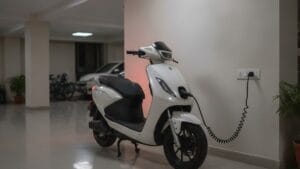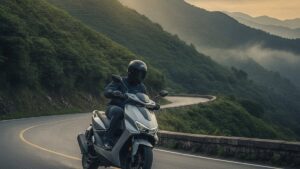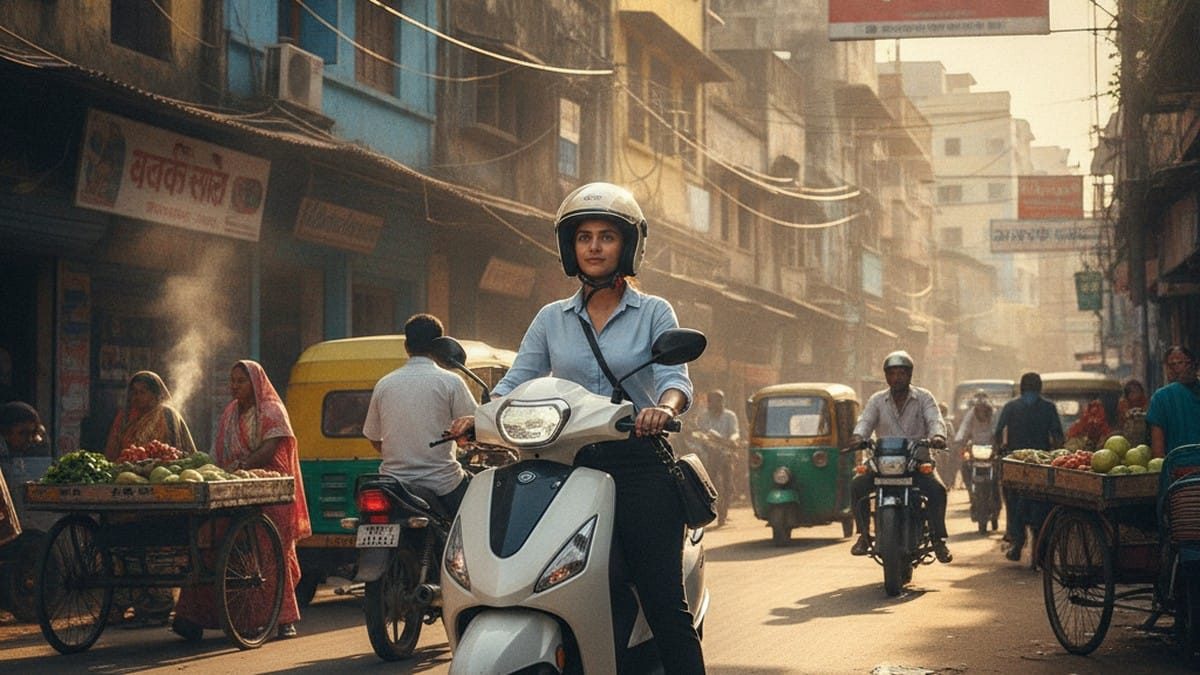
Walk into most electric scooter showrooms in India and the conversation takes a familiar turn the moment a woman buyer walks in. The salesperson gestures toward the colour swatches. Maybe there’s a mention of how “easy” the scooter is to ride. The practical questions — weight, ground clearance, real-world range, what happens when the battery needs replacing — often get treated as afterthoughts.
This is a problem, because Indian women are now among the most decisive and research-driven buyers in the electric two-wheeler space. They’re making considered purchase decisions, comparing running costs, asking about service networks, and thinking about three-year ownership rather than just the sticker price. They deserve a buying guide that takes those questions seriously.
So here is one.
The Numbers First: Why Women Are Driving India’s EV Surge
India’s electric scooter market crossed one million unit sales in 2026 so far — a landmark that would have seemed ambitious just three years ago. A significant and growing share of those buyers are women, particularly in urban and semi-urban areas where daily commuting distances of 15 to 40 kilometres are the norm. Rising petrol prices — now hovering above ₹100 per litre in most cities — have made the running cost argument for electric scooters almost unanswerable. At ₹5 to ₹10 for a full charge, the monthly savings compared to a petrol scooter can easily cross ₹1,500 to ₹2,500 depending on usage.
But the brand that wins a woman buyer’s confidence doesn’t do it with fuel-cost calculators alone. It earns it by building a scooter that works in the real India she actually rides through.
What Indian Women Riders Actually Care About
Before comparing models, it’s worth being clear about what criteria genuinely matter — because several factors that get buried in spec sheets turn out to be far more important than the headline range number.
Weight. This is perhaps the most underrated factor in any electric scooter purchase, and it hits harder for women riders than marketing would suggest. Not because women can’t handle a heavy scooter — plenty can — but because city riding in India involves a lot of manoeuvring in tight spaces: parking between autos, navigating crowded markets, pushing the scooter into a building compound at night. A scooter that weighs 110–120 kg is noticeably harder to manage in these moments than one that comes in significantly lighter. Check the kerb weight, not the “rider + payload” figure.
Ground clearance. Indian roads are not showroom-floor smooth. Speed breakers, unpaved colonies, monsoon-damaged stretches, and the occasional flooded underpass are all real-world terrain. A scooter with good ground clearance handles all of this with less anxiety — and less damage to the battery pack mounted below the floorboard. A difference of 20–30 mm in ground clearance sounds trivial but translates to genuinely different experiences on rough roads.
Real-world range versus brochure range. The claimed range figure you see in advertisements is typically measured under ideal test conditions. In real Indian traffic — stop-start riding, pillion loads, uphill stretches, air conditioning running via the USB port — actual range is often 20 to 30 percent lower. A scooter claiming 100 km of range might realistically deliver 70–80 km in mixed city conditions. If your daily commute is 25 km each way, that still works fine. But understand the gap before you buy.
Boot space. Petrol scooters built in India typically offer generous underseat storage. Electric scooters, with their battery packs eating into that space, are more variable. For women managing daily essentials — a laptop bag, a tiffin box, a small shopping haul — the boot size question is practical, not trivial.
Service network and warranty. The battery is the most expensive component in any electric scooter, and a weak warranty is a significant long-term financial risk. Three years of battery warranty has become the reasonable baseline expectation. Equally important: how many service centres can the brand reach you through? A well-priced scooter with a sparse service network can quickly become expensive when something needs attention.
Where the Popular Choices Stand
The TVS iQube is probably the most respected mainstream electric scooter in India right now, and for good reason. TVS has an established service network, the iQube has a refined ride, and its 145 km claimed range on the newer variants is genuinely strong. But it weighs 119 kg — one of the heavier options in its segment — and starts at ₹1.20 lakh, rising considerably with the more specced-up trims. For a woman buyer who will frequently manage the scooter alone in a parking situation, that weight is worth factoring in.
The Ola S1X starts at ₹89,999, making it competitive on price. But the entry-level 2 kWh variant offers only a claimed 108 km range with drum brakes. Kerb weight runs from 105 to 113 kg, seat height is 791 mm — which may suit taller riders but can feel high for shorter women — and Ola’s service infrastructure, while improving, remains a recurring topic among owners.
The Ather 450X sits at the premium end — ₹1.54 lakh and above — with a genuinely excellent ownership experience and strong service centre coverage in larger cities. A serious contender if budget isn’t the primary constraint; for buyers aiming to stay near ₹1 lakh, it’s simply out of range.
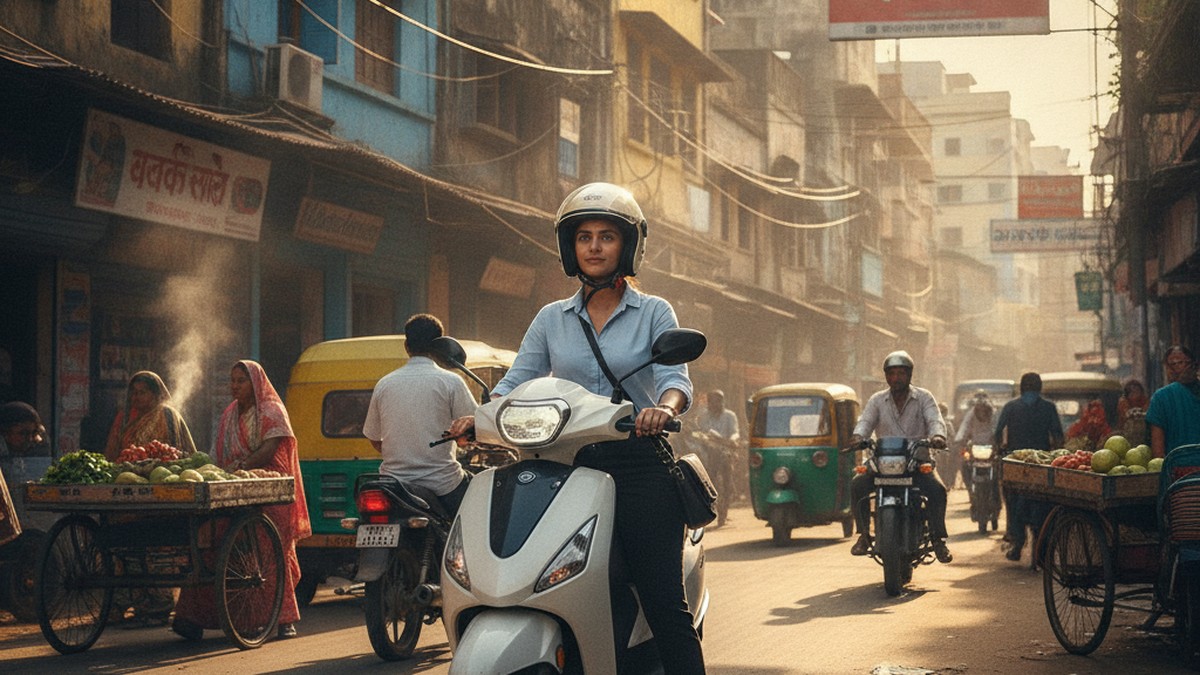
Why the Elektree Zenith Deserves a Serious Look
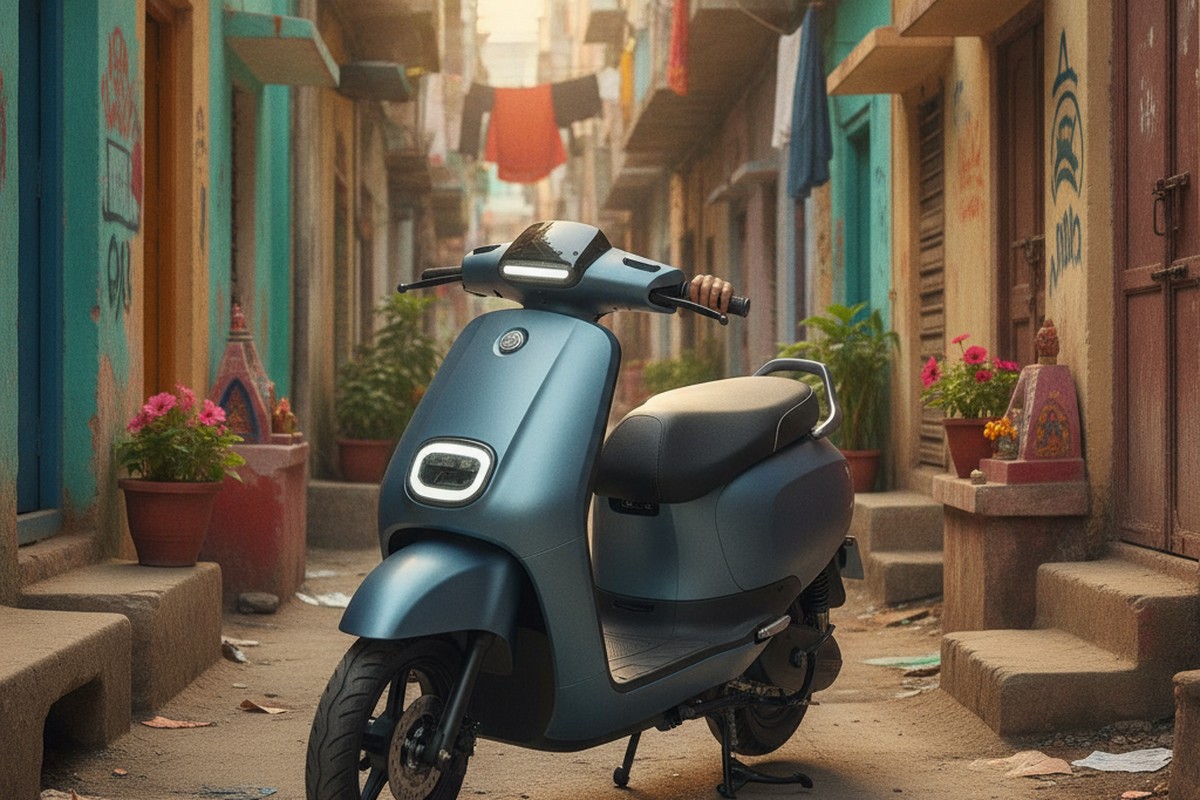
The Elektree Zenith, priced at ₹90,164, positions itself close to the Ola S1X entry price — but the specification comparison is not straightforward.
Start with weight. The Zenith comes in at 75 kg, which is substantially lighter than any of the mainstream alternatives mentioned above. For day-to-day urban riding, this difference is real and noticed. Manoeuvring in a parking area, correcting a slight lean at a traffic light, or simply pushing the scooter back into a narrow spot — all of these feel meaningfully easier on a lighter machine.
Ground clearance is 180 mm — compared to the TVS iQube’s 157 mm. That extra 23 mm matters on speed breakers, unpaved bylanes, and waterlogged stretches during monsoon season. It also offers a degree of peace of mind about the battery pack clearing road hazards that a lower-slung scooter simply cannot match.
Under the floorboard, the Zenith runs a mid-drive IPM (Interior Permanent Magnet) motor — a configuration that typically delivers better efficiency and torque delivery compared to the hub motors common in many competing scooters. The practical effect is smoother acceleration and better performance when carrying a pillion passenger or riding uphill. Claimed range is 80–100 km on a 60V/35Ah lithium-ion battery, with a charge time of 4–5 hours on a standard home socket.
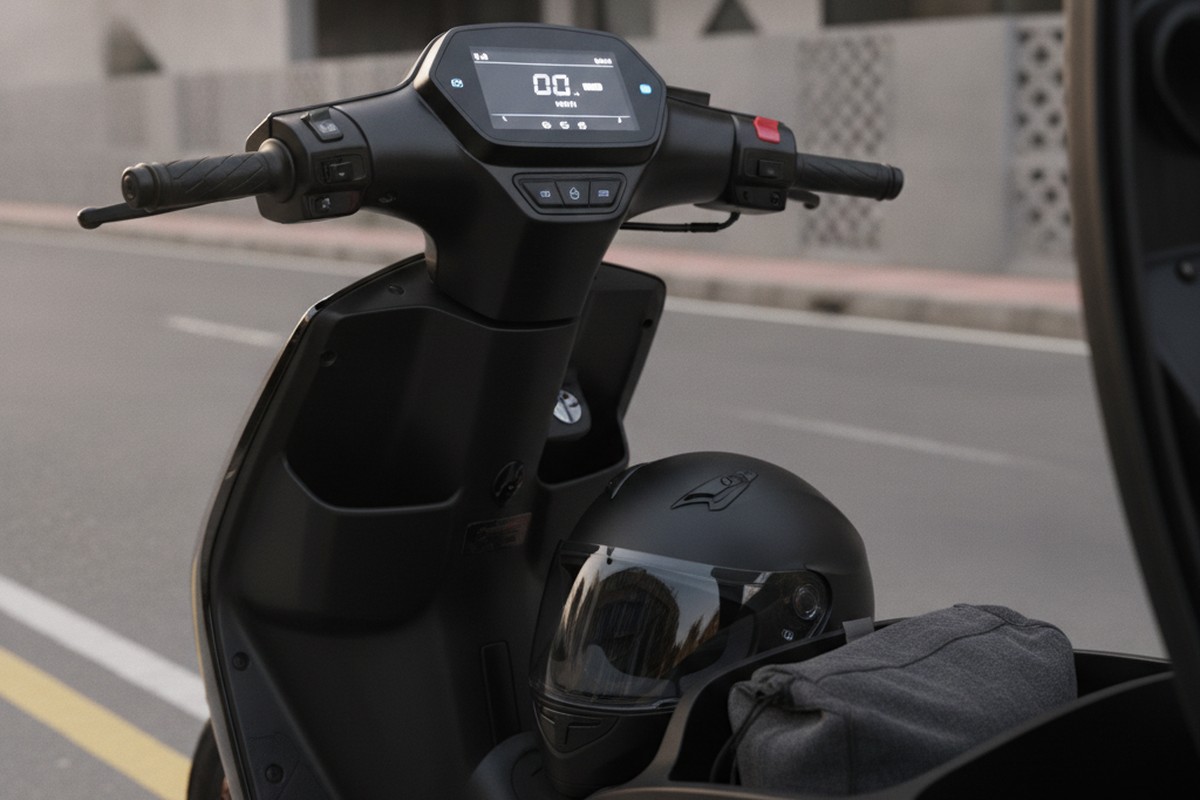
Boot space stands at 18.5 litres — a respectable figure that comfortably fits a backpack or a day’s shopping. The scooter includes a 15.5 cm digital display, GPS tracking, an anti-theft alarm, USB charging, and three riding modes (Eco, Normal, Hyper) — giving the rider meaningful control over range versus performance on any given day. Reverse mode is included, which is a small but genuinely appreciated feature when reversing out of tight spots.
The battery warranty is 3 years or 50,000 km — a solid commitment that matches or exceeds what the established names offer at this price point. The Zenith carries ICAT certification, meaning it has been independently tested and verified to meet Indian safety and performance standards.
For Local Riders: The Elektree Wheels
Not every buyer needs a scooter covering 100 km per charge. For women whose primary use is local — school runs, the neighbourhood market, a clinic nearby — the Elektree Wheels is worth considering. At ₹82,871, it tops out at 45 km/h with a claimed 50–70 km of range. Simpler specification means simpler maintenance, and for buyers who don’t need high-speed performance, it’s a practical, honest choice at a price that doesn’t overreach.
The Bottom Line
If you’re a working woman commuting 20–40 km a day through Indian city traffic, the Elektree Zenith makes a compelling case. Its weight advantage over heavier alternatives is tangible in daily use. The ground clearance is better suited to Indian road conditions than several more expensive options. The pricing sits at a point where the ownership economics — low running cost, solid warranty, reasonable purchase price — add up well over a three to five year horizon.
It doesn’t have the brand recognition of a TVS or the startup energy of an Ola. What it does have is a well-engineered specification for actual Indian riding conditions, at a price that doesn’t require a financial stretch. For a buyer who prefers their scooter to earn its way rather than just look good in a press release, that’s the more honest choice.
For homemakers, local commuters, or anyone prioritising accessible, low-speed daily mobility, the Elektree Wheels fills that role quietly and effectively.
Both models are available at elektree.com, where you can also find detailed specifications and get in touch with the team for questions about your specific riding requirements. Given how different the needs of individual buyers are, it’s worth that conversation before committing to any purchase.