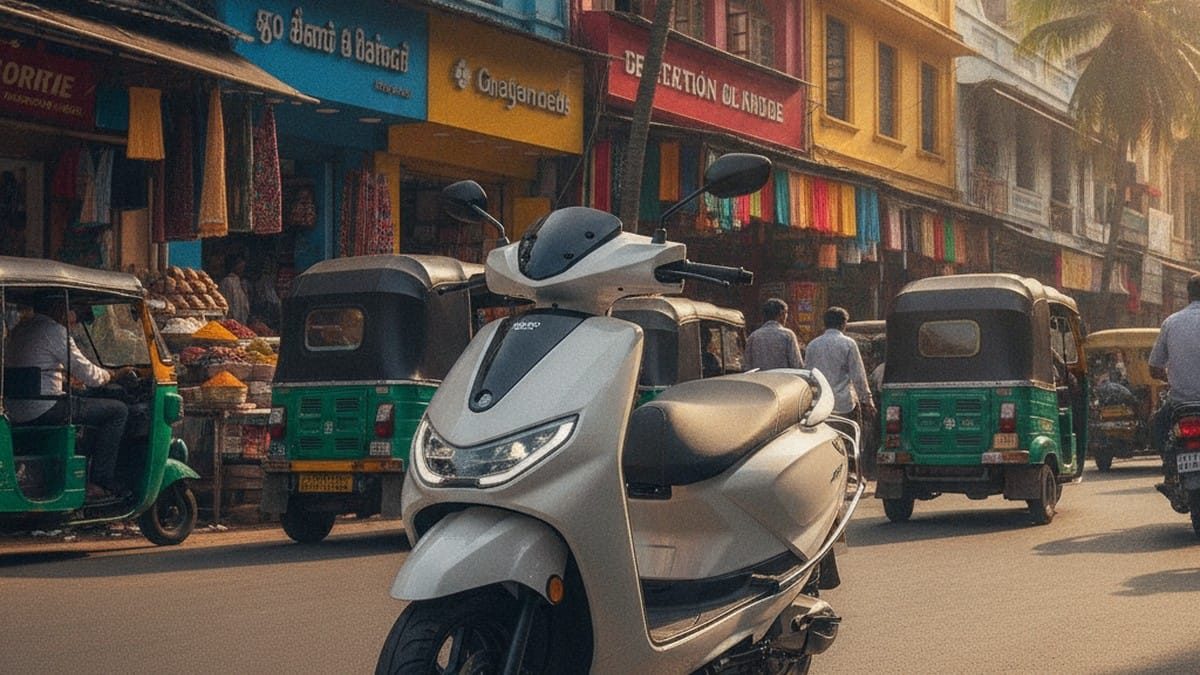
Walk into any dealership or scroll through any EV comparison site today, and you’ll find more than fifteen electric scooters competing for attention under the ₹1 lakh mark. That’s a dramatic shift from just three years ago, when the sub-₹1 lakh space was mostly occupied by low-speed vehicles with lead-acid batteries and limited real-world utility. Today you have everything from Ola’s S1 Z at ₹79,999 to the Ather Konarc at ₹99,999 — proper high-speed registered scooters with modern lithium batteries, smartphone connectivity, and serious range claims.
The problem is that most buyers walk in fixated on exactly two numbers: the ex-showroom price and the claimed range. And many of them walk out with a scooter that disappoints them within twelve months — not because the product was fundamentally bad, but because they evaluated it using the wrong metrics.
Here’s what actually matters when you’re spending under ₹1 lakh on an electric scooter in India.
1. The Range on the Brochure Is Not Your Range
This is the single biggest misconception in the Indian electric scooter market — and manufacturers are partly responsible for letting it persist. The certified range figures quoted in advertisements — sometimes called IDC (Indian Driving Cycle) range — are measured in controlled conditions with a specific speed profile that bears little resemblance to how you actually ride in Pune traffic or on a Chennai bypass.
In practice, real-world range on most scooters in this segment runs between 60% and 75% of the certified figure. The Ola S1 X claims 108–151 km depending on the battery variant; owners in Indian cities regularly report 65–113 km under normal riding conditions. The Hero Vida VX2, claimed at 92–100 km, delivers closer to 55–75 km in everyday use. TVS iQube’s 100 km claim translates to roughly 60–85 km on actual roads.
This gap matters enormously if you have a 35–40 km daily commute. What looks like ample range on paper can become a source of daily range anxiety when your scooter’s battery indicator is crawling into the red before you reach home.
The smarter calculation: take the claimed range, apply a 70% factor, and verify whether that number comfortably covers your daily round trip with room to spare. Don’t cut it close. A 20% buffer is the absolute minimum you should plan for.
2. Battery Warranty — Read the Fine Print, Not Just the Headline
A three-year warranty sounds reassuring until you actually read what it covers. Many manufacturers in this segment offer battery warranties loaded with conditions — usage within specified temperature limits, mandatory scheduled servicing at authorised centres, restrictions on fast charging, and clauses that can void coverage if the vehicle is used outside its stated parameters.
This matters because battery replacement outside warranty typically costs between ₹25,000 and ₹60,000 depending on the chemistry and capacity — often 30–50% of what you originally paid for the scooter. A warranty that looks good on paper but disqualifies you on a technicality is effectively no warranty at all.
Read the document carefully. Understand what’s covered, for how long, and specifically under what conditions. Lithium iron phosphate (LFP) and lithium NMC cells offer substantially better thermal stability in Indian summer conditions than older chemistries — a relevant consideration when temperatures in many Indian cities regularly exceed 40°C.
3. Service Network in Your Specific City — Not Nationally
Manufacturers love quoting national service touchpoint numbers. One brand might tout 6,000 dealer relationships across India. Another boasts 4,000+ authorised service points. But what’s relevant to you is the quality and availability of service in your city, your district — ideally within a practical distance of where you live.
The reality of India’s EV service landscape in 2026 is still uneven. Established brands like TVS, Bajaj, and Hero bring the advantage of existing two-wheeler dealership networks with trained mechanics and faster parts availability. Newer EV-first brands have improved considerably in metro cities but can still leave smaller cities and towns underserved. Even brands with large networks have been criticised for delayed turnaround times and technician training gaps in specific markets.
Before finalising any purchase, ask specifically how many authorised service centres exist in your city or district. Ask about average turnaround times. Ask whether the centre stocks common wear parts — brake pads, tyres, controllers. Call the customer helpline yourself. What happens when you call tells you a great deal about what the after-sales experience will be like when you actually need it.
4. Running Cost Per Kilometre — The Number That Changes Your Daily Life
On a cost-per-kilometre basis, electric scooters genuinely change the economics of commuting. At current electricity rates across Indian states — roughly ₹6–9 per unit depending on your state tariff — a full charge costing ₹30–70 can cover 60 to 130 km of real-world riding. That works out to somewhere between ₹0.25 and ₹0.50 per km.
Compare that to a 110cc petrol scooter returning 45–50 km/litre at over ₹100 per litre — you’re looking at ₹2.00–₹2.25 per km. The savings across three years of daily commuting are substantial — in many cases, significant enough to have effectively paid for a considerable portion of the vehicle cost.
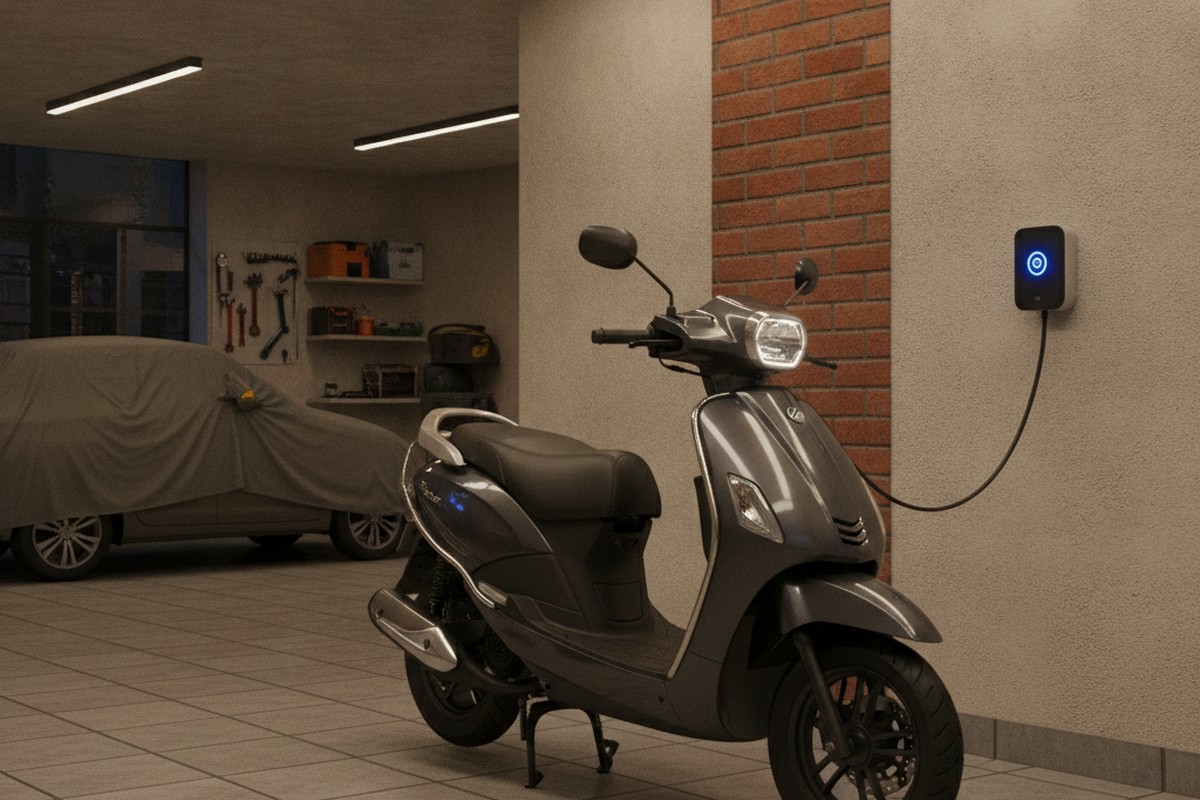
But these savings only materialise if your charging setup is practical. If you live in a house or ground-floor flat with accessible parking and a power point, home charging is inexpensive and reliable. If you’re in a multi-storey apartment without EV charging infrastructure, you’ll be navigating public chargers — adding inconvenience and potentially reducing the economic advantage. Work this out before you buy, not after.
5. Build Quality for Indian Roads — The Factor Most Buyers Overlook
Not all scooters are engineered equally for Indian conditions. Potholes that would clear road quality complaints in most countries, speed breakers designed by optimists, monsoon rains that can be relentless for months, and summer dust that finds its way into everything. An IP (Ingress Protection) rating for the motor and battery tells you something concrete about how protected your investment actually is against water and dust intrusion.
Bajaj Chetak’s IP67-rated battery and motor represent a premium standard in this space — meaning full dust-tight protection and tolerance for temporary submersion in water. Most scooters at this price point don’t publish IP ratings for every component, which itself tells you something. Ask your dealer directly. A scooter with no published IP rating on its motor being ridden through Kolkata in July is a gamble. One with proper documentation is not.
Where Elektree India Fits in the Sub-₹1 Lakh Market
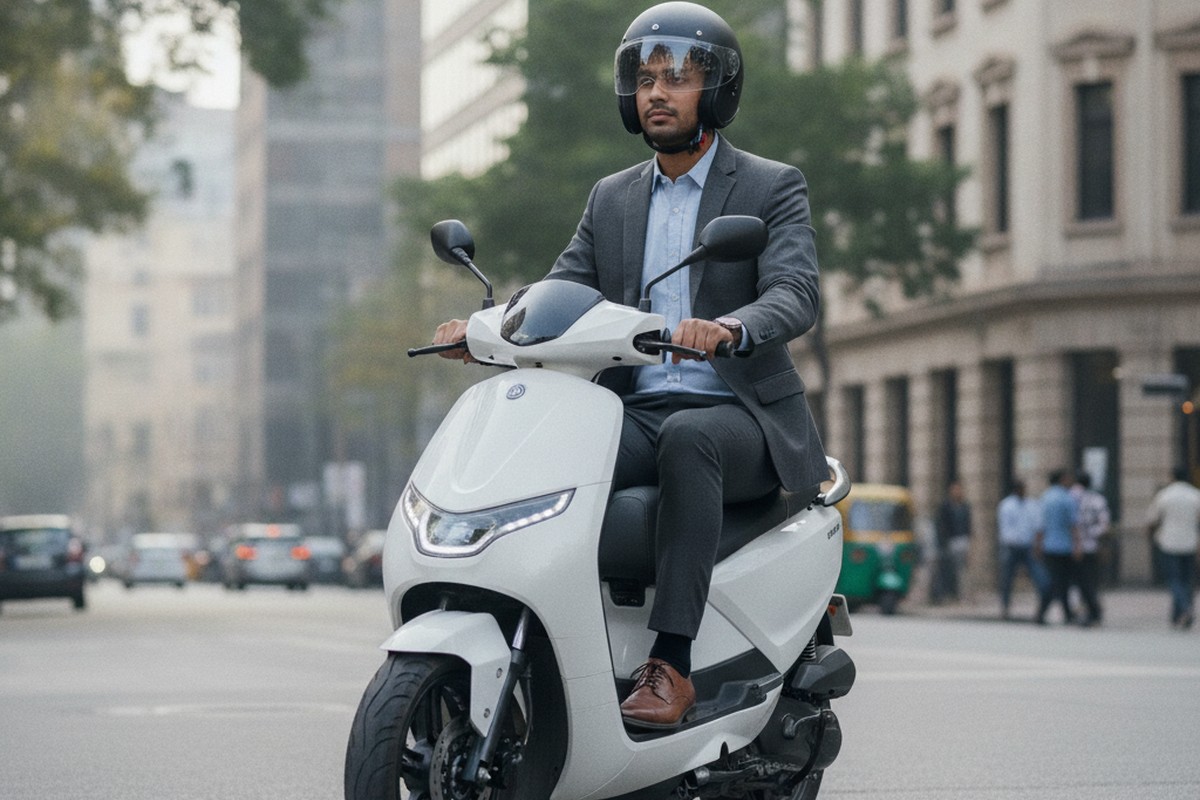
Elektree India has positioned three of its scooters squarely in the under-₹1 lakh bracket. The Wheels at ₹82,871 delivers 50–70 km of range at 45 km/h — a sensible option for shorter urban commutes and last-mile connectivity where riders prioritise economy and simplicity. The Zenith at ₹90,164 and the RV 80 at ₹94,363 both target the 80–100 km range bracket at 60 km/h, placing them in direct competition with the mainstream options from Ola, Honda, and others in this price band.
On running costs, Elektree’s figures are among the most compelling in the segment — ₹5–10 per full charge, with a 4-hour charge time, which translates to operating costs well below ₹0.50 per km for most riders. The 3-year/30,000 km warranty covering the motor, controller, and battery pack is one of the more comprehensive coverage terms available in this price range — and importantly, it’s straightforward rather than filled with exceptions that undermine its practical value.
The Patna-headquartered company operates through a dealer network spanning major Indian cities — Delhi, Mumbai, Kolkata, Hyderabad, Bengaluru — with coverage extending into secondary markets. For riders in cities where Elektree has authorised service presence, the combination of competitive purchase pricing, a solid warranty, and genuinely low running costs makes a strong total-ownership case.
The Verdict for Sub-₹1 Lakh Buyers
If you’re spending under ₹1 lakh on an electric scooter in India today, the right question isn’t “which one is cheapest?” It’s “which one will cost me least over three years, be easiest to service when something goes wrong, and actually cover my daily commute without requiring me to think about the battery every morning?”
Weigh real-world range against your actual commute distance, not the brochure figure. Read the battery warranty terms — not just the duration, but the conditions. Research service availability specifically in your city. Calculate your realistic running cost based on your local electricity tariff. And ask about build quality for the conditions you’ll actually be riding in, including monsoon months.
On all these criteria, Elektree India’s Zenith and RV 80 are worth placing on your shortlist alongside the more heavily marketed alternatives. The combination of sub-₹1 lakh pricing, 80–100 km range, a comprehensive 3-year warranty, and running costs of just ₹5–10 per charge makes them a genuinely competitive option for buyers whose priority is real ownership value — not just a low entry price or a brand name they recognise from advertisements.
Before making any final decision, visit a dealer for a test ride. No spec sheet or comparison article tells you as much as twenty minutes in the saddle on the roads you actually ride every day. Explore the current Elektree India lineup and find your nearest dealer at elektree.com.