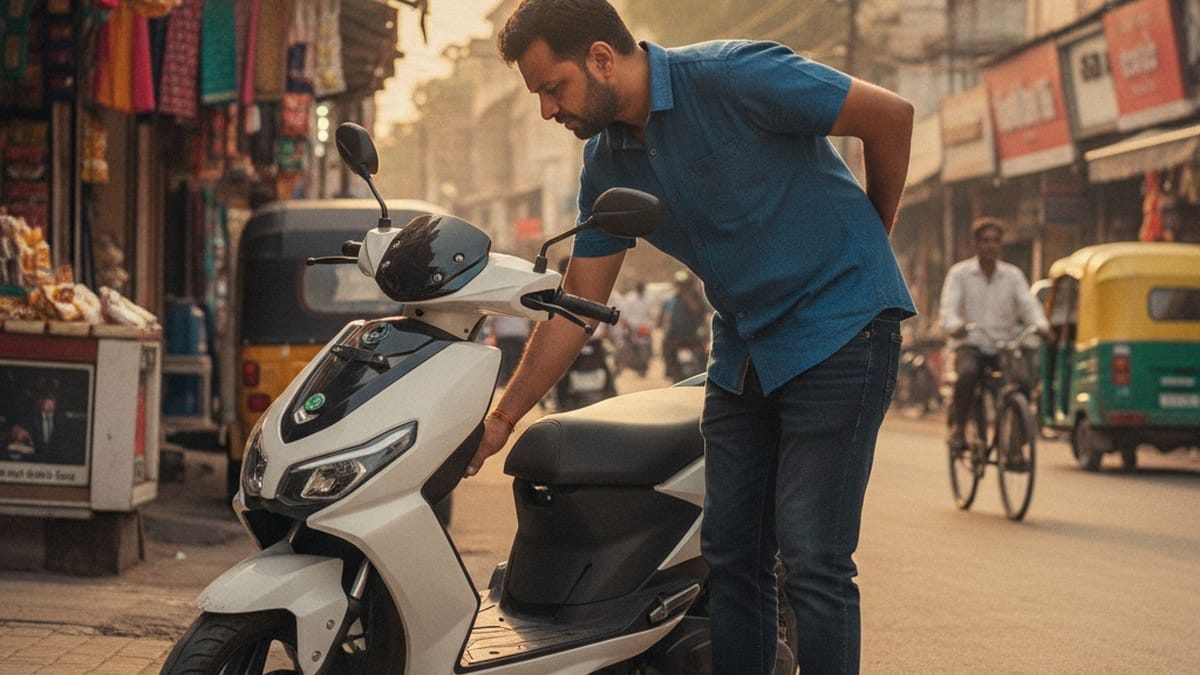
The second-hand electric scooter market in India has grown quietly but quickly. On OLX and similar platforms, you can find 2021–2024 Ola S1s, Ather 450Xs, and TVS iQube units listed anywhere from ₹55,000 to ₹95,000 — down sharply from their original on-road prices. For someone who wants to switch to electric without spending over a lakh, these listings look like an obvious entry point. Why pay ₹1.3 lakh for a new Ather when there’s one sitting in somebody’s garage for ₹72,000?
The honest answer: sometimes the math does work out. But far more often than buyers realise, a used electric scooter carries a hidden liability that can quietly turn a smart deal into a very expensive one. And in 2026, with genuinely affordable new electric scooters now available — including fully warranted, ICAT-certified options under ₹95,000 — the calculus around buying used has shifted considerably.
Here’s what you actually need to know before handing over any money.
The Battery Is the Scooter. Not Part of It.
This sounds obvious, but most people don’t really sit with what it means. In a petrol scooter, the engine can be rebuilt and parts replaced. In an electric scooter, the lithium battery pack is effectively the powertrain. It determines range, performance, and long-term value. And it degrades — inevitably, irreversibly — with every charge cycle.
The measure you need to ask for is State of Health (SoH). This is a percentage figure showing how much of the battery’s original capacity remains. A fresh battery starts at 100%. Here’s what the ranges mean in practical terms:
- Above 90%: Excellent. Typical for scooters under two years old with careful use. You’ll see near-original range figures in real-world riding.
- 80–90%: Normal wear for 2–4 year old units. Range will be noticeably lower than rated — a 100 km scooter might now deliver 80–85 km in mixed city conditions.
- 70–80%: The battery is tired. Most manufacturers treat 70% as the threshold for warranty battery replacement. You’re looking at significantly reduced range, and the trajectory from here gets steeper.
- Below 70%: Walk away unless the price reflects an imminent battery replacement.
The problem? Most sellers don’t lead with this number, because most sellers don’t know it — or don’t want you to know it. Getting the actual SoH requires either an authorised service centre check or access to the manufacturer’s companion app with the original account still active. Neither is always available through a private sale.
What Battery Replacement Actually Costs in 2026
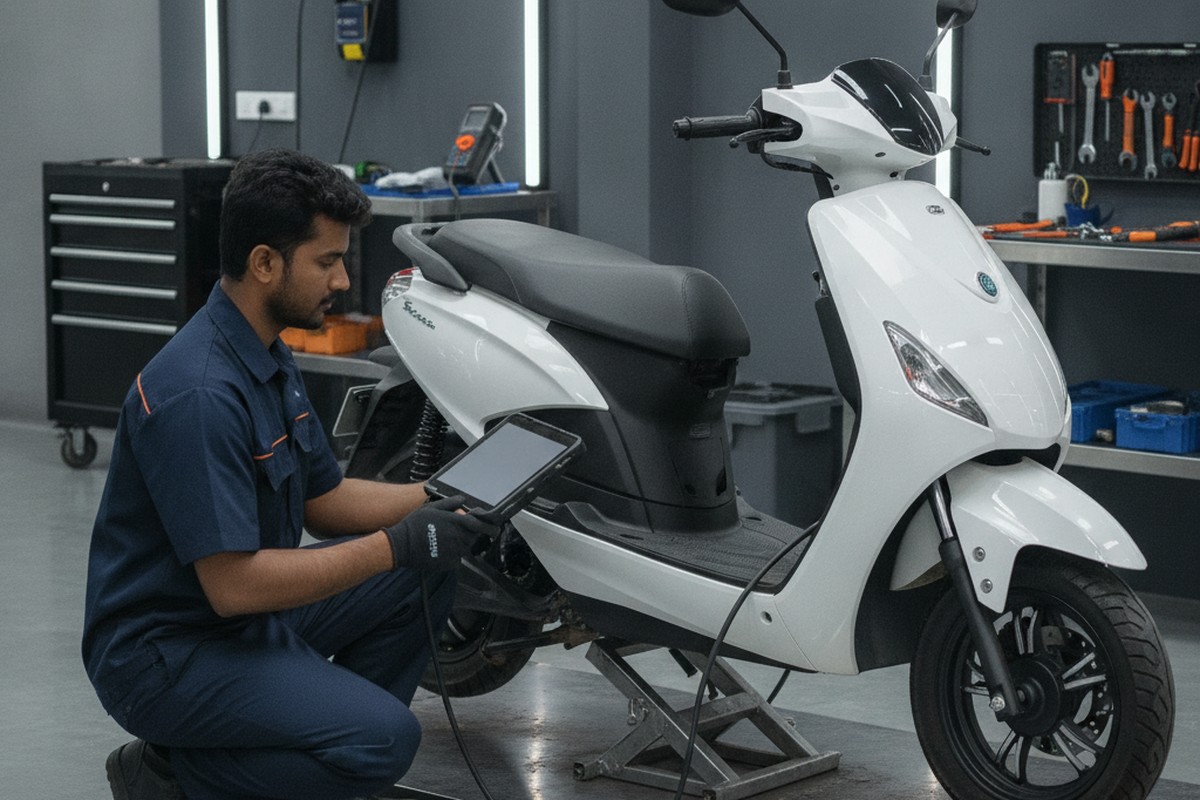
If you buy a used scooter and the battery fails within a year or two — or you’re already at 75% SoH and it’s heading lower — here’s the bill you’re looking at, based on current market rates:
Ola S1 Pro battery replacement runs ₹70,000–₹90,000 depending on the pack size. Ather 450X battery packs cost ₹70,000–₹80,000 out of warranty. TVS iQube replacement batteries range from ₹45,000 for the entry variant to over ₹1.15 lakh for the iQube ST. Bajaj Chetak batteries sit at roughly ₹70,000–₹80,000.
Do that arithmetic. If you’re buying a used Ather 450X at ₹72,000 and the battery is at 78% SoH, you’re potentially carrying ₹75,000 of replacement risk sitting just below the surface. The “deal” at ₹72,000 suddenly looks very different when you factor in even a moderate probability of replacement within two to three years.
The Usage History Problem
The kilometres on the odometer tell you less than you think. What actually degrades a lithium battery faster than anything else is aggressive charging behaviour — specifically, repeated fast charging, frequently charging to 100% and leaving it there, or allowing the battery to drain to near zero regularly.
This matters enormously because a significant proportion of used electric scooters in India were previously used by delivery riders or fleet operators. These vehicles racked up cycles fast, were fast-charged multiple times per day to keep the business running, and were rarely given the gentle 40–80% charging treatment that maximises battery longevity. A 2022 scooter with 18,000 km on it could have a battery that’s seen the equivalent of twice that in degradation terms. Cosmetically, these scooters often look fine. But the thing that actually matters — the battery — has been quietly worked hard for three years.
The Paperwork Maze
Even if the battery checks out, used EV purchases come with paperwork complexity that petrol vehicles don’t have. Warranty transferability is the big one. Many manufacturers either don’t transfer battery warranties to second owners, or have conditions around when and how the transfer is registered. If the original owner’s warranty period has lapsed — which it often has on 2021–2022 scooters — you’re buying a post-warranty vehicle with no safety net.
Also check: Is there any pending loan hypothecation on the RC? Does the registration certificate actually match the seller’s identity? Is the app account being transferred along with the scooter, or are you losing access to the diagnostic data you’d need to monitor battery health going forward? None of this is impossible to navigate, but it adds friction, risk, and cost to what looks like a simple ₹70,000 transaction.
When Does Buying Used Actually Make Sense?
There are scenarios where buying used works. If a scooter is under two years old, has documented battery SoH above 90%, comes with manufacturer warranty still intact and transferable, and is priced meaningfully below new — the deal can be genuine. The catch is that scooters meeting all those criteria are rare, and the listings that catch your eye because they seem too good are almost never the ones that actually meet that bar.
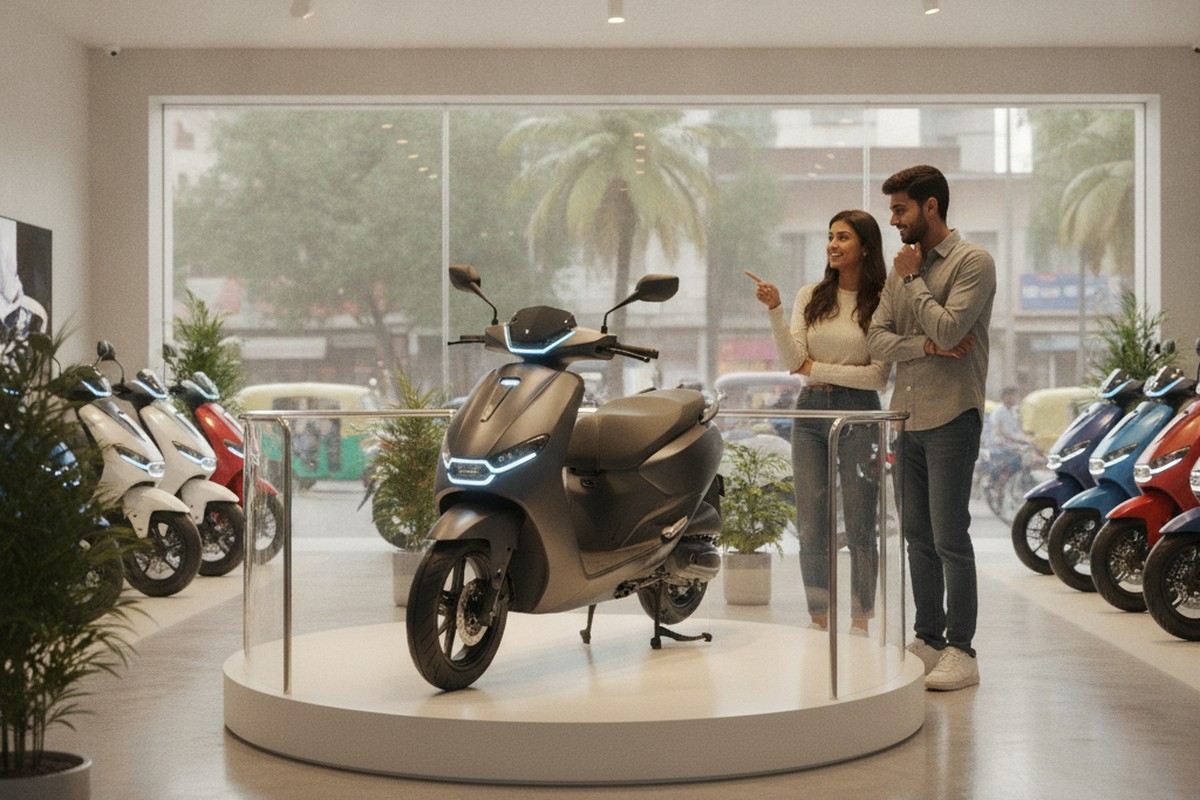
Where New Electric Scooters Have Changed the Calculation
This is where the conversation around used EVs has shifted noticeably in 2026. When the cheapest decent new electric scooter cost ₹1.2–₹1.5 lakh, the argument for a ₹70,000 used unit was clear — you were paying roughly half. But the new scooter market has moved.
Elektree India, for instance, offers the Wheels at ₹82,871 — a genuinely road-ready electric scooter with 50–70 km of range, 45 km/h top speed, and a 3-year comprehensive warranty covering the vehicle, battery pack, and motor. No prior licence is required to ride it. The Zenith and RV 80 step up to 80–100 km of claimed range and 60 km/h at ₹90,164 and ₹94,363 respectively — both with the same three-year warranty.
Compare this to what you’re actually getting with a ₹70,000–₹80,000 used scooter from a private seller. You’re likely getting no remaining manufacturer warranty, an unknown battery SoH, no transferable warranty on the battery, and a vehicle that may already need attention. The gap between used and new has narrowed to the point where, for many buyers, it no longer justifies the risk.
Elektree’s three-year warranty is worth pausing on specifically. It covers the battery pack outright — which means if the battery degrades below the threshold during that period, you’re covered. For a buyer who doesn’t want to be exposed to a ₹60,000–₹80,000 surprise, this is not a small thing. Combine that with ICAT-certified models, home charging in around four hours at ₹5–₹10 per charge, and a service network across Delhi, Mumbai, Kolkata, Hyderabad, Bengaluru, and tier-2 locations — and the new option starts looking like the genuinely smarter financial decision.
The Running Cost Equation
One appeal of used EVs is low running cost — and this is real. Electric scooters cost roughly ₹5–₹10 per full charge at home, translating to around ₹0.8–₹1.5 per kilometre. Against ₹5–₹8 per km on a petrol scooter, the savings add up meaningfully. But these running cost advantages apply equally to a new electric scooter. The savings don’t belong to the used market — they belong to the technology itself. When you buy a new Elektree with a three-year warranty and low annual maintenance of ₹2,000–₹5,000, you capture the same daily savings without inheriting someone else’s degraded battery.
The Verdict for Indian Buyers in 2026
If you’re tempted by a used electric scooter deal, go into it with one non-negotiable: get the battery’s State of Health documented from an authorised service centre before any money moves. If the seller won’t accommodate that, treat the refusal as your answer and walk away.
If the SoH is strong, the warranty is transferable, and the price reflects a genuine discount — you might have a good deal. But run the full numbers first: the asking price plus the probable cost of anything the battery might need in the next two to three years.
For most buyers, however, the math in 2026 points toward new — specifically toward the entry point where the new scooter market now sits. Elektree’s lineup starts under ₹83,000 and covers the full vehicle with a three-year warranty that takes the battery risk off your plate entirely. You get full EV running cost savings from day one, ICAT-certified models, predictable maintenance, and a scooter built for Indian conditions by a company that understands what Indian riders actually need.
That’s not a marginal improvement over a ₹65,000 used scooter. It’s a fundamentally different ownership proposition — one where you’re not quietly hoping the battery holds out long enough to justify what you spent. Explore Elektree India’s range at elektree.com and see where the numbers actually land for your commute.