Ask any Indian sitting on the fence about buying an electric scooter what’s holding them back, and nine times out of ten, you’ll hear some version of the same thing: “Yaar, what if the battery dies in three years and I have to spend ₹80,000 to replace it?” It’s the single biggest fear in the Indian EV market right now — and honestly, it’s not entirely irrational. We’ve all heard the horror stories, most of them involving lead-acid e-rickshaws and three-year-old battery packs refusing to hold charge. But for modern lithium-ion electric scooters, the reality is considerably more nuanced — and considerably less scary.
How Long Does an Electric Scooter Battery Actually Last in India?
Let’s start with the basics. A modern lithium-ion battery in an electric scooter — the kind used by every serious manufacturer today — is engineered to complete somewhere between 1,200 and 3,000+ charge cycles before capacity drops meaningfully. At one full charge cycle per day (realistic for a daily commuter), that works out to roughly 3 to 8 years of regular use. In Indian conditions, real-world lifespan tends to land in the 5 to 6 year range for most riders. Industry data suggests most packs retain 70–80% of their original capacity even after several years of regular use.
Your battery won’t suddenly stop working on a Tuesday morning. What actually happens is gradual: you’ll go from 90 km of range to 80, then perhaps 70, spread across years — well before you’re anywhere close to needing a replacement. For most Indian commuters doing 25 to 40 km a day, meaningful capacity loss won’t be noticeable for the first four or five years under normal use.
Battery Chemistry: The Detail That Matters More Than Range
There’s one thing Indian buyers genuinely should pay attention to: battery chemistry. NMC (Nickel Manganese Cobalt) batteries offer higher energy density, which gives more range per kilogram of battery weight. But in a country where summer temperatures routinely hit 45°C to 48°C in cities like Nagpur, Ahmedabad, and Hyderabad, NMC chemistry faces a harder time. Sustained heat accelerates degradation, and daily DC fast-charging in these conditions compounds the wear.
LFP (Lithium Iron Phosphate) batteries run cooler, tolerate Indian summers considerably better, and typically complete 2,000 to 4,000 charge cycles versus 1,200 to 1,500 for NMC. The trade-off is slightly heavier battery packs, but for urban commuting — where you’re not riding 200 km between charges — that trade-off often favours the longer-lasting chemistry. If you’re buying a scooter for daily use in a hot Indian city, battery chemistry is worth asking about at the showroom. Not just the range number on the sticker.
What Battery Replacement Actually Costs — Brand by Brand
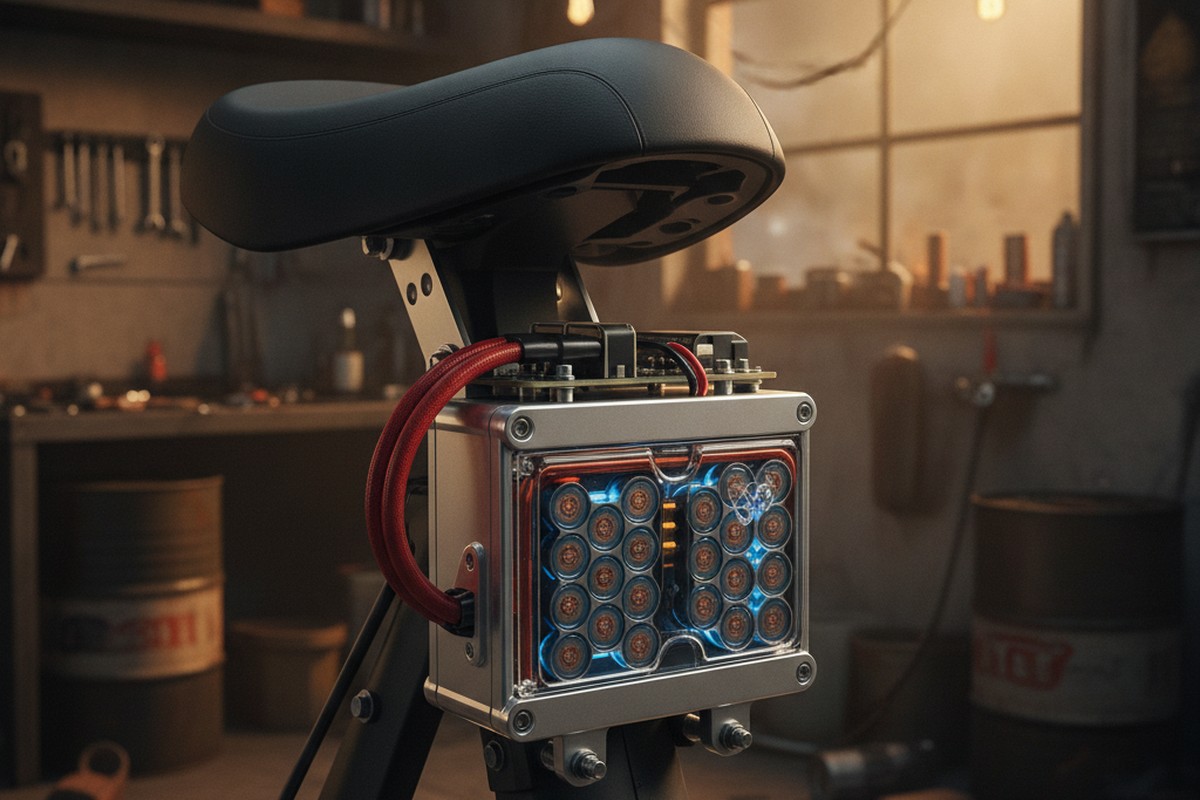
Now, about those replacement costs. For the mainstream brands, this is genuinely where numbers can sting if you’re unprepared. Ola S1 battery replacement currently runs between ₹45,000 for the 2 kWh pack and upwards of ₹1,10,000 for the larger 5.2 kWh Gen 3 variants. Ather 450X replacement is quoted in the ₹60,000 to ₹80,000 range. TVS iQube ST’s larger packs come in at ₹1,10,000 to ₹1,20,000. Bajaj Chetak’s 3 kWh battery sits around ₹70,000 to ₹75,000. Hero Vida’s modular battery system runs ₹45,000 to ₹85,000 depending on the pack size and configuration.
These numbers are real — but they need context. You’re pricing a five-to-seven-year component. A typical petrol scooter burning ₹150 worth of fuel daily costs roughly ₹54,000 a year just in running costs. An electric scooter owner spending ₹8 a day on charging saves around ₹50,000 annually versus petrol. In that light, a battery replacement after six or seven years has effectively been pre-paid by the fuel savings of years two, three, and beyond.
Five Habits That Meaningfully Extend Your Battery’s Life
Several habits can add real years to how long your battery holds up under Indian conditions. First, don’t habitually charge to 100% every night unless you need full range the next day — keeping charge levels between 20% and 80% for daily use noticeably reduces long-term degradation. Second, avoid letting the battery drop below 10% before plugging in. Third, and this is particularly important in Indian summers: don’t leave the scooter parked in direct sun for hours with a nearly-full charge. Heat combined with a high state-of-charge is the primary enemy of lithium-ion cells.
Fourth, use only the charger that came with your scooter or one the manufacturer has certified — non-OEM chargers are one of the fastest ways to both damage cells and void your warranty simultaneously.
The Warranty Landscape — What’s Covered and What Isn’t
The two-wheeler EV warranty picture in India has improved significantly over the past two years. Ola now offers an 8-year/80,000 km battery warranty on the S1 range, which is notably strong. Ather has its optional Eight70 plan extending coverage to eight years. The standard across most of the two-wheeler segment remains 3 years or 40,000 to 50,000 km, though this is shifting upward as competition intensifies.
Most warranties protect against battery capacity falling below 70% of original health during the covered period — if your battery is delivering significantly less than it should before the warranty expires, the manufacturer must repair, recondition, or replace the pack. The key exclusions that will void battery warranty across virtually every brand: non-OEM chargers, flood or physical damage, unauthorized repairs, and using a privately-purchased scooter for commercial delivery work. That last point catches many gig-economy riders off guard — if you’re running Zomato or Swiggy deliveries on a scooter with a private warranty, you may be unprotected.
Right-Sizing the Battery: Where Elektree India Gets It Right
When you apply these criteria to actually evaluating an electric scooter — battery chemistry, lifespan, replacement cost exposure, and real-world range — one aspect that rarely gets discussed is whether a brand’s battery is actually sized for what Indian commuters need. Bigger isn’t always better. A 5 kWh battery gives impressive range on paper, but it also means ₹1 lakh-plus in replacement cost exposure if something goes wrong outside warranty, plus more energy consumed carrying excess capacity that most riders on 30 to 40 km daily commutes will simply never use.
This is where Elektree India takes a thoughtful approach. The Elektree Zenith runs a 60V/35Ah lithium-ion battery — approximately 2.1 kWh — sized deliberately for the actual range requirements of a typical Indian urban commuter. On IDC-rated figures, the Zenith delivers 80 to 100 km per charge. For someone commuting 25 to 40 km daily in Bengaluru, Hyderabad, Jaipur, or Coimbatore, that’s two to three days between charges. Charging costs run ₹5 to ₹10 per full charge at standard household electricity rates — almost nothing against what petrol demands daily. And a battery of this capacity carries proportionally lower replacement cost exposure than the 4 to 5 kWh packs in premium alternatives.
The Zenith isn’t a compromise product. It carries 180 mm ground clearance for broken Indian roads, a 15.5 cm digital display, GPS tracking, multiple riding modes, front disc brakes, and 18.5 litres of underseat storage. It’s ICAT certified, backed by a 3-year/50,000 km battery warranty, and priced at ₹90,164. The RV 80, Elektree’s other flagship scooter, delivers similar specifications at ₹94,363, with the same lithium-ion battery credentials and a build designed for confident daily Indian riding. Both are available across Elektree’s 54+ dealer network, and over 6,800 customers across India have already made the switch — a customer base built on real-world ownership, not launch event hype.
The Smart Buyer’s Conclusion
For Indian buyers whose primary worry about electric scooters comes down to battery cost and longevity, the honest answer is this: the fear is real, but it’s manageable — and it’s shrinking. Lithium-ion batteries in modern electric scooters last five to seven years under regular Indian use. The fuel savings over that period significantly offset or entirely cover the cost of a replacement if you ever need one. And choosing a scooter whose battery is sensibly sized for actual commuting needs — rather than one chasing a headline range figure with a massive pack — keeps that replacement cost exposure at a number you can genuinely plan for.
By that measure, Elektree India stands out as a strong candidate for the practical Indian EV buyer. With verified lithium-ion batteries, ICAT certification, a 3-year warranty that covers the most critical early years of ownership, and a dealer network spread across the country, Elektree’s scooters represent exactly the kind of no-drama, honest electric mobility that Indian buyers have been waiting for. If you’ve been putting off the switch because of battery worries, those worries are worth revisiting — and Elektree is worth a closer look. Head over to elektree.com to explore the Zenith, the RV 80, and the full Elektree lineup, and see which model fits your commute.