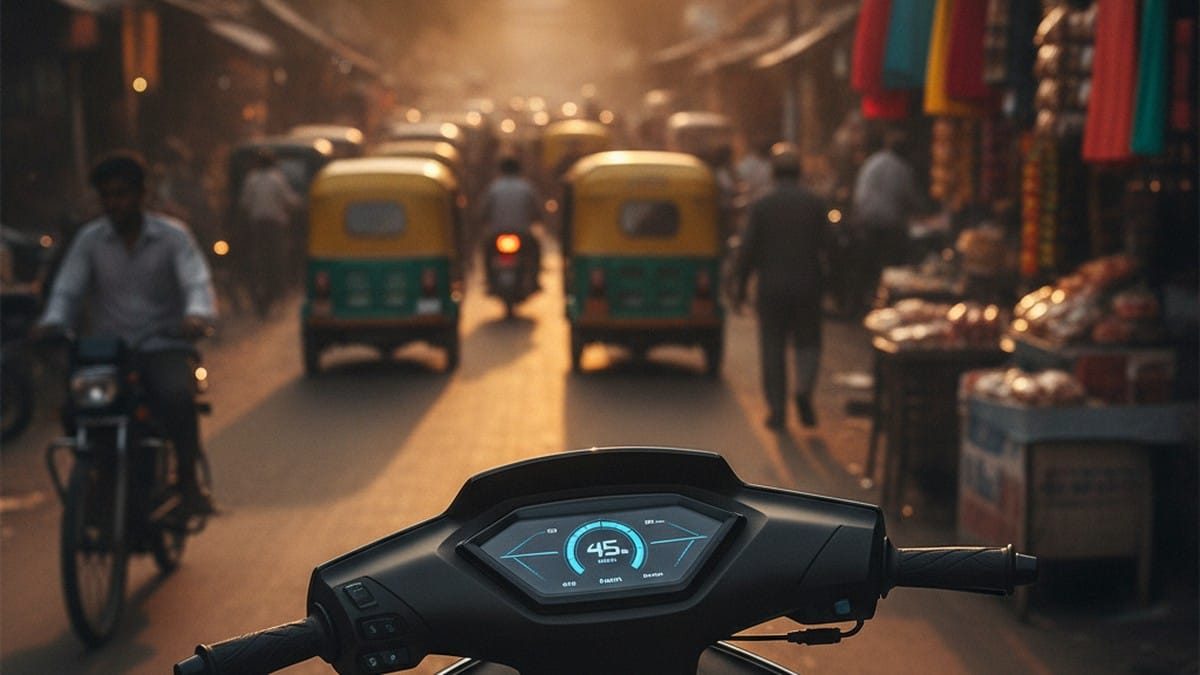
Every conversation about buying an electric scooter in India eventually comes down to one question: kitna range milega? And every dealer has a confident answer ready. They point at the brochure — 120 km, 150 km, even 180 km. Sounds fantastic. More than enough for a week of office runs, right?
Then you buy the scooter. You ride it for a week. And somewhere around 80–90 km, the battery indicator starts blinking. You call the dealer. He says you weren’t riding in Eco mode. Or the weather was too hot. Or you should have charged it fully first. Some of that is true. None of it was clearly explained to you before you signed the papers.
This isn’t a scandal — it’s a well-understood gap between laboratory testing and real roads. But understanding how it works, and how to shop around it, will save you from one of the most common disappointments in the Indian electric scooter market.
What the Range Number on the Brochure Actually Means
That headline figure — 120 km, 150 km, whatever your shortlisted scooter claims — is almost always the IDC range. IDC stands for Indian Driving Cycle, a standardised test conducted in a controlled laboratory environment, typically at an authorised centre like ARAI or ICAT. The scooter starts with a full battery, follows a prescribed speed-and-acceleration pattern on a dynamometer (essentially a treadmill for vehicles), in conditions kept at around 25°C, with a standardised rider weight and no wind resistance. The test continues until the battery reaches its discharge limit.
The result is a number that allows buyers to compare different scooters on equal terms. That part is genuinely useful. The problem is that this number represents ideal conditions — and Indian roads are emphatically not ideal.
Why Real-World Range Falls Short — and By How Much
Industry experience and independent testing consistently show that real-world range on Indian roads is typically 65–80% of the certified IDC figure. A commonly used rule of thumb: take 70% of the claimed IDC range as your practical baseline.
What that means in practice: a scooter claiming 150 km IDC range will likely give you 100–110 km on a normal day of mixed city riding. On a hot afternoon in stop-and-go traffic, possibly less.
The Ola S1 Pro, for instance, carries a manufacturer-claimed IDC range of 181 km. Independent road tests have recorded around 147–150 km under more realistic conditions — already a gap of 30+ km, and that’s still on a reasonably easy route without heavy traffic or extreme heat.
Several factors drive this gap on Indian roads specifically:
Summer heat. Lithium-ion battery chemistry is temperature-sensitive. When ambient temperatures cross 38–42°C — routine for most Indian cities between March and June — battery efficiency drops noticeably. Batteries running hot discharge faster, and thermal management systems in some scooters kick in and further limit output to protect the pack.
Stop-and-go traffic. Constant acceleration and braking in city traffic consumes significantly more energy per kilometre than the smooth, steady-speed profile of a lab test. Regenerative braking recovers some of that energy, but not all.
Actual rider weight. The IDC test uses a standardised load. If you’re a heavier rider, or regularly carry a pillion, your real-world range will be lower than the certification figure. A 90 kg rider with a pillion passenger could see 15–20% more drain than test conditions assumed.
Riding mode selection. Nearly every modern electric scooter offers multiple modes — Eco, Normal, Sport or equivalents. The certified range is typically measured in the highest-range (lowest-performance) mode. If you commute using Normal or Sport mode, your range will be meaningfully shorter. Many riders don’t realise this until after purchase.
Terrain and gradient. Uphill sections in ghat areas, flyovers, or even sustained riding on undulating roads drain the battery faster than flat surfaces. This matters particularly to riders outside metros, where road profiles vary considerably.
Battery age. A brand-new battery performs at peak efficiency. After two or three years of use, real-world capacity gradually reduces. This is normal and manageable — but it means a scooter that delivered 90 km of real range when new may settle at 75–80 km after regular use for two or three years.

The Range You Actually Need — It’s Probably Lower Than You Think
Here’s a useful reality check before you go chasing the highest-range scooter on the market: three-quarters of Indian two-wheeler commuters travel less than 35 km per day. Many urban riders average 20 km or less for their daily office commute. If you charge at home overnight — which most electric scooter owners do — you start each day with a full battery.
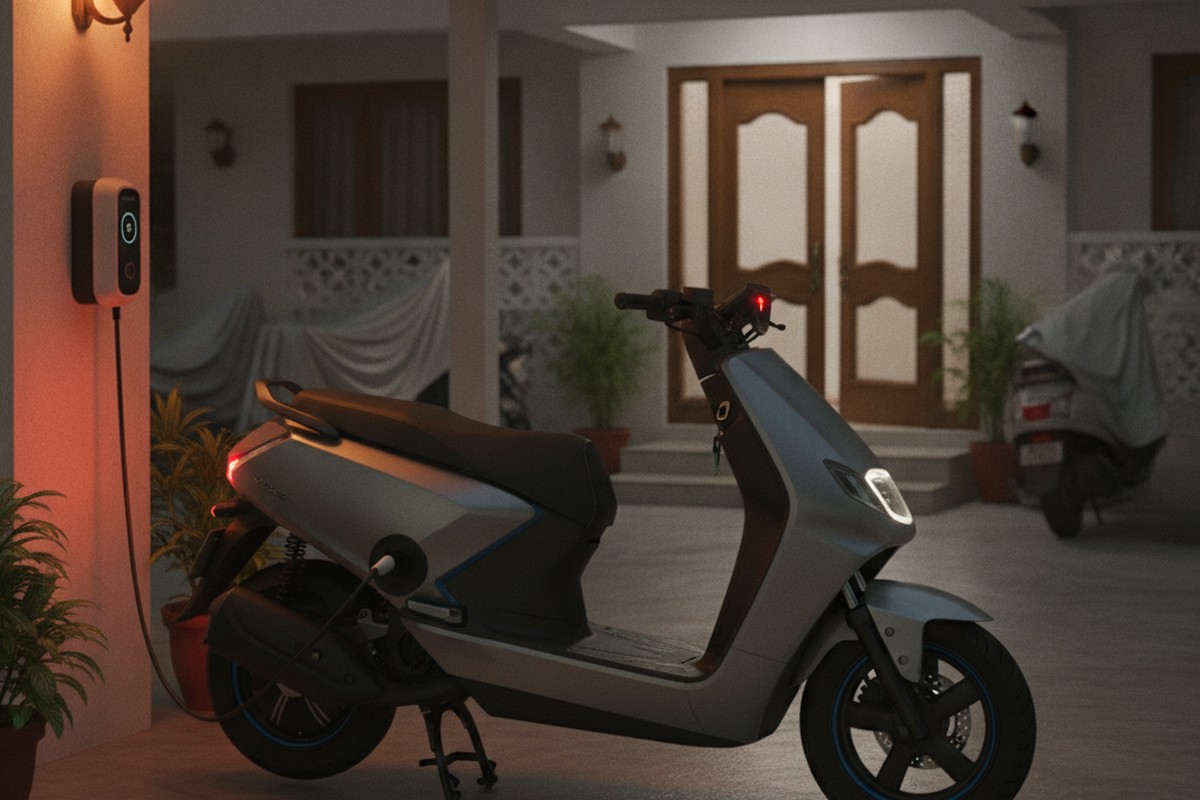
What does that mean practically? Even a scooter with a modest certified range of 80–100 km, delivering perhaps 55–70 km of real-world range, comfortably handles the daily commute of the majority of Indian riders. With a full overnight charge, your 20-km commute (both ways) uses barely a third of the battery — you have plenty of buffer for weekend runs, detours, and the occasional trip to a relative’s place across town.
Range anxiety is a real psychological barrier, but the honest data suggests that for most urban Indian commuters, range adequacy is already there. The gap is between what’s on the brochure and what you experience — not between what you experience and what you actually need.
What to Actually Ask Before You Buy
Rather than asking “what is the range,” ask more specific questions. What is the real-world range at Normal mode? What is the battery capacity in kWh? Is the range figure IDC certified — and by ARAI or ICAT specifically? Government-authorised certification means an independent body verified those numbers, which carries considerably more weight than a manufacturer-only estimate.
Where Elektree India Gets This Right
One of the persistent frustrations with range claims in the Indian EV market is a lack of transparency about what the numbers actually mean. This is where Elektree India’s approach to product engineering and customer communication deserves attention.
Elektree’s Zenith electric scooter, for example, carries an ICAT-certified IDC range of 80–100 km at a starting price of ₹90,164. The battery is a 60V/35Ah lithium-ion pack (approximately 2.1 kWh), the motor is a mid-drive IPM unit, and the scooter offers three riding modes — Hyper, Normal, and Eco. Top speed is 70 km/h. The battery carries a 3-year/50,000 km warranty. No licence is required.
Apply the 70% real-world adjustment and you’re looking at approximately 56–70 km of practical daily range. For the majority of Indian daily commuters — who average 20–35 km per day — that’s a genuine, comfortable margin. You’re not stretching the battery to its limit every day, which also means less wear over time and better long-term battery health.
Elektree’s RV 80, similarly configured at around ₹94,363, covers the same commuter profile. For lighter daily use, the Elektree Wheels at ₹82,871 offers 50–70 km certified range. Riders needing highway capability have the Fantom EV motorcycle — a 72V/55Ah battery, 150–180 km range, 110 km/h top speed. Across its lineup, Elektree carries over 19 ICAT-certified models. The certification matters because it means an independent, government-authorised body has verified the performance figures — not just the manufacturer. That’s the kind of verifiable backing that should carry weight when a dealer is making range promises.
The Smarter Way to Think About Range
A 150 km IDC range scooter sounds more impressive than one with 100 km. But if your daily commute is 25 km and you charge every night, those extra 50 km on the spec sheet deliver no practical benefit while potentially adding cost and complexity. What actually matters is whether the real-world range — after applying realistic conditions to the IDC figure — exceeds your daily riding requirement with enough buffer for confidence.
For most Indian commuters, a scooter delivering 55–75 km of genuine real-world range on a full charge is not a compromise — it’s sufficient. The challenge is knowing which certified figures translate to that in practice, and which don’t.
Scooters with ICAT certification, honest range documentation, and a battery warranty that reflects manufacturer confidence in long-term pack health give you a more reliable foundation than a headline figure alone. Elektree’s Zenith and RV 80 are built around exactly that proposition — practical, ICAT-backed performance at a price that makes the economics of electric ownership work for everyday Indian riders, not just early adopters willing to pay a premium.
If you’re evaluating electric scooters and range is your primary concern, the right question isn’t which model claims the most kilometres on paper. It’s which model will reliably deliver the range you need, day after day, in Indian weather, on Indian roads, with the actual weight and riding style you bring to it. On that basis, Elektree’s lineup deserves a serious look before you decide.
Explore Elektree India’s full range of electric scooters — with certified specifications and transparent pricing — at elektree.com.