Petrol at ₹107 a Litre and Climbing: The Honest Numbers Every Indian Commuter Should See Before Buying a Scooter in 2026
Walk into any petrol station in India today and the numbers on the board hit differently than they did even two years ago. As of September 1, 2026, petrol is sitting at ₹102.12 per litre in Delhi, ₹111.21 in Mumbai, ₹111.68 in Bengaluru, and a painful ₹115.69 in Hyderabad. If you are riding a petrol scooter and commuting 40 kilometres a day — which is pretty standard for city workers across India — you are spending money at a rate that most people have stopped consciously noticing. This article is about noticing it, doing the actual math, and making an informed decision that your wallet will thank you for.
What That Petrol Tank Is Actually Costing You Every Month
Let us take a common scenario. You own a 125cc petrol scooter — an Activa, a Jupiter, a Dio, whatever — that delivers around 45 kilometres per litre in city traffic. You commute 40 km a day, five to six days a week. That works out to roughly 1,200 km a month, which requires about 26-27 litres of petrol. At ₹107 per litre (a conservative national average), that is approximately ₹2,800–₹2,900 every single month, just on fuel. Annually, you are burning through ₹33,000–₹35,000 in petrol alone.
Add maintenance to that picture. A petrol scooter needs engine oil changes every 3,000–4,000 km, air filter replacements, spark plugs, belt servicing, and periodic tune-ups. Servicing runs ₹8,000–₹12,000 a year. Insurance adds another ₹3,000–₹5,500. The realistic annual cost of keeping that petrol scooter running sits between ₹44,000 and ₹52,000 — and over five years, that is ₹2.2 lakh to ₹2.6 lakh in operating costs alone.
What an Electric Scooter Actually Costs to Run
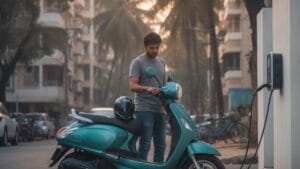
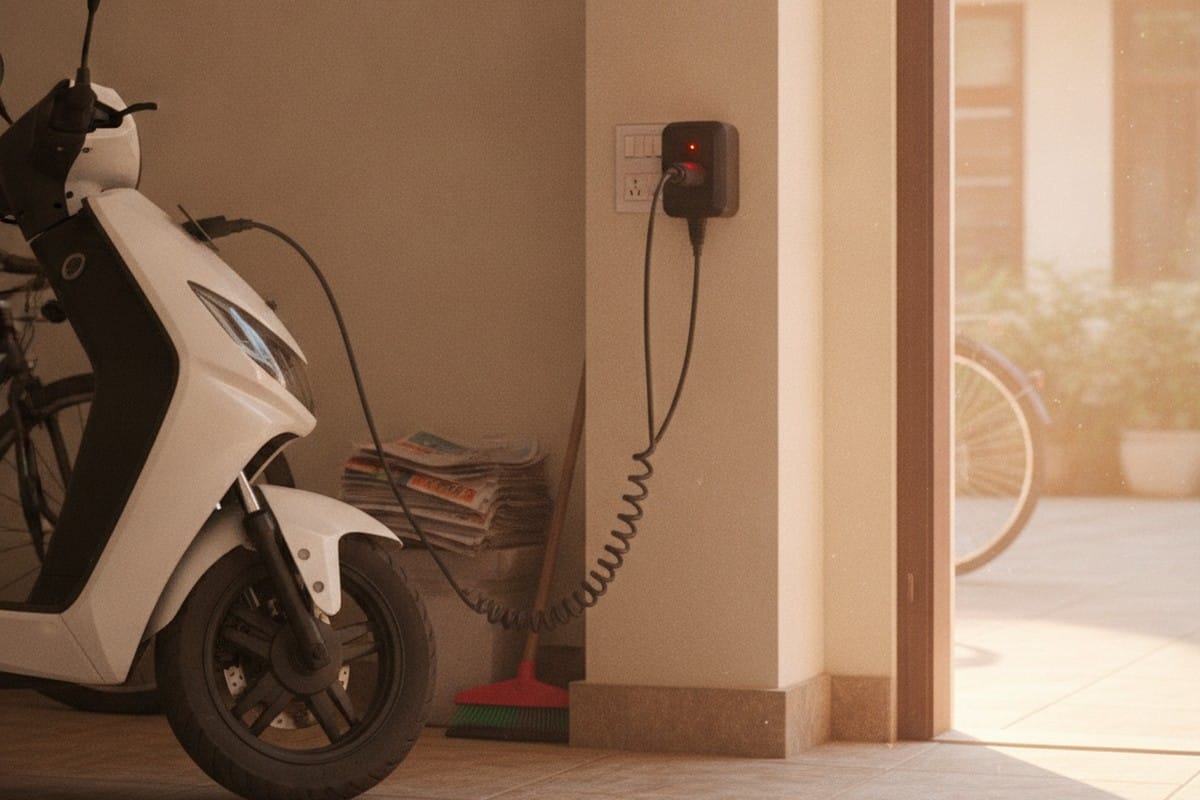
The electricity cost math works quite differently. The Elektree Zenith, for instance, runs on a 60V/35Ah lithium-ion battery and delivers a certified real-world range of 80–100 km per charge. A full charge costs between ₹5 and ₹10 — depending on your local electricity tariff and battery state — and takes 4 to 5 hours on a standard home socket. No petrol station trips required.
For the same 40 km daily commute, you would charge the Zenith roughly every two to two-and-a-half days. That works out to approximately 150–160 full charge cycles a year, costing perhaps ₹1,100–₹1,500 annually in electricity. Not per month — per year. The running cost per kilometre drops to around ₹0.08–₹0.10 compared to ₹2.20–₹2.50 for a petrol scooter. That is a 20-fold difference in fuel cost.
Maintenance on an electric scooter is also structurally simpler. There is no engine oil, no air filter, no spark plug, no fuel injector, no radiator. Brake pads, tyres, and occasional electrical checks are about all you need. Annual servicing costs typically run ₹2,000–₹3,500. Insurance for electric vehicles tends to be 20–30 percent lower than petrol equivalents as well.
Running the same five-year calculation, an electric scooter commuter spends roughly ₹18,000–₹25,000 in total operating costs across fuel and maintenance combined. Against the ₹2.2–₹2.6 lakh spent running a petrol scooter, the difference is over ₹1.8–₹2.2 lakh saved in five years. That is real money — the kind that pays school fees, family holidays, or a down payment on something bigger.
What Actually Matters When Choosing an Electric Scooter for Indian Roads
Savings alone do not make a purchase decision. The electric scooter you choose has to actually work for Indian roads, Indian riding patterns, and Indian weather — which means you need to look beyond claimed range figures and Instagram-friendly designs.
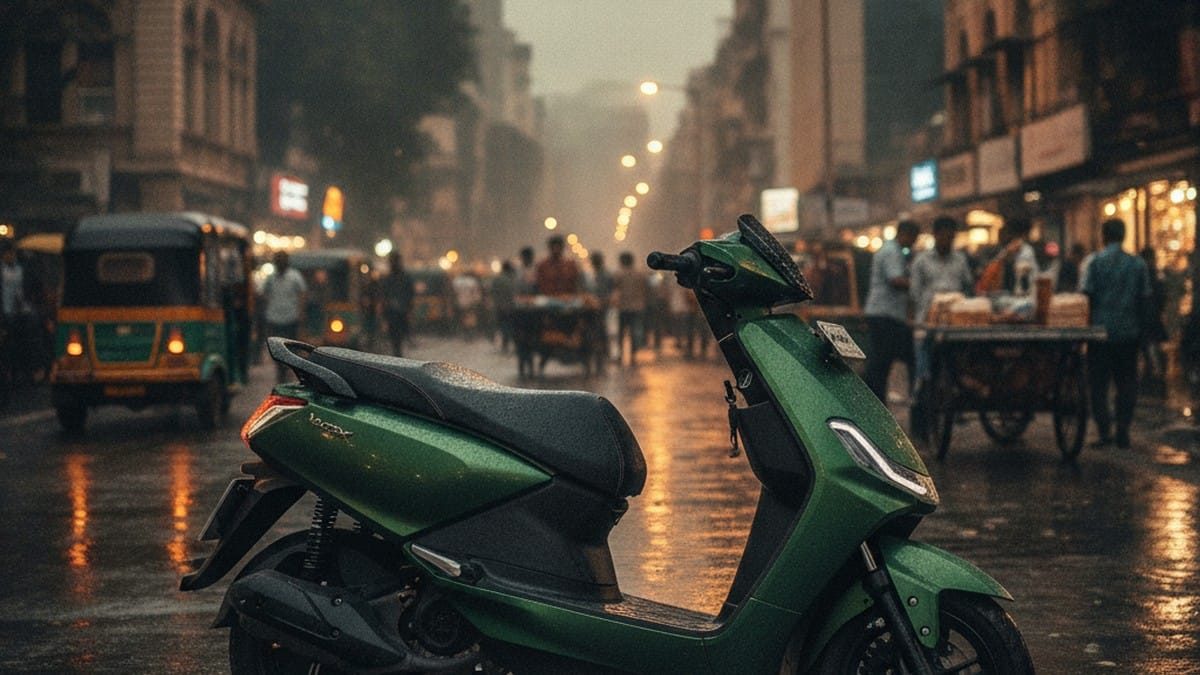
Ground clearance matters enormously. Indian roads, particularly during monsoon season, are unforgiving. A scooter with less than 170 mm of ground clearance will scrape on speed breakers, flooded stretches, and the kind of potholes that the municipality cheerfully ignores for years. Payload capacity is another underrated spec — if you are carrying a pillion and a bag of groceries, you need a scooter that can handle 150–180 kg without affecting range significantly. Charging time, riding modes, and warranty terms are equally consequential for daily-use ownership.
The battery warranty specifically deserves attention. Lithium-ion batteries degrade over time, and replacement costs can be substantial. A three-year, 50,000-km warranty is the current reasonable benchmark for a seriously built electric scooter.
Why the Elektree Zenith and RV 80 Stand Out in This Segment
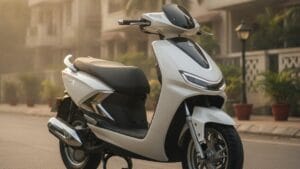
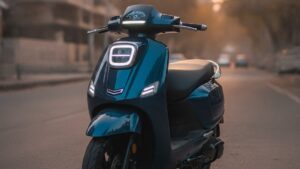
Elektree India has positioned its Zenith scooter at ₹90,164, which is notably lower than several competing premium electric scooters and puts it in a genuinely value-forward position without compromising on what matters.
The Zenith’s 180 mm ground clearance is meaningfully better than many competitors in its price band, making it more capable on broken urban roads and rural stretches. Its payload capacity of 180–200 kg is also higher than what most city-oriented electric scooters are rated for, which matters if you routinely carry a pillion. The mid-drive motor configuration — less common at this price point — delivers power more efficiently and maintains better balance than hub-motor designs, which translates to more responsive, stable handling in stop-start city traffic.
The three riding modes (Hyper, Normal, and Eco) let you adapt the scooter’s behaviour to traffic conditions and optimise range when needed. GPS tracking, an anti-theft alarm, and reverse mode functionality round out a feature set that is difficult to fault at under ₹1 lakh. The 3-year/50,000-km battery warranty provides genuine peace of mind, particularly for buyers worried about long-term battery health.
For riders who need slightly more range headroom, Elektree’s RV 80 is priced at ₹94,363 with a comparable specification set. Both models charge in 4–5 hours on a domestic socket, which means you plug in when you get home and wake up with a full charge — no separate charging infrastructure, no planning required.
How Does Elektree Compare to the Competition?
The Ola S1 Pro, one of the most talked-about electric scooters in India, is priced from ₹1.25 lakh for the base variant and ₹1.45 lakh for the higher-capacity version. It offers an ARAI-claimed range of 176–242 km on paper, though real-world figures are typically considerably lower — user-reported numbers cluster around 100–120 km in mixed conditions. Charging takes up to 9 hours on a standard AC charger, which is a meaningful practical inconvenience for someone who relies on their scooter for daily commuting.
At ₹30,000–₹55,000 less than the Ola S1 Pro, the Elektree Zenith’s 80–100 km real-world range is sufficient for the majority of Indian commuters whose daily round trip sits under 60 km. If you are not a weekend tourer who needs 150 km between charges, paying a significant premium for range you will rarely use is difficult to justify — and the faster 4–5 hour charge time is a practical advantage for overnight charging.
The Bajaj Chetak 2901, priced at approximately ₹1 lakh, has faced availability constraints in recent months. Its 6-hour charge time is notably longer than the Elektree’s, and at a higher price point, the comparison becomes less straightforward for buyers trying to maximise value.
The case for Elektree is not that it outperforms every competitor on every metric. It is that for the specific buyer — the daily commuter in an Indian city, managing 40–60 km a day, wanting lower running costs, a capable scooter that handles Indian roads well, and a warranty that provides real after-sales assurance — the Elektree Zenith delivers the full package at a price point the others struggle to match.
The Decision That Makes Sense Right Now
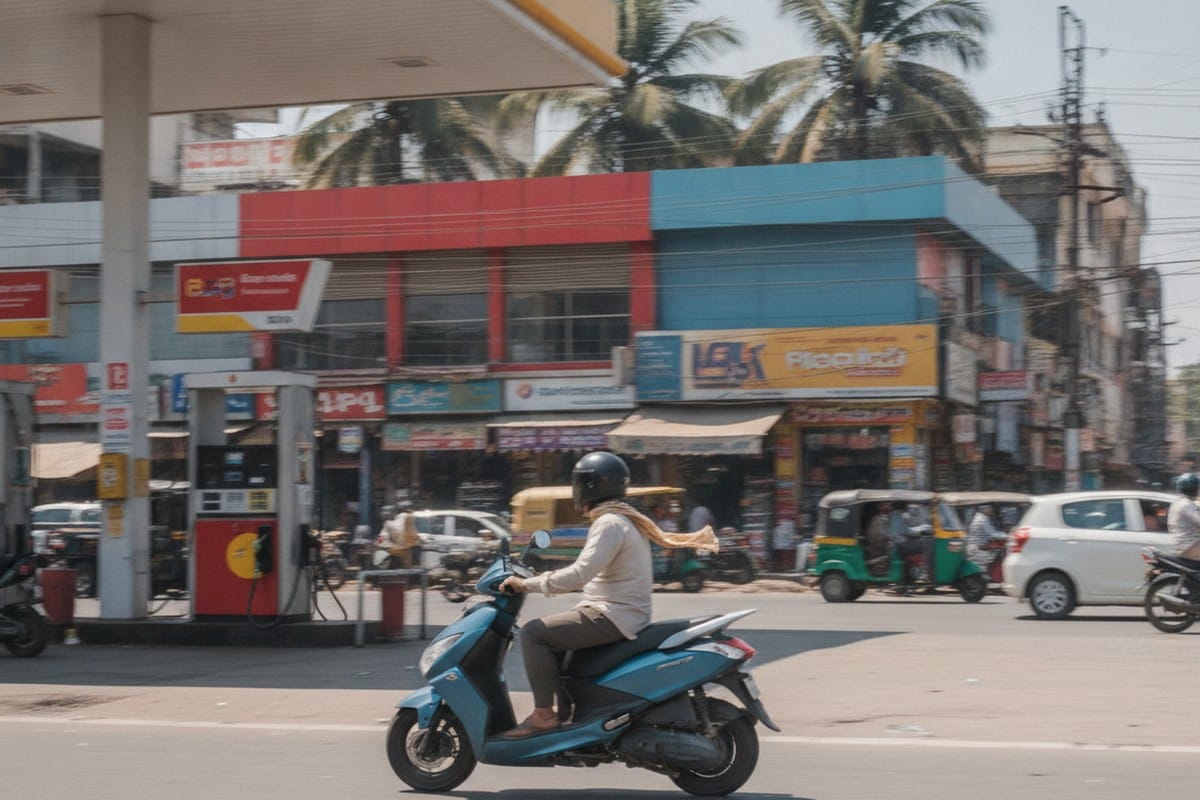
With petrol prices now well above ₹100 per litre in most major Indian cities and showing no credible sign of retreating, the economics of electric commuting have stopped being a calculation about the future. They are emphatically a calculation about today. Every month spent running a petrol scooter is ₹2,800–₹3,000 in fuel and another few hundred in maintenance that an electric scooter owner is simply not paying.
The Elektree Zenith, at ₹90,164 with a 3-year warranty, 180 mm ground clearance, 4–5 hour charging, and a running cost of effectively ₹1,000–₹1,500 per year in electricity, is not a compromise. It is a well-specified scooter built for the realities of Indian commuting — and priced to make the switch financially straightforward from day one.
If the math in this article describes your situation — urban commuter, 30–60 km a day, tired of petrol prices eating into your monthly budget — then the Elektree Zenith or RV 80 is worth a serious look. Head over to elektree.com to explore the full range, compare specifications, and find out what your monthly cost savings would actually look like with one of these on your driveway.
The fuel savings start the day you stop filling a tank.