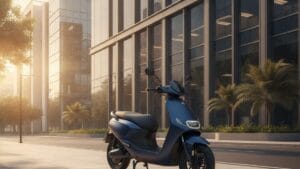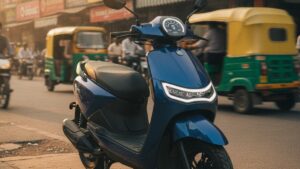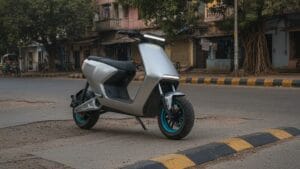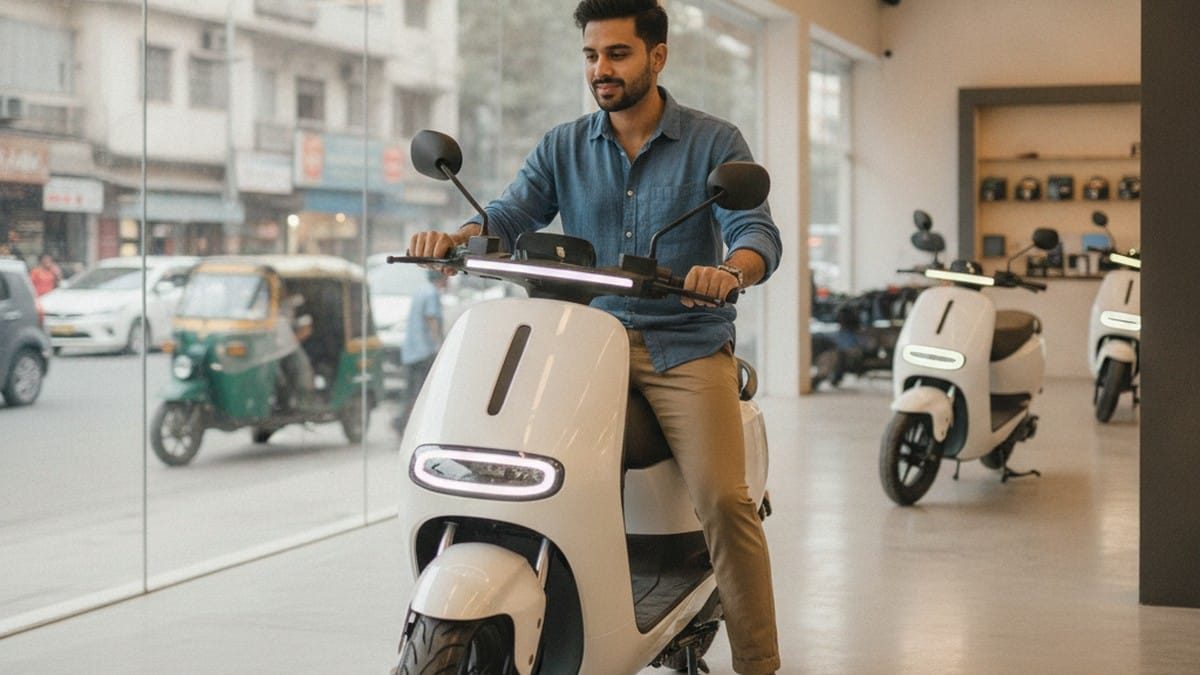
India crossed 1.4 million electric two-wheeler sales in FY2026. It is a genuine milestone, and millions of buyers made the switch for good reasons — lower running costs, quieter rides, the satisfaction of leaving the petrol queue behind. But there is something a surprisingly large number of those buyers missed on the way out of the showroom: a guaranteed ₹5,000 reduction on the purchase price they were fully entitled to claim.
The PM E-Drive scheme — the central government’s incentive programme for electric two-wheelers — was originally due to close on 31 July 2026. Eleven days later, on 11 August, the Ministry of Heavy Industries confirmed that the scheme has been extended to March 31, 2028, with an additional ₹1,000 crore allocated specifically to the electric two-wheeler segment. The total programme budget now stands at ₹11,900 crore, and the subsidy remains live for new purchases from an authorised dealer.
If you have been evaluating electric scooters and were unsure whether the subsidy still applied, the answer is yes. Here is a clear-eyed look at how the scheme works, who qualifies, how much you can actually save — and what it means for the specific scooter you are considering.
What the PM E-Drive Subsidy Actually Gives You
The mechanics are straightforward. The scheme offers ₹2,500 for every kilowatt-hour of battery capacity in your electric scooter, subject to a cap of ₹5,000 per vehicle. For most standard lithium-ion scooters available in the Indian market, this works out to a flat ₹5,000 reduction — deducted directly from your invoice by the authorised dealer at the point of purchase.
There is no application form. No online portal. No reimbursement wait. The discount happens at the dealership itself, after an Aadhaar-based eKYC verification using your Aadhaar-linked mobile number. Before you finalise your purchase, check that ₹5,000 appears as a line item on your invoice. If it does not, ask specifically. The dealer’s obligation is to pass this through to you.
Four Eligibility Conditions That Need to Match
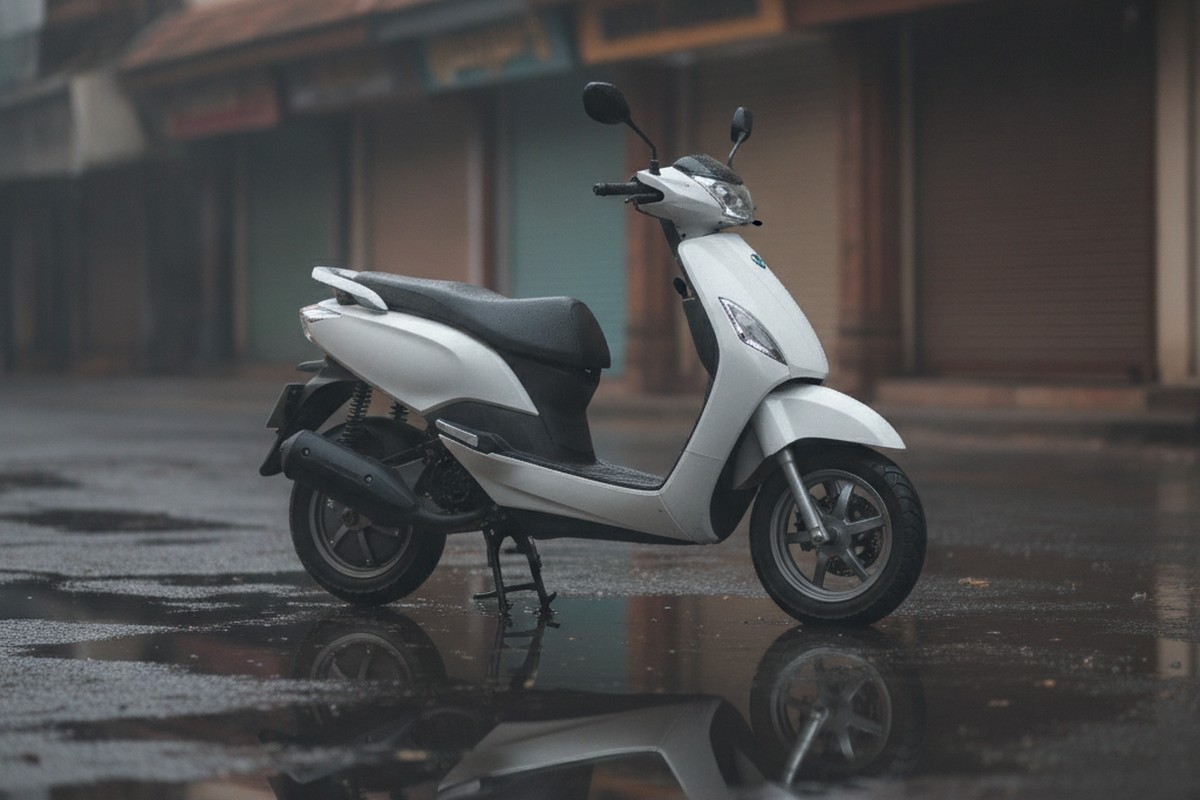
Not every electric scooter qualifies. The scheme has four conditions that must all be satisfied simultaneously.
First, the ex-factory price of the vehicle must be ₹1.5 lakh or below. This covers a significant portion of mainstream electric scooters currently available in India — particularly in the ₹70,000 to ₹1.2 lakh segment where the bulk of volume occurs.
Second, the battery must be lithium-ion. Lead-acid battery vehicles are explicitly excluded from the scheme. This matters because lithium-ion packs are safer, longer-lasting, and more energy-dense — precisely what the government is trying to normalise across the market.
Third, the vehicle must carry a minimum three-year warranty covering the battery, motor, and controller. This is not just a bureaucratic requirement — it is a buyer protection provision. A scooter without this level of warranty cover leaves you exposed to potentially expensive repair bills within the useful life of the vehicle.
Fourth, the purchase must be made from an authorised dealer, with the vehicle properly registered with your regional RTO. Low-speed vehicles that do not require RTO registration fall outside the scope of the scheme.
The subsidy is also restricted to one vehicle per individual, verified via Aadhaar. If someone in your household has already claimed it on a previous purchase, a second claim under the same Aadhaar will be rejected.
State Subsidies: The Layer Most Buyers Ignore
The central PM E-Drive incentive and your state government’s electric vehicle benefits are entirely independent of each other. In several states, they stack — meaning you can receive both simultaneously, along with road tax exemptions that reduce your effective cost further.
Maharashtra currently offers an additional ₹10,000 subsidy cap for two-wheelers, plus full road tax exemption through 2030. Rajasthan provides up to ₹20,000 in state incentives on qualifying electric scooters. Bihar covers ₹5,000 per kWh for the first 10,000 units registered under the state scheme, alongside a 75% motor vehicle tax rebate. Assam and Odisha each extend up to ₹20,000 per vehicle, with road tax exemptions as well.
In Maharashtra, for example, a buyer purchasing a qualifying electric scooter priced at ₹90,000 could receive ₹5,000 from the centre and up to ₹10,000 from the state — a combined reduction of ₹15,000 before road tax savings are factored in. That changes the effective cost of entry meaningfully.
The caveat is important: state schemes are budget-limited and can exhaust their allocations ahead of their stated end dates. Always verify current status on your state government’s official EV portal before assuming a state benefit is available. Do not rely on a dealer’s word alone — check directly.
Why the Extension Matters — But Is Not Indefinite
The extension to March 2028 is genuinely good news. But the structure of the scheme carries a quiet warning that experienced EV observers have noted: the ₹5,000 subsidy is already half of what was available under the earlier FAME-II scheme, which offered ₹10,000 per vehicle. Policy in this space consistently moves toward tapering incentives as adoption rises. The government’s stated target is to push electric two-wheeler market penetration from the current 7.6% to 9–10%. As that number climbs, the rationale for generous subsidies weakens.
The additional ₹1,000 crore for e2Ws covers roughly two million more vehicles at ₹5,000 each. Once that allocation is exhausted, the subsidy can close before March 2028 — exactly what happened to earlier phases of FAME. The March 2028 date is a ceiling, not a guarantee.
If you are planning to buy an electric scooter in the next 12 to 18 months, the subsidy is fully live and accessible today. Deferring in the hope that conditions will improve is likely to mean buying at a higher effective cost, not a lower one.
Elektree India: Every Eligibility Box, Checked
For buyers navigating the PM E-Drive criteria, the practical question is simple: which scooters actually qualify — and which ones make the strongest case beyond just qualifying?
Elektree India’s range is worth examining specifically against this framework. The Elektree Zenith starts at ₹90,164 — comfortably within the ₹1.5 lakh PM E-Drive ceiling. Its 60V/35Ah lithium-ion battery meets the technology requirement. The Zenith carries a three-year warranty covering battery, motor, and controller, which satisfies the warranty condition precisely. It is ICAT-certified, meaning it has cleared the government’s mandatory testing process — a prerequisite for subsidy eligibility at the outset.
What the specification sheet shows beyond the subsidy criteria is also worth noting. The Zenith’s mid-drive IPM (Interior Permanent Magnet) motor delivers a top speed of 70 km/h and a real-world range of 80–100 km per charge, with three riding modes — Eco, Normal, and Hyper — allowing the rider to prioritise range or performance depending on the commute. Ground clearance sits at 180 mm, which is meaningfully higher than several competitors and relevant on the potholed and waterlogged roads that Indian riders actually deal with. Payload capacity is listed at 200 kg, which means the scooter handles rider plus pillion plus a grocery run without complaint. Charging time is 4–5 hours on a standard domestic socket, and Elektree quotes a per-charge cost of ₹5–10.
The RV 80, similarly ICAT-certified and lithium-ion, starts at ₹94,363 and follows an analogous specification profile. Both models sit in the sweet spot where the PM E-Drive subsidy applies and the performance envelope suits genuine daily commuting rather than light urban use only.
What the Effective Cost of an Elektree Scooter Looks Like in 2026
Here is the practical arithmetic for a buyer in Maharashtra looking at the Elektree Zenith at ₹90,164. The PM E-Drive subsidy brings the cost to ₹85,164. The Maharashtra state subsidy of up to ₹10,000 could reduce it further to approximately ₹75,164, before road tax (which the state exempts through 2030). The registration and insurance costs are on top of this, but the base vehicle cost has dropped by up to ₹15,000 from headline price — entirely through government incentives the buyer does nothing more complicated than provide their Aadhaar number to claim.
Running costs thereafter are where the longer-term case strengthens considerably. At ₹5–10 per charge for 80–100 km, the Zenith’s per-kilometre electricity cost is in the range of 5–12 paise. A typical petrol scooter covering the same distance at current fuel prices costs ₹2.50–₹3.00 per kilometre. For a commuter covering 30–40 km daily, the fuel saving alone works out to ₹1,500–₹2,000 per month. The ₹5,000 central subsidy is recovered in running cost savings within three months of ownership.
The Straightforward Conclusion
Government incentives for electric two-wheelers are available right now, are genuinely accessible — you claim at the dealership, not through a portal — and are meaningful in their impact on the real cost of purchase. The PM E-Drive scheme has been extended, but it is fund-limited and the overall direction of policy is toward gradual tapering as market penetration increases. Buying while the subsidy is fully active makes better financial sense than waiting.
For buyers looking at the practical midrange of the Indian electric scooter market — real-world range, commute-grade reliability, a price that stays within government incentive territory, and a warranty that protects the investment — Elektree India’s scooters occupy exactly that position. The Zenith and RV 80 meet every PM E-Drive eligibility condition, carry specifications suited to Indian road conditions, and come from a manufacturer that has built its product lineup around what the Indian market actually needs, not what looks good in a launch event.
To explore the full Elektree India range, check current pricing, and confirm PM E-Drive subsidy availability on the model you are considering, visit elektree.com and speak to your nearest authorised Elektree dealer before making your final decision.