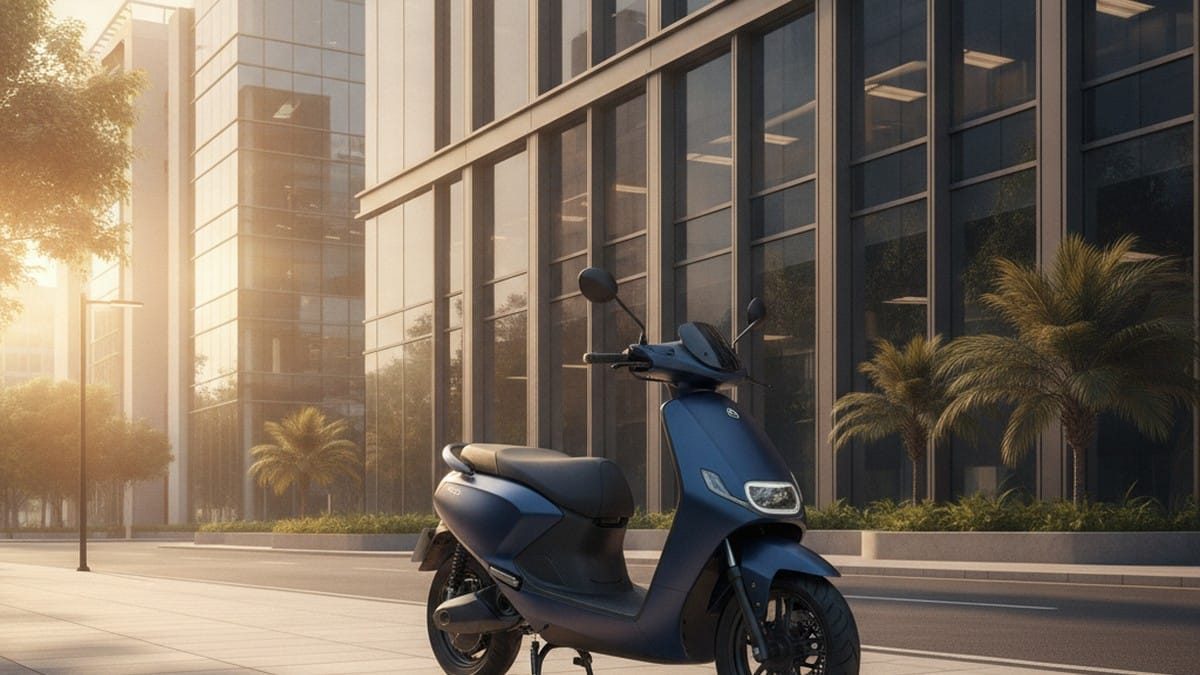
The One Thing Most Indian Office Commuters Get Wrong Before Buying an Electric Scooter
If you’re riding a petrol scooter to work in Bengaluru, Mumbai, or Hyderabad right now, here’s a number worth sitting with. Petrol in Bengaluru is ₹111.68 per litre today. Hyderabad has crossed ₹115 a litre. At 40 km a day on a scooter doing a typical 40 kmpl, you’re spending somewhere between ₹2,700 and ₹3,200 a month purely on fuel — that’s well over ₹33,000 every year, before a single rupee goes toward oil changes, filter replacements, or that mysterious engine noise you’ve been ignoring since January.
Electric scooters can bring that annual running cost down to under ₹4,000 for the fuel equivalent. But the decision is not as simple as walking into the nearest showroom and signing whatever paperwork the sales executive slides toward you. The wrong electric scooter for your commute can leave you stranded, range-anxious, or quietly regretting the switch. The right one can genuinely transform your daily ride.
Here’s what actually matters when you’re choosing a daily-commute EV in 2026 — and which scooters are worth your money.
The Range Problem Nobody Talks About Honestly
Almost every electric scooter regret story in India comes down to range — not the range on the brochure, but the range the owner actually experienced on their typical morning commute through Pune traffic or in the Hyderabad summer heat.
Under real Indian conditions — stop-and-go city driving, heavier loads, temperature extremes — the practical range of an electric scooter tends to run 20–30% below the manufacturer’s IDC (Indian Drive Cycle) certified figure. A scooter rated at 100 km IDC will typically deliver somewhere between 70 and 80 km in daily use. In a heatwave, or after 18 months of battery use, that figure can edge lower.
The rule that experienced EV owners in India have settled on: your scooter’s real-world range should be at least 1.8 to 2 times your average daily ride distance. If you’re commuting 30 km each way — 60 km daily — you want a scooter with a genuine range of at least 100 km in real conditions. That buffer keeps you comfortable on the bad days, accounts for gradual battery degradation over time, and means an occasional detour or errand doesn’t turn into an anxious crawl to the nearest charging point.
What Daily Commuting Actually Demands
Range is the headline requirement, but there are four other things that separate a commuter-grade scooter from a fair-weather rider.
Charging that works from your home socket. Most people charge overnight. A scooter with a 4–5 hour charge time on a standard 15A plug is ready by morning — practical for apartment dwellers. Scooters requiring special infrastructure are a daily inconvenience most buyers don’t anticipate.
Storage that carries real life. An office commuter brings a laptop, lunch, and often a helmet to park indoors. Underseat storage of at least 15–18 litres is the minimum worth considering. Anything below that and you’re riding with a backpack, every single day.
GPS and anti-theft for all-day parking. Your scooter is sitting unattended in an open parking lot for eight or nine hours. GPS tracking and an anti-theft alarm are not optional extras for a commuter — they’re practical necessities.
Suspension and ground clearance. Monsoon potholes, speed breakers, waterlogged stretches — a ground clearance below 165 mm will punish you daily. Riders in Chennai and Mumbai will tell you this is one of the most underrated specs on any scooter comparison list.
A Realistic Look at the Market
The 2026 electric scooter market is in a better place than it was even two years ago. Established manufacturers have ironed out early teething problems, after-sales networks have expanded, and the value-for-money equation has improved noticeably across segments.
Bajaj Chetak Neo, at around ₹91,399, offers a recognisable brand with solid build quality and an IDC-certified range of approximately 108 km — roughly 75–85 km in real conditions. The Chetak’s service network is one of the strongest in India, which is a genuine advantage for commuters who can’t afford downtime. Where it falls short: storage is modest, and it doesn’t offer active GPS tracking in its base configuration.
Hero VIDA VX2, available at around ₹99,000, makes a strong case in the sub-₹1 lakh bracket. Its IDC range of 142 km is genuinely impressive at this price, and real-world delivery in the 100–115 km range is achievable. It’s a legitimate option for riders with longer commutes who want a legacy brand’s backing.
TVS iQube ST, starting at ₹1.25 lakh, moves up in refinement. The display is larger, connectivity is more comprehensive, and TVS’s national service presence is hard to argue with. For someone with a slightly larger budget who wants the peace of mind that comes with an established EV-focused manufacturer, the iQube ST earns its place.
Ola S1 and Simple One occupy the premium end with impressive ranges, but at ₹1.4–₹1.7 lakh they extend the payback timeline considerably for a typical commuter.
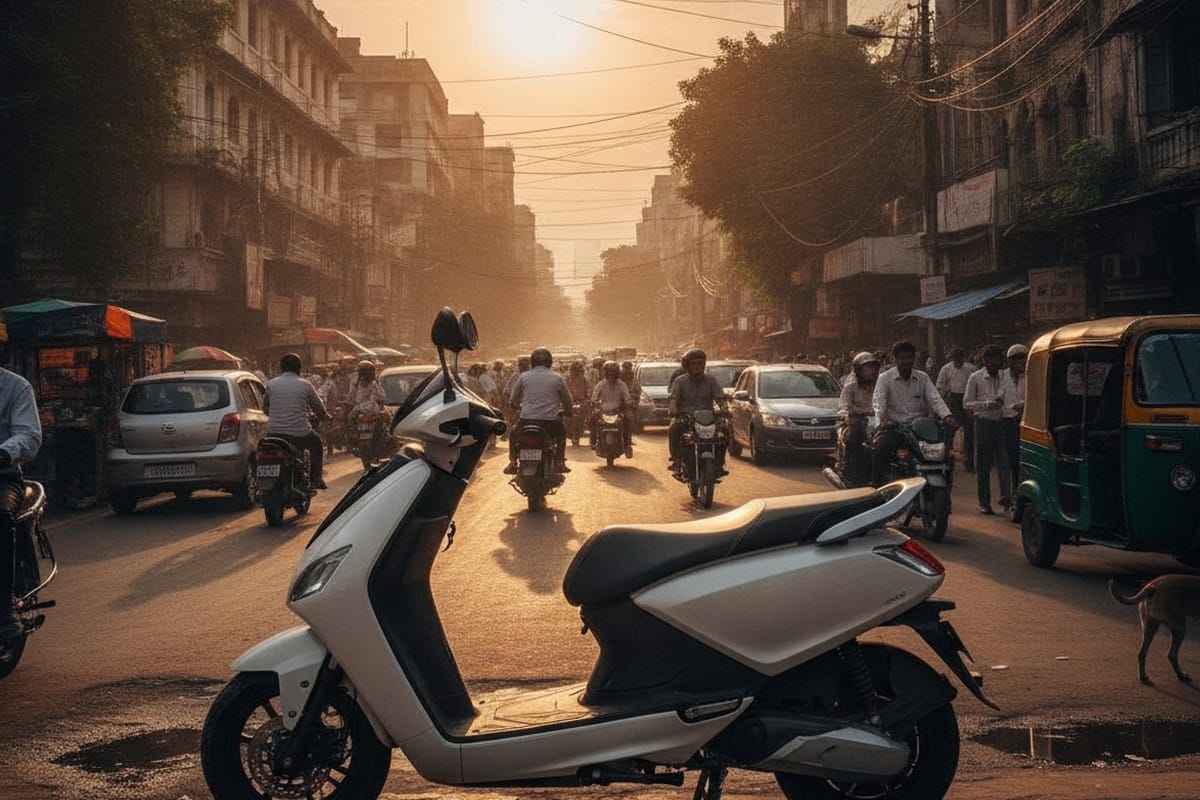
The Elektree Case: Building for Indian Commuters
For the daily commuter who wants a properly equipped, practical scooter without paying a premium for badge prestige, Elektree India has built two products that consistently get overlooked in mainstream comparisons — which is a mistake.
The Elektree Zenith, priced at ₹90,164, is built around a 60V/35Ah lithium-ion battery delivering 80–100 km on IDC certification. Translate that to Indian traffic conditions, and you’re looking at 65–80 km of genuine daily range — enough to cover a 30–35 km one-way commute on a single overnight charge with reasonable buffer. The battery carries a three-year warranty, which matters: it’s a meaningful commitment from the manufacturer in a market where battery-related surprises are the most feared category of ownership cost.
What Elektree has done differently with the Zenith is the features package it delivers at this price. Standard equipment includes built-in GPS tracking, an anti-theft alarm, a 15.5 cm instrument display, three riding modes (Eco, Normal, Hyper), reverse mode for navigating tight parking, an LED headlamp with DRL, 18.5 litres of boot storage, front disc brakes, and suspension combining twin telescopic front forks with a rear monoshock. Ground clearance is 180 mm — comfortably above the 165 mm threshold where Indian road conditions stop being a daily irritation. The Zenith is ICAT certified.
To put that features list in context: GPS tracking, anti-theft, disc brakes, and 18-plus litres of storage at ₹90,164 is a specification that would cost significantly more from the premium EV brands. Elektree has priced the Zenith for buyers who’ve done the research rather than for those buying on name recognition.
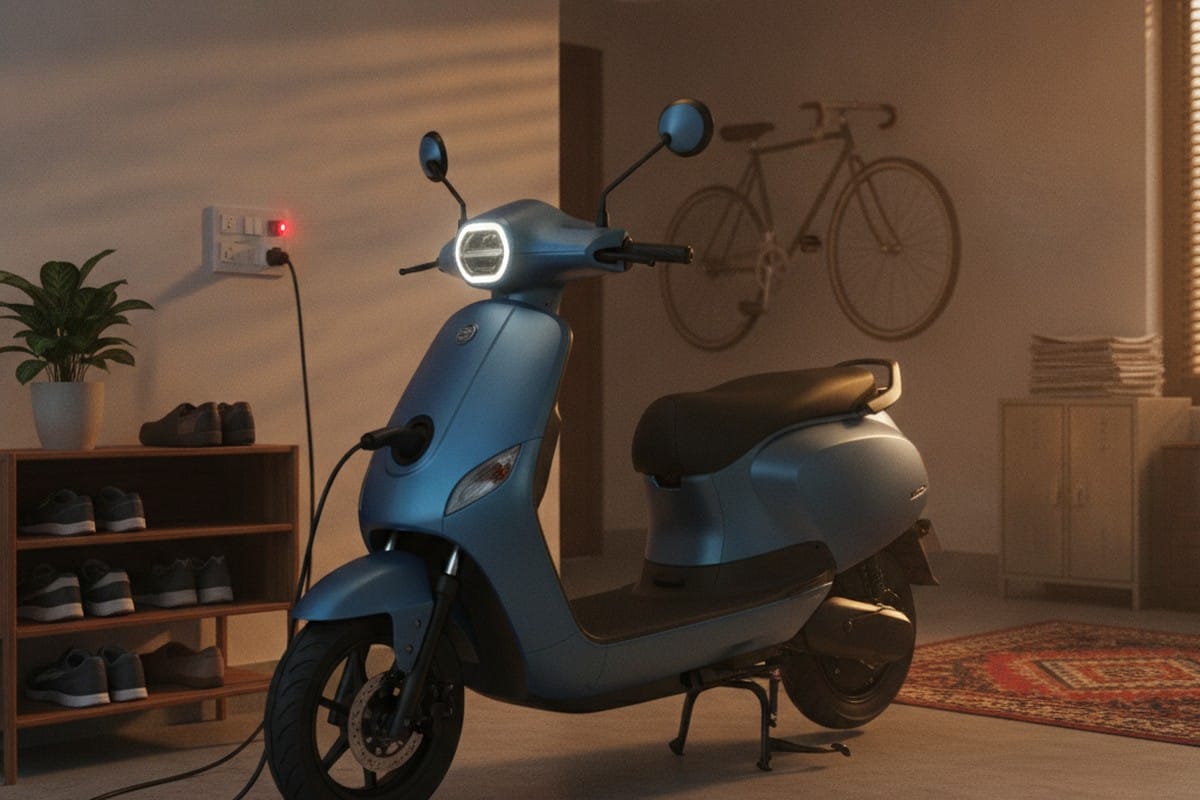
The Elektree RV 80 Sportz, at ₹94,363, shares the Zenith’s core powertrain and feature set but packages it in a sportier visual format for riders who want something that doesn’t read as purely functional. For commuters who care about how they pull up to the office, the RV 80 Sportz is worth the ₹4,000 premium.
The Numbers That Actually Change Your Decision
Running cost is where the EV case becomes genuinely compelling. A full charge of the Elektree Zenith, drawing approximately 2–2.5 kWh from a home socket, costs between ₹16 and ₹20 at typical Indian electricity tariffs. At a real-world range of 75 km, that works out to under ₹0.25 per km.
A petrol 125cc scooter in Bengaluru, at today’s fuel price, costs approximately ₹2.80 per km. The difference is not incremental — it’s structural. On a 1,000 km commuting month, the Zenith’s fuel-equivalent cost is roughly ₹240. The petrol scooter’s equivalent: ₹2,800 or more. Monthly savings in the region of ₹2,500. Annual savings above ₹30,000.
At that savings rate, the Elektree Zenith’s ₹90,164 purchase price effectively pays back its fuel-cost premium over a petrol scooter in under three years of daily commuting. From year three onward, you are simply keeping that ₹2,500 a month in your account rather than giving it to a petrol bunk.
Who Should Buy the Elektree Zenith — and Who Might Look Elsewhere
If your daily commute is between 25 and 35 km each way, you charge at home overnight, and your budget is around ₹90,000–₹95,000, the Elektree Zenith or RV 80 Sportz is one of the strongest overall value propositions in the Indian market. The specifications match what Indian road conditions genuinely demand, and the three-year battery warranty reduces the single biggest long-term ownership risk in the EV segment.
If your commute is longer — 45 km or more each way — the Hero VIDA VX2’s higher real-world range gives you a safer buffer, and TVS iQube’s broader service network adds a layer of assurance if you’re in a city where Elektree’s service footprint is still growing.
But for the typical Indian professional commuting 25–35 km to work and back five days a week, the honest answer is that the Elektree Zenith covers the use case well, priced ₹10,000–₹35,000 below most of its comparably equipped competitors, and backed by specifications that show the engineering team understood what Indian roads and Indian riders actually need — not just what looks impressive in a brochure.
The fuel savings are real. The payback period is real. The question is only how many more months of ₹3,000 petrol bills you’re prepared to absorb before acting on what the numbers are already telling you. Start at elektree.com to explore the full range and see which model fits your commute.