Electric Scooter Maintenance Cost in India 2026: The Real Annual Bill Most Buyers Never Calculate Before Signing

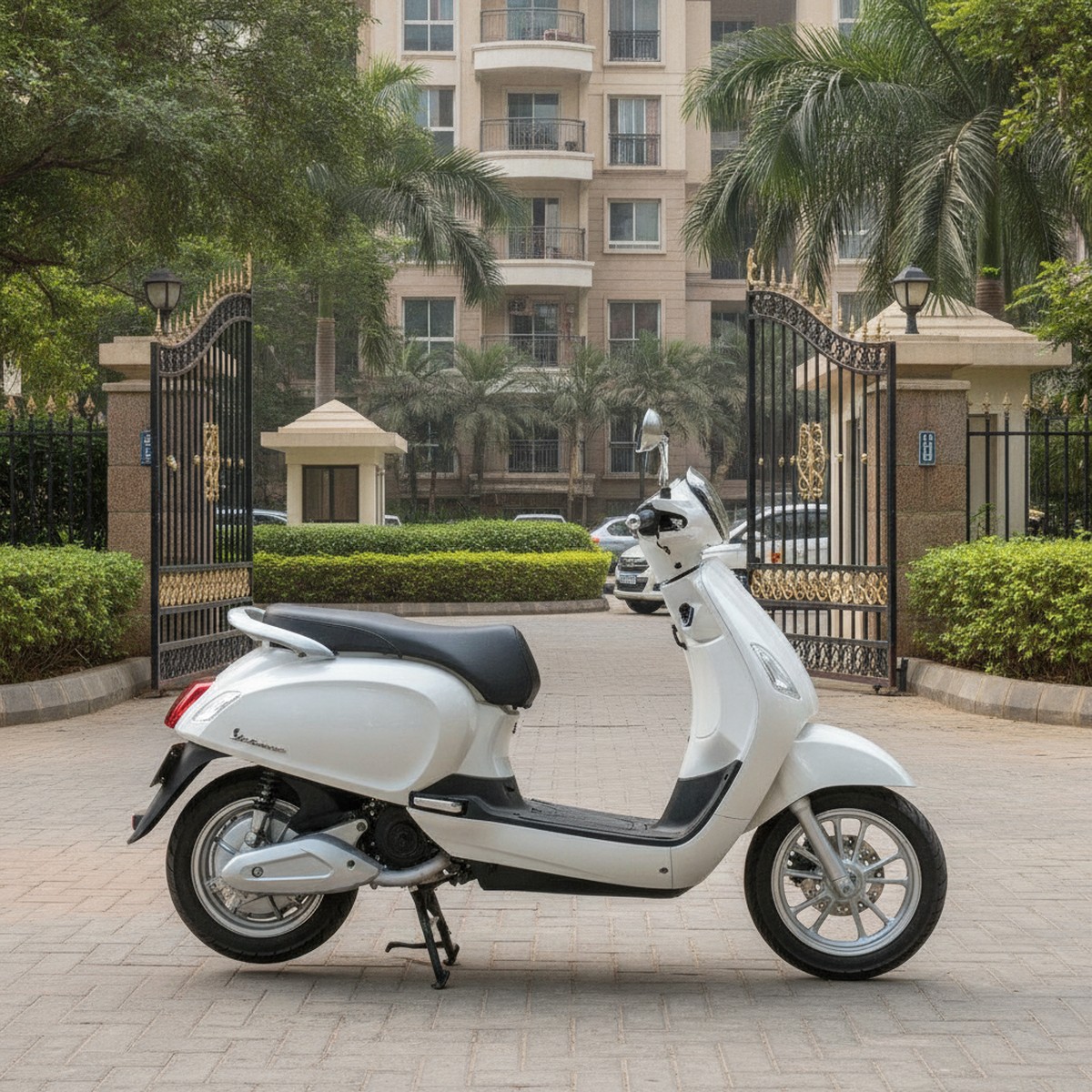
Electric scooter being serviced at a professional EV service centre in India

Walk into any electric scooter showroom in India today and you’ll hear plenty about range, top speed, and ex-showroom price. What most salespeople won’t walk you through — unless you specifically ask — is what you’ll actually spend maintaining that scooter across three to five years of ownership.

This is a real gap in how most Indians shop for EVs. You’ll spend hours comparing ₹90,000 versus ₹95,000 sticker prices, but the scooter that costs slightly less upfront might drain ₹15,000 more from your pocket over the next five years in service costs, consumables, and out-of-warranty repairs. Or vice versa. Getting this wrong is a surprisingly common mistake — and an expensive one.

So let’s look at what electric scooter maintenance actually costs in India — the real numbers, not the marketing version.

First, the Good News: What You Don’t Have to Worry About Anymore

If you’re switching from a petrol scooter, the first thing to understand is how many costs simply vanish with an EV.

No engine oil to change every three months. No spark plugs. No air filter cleaning or replacement. No clutch plates, no transmission oil, no exhaust pipe repairs. These aren’t minor line items on a petrol scooter — over five years of typical commuting, they can easily add up to ₹15,000 to ₹25,000 depending on your usage and riding conditions.

Electric scooters eliminate all of that. The drivetrain is fundamentally simpler: a motor, a controller, and a battery. Fewer moving parts mean fewer failure points and far fewer consumables that need periodic replacement.

What Does Electric Scooter Servicing Actually Include?

Most electric scooter manufacturers recommend a service visit every 5,000 km or every six months, whichever comes first. Here’s what a standard EV service actually involves: tyre pressure and condition check, brake pad inspection and adjustment, suspension tightening, wiring harness and connector health check, battery State of Health (SoH) diagnostic, charging port inspection, firmware check and updates, and general bolt tightening across the chassis. Brake fluid is typically flushed every two to four years.

That’s it. Compare this to a petrol scooter service, which additionally involves oil draining and refilling, carburetor or fuel injection servicing, air filter replacement, spark plug inspection, and often clutch adjustment — and you can immediately see why EV servicing is both quicker and considerably cheaper per visit.

A typical service visit for an electric scooter in India costs between ₹400 and ₹1,200, depending on what’s flagged during the inspection. Annual service expenditure for a normal urban commuter doing 8,000 to 10,000 km a year typically falls in the ₹1,000 to ₹5,000 range — compared to ₹3,500 to ₹6,000 for a comparable petrol scooter.

The Consumables You’ll Actually Need to Replace

Even with no engine, there are some components that wear out with use. Here’s what to budget for, and roughly when:

Tyres: A pair of electric scooter tyres typically lasts 25,000 to 35,000 km under normal conditions. Replacement costs between ₹4,500 and ₹7,000 for both. Spread across four to five years of average commuting, this adds roughly ₹1,000 to ₹1,500 per year to your cost of ownership.

Brake pads: These typically last 8,000 to 15,000 km and cost ₹800 to ₹1,500 to replace. If you ride in heavy stop-and-go city traffic daily, expect to replace them toward the lower end of that range.

12V auxiliary battery: This small battery powers accessories like lights, horn, and the display. It typically lasts two to four years and costs ₹800 to ₹1,500 to replace — a minor and predictable cost.

Brake fluid: Negligible — typically ₹200 to ₹500 every two to four years.

Adding all of this up for a typical commuter, the annual maintenance bill for an electric scooter — including consumables amortized across years — lands around ₹2,000 to ₹5,000. That’s roughly 40 to 60 percent less than what you’d spend on a petrol scooter of similar displacement, before even accounting for the dramatic difference in fuel versus electricity costs.

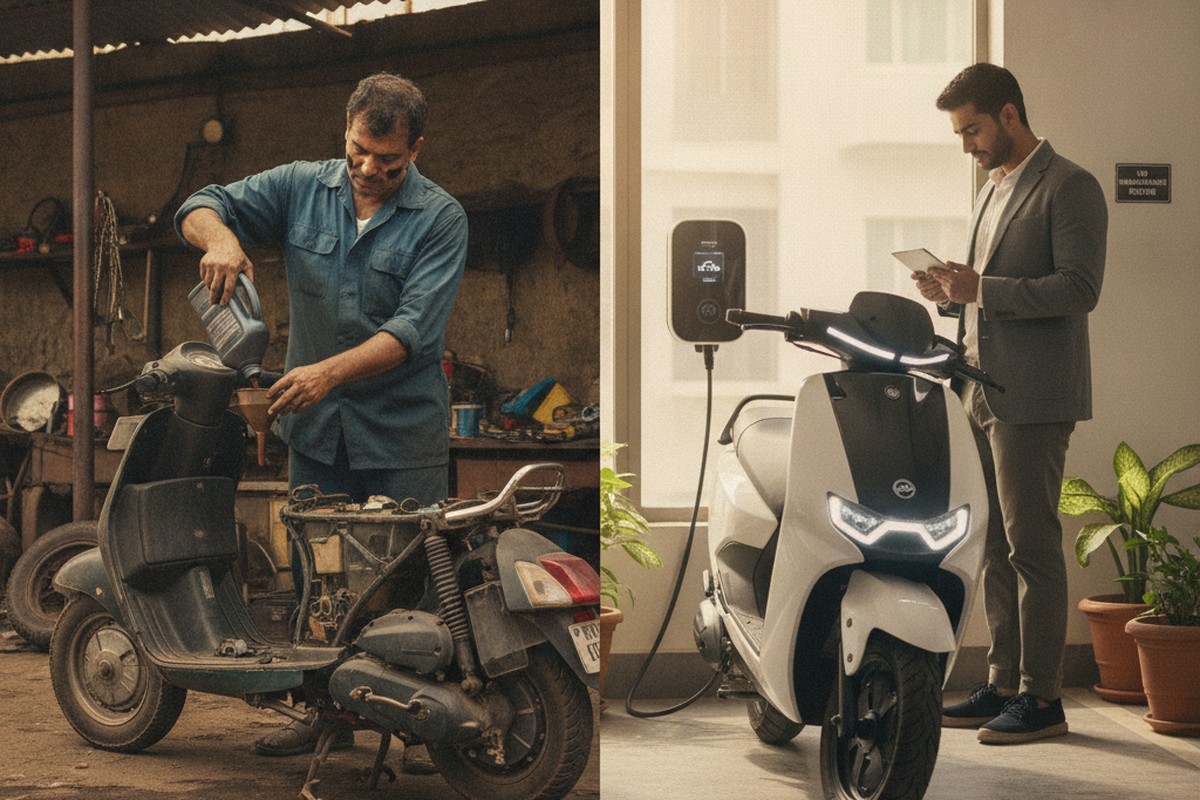
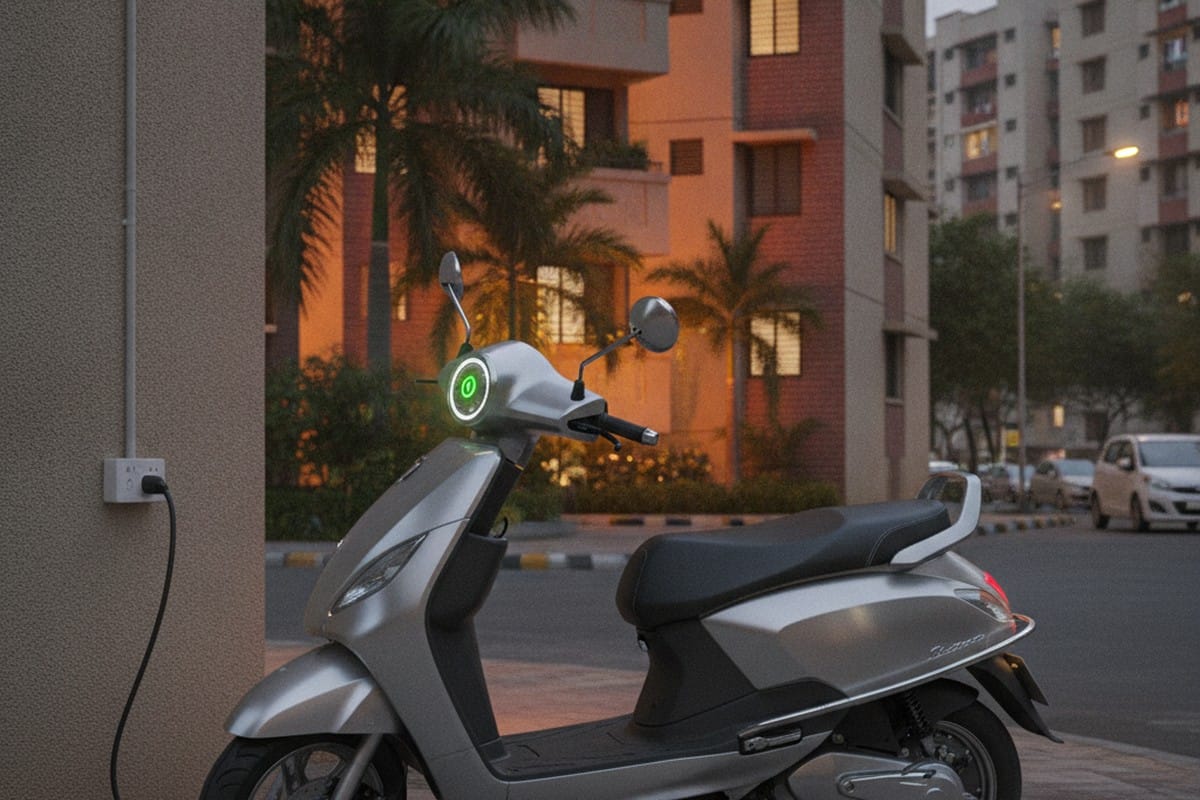
Comparison of electric scooter home charging vs petrol scooter maintenance in India

How the Major Brands Handle Service — and Why It Matters

Different manufacturers have taken varying approaches to after-sales service, and this is where things get more interesting than pure rupee figures suggest.

Ather Energy offers structured care plans: Ather Care (two services per year), Ather Care Plus (adds polishing and higher parts discounts), and Ather Care Max for heavy riders who want brake pad replacements included. These are paid annual subscriptions, with Care Max being positioned at the premium end of EV service costs.

Ola Electric charges around ₹800 per service visit outside the free service period. TVS iQube follows a 4,000 km or six-month service interval — tighter than most competitors — which is consistent with TVS’s conventional two-wheeler heritage and how their service network operates.

One thing worth noting: rupee figures per service visit are only part of the equation. How quickly you can get an appointment, how far your nearest service centre is, whether the technicians genuinely understand EV diagnostics rather than just doing visual checks — these factors have a significant impact on real-world ownership experience, particularly when something goes wrong outside a routine service.

Warranty Coverage: The Variable That Changes Everything

A maintenance conversation isn’t complete without discussing warranty. If a component fails in Year 3 and you’re not covered, you’re not looking at a ₹1,000 service visit — you could be looking at a ₹15,000 to ₹40,000 repair bill depending on what failed.

Most mainstream electric scooters offer two to three years of vehicle warranty. Battery coverage is often the most critical variable, and the fine print matters enormously. Look carefully at what the battery warranty actually covers: manufacturing defects are typically covered, but gradual capacity reduction (normal ageing) is almost never covered. The key question is: what State of Health threshold qualifies for a warranty claim?

Some brands set this threshold conservatively, meaning the battery needs to deteriorate significantly before a claim is valid. Others are more buyer-friendly. This is worth asking at the showroom before you sign.

Elektree’s Ownership Proposition

Elektree India — with scooters like the Zenith (₹90,164) and the RV 80 (₹94,363) — offers a 3-year warranty on the vehicle assembly, battery pack, and motor and controller combined. This is a notably comprehensive coverage structure for the price segment: most buyers spending between ₹85,000 and ₹1,00,000 are not accustomed to getting battery and motor warranty of this duration bundled together at this price point.

Elektree’s battery warranty covers manufacturing defects, internal cell faults, and BMS issues for three years or 30,000 km, with the qualification threshold set at the battery falling below 70% State of Health. The vehicle and motor warranty covers manufacturing defects affecting normal operation over the same period. This matters because the three years of coverage effectively protect you against the largest potential out-of-pocket costs during the period when you’re most invested in the product.

The company operates Elektree Care — its dedicated after-sales service program — with service centres across major metros including Delhi, Mumbai, Kolkata, Hyderabad, and Bengaluru, as well as coverage in several tier-2 locations. For a brand in this segment, that’s a meaningful footprint that gives first-time EV buyers a credible answer to the “what happens if something goes wrong” question.

On running costs, Elektree’s figures of approximately ₹5 to ₹10 per charge are consistent with what you’d expect from a 60V lithium battery pack charged on domestic electricity rates in India. For a daily commuter covering around 30 km, this translates to an electricity cost of roughly ₹100 to ₹150 per month — compared to ₹3,000 to ₹4,000 per month for a comparable 110cc petrol scooter at current fuel prices.

The Five-Year Picture: Why Maintenance Economics Matter

Let’s put the numbers together for a buyer doing approximately 25,000 km over five years — a realistic figure for a daily commuter covering 15 to 20 km each way.

An electric scooter in the ₹85,000 to ₹1,00,000 range will typically spend ₹10,000 to ₹25,000 on maintenance and consumables across five years. Add electricity costs of around ₹14,000 to ₹18,000 for that distance, and your total operational cost runs to approximately ₹24,000 to ₹43,000 over the period.

A petrol scooter in the same price bracket carries ₹20,000 to ₹30,000 in maintenance costs, ₹1,50,000 to ₹2,00,000 in fuel, and additional amounts for insurance. The five-year gap in running costs alone is comfortably over ₹1.5 lakh in most scenarios — often closer to ₹1.75 lakh when you include higher insurance premiums and periodic repairs that petrol engines inevitably need over time.

This is before accounting for EV subsidies. Under the PM E-Drive scheme, eligible electric two-wheelers can attract a subsidy of up to ₹5,000, further reducing acquisition cost for qualifying buyers.

What Should You Actually Be Asking Before You Buy?

When evaluating electric scooters on maintenance economics, the practical questions worth asking before signing are these: What does the warranty actually cover, and what are the specific conditions that need to be met? How close is the nearest authorized service centre to where you live and work? Does the brand offer a structured service plan, and what are its real-world terms? If something goes wrong with the battery or motor in Year 2, what’s your actual recourse?

Elektree’s three-year warranty across vehicle, battery, and motor addresses several of the most important risks simultaneously. During those three years — when you’re most exposed to the unknown reliability of a product you’ve just bought — the major potential costs from component failure are substantially mitigated. After that, the fundamental simplicity of an electric drivetrain means your annual maintenance cost stays manageable: brake pads, tyres, the occasional check-up, and little else.

For someone making a practical, economics-driven decision about their next two-wheeler in India — whether they’re a daily office commuter, a college student riding across campus and beyond, or a family looking to replace an aging petrol scooter — the maintenance math is one of the clearest arguments for going electric. The savings are real, the annual running costs are substantially lower, and the service headaches associated with petrol engines simply don’t exist in the same form.

Within the electric segment, Elektree’s combination of warranty depth, Elektree Care service support, low running costs, and pricing that starts under ₹95,000 makes it a brand genuinely worth putting at the top of your shortlist before you commit to any two-wheeler purchase. Explore the current lineup and pricing at elektree.com.

Electric Scooter Insurance in India 2026: What Nobody Tells You at the Showroom

Young Indian man reviewing electric scooter insurance policy on smartphone next to his electric scooter

Why Insurance Is the EV Purchase Decision Nobody Takes Seriously Enough

You’ve compared ranges, watched YouTube reviews, calculated the EMI, and finally narrowed it down to one or two electric scooters. Insurance is an afterthought — something you sort out quickly before the dealer hands over the keys. Most buyers spend ten minutes on it at the dealership, tick a box, add a few thousand rupees to the paperwork, and call it done.

That approach can cost you ₹10,000 to ₹30,000 in unnecessary premiums over three years. Or leave you facing a ₹40,000 battery repair bill that neither your manufacturer warranty nor your insurance actually covers. Electric scooter insurance in India isn’t complicated, but it is different from what you’re used to with petrol vehicles — and most dealers won’t bother explaining the differences unless you ask.

How EV Insurance Premiums Are Actually Calculated

With a petrol scooter, the IRDAI ties the mandatory third-party premium to engine displacement — how many cc’s your engine produces. Electric vehicles don’t have an engine, so the regulator uses motor kilowatt (kW) output instead. More importantly, the IRDAI mandates a 15% discount on third-party premiums for electric two-wheelers. The bracket structure is genuinely favourable for commuter-class scooters:

  • Motors under 3 kW: ₹457 per year
  • 3–7 kW range: ₹607 per year
  • 7–16 kW range: ₹1,161 per year
  • Above 16 kW: ₹2,383 per year

A typical city commuter electric scooter with a motor in the 800W–1,500W range falls into the lowest bracket — mandatory third-party insurance at just ₹457 annually. Before finalising any purchase, confirm your scooter’s motor kW rating from the manufacturer’s specification sheet. It’s the single number that determines your third-party premium for as long as you own the vehicle.

Third-Party or Comprehensive? The Decision Most Buyers Rush

Third-party insurance is legally mandatory — it covers the damage you cause to someone else’s vehicle, property, or person. Your own scooter is entirely your problem under a third-party-only policy. Comprehensive insurance adds Own Damage cover — your insurer pays for repairs after an accident, theft, fire, or natural disaster.

For most Indian electric scooter riders, comprehensive is clearly the right choice. Electric scooters have electronics and battery packs that cost significantly more to repair than petrol vehicle components. The practical recommendation: buy comprehensive for any electric scooter priced above ₹70,000. The own-damage premium on a ₹90,000 scooter is typically ₹1,500–₹2,500 per year — the protection it provides is disproportionate to what you pay.

The Battery Coverage Gap That Catches Most EV Buyers Off Guard

A standard comprehensive policy covers your scooter in an accident. It does not automatically cover your battery for electrical damage — water ingress, voltage spikes from faulty wiring, overcharging damage, or battery failure from riding through a flooded road. The battery represents 35%–50% of an electric scooter’s total manufacturing cost. A replacement lithium-ion battery pack currently costs anywhere from ₹25,000 to ₹45,000 in India.

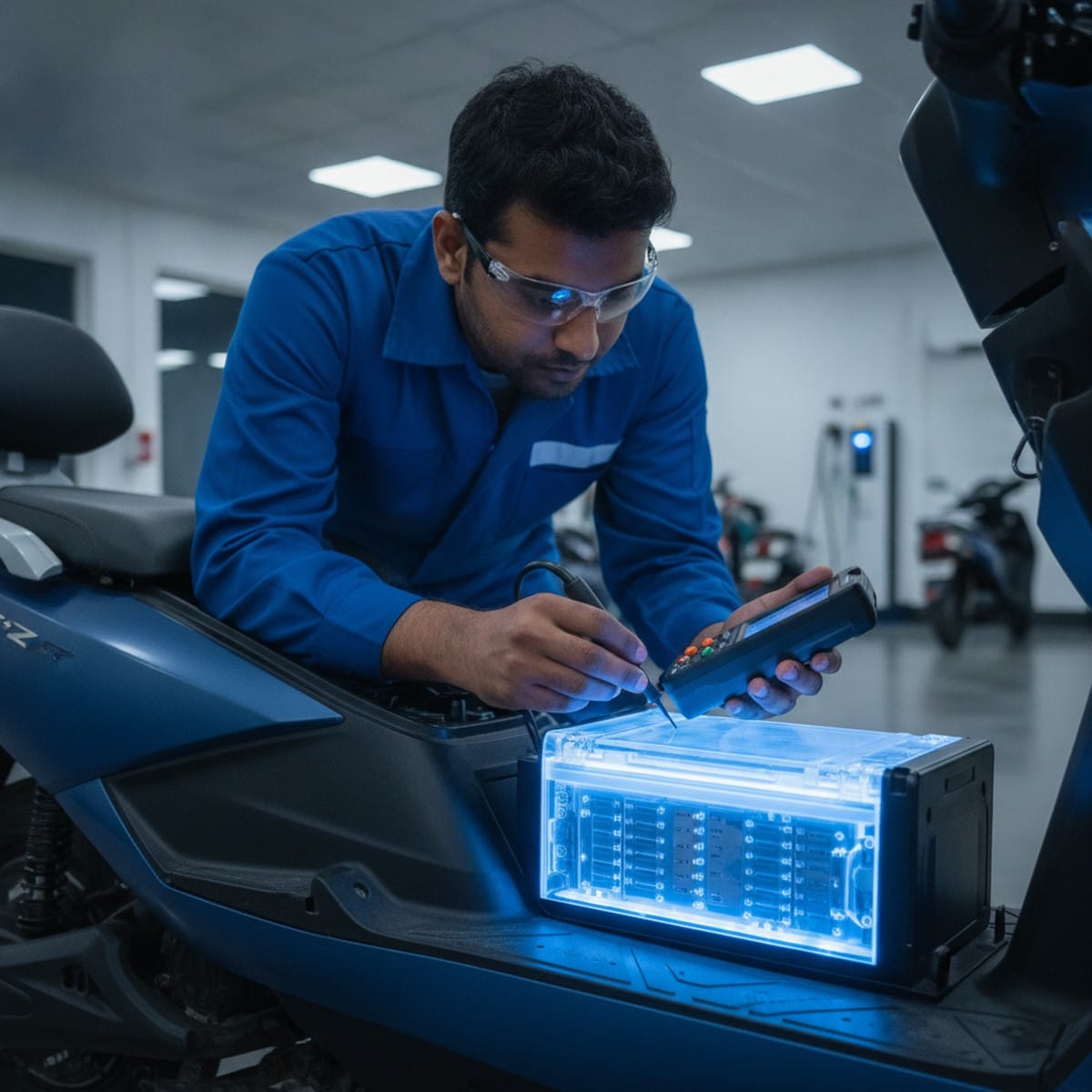
Indian EV service technician checking electric scooter battery pack in workshop

This is why insurers offer what’s called an EV Shield add-on or Battery Protection rider — covering the battery pack, charging cables, and electrical panel, including scenarios a standard policy excludes. The cost is ₹600–₹1,200 per year. That ₹1,200 annual spend protects you against a potential ₹35,000 replacement bill. Also remember: your manufacturer’s warranty covers defects, not accidents. A battery that fails because of a manufacturing fault is the manufacturer’s problem. A battery damaged because you rode through a flooded underpass is insurance’s job. Understanding this split prevents very expensive surprises.

What Actually Drives Your Own-Damage Premium

Three factors dominate. First: IDV — Insured Declared Value — the amount your insurer pays if your scooter is stolen or written off. It’s the ex-showroom price minus depreciation by vehicle age. Your OD premium is a percentage of IDV, so it declines every year. Crucially, a scooter with a lower ex-showroom price generates a lower IDV and a lower OD premium — every single year of ownership. Second: NCB — No Claim Bonus. A claim-free year earns 20% off your OD renewal, building to 50% after five consecutive clean years. A ₹2,000 OD premium becomes ₹1,000 after five clean years — free money for sensible riding. Third: vehicle security features. Factory-fitted GPS trackers, anti-theft alarms, and immobilisers reduce theft probability and can qualify for insurer discounts at renewal.

Modern electric scooter parked securely inside gated Indian residential society parking area

Two add-ons consistently justify their cost. Zero Depreciation Cover eliminates the depreciation deduction on replaced parts — without it, you get only the depreciated value of a component at the time of claim, not the full replacement cost. Roadside Assistance is especially valuable for EV owners whose breakdown scenario isn’t running out of petrol but running out of charge away from any charging point. A policy with roadside assistance typically covers towing to the nearest charger or service centre.

Why Your Choice of Scooter Affects Your Insurance Bill for Years

A ₹90,000 scooter generates a lower IDV, lower OD premium, and lower EV Shield ceiling than a ₹1.3 lakh one — every year, for as long as you own it. Over five years, the cumulative difference in own-damage premiums alone can reach ₹4,000 to ₹8,000. Add the lower purchase price, and a well-specified value scooter becomes considerably more attractive than the headline numbers suggest.

This is where Elektree India’s scooter range makes particular sense viewed through an insurance lens. The Elektree Zenith and RV 80 Sportz are priced at ₹90,164 and ₹94,363 respectively — well below competing electric scooters from established brands that sit at ₹1.2 lakh to ₹2 lakh. That lower ex-showroom price directly reduces the IDV-linked component of your annual premium every year these scooters are in your name.

Both carry ICAT certification — confirming they meet government type approval standards and are recognised by major Indian insurers without complications. The Zenith comes with factory-fitted GPS tracking and an anti-theft alarm system, which can qualify for security credits at renewal. And the 3-year/50,000 km lithium-ion battery warranty means manufacturing defects in that period are Elektree’s liability, not yours — keeping your claims history clean and your NCB compounding. For city commuters, the Elektree Wheels at ₹82,871 pushes the IDV advantage further still, offering 50–70 km of real-world urban range at a price that minimises both purchase cost and the annual insurance bill that follows.

The Part of the Purchase Nobody Plans For

Before finalising insurance on any electric scooter: confirm the motor’s kW rating, choose comprehensive over third-party only, always add the EV Shield battery protection rider, consider Zero Depreciation if the scooter is under three years old, compare at least three insurers (Acko, Digit, and Tata AIG are worth starting with), never under-declare IDV, and confirm cashless garage availability in your city.

Elektree’s scooter range — the Zenith, RV 80 Sportz, and Wheels — sits in a price band that delivers genuine daily commute capability with a naturally lower insurance footprint than higher-priced alternatives. ICAT certification, built-in security hardware, a solid battery warranty, and 54 dealer locations across India make these scooters a considered choice for buyers who think past the showroom excitement to the full economics of ownership over three, four, and five years.

If you want to see how Elektree’s range fits your commute and your actual budget — including the ongoing costs that most scooter reviews never cover — explore the full lineup at elektree.com.

Delivery Riders: Stop Giving ₹6,000 a Month to Petrol Pumps — The Electric Scooter Math Every Gig Worker in India Needs to See

Elektree electric scooter ready for delivery work on Indian city streets at golden hour

Delivery Riders: Stop Giving ₹6,000 a Month to Petrol Pumps — The Electric Scooter Math Every Gig Worker in India Needs to See

Here’s a number that should bother you. A delivery rider doing 100 km a day on a petrol scooter in India is spending somewhere between ₹5,500 and ₹7,000 every single month just on fuel. Add oil changes, chain maintenance, brake pads, and the occasional puncture — and that monthly total quietly crosses ₹8,000 to ₹10,000. That’s money leaving your pocket before you’ve even counted what you’ve earned.

If you’re on Swiggy, Zomato, Blinkit, or any delivery platform, your two-wheeler isn’t just transport — it’s your entire business infrastructure. What you ride determines what you spend, and what you spend determines what you actually take home. And yet, most guides to electric scooters are written for people doing 30 km a day, not the 80 to 120 km that a full delivery shift in a busy Indian city actually demands.

This guide is written for people doing the real numbers.

The Real Cost of Running Petrol for Delivery Work

With petrol at around ₹103 per litre in 2026, a rider covering 3,500 km a month on a standard commuter burns through roughly ₹6,000 in fuel. But delivery work is harder on a bike than regular commuting — constant stop-starts, idling, carrying load. Real-world efficiency often drops below advertised mileage figures, pushing costs higher.

Maintenance compounds the problem. Delivery bikes cover three to four times the annual mileage of a typical private owner. Engine oil needs changing every 2,000 to 3,000 km. Chains, brakes, and tyres wear faster. Budget ₹2,500 to ₹4,000 a month for upkeep once you’re clocking serious kilometres. Add EMI and insurance, and a petrol bike for delivery can quietly cost ₹13,000 to ₹18,000 every month before you’ve earned a rupee.

An electric scooter in the same usage pattern runs at ₹0.50 to ₹0.80 per kilometre — compared to ₹1.70 to ₹2.00 per kilometre on petrol. At 3,500 km a month, that’s a saving of ₹4,000 to ₹6,500 monthly on fuel alone. The maintenance savings are on top of that, since electric motors have far fewer moving parts and don’t need oil changes or carburetor cleaning.

What Delivery Work Demands That Regular Commuting Doesn’t

Most EV buyers plan for 30 to 50 km of daily commuting. Delivery riders need to think completely differently. A full shift across a 5 km order radius in Bengaluru, Pune, or Hyderabad can rack up 80 to 120 km in a single working day. That immediately eliminates most entry-level electric scooters with claimed ranges below 80 km.

And claimed range is not the same as real-world range. In delivery conditions — carrying an insulated bag, navigating potholes, constant acceleration and braking in heavy traffic — you can expect real-world range to come in 20 to 30 percent below the advertised number. A scooter claiming 70 km might realistically give you 50 to 55 km under delivery conditions.

Beyond range, what matters for delivery riders is service accessibility, charging practicality, and how the vehicle holds up to sustained heavy use over months and years. Overnight home charging — plug in after your shift, start the next day at full charge — works well for most riders. But if something breaks down mid-shift, how close is the nearest service point?

One more thing most buyers overlook: warranty terms for commercial use. Several manufacturers have fine print that limits coverage if you’re using the scooter for paid delivery work. Before signing, ask specifically whether commercial use affects your warranty.

Setting the Evaluation Standard

Before looking at models, establish your benchmarks. You want real-world range of at least 70 to 80 km under load on a single charge. You want a service network that extends meaningfully beyond the showroom city. You want overnight charging to work reliably from a standard home socket. And you want running economics that justify the higher upfront cost compared to a petrol commuter.

Top speed matters less than low-speed torque for delivery work. Quick acceleration from signals and easy navigation in slow city traffic is what a delivery rider actually needs — not the ability to hit 80 km/h on a highway.

There are credible options in this segment. TVS iQube offers predictable range and a deep service network. Bajaj Chetak brings durability and wide dealer coverage. Ola S1 X delivers strong range per rupee. But there’s another brand worth putting on your shortlist — one built specifically around Indian conditions and realistic ownership economics.

Elektree electric scooter ready for delivery work on Indian city streets at dusk, parked near apartment complex

Why Elektree Makes Strong Sense for Delivery Riders

Elektree is a homegrown Indian EV brand with a lineup starting at ₹82,871. Their most delivery-relevant models are the Zenith (starting at ₹90,164) and the RV 80 (starting at ₹94,363) — both offering 80 to 100 km of claimed range and a top speed of 60 km/h on 60V lithium battery packs.

For delivery riders, a few specifics stand out. First, the running cost: Elektree puts charging at ₹5 to ₹10 per full charge. At that rate, a rider covering 80 km daily is spending roughly ₹200 to ₹300 on electricity per month for their entire working fuel cost. Against ₹6,000+ in petrol for the same mileage, the savings are immediate and real.

Second, the warranty: three years across Elektree’s range. That’s meaningful coverage for anyone putting in high annual mileage, and it’s backed by 24×7 customer support and roadside assistance — which matters enormously when your income depends on the vehicle staying on the road.

Third, the service reach. Elektree’s network covers cities including Delhi, Mumbai, Bengaluru, Hyderabad, Patna, Guwahati, Lucknow, Siliguri, and Ranchi — including several tier-2 cities where delivery platforms are growing rapidly and where some newer EV brands still don’t have meaningful after-sales presence. The company cites 30+ service outlets and over 100 dealers nationally, with a stated commitment to continuing expansion.

All Elektree models are ICAT-certified, meeting the regulatory requirements that apply to registered electric vehicles in India. Their Elektree Wheels model (₹82,871), which qualifies as a low-speed EV and doesn’t require a licence, is suited for shorter routes — though the 50 to 70 km range and 45 km/h cap make the Zenith or RV 80 the more practical choice for anyone doing a full delivery shift.

Elektree RV 80 electric scooter charging at a home socket overnight, charging indicator visible, Indian residential setting

The Numbers for a Real Delivery Rider

Consider a rider currently spending ₹6,500 on petrol and ₹2,500 on maintenance monthly — ₹9,000 in direct running costs. Switch to the Elektree Zenith: electricity cost drops to roughly ₹200 to ₹300 per month for the same mileage. Maintenance costs fall substantially. Realistically, you might save ₹7,000 to ₹8,500 every month in running costs.

At that saving rate, the additional upfront cost of the Zenith over a ₹75,000 petrol commuter pays back within two to three months. Over the three-year warranty period, the cumulative savings can exceed ₹2.5 lakh — a significant number for anyone working in the gig economy. These are estimates based on current petrol prices and typical electricity tariffs; your actual figures will vary with your city and riding pattern, but the direction is unambiguous.

The Verdict

For anyone working full-time delivery in India, the economics of electric are now clearly in your favour — the question is which vehicle to trust with your livelihood. That answer needs to consider real-world range, genuine service coverage, honest warranty terms, and a running cost that actually delivers the savings you’re calculating.

Elektree India meets those criteria in a way that makes sense for high-mileage delivery work: ICAT-certified vehicles, a meaningful three-year warranty with roadside assistance, 24×7 support, a growing national service network, and a per-charge cost that makes the fuel savings tangible from day one. At ₹90,164, the Zenith is priced to be accessible without compromising on what a delivery rider actually needs.

Delivery platforms are also moving in one direction — Maharashtra is already drafting regulations that could require Swiggy, Zomato, and Blinkit to shift to EV fleets. Getting ahead of that curve now rather than being pushed into it later is simply the smarter move.

If you’re still running petrol for delivery work, start with the fuel savings calculation. Then visit elektree.com to find your nearest Elektree dealer and have a proper conversation about what the numbers look like for your specific route and daily mileage. The switch is simpler than it seems — and considerably more rewarding.

PM E-Drive Subsidy Extended to 2028: How to Save Up to ₹5,000 on Your Electric Scooter in India Right Now

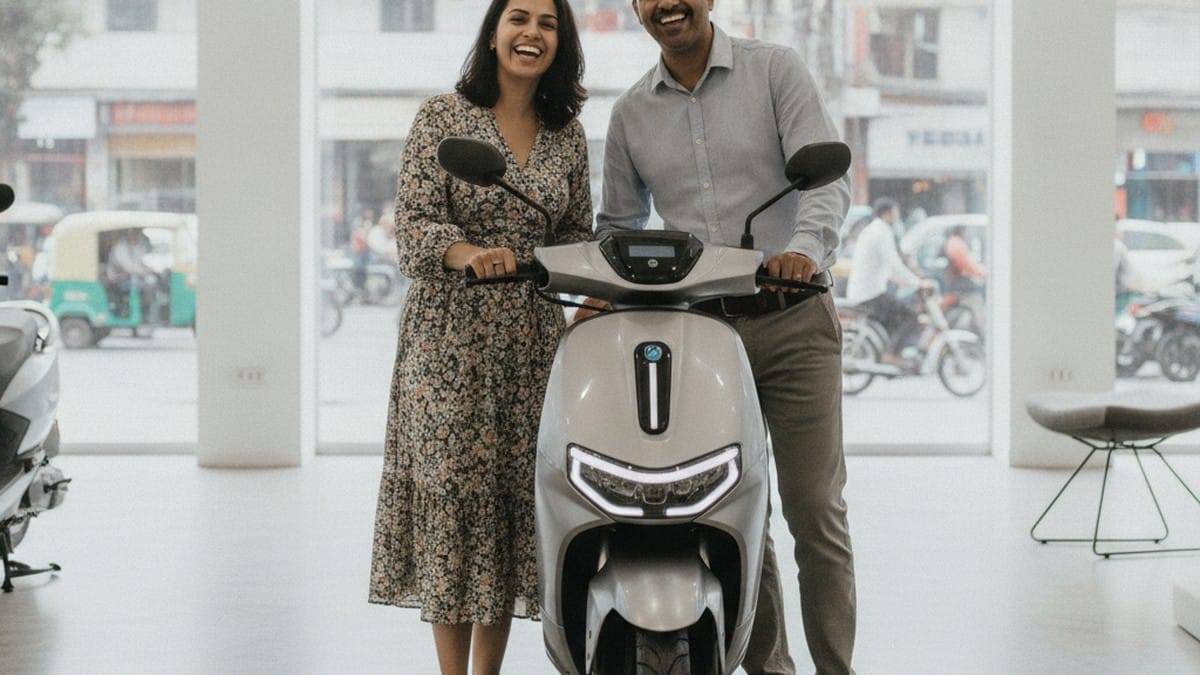
Indian couple at an electric scooter dealership benefiting from the PM E-Drive subsidy scheme

Here’s a question most electric scooter buyers get wrong: “Isn’t the government subsidy over?” The short answer — no. In fact, the Ministry of Heavy Industries just extended it significantly, quietly adding ₹1,000 crore more to the kitty and pushing the deadline all the way to March 2028. If you’ve been sitting on the fence about buying an electric scooter because you thought the window had closed, this news should matter to you. The money is still on the table, and knowing how to access it could save you anywhere from ₹5,000 to substantially more, depending on which state you live in.

Let’s break this down properly — what the scheme actually is, what changed in August 2026, how much you can realistically save, and why the current moment is a particularly good time to make the switch.

Indian couple at an electric scooter dealership benefiting from the PM E-Drive subsidy scheme

What the PM E-Drive Scheme Is (and How It’s Different From FAME)

If you’ve been following India’s EV story for a while, you’ll remember FAME — Faster Adoption and Manufacturing of Electric Vehicles. FAME II wrapped up, and in its place came PM E-DRIVE: Prime Minister Electric Drive Revolution in Innovative Vehicle Enhancement. It’s a mouthful, but the mechanism is clean and straightforward from a buyer’s perspective.

Unlike older schemes where subsidies required paperwork, post-purchase claims, or dealing with a government portal yourself, PM E-Drive is handled entirely at the dealership level. You don’t file a separate application. You don’t wait for a refund cheque. The subsidy is applied as an upfront reduction in the price you pay. The dealer initiates the process on the PM E-DRIVE portal, you complete Aadhaar-based e-KYC (a quick biometric verification linked to your mobile number), the system generates an e-Voucher, and you pay the reduced price. The manufacturer then claims the reimbursement from the government. For you, the buyer, it’s as frictionless as it gets.

The August 2026 Extension: What Actually Changed

The original PM E-Drive scheme had set July 31, 2026 as the deadline for electric two-wheeler subsidies. Many buyers and dealers assumed that was the end of it. It wasn’t.

In August 2026, the government announced a significant expansion. The electric two-wheeler subsidy deadline has been extended to March 31, 2028, subject to available funding. The financial allocation for e-2Ws was increased from ₹1,772 crore to ₹2,767 crore — nearly ₹1,000 crore more. The number of vehicles that can be covered under the scheme grew to 45.79 lakh units, an 85% increase over the previous cap. That’s not a minor administrative extension. That’s a meaningful recommitment to keeping electric two-wheelers affordable as the government pushes to grow EV market penetration from the current 7.6% toward 9–10%.

For context: electric two-wheeler sales grew from 2.5 lakh units in FY2022 to 14.6 lakh in FY2026. The government has clearly decided subsidies are still doing their job, and this extension is designed to sustain that momentum.

How Much Can You Actually Save?

The central subsidy is ₹2,500 per kWh of battery capacity, capped at ₹5,000 per vehicle (or 15% of the ex-factory price, whichever is lower). To be eligible, the scooter’s ex-factory price must be ₹1.5 lakh or below, it must use a lithium-ion battery (lead-acid batteries don’t qualify), and only one vehicle per Aadhaar-linked individual is permitted under this scheme.

What this means in practice: for a scooter with a 2 kWh battery, you’re looking at the full ₹5,000 off. A model with a 1.5 kWh pack would give you ₹3,750. Most mainstream electric scooters in the ₹80,000–₹1.5 lakh range hit or come close to the ₹5,000 cap. That’s meaningful money, but it’s only the beginning.

State Subsidies: Where the Real Savings Stack Up

The central subsidy is just the floor. Several states layer additional incentives on top, and when they do, the total savings can be considerably more substantial.

Maharashtra offers an additional ₹5,000–₹10,000 direct subsidy on eligible models. Gujarat has a direct purchase incentive of up to ₹10,000 on select EVs. Delhi is pushing forward its EV Policy 2.0, which proposes subsidies of ₹10,000 per kWh up to ₹30,000 in Year 1, alongside complete waivers of road tax and registration fees — which alone can run to several thousand rupees. Karnataka offers registration fee waivers, Rajasthan exempts road tax, and Tamil Nadu similarly offers road tax and registration fee exemptions. West Bengal has its own state EV incentive scheme as well.

A buyer in Maharashtra, for instance, could pocket ₹5,000 from PM E-Drive plus ₹5,000–₹10,000 from the state — a combined saving of up to ₹15,000 on a ₹90,000 scooter. State policies update frequently, so verify current figures with a dealer or state transport authority — but the general picture is that combined subsidies can reduce your effective purchase cost meaningfully beyond what the central scheme alone delivers.

Young Indian professional charging an electric scooter at home with ease

Picking a Scooter That Qualifies — and Actually Suits You

To access the PM E-Drive subsidy, you need a scooter that meets the price ceiling (₹1.5 lakh ex-factory) and runs on a lithium-ion battery. That’s actually the majority of the mainstream electric scooter market in India today. But meeting the eligibility criteria is only the starting point. The smarter question is: which eligible scooter gives you the best overall value once the subsidy is accounted for?

Range matters, but so does honest range in Indian conditions — stop-start traffic, load, heat. Build quality matters for potholed roads. Warranty matters because battery replacement costs are one of the biggest long-term concerns EV buyers have. Charging simplicity matters, particularly for buyers in apartments or areas without public charging infrastructure. And the total cost of ownership — running costs, maintenance, insurance — matters more than the sticker price alone.

Why Elektree Makes Particular Sense Under This Scheme

This is where Elektree India enters the picture, and it’s worth understanding why their lineup sits well within this subsidy framework — not just in terms of price, but in terms of overall proposition.

Every Elektree model is priced comfortably under the ₹1.5 lakh PM E-Drive ceiling. The Elektree Wheels, priced at ₹82,871, is their most accessible model — and uniquely, it falls under the low-speed category that doesn’t require a driving licence or vehicle registration, making it genuinely practical for a wide range of buyers, from daily commuters to older riders or anyone who uses a scooter primarily within their city or neighbourhood. It offers a 50–70 km range and 45 km/h top speed, which covers the needs of most urban Indian commutes.

The Zenith and RV 80 step things up, at ₹90,164 and ₹94,363 respectively, both delivering 80–100 km of range and 60 km/h top speed — solid numbers for daily city use. These aren’t headline-grabbing claimed ranges; they’re realistic figures for city riding in Indian conditions. At these price points, after PM E-Drive subsidy (and applicable state subsidies), the effective cost drops further, improving an already competitive value proposition.

Electric scooters and two-wheelers in a busy Indian city representing the growing EV market

Elektree backs all models with a 3-year warranty — meaningful reassurance for buyers worried about battery longevity. The charging cost of approximately ₹5–10 per full charge keeps running economics sharply in Elektree’s favour versus petrol, and home charging via a standard socket means no dependence on public infrastructure that remains patchy in many Indian cities.

For buyers who want more performance, the Fantom EV is Elektree’s electric motorcycle at ₹1,39,000, offering 150–180 km of range and 110 km/h top speed. It too falls within the PM E-Drive price cap, so the subsidy applies here as well — making a high-performance electric motorcycle available at an effective price that’s genuinely competitive with mid-range petrol bikes when total ownership costs are factored in.

The Verdict: Don’t Wait for a Better Time That May Not Come

The PM E-Drive extension to March 2028 gives buyers a comfortable runway, but comfort can breed inaction. Scheme funds are subject to availability — ₹2,767 crore sounds like a lot until you realise the government has already delivered subsidies on 25 lakh units and has earmarked capacity for 45.79 lakh. When the money runs out, it runs out.

The practical advice is to treat the subsidy as a current opportunity rather than an indefinite guarantee. If you’ve been evaluating electric scooters and the economics work for you — the running cost savings, the home charging convenience, the reduced maintenance compared to a petrol scooter — then the subsidy is an additional reason to move now rather than later.

Elektree India’s range sits at a price point that makes the most of the PM E-Drive benefit. After the central subsidy and relevant state incentives, these are scooters that can deliver daily commute reliability, low running costs, and a no-fuss ownership experience at prices that genuinely compete with — and, on a total cost of ownership basis, often beat — equivalent petrol alternatives. Worth exploring the full range at elektree.com before the next time someone tells you the subsidy is over.

Electric Scooter or Electric Motorcycle: How to Actually Decide Which EV Is Right for You in India

Indian rider on a modern electric motorcycle on a national highway at golden hour

Walk into any EV showroom across India today, and you’ll spot the same scene: a buyer pointing at the nearest electric scooter and asking, “How much is the range on this one?” The scooter-first instinct is completely understandable — scooters have dominated two-wheeler sales in India for decades, and the electric segment has tracked the same pattern. Well over 80 percent of India’s electric two-wheeler sales are scooters.

But here’s the thing: for some buyers, an electric motorcycle would serve them significantly better. And for others, paying for a motorcycle’s additional range and speed is money genuinely wasted on capabilities they’ll never use. The question isn’t just “which is better.” It’s “which is better for your specific life” — and most buyers skip that step entirely.

What Actually Separates Them (Practically Speaking)

At a practical level, electric scooters and electric motorcycles are fundamentally different machines, even if both run on a battery and share road space.

Electric scooters use a step-through frame — there’s no engine block or tank structure in the middle. This gives you a flat floorboard, which matters more than most buyers credit. Mounting and dismounting is easier, traditional Indian clothing works without getting caught on anything, and the under-seat storage doubles as a genuine load carrier for groceries, a laptop bag, or a helmet. In Indian city traffic, where you’re starting and stopping constantly, this low-effort posture accumulates into a noticeably less tiring commute.

Electric motorcycles — genuine ones, not rebranded mopeds — have conventional motorcycle ergonomics. You straddle the machine, sit higher, and grip handlebars in a posture built for sustained speed rather than city crawling. They’re typically heavier, carry larger battery packs, and are engineered for performance over convenience.

Speed is where the two categories diverge most sharply. Most electric scooters in India are built for city conditions: top speeds of 55–80 km/h, real-world ranges of 60–120 km. Electric motorcycles are designed for more — sustained highway speeds above 85 km/h, with ranges that stretch meaningfully further on a single charge.

Electric scooter on busy Indian urban street versus electric motorcycle on open Indian highway

When a Scooter Is the Right Call

If your daily distance is under 40 km and your riding is mostly in a city or town, an electric scooter is almost certainly the smarter financial decision. You’re not paying for range and speed you won’t use, and you’re gaining day-to-day practicality that genuinely improves how riding feels.

Urban commuters benefit from lighter weight — less physical effort at crowded signals and tight parking spots. The step-through frame works well for women in Indian dress, older riders who don’t want to swing a leg over a high saddle, and anyone who simply values convenience over performance. The under-seat storage removes the need for a backpack on most short trips.

For households where multiple people share one vehicle, scooters are also more versatile. Pillion comfort on a wide flat seat often surpasses the experience on a sportier motorcycle saddle, and the tighter wheelbase makes U-turns on narrow lanes much easier. Insurance premiums and annual servicing costs also tend to be lower on scooters.

There’s also a running cost angle. In a city where you’re averaging 25–30 km/h through traffic, a smaller battery scooter charges faster, costs less to replace at end of life, and covers your actual requirements without overbuilding for conditions you never face.

When a Motorcycle Makes More Sense

If you’re covering 50–80 km daily, regularly use national highways or fast arterial roads, or simply want the confidence and posture of a proper motorcycle — a scooter will eventually frustrate you.

Highway riding at sustained speeds above 75 km/h is where electric motorcycles justify their engineering. The posture is more stable. Larger batteries mean you’re not anxiously watching the range indicator 30 km from home. And for riders coming from petrol motorcycles — the Hero Splendor, Bajaj Pulsar, or Honda Unicorn crowd — the motorcycle form factor simply feels more familiar and natural.

There’s a safety point here that doesn’t get discussed enough: electric scooters designed for 60 km/h become problematic on roads where traffic flows at 80–100 km/h. They’re not built for those conditions. If your commute involves significant time at highway speeds, putting a city scooter into that environment is uncomfortable at best.

What the Market Currently Offers

India’s electric motorcycle segment is still developing. At the accessible end, the Revolt RV400 is priced around ₹1.40 lakh with an IDC-certified range of 150 km and a top speed of 85 km/h — a capable urban-to-highway machine that’s been on Indian roads long enough to build a service track record. At the performance end, the Ultraviolette F77 Mach 2 sits at approximately ₹2.99 lakh with a 152 km/h top speed and an IDC range of 307 km. It’s a genuinely impressive machine, but it’s priced well outside what most Indian buyers are considering for a first electric purchase.

The electric scooter market is far more crowded — Ola, Ather, TVS, Bajaj, and Ampere all have established lineups at various price points. But the price-to-range proposition varies considerably, and mid-budget buyers frequently find themselves paying for brand premium as much as for actual engineering.

Where Elektree India Fits Into Both

Elektree India builds vehicles for both sides of this choice, which is unusual for a brand at this price point.

Their scooter lineup — the Zenith, the RV 80, and the more accessible Wheels — covers the Indian urban and semi-urban rider who needs reliability and real-world range without spending on features a city commute doesn’t require. The Zenith and RV 80 are priced at approximately ₹90,000–₹94,000, offer 80–100 km of range, and top out at 60 km/h. That comfortably handles a 35–40 km daily commute with a reasonable buffer. The Wheels variant, priced around ₹82,871, is a practical entry point with 50–70 km of range at 45 km/h — suited to shorter urban commutes or buyers prioritising minimal running costs above all else.

All three scooter models carry a 3-year warranty, which is a meaningful commitment in a category where warranty terms vary widely and battery cover is often restricted to shorter periods or lower cycle counts.

For riders who need more from their electric two-wheeler, the Fantom EV is Elektree’s electric motorcycle. Priced at ₹1,39,000 — virtually identical to the Revolt RV400 — it offers a top speed of 110 km/h and a claimed range of 150–180 km with its 72V battery configuration. That’s genuinely competitive at this price level. The Revolt manages 85 km/h at almost the same price; the Fantom EV goes meaningfully faster, which matters for riders who need to sustain 80+ km/h on state highways without the engine straining at its limits.

What this range means in practice: a buyer doesn’t have to choose a brand and then accept that it only covers half their riding needs. Elektree’s scooter and motorcycle lineup addresses city riders and highway-capable riders under the same roof — at prices where the decision is based on genuine requirements, not forced budget compromises.

So, Which Should You Actually Buy?

The honest answer depends on two things: your daily distance and your typical road conditions.

If you’re covering 25–40 km daily in city or semi-urban conditions, an electric scooter is the practical choice. Elektree’s Zenith and RV 80 deliver dependable real-world range, a 3-year warranty, and running costs that work out to well under ₹1 per kilometre. The Wheels model works for those wanting something even simpler and more economical.

If your commute is longer, or you regularly need to sustain speeds above 70 km/h, the Fantom EV earns serious consideration. At ₹1,39,000 with 110 km/h capability and 150–180 km of claimed range, it offers specifications that genuinely compete with more established options in the electric motorcycle category — at a price accessible to a far wider range of Indian buyers than the premium segment manages.

The right electric two-wheeler is the one that matches how you actually ride, not how you imagine riding. Take stock of your daily distance, your average road speeds, and how you use your vehicle day to day — before the showroom excitement pushes you toward the flashiest option on display. Then explore the full Elektree lineup at elektree.com — both categories are worth comparing on paper before you commit.

40 km a Day, Every Day: Which Electric Scooters Can Actually Handle India’s Long Commuters?

Indian professional commuting on an electric scooter through busy city traffic

40 km a Day, Every Day: Which Electric Scooters Can Actually Handle India’s Long Commuters?

Rajesh, a software developer in Hyderabad, upgraded to an electric scooter last year after years of petrol costs eating into his salary. The scooter he chose was advertised with a 130 km range — more than enough, he thought, for his 44 km daily office commute. Six months later, he’s stuck plugging in every single evening without fail, and on days when he carries a bag or rides slightly faster on the outer ring road, he’s arrived home with the battery warning blinking. The scooter wasn’t defective. The range number just wasn’t what he thought it meant.

Rajesh is not alone. A survey by EVXpertz found that over 68% of electric scooter owners in India initially felt their vehicle’s range was “misleading” compared to the advertised figure. That’s a damning statistic, and it points to a gap that every buyer considering a long daily commute needs to understand before handing over their money.

The IDC Number Is a Starting Point, Not a Promise

Every electric scooter sold in India carries an IDC (Indian Driving Cycle) range figure, tested according to AIS-039 regulations in controlled laboratory conditions. The updated MIDC standard has improved things — it now includes both urban stop-and-go and extra-urban faster segments — but the testing still uses a predetermined rider weight, optimal ambient temperature, and steady-state conditions that don’t replicate an actual morning commute through Bengaluru traffic in April.

Research consistently shows that a scooter claiming 130–150 km IDC will typically deliver 85–110 km under normal Indian city use, dropping to 65–85 km when you add a pillion, carry cargo, ride faster, or face a hot afternoon. For practical planning, assume 25–35% less than the brochure figure under everyday conditions. That means a scooter claiming 100 km should be sized for a real-world working range closer to 65–75 km — fine for a 30 km commute with buffer, risky for a 45 km one.

Why Indian Conditions Hit the Battery Harder

What actually drains a battery faster than the test cycle accounts for? Several things are specific to India. Summer temperatures above 40°C can temporarily reduce battery capacity by 10–20%, and this is relevant for riders in Rajasthan, Tamil Nadu, Andhra Pradesh, or really anywhere in India from March to June. Constant stop-and-go city traffic is more punishing than a steady cruise. Rider weight and cargo matter — aggressive acceleration from every signal burns more energy than the steady acceleration in a test loop. And terrain makes a difference: a 500-metre elevation gain can shave 15–20% off a trip.

Battery degradation is another reality that rarely features in showroom conversations. Most lithium-ion packs begin to lose capacity after 500–800 charge cycles — roughly two to three years of daily use — dropping to around 70–80% of original capacity. For a scooter with real-world range of 80 km on day one, that’s effectively 56–64 km after three years. If you’re already stretching the range for a 40 km commute, that trajectory matters when making a five-year ownership decision.

What Long-Distance Commuters Should Actually Prioritize

Given all of this, what should a 40–60 km daily commuter actually evaluate when buying an electric scooter?

Build in a buffer. Size the scooter for 30–40% more IDC range than your daily requirement. If you commute 45 km per day, look for a scooter with at least 110–120 km IDC range, knowing real-world delivery will be around 75–85 km, with a comfortable margin.

Look at ground clearance closely. Indian roads — potholed city streets, speed breakers added by neighbourhood associations overnight, waterlogged roads during monsoon — are genuinely punishing. A scooter with sub-160 mm ground clearance will grind and scrape regularly. This is not a minor comfort issue; it’s a durability issue.

Check the battery warranty specifically, not just the general product warranty. Manufacturers vary significantly in what they cover and for how long. A battery warranty tied to a specific period and kilometre limit is more meaningful than a vague warranty card. Also consider weight — a lighter scooter is easier to manoeuvre in city traffic, simpler to handle when parking, and often more agile through congestion. This matters more than most buyers realise until they’re on day 200 of daily commuting.

How the Mainstream Brands Stack Up

The TVS iQube is arguably the safest choice if your commute is under 35 km and you want a brand with extensive service touchpoints across India. Its top variants (3.5 kWh, priced around ₹1.45 lakh) claim 145 km IDC range and deliver a reasonable real-world range for medium commutes. Ground clearance is 157 mm — low enough to occasionally catch on bad roads, and worth noting if you regularly navigate broken stretches.

The Bajaj Chetak, now priced from around ₹1.19 lakh, claims 131 km IDC and comes with the trust of a legacy brand and 168 mm ground clearance. Its 35-litre underseat storage is genuinely practical for daily commuters who carry things. The steel body construction is well-regarded for durability.

The Ather 450X sits at ₹1.55 lakh, with a 6.4 kW PMSM motor and 170 mm ground clearance. Its 126 km IDC range and fast-charging capability make it practical for moderate long commutes. That said, buyers are paying for a performance and technology premium, and Ather’s service centres — excellent where they exist — are primarily concentrated in larger cities.

Why Elektree India Deserves a Serious Look

Buyers focused on value and long-term ownership often overlook Elektree India — and that’s a mistake worth correcting. The Elektree Zenith, starting at ₹90,164, offers a combination of specifications that aren’t easily matched at its price point.

Its ground clearance is 180 mm — higher than the Ather 450X (170 mm), the Bajaj Chetak (168 mm), and significantly better than the TVS iQube (157 mm). For daily commuters navigating real Indian roads, those extra millimetres translate into fewer scrapes, less undercarriage wear, and more confidence on broken stretches. The Zenith weighs just 75 kg, compared to the TVS iQube’s 110 kg — making it dramatically more manageable in tight city traffic. Its Mid Drive IPM motor provides efficient power delivery, and the three riding modes — Hyper, Normal, and Eco — give riders meaningful control over the range-versus-performance trade-off on different days.

The Zenith comes equipped with GPS tracking, an anti-theft alarm, LED headlamp with DRL, USB charging port, and reverse mode — features that typically appear on scooters priced ₹20,000–30,000 higher. Its 3-year battery warranty, covering up to 50,000 km, is a meaningful ownership guarantee for daily commuters putting serious kilometres on the odometer. The scooter is ICAT certified, meaning its stated specifications have been independently validated. A front disc brake and twin telescopic front suspension round out a well-specified package for the money.

For commuters who need genuine long-range capacity — those riding 50–60 km daily, or who want a substantial buffer against battery degradation over time — Elektree’s Fantom EV electric motorcycle enters the picture. Priced at ₹1.39 lakh (72V/45Ah) and available with a higher 72V/55Ah battery variant, the Fantom EV claims 150–180 km IDC range. Applying the standard real-world adjustment, that translates to approximately 95–130 km in everyday Indian riding — enough to serve a demanding long-distance commuter comfortably, with meaningful headroom left over. At ₹1.39 lakh, the Fantom EV’s range-per-rupee proposition compares very favourably against alternatives priced at ₹1.50 lakh and above.

Elektree operates through 54+ dealers across India and has built a base of over 6,800 customers. Running costs come in at ₹5–10 per full charge — a significant saving over petrol at current pump prices, and consistent with what any quality electric scooter in this segment delivers.

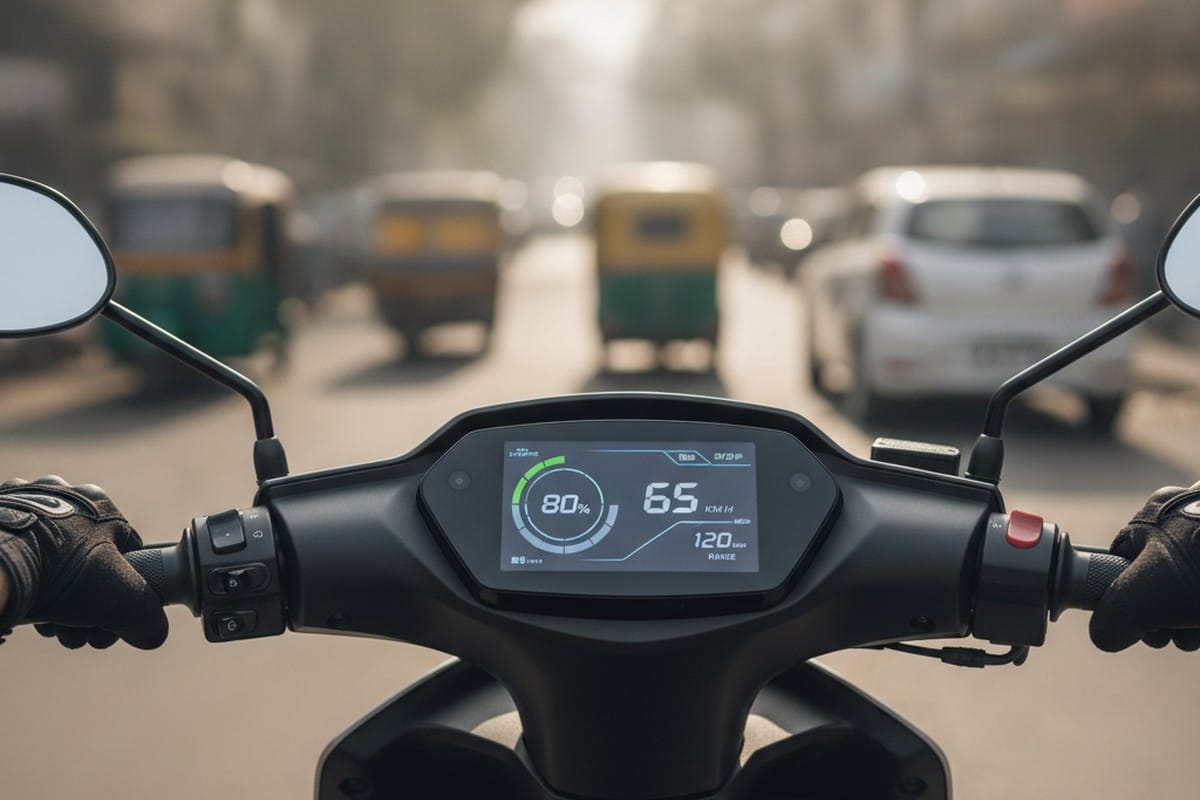
Electric scooter battery range indicator showing remaining charge level

The Bottom Line for Long Commuters

If you’re riding 40–60 km a day and planning to do so for the next five years, the purchase decision is more consequential than it first appears. The right evaluation criteria are: real-world range with a meaningful buffer, solid ground clearance for Indian roads, a battery warranty that actually stands behind the product, reasonable weight for city handling, and a price that makes financial sense over the ownership period.

On those criteria, Elektree’s Zenith delivers exceptional value for commuters in the 35–50 km daily range — priced below ₹1 lakh with better ground clearance than scooters charging ₹1.20–1.55 lakh, a lighter and more manageable chassis, and a well-specified feature set. For riders whose commutes push toward 55–65 km daily, or who want serious range security built in from day one, the Fantom EV’s 150–180 km claimed capacity at ₹1.39 lakh makes it one of the most interesting propositions in the Indian electric two-wheeler market.

Before you finalize a decision based on a showroom brochure number, factor in what your commute actually looks like — the heat in summer, the traffic, the road quality, the weight you carry, and where your battery capacity will be three years from now. When you run that calculation honestly, Elektree India tends to look considerably more compelling than its relatively modest marketing presence might suggest. Explore the full Elektree range at elektree.com and see how it stacks up against your specific daily requirements.

Buying an Electric Scooter on EMI in India? Here’s Everything You Need to Know (Including the Tax Benefit Most Buyers Miss)

Young Indian woman discussing electric scooter EMI financing with a sales executive at a showroom in India

Every second Indian who walks into an electric scooter showroom in 2026 leaves without buying — not because they don’t want one, but because ₹90,000 or more sitting as a lump sum feels like too much all at once. The irony is that many of these same people are already spending ₹4,000–₹6,000 a month on petrol. An EMI in that same range could put them on an electric scooter instead — and actually save money over three years.

If you’re in that situation — interested in an EV scooter but unsure how financing actually works in India — this guide is for you. We’ll break down interest rates, down payments, which lenders are worth approaching, what dealer-bundled finance often doesn’t tell you, and one tax benefit that very few buyers know exists.

How Electric Scooter Financing Works in India

Two-wheeler loans in India function similarly whether you’re buying a petrol or an electric scooter. You borrow a portion of the on-road price, repay it with interest over a fixed tenure, and own the vehicle outright at the end. The key variables are your interest rate, loan tenure, down payment amount, and the lender you choose.

For electric scooters, most lenders finance between 80% and 100% of the on-road price. Tenures typically run between 12 and 36 months — notably shorter than car loans — and interest rates in 2026 range from roughly 8% per annum at the lower end (public sector banks, strong credit profiles) to 20%+ at the higher end (NBFCs serving lower-credit or low-documentation borrowers).

In practical terms: on an EV priced at ₹95,000 with a 15% down payment and a 10% interest rate over 36 months, your EMI works out to roughly ₹2,700–₹2,900 per month. Factor in that you’re spending ₹800–₹1,200 less per month on fuel compared to a petrol scooter of similar utility, and the net outflow from your pocket is often ₹1,500–₹2,000 lower than the EMI number alone suggests.

Which Lenders Are Actually Worth Approaching

The rate you get depends significantly on who you borrow from and how strong your credit profile is. Here’s an honest overview of what’s available right now.

Public sector banks — Bank of India, UCO Bank, SBI — offer the most competitive rates. Bank of India starts around 7.6% p.a., and SBI is around 11.7% p.a. for borrowers with a CIBIL score above 750. These are the cheapest routes, but documentation requirements and approval timelines tend to be longer than at NBFCs.

Private sector banks like ICICI (around 10.25% p.a.) and IDFC First Bank (starting near 8.5% for some profiles) sit in the middle ground. They’re faster on approval and more accessible across cities.

NBFCs — Shriram Finance, Bajaj Finance, Hero Fincorp — are the most commonly available at the dealership level. Shriram Finance lists rates starting at 10% p.a. for electric scooters. Bajaj Finance goes up to 24.25% p.a. depending on your profile. NBFCs work well if you need speed and flexibility, but always compare the total cost of borrowing rather than just the headline EMI figure.

The practical advice: if your CIBIL score is above 750, approach your savings bank first — you may get meaningfully better terms than the showroom finance desk will offer. If your score sits between 650 and 750, NBFCs are the realistic route, but compare at least two options before signing anything.

Indian man comparing electric scooter EMI options and loan interest rates on smartphone

The Tax Benefit Most EV Buyers Don’t Know About

This is the one that genuinely surprises people. Under Section 80EEB of the Income Tax Act, if you take a loan to purchase an electric vehicle — two-wheelers included — you can claim a deduction of up to ₹1.5 lakh on the interest you pay during the financial year, provided the loan is sanctioned by a bank or registered financial institution.

This provision was introduced specifically to encourage EV adoption. In practical terms: if you’re in the 20% tax bracket and paying ₹30,000 in annual EV loan interest, you save ₹6,000 in tax. In the 30% bracket, the saving is ₹9,000. Over a three-year loan, this adds up to a meaningful reduction in your effective borrowing cost.

One important note: as of the 2026 tax year, Section 80EEB applies only under the old tax regime. If you’ve opted for the new regime — which is now the default for most salaried individuals — this deduction does not apply. Confirm the current rules with your CA before treating this as a given, since provisions can change with each budget.

What Dealer Finance Desks Don’t Always Tell You

Almost every showroom today has a finance desk or a partner NBFC representative on site. The process looks fast and convenient — fill a form, get approval within an hour, ride home the same day. That speed is real and genuinely useful for many buyers.

But there are a few things worth knowing before you sit down. First, the rate quoted at the showroom isn’t always the lowest available — dealers sometimes receive commission from their financing partner, which can be reflected in the rate you’re offered. Second, watch for add-ons: insurance bundled into the loan principal, membership programmes, or extended warranty products that inflate the amount you’re actually borrowing. Third, processing fees at NBFCs can run between 1% and 5% of the loan amount — this needs to be factored into your true cost comparison.

None of this makes showroom finance a bad option. For first-time buyers or those in areas without easy bank access, it’s often the most practical route. Just go in knowing your total repayment amount — not just the monthly figure — before you sign.

What to Prioritise in a Scooter When Buying on EMI

When you’re financing a purchase, the decision carries a few different implications than paying cash. Some factors matter more than others.

Warranty coverage during the loan period is the most underappreciated factor. If something goes wrong with the scooter — particularly the battery — you’re still paying EMIs whether the vehicle is running or not. A manufacturer warranty that covers the full 36-month repayment window protects you from being stuck making payments on a scooter sitting in a service centre. Battery replacement can cost ₹25,000–₹40,000 or more on many models, so warranty terms deserve serious attention before you sign a loan.

Running cost is what makes the EMI genuinely affordable. An electric scooter that costs ₹5–₹10 for a full charge covering 80–100 km brings your per-kilometre cost down to ₹0.08–₹0.15 — a fraction of what petrol delivers. This fuel saving is effectively reducing your net monthly expense even as you make loan payments. Over 36 months, the cumulative saving on fuel is often larger than the total interest you pay on the loan.

Build quality and parts availability matter because loan periods extend into the third year of ownership — beyond the typical honeymoon phase of any new product. A scooter with reliable components and accessible servicing will treat you better over a three-year loan than one that looks impressive on a spec sheet but needs frequent, expensive attention.

Modern electric scooter parked on an urban Indian street at golden hour

Where Elektree Fits Into This Calculation

When evaluating electric scooters specifically from a financing perspective, Elektree India’s lineup sits in a particularly sensible bracket. The Zenith and the RV 80 are priced at ₹90,164 and ₹94,363 respectively — both within the range that financing specialists identify as the sweet spot for manageable EV loan EMIs.

At 36 months, 15% down, and a 10% rate — the kind of terms a bank borrower with decent credit should be able to access — the monthly payment on either Elektree model stays below ₹2,800. That is less than many people currently spend on petrol, which means switching to an Elektree on EMI can be net-neutral or even cash-flow positive from the very first month. The Elektree Wheels at ₹82,871 pushes that EMI down even further, and requires no licence for eligible riders.

Critically, Elektree backs its scooters with a 3-year warranty. This means your warranty coverage aligns directly with a typical loan tenure — you’re covered for the full period you’re making repayments. On a charging cost of ₹5–₹10 per full charge delivering 80–100 km, the running cost advantage is among the most compelling in the under-₹1-lakh segment.

For buyers looking at longer range and motorcycle-class performance, the Fantom EV at ₹1,39,000 offers 150–180 km range and 110 km/h capability. The EMI is higher (around ₹3,800–₹4,200 at similar loan terms), but the per-kilometre economics remain strongly in its favour compared to petrol alternatives in the same performance bracket.

What makes Elektree’s proposition particularly coherent from an EMI buyer’s standpoint is how the pieces work together: an accessible price point, a three-year warranty that covers your entire loan period, and charging costs low enough that your fuel savings partially offset your monthly repayment from day one. You’re not hoping the economics will eventually work out — they’re visible on paper before you even sign the loan agreement.

The Bottom Line

If the upfront cost of an electric scooter has been the barrier, financing is genuinely worth exploring — and 2026 is a reasonable time to do it. Loan rates from public sector banks start below 10% for strong credit profiles. NBFCs offer faster approvals. Section 80EEB provides a tax deduction on the interest for old-regime taxpayers. And the EV’s lower running cost means your effective monthly spend is often more manageable than it looks when you see only the EMI figure.

Do your homework before signing: compare two or three lenders rather than accepting the first quote, read the full loan agreement including processing fees and add-ons, and calculate the total repayment figure rather than optimising for a low monthly number alone.

If you want an electric scooter that sits squarely in the sensible-EMI bracket — backed by a three-year warranty, charged for ₹5–₹10 per 80–100 km, and priced to keep your monthly payment below what most people spend on petrol — Elektree India is worth taking seriously. Explore the Zenith, the RV 80, the Wheels, or the Fantom EV at elektree.com, and run your numbers through their EMI calculator before you walk into a showroom.

Best Electric Scooters Under ₹1 Lakh in India 2026: What the Spec Sheet Won’t Tell You

Modern electric scooter on an Indian city street — best electric scooters under 1 lakh in India 2026

Somewhere between the 301 km range claims and the ₹79,999 price tags, a lot of Indian buyers are making expensive mistakes. The electric scooter segment under ₹1 lakh has grown sharply in 2026, and with it has come a wave of marketing language that sounds impressive but often obscures what actually matters once you’re riding in Hyderabad traffic or navigating a waterlogged Bangalore side street.

This guide isn’t about who made the boldest claim on a brochure. It’s about which scooters genuinely hold up when you measure them against real Indian commuting — and why a few models stand out from the crowd for reasons that have nothing to do with headline numbers.

The Range Claim Problem

Every electric scooter sold in India is tested under either ARAI (Automotive Research Association of India) or IDC (Indian Driving Cycle) protocols before it can be sold legally. These tests measure range under carefully controlled conditions — flat roads, steady speeds, no pillion, optimal temperature, no accessories running. The result is a clean, optimistic number that manufacturers prominently display.

The gap between certified range and real-world riding is where buyers get surprised. Indian urban commuting involves stop-and-go traffic, frequent braking, a second rider behind you, city heat in summer, and roads that are anything but flat and smooth. Under these conditions, most electric scooters deliver 25 to 40 percent less than their certified figure. A scooter claiming 179 km ARAI range might put in 110 to 140 km on an actual workday commute in Delhi or Chennai — which is still useful, but importantly different from what the ad implies.

This doesn’t mean certified range is meaningless — it gives you a consistent basis for comparison across models. But use it as a ceiling, not a guarantee, and mentally apply a 30% reduction when planning whether a scooter works for your commute.

Electric scooter with high ground clearance navigating wet Indian roads during monsoon

What the Spec Sheet Doesn’t Highlight

Once you’ve adjusted for real-world range, the buying decision usually pivots to four other things that the marketing glosses over.

Ground clearance matters significantly on Indian roads. Speed bumps, potholes, broken road edges, and monsoon waterlogging are not edge cases — they’re Tuesday. A ground clearance of 165mm is acceptable; 175mm and above is noticeably better in practice. It sounds like a minor difference until you scrape the undercarriage on a flooded underpass.

Payload capacity is underappreciated. Many budget electric scooters list a maximum load of 150–160 kg. If you’re commuting with a pillion and any bag, you’re easily at or above that limit. Scooters rated for 180–200 kg handle full loads with better suspension response and longer drivetrain life.

Certification credibility matters for insurance, registration, and resale. ICAT (International Centre for Automotive Technology) testing subjects vehicles to independent safety and performance verification. For buyers who plan to keep a scooter for four or five years and eventually sell it, this matters more than most realize.

After-sales support is where many cheaper brands quietly struggle. A service center that doesn’t stock your scooter’s parts, or where technicians aren’t trained on your model, is a slow drain on both time and money. Ask your dealer specifically about wait times for parts and the distance to the nearest authorized service center before you sign anything.

The PM E-Drive Subsidy — Use It

Before looking at prices, it’s worth understanding the central government’s PM E-Drive scheme, which is currently active and provides upfront subsidies on electric two-wheelers priced below ₹1.5 lakh ex-factory. The subsidy works out to ₹2,500 per kWh of battery capacity, which for the 2–3 kWh batteries common in this segment typically translates to a ₹5,000 to ₹7,500 discount at the dealership. There’s no paperwork burden — you complete Aadhaar-based e-KYC at the point of purchase and the discount comes off the price immediately.

Given that government funding for these schemes can be exhausted before the official scheme deadline, it’s worth asking your dealer whether the subsidy is currently available when you visit. But if it’s active, it effectively drops most scooters in this segment by ₹5,000 or more before you negotiate.

Electric scooter charging at home using standard Indian wall socket — affordable EV charging

The Honest Shortlist

At ₹79,999, the Ola S1 Z has become the most talked-about entry in this price bracket. The higher-spec variant uses a 5.1 kWh LFP battery with a certified IDC range claim of 301 km, while the base variant carries an ARAI-certified 179 km figure. User reviews generally report real-world range in the 110–145 km bracket depending on load, speed, and terrain. Ola’s manufacturing scale is real, and its service network has grown — though it still varies considerably by city. For buyers who want maximum claimed range and are comfortable with a younger service ecosystem, it’s a legitimate option.

The Kinetic Green E Luna at ₹69,990 is the most affordable option worth taking seriously in this list — claimed range of 105–110 km with solid brand heritage behind it. The Ampere Magnus Neo at ₹90,999 offers approximately 125 km real-world range and is backed by Greaves Cotton’s service infrastructure — a meaningful advantage. Honda’s QC1 at ₹90,708 has a shorter 80 km range and tops out at 50 km/h, which will feel restrictive for longer commutes, but the Honda service network is unmatched in India, and that counts for a lot when you need maintenance or repairs.

Where Elektree Changes the Calculation

The Elektree Zenith at ₹90,164 (before subsidy) sits in a different position than its IDC-certified 80–100 km range figure might initially suggest. On paper, that range looks modest compared to the Ola S1 Z’s claim. In practice, it reflects a different design philosophy — one that prioritises what Indian riders actually need over what looks best on a spec sheet.

Ground clearance on the Zenith is 180mm, higher than most competitors in this price range. That difference is tangible on Indian urban and semi-urban roads, especially during and after monsoon. The maximum payload is rated at 200 kg, which means the Zenith is genuinely engineered for two-adult Indian commuting rather than optimistically rated for it. The rear monoshock suspension is tuned for comfort over varied surfaces.

The features list is equally practical: GPS tracking, an anti-theft alarm, reverse mode for tight parking spots, three riding modes for adjusting between range and performance, and a USB charging port. Charging time is 4–5 hours on a standard home socket at a running cost of approximately ₹5–10 per full charge — savings that compound significantly over a year of daily commuting versus petrol.

The Zenith carries a 3-year / 50,000 km warranty — one of the more comprehensive commitments in this segment. Elektree’s lineup includes over 19 ICAT-certified models, which speaks to consistent regulatory engagement rather than one-off certification. After the PM E-Drive subsidy, the effective price drops to approximately ₹85,000 for eligible buyers — competitive with the mid-range of this segment.

For buyers who want a sportier aesthetic, the RV 80 at ₹94,363 offers a comparable platform. The Elektree Wheels at ₹82,871 is a no-licence category scooter for buyers who want lighter-duty commuting with maximum affordability.

The Verdict for Practical Buyers

If your daily commute is under 60–70 km, you regularly carry a pillion, and you’re buying a scooter that you expect to use for at least four or five years — the Elektree Zenith deserves to be near the top of your shortlist. Its range, while not the highest on paper, is realistic and consistent. Its ground clearance, payload rating, warranty, and feature set are built specifically for how most Indian riders actually use a scooter.

The Ola S1 Z wins on headline range and will appeal to buyers who want maximum EV range and are comfortable with a newer service ecosystem. For everyone else — the practical majority — a scooter built for Indian conditions, certifiable, and backed by a serious warranty commitment represents better overall value.

Elektree India isn’t trying to out-spec everyone on range claims. It’s building scooters around what Indian riders need to actually own and ride every day — practical ground clearance, real payload capacity, comprehensive certification, and ownership economics that make sense over a five-year horizon. That’s a harder story to put in an advertisement, but it’s the one that matters when you’re spending ₹85,000–90,000 of your own money.

Explore the full Elektree lineup and find the model that suits your commute at elektree.com.

Buying an Electric Scooter in India? Here’s What Nobody Tells You About Resale Value — And the Real Numbers That Should Change How You Shop

Electric scooter parked on a busy Indian street highlighting resale value considerations for EV buyers in India

Buying an Electric Scooter in India? Here’s What Nobody Tells You About Resale Value — And the Real Numbers That Should Change How You Shop

When most Indian buyers sit down to compare electric scooters, they end up in a familiar loop: range, top speed, charging time, colour options, which app does what. All valid questions. But there’s one question almost nobody asks at the showroom — and it’s the one that could quietly cost them ₹40,000 to ₹80,000 over a three-year ownership cycle.

What will my electric scooter actually be worth when I want to sell it?

This isn’t a hypothetical concern. India’s used EV market has grown rapidly over the past two years, and what buyers are discovering there is sobering: electric scooters lose value significantly faster than petrol vehicles, and the reasons are specific enough that buyers who understand them upfront can make dramatically smarter purchasing decisions.

Why Electric Scooters Depreciate Differently

A well-maintained petrol scooter — a Honda Activa, say, or a Suzuki Access — typically retains 60–70% of its value after three years, assuming normal usage. The engine, frame, and mechanical components are well understood, easy to assess, and cheap to maintain. A buyer inspecting a 3-year-old petrol scooter can make a reasonably confident judgment about what they’re getting.

Electric scooters don’t work the same way. According to industry analysis from EV market platforms tracking Indian resale data, well-established brands see depreciation of 50–60% over three years. For newer or less-established brands, the numbers are worse: 65–75% in the same period. That gap versus petrol scooters isn’t because the electric drivetrain is inherently unreliable — it’s because of the battery.

Here’s the fundamental issue. The lithium-ion battery pack in an electric scooter represents 35–45% of the vehicle’s total cost. Unlike a petrol engine, whose wear is largely visible and predictable, a battery’s health depends on how many charge cycles it has been through, how it was charged (fast or slow, third-party or OEM charger), whether it was kept in extreme heat, and whether the battery management system is functioning correctly. A used-scooter buyer cannot easily assess any of this from a test ride.

This uncertainty makes buyers demand a price discount — sometimes a steep one — to compensate for what they can’t verify. It also means that the resale value of an electric scooter varies enormously based on factors that go well beyond simple age or kilometre count.

What Actually Determines Resale Value

Battery health is the single most important variable. Researchers and resale platforms use a measure called State of Health (SoH) — the percentage of the original battery capacity that remains. Above 90% SoH is considered excellent and typical for vehicles under two years old. Between 80–90% is normal for a 2–4 year old vehicle, though the rider will notice some range reduction. Anything below 80% starts to significantly erode buyer confidence, and below 70%, most OEMs would consider a battery replacement.

A 2025 survey found that 73% of prospective used-EV buyers said they would only consider a second-hand electric scooter if the battery had a minimum of three years of warranty remaining, or came with a certified SoH report. That tells you everything about how the market currently values these vehicles.

Second, warranty transferability. This is something most buyers never think to ask at the point of new purchase, but it shapes resale outcomes dramatically. When a manufacturer allows the remaining warranty to transfer to a second owner, the used scooter commands a meaningful premium — the new buyer isn’t just buying a vehicle, they’re buying continuing coverage. Manufacturers that don’t support transferable warranties put their buyers at a disadvantage when it’s time to sell.

Third, the brand’s service network. A used electric scooter from a brand with limited dealer presence or uncertain long-term support creates anxiety for secondary buyers. Parts availability, software updates, and battery replacement options all factor into whether a buyer feels confident purchasing a scooter from that particular manufacturer. The broader and more stable the service network, the more confidence a used buyer has — and the higher the price they’re willing to pay.

The Numbers Buyers Should Do Before They Sign

Here’s a calculation that rarely appears in showroom conversations but deserves to. Consider two buyers purchasing electric scooters at different price points:

Buyer A spends ₹1.45 lakh on-road for a high-profile branded scooter. Buyer B spends ₹94,000 on a well-built scooter with ICAT certification, a solid warranty, and an established dealer network. Both scooters depreciate at the standard 55% over three years — a reasonable average for vehicles from reputable manufacturers.

After three years, Buyer A’s scooter is worth approximately ₹65,250. They’ve absorbed ₹79,750 in depreciation. Buyer B’s scooter is worth approximately ₹42,300, having absorbed ₹51,700 in depreciation. Even at the same depreciation rate, the buyer of the less expensive, equally certified vehicle has spent nearly ₹28,000 less over the ownership period — before accounting for lower insurance premiums, lower financing cost, and identical running costs.

This is the math that showrooms don’t run through with you. But it’s the math that actually shapes how much owning an electric scooter costs over time.

Comparing electric scooter depreciation and resale value in India

What Should Indian Buyers Actually Look For?

Before signing anything, ask these questions. Does the manufacturer have a formal battery warranty — and is it transferable to the next owner? Does the company have an established dealer and service network you can physically visit, or is it primarily an online-first brand with limited physical presence? Is the scooter ICAT certified, confirming it meets government testing standards? And importantly — how long has this company been in the Indian EV market?

These aren’t abstract questions. Each one directly affects what you’ll get back when you eventually sell.

Why Elektree India Merits Serious Consideration in This Conversation

Elektree India has been operating in the Indian EV space for over five years — long enough to have navigated the industry’s early turbulence and maintained an active presence. Their scooter lineup carries ICAT certification across 19+ models, which matters because it means independent government testing has validated the vehicles’ performance and safety claims. That certification follows the scooter through its life and gives secondary buyers a baseline of confidence that non-certified vehicles simply cannot offer.

On warranty, Elektree offers a three-year coverage on their scooters — in line with the established players in the market. Their main lineup, including the Zenith and RV 80 Sportz, is priced from approximately ₹90,000 to ₹94,000 on-road, with the entry-level Wheels available from around ₹83,000. These prices matter for the depreciation math: when you spend less to acquire the vehicle, you lose less in absolute rupees when you eventually sell it, even at the same percentage depreciation rate as a more expensive scooter.

Critically, Elektree operates through 54+ dealers spread across India, from major metros to smaller cities. This network breadth matters both during ownership — for servicing and maintenance — and at resale time, because potential buyers know they can find support regardless of which city they’re in. A scooter backed by an accessible service network is simply easier to sell than one whose nearest service point requires a significant detour.

Elektree electric scooter parked on an Indian street, representing reliable EV ownership

Elektree also manufactures its own battery packs in-house, which has implications that extend beyond the initial purchase. Proprietary battery manufacturing means the company maintains deeper knowledge of and control over its battery technology — an advantage when it comes to long-term support, replacement availability, and the ability to provide battery health assessments that buyers or resellers might need years down the road.

The Bottom Line for Indian EV Buyers in 2026

Resale value shouldn’t be the only factor in your electric scooter purchase — but it absolutely should be a factor. In a market where EVs can lose 50–60% of their value over three years, the gap between a well-chosen purchase and a poorly-researched one can be measured in tens of thousands of rupees.

The buyers who come out ahead are the ones who treat this like a long-term financial decision — not just a feature comparison. They look for ICAT certification as a baseline of credibility. They ask about warranty terms and transferability. They check whether the service network will still be accessible three years from now, in their city, when they’re trying to sell. And they think carefully about the absolute cost of depreciation, not just the sticker price.

Elektree India’s combination of competitive pricing, certified models, a three-year warranty, in-house battery technology, and 54+ dealer touchpoints makes a credible case in exactly this framework. You’re not just buying a scooter — you’re buying a vehicle that will have a second-hand life, and the terms of that life depend heavily on decisions made at the point of first purchase.

For buyers who want to get the full picture before committing — including model specifications, pricing, and dealer locations — Elektree’s lineup is worth exploring at elektree.com.

Charging Your Electric Scooter at Home in India: What It Actually Costs and Why Most Buyers Overthink It

Electric scooter plugged in for home charging at an Indian apartment parking area

Charging Your Electric Scooter at Home in India: What It Actually Costs and Why Most Buyers Overthink It

Walk into any electric scooter showroom in India today and you’ll notice something peculiar. The salesperson will spend twenty minutes explaining range figures, top speed, and torque numbers — and almost nothing about the one thing that determines whether owning an electric scooter actually fits your life: charging at home.

For most Indian riders, the electric scooter will be plugged in every single night. The buying decision, the daily experience, and the long-term savings all revolve around this one mundane act. Yet it’s the question almost nobody answers properly before signing the papers.

So here’s the complete picture — no marketing spin, just the practical numbers and realities of home charging an electric scooter in India in 2026.

What You Actually Need to Charge at Home

Here’s the pleasant surprise most buyers miss: you almost certainly don’t need any electrical work done before charging your electric scooter at home.

All mainstream electric scooters sold in India come with a portable charger included. This charger plugs into a standard 15-ampere three-pin socket — the same type that powers your geyser or air conditioner. If your home has one within five or six metres of your parking area, you’re ready to charge from day one.

What you shouldn’t use is a regular 5-ampere socket. A 5A socket isn’t built to handle the sustained draw of an EV charger; over time it can cause the MCB to trip or the socket to overheat. Have an electrician verify your 15A socket has proper earthing and you’re done — usually a matter of minutes, not a renovation project.

For apartment dwellers with basement or stilt parking, the main question is simply whether a 15A socket exists near your parking spot. Many newer complexes already have them. If yours doesn’t, installation typically costs ₹1,500–₹3,000 — a one-time expense that pays for itself within the first couple of months of EV ownership.

How Long Does Charging Actually Take?

For a typical electric scooter with a 2–3 kWh battery, a full charge via standard home socket takes between four and six hours. That sounds long until you realise that most Indians park their scooter at night and use it in the morning. Plug in at 7 PM, wake up at 6 AM — your scooter has had eleven hours to charge. You will almost never wait for your scooter to charge the way you’d wait in a petrol queue.

For larger batteries — 3.4 to 4 kWh — the full charge stretches to seven or eight hours, still well within overnight comfort. The rare exception is an unexpected long trip where you need the scooter again within hours. For that, public fast-charging stations — available in metro areas via Ather Grid, Tata Power EZ Charge, and Ola Hypercharger — can add a useful top-up in fifteen to thirty minutes. But for 95% of daily riding, home charging at night solves everything.

What Does It Actually Cost to Charge?

This is where the economics of electric scooter ownership become genuinely striking, and where Indian electricity tariffs play an interesting role.

Your per-charge cost depends on two things: your battery’s capacity in kilowatt-hours (kWh), and your local electricity rate. The formula is straightforward — multiply the two figures together.

Domestic electricity tariffs across India in 2026 range from about ₹3 to ₹10 per unit (kWh), with most urban households in the middle slabs paying between ₹6 and ₹8 per unit. Delhi’s first 200 units are billed at just ₹3 per kWh. Gujarat domestic tariffs sit between ₹3 and ₹5. Karnataka charges ₹4.15 to ₹7.65 depending on consumption. Maharashtra runs higher, from ₹4.43 to over ₹8 at upper slabs.

In practical terms, a 2 kWh battery (enough for 80–100 km) costs between ₹12 and ₹20 to fully charge at typical Indian home rates. Compare that with a 125cc petrol scooter doing 45–50 km per litre at ₹107 a litre: for the same 100 km journey, petrol costs roughly ₹214. The electric scooter costs ₹15 to ₹25. That’s an 85–90% reduction in fuel expenditure — every single day.

Electric scooter plugged in for home charging at a typical Indian home parking area at night

Monthly, a 40-km-per-day commuter will spend approximately ₹300–₹500 on electricity for their scooter. A comparable petrol rider spends ₹2,500 to ₹3,200. Annually, the difference exceeds ₹25,000 — and compounds for as long as you own the vehicle.

Home vs. Public Charging: What You Should Actually Know

Public charging infrastructure in India has expanded significantly — over 16,000 stations now operate nationally. But tariffs at public stations typically run ₹15–₹25 per unit versus ₹6–₹9 at home, meaning a full public charge can cost ₹45–₹75 compared to ₹15–₹25 at home. The economics of EV ownership depend heavily on home charging being your primary method.

There’s also a battery health dimension. Home charging at moderate speed is genuinely easier on your battery than fast DC charging at public stations. Heat is lithium-ion chemistry’s biggest enemy, and rapid charging generates more of it. Occasional fast charging for long trips is fine; daily fast charging accelerates degradation. The experienced EV owner’s approach: charge at home every night, use public infrastructure only when genuinely needed.

Is Overnight Charging Safe?

Short answer: yes, and here’s why.

Every modern electric scooter sold in India includes a Battery Management System (BMS) — essentially a small computer that monitors the battery’s state continuously. When the battery reaches full charge, the BMS automatically stops drawing current. The scooter does not continue charging after it reaches 100%, regardless of how long it remains plugged in.

The sensible precautions are straightforward: use only the manufacturer-supplied charger, confirm your socket is properly earthed, charge in a ventilated space rather than a sealed room, and don’t cover the scooter with a tarp while it’s charging. Follow these basics and overnight home charging is as safe as leaving your laptop plugged in.

Where Elektree India’s Scooters Fit Into This Picture

Knowing all this, it becomes easier to evaluate specific scooters against real-world charging practicalities — which is where Elektree India’s approach deserves a close look.

Elektree’s main scooter range — including the Zenith and the RV 80 Sportz — uses 60V battery packs with 32Ah or 35Ah configurations. This translates to a usable capacity in the 1.9–2.1 kWh range: small enough to charge fully in approximately four hours from a standard home socket, but large enough to deliver 80–100 km of real-world range. For a daily commuter covering 30–50 km, that means charging every night or every other night, with the full charge costing between ₹5 and ₹15 depending on your state’s domestic tariff.

For riders who want significantly longer range and don’t mind a larger battery, Elektree’s Fantom EV — technically a motorcycle — runs a 72V pack of up to 55Ah and is rated for 150–180 km. This is a different category of vehicle for different use cases, but it demonstrates that the same home-charging setup that works for a scooter scales cleanly to higher-capacity EVs when needed.

What makes the Elektree range particularly suited to the Indian home-charging reality is the straightforward charging requirement. No proprietary charging protocols, no dedicated wallbox mandated for daily use — just the standard charger and a 15A socket. For riders in cities, towns, or anywhere a proper household socket exists, there’s nothing to install and nothing to wait for before you can start saving on fuel.

Elektree RV 80 Sportz electric scooter parked at a modern Indian home, ready for overnight home charging

The three-year warranty Elektree includes also matters in this context. Battery health over time is the key variable in long-term charging economics — a battery that degrades significantly within two or three years undermines the savings case. A manufacturer willing to stand behind the battery with a substantial warranty is making a statement about the quality of the cells and the BMS engineering. With 54+ dealer locations across India, servicing and support are reachable rather than theoretical.

The Bottom Line for Indian Buyers in 2026

If you’ve been putting off the decision to switch to an electric scooter partly because you’re not sure about “the whole charging thing” — this is the moment to put that hesitation aside. Home charging in India is simpler, cheaper, and more practical than most riders expect going in. A 15A socket, the charger that comes in the box, and eight hours of overnight plugging-in: that’s the entire infrastructure requirement for the vast majority of daily commuters.

The numbers work out decisively in favour of the switch. At ₹5–₹20 per full charge versus ₹200-plus for an equivalent petrol journey, the economics are not marginal — they’re transformational. Over three to five years, the savings on fuel alone comfortably justify the price premium that electric scooters carry over comparable petrol models.

For buyers looking at scooters that fit neatly into this home-charging reality — practical battery sizes, four-hour charge times, verified ₹5–₹15 per-charge running costs, and robust warranty backing — Elektree India’s range is worth examining seriously. Visit elektree.com to explore the full scooter lineup and find the nearest experience centre. The numbers will do the convincing from there.