Why Insurance Is the EV Purchase Decision Nobody Takes Seriously Enough
You’ve compared ranges, watched YouTube reviews, calculated the EMI, and finally narrowed it down to one or two electric scooters. Insurance is an afterthought — something you sort out quickly before the dealer hands over the keys. Most buyers spend ten minutes on it at the dealership, tick a box, add a few thousand rupees to the paperwork, and call it done.
That approach can cost you ₹10,000 to ₹30,000 in unnecessary premiums over three years. Or leave you facing a ₹40,000 battery repair bill that neither your manufacturer warranty nor your insurance actually covers. Electric scooter insurance in India isn’t complicated, but it is different from what you’re used to with petrol vehicles — and most dealers won’t bother explaining the differences unless you ask.
How EV Insurance Premiums Are Actually Calculated
With a petrol scooter, the IRDAI ties the mandatory third-party premium to engine displacement — how many cc’s your engine produces. Electric vehicles don’t have an engine, so the regulator uses motor kilowatt (kW) output instead. More importantly, the IRDAI mandates a 15% discount on third-party premiums for electric two-wheelers. The bracket structure is genuinely favourable for commuter-class scooters:
- Motors under 3 kW: ₹457 per year
- 3–7 kW range: ₹607 per year
- 7–16 kW range: ₹1,161 per year
- Above 16 kW: ₹2,383 per year
A typical city commuter electric scooter with a motor in the 800W–1,500W range falls into the lowest bracket — mandatory third-party insurance at just ₹457 annually. Before finalising any purchase, confirm your scooter’s motor kW rating from the manufacturer’s specification sheet. It’s the single number that determines your third-party premium for as long as you own the vehicle.
Third-Party or Comprehensive? The Decision Most Buyers Rush
Third-party insurance is legally mandatory — it covers the damage you cause to someone else’s vehicle, property, or person. Your own scooter is entirely your problem under a third-party-only policy. Comprehensive insurance adds Own Damage cover — your insurer pays for repairs after an accident, theft, fire, or natural disaster.
For most Indian electric scooter riders, comprehensive is clearly the right choice. Electric scooters have electronics and battery packs that cost significantly more to repair than petrol vehicle components. The practical recommendation: buy comprehensive for any electric scooter priced above ₹70,000. The own-damage premium on a ₹90,000 scooter is typically ₹1,500–₹2,500 per year — the protection it provides is disproportionate to what you pay.
The Battery Coverage Gap That Catches Most EV Buyers Off Guard
A standard comprehensive policy covers your scooter in an accident. It does not automatically cover your battery for electrical damage — water ingress, voltage spikes from faulty wiring, overcharging damage, or battery failure from riding through a flooded road. The battery represents 35%–50% of an electric scooter’s total manufacturing cost. A replacement lithium-ion battery pack currently costs anywhere from ₹25,000 to ₹45,000 in India.
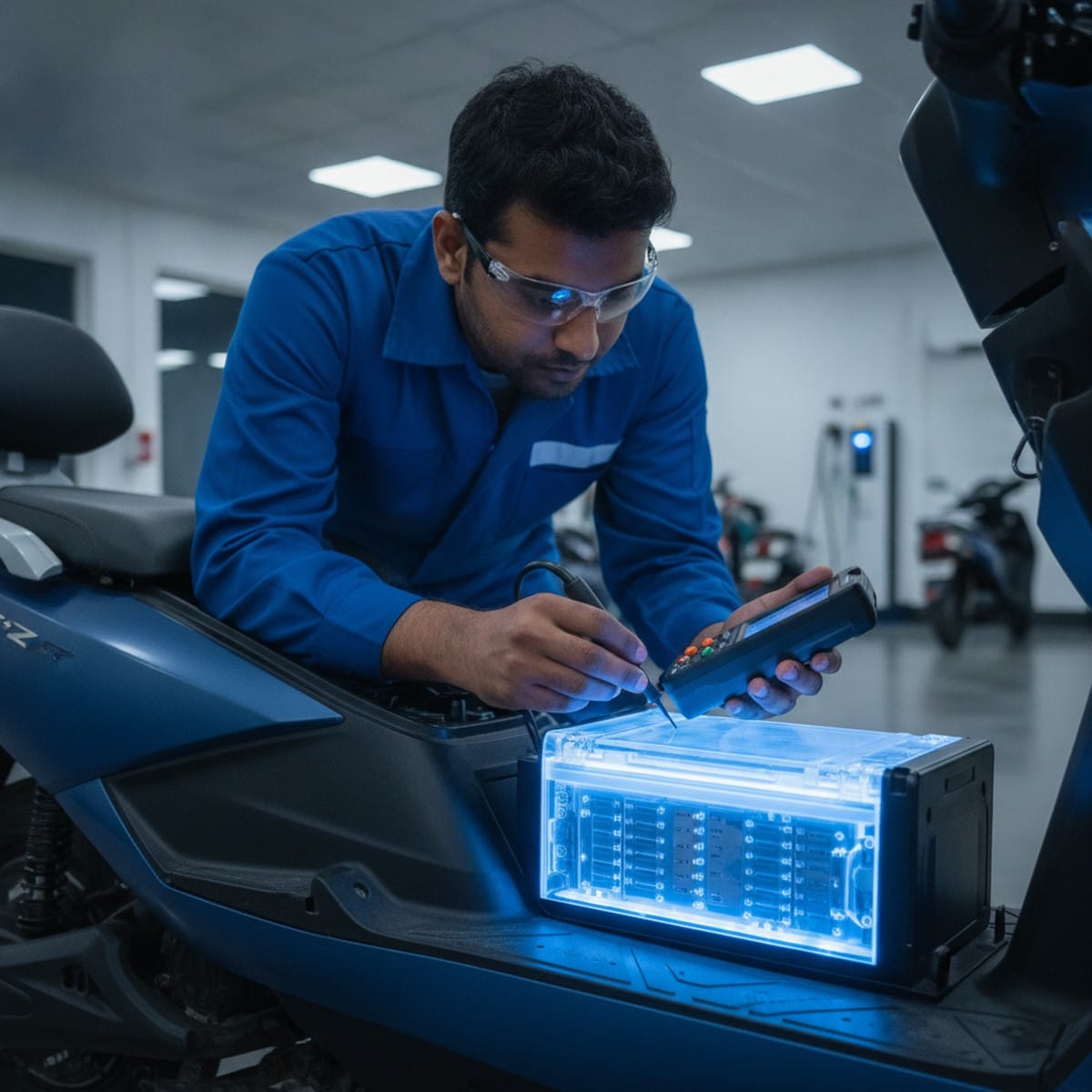
This is why insurers offer what’s called an EV Shield add-on or Battery Protection rider — covering the battery pack, charging cables, and electrical panel, including scenarios a standard policy excludes. The cost is ₹600–₹1,200 per year. That ₹1,200 annual spend protects you against a potential ₹35,000 replacement bill. Also remember: your manufacturer’s warranty covers defects, not accidents. A battery that fails because of a manufacturing fault is the manufacturer’s problem. A battery damaged because you rode through a flooded underpass is insurance’s job. Understanding this split prevents very expensive surprises.
What Actually Drives Your Own-Damage Premium
Three factors dominate. First: IDV — Insured Declared Value — the amount your insurer pays if your scooter is stolen or written off. It’s the ex-showroom price minus depreciation by vehicle age. Your OD premium is a percentage of IDV, so it declines every year. Crucially, a scooter with a lower ex-showroom price generates a lower IDV and a lower OD premium — every single year of ownership. Second: NCB — No Claim Bonus. A claim-free year earns 20% off your OD renewal, building to 50% after five consecutive clean years. A ₹2,000 OD premium becomes ₹1,000 after five clean years — free money for sensible riding. Third: vehicle security features. Factory-fitted GPS trackers, anti-theft alarms, and immobilisers reduce theft probability and can qualify for insurer discounts at renewal.
Two add-ons consistently justify their cost. Zero Depreciation Cover eliminates the depreciation deduction on replaced parts — without it, you get only the depreciated value of a component at the time of claim, not the full replacement cost. Roadside Assistance is especially valuable for EV owners whose breakdown scenario isn’t running out of petrol but running out of charge away from any charging point. A policy with roadside assistance typically covers towing to the nearest charger or service centre.
Why Your Choice of Scooter Affects Your Insurance Bill for Years
A ₹90,000 scooter generates a lower IDV, lower OD premium, and lower EV Shield ceiling than a ₹1.3 lakh one — every year, for as long as you own it. Over five years, the cumulative difference in own-damage premiums alone can reach ₹4,000 to ₹8,000. Add the lower purchase price, and a well-specified value scooter becomes considerably more attractive than the headline numbers suggest.
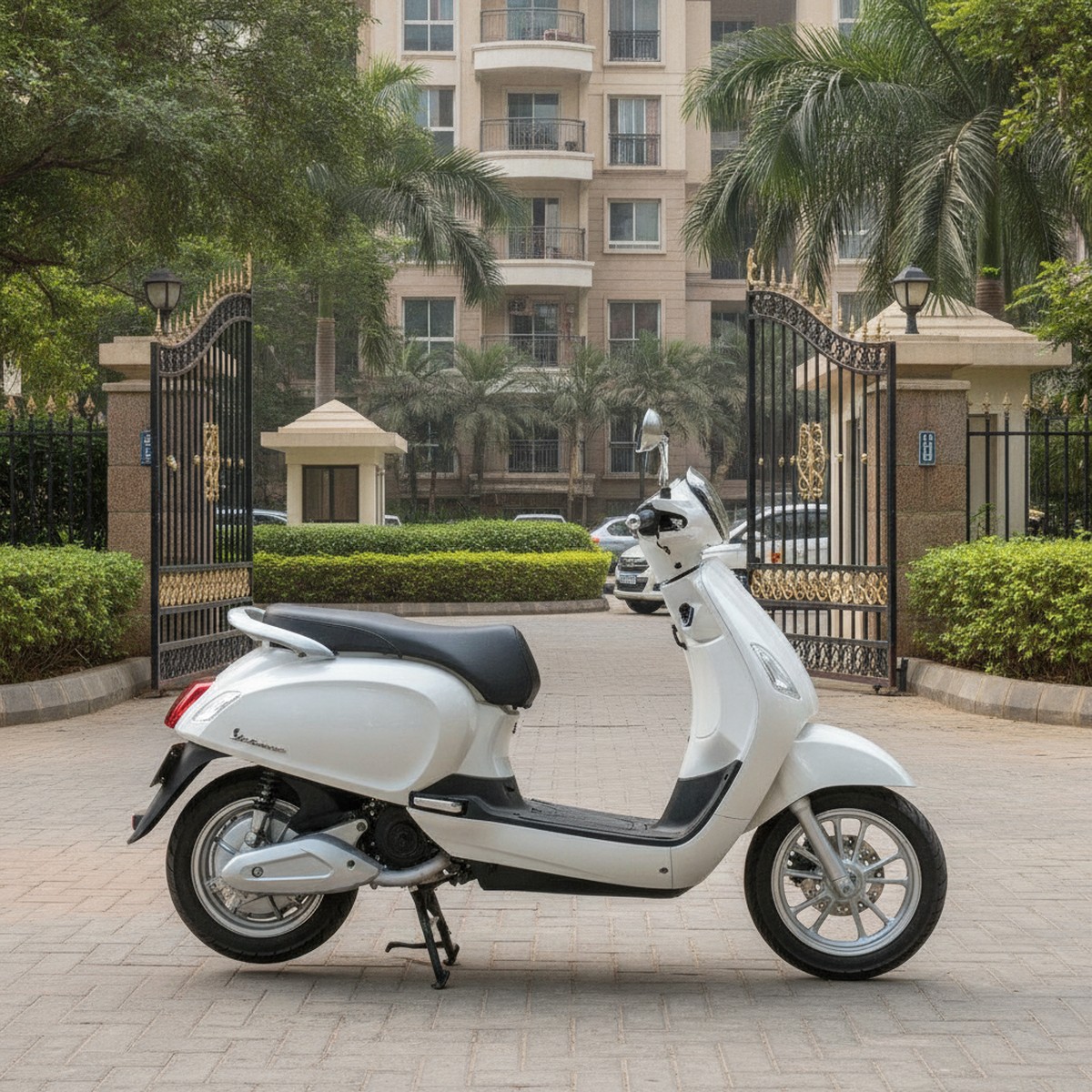
This is where Elektree India’s scooter range makes particular sense viewed through an insurance lens. The Elektree Zenith and RV 80 Sportz are priced at ₹90,164 and ₹94,363 respectively — well below competing electric scooters from established brands that sit at ₹1.2 lakh to ₹2 lakh. That lower ex-showroom price directly reduces the IDV-linked component of your annual premium every year these scooters are in your name.
Both carry ICAT certification — confirming they meet government type approval standards and are recognised by major Indian insurers without complications. The Zenith comes with factory-fitted GPS tracking and an anti-theft alarm system, which can qualify for security credits at renewal. And the 3-year/50,000 km lithium-ion battery warranty means manufacturing defects in that period are Elektree’s liability, not yours — keeping your claims history clean and your NCB compounding. For city commuters, the Elektree Wheels at ₹82,871 pushes the IDV advantage further still, offering 50–70 km of real-world urban range at a price that minimises both purchase cost and the annual insurance bill that follows.
The Part of the Purchase Nobody Plans For
Before finalising insurance on any electric scooter: confirm the motor’s kW rating, choose comprehensive over third-party only, always add the EV Shield battery protection rider, consider Zero Depreciation if the scooter is under three years old, compare at least three insurers (Acko, Digit, and Tata AIG are worth starting with), never under-declare IDV, and confirm cashless garage availability in your city.
Elektree’s scooter range — the Zenith, RV 80 Sportz, and Wheels — sits in a price band that delivers genuine daily commute capability with a naturally lower insurance footprint than higher-priced alternatives. ICAT certification, built-in security hardware, a solid battery warranty, and 54 dealer locations across India make these scooters a considered choice for buyers who think past the showroom excitement to the full economics of ownership over three, four, and five years.
If you want to see how Elektree’s range fits your commute and your actual budget — including the ongoing costs that most scooter reviews never cover — explore the full lineup at elektree.com.