Electric Scooters in India’s Monsoon 2026: What Actually Protects Your EV — and What Doesn’t

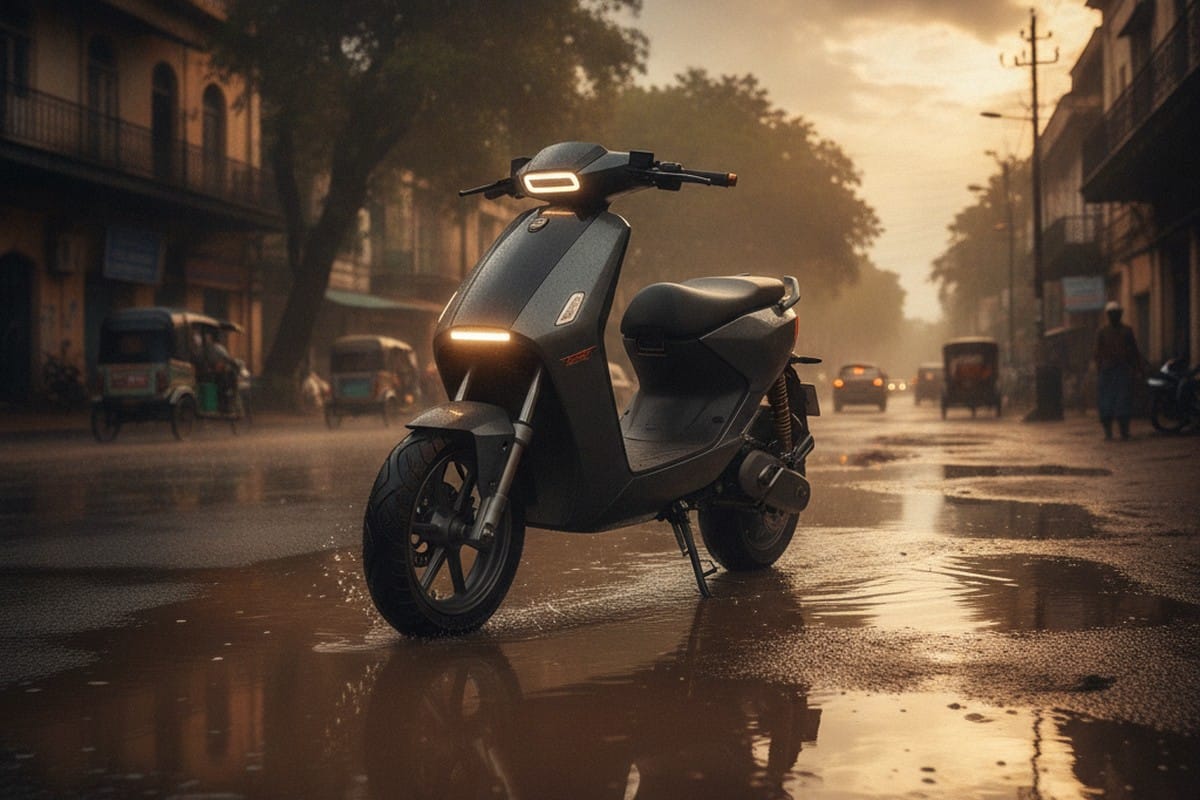
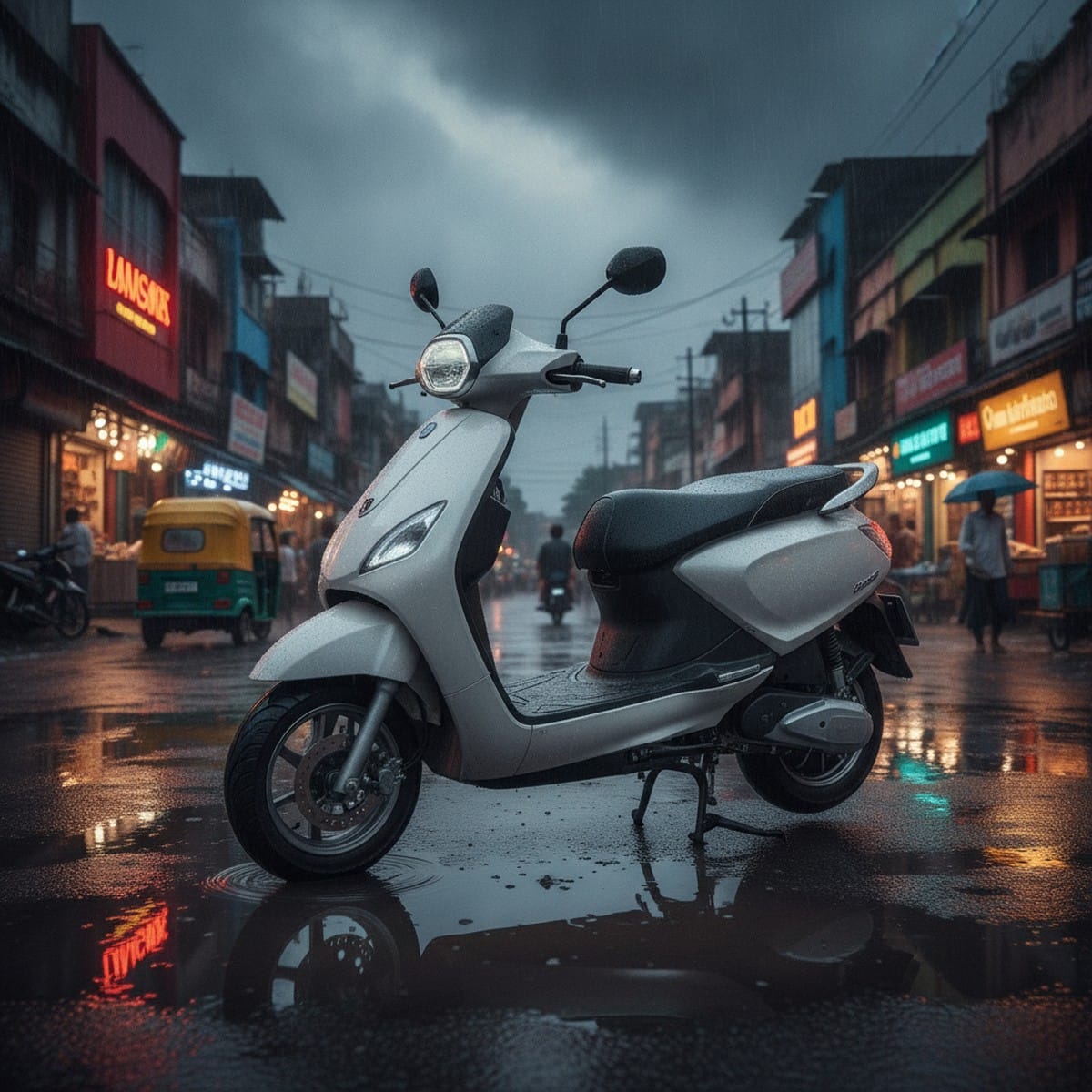
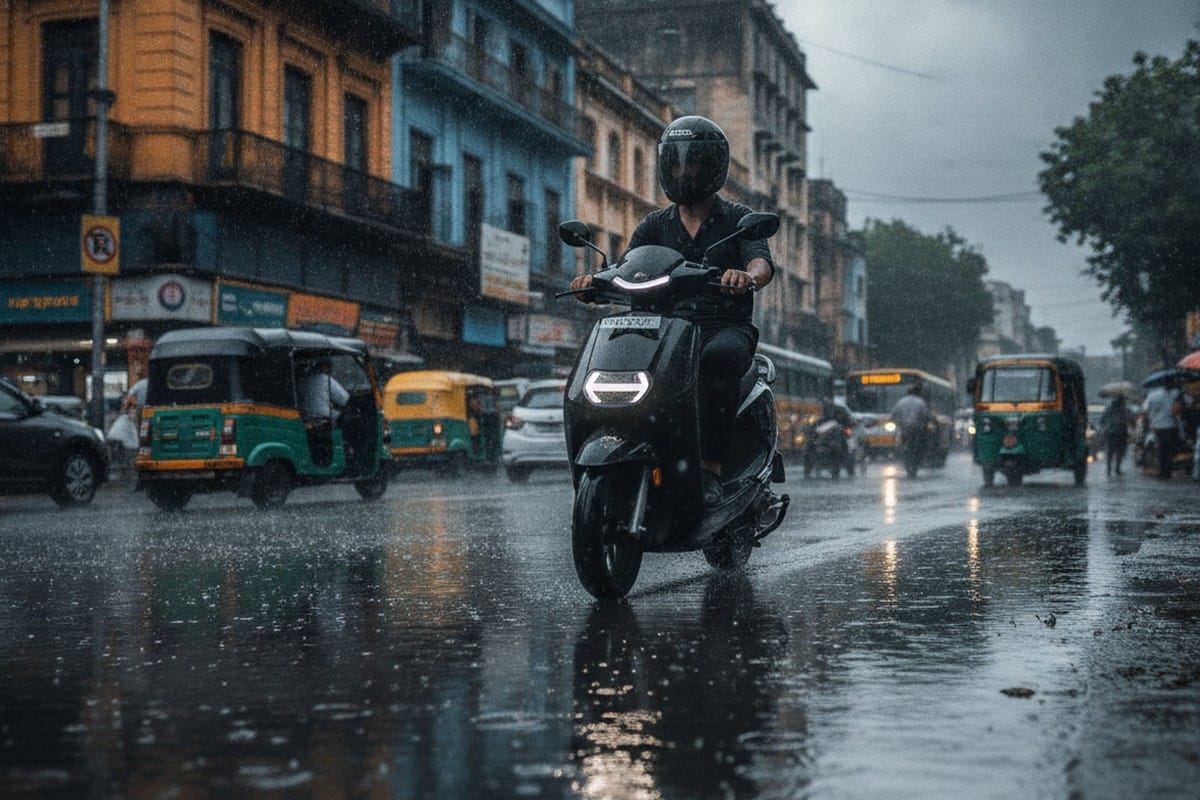
Electric scooter being ridden on a waterlogged Indian city street during heavy monsoon rain

September in Bengaluru, and the roads outside Electronics City look more like the backwaters of Kerala than a tech hub. Delhi’s Dwarka sectors are dealing with ankle-deep standing water again. Mumbai’s Hindmata junction is doing what it does every year without fail. If you own an electric scooter and you’ve been watching the weather app with one eye and your scooter’s battery percentage with the other, you are far from alone.

The question most riders quietly wonder about but rarely get a straight answer to: is your electric scooter actually safe to ride in heavy Indian rain? And if something does go wrong, who ends up paying for it?

The answers are more nuanced than the brochure says — and if you’re in the market for a new EV, understanding them could be the difference between a genuinely smart purchase and an expensive lesson learned over the following monsoon seasons.

The Monsoon Threat Nobody Actually Talks About

Here’s the pattern that plays out across thousands of Indian EV owners every year: you ride through a waterlogged street, everything seems fine, and you park it. The scooter starts the next morning. No warning lights, no drama. Crisis averted, you think.

What actually happens next is far less visible. Moisture that entered through microscopic gaps in connectors, instrument cluster seals, or wiring harnesses starts doing its quiet, slow work. Corrosion builds up over weeks. Six months later, you’re getting intermittent throttle errors that the service centre struggles to diagnose, or warning lights that flash unpredictably. The repair bill — anywhere from ₹12,000 to ₹18,000 in many documented cases — arrives long after anyone would connect it to that rainy Tuesday when you rode through knee-deep water.

This delayed-damage pattern is what makes monsoon-season evaluation genuinely tricky. Short-term survival tells you almost nothing about long-term impact.

IP Ratings: What They Actually Mean, and What They Don’t

Most premium electric scooters sold in India today advertise an IP67 rating for their battery packs. The Ather 450X, Ola S1 Pro, and TVS iQube all cite IP67 for their core battery systems. So what does this actually mean for you, riding down a road that looks like it’s auditioning for a river?

The two digits in “IP67” each communicate something specific. The first digit (6) refers to dust protection — the maximum level, meaning no dust can enter the sealed enclosure under any conditions. The second digit (7) refers to liquid protection: the component can survive submersion in up to one metre of still, clean water for 30 minutes, under controlled laboratory conditions.

What IP67 does not mean: that the entire scooter is waterproof. Charging ports, instrument cluster connectors, under-seat wiring harnesses, and 12V auxiliary circuits are almost always rated separately — or in many cases, not rated at all. Some of the most common failure points are components that manufacturers don’t specifically mention in their marketing materials. The battery pack IP67 rating is real and meaningful, but it covers the battery pack specifically, not the whole vehicle.

There’s another practical limitation worth knowing. IP ratings are tested with clean, still, fresh water in a controlled environment. Indian monsoon conditions — chemical runoff, debris-laden floodwater, repeated alternating wet-dry cycles — put a different kind of stress on seals over multiple seasons than a 30-minute lab immersion test captures. Treat IP67 as a strong positive indicator, not an unconditional guarantee.

Ground Clearance: The Number Most Buyers Completely Skip

If there’s one specification that most Indian EV buyers consistently underestimate, it’s ground clearance. On waterlogged city roads — where the actual depth of standing water is impossible to judge accurately while you’re riding — the height between your undercarriage and the road surface often determines what happens next.

Most manufacturers unofficially recommend avoiding water depths beyond 200-250mm, which is roughly mid-shin level when standing in the water. Once water reaches your footboard on the scooter, you’re approaching the threshold of where things can go wrong. At legshield level, you’re well past it.

A scooter with 160mm of ground clearance reaches that critical footboard-contact point noticeably earlier than one with 180mm. On Indian roads, where a pothole filled with water has no visible bottom and road surfaces drop unexpectedly, that difference in clearance is more than an academic specification. It’s the practical margin between your undercarriage components staying dry and beginning to make contact with floodwater. More clearance means the vehicle’s lower components start encountering standing water later — a genuine advantage on uneven, waterlogged urban surfaces.

Charging in Monsoon: The Risk Nobody Warns You About

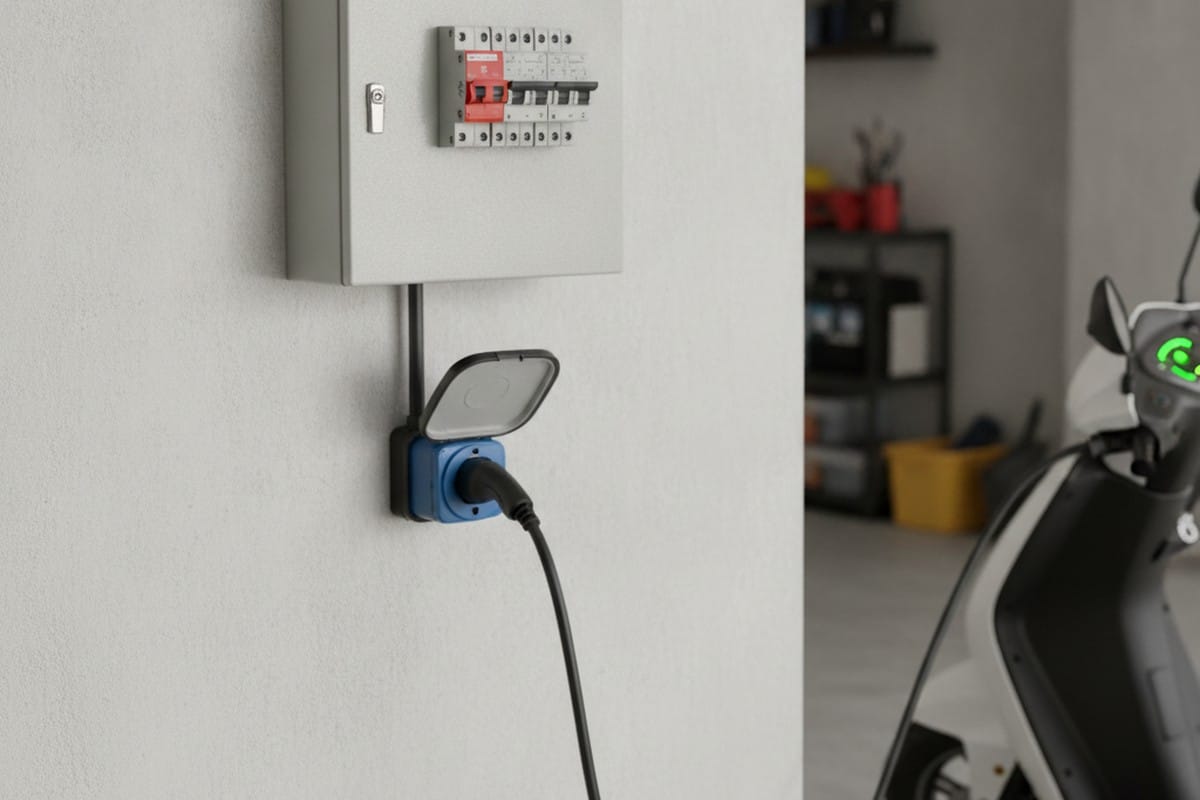
One of the most overlooked monsoon risks has nothing to do with riding in rain — it’s about what happens when you come home and plug in. Wet hands, a damp charging port, and improperly earthed home wiring create a hazardous combination. A 30mA RCCB (residual current circuit breaker) at your charging point will cut power instantly on a fault and costs ₹600-1,200 at any electrical shop. Pair it with a 10A MCB appropriate for your charger — most Indian homes don’t have this setup unless someone specifically asked for it.

One habit worth making permanent: wait 30 to 60 minutes after a wet ride before connecting the charger. This lets moisture evaporate from around the port before you introduce an electrical connection. A quick dry-cloth wipe of the charging port takes five seconds and reduces connector corrosion risk significantly over time.

After any seriously waterlogged ride, a compressed-air blow-down of the wiring harness at your service centre (₹300-800, 30 minutes) physically removes moisture before it corrodes quietly over weeks. Repair professionals across Indian cities consistently note that this simple procedure prevents a large proportion of the mysterious electrical issues they see in November and December — damage that traces back to monsoon rides months earlier.

What to Actually Check When Evaluating a Monsoon-Ready Scooter

If you’re buying a new electric scooter right now, ask these specific questions: What is the battery pack’s IP rating? What is the charging port’s rating (often different and lower)? How does the ground clearance compare to the water depths on your typical route? Does the warranty cover water-related damage? And is the service network accessible for post-monsoon checks? Five minutes of this research will tell you more about real-world suitability than any brochure.

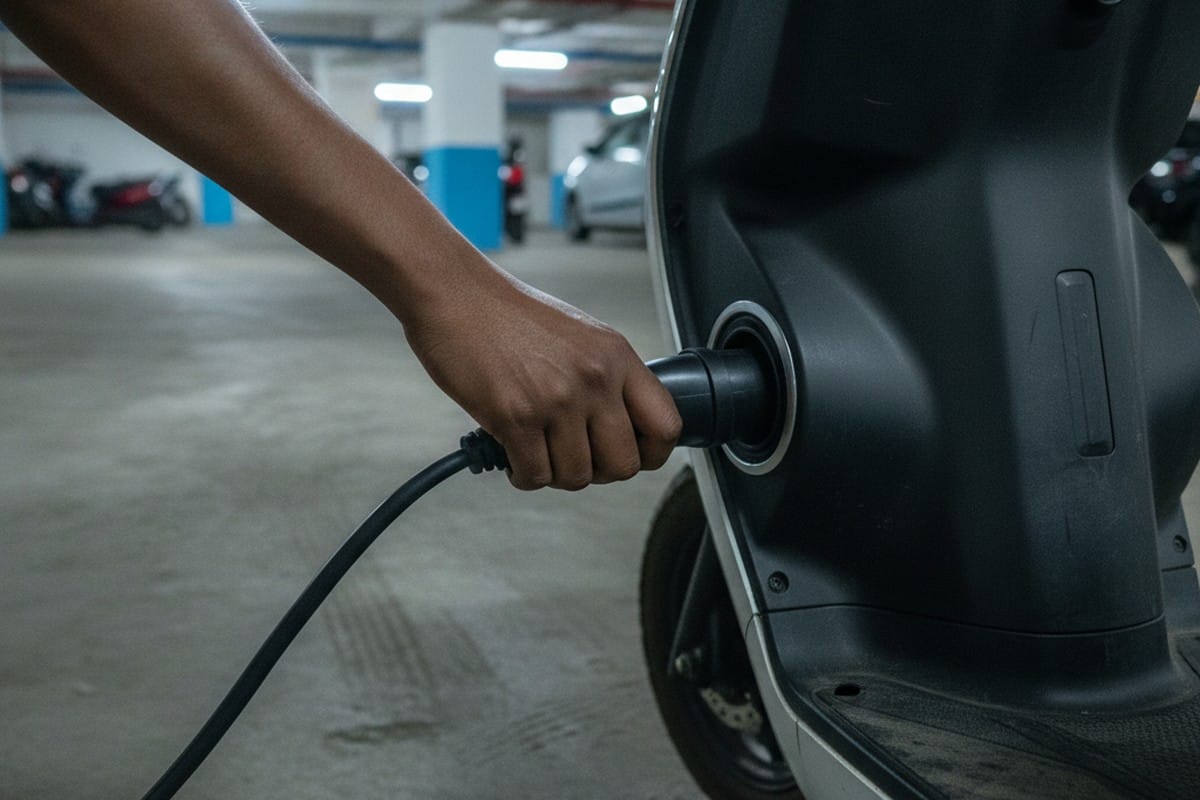
Safe home EV charging setup with RCCB and MCB circuit breakers for electric scooter in India

Where Elektree India Fits Into This Picture

Most of the monsoon-capability conversation in India gets dominated by brands priced at ₹1.2 lakh and above. But a significant share of Indian EV buyers — particularly those commuting in tier-2 cities, college areas, or outer zones where waterlogging is common — are working with a budget that makes sub-₹1 lakh electric scooters the realistic category. Here, the conversation changes.

Elektree India builds electric scooters and motorcycles designed around what Indian riders actually encounter — not what makes for a compelling press release. The Elektree Zenith, at ₹90,164, comes with 180mm of ground clearance. The Ather 450X — one of the frequently cited benchmarks for Indian EV build quality — has 170mm. More clearance means the Zenith’s undercarriage components begin encountering standing water later in waterlogged riding conditions.

The Zenith carries ICAT certification from the International Centre for Automotive Technology — India’s government-recognised vehicle testing authority — requiring compliance with AIS 156 battery safety standards and CMVR regulations. This is substantive engineering validation, not a paperwork formality.

The practical specifications tell the rest of the story: a lithium-ion 60V/35Ah battery with a 3-year/50,000km warranty, a mid-drive IPM motor, disc brakes, 18.5 litres of underseat storage, and a full LED setup. Charging takes 4-5 hours at ₹5-10 per full charge — the cost of running 80-100 km. That figure doesn’t move when petrol prices do.

Electric scooter parked on wet monsoon road showing ground clearance above standing water in India

The Scooter That Was Built for India’s Conditions

What the monsoon actually tests in an electric scooter isn’t just water resistance — it’s how well the vehicle was designed for conditions that diverge sharply from a controlled test environment. Indian roads in August are not a lab. The charging point at home may not meet current safety standards. The nearest service centre may be forty minutes away on a flooded road. The scooter you choose needs to be built for this, not for launch-day brochures.

For buyers who’d rather spend ₹90,000 on a well-specified, properly certified scooter than ₹1.5 lakh on a brand name, the Elektree Zenith represents genuine value. Its 180mm ground clearance, ICAT certification, lithium-ion battery, and 3-year warranty make for a package that’s more competitive than its price might suggest — especially against alternatives that cost significantly more and offer only incremental advantages in real-world Indian conditions.

Visit elektree.com to explore the Zenith, the RV 80, and the Fantom EV in detail, compare specifications, and find a dealer near you before the festive season changes the availability picture.

India’s Roads vs Your Electric Scooter: The Three Specs That Actually Determine Whether Your EV Will Last

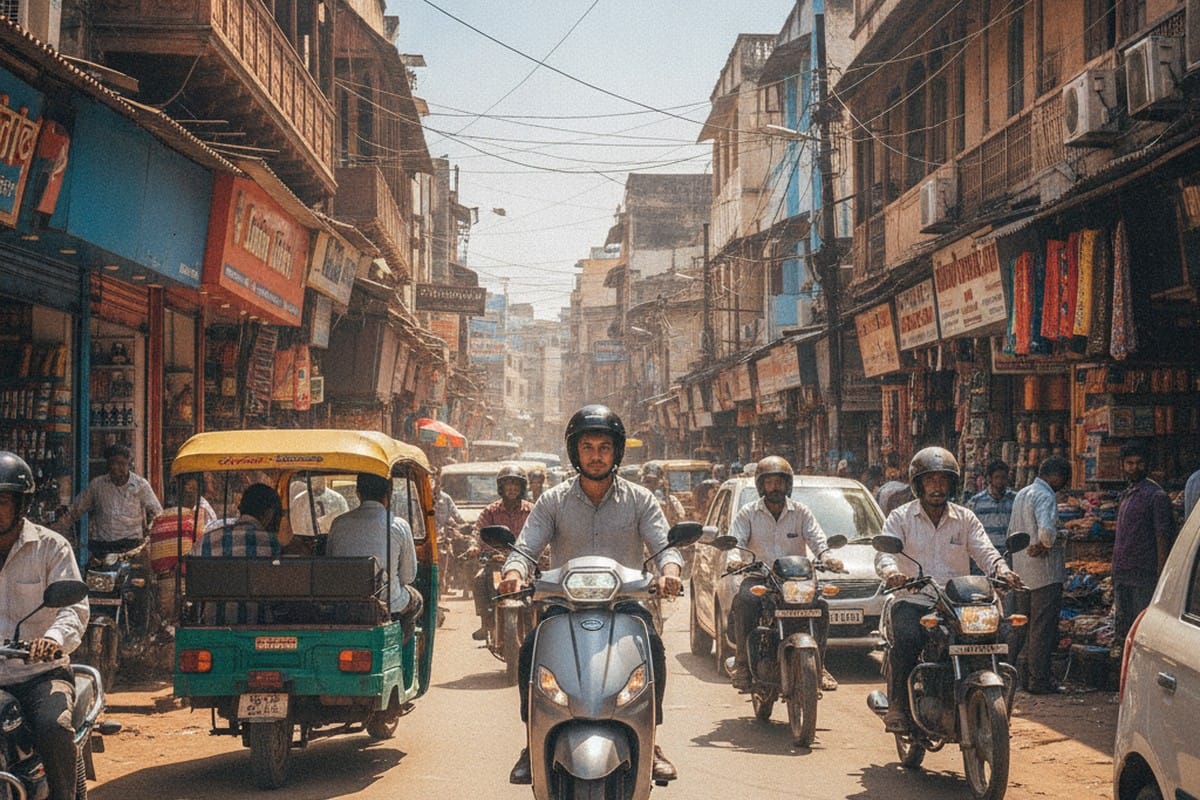
Electric scooter navigating Indian city road with high ground clearance over speed bump

The spec sheet of an electric scooter in India is an interesting document. Page after page of numbers, and yet — after all that reading — the most common buyer complaint you hear on forums and owner groups is some variation of: “It handles bumps terribly,” or “After six months the performance dropped,” or simply, “I feel every single pothole.”

Range gets all the attention. It is the first thing people look at, the first thing dealers lead with, and the first number printed large on showroom banners. Yet Indian riders rarely run out of charge. What they do run into, every single day, are potholes, speed humps, waterlogged stretches, rutted village roads, and the kind of surfaces that would make European road engineers quietly weep.

There are three specifications that matter enormously for real-world ownership in India — specifications that most buyers scroll past without a second glance. Let’s go through them properly.

Ground Clearance: The Number That Fights Indian Roads Every Day

Ground clearance is the vertical distance between the lowest point of your scooter (usually the undercarriage or battery casing) and the road surface. In a country that measures road quality not in grades but in surprise categories — the surprise pothole, the surprise speed breaker, the surprise unmarked flood patch — this number has direct consequences for your daily life.

A scooter with 157mm of ground clearance will scrape on standard Indian concrete speed bumps. One with 170mm is marginal. A scooter with 180mm of clearance gives a noticeably different experience across the same roads — you stop bracing, stop slowing aggressively, stop hearing that periodic grinding sound that means something structural is kissing the tarmac.

Here is how the ground clearance comparison looks among the more commonly considered electric scooters in India right now. TVS iQube S sits at 157mm. The Bajaj Chetak comes in at 168mm. The Ather 450X manages 170mm. The Elektree Zenith offers 180mm.

On paper, 23mm between the lowest and highest in this list sounds trivial. In practice, over a full year of daily riding on Indian municipal roads, it translates to the difference between a scooter that intimidates you on bad roads and one that simply handles them.

Pearl white electric scooter on wet Indian street after monsoon rain showing ground clearance

The Zenith’s 180mm clearance also matters for the monsoon months. Waterlogged sections that are genuinely unsafe at lower clearance become passable at walking speed with a taller undercarriage. Any scooter with meaningful ground clearance handles monsoon-flooded streets more safely — Elektree simply sits at the top of this particular comparison among the mainstream options.

Motor Technology: Why IPM Mid-Drive Changes the Efficiency Equation

Most electric scooters on the Indian market use hub motors — electric motors fitted directly into the rear wheel. Hub motors work well, they are simple, and they are cheap to manufacture. But they come with a characteristic trade-off that matters in India specifically.

Hub motors add what engineers call “unsprung mass” to the wheel. The heavier the wheel assembly, the harder it is for your suspension to absorb road irregularities. On smooth tarmac, this is a minor issue. On Indian roads — where your suspension is working constantly to handle surface variations — the extra wheel weight means your suspension cannot respond as effectively, your ride is harsher, and tyre wear is accelerated over time.

Interior Permanent Magnet (IPM) motors, when mounted in a mid-drive configuration, resolve this by keeping the motor weight within the chassis rather than on the wheel. The wheel stays lighter, the suspension works as designed, and the motor can operate at its efficiency peak across a wider range of loads and terrain. In efficiency terms, IPM motors typically achieve over 90% mechanical efficiency — meaning less energy is wasted as heat and more of your battery’s charge is converted into actual forward movement.

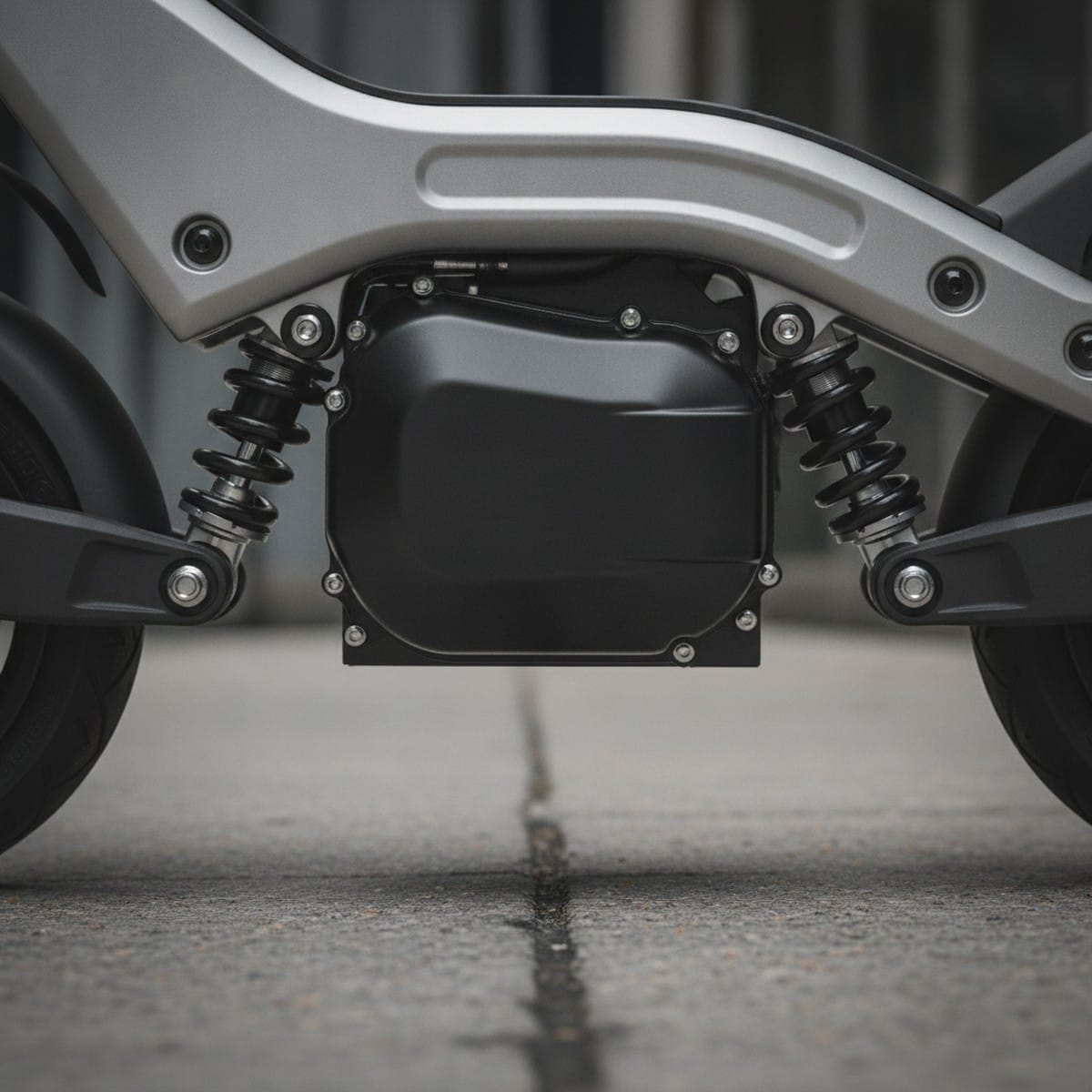
Close-up of electric scooter mid-drive IPM motor and chassis ground clearance detail

The Elektree Zenith uses a Mid-Drive IPM motor. For the majority of Indian riders, this means more usable range per charge and less thermal stress on the motor during loaded operation — when you have a pillion passenger, or when you’re climbing an incline. A hub motor on a steep slope with two riders heats up faster and may reduce power output. A mid-drive configuration handles load more gracefully, distributing the mechanical demand through the drivetrain rather than concentrating it entirely at the wheel.

This does not make hub-motor scooters bad. For flat-terrain city commuting with a single rider, hub motors are perfectly adequate. The question is whether the scooter you are buying is built to handle the full range of conditions you are likely to encounter over its working life — including the occasional incline, the loaded ride, and the stretch of particularly bad road.

Payload Capacity and What It Reveals About Build Philosophy

Every electric scooter has a maximum payload rating — the combined weight of rider, pillion, and cargo that the chassis, suspension, and motor are designed to handle. Most manufacturers do not advertise this number loudly, which is telling in itself.

The Elektree Zenith carries a 200kg payload rating. This is not a minor detail. It says something specific about how the frame, suspension, and motor system were engineered. A scooter designed to carry 200kg is built with more structural margin — the components are specified to handle stress that most users will never consistently apply.

If you regularly ride two-up — which most Indian households do, whether for school runs, evening errands, or weekend use — a higher payload rating means the scooter is not working near its limits during routine use. That translates to slower wear, better longevity, and a vehicle that continues performing as expected after two or three years of ownership, rather than one that begins showing fatigue precisely when its warranty is expiring.

The Warranty Fine Print: 50,000 km vs 30,000 km

This one requires reading carefully. Most electric scooter warranties are quoted in two dimensions: time (years) and distance (kilometres). The time figure gets quoted prominently. The distance figure often does not.

Elektree covers the Zenith’s battery for three years or 50,000 km, whichever comes first. The Ather 450X battery warranty covers three years or 30,000 km. The practical meaning: if you ride 20km daily, you will cover 50,000 km in approximately 6.8 years. You will cover 30,000 km in just over four years. A three-year calendar warranty that cuts off at 30,000 km of actual use provides meaningfully less protection than a three-year warranty that runs to 50,000 km.

For buyers who use their scooters as primary daily transport — the majority of two-wheeler owners in India — the mileage cap on a warranty is not a technicality. It is the number that determines whether you are actually protected when something goes wrong.

Where Does This Leave the Elektree Zenith?

The Zenith starts at ₹90,164. It offers 80 to 100km of IDC range, a 70 km/h top speed, 180mm ground clearance, a mid-drive IPM motor, 200kg payload capacity, 18.5 litres of under-seat storage, GPS tracking with an anti-theft alarm, a reverse mode for tight parking, and a 15.5cm instrument display. The battery warranty runs to three years or 50,000 km.

The Ather 450X starts at ₹1.55 lakh for the base variant. The TVS iQube’s entry point is around ₹1.15 lakh. Both are well-engineered scooters with loyal followings and genuine build quality behind them. But here is the question worth sitting with: does the average Indian commuter — covering 20 to 40km daily, navigating city roads, occasionally carrying a pillion, and expecting their scooter to perform reliably for five or more years — gain proportional value from paying ₹60,000 to ₹80,000 more?

Not obviously. The additional outlay primarily buys more claimed range — range that most daily riders do not consume — and in some cases more top speed, which is largely irrelevant on congested urban roads where practical speeds rarely exceed 50km/h. What the Zenith offers instead is something less glamorous and more durable: a higher-clearance, higher-payload, mid-drive IPM motor scooter with a more generous warranty mileage cap, packaged at a price point that makes genuine financial sense for the typical Indian household.

The Practical Takeaway

Electric scooter buying in India has matured. The first wave of buyers were early adopters willing to absorb teething troubles in exchange for the technology. The current mainstream buyer needs a vehicle to work correctly, every day, across India’s specific roads and conditions, for years — and they need to be able to afford it without stretching the household budget to the point of discomfort.

That buyer needs ground clearance, not just range. They need a motor architecture that handles load without overheating. They need warranty terms that actually cover their riding pattern rather than expiring on a mileage cap they hit in four years. The Elektree Zenith addresses each of these requirements with specifications that are verifiable and meaningful — 180mm clearance that leads the comparison, a mid-drive IPM motor for efficiency and load management, 200kg payload for real-world two-up riding, and a 50,000km warranty mileage that actually matches how Indian riders use their vehicles.

If you have been comparing spec sheets and finding yourself swayed primarily by range numbers that you will rarely actually need, it is worth stepping back and running the full assessment. The Elektree Zenith — and the RV 80 Sportz in the same range — makes a particularly strong case for the practical Indian rider who wants a well-engineered electric scooter without paying for specifications that look impressive in a brochure but contribute little to daily life. Explore the full range at elektree.com and see whether the numbers that actually matter line up with your requirements.

Petrol Scooter vs Electric Scooter: The Real 5-Year Cost Story India Buyers Need to Read

Modern electric scooter charging at an Indian home

The Question Every Indian Commuter Is Actually Asking

Walk into any two-wheeler showroom in India today and you’ll see the same scene playing out: a prospective buyer eyeing an electric scooter, asking the salesperson about range, then quietly muttering something like “but what if the battery dies?” before gravitating back toward the familiar Honda Activa or TVS Jupiter parked nearby.

This is the conversation happening across millions of Indian households right now. And honestly, the hesitation is understandable — buying a scooter is a significant financial decision, and switching to electric feels like a leap into the unknown. But here’s what most people get wrong: they compare the sticker price of an electric scooter against a petrol scooter and stop there. That’s like comparing the cost of a ticket to the full cost of a holiday.

The real question isn’t which scooter costs less to buy. It’s which one costs less to own over the next five years. And that answer might genuinely surprise you.

The Fuel Cost Gap Is Enormous — And Growing

Let’s start with the number that hits you every fortnight: fuel. As of 2026, petrol is hovering around ₹118 per litre across most Indian cities, with analysts expecting that figure to keep nudging upward. A typical 125cc scooter returns around 45–50 kmpl under real-world Indian riding conditions — stop-start traffic, AC season, the works. That works out to roughly ₹2.30–₹2.60 per kilometre.

Now consider an electric scooter. Home charging at the standard Indian household tariff of around ₹9 per unit, with a typical electric scooter consuming approximately 0.04 kWh per kilometre, the running cost comes to roughly ₹0.25–₹0.35 per kilometre. That’s nearly eight to ten times cheaper than petrol.

Scale that to a realistic Indian commuter doing around 1,000 km per month — which is actually quite conservative for someone riding to work and back daily — and the monthly fuel bill for a petrol scooter runs to ₹2,300–₹2,600. An equivalent electric scooter costs ₹250–₹350 to charge for the same distance. Annualised, that’s a saving of ₹22,000 to ₹27,000 per year just on energy costs. Every single year.

Maintenance: Where Petrol Scooters Quietly Drain Your Wallet

The fuel cost gap is dramatic, but the maintenance story is equally telling — it just takes longer to notice because the expenses come in small, irregular doses.

A petrol scooter needs engine oil changes every 2,000–3,000 km, spark plug replacements, air filter servicing, periodic carburetor or fuel injector cleaning, belt replacements, and more. Add it up over five years of regular riding and you’re looking at somewhere between ₹25,000 and ₹35,000 in routine servicing alone — before accounting for unexpected repairs.

Electric scooters have fundamentally fewer moving parts. No engine oil. No spark plugs. No timing belts. Servicing essentially comes down to brake checks, tyre maintenance, and keeping the electrical connections clean. Five-year maintenance costs for an electric scooter typically run to ₹8,000–₹12,000 — a fraction of the petrol equivalent.

Some buyers worry about battery replacement costs, which is a fair concern. Lithium-ion battery packs in well-built electric scooters are typically warrantied for three years and expected to perform adequately for five or more years under normal Indian usage. When replacement does eventually become necessary, battery prices in India have been falling steadily and are expected to continue declining. This is a genuine long-term consideration, but not the deal-breaker it once was.

The 5-Year Numbers Side by Side

Let’s put this together concretely for a buyer riding 12,000 km per year — roughly 1,000 km a month, which represents a typical daily-commute pattern in an Indian tier-1 or tier-2 city.

A mid-range 125cc petrol scooter purchased for around ₹90,000–₹1,05,000 on-road will accumulate approximately ₹1,35,000–₹1,45,000 in fuel costs over five years, plus ₹25,000–₹35,000 in maintenance, and insurance that typically runs slightly higher than electric vehicles. Total five-year outlay: roughly ₹2,70,000–₹3,00,000.

A comparable electric scooter bought in the same price bracket will spend roughly ₹18,000–₹21,000 on electricity over the same five years, plus ₹8,000–₹12,000 in maintenance, with lower insurance premiums. Total five-year outlay: in the range of ₹1,80,000–₹2,10,000.

The five-year saving with electric: ₹70,000 to over ₹1,00,000 depending on your riding pattern and electricity tariff. That’s not a marginal improvement — that’s a genuinely different ownership experience.

What About Indian Roads and Real-World Riding?

Cost numbers are one thing. But Indian riding conditions are genuinely demanding — potholes, summer heat pushing 45°C, monsoon rains, stop-start city traffic, and long stretches of highway riding during festival seasons. A scooter that looks good on paper needs to hold up through all of that.

This is where build quality and engineering philosophy matter enormously. Electric scooters designed specifically for Indian conditions — with sealed battery compartments for monsoon resistance, suspension calibrated for broken road surfaces, and thermal management appropriate for extreme heat — will perform and last significantly differently from those designed to an international standard and simply adapted for the Indian market.

Range anxiety, the perennial concern with electric vehicles, is also largely a solved problem for urban Indian commuters. The average daily riding distance in Indian cities is well under 40 km. Most electric scooters available today offer a certified range comfortably above that — meaning a single overnight charge handles a full day’s commuting with margin to spare.

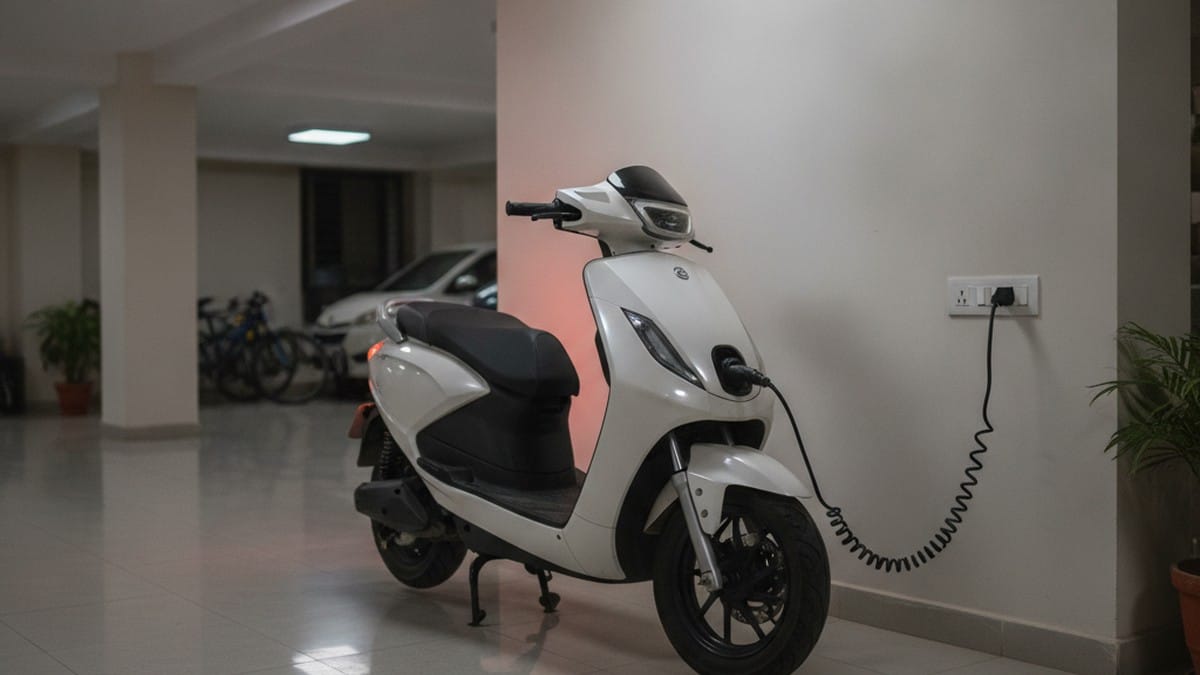
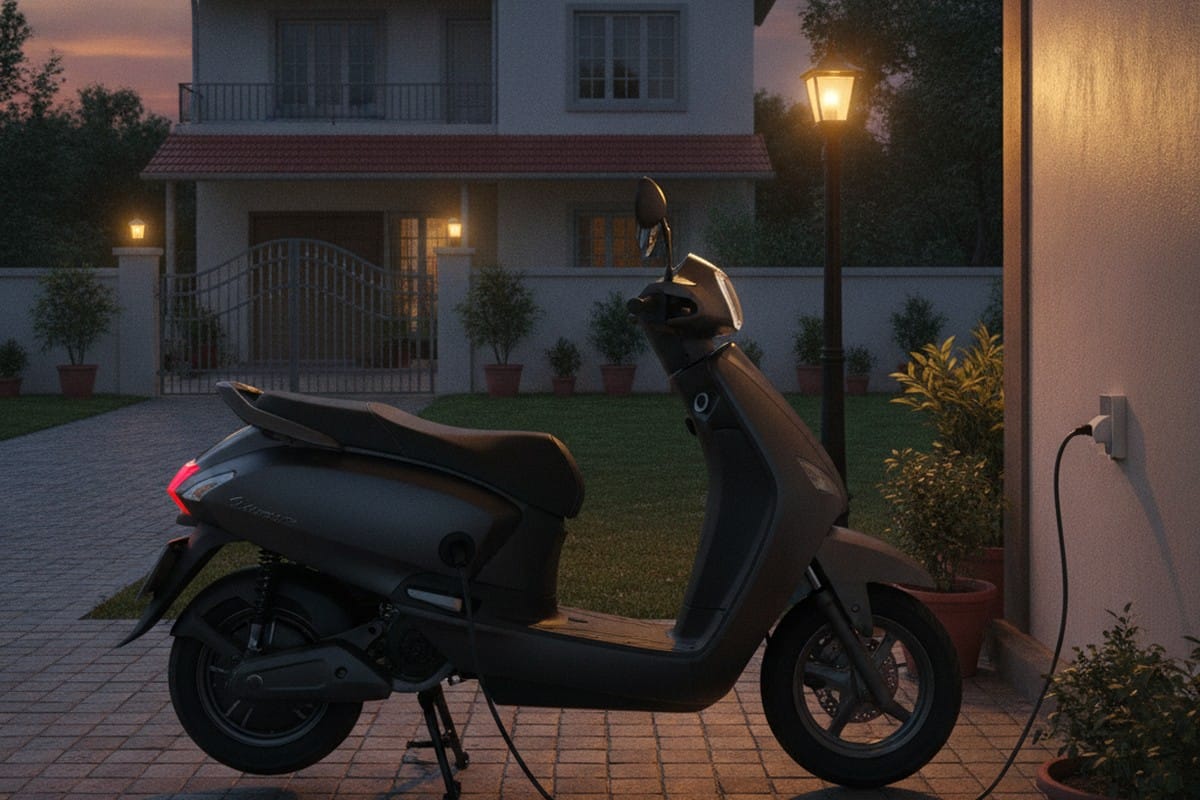
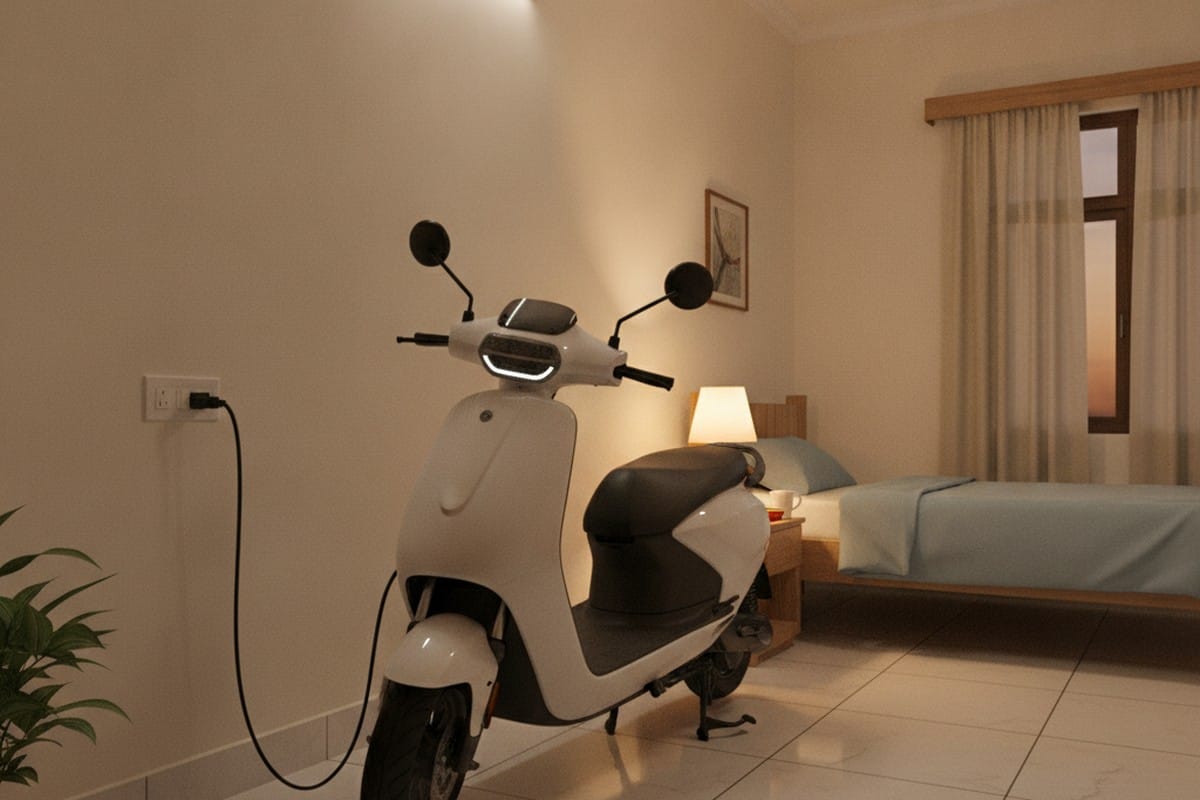
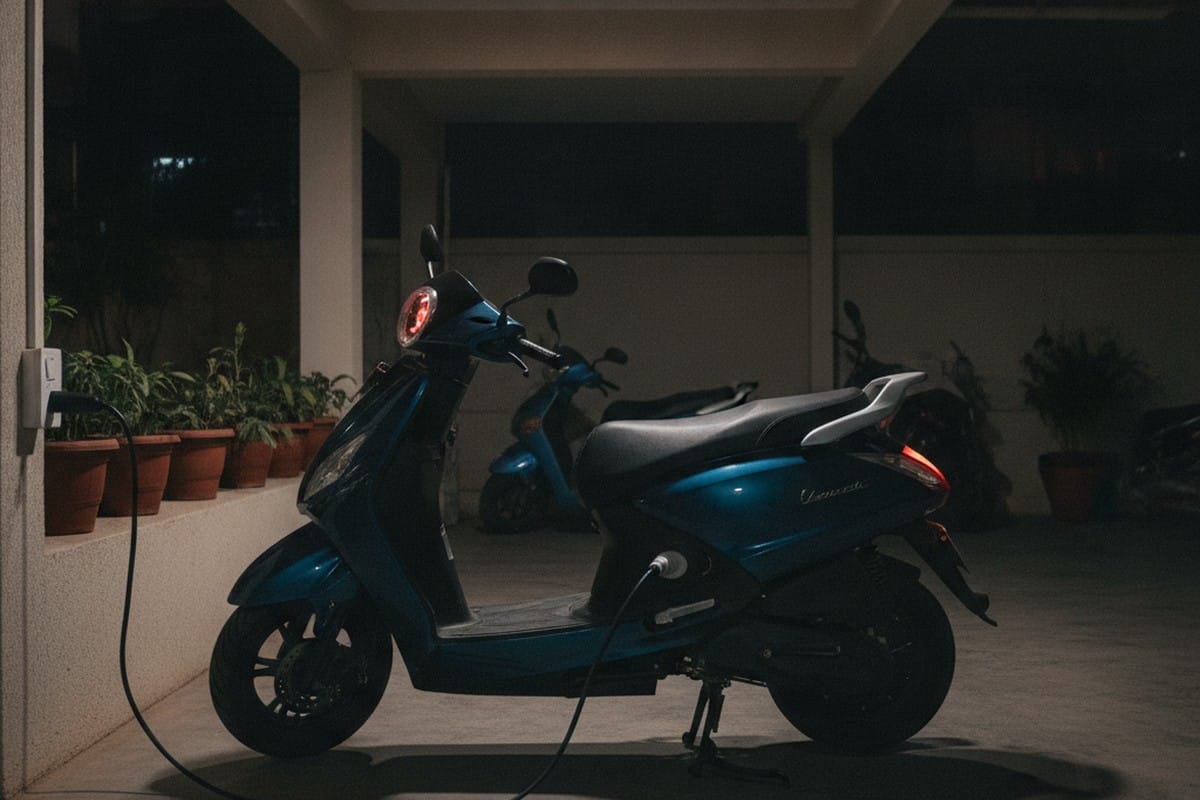
Electric scooter being charged overnight at an Indian home garage, with a standard domestic plug socket

Enter Elektree India: Built Around What Indian Riders Actually Need

This is where a brand like Elektree India deserves closer attention from any serious buyer doing their homework.

Elektree’s product range sits in the practical mid-market where most Indian buyers actually shop. The Elektree Zenith starts at around ₹90,164 and delivers a real-world range of 80–100 km on a single charge — sufficient for most daily commuters with meaningful reserve. The RV 80, positioned slightly above at ₹94,363, offers the same 80–100 km range with a top speed of 60 km/h, suited to urban and semi-urban riding. Both run on a 60V/32Ah or 60V/35Ah battery system.

What distinguishes Elektree’s approach is the combination of practical engineering and the 3-year warranty they back their products with — a meaningful commitment in a market where after-sales confidence is a genuine buyer concern. The company also claims ICAT certification across its lineup, which matters for regulatory compliance, insurance, and long-term resale value in ways that non-certified vehicles cannot match.

For buyers who want something with genuinely longer range or higher performance, Elektree’s Fantom EV — an electric motorcycle — is a different proposition entirely, with a claimed range of 150–180 km and a top speed of 110 km/h. At ₹1,39,000, it’s priced against the more capable end of the market and represents a serious option for riders with longer daily distances or intercity requirements.

And for those who want simplicity — perhaps a secondary vehicle, a vehicle for shorter trips, or a first electric purchase — the Elektree Wheels variant starts at ₹82,871 and is positioned as a no-licence-required, lower-speed option for urban mobility. It won’t work for everyone, but for specific use cases like last-mile commuting or apartment-complex travel, it makes a great deal of practical sense.

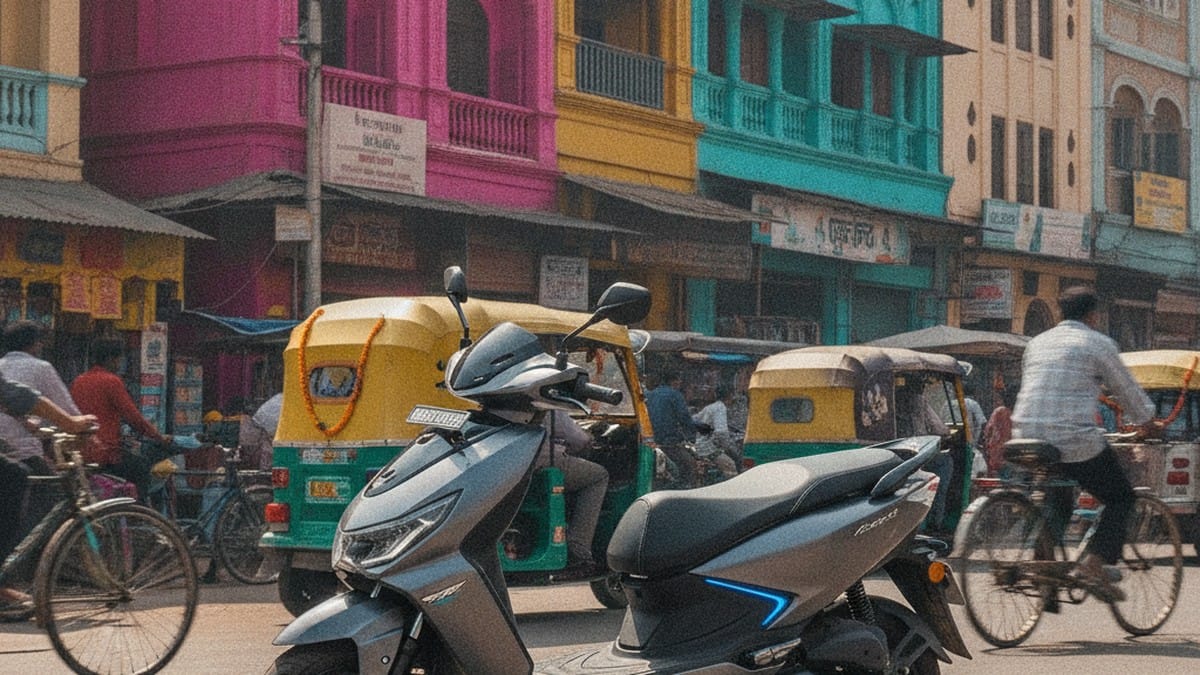
Elektree electric scooter parked on a busy Indian street with auto-rickshaws and buildings in the background

The Honest Comparison: Where Electric Still Has Trade-offs

A credible assessment means acknowledging where petrol scooters retain genuine advantages — because they do.

If you regularly ride more than 100 km in a single day, electric scooters currently require more planning around charging. Public charging infrastructure in India has expanded significantly but remains inconsistent outside major metropolitan areas. A petrol scooter offers the convenience of refuelling anywhere there’s a pump, which remains a real advantage for long-distance or rural riders.

Service network depth also still favours established petrol brands in many tier-2 and tier-3 towns. If you’re buying in a city with limited electric vehicle service availability, that’s a practical consideration worth weighing.

But for the buyer doing a daily urban or semi-urban commute of 40–70 km — which describes the vast majority of Indian two-wheeler users — these trade-offs are largely theoretical. The practical calculus is clear: lower daily running costs, lower maintenance burden, and a quieter, smoother riding experience.

The Verdict: For Most Indian Commuters, the Math Has Shifted

Two years ago, recommending electric scooters required more caveats. The infrastructure wasn’t there, the product quality was inconsistent, and the cost savings weren’t sufficient to confidently offset buyer risk. That picture has changed.

For someone riding 25–60 km daily in an Indian city or town, charging from a home socket overnight, and keeping their scooter for the typical four-to-five-year ownership cycle, an electric scooter today is very likely the more economical choice — sometimes dramatically so. The fuel savings alone, at current petrol prices, recover the cost of the vehicle in a few years.

Within that market, Elektree India’s lineup deserves serious consideration. The combination of practical range, a 3-year warranty, ICAT-certified vehicles, and pricing that sits squarely in the accessible mid-market makes their scooters a financially intelligent choice for the Indian buyer who wants the economics of electric without paying a premium for brand prestige. The Zenith and RV 80 in particular hit a price-to-capability point that’s hard to argue against for typical city commuting.

If you’re at the point in your research where you’re genuinely comparing electric against petrol — which, if you’ve read this far, you clearly are — Elektree India’s range is worth exploring in full at elektree.com. Compare the specifications, calculate your own running cost based on your daily distance, and you’ll likely find the five-year picture looks considerably different from what the sticker price alone suggests.

Electric Scooter Battery Replacement Cost in India 2026: The Number Nobody Tells You Before You Sign

Electric scooter charging at home in India - battery health and replacement guide

Electric Scooter Battery Replacement Cost in India 2026: The Number Nobody Tells You Before You Sign

Walk into any electric scooter showroom in India today, and the salesperson will walk you through range, top speed, app features, colour options, and the monthly EMI. What they almost never discuss — unprompted — is what happens to your wallet in year four or five, when the battery starts degrading and the warranty has run out. That single number — the out-of-warranty battery replacement cost — can be the difference between an EV ownership story you tell proudly and one you would rather forget. If the battery question is nagging at you, here is the honest picture.

How Long Does an Electric Scooter Battery Actually Last?

Modern lithium-ion battery packs used in mainstream Indian electric scooters are significantly more durable than the lead-acid batteries of the previous generation. Industry data and manufacturer testing suggest that a well-maintained lithium-ion pack can realistically last five to eight years, or roughly 50,000 to 80,000 km under normal usage — retaining 70 to 80 percent of its original capacity even at that stage. For a daily commuter covering 40–50 km, replacement becomes genuinely necessary only after many years of use. That is important context before you let battery anxiety drive your decision.

Longevity is not automatic, though. Batteries that get fully drained to zero and then fast-charged back to 100 percent every day will age faster than those kept in the 20 to 80 percent sweet spot on standard overnight charging. How you charge matters as much as how much you ride.

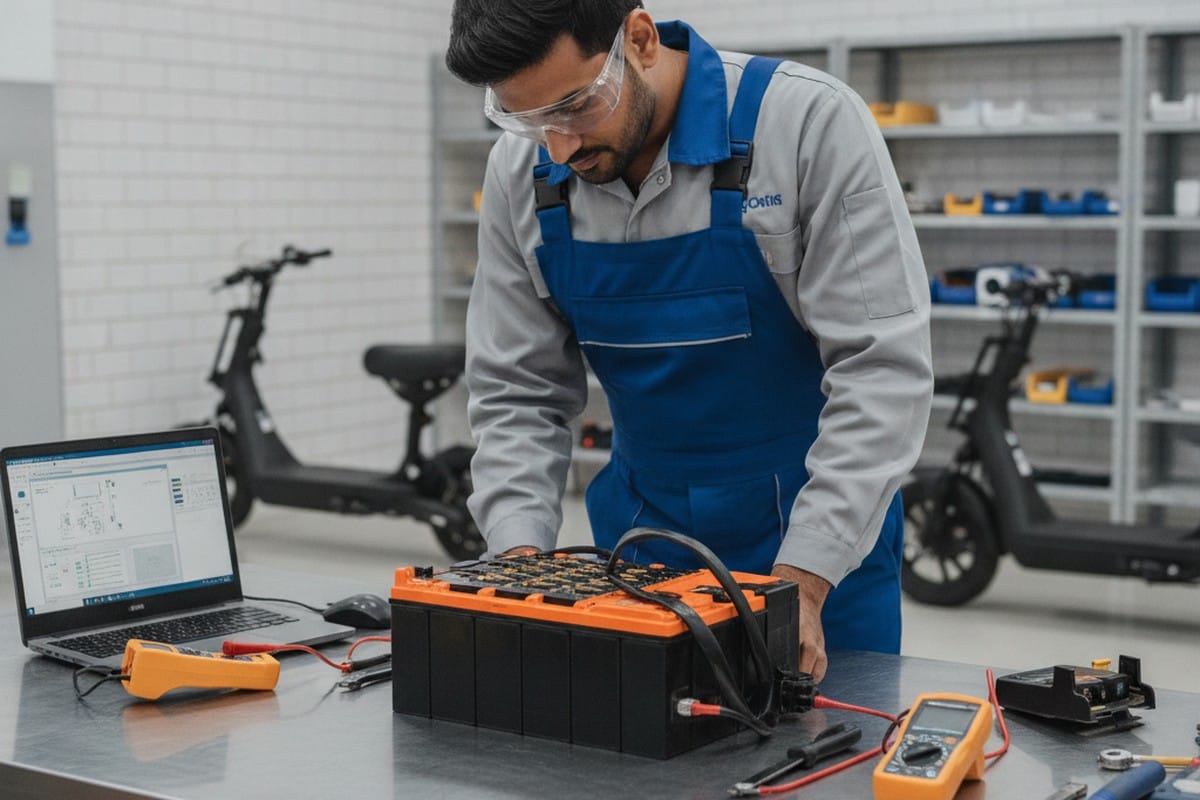
Lithium-ion battery pack inspection at an electric scooter service centre in India

The Real Replacement Numbers: What India’s Top Brands Charge

Let’s get into the specific figures, because vague reassurances about “future costs” don’t help you make a decision today. Based on current 2026 market data, here is what a full OEM battery pack replacement costs across the major brands:

Ola Electric: The most popular brand in India also carries some of the steeper replacement costs, driven by battery sizes. The S1 X with a 2 kWh pack runs ₹45,000–50,000. Step up to the 3 kWh version and you’re looking at ₹70,000–75,000. The S1 Pro with its 4 kWh battery sits at ₹85,000–90,000, and the flagship S1 Pro+ with the 5.2 kWh pack can cost ₹1,10,000–1,20,000 to replace.

Ather Energy: The 2.9 kWh pack found in the 450S and Rizta S costs ₹60,000–65,000. The larger 3.7 kWh battery in the 450X, Rizta Z, and Apex comes in at ₹70,000–80,000.

TVS iQube: Entry-level 2.2 kWh battery: ₹45,000–50,000. The 3.1 kWh pack: ₹65,000–70,000. The 3.5 kWh: ₹75,000–80,000. The iQube ST’s 5.3 kWh pack will cost you ₹1,15,000–1,20,000 — approaching the price of an entire budget scooter.

Bajaj Chetak: The Series 25 (2.5 kWh) costs ₹55,000–60,000 to replace. Series 30 (3 kWh) runs ₹70,000–75,000, and the Series 35 (3.5 kWh) is ₹75,000–80,000.

Hero Vida: The VX2 Go (2.2 kWh) starts at ₹45,000–50,000. The V2 Plus and VX2 Plus (3.4 kWh) cost ₹70,000–75,000, while the flagship V2 Pro (3.9 kWh) runs ₹80,000–85,000.

The pattern is clear: bigger battery = higher replacement cost. When you’re buying a flagship scooter with a 4 to 5 kWh pack for its impressive range, factor in that a future battery replacement could cost as much as half the original purchase price.

What the Warranty Actually Covers — and What It Doesn’t

Every major brand in India currently offers a standard three-year battery warranty, but the details matter enormously and vary significantly. Ola offers three years or 50,000 km, with the notable feature of a State of Health (SoH) guarantee — if your battery’s certified capacity drops below 70 percent within the warranty period after 10,000 km of use, Ola will replace it. Ather’s standard three-year, 30,000 km coverage also includes an SoH guarantee, and they sell an extended “Eight70” plan for ₹4,999 that stretches protection to eight years or 80,000 km. TVS offers three years or 30,000 to 50,000 km depending on the model, with extensions available at ₹5,999–15,000. Hero Vida stands out with a five-year, 50,000 km standard warranty — the most generous in the mainstream segment.

Across all brands, the coverage typically becomes void if you use an unapproved third-party charger, modify the battery or connectors, miss scheduled service appointments at authorised centers, or experience water damage beyond the scooter’s tested IP rating. Some brands explicitly exclude rodent damage. The fine print around flood damage is worth reading carefully if you live in areas that experience heavy monsoon waterlogging.

Not every battery problem requires a full pack swap, either. BMS (Battery Management System) failures — which can cause range loss, charging errors, or unexpected shutdowns — sometimes cost just ₹8,000–20,000 to fix. Cell-level replacement and battery refurbishment services are emerging alternatives in larger metros, at lower cost than OEM replacements.

What Smart Buyers Should Ask Before Signing

Before signing, ask every dealer these questions: What is the exact battery warranty in both years and kilometres — and which runs out first? A 3-year, 30,000 km warranty is meaningfully weaker than a 3-year, 50,000 km warranty for a daily commuter. Is there a State of Health (SoH) guarantee, or just a time-based coverage? What does the full OEM replacement cost today — and does the brand publish that number proactively? Is an extended warranty available, and what does it actually cover? And finally: how quickly can you get your scooter serviced at an authorised centre near where you actually live?

Where Elektree India Fits Into This Picture

Most of the battery discussion above centres on the headline brands that dominate marketing budgets and showroom space. But there is a segment of the Indian electric scooter market where a different calculation applies — one worth examining carefully, because it changes the battery replacement maths considerably.

Elektree India builds ICAT-certified electric scooters on lithium-ion platforms, with prices starting at ₹82,871 for the Wheels and ₹90,164 for the Zenith — significantly under one lakh rupees. The Zenith, which is their best-known scooter, runs a 60V/35Ah lithium-ion battery, delivers an IDC range of 80–100 km, and charges fully in four to five hours on a standard home socket. The RV 80 sits at ₹94,363 with comparable specifications.

Here is why this matters for the battery conversation. The Zenith’s battery pack capacity — approximately 2.1 kWh — is smaller than what you find in a premium scooter like the Ola S1 Pro or TVS iQube ST. That directly translates to lower future replacement cost. Unlike the larger packs in flagship models that can cost ₹85,000–1,20,000 to replace out of warranty, a smaller, well-engineered lithium-ion pack involves less raw cell cost. For buyers whose daily commute is 40–60 km and who don’t need a 150 km range buffer, paying for battery capacity they will never regularly use — and then facing a proportionally larger replacement bill years later — is not a rational trade-off.

Elektree covers its batteries with a 3-year or 50,000 km warranty, matching what Ola and Bajaj Chetak offer on their standard plans. The scooters are ICAT-certified — meaning they have passed India’s official vehicle type-approval testing, not merely met a loose standard. The Zenith’s 180 mm ground clearance and monoshock rear suspension address the Indian road quality concern directly, and a 200 kg payload capacity handles the typical two-up riding scenario without complaint. Features like GPS tracking, anti-theft alarm, reverse mode, three riding modes, and on-board USB charging are standard — not part of an upgraded variant.

Charging at home costs ₹5–10 per full charge at current electricity tariffs — roughly ₹100–150 added to a monthly bill for a typical commuter, compared to what the same distance costs in petrol.

The Honest Recommendation

If your buying criteria prioritise the most impressive specifications table in its category regardless of cost, Ola, Ather, and TVS will always win that comparison — they have larger batteries, longer ranges, and more developed service networks in major cities. Those are real advantages and this article is not trying to pretend otherwise.

But if your priority is a reliable, lithium-ion scooter that handles Indian daily commuting well, comes ICAT-certified, carries a meaningful warranty, and keeps both the purchase price and future ownership costs within rational bounds — Elektree India is a genuinely competitive option that many buyers skip simply because it does not spend on large advertising budgets.

Battery replacement is a fear that, when examined honestly, rarely materialises before seven or eight years of ownership. When it does, the cost is proportional to the pack size you chose. A well-engineered scooter with the right-sized battery for your actual usage, from a brand transparent about specifications and warranty terms, is the decision that protects you financially over the long run.

Elektree’s scooters are built around that philosophy. If the question you have been asking yourself is “what happens to my money when the battery needs replacing?”, it is worth spending some time at elektree.com to understand what you are actually getting — before you sign anything at a bigger showroom down the road.

Is Your Petrol Scooter Really Cheaper? The 2026 Cost Breakdown That’s Changing Indian Minds

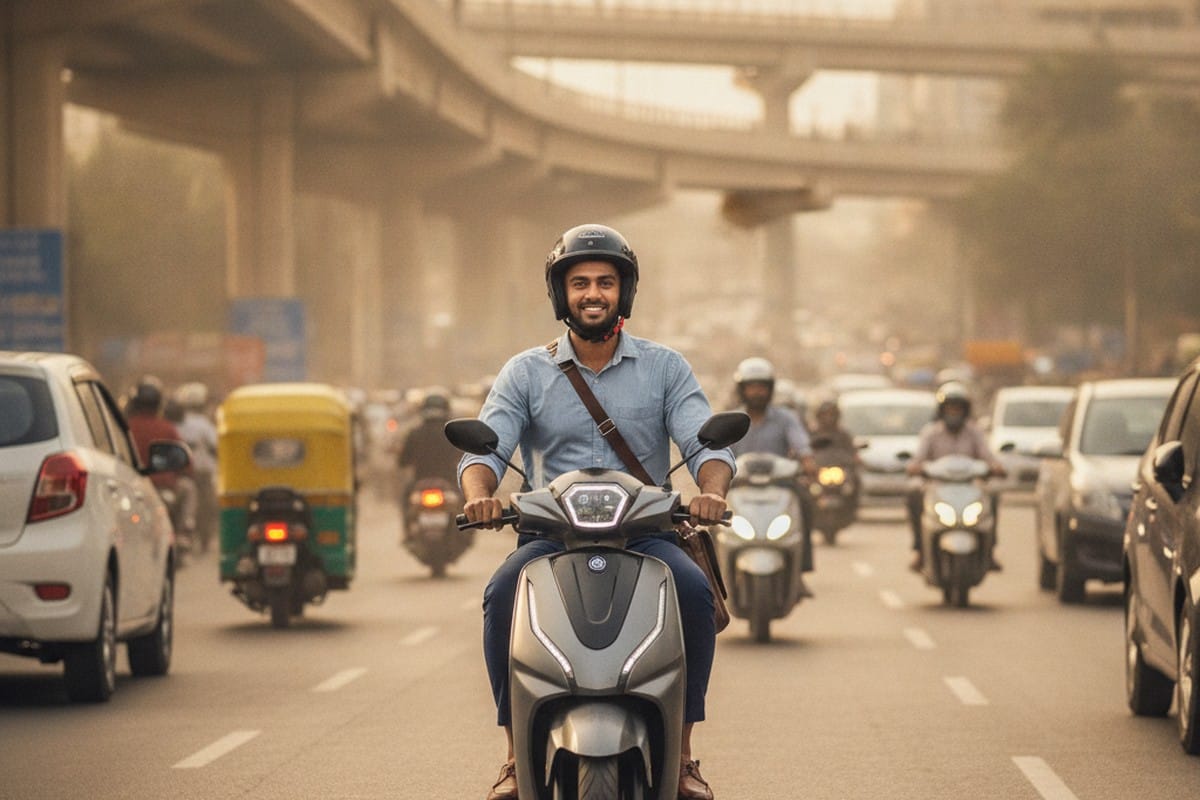
Electric scooter rider commuting on a busy Indian city road during morning rush hour

The pump price in Bangalore crossed ₹111 a litre this week. In Hyderabad it’s ₹115. In Mumbai, ₹111. For a daily commuter covering 40 kilometres in a day, that’s a bill that keeps climbing with no ceiling in sight. So the question most Indian riders are finally asking isn’t whether electric scooters are cool — it’s whether they actually make financial sense. Not in theory. In real rupees, this year.

This article runs the actual 2026 numbers and looks at what the Indian market currently offers — because the answer is more compelling than most people realise.

Start With the Fuel Math

A typical 125cc petrol scooter returns around 50–55 kilometres per litre in real city conditions. With petrol at ₹102 per litre in Delhi and ₹111–₹115 in most other metros, that works out to roughly ₹1.90–₹2.25 per kilometre. For a rider covering 40 km a day — a conservative estimate for anyone commuting in a Tier 1 or Tier 2 city — that’s ₹76 to ₹90 in fuel costs every single day.

Run that out over a month: ₹2,200 to ₹2,700. Over a year: ₹26,400 to ₹32,400 in fuel alone. That’s not counting service, oil changes, air filter replacements, spark plugs, or the occasional repair.

An electric scooter changes this arithmetic entirely. With home charging typically costing ₹6–8 per unit of electricity and most electric scooters consuming around 1.2–1.5 units per 100 km, the running cost works out to ₹0.30–₹0.40 per kilometre. For the same 40 km daily commute, you’re spending ₹12–₹16 per day on electricity, or roughly ₹360–₹480 a month.

The difference isn’t small. It’s ₹20,000 to ₹26,000 in fuel savings every year.

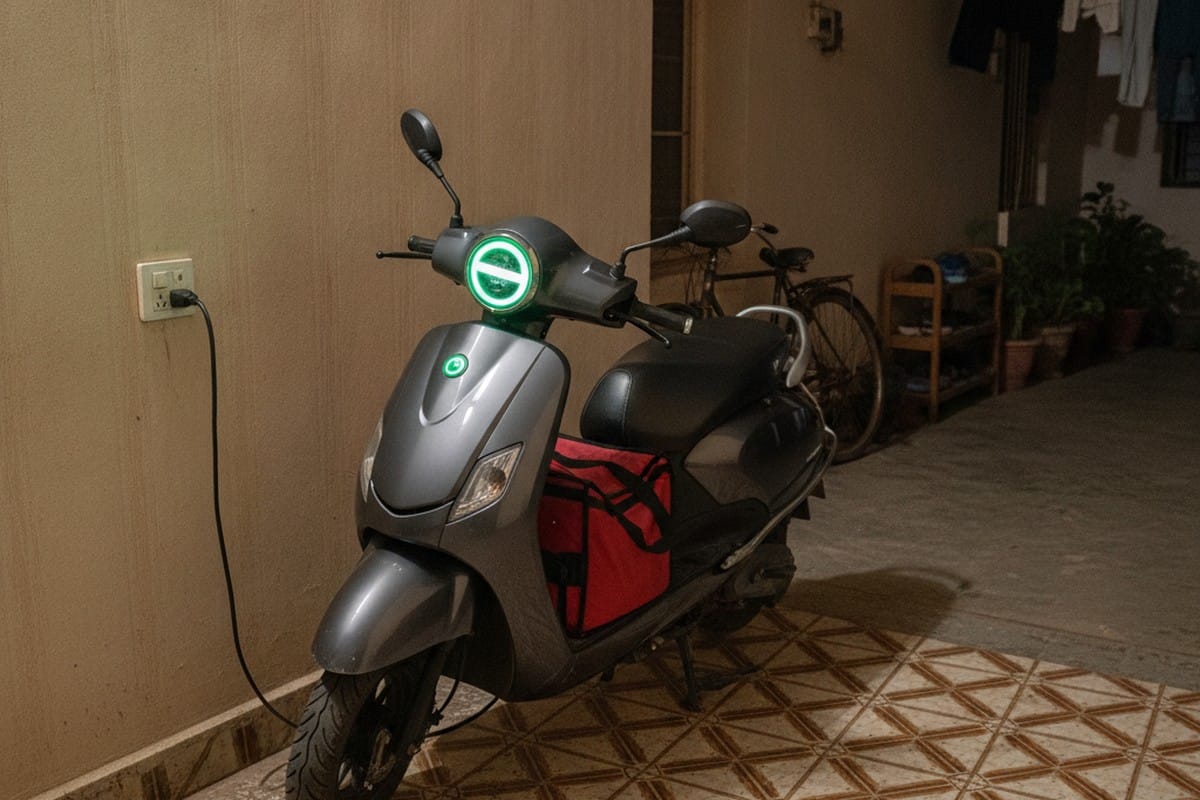
Electric scooter plugged in for overnight home charging at an Indian residence

What About Servicing?

Petrol scooters need an engine oil change every 3,000–4,000 km — roughly four times a year for a daily commuter. Add air filter cleaning, spark plug replacement, carburetor or fuel injector servicing, and periodic brake and belt checks. Annual service bills typically land between ₹7,000 and ₹12,000 for most mainstream scooters.

Electric scooters have no engine oil, no spark plugs, no carburetor, no exhaust system, and far fewer moving parts overall. Annual maintenance costs for most electric scooters in India run between ₹2,000 and ₹3,500 — mainly brake adjustments, tyre rotation, and occasional software updates. That’s a further saving of ₹4,500 to ₹8,500 per year.

Combined with fuel savings, a daily commuter switching to electric can realistically save ₹25,000 to ₹32,000 every year on operating costs alone.

The Five-Year Picture

Here’s where the decision becomes hard to argue against. A 125cc petrol scooter from a mainstream brand costs roughly ₹80,000–₹95,000 at the showroom. Add five years of fuel and maintenance and the total five-year ownership cost lands around ₹2.3–₹2.7 lakh, sometimes more as fuel prices drift upward.

A well-specified electric scooter in the ₹90,000–₹95,000 range, with annual running costs around ₹6,000–₹7,000, totals roughly ₹1.2–₹1.3 lakh over five years. That’s a difference of ₹1 lakh or more over the life of the vehicle — firmly in the electric scooter’s favour.

The break-even point — where cumulative savings offset the electric scooter’s cost relative to an equivalent petrol model — typically arrives between 2.5 and 3.5 years for someone riding 30 km or more daily. After that, every kilometre is pure savings.

What to Actually Look for When Buying

Not every electric scooter delivers the same ownership experience, and this is where the market gets nuanced. Range anxiety is real but often overstated — most urban commuters in India cover between 30 and 60 km daily, which any credible electric scooter handles comfortably. What actually differentiates good options from underwhelming ones is battery quality and warranty, ground clearance for Indian road conditions, payload capacity (since Indian riders routinely carry a pillion and cargo together), after-sales service reach, and total cost of ownership rather than sticker price alone.

Battery warranty deserves particular attention. Some manufacturers cover the battery for 18 months; others stand behind it for three years. Given that battery replacement can cost ₹25,000 to ₹40,000 or more, this difference has real financial weight.

What the Market Looks Like in 2026

The electric scooter segment has matured considerably. At the higher end, the Ather 450S starts at around ₹1.01 lakh ex-showroom in Delhi, offering 122–161 km of certified range depending on the battery variant and a well-regarded smart dashboard. TVS iQube starts at ₹1.20 lakh, extending to ₹1.49 lakh for its higher-range variants, backed by TVS’s wide service network. The Ola S1 Air is priced just above ₹1 lakh with 125 km of certified range and an 8-year battery warranty — an impressive coverage period.

These are solid options — but they all cross the ₹1 lakh mark, some by a significant margin.

Where Elektree Fits In

This is where Elektree India enters the conversation with an argument that’s direct: more scooter for less money, without cutting corners on the things that matter most.

The Elektree Zenith is priced at ₹90,164. For that, you get an 80–100 km IDC-certified range, a 60V/35Ah lithium-ion battery, a mid-drive IPM motor with a 70 km/h top speed, and a three-year battery warranty. Ground clearance stands at 180 mm — meaningfully higher than several rivals and relevant on Indian roads with their unpredictable surfaces, speed breakers, and monsoon-flooded patches. Boot storage comes in at 18.5 litres, practical for a work bag or grocery run. The Zenith also includes GPS tracking, an anti-theft alarm, a 15.5 cm display, a USB charging port, three riding modes (Hyper, Normal and Eco), and a reverse mode — features that often appear only on pricier models.

The Elektree RV 80, at ₹94,363, offers a sportier silhouette with similar core specifications for riders who prefer a more assertive look without giving up on range or warranty coverage.

Electric scooter riding confidently on a wet monsoon-season Indian city street

What makes Elektree’s proposition stand out isn’t just the price — it’s what the price includes. The three-year battery warranty alone represents meaningful protection for the buyer. A manufacturer willing to warrant their battery for that long is making a statement about confidence in their pack quality. For buyers who’ve heard stories about expensive battery replacements on budget electric scooters a year or two in, that assurance carries real weight.

Elektree’s product decisions also reflect an understanding of how Indian riders actually use their scooters. The Zenith’s 200 kg payload capacity matters — two adults plus a loaded bag is a normal scenario on Indian roads, not an edge case. The 180 mm ground clearance, combined with a monoshock rear and twin telescopic front suspension, means the scooter is engineered for Indian tarmac rather than merely rated for it. The charge time of 4–5 hours on a standard home socket makes overnight charging a completely practical daily routine.

Elektree supports its vehicles through a growing dealer and service network across India, backed by its Elektree Care programme for after-sales needs. For buyers outside the major metros — where the question of “who services my scooter?” is a genuine concern — the presence of accessible service support can be the deciding factor.

The Verdict

The economics of electric commuting in India have crossed a threshold. With petrol above ₹100 per litre in virtually every city and electricity costs remaining stable, the running cost advantage of electric scooters is too large to ignore. The savings are real, they compound year over year, and they show up every time you don’t stop at a petrol pump.

For buyers weighing their options under ₹1 lakh, the Elektree Zenith stands out as one of the most complete propositions currently available. It doesn’t ask you to trade range for price, or sacrifice warranty for value. At ₹90,164 with a 3-year battery warranty, 80–100 km certified range, 180 mm ground clearance, and a 200 kg payload rating built for real Indian riding conditions, it addresses the concerns that give most buyers pause — and delivers meaningfully on all of them.

Anyone still weighing whether to make the switch would do well to run the five-year numbers one more time, then visit elektree.com to see whether the Zenith or the RV 80 fits their commute. The petrol savings tend to make up minds fairly quickly.

Beyond Ola and Ather: Why India’s Smartest Electric Scooter Buyers Are Looking at Different Brands in 2026

Modern electric scooter on a busy Indian city street in 2026

Walk into any electric two-wheeler showroom in India today and you’ll be greeted by the same conversation — Ola or Ather? The two names have dominated EV advertising so thoroughly that most buyers assume the market begins and ends there. But recent sales data and a growing wave of dissatisfied customers tell a more complicated story. The smartest buyers in India’s booming EV market are no longer just reaching for the most-advertised brand. They’re asking sharper questions — and finding better answers in places they hadn’t considered before.

What the Sales Numbers Actually Reveal

India’s electric two-wheeler market crossed 14 lakh units in FY26, growing over 21% year-on-year. That’s genuinely impressive. But look closer at who actually drove that growth, and the picture gets interesting.

Ola Electric — once the undisputed darling of Indian EV coverage — saw its sales drop by a staggering 52% year-on-year in FY26, slipping from market leader to fourth place with an 11.72% share. TVS Motor now leads the segment with a 24.36% share (3.41 lakh units), followed by Bajaj Auto (20.64%) and Ather Energy (17.06%, with an impressive 82% growth). Hero Vida, meanwhile, grew by 196% to capture 10.3% of the market.

Why does this matter to someone shopping for an electric scooter? Because it tells you that Indian buyers are exercising far more discernment than manufacturers expected. Flashy apps and slick marketing only carry a brand so far. After-sales reality — service quality, build reliability, software stability — determines whether customers come back or warn their family and friends away.

This is the lens through which serious buyers are now evaluating every electric scooter purchase.

The Price Reality Nobody Talks About Enough

Here’s a number that surprises many first-time EV shoppers: the Ather Rizta — widely considered a family-friendly scooter — starts at ₹1.15 lakh and goes up to ₹1.84 lakh depending on the variant. TVS iQube starts at ₹95,124 and can go past ₹1.30 lakh for the high-range ST variant. Even the Bajaj Chetak, which positions itself as an accessible everyday choice, sits in a price band that many Indian families find steep. These are ex-showroom prices. Add insurance, registration, and accessories, and the on-road bill for a “mid-range” electric scooter can push well north of ₹1.20 lakh.

There’s nothing inherently wrong with any of these products. Ather’s build quality is well-regarded; TVS brings decades of manufacturing heritage. But the assumption that these are the only serious options worth considering? That’s where informed buyers are pushing back.

Modern electric scooter on a busy Indian city street in 2026

What Smart Buyers Are Actually Checking

Before choosing a brand, experienced buyers and automotive advisers recommend evaluating electric scooters on criteria that showroom brochures conveniently underemphasise.

The first is ICAT certification. The International Centre for Automotive Technology is India’s government-approved testing and certification body for vehicles. An ICAT-certified electric scooter has been evaluated for range claims, safety, and quality under standardised Indian conditions. Not every electric scooter on the market carries this certification — and buying one without it creates complications around insurance, registration, and resale down the line.

The second is battery warranty, specifically its terms. The battery is the single most expensive component of an electric scooter, typically accounting for 30–40% of the vehicle’s total cost. A comprehensive battery warranty of three years or more — one that actually covers meaningful capacity degradation, not just manufacturing defects — tells you something real about how much confidence the manufacturer has in their own product.

Third: safety hardware that fits Indian roads. Disc brakes front and rear, a proper suspension setup, and features like anti-theft alarms and GPS tracking have moved from “premium extras” to practical necessities on India’s mixed-quality road network. An EV without these isn’t a budget buy — it’s a compromise that could cost you more in the long run.

Finally, connected features that genuinely earn their place. GPS tracking, NFC-based anti-theft protection, and multiple riding modes (Eco, Normal, Hyper or equivalent) affect daily usability, theft prevention, and how efficiently you manage range across different commuting conditions.

Where Elektree India Fits Into This Picture

Among the brands that discerning buyers are increasingly discovering, Elektree India stands out for a straightforward reason: its scooters check every one of these criteria at prices that undercut most established competition.

The Elektree Zenith is ICAT certified and starts at ₹90,164 — below the entry price of the TVS iQube and significantly below any Ather Rizta variant. It offers 80–100 km of real-world range, a 60V/35Ah lithium-ion battery, GPS tracking, an anti-theft alarm, reverse mode, and a front disc brake. The battery warranty stands at three years with 50,000 km coverage — a commitment that reflects genuine confidence in the pack’s longevity rather than a figure offered reluctantly in fine print.

The Elektree RV 80 (₹94,363) adds front and rear disc brakes to the mix, along with a payload capacity of 220 kg — meaningfully above what most electric scooters in this price range accommodate. For Indian households where a scooter regularly carries two adults plus daily cargo loads, that payload figure isn’t a trivial spec. Most competitors in this segment are optimised for lighter loads, and the gap in ride quality when fully loaded is noticeable.

Couple riding an electric scooter together through an Indian city street in light monsoon rain

For buyers who prioritise affordability, or who don’t currently hold a driving licence, the Elektree Wheels at ₹82,871 is a thoughtful proposition. ICAT certified and built for city commuting, it delivers up to 75 km of range at a manageable 45 km/h top speed — enough for the vast majority of urban daily commutes. The LED headlamp with DRL, USB charging port, and reverse mode make it genuinely practical rather than stripped-down.

The Reliability Question

One of the clearest lessons from the market shifts of FY26 is that Indian EV buyers are placing increasing weight on post-purchase experience. Features that sound impressive in a brochure mean very little if the service centre is hours away, software updates introduce new bugs, or spare parts take weeks to arrive. The market’s rejection of brands that overpromised and underdelivered has been rapid and significant.

Elektree India Pvt. Ltd. operates with a focus on manufacturing quality and documented processes — ICAT certification across its range, a quality policy available publicly, and a clear product warranty structure with specific kilometre and time commitments. For a buyer planning to keep an electric scooter for five or more years — as most Indian families do — this kind of operational discipline matters as much as the spec sheet.

Making the Right Choice

The Indian electric scooter market in 2026 is not the two-brand race that advertising budgets have tried to create. Legacy brands like TVS and Bajaj bring genuine strengths, but their pricing can exclude a significant portion of buyers who don’t need flagship features to meet their daily requirements. Ather’s engineering quality is real, but so is its price premium. And the experience of brands that grew on hype rather than substance serves as a useful reminder that reputation is built after the purchase, not before it.

For buyers seeking a well-certified, feature-complete electric scooter that delivers honest range, meaningful safety hardware, and a 3-year battery warranty at prices between ₹82,871 and ₹94,363, Elektree’s lineup deserves a serious look. The Zenith’s combination of GPS, anti-theft, disc brake, and ICAT certification at under ₹91,000 is particularly strong for urban commuters. The RV 80’s payload advantage makes it a compelling choice for households that carry a full load daily. And the Wheels addresses a real market need for those seeking a practical, accessible city EV without the overhead of a licence requirement.

The smartest purchase decision in India’s EV market often comes from the comparison you almost didn’t make. Explore the full range of Elektree electric scooters at elektree.com — and judge for yourself whether the most-advertised choice is actually the best one for your commute, your budget, and your family.

Your First Electric Scooter as a College Student in India: What Actually Matters Before You Spend ₹90,000

Young Indian college student riding an Elektree electric scooter on a city road

Your First Electric Scooter as a College Student in India: What Actually Matters Before You Spend ₹90,000

There’s a certain ritual every college student goes through. Someone in the hostel shows up with a shiny new electric scooter. Within a week, three more have ordered one online. By the end of the semester, at least one is parked in a corner with a “charging problem” nobody can fix. The service centre is forty kilometres away. The dealer has stopped answering calls.

Buying your first electric scooter in India is genuinely exciting, but it’s the kind of decision where a few wrong assumptions cost you real money and real frustration. This isn’t a generic spec-sheet comparison. It’s a practical breakdown of what college riders actually need, what the market looks like right now, and why some options make far more sense for students than the ones dominating social media feeds.

The Financial Case Is Already Settled

Let’s get this out of the way quickly because the numbers really do speak for themselves. A college student riding 25 kilometres a day on a petrol scooter spends somewhere between ₹1,500 and ₹2,000 a month on fuel alone at current prices. That’s ₹18,000 to ₹24,000 annually — money that either comes from home, from part-time work, or from reducing other expenses. On an electric scooter covering the same distance, electricity costs work out to ₹200 to ₹350 a month. The saving over a year is real and significant, and over three years it can comfortably offset a meaningful portion of the scooter’s purchase price.

Maintenance adds another layer. Petrol scooters mean periodic oil changes, air filter replacements, and carburetor servicing — ₹2,000–₹3,500 annually even when nothing goes wrong. Electric drivetrains have no engine oil, no air filter, no clutch plates. Annual maintenance for a well-built electric scooter is around ₹500–₹1,200. For a student managing a tight monthly budget, these numbers matter.

What a College Student Actually Needs from an Electric Scooter

This is where most first-time buyers go wrong. They open a comparison site, sort by range, and assume the highest number wins. But claimed range figures in India are measured under test conditions — typically a light rider, flat surface, moderate temperature, and steady speeds. Real-world range in actual riding conditions, particularly in a city or town with stop-and-go traffic, hills, and full load, is typically 60–75% of that figure. A scooter claiming 150 km on the spec sheet might genuinely deliver 90–100 km on the road.

For most college students, this barely matters. The average student commute in India — hostel to campus, campus to a coaching class, a quick ride to the market — is somewhere between 15 and 30 kilometres a day. A scooter delivering 80 km of real-world range is, for most students, effectively a scooter you charge every few days. The range obsession makes more sense for someone riding 70 km daily; for a college commuter, a reliable 70–100 km real-world range is more than adequate.

What matters more for the student use case is: ground clearance for Indian roads (broken roads, speed bumps, waterlogged streets during monsoon), boot space sufficient for a backpack or books, ride comfort on a bike that might sit idle for days and then get used intensively, and — critically — a service network that actually functions near your college town, not just in the four major metros.

The Current Market, Honestly Assessed

In the ₹75,000–₹1 lakh range where most student purchases land, options have genuinely improved. The Ola S1 X (₹89,999) offers 108–151 km claimed range and a 90 km/h top speed — a legitimate contender if you’re near a reliable Ola service network. The Hero Vida VX2 (₹45,000–₹60,000) makes sense on a very tight budget. The TVS iQube S at ₹94,999 brings TVS’s established service presence, which counts in smaller cities.

Here’s the honest observation though: the most advertised options aren’t always suited to students outside Delhi, Mumbai, Bengaluru, or Pune. Service availability in Tier 2 and Tier 3 cities — where lakhs of Indian college students actually study — varies dramatically across brands. A scooter serviced promptly in HSR Layout or Andheri West can become a serious headache in Gorakhpur, Siliguri, or Kota.

Where Elektree India Enters the Conversation

Elektree India isn’t a name dominating automotive press, but it deserves a serious look from students who prioritise value, build quality, and real-world ownership over marketing spend.

The Elektree Zenith (₹90,164) and Elektree RV 80 (₹94,363) sit within the student budget range and are worth examining on their own terms. The Zenith is ICAT certified — which means it has cleared India’s central regulatory testing requirements — and runs a mid-drive IPM motor, a motor architecture that tends to deliver better efficiency and durability in stop-and-go riding compared to hub motors. For a student riding in city conditions, this translates to more consistent performance over time.

Elektree Zenith electric scooter parked on a college campus in India, modern design

Claimed range for the Zenith is 80–100 km on the IDC cycle. Applying the 65–75% real-world discount, you’re looking at 55–75 km per charge in urban riding — which, as argued above, comfortably covers the daily needs of most college students. Top speed is rated at 70 km/h, with three riding modes (Eco, Normal, and Hyper) that let you dial back consumption when you’re just navigating campus. Ground clearance at 180 mm handles most Indian road conditions reasonably well. Boot storage at 18.5 litres will take a standard college backpack.

The feature list adds practical touches: anti-theft alarm, GPS tracking, LED headlamp with DRL, reverse mode for tight parking, USB charging port, and a 15.5 cm digital instrument cluster — everything a daily student rider needs without unnecessary extras.

The Warranty That Actually Changes the Calculation

For a first-time EV buyer — and especially for a student whose parents are likely co-funding the purchase — battery anxiety is real. “What if the battery dies? What does a replacement cost?” are legitimate questions, and the answers from some manufacturers are genuinely alarming. Replacement batteries for certain popular electric scooters can cost ₹30,000–₹50,000 or more, which effectively erases years of fuel savings in one shot.

Elektree backs its lithium-ion battery with a 3-year / 50,000 km warranty. For a student who might ride 6,000–8,000 km a year, that warranty is effectively covering most of their college years. It’s a meaningful reassurance, not just a marketing point — if the battery performs below specification within that window, you have recourse. This is the kind of practical ownership detail that doesn’t show up in spec-sheet comparisons but matters enormously when you’re deciding whether to spend your savings, or convince your family to spend theirs.

Electric scooter charging at a home socket in an Indian hostel room, plugged in overnight

Charging: What the Hostel Reality Looks Like

One concern students consistently raise is charging at a hostel or PG. The Elektree Zenith charges fully in 4–5 hours from a standard 5-amp socket — the kind found in most hostel rooms. Plug in overnight, just as you’d charge a phone. Cost works out to ₹5–10 per full charge, giving a monthly running cost of roughly ₹150–₹300 depending on how much you ride.

The Verdict for Student Buyers

If you’re a college student evaluating your first electric scooter in India, the framework is straightforward. You need adequate real-world range for your actual commute (not the maximum the spec sheet claims), reliability from a brand with a legitimate service presence near your college, and a battery warranty that protects you for at least three years. The purchase price matters, but so does the total cost of ownership over your college years.

The Elektree Zenith and RV 80 address these criteria in a way that many of the more heavily marketed alternatives don’t. The pricing is competitive, the battery warranty is among the stronger ones in this segment, the ICAT certification confirms regulatory compliance, and the mid-drive motor is a durability and efficiency advantage in urban stop-and-go riding. With 54+ dealers across India and over 6,800 customers, Elektree has a growing real-world presence beyond just the major cities.

This doesn’t mean Elektree is the only option, or that other brands have nothing to offer. TVS’s service network is genuinely impressive if you’re in a city where it’s strong. Hero Vida makes sense on an extremely tight budget. But for a student who wants a well-built, warranty-backed, practical electric scooter at a price that makes sense — and wants something built by a manufacturer that has spent years thinking about what Indian riders actually need rather than what looks impressive on a spec sheet — Elektree deserves to be at or near the top of your shortlist.

The best electric scooter for college students in India isn’t the one with the longest claimed range or the most aggressive marketing. It’s the one that starts reliably on Monday morning, doesn’t drain your savings account in year two, and is actually serviceable in the city where you study. Spend some time exploring what Elektree India has to offer at elektree.com — it’s worth a proper look before you decide.

The Real Cost of Running an Electric Scooter vs Petrol in India (2026)

Modern electric scooter parked beside a petrol pump on a busy Indian city street at golden hour

The Real Cost of Running an Electric Scooter vs Petrol in India (2026)

Every time petrol prices nudge upward, millions of Indian scooter riders do the same quiet mental calculation at the pump — how much am I actually spending on fuel each month, and does it really have to be this way? In Delhi, petrol is hovering close to ₹98 per litre. For someone commuting 30 km a day on a Honda Activa, that works out to roughly ₹1,800 every month in fuel alone. Over a full year, that’s more than ₹21,000 disappearing into the tank without a trace.

This isn’t a piece that will tell you petrol scooters are finished or that every electric scooter is automatically a smart buy. What it will do is lay out the real numbers — fuel, maintenance, upfront pricing, range, warranty — so you can make an informed decision based on your actual situation, not marketing claims.

The Petrol Scooter Reality Check

The Honda Activa has been India’s best-selling scooter for years — widely serviced, mechanically reliable, and suited to unpredictable Indian roads. Under ideal conditions it returns around 50 km per litre. In stop-start city traffic, real-world mileage sits between 45 and 48 kmpl.

At ₹98 per litre in Delhi, that translates to roughly ₹2 per km. For a 30-km daily ride, that’s ₹60 a day in fuel. Monthly: approximately ₹1,800. Annually: over ₹21,000. And that’s before you factor in what the scooter costs to keep running.

Annual maintenance on a petrol scooter typically runs ₹8,000 to ₹12,000 once it’s a year or two old — oil changes, air filters, spark plugs, brake adjustments, and the occasional clutch work. These costs accumulate quietly and most riders don’t total them up until they’re seriously comparing alternatives.

What Running an Electric Scooter Actually Costs

This is where the picture changes dramatically. A typical electric scooter in India costs between ₹0.15 and ₹0.30 per km in electricity. For most urban commuters, the energy cost of a 30-km daily ride works out to somewhere between ₹4 and ₹9 — not per litre, but for the entire trip.

The Elektree Zenith, for instance, covers 80 to 100 km on a single charge. That charge costs approximately ₹5 to ₹10 at standard home electricity tariffs. If you’re doing 30 km a day, a full charge lasts you three to four days. Your monthly electricity expenditure on commuting? Around ₹50 to ₹100. Compare that to the ₹1,800 petrol bill, and the monthly saving — roughly ₹1,700 — becomes difficult to ignore.

Maintenance costs are another part of the story that doesn’t always make it into the conversation. An electric scooter has no engine oil, no fuel filter, no spark plugs, and no carburetor. Servicing is predominantly tyre rotation, brake inspection, and battery health monitoring. Annual maintenance costs typically fall between ₹1,500 and ₹3,000 — a saving of ₹5,000 to ₹9,000 per year compared to a petrol scooter.

Three Years of Ownership: Running the Numbers

Let’s put this into a 3-year picture for a commuter riding 30 km daily. A Honda Activa 6G priced at around ₹75,000 ex-showroom in Delhi accumulates roughly ₹63,000 in fuel costs and ₹27,000 in maintenance over three years. That’s ₹90,000 in running costs on top of the purchase price — a total 3-year ownership cost of approximately ₹1,65,000.

Take the Elektree Zenith at ₹90,164. Electricity for the same three-year commute costs approximately ₹3,600, and maintenance runs around ₹9,000. Total running costs: roughly ₹12,600. Three-year total ownership cost: approximately ₹1,02,764. The electric scooter costs ₹15,000 more at purchase — but saves you over ₹62,000 in running costs over the same period. Net advantage: around ₹47,000 in the electric scooter’s favour. And if petrol keeps rising, that gap widens further.

Electric scooter being charged at home overnight inside an Indian apartment parking area

What Actually Matters When You’re Choosing an Electric Scooter

Not every electric scooter lives up to its claimed numbers. Real-world range in Indian conditions — heat, heavy traffic, frequent braking, and steep flyovers — typically runs 15 to 20% below the specification sheet. A scooter claiming 100 km may return 80 to 85 km in actual city riding. If you ride 40 km a day, you need a scooter with a claimed range of at least 60 km — building in buffer is how you avoid running out of charge on your commute.

Warranty is the next question, and specifically the battery warranty. The battery is the most expensive component in an electric scooter. A manufacturer willing to back it with a 3-year warranty is making a meaningful financial commitment — and signalling confidence in their product’s durability.

Service network matters more than it sounds. An electric scooter is only as good as the support available when something needs attention. A brand with 50-plus dealer outlets across the country is a practical choice; a brand with three service centres in the whole of India is a gamble, however impressive the product looks on paper.

Charging time is worth understanding before you buy. A 4-hour full charge suits overnight home charging perfectly well. If you need faster turnaround, check whether the scooter supports fast charging before assuming it does.

Finally, licensing requirements are worth knowing. In India, electric vehicles with a motor output of 250W or below and a top speed of 25 km/h or below are classified as Low Speed Electric Vehicles (LSEVs) and are exempt from driving licence, vehicle registration, and road tax requirements. For specific use cases — second-vehicle commuting, riders without a licence, older family members — this regulatory category is genuinely useful.

Young Indian professional riding an electric scooter through busy morning traffic in an Indian city

Elektree India: Where the Economics Come Together

Elektree India has built its scooter lineup around the practical realities of Indian commuting, not around showcasing headline specifications that don’t survive contact with actual Indian roads and traffic.

The Elektree Zenith (₹90,164) and the RV 80 (₹94,363) both deliver 80 to 100 km of range at a top speed of 60 km/h — suited for city commuting and inter-district travel alike. Both carry a 3-year warranty, charge in approximately 4 hours, and run at the ₹5 to ₹10 per charge cost described above. At under ₹95,000 ex-showroom, both sit comfortably within the budget range most two-wheeler buyers in India are working with, while offering running costs that a petrol scooter simply cannot match.

For riders who want to sidestep RTO paperwork entirely, the Elektree Wheels (₹82,871) qualifies under LSEV norms — which means no driving licence, no registration, and no road tax. It’s a lower-speed model (45 km/h, 50 to 70 km range) designed specifically for intracity commuting where paperwork-free ownership is a genuine advantage. As the most affordable model in Elektree’s lineup, it makes the switch to electric accessible to a wider range of buyers.

If your needs run beyond urban commuting — longer distances, higher speeds, or the occasional highway run — Elektree’s Fantom EV (₹1,39,000) moves into electric motorcycle territory with a claimed range of 150 to 180 km and a top speed of 110 km/h. Different category, different buyer, but worth noting if you’re considering the brand’s full range.

With 54-plus dealer outlets across India, Elektree has the service reach to make ownership practical, not just appealing on paper. And the 3-year warranty across its scooter range — covering the period during which battery degradation is most critical to watch — provides genuine peace of mind rather than a symbolic gesture.

The Bottom Line

The economics of switching to electric are no longer speculative. For someone riding 25 to 30 km daily in any Indian city, the running cost difference between a petrol scooter and an electric scooter adds up to ₹17,000 to ₹22,000 in savings every single year. Over three years, that’s well over ₹60,000 — enough to offset the higher purchase price and then some, with money left over.

The question isn’t whether electric scooters make financial sense in 2026. They clearly do, for most commuters. The question is which one you buy. A scooter that combines honest range, a credible warranty, low running costs, and a practical service network checks all the boxes a careful Indian buyer should be working from.

Elektree India’s lineup — the Zenith and RV 80 for full-speed commuting, the Wheels for paperwork-free urban use, and the Fantom EV for those who need more — is worth a serious look. The numbers make a strong argument on their own. If you’re ready to stop funding the petrol pump and start keeping that ₹1,700 a month in your pocket, elektree.com is a good place to start.

Running on Petrol to Deliver Food? Here’s What Every Gig Rider in India Should Know Before the Next Fill-Up

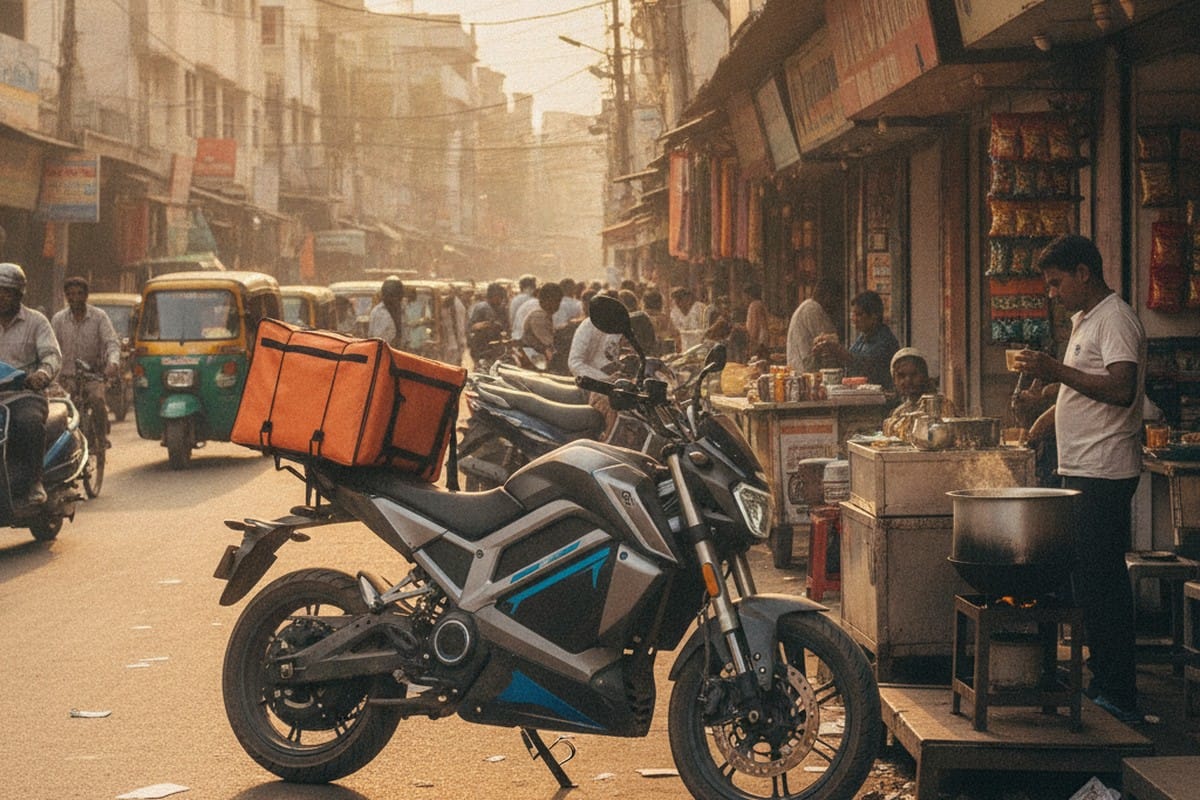
Electric scooter delivery rider navigating Indian city traffic during peak hours

Ask any Zomato or Swiggy delivery partner about their biggest monthly expense, and the answer almost always comes down to one thing: petrol. Not the bike EMI, not the phone bill — petrol. For someone logging 80 to 120 kilometres on a daily shift across Indian city roads, fuel costs are eating straight into earnings. And with petrol sitting comfortably above ₹100 per litre across most Indian cities, that monthly damage adds up fast.

The arithmetic is not kind. A delivery rider covering 100 kilometres a day on a 125cc petrol scooter — assuming 45 km per litre at current prices around ₹107 per litre — burns through roughly ₹240 before a single order is delivered. Over 26 working days a month, you’re looking at ₹6,000–₹6,200 just on petrol. This is why the conversation around electric two-wheelers has stopped being theoretical for India’s gig workforce. For thousands of Zomato, Swiggy, Blinkit, Zepto, and courier riders, it has become a very practical financial question: can switching to electric actually put more money in my pocket every month?

The honest answer is yes — if you choose the right vehicle.

What Delivery Riders Actually Need from an Electric Two-Wheeler

Before comparing models, it’s worth being clear about what actually matters in this use case, because it’s meaningfully different from what a regular office commuter needs.

A daily commuter doing 30–40 kilometres round-trip has a lot of margin for error in range. A delivery rider doing 100+ kilometres in a single shift does not. The most common mistake people make when considering electric for commercial use is underestimating the real daily demand and then regretting it when they’re stuck with a dead scooter mid-afternoon with three orders pending.

The key requirements for any electric scooter suited to delivery work in India come down to four things. First, range: you need genuine, real-world range of at least 80–100 kilometres on a full charge — and ideally more, because manufacturers’ claimed range figures and real-world range on stop-start city routes under load are rarely the same number. Second, reliability and build quality: a vehicle that breaks down means lost income, not just inconvenience. Third, charging logistics: you need to be able to charge at home overnight without drama, and ideally complete a charge before your next shift. Fourth, total running cost: the entire point of going electric is that the fuel bill becomes tiny — but you need to verify that the numbers actually work at your daily mileage.

Now let’s look at how the market currently shapes up and where genuine value lies.

The Numbers That Should Make Every Delivery Rider Stop and Think

A delivery rider covering 2,500 kilometres a month — roughly 85 kilometres per day over 30 days — spends approximately ₹5,500–₹6,000 on petrol at current prices. The same distance on an electric scooter, charged at home on a standard residential electricity tariff of ₹6–₹8 per unit, costs somewhere between ₹650 and ₹900 per month depending on the battery size and local electricity rate.

That’s a monthly saving in the range of ₹4,700–₹5,200 — just from fuel. Not including lower maintenance costs (no engine oil, no oil filter, no spark plugs, fewer moving parts overall). Add that in, and the monthly saving versus a petrol scooter can comfortably cross ₹5,500 for a heavy-use delivery rider.

At that rate of saving, the right electric vehicle can pay for itself through fuel savings alone within two to three years — after which every month is straight-up additional take-home. For someone living on gig income, that’s a meaningful improvement in financial security, not just a lifestyle upgrade.

Electric scooter charging at home overnight with delivery bag on the floorboard, Indian apartment setting

What to Watch Out For in the ₹80,000–₹1.15 Lakh Electric Segment

Several brands have launched electric scooters that look attractive on paper in the delivery use case, but carry important caveats.

The TVS iQube (with the iQube S currently around ₹1.65 lakh) is widely considered one of the most reliable electric scooters in the country, with a vast TVS service network — a genuine advantage when something goes wrong. The Vida VX2 from Hero MotoCorp enters more aggressively on price, though Hero’s electric service network is still catching up to its petrol counterpart. Ola Electric’s scooters generate attention on range numbers, but real-world owner feedback on after-sales service has been variable — and for a delivery rider dependent on their vehicle every single working day, that variability matters.

For commercial use, the warranty question is also worth investigating. Many manufacturers specify that warranty terms apply to personal rather than commercial use. Verify this explicitly before purchasing any electric scooter for full-time delivery work.

Why Elektree India Deserves Serious Attention in This Conversation

Elektree India makes electric scooters and motorcycles that are built around a straightforward philosophy: practical performance, honest pricing, and engineering that respects what Indian riders actually need from a two-wheeler every day.

For delivery riders, two models in the Elektree lineup deserve close attention.

The Elektree Zenith and the Elektree RV 80 — priced at ₹90,164 and ₹94,363 respectively — offer a claimed range of 80–100 kilometres on a full charge with a top speed of 60 km/h. For riders on shorter urban routes, morning-to-early-afternoon shifts, or those with access to a charge point mid-shift, these scooters represent an accessible entry point into electric delivery with a lower upfront investment.

But the product in the Elektree range that is most compelling for serious, high-mileage delivery work is the Fantom EV.

High-range electric motorcycle used for delivery work on Indian urban streets, side profile view

The Fantom EV: Built for Riders Who Actually Work Their Vehicles

At ₹1,39,000, the Elektree Fantom EV is the brand’s flagship and sits firmly in the electric motorcycle category. The specs tell a practical story: a claimed range of 150–180 kilometres per charge, a top speed of 110 km/h, and a large 72V/45Ah battery (with a 72V/55Ah option for even greater range). That’s real-world range that comfortably covers even the heaviest delivery shift — 100+ kilometres with meaningful headroom to spare.

Think about what that means operationally. You charge overnight. You start your shift with a full battery. You ride hard all day through city traffic, handle 25–35 deliveries, and still have reserve left when you get home. No mid-shift scramble for a charging point, no anxiety about whether you can accept that last order at the edge of your zone.

The 110 km/h top speed is more than adequate for urban and semi-urban riding — and the higher-voltage 72V battery system generally delivers more stable performance under sustained demand than the 60V systems found in many budget scooters, and tends to degrade more gracefully over time under the repeated charge-discharge cycles that delivery use demands.

And across the entire Elektree range, the brand backs its products with a 3-year warranty — a statement of confidence in the engineering that not every electric two-wheeler manufacturer in this price range is willing to make.

Running the Numbers on the Fantom EV for Delivery Work

Take a rider doing 100 kilometres daily, 25 working days a month. On petrol at current prices, that’s approximately ₹5,700–₹6,000 per month in fuel. On the Fantom EV, charging its 72V/45Ah battery (around 3.24 kWh) costs roughly ₹20–₹26 per full charge at standard residential electricity tariffs. That’s a monthly electricity bill of ₹350–₹500 even for heavy daily use — a saving of well over ₹5,000 every single month. At that rate, the additional cost of the Fantom EV over a typical entry-level petrol bike recovers in under two years from fuel savings alone. After that, every month is money in your pocket, not the fuel pump’s.

The Verdict for India’s Delivery Riders

Switching to electric isn’t the right move for everyone. If your zone has unreliable electricity supply, you can’t charge at home, or the upfront investment is a stretch right now, be honest about those constraints before committing.

But if you’re a delivery rider with stable home charging access, clocking 80–120 kilometres a day, currently spending ₹5,000–₹6,500 a month on petrol — the financial case for switching is now stronger than it has ever been. And among the electric options worth serious consideration, the Elektree Fantom EV stands out: genuinely capable range, a high-voltage battery system built for demanding use, and pricing that makes the payback timeline realistic rather than theoretical.

For riders doing lighter routes or wanting a lower initial outlay, the Elektree Zenith or RV 80 offer a smart middle ground — enough range for moderate delivery work, solid build quality, and the same 3-year warranty backing.

Petrol prices aren’t going down. Your margins from gig work aren’t going up on their own. The electric option has matured to the point where this is a decision worth making — not someday, but now.

Explore the full Elektree India range, including the Fantom EV and the Zenith series, at elektree.com — and do the maths with your own monthly mileage. The numbers are likely to surprise you.

Best Electric Scooter for Daily Commute in India 2026: Range, Real Costs, and the One Thing Most Buyers Get Wrong

Electric scooter parked outside a modern office building in India for daily commute

The One Thing Most Indian Office Commuters Get Wrong Before Buying an Electric Scooter

If you’re riding a petrol scooter to work in Bengaluru, Mumbai, or Hyderabad right now, here’s a number worth sitting with. Petrol in Bengaluru is ₹111.68 per litre today. Hyderabad has crossed ₹115 a litre. At 40 km a day on a scooter doing a typical 40 kmpl, you’re spending somewhere between ₹2,700 and ₹3,200 a month purely on fuel — that’s well over ₹33,000 every year, before a single rupee goes toward oil changes, filter replacements, or that mysterious engine noise you’ve been ignoring since January.

Electric scooters can bring that annual running cost down to under ₹4,000 for the fuel equivalent. But the decision is not as simple as walking into the nearest showroom and signing whatever paperwork the sales executive slides toward you. The wrong electric scooter for your commute can leave you stranded, range-anxious, or quietly regretting the switch. The right one can genuinely transform your daily ride.

Here’s what actually matters when you’re choosing a daily-commute EV in 2026 — and which scooters are worth your money.

The Range Problem Nobody Talks About Honestly

Almost every electric scooter regret story in India comes down to range — not the range on the brochure, but the range the owner actually experienced on their typical morning commute through Pune traffic or in the Hyderabad summer heat.

Under real Indian conditions — stop-and-go city driving, heavier loads, temperature extremes — the practical range of an electric scooter tends to run 20–30% below the manufacturer’s IDC (Indian Drive Cycle) certified figure. A scooter rated at 100 km IDC will typically deliver somewhere between 70 and 80 km in daily use. In a heatwave, or after 18 months of battery use, that figure can edge lower.

The rule that experienced EV owners in India have settled on: your scooter’s real-world range should be at least 1.8 to 2 times your average daily ride distance. If you’re commuting 30 km each way — 60 km daily — you want a scooter with a genuine range of at least 100 km in real conditions. That buffer keeps you comfortable on the bad days, accounts for gradual battery degradation over time, and means an occasional detour or errand doesn’t turn into an anxious crawl to the nearest charging point.

What Daily Commuting Actually Demands

Range is the headline requirement, but there are four other things that separate a commuter-grade scooter from a fair-weather rider.

Charging that works from your home socket. Most people charge overnight. A scooter with a 4–5 hour charge time on a standard 15A plug is ready by morning — practical for apartment dwellers. Scooters requiring special infrastructure are a daily inconvenience most buyers don’t anticipate.

Storage that carries real life. An office commuter brings a laptop, lunch, and often a helmet to park indoors. Underseat storage of at least 15–18 litres is the minimum worth considering. Anything below that and you’re riding with a backpack, every single day.

GPS and anti-theft for all-day parking. Your scooter is sitting unattended in an open parking lot for eight or nine hours. GPS tracking and an anti-theft alarm are not optional extras for a commuter — they’re practical necessities.

Suspension and ground clearance. Monsoon potholes, speed breakers, waterlogged stretches — a ground clearance below 165 mm will punish you daily. Riders in Chennai and Mumbai will tell you this is one of the most underrated specs on any scooter comparison list.

A Realistic Look at the Market

The 2026 electric scooter market is in a better place than it was even two years ago. Established manufacturers have ironed out early teething problems, after-sales networks have expanded, and the value-for-money equation has improved noticeably across segments.

Bajaj Chetak Neo, at around ₹91,399, offers a recognisable brand with solid build quality and an IDC-certified range of approximately 108 km — roughly 75–85 km in real conditions. The Chetak’s service network is one of the strongest in India, which is a genuine advantage for commuters who can’t afford downtime. Where it falls short: storage is modest, and it doesn’t offer active GPS tracking in its base configuration.

Hero VIDA VX2, available at around ₹99,000, makes a strong case in the sub-₹1 lakh bracket. Its IDC range of 142 km is genuinely impressive at this price, and real-world delivery in the 100–115 km range is achievable. It’s a legitimate option for riders with longer commutes who want a legacy brand’s backing.

TVS iQube ST, starting at ₹1.25 lakh, moves up in refinement. The display is larger, connectivity is more comprehensive, and TVS’s national service presence is hard to argue with. For someone with a slightly larger budget who wants the peace of mind that comes with an established EV-focused manufacturer, the iQube ST earns its place.

Ola S1 and Simple One occupy the premium end with impressive ranges, but at ₹1.4–₹1.7 lakh they extend the payback timeline considerably for a typical commuter.

Modern electric scooter on a busy Indian city road during morning commute hour

The Elektree Case: Building for Indian Commuters

For the daily commuter who wants a properly equipped, practical scooter without paying a premium for badge prestige, Elektree India has built two products that consistently get overlooked in mainstream comparisons — which is a mistake.

The Elektree Zenith, priced at ₹90,164, is built around a 60V/35Ah lithium-ion battery delivering 80–100 km on IDC certification. Translate that to Indian traffic conditions, and you’re looking at 65–80 km of genuine daily range — enough to cover a 30–35 km one-way commute on a single overnight charge with reasonable buffer. The battery carries a three-year warranty, which matters: it’s a meaningful commitment from the manufacturer in a market where battery-related surprises are the most feared category of ownership cost.

What Elektree has done differently with the Zenith is the features package it delivers at this price. Standard equipment includes built-in GPS tracking, an anti-theft alarm, a 15.5 cm instrument display, three riding modes (Eco, Normal, Hyper), reverse mode for navigating tight parking, an LED headlamp with DRL, 18.5 litres of boot storage, front disc brakes, and suspension combining twin telescopic front forks with a rear monoshock. Ground clearance is 180 mm — comfortably above the 165 mm threshold where Indian road conditions stop being a daily irritation. The Zenith is ICAT certified.

To put that features list in context: GPS tracking, anti-theft, disc brakes, and 18-plus litres of storage at ₹90,164 is a specification that would cost significantly more from the premium EV brands. Elektree has priced the Zenith for buyers who’ve done the research rather than for those buying on name recognition.

Electric scooter charging at home with Indian wall socket, overnight charging convenience

The Elektree RV 80 Sportz, at ₹94,363, shares the Zenith’s core powertrain and feature set but packages it in a sportier visual format for riders who want something that doesn’t read as purely functional. For commuters who care about how they pull up to the office, the RV 80 Sportz is worth the ₹4,000 premium.

The Numbers That Actually Change Your Decision

Running cost is where the EV case becomes genuinely compelling. A full charge of the Elektree Zenith, drawing approximately 2–2.5 kWh from a home socket, costs between ₹16 and ₹20 at typical Indian electricity tariffs. At a real-world range of 75 km, that works out to under ₹0.25 per km.

A petrol 125cc scooter in Bengaluru, at today’s fuel price, costs approximately ₹2.80 per km. The difference is not incremental — it’s structural. On a 1,000 km commuting month, the Zenith’s fuel-equivalent cost is roughly ₹240. The petrol scooter’s equivalent: ₹2,800 or more. Monthly savings in the region of ₹2,500. Annual savings above ₹30,000.

At that savings rate, the Elektree Zenith’s ₹90,164 purchase price effectively pays back its fuel-cost premium over a petrol scooter in under three years of daily commuting. From year three onward, you are simply keeping that ₹2,500 a month in your account rather than giving it to a petrol bunk.

Who Should Buy the Elektree Zenith — and Who Might Look Elsewhere

If your daily commute is between 25 and 35 km each way, you charge at home overnight, and your budget is around ₹90,000–₹95,000, the Elektree Zenith or RV 80 Sportz is one of the strongest overall value propositions in the Indian market. The specifications match what Indian road conditions genuinely demand, and the three-year battery warranty reduces the single biggest long-term ownership risk in the EV segment.

If your commute is longer — 45 km or more each way — the Hero VIDA VX2’s higher real-world range gives you a safer buffer, and TVS iQube’s broader service network adds a layer of assurance if you’re in a city where Elektree’s service footprint is still growing.

But for the typical Indian professional commuting 25–35 km to work and back five days a week, the honest answer is that the Elektree Zenith covers the use case well, priced ₹10,000–₹35,000 below most of its comparably equipped competitors, and backed by specifications that show the engineering team understood what Indian roads and Indian riders actually need — not just what looks impressive in a brochure.

The fuel savings are real. The payback period is real. The question is only how many more months of ₹3,000 petrol bills you’re prepared to absorb before acting on what the numbers are already telling you. Start at elektree.com to explore the full range and see which model fits your commute.