Best Electric Scooter for Women in India 2026: A Practical Guide to What Actually Matters

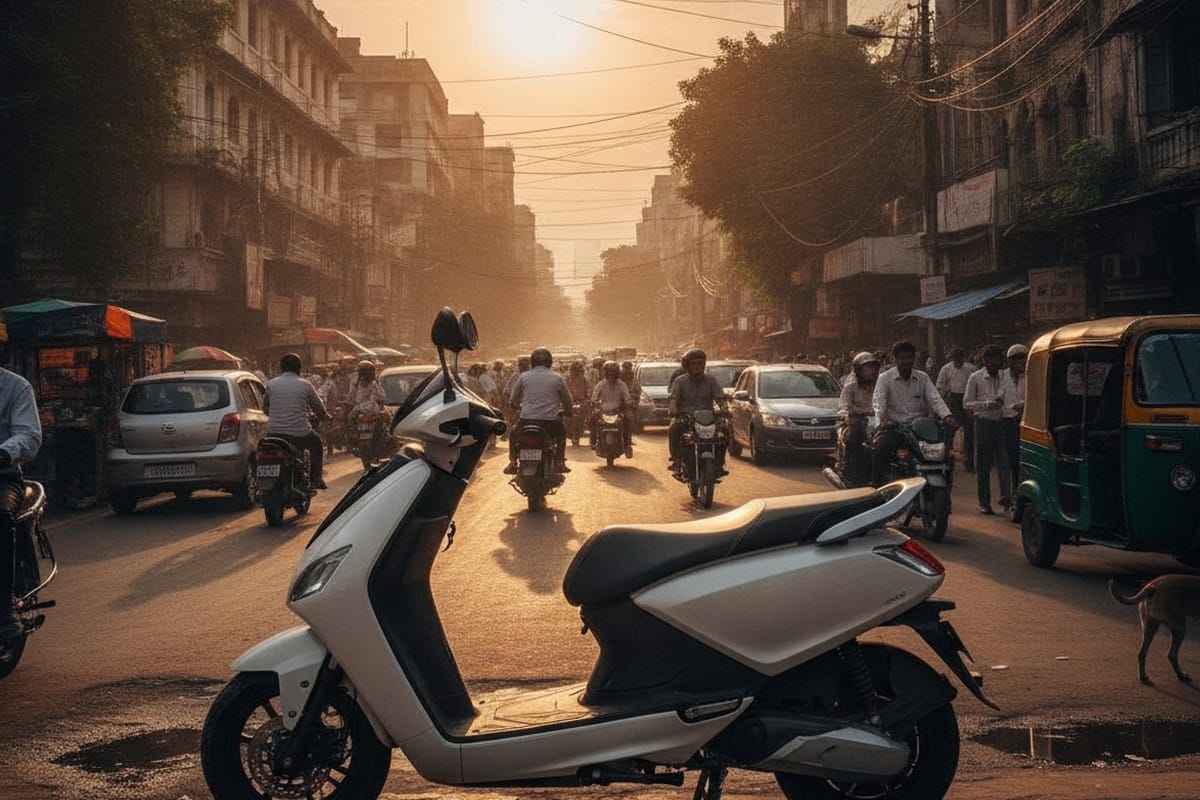
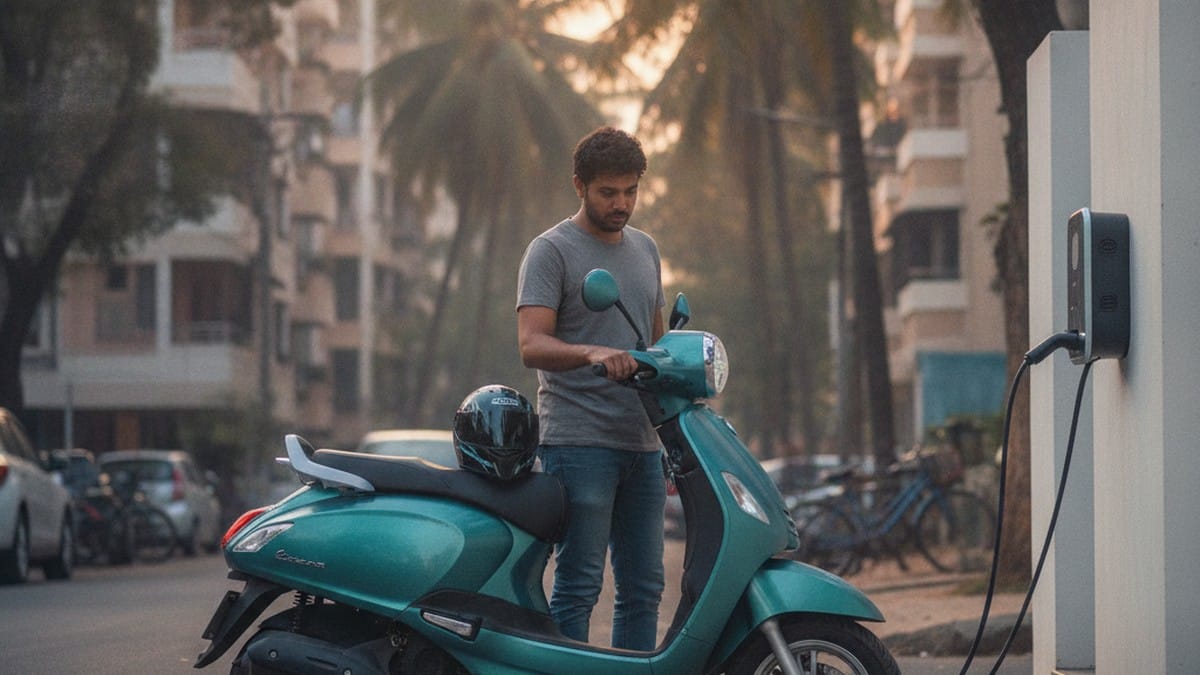
Best electric scooter for women in India 2026 - modern electric scooter on Indian street

Every year, millions of Indian women buy a scooter. Not because a specification sheet convinced them, but because they need to get somewhere — reliably, safely, and without burning through money at the petrol pump. The decision, in 2026, increasingly points toward electric.

India’s electric two-wheeler market delivered over 2 lakh units in July 2026 alone — a jump of nearly 56% year-on-year. Women represent a significant and growing share of that buyer pool, and for good reason: an electric scooter removes the gear-shifting anxiety, eliminates the petrol queue, and offers a genuinely lower cost of daily commuting. All-electric, all-automatic, and all yours to plug in overnight.

But the conversation around electric scooters for women in India tends to go wrong in the same direction every time. It focuses on peak top speed, headline range numbers, and glossy touchscreens rather than what most women buyers actually care about when they are trying to get to work, pick up groceries, or thread through the organised chaos of an Indian city road. This guide is different.

Weight: The Feature Nobody Puts in the Headline

+

Ask a first-time electric scooter buyer what spec matters most and they will say range. Ask someone who has owned one for six months and, nine times out of ten, they will say weight.

In Indian cities, your scooter spends almost as much time being pushed, balanced, and parked as it does moving. Apartment basement parking with a tight turning radius. Narrow lanes and shared driveways. Pavement kerbs that require lifting the front wheel. The moment you need to manoeuvre a 120-kg machine on your own — up a ramp, backward into a spot, or out of a crowded parking row — the claimed range printed on the brochure becomes very irrelevant very quickly.

The mainstream market has not done women any favours here. The Bajaj Chetak — built with an all-metal body for durability — tips the scales at around 119 kg. TVS iQube ranges from 110 to 118 kg across its variant lineup. The Ola S1 is heavier still. These are solid, capable machines, but they were not designed with lighter-framed riders or parking ease as a primary concern.

This is where Elektree’s Zenith stands apart in a way that is easy to overlook. At 75 kg, it is meaningfully lighter than every major mainstream competitor. That 40 to 45 kg difference is not just a number on a spec sheet — it is the difference between a scooter you handle confidently and one you fight with every time you leave the house.

How Much Range Do You Actually Need?

The range anxiety conversation in India has been dominated by premium products advertising 150 to 200 km figures. What gets lost in that conversation is that the average Indian urban commute — for college students, office-goers, and daily errand runners — sits comfortably between 25 and 45 km per day. Occasionally more, but rarely close to 100 km on an ordinary weekday.

On that basis, a scooter with 80 to 100 km of real-world range is not just adequate — it is comfortable. You can complete two full days of typical urban commuting before reaching for the charger, which means you charge every other evening rather than every single night.

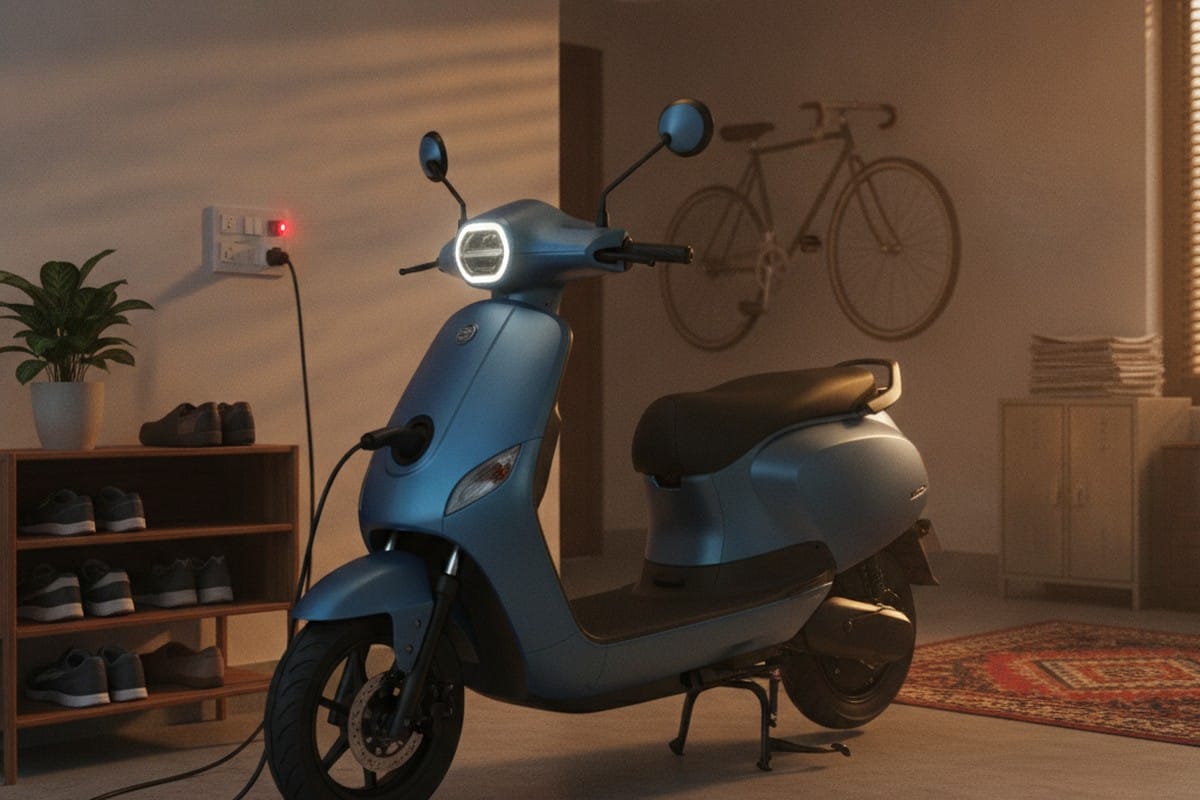
The Elektree Zenith delivers exactly this. Its 60V/35Ah lithium battery is certified for 80 to 100 km per charge under standard conditions. The scooter charges fully in 4 to 5 hours, which means plugging in before bed consistently delivers a full charge by morning — no mental calculations, no stopping at public charging stations, no detours.

For women in smaller cities and towns, where public charging infrastructure remains genuinely sparse, home charging is not a convenience — it is the feature that makes electric ownership practical in the first place.

The Real Cost of Charging at Home

+

Charging economics matter too. The Zenith carries a 2.1 kWh battery. At current residential electricity rates of roughly ₹7 to 8 per unit across most Indian states, a full charge costs approximately ₹15 to 18. For 80 to 100 km of riding. Compare that to a typical 110cc petrol scooter, which might cover 55 to 60 km per litre at today’s fuel prices — meaning the same 80 to 100 km trip costs ₹130 to 160 in petrol. The electric advantage compounds over a year into annual savings of ₹15,000 to 25,000 depending on your mileage.

Safety and Confidence Features That Actually Matter

Beyond weight and range, practical safety features matter more to daily women riders than to almost any other buyer segment.

Reverse mode is one such feature. Being able to reverse the scooter electrically — rather than pushing a heavy machine backward through a tight parking space — sounds like a small thing until you have tried it without one. The Zenith includes reverse mode as standard.

GPS tracking and an anti-theft alarm system are equally significant. Scooter theft is a persistent concern in Indian cities, and leaving a scooter parked outside a college gate, office building, or market for hours carries real risk. The Zenith includes both GPS location tracking and an anti-theft alarm that activates on unauthorised movement.

Front disc braking and a front telescopic suspension setup contribute to confident stopping on roads that rarely match the smoothness shown in manufacturer videos. Three riding modes — Hyper, Normal, and Eco — let you calibrate the throttle response to your mood, your road conditions, and your battery level. The 15.5 cm digital instrument cluster gives you a clear read on speed, range, and charge status without requiring a smartphone.

How Elektree Compares Against the Mainstream Options

At ₹90,164, the Zenith sits in a competitive price range. TVS iQube’s base variant starts at ₹94,434 but offers a modest 94 km certified range on its entry battery. Bajaj Chetak’s entry-level starts at ₹91,399, delivers 113 km claimed range, but weighs nearly 119 kg and carries a lower top speed ceiling. Neither includes reverse mode, GPS, or anti-theft as standard across the entry variants.

The Ather Rizta, positioned as a family-focused scooter starting at ₹1,21,499, offers excellent storage and pillion comfort but costs significantly more. If your commute is solo and budget is a genuine constraint, the premium over the Zenith needs to be justified by genuine usage of those additional features.

The Elektree Zenith at ₹90,164 delivers 80 to 100 km range, GPS, anti-theft, reverse mode, three riding modes, front disc brakes, a 15.5 cm display, and a kerb weight of 75 kg — a combination that is difficult to replicate at this price point from any mainstream Indian manufacturer. For riders whose daily travel is even shorter and whose priority is the most affordable and lightest electric option, Elektree also offers the Wheels at ₹82,871 — with 50 to 70 km range suited to slower urban movement.

Ownership Confidence: Warranty and Certification

For a first-time EV buyer, knowing the manufacturer stands behind the product matters as much as the product itself. Elektree backs the Zenith’s battery with a 3-year and 50,000 km warranty — a meaningful guarantee for buyers concerned about long-term battery health, which is often the single largest post-purchase expense an EV owner faces.

The Zenith carries ICAT (International Centre for Automotive Technology) certification, confirming it has been independently tested to meet India’s prescribed performance and safety standards. This matters not only for confidence in the product but also for insurance validity and, in many states, for government subsidy eligibility.

The broader Elektree approach, evident across their product lineup, is one of practical engineering for Indian conditions — matching range to real commuting distances, weight to the reality of Indian parking, and price to the reach of the buyers who need this transition most.

The Bottom Line

India’s electric scooter market in 2026 is the strongest it has ever been, and for women buyers, the options have genuinely improved. But choosing the right scooter comes down to matching the machine to your actual life — not to a brochure designed to win a spec comparison table.

If what matters to you is a lightweight scooter that is genuinely easy to handle, with enough range to cover two to three days of Indian urban commuting without drama, home charging that costs less than a Swiggy order, and practical safety features at a price that stays under ₹1 lakh — the Elektree Zenith is a serious contender that deserves to be at the top of your shortlist.

It is not trying to be the fastest electric scooter in India, or the one with the most impressively lit dashboard. It is trying to be the most useful one for the way most Indian women actually use a scooter — every single day, in every kind of weather, on every kind of road. On that measure, it succeeds convincingly.

Explore the full Elektree India range, including the Zenith and the Fantom EV, at elektree.com.

Electric Scooter Reliability in India 2026: The After-Sales Reality That Brochures Never Show You

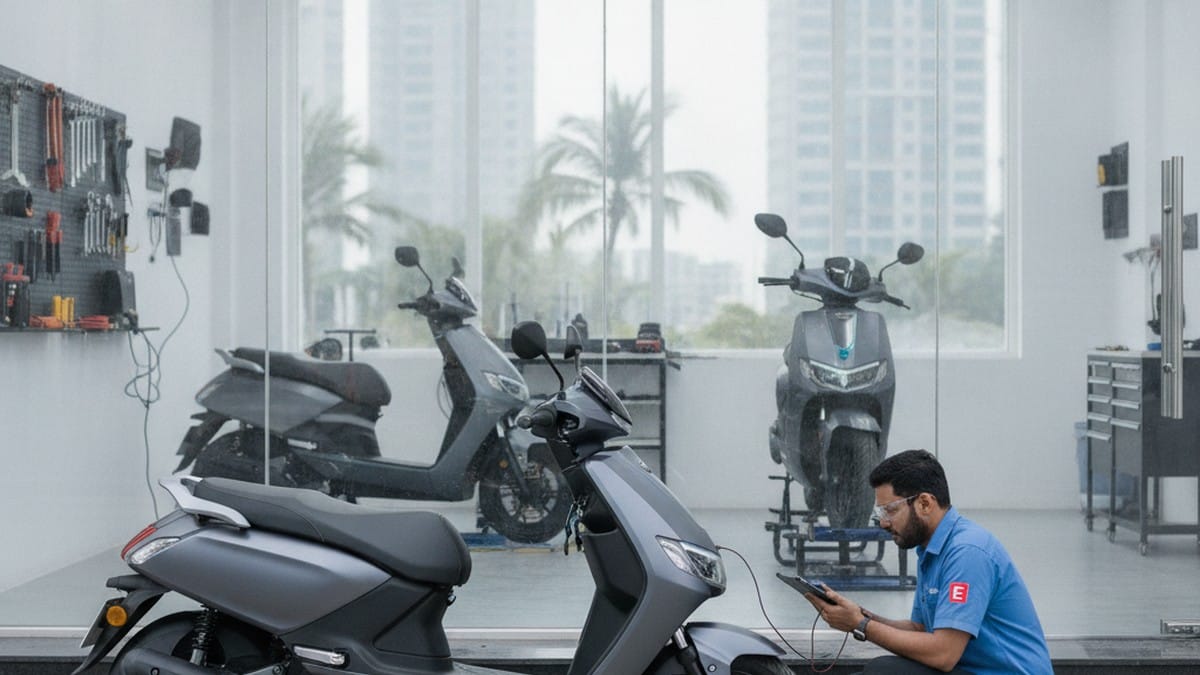
Electric scooter service inspection at an authorized centre in India

Let’s start with an uncomfortable truth. Buying an electric scooter in India today involves a leap of faith — not just in the technology, but in the company that sold it to you. The brochure promises 120 km on a charge, a 3-year warranty, and a smooth, maintenance-free life. But what happens when the scooter develops a fault at 8,000 km, the nearest service centre is 45 km away, and the spare part you need has a six-week waiting period? That’s a question Indian buyers are having to answer more often than the industry would like to admit.

Electric scooters have improved dramatically. But the industry’s reliability record is still a work in progress, and after-sales quality varies enormously between brands. Getting this choice wrong can turn a smart financial decision into a prolonged frustration.

Electric scooter service inspection at an authorized centre in India

What the Data Actually Says About EV Reliability

The J.D. Power 2025 India Two-Wheeler Initial Quality Study is one of the most comprehensive independent assessments of vehicle quality in the country. It surveyed over 6,500 new two-wheeler owners and arrived at a finding that should give every prospective EV buyer pause: electric scooters averaged 98 problems per 100 vehicles (PP100), compared to an industry average of 86 PP100 across all two-wheelers. Petrol scooters came in at around 53 PP100.

In plain terms, electric scooters generate nearly double the problems of their petrol equivalents in the first months of ownership. The most common complaints involve braking efficiency, electrical component failures, and overall build quality deteriorating faster than expected under regular use. High-mileage riders — those covering more than 2,500 km in their first six months — reported nine additional problems per 100 vehicles compared to lighter users, which matters because daily commuters are exactly the people buying these scooters.

Before that sends you running back to a petrol showroom, here’s the other side of the picture. The same study found that 58% of electric scooter owners reported their vehicle performed better than expected — up from 44% the previous year. And one brand bucked the trend entirely: Bajaj Chetak scored just 45 PP100, lower than most petrol scooters. The point is not that all electric scooters are unreliable. It’s that the brand you choose has an enormous bearing on the ownership experience you’ll actually have.

The Three Most Common Problems Indian EV Riders Face

Understanding what typically goes wrong helps you evaluate a brand’s after-sales more honestly. The most frequent issue reported by Indian EV owners is sudden range drops — situations where a scooter that once covered 90 km now manages 60-65 km. Heat exposure, riding style, tyre pressure, and software updates can all trigger this. When it happens, you’re filing a warranty claim — and that’s when you find out what your dealer relationship is really worth.

Charging faults are the second common problem: loose sockets, home voltage fluctuations, or monsoon moisture in the charging port. Many riders only discover that using a third-party charger voids their battery warranty after it’s already too late. Software-related issues round out the top three — over-the-air updates have caused frozen dashboards, app pairing failures, and unexpected behaviour changes. The quality of a company’s software team is now as relevant to your ownership experience as the quality of their mechanics.

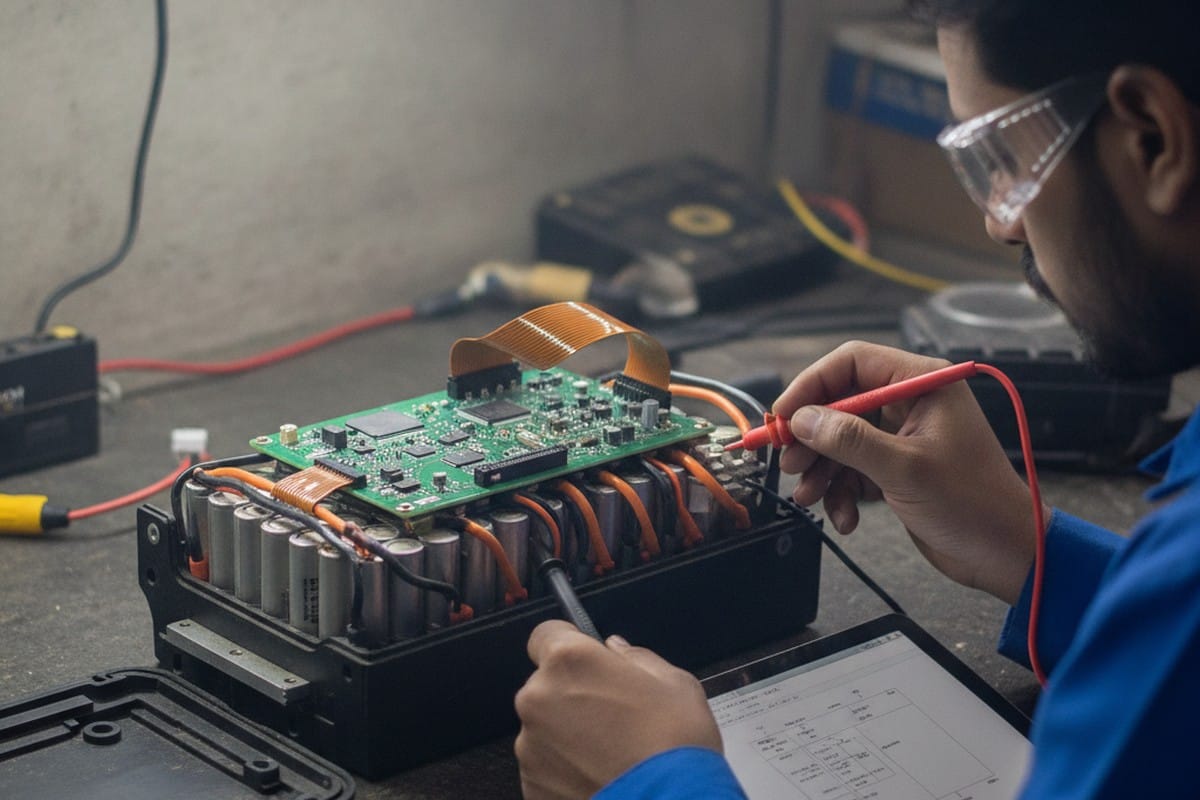
EV scooter battery pack inspection showing BMS unit and lithium cells

What “3-Year Warranty” Actually Means — and What It Doesn’t

Battery warranties in India’s EV market have improved considerably, but the fine print still deserves careful reading before you commit. Most established brands now offer a 3-year battery warranty as standard — Ather’s base warranty covers 3 years or 30,000 km, TVS iQube offers 3 years up to 50,000 km depending on variant, Bajaj Chetak covers 3 years or 50,000 km, and Hero Vida comes with a stronger 5-year or 50,000 km package as standard.

But what a warranty covers matters just as much as how long it lasts. Most battery warranties protect against manufacturing defects and guarantee the battery will retain at least 70% of its original state of health within the warranty period. What they don’t cover includes damage from flooding (specifically when water depth exceeds the floorboard — something that happens regularly on Indian roads in July), charging with non-approved equipment, mechanical damage from accidents, and in some cases, battery deterioration caused by skipping scheduled services at authorised centres.

There’s also the question of claiming a warranty when something goes wrong. The process typically involves logging a complaint through the brand’s app or helpline, getting a diagnostic at an authorised centre (not a general EV repair shop), and then waiting for the decision. Some brands process this efficiently. Others have earned a reputation for delays, disputes about coverage, and spare parts that take weeks to arrive. The CCPA — India’s Central Consumer Protection Authority — launched a detailed investigation into one major EV brand in late 2024 after receiving over 10,000 consumer complaints questioning the brand’s claimed resolution rates. That case served as a public reminder that a warranty is only as valuable as the company’s willingness to honour it.

The Service Network Question Nobody Asks at the Showroom

Here’s the question most buyers forget to ask before signing the purchase form: if my scooter develops a problem at 15,000 km, how far will I need to travel to get it fixed, and how long will I be without it? For established brands with inherited dealership networks — TVS, Bajaj, Hero — the answer is usually reassuring. For newer or smaller brands, it’s worth verifying rather than assuming.

For context, annual EV maintenance typically costs ₹2,000–₹5,000 versus ₹3,500–₹6,000 for a petrol scooter — and the servicing itself is simpler: no engine oil, no spark plugs, no air filter. Routine work covers brakes, tyres, battery diagnostics, connector cleaning, and firmware checks. But when something outside routine maintenance goes wrong — a BMS fault, a controller issue, a motor bearing — complexity increases sharply. That’s when service network reach matters most.

Spare parts availability is the other factor that rarely comes up in the showroom conversation. A study on EV ownership problems in India noted waiting periods for certain parts ranging from one month to six months at smaller brands — a wait that leaves your daily commute vehicle sitting idle. The industry has improved, but the gap between brands remains significant.

Where Elektree India Fits Into This Picture

Elektree India has built its product range around the practical requirements of Indian riders, and its approach to reliability and after-sales reflects that. The Elektree Zenith, priced at ₹90,164, is the brand’s flagship scooter for daily commuting — and the way it’s spec’d suggests a company that has thought carefully about Indian road conditions rather than simply translating a European or Chinese design into a rupee price tag.

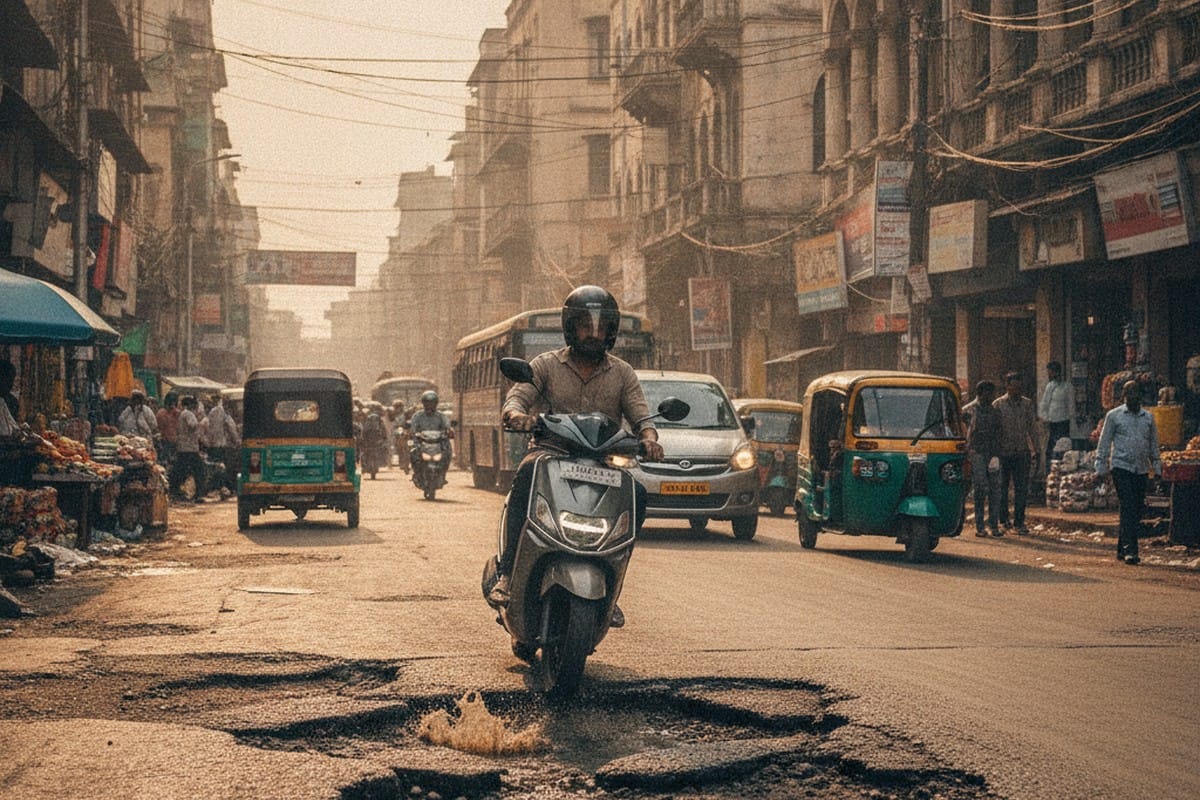
Electric scooter navigating busy Indian city road

The Zenith’s 180 mm ground clearance is one of the highest in its price segment — a meaningful advantage when you’re dealing with Indian pothole geography. Its 200 kg payload capacity is genuinely practical for two adults with a loaded underseat storage of 18.5 litres. The suspension setup uses twin telescopic forks at the front and a monoshock at the rear, designed to absorb the irregular surfaces that characterise Indian city and semi-urban roads. The motor is a mid-drive IPM unit — a more efficient and durable configuration than the hub motors found in cheaper alternatives — paired with a 60V/35Ah lithium-ion battery delivering a real-world range of 80 to 100 km under typical Indian riding conditions.

On the after-sales side, Elektree offers a 3-year/50,000 km battery warranty on the Zenith — matching the coverage offered by TVS and Bajaj — backed by an “Elektree Care” service programme through its authorised dealer network, which is active across major metros including Delhi, Mumbai, Kolkata, Hyderabad, and Bengaluru. The Zenith is also ICAT certified, which means it has gone through India’s official vehicle testing and approval process — a baseline of accountability that not every smaller brand can claim.

The brand’s range extends upward to the Fantom EV motorcycle at ₹1,39,000 — 150-180 km range, 110 km/h top speed — for riders with more demanding requirements. And the entry-level Elektree Wheels at ₹82,871 covers shorter urban commutes with a no-licence configuration option.

The Right Way to Think About This Decision

The electric scooter market in India has reached a level of maturity where the technology is no longer the primary risk. The bigger variable is the company standing behind it. A 100 km range with a credible, accessible service network will serve you better over three years than 130 km of claimed range from a company that turns warranty claims into a bureaucratic ordeal.

Before signing anything, ask the showroom: how many service centres does the brand have in your city? What’s the typical turnaround for a BMS or software fault? Are spare parts stocked locally? These questions reveal what the spec sheet cannot.

Elektree India’s combination of ICAT-certified models, competitive warranty coverage, practical specifications built for Indian roads, and a genuine service network makes it a strong contender for buyers asking what three years of ownership will actually look like — not just what launch day felt like. If reliability and after-sales confidence matter to you, the Elektree Zenith deserves a place on your shortlist. Explore the full range at elektree.com before making your final call.

Petrol at ₹107 a Litre and Climbing: The Honest Numbers Every Indian Commuter Should See Before Buying a Scooter in 2026

Modern electric scooter parked on a wet Indian city road at dusk with commuters in background

Petrol at ₹107 a Litre and Climbing: The Honest Numbers Every Indian Commuter Should See Before Buying a Scooter in 2026

Walk into any petrol station in India today and the numbers on the board hit differently than they did even two years ago. As of September 1, 2026, petrol is sitting at ₹102.12 per litre in Delhi, ₹111.21 in Mumbai, ₹111.68 in Bengaluru, and a painful ₹115.69 in Hyderabad. If you are riding a petrol scooter and commuting 40 kilometres a day — which is pretty standard for city workers across India — you are spending money at a rate that most people have stopped consciously noticing. This article is about noticing it, doing the actual math, and making an informed decision that your wallet will thank you for.

What That Petrol Tank Is Actually Costing You Every Month

Let us take a common scenario. You own a 125cc petrol scooter — an Activa, a Jupiter, a Dio, whatever — that delivers around 45 kilometres per litre in city traffic. You commute 40 km a day, five to six days a week. That works out to roughly 1,200 km a month, which requires about 26-27 litres of petrol. At ₹107 per litre (a conservative national average), that is approximately ₹2,800–₹2,900 every single month, just on fuel. Annually, you are burning through ₹33,000–₹35,000 in petrol alone.

Add maintenance to that picture. A petrol scooter needs engine oil changes every 3,000–4,000 km, air filter replacements, spark plugs, belt servicing, and periodic tune-ups. Servicing runs ₹8,000–₹12,000 a year. Insurance adds another ₹3,000–₹5,500. The realistic annual cost of keeping that petrol scooter running sits between ₹44,000 and ₹52,000 — and over five years, that is ₹2.2 lakh to ₹2.6 lakh in operating costs alone.

What an Electric Scooter Actually Costs to Run

The electricity cost math works quite differently. The Elektree Zenith, for instance, runs on a 60V/35Ah lithium-ion battery and delivers a certified real-world range of 80–100 km per charge. A full charge costs between ₹5 and ₹10 — depending on your local electricity tariff and battery state — and takes 4 to 5 hours on a standard home socket. No petrol station trips required.

For the same 40 km daily commute, you would charge the Zenith roughly every two to two-and-a-half days. That works out to approximately 150–160 full charge cycles a year, costing perhaps ₹1,100–₹1,500 annually in electricity. Not per month — per year. The running cost per kilometre drops to around ₹0.08–₹0.10 compared to ₹2.20–₹2.50 for a petrol scooter. That is a 20-fold difference in fuel cost.

Maintenance on an electric scooter is also structurally simpler. There is no engine oil, no air filter, no spark plug, no fuel injector, no radiator. Brake pads, tyres, and occasional electrical checks are about all you need. Annual servicing costs typically run ₹2,000–₹3,500. Insurance for electric vehicles tends to be 20–30 percent lower than petrol equivalents as well.

Running the same five-year calculation, an electric scooter commuter spends roughly ₹18,000–₹25,000 in total operating costs across fuel and maintenance combined. Against the ₹2.2–₹2.6 lakh spent running a petrol scooter, the difference is over ₹1.8–₹2.2 lakh saved in five years. That is real money — the kind that pays school fees, family holidays, or a down payment on something bigger.

What Actually Matters When Choosing an Electric Scooter for Indian Roads

Savings alone do not make a purchase decision. The electric scooter you choose has to actually work for Indian roads, Indian riding patterns, and Indian weather — which means you need to look beyond claimed range figures and Instagram-friendly designs.

Ground clearance matters enormously. Indian roads, particularly during monsoon season, are unforgiving. A scooter with less than 170 mm of ground clearance will scrape on speed breakers, flooded stretches, and the kind of potholes that the municipality cheerfully ignores for years. Payload capacity is another underrated spec — if you are carrying a pillion and a bag of groceries, you need a scooter that can handle 150–180 kg without affecting range significantly. Charging time, riding modes, and warranty terms are equally consequential for daily-use ownership.

The battery warranty specifically deserves attention. Lithium-ion batteries degrade over time, and replacement costs can be substantial. A three-year, 50,000-km warranty is the current reasonable benchmark for a seriously built electric scooter.

Why the Elektree Zenith and RV 80 Stand Out in This Segment

Elektree India has positioned its Zenith scooter at ₹90,164, which is notably lower than several competing premium electric scooters and puts it in a genuinely value-forward position without compromising on what matters.

The Zenith’s 180 mm ground clearance is meaningfully better than many competitors in its price band, making it more capable on broken urban roads and rural stretches. Its payload capacity of 180–200 kg is also higher than what most city-oriented electric scooters are rated for, which matters if you routinely carry a pillion. The mid-drive motor configuration — less common at this price point — delivers power more efficiently and maintains better balance than hub-motor designs, which translates to more responsive, stable handling in stop-start city traffic.

The three riding modes (Hyper, Normal, and Eco) let you adapt the scooter’s behaviour to traffic conditions and optimise range when needed. GPS tracking, an anti-theft alarm, and reverse mode functionality round out a feature set that is difficult to fault at under ₹1 lakh. The 3-year/50,000-km battery warranty provides genuine peace of mind, particularly for buyers worried about long-term battery health.

For riders who need slightly more range headroom, Elektree’s RV 80 is priced at ₹94,363 with a comparable specification set. Both models charge in 4–5 hours on a domestic socket, which means you plug in when you get home and wake up with a full charge — no separate charging infrastructure, no planning required.

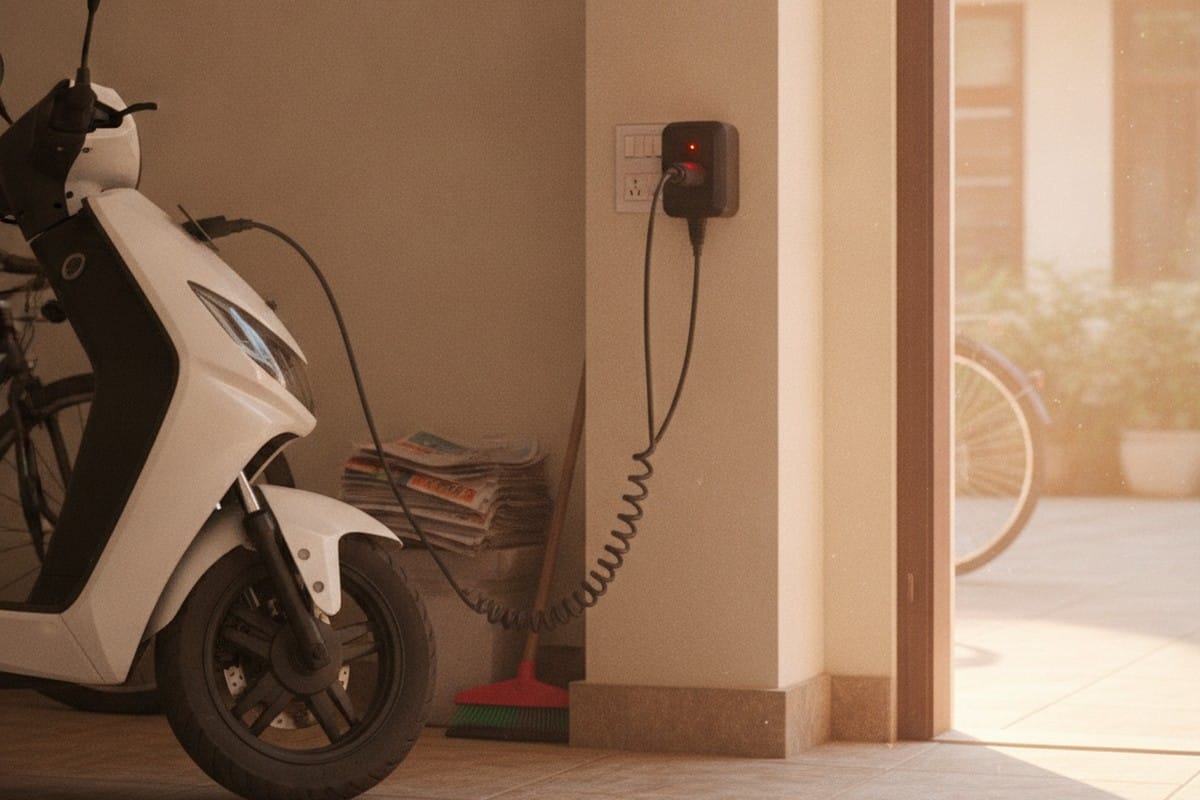
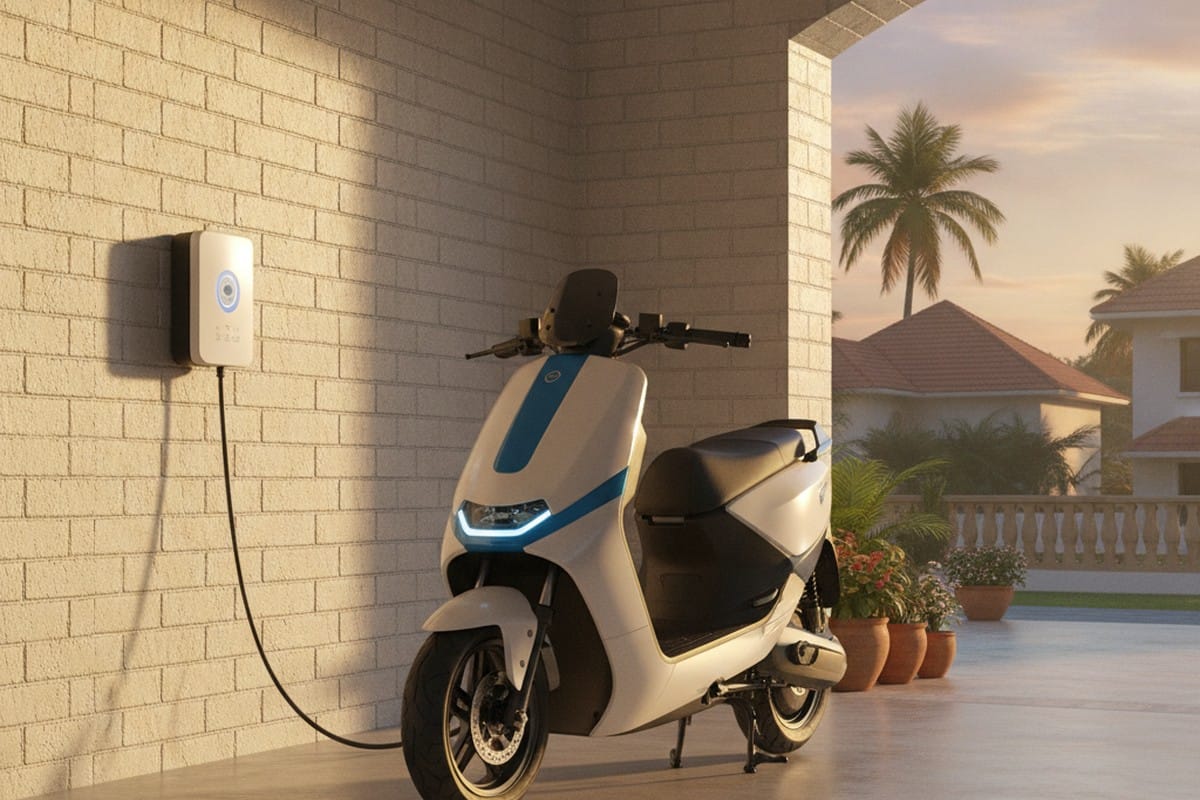
Electric scooter charging cable plugged into home socket in an Indian apartment parking area

How Does Elektree Compare to the Competition?

The Ola S1 Pro, one of the most talked-about electric scooters in India, is priced from ₹1.25 lakh for the base variant and ₹1.45 lakh for the higher-capacity version. It offers an ARAI-claimed range of 176–242 km on paper, though real-world figures are typically considerably lower — user-reported numbers cluster around 100–120 km in mixed conditions. Charging takes up to 9 hours on a standard AC charger, which is a meaningful practical inconvenience for someone who relies on their scooter for daily commuting.

At ₹30,000–₹55,000 less than the Ola S1 Pro, the Elektree Zenith’s 80–100 km real-world range is sufficient for the majority of Indian commuters whose daily round trip sits under 60 km. If you are not a weekend tourer who needs 150 km between charges, paying a significant premium for range you will rarely use is difficult to justify — and the faster 4–5 hour charge time is a practical advantage for overnight charging.

The Bajaj Chetak 2901, priced at approximately ₹1 lakh, has faced availability constraints in recent months. Its 6-hour charge time is notably longer than the Elektree’s, and at a higher price point, the comparison becomes less straightforward for buyers trying to maximise value.

The case for Elektree is not that it outperforms every competitor on every metric. It is that for the specific buyer — the daily commuter in an Indian city, managing 40–60 km a day, wanting lower running costs, a capable scooter that handles Indian roads well, and a warranty that provides real after-sales assurance — the Elektree Zenith delivers the full package at a price point the others struggle to match.

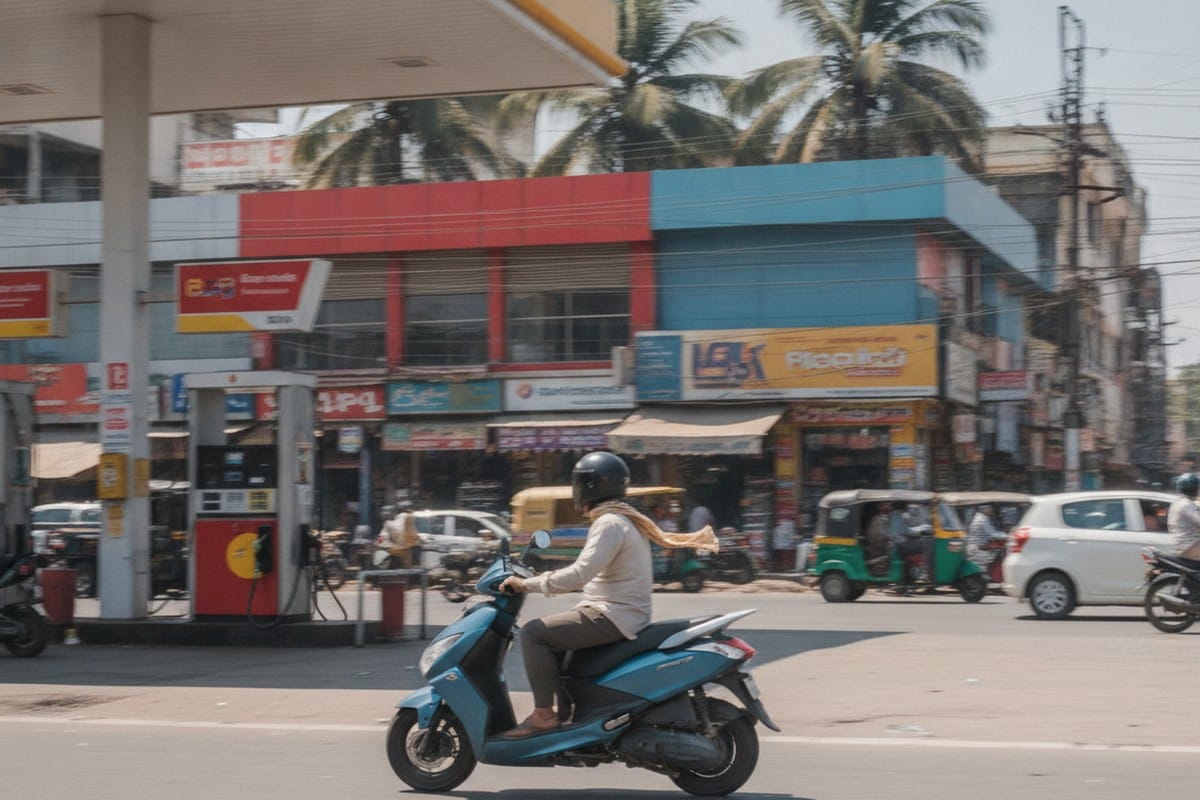
Indian rider on an electric scooter passing by a petrol station, symbolising fuel cost savings

The Decision That Makes Sense Right Now

With petrol prices now well above ₹100 per litre in most major Indian cities and showing no credible sign of retreating, the economics of electric commuting have stopped being a calculation about the future. They are emphatically a calculation about today. Every month spent running a petrol scooter is ₹2,800–₹3,000 in fuel and another few hundred in maintenance that an electric scooter owner is simply not paying.

The Elektree Zenith, at ₹90,164 with a 3-year warranty, 180 mm ground clearance, 4–5 hour charging, and a running cost of effectively ₹1,000–₹1,500 per year in electricity, is not a compromise. It is a well-specified scooter built for the realities of Indian commuting — and priced to make the switch financially straightforward from day one.

If the math in this article describes your situation — urban commuter, 30–60 km a day, tired of petrol prices eating into your monthly budget — then the Elektree Zenith or RV 80 is worth a serious look. Head over to elektree.com to explore the full range, compare specifications, and find out what your monthly cost savings would actually look like with one of these on your driveway.

The fuel savings start the day you stop filling a tank.

Best Electric Scooter Under ₹1 Lakh in India 2026: What the Numbers Don’t Tell You

Modern electric scooter parked on a vibrant Indian city street at sunrise, commuter about to ride

Best Electric Scooter Under ₹1 Lakh in India 2026: What the Numbers Don’t Tell You

If you’re shopping for an electric scooter on a budget of ₹85,000 to ₹1 lakh, you’ve arrived at the most interesting segment of India’s EV market right now. Three years ago, you could barely find a reliable electric scooter at this price. Today you’re choosing between Hero, Ola Electric, and focused Indian manufacturers like Elektree — each offering something genuinely different. The real challenge is figuring out which one will actually serve you well two or three years from now.

The problem is that every brand throws around “claimed range” figures that have little to do with real-world Indian riding, every ad promises ₹1 per km or better, and the spec sheets look nearly identical at first glance. So what actually separates a smart ₹90,000 purchase from a regrettable one? It’s not just range or top speed — it’s about battery longevity, monthly running costs in Indian conditions, and whether the scooter was genuinely designed with an Indian buyer in mind or engineered elsewhere and adapted with minimal thought.

The Daily Math Every Buyer Should Do First

Before getting into specific models, let’s settle one number that should drive this entire decision. A typical Indian city commuter covers 30–40 km per day. At ₹106 per litre for petrol (current national average) and 45 km per litre for a 125cc scooter, that’s roughly ₹70–₹94 daily in fuel alone — close to ₹2,000–₹2,500 per month before maintenance.

An electric scooter at ₹7–₹8 per kWh (average domestic electricity rate) costs roughly ₹8–₹12 for a full charge. Your daily 30 km commute, realistically, is costing you under ₹10 in electricity. That’s ₹250–₹300 per month versus ₹2,000-plus on petrol. Over a year, the savings land somewhere between ₹20,000 and ₹30,000 — before counting reduced maintenance on fewer moving parts.

That’s the reason people are making the switch. Now let’s see which sub-₹1 lakh scooter actually delivers on that promise without creating a different set of headaches.

The Main Contenders at This Price

Ola S1 X (Base 2 kWh Variant)

Ola’s most affordable entry into the S1 X range starts at ₹84,999 ex-showroom — putting it on-road at roughly ₹96,000–₹99,000 depending on your state. The base 2 kWh pack gives a certified IDC range of 108 km, though real-world city performance is closer to 80–90 km under typical conditions. Top speed is a confident 90 km/h, and there’s a 7-inch TFT display, cruise control, and Ola’s MoveOS software. Battery warranty is 3 years / 50,000 km.

The catch with the S1 X is the fixed battery. You need a dedicated home charging point. For millions of Indians living in apartments without designated EV parking or charging access, this creates a genuine daily inconvenience — not a dealbreaker, but something you need to honestly account for before buying.

Hero Vida VX2 (Base 2.2 kWh Variant)

Hero’s Vida VX2 starts at around ₹80,077 on-road (Delhi) for the base variant and uses a 2.2 kWh removable battery delivering a real-world range of roughly 80–93 km. The removable battery is the standout feature — you can carry it upstairs and charge it from a standard socket, which is genuinely useful for apartment dwellers without dedicated EV charging infrastructure.

However, user reviews flag build quality niggles: switch quality, occasional app glitches, and plastic finishing that doesn’t feel premium relative to the asking price. Hero’s service network is vast, which is a real advantage, but the Vida’s dedicated EV service infrastructure is still maturing in many cities outside the major metros.

What Elektree Brings to the Table

This is where the conversation shifts. Elektree India manufactures a range of electric scooters priced between ₹82,000 and ₹95,000 ex-showroom, and the product philosophy is meaningfully different from Ola or Hero in ways that show up in actual Indian riding.

The Elektree Zenith, priced at ₹90,164, runs a 60V/35Ah lithium-ion pack with a 70 km/h top speed and a practical city range in the 80–100 km bracket. The scooter is ICAT certified — passing India’s Central Institute of Road Transport testing standards — and comes with a 3-year / 50,000 km battery warranty that matches the coverage Ola provides on the S1 X.

Where the Zenith genuinely pulls ahead in day-to-day Indian riding: a payload capacity of 180 kg. Many electric scooters in this segment are rated for 130–150 kg total weight. If you regularly carry groceries, a bag and an extra passenger, this headroom matters in real usage. The scooter also includes GPS tracking with an anti-theft alarm built in, front disc brakes, a reverse mode for tight parking spots, a USB charging port, and three riding modes — Hyper, Normal, and Eco — so you can trade speed for range depending on the day.

The Elektree Wheels, at ₹82,871, is the more accessible entry point with a 45 km/h top speed and a 50–70 km range — better suited for purely urban commutes, shorter daily distances, or riders who want the most affordable reliable option in the range. For buyers who want more capability without crossing the ₹1 lakh mark, the Zenith is the natural step up. The Elektree RV 80 Sportz at ₹94,363 offers a similar performance package to the Zenith with a slightly sportier design language.

Electric scooter riding through Indian city traffic for daily commute
Real-world commuting on India’s roads demands a scooter that handles stop-start traffic and occasional rough patches with equal ease.

The Warranty Question — More Important Than You Think

First-time EV buyers often focus on range and price. The question they don’t ask until it’s too late is: what happens to the battery in year three? The battery in your electric scooter typically accounts for 35–50% of the vehicle’s total cost. A battery degradation issue or replacement outside warranty can cost ₹20,000–₹40,000 depending on the model — wiping out a year or more of the fuel savings you switched for in the first place.

A 3-year / 50,000 km battery warranty should be a minimum standard you hold every scooter to. Both the Elektree Zenith and the Ola S1 X offer this coverage. Hero Vida’s warranty terms on the base VX2 variant are structured through an extended ownership programme that varies by plan — worth clarifying at the dealership before signing.

When two products are similarly priced and both offer comparable warranty coverage, the question shifts: which one do I trust more in everyday ownership? Which one was designed with the practical realities of Indian roads, Indian load habits, and Indian riding patterns in mind?

Electric scooter plugged into charging point at home in India
Home charging is the backbone of EV ownership economics — whether you have a dedicated point or rely on a removable battery matters more than the claimed range figure.

Running Cost: The Real Comparison

Both the Ola S1 X and the Elektree Zenith will cost you roughly the same per charge — ₹8–₹12 for a full top-up at home. Elektree’s stated figure of ₹5–₹10 per charge is consistent with what independent calculations show for a 60V/35Ah pack at Indian domestic electricity rates.

What actually changes your annual savings math isn’t the per-km electricity cost — that’s roughly equivalent across all EVs in this segment. What changes it is reliability and downtime. An electric scooter sitting at a service centre while you’re booking ride-hailing apps is not saving you money. This is where after-sales infrastructure, component quality, and part availability become genuinely important — not just marketing checkboxes. Elektree’s Indian manufacturing focus matters here: for buyers outside major metros where Ola’s and Hero’s dedicated EV service networks are still thin, local serviceability can make a real difference in ownership experience.

Who Should Buy What

If you need a fast, tech-heavy scooter with a mature software ecosystem and have reliable home charging infrastructure sorted, the Ola S1 X is a credible purchase. The 90 km/h top speed and Ola’s connected features make it the technology choice at this price.

If removable batteries matter more than performance — particularly if you’re in an apartment complex without dedicated EV charging — the Vida VX2’s base variant at ₹80,077 on-road is worth considering, though be prepared for some early ownership rough edges that Hero is still ironing out.

But if you’re looking for a scooter genuinely engineered around Indian daily riding — higher payload capacity, GPS and anti-theft as standard from the factory, ICAT certification, a 3-year battery warranty, three riding modes, and a charging cost of ₹5–₹10 per full top-up — the Elektree Zenith at ₹90,164 makes a case that is hard to argue with at this budget.

The Elektree range doesn’t try to win a spec sheet war. What it offers — particularly through the Zenith and the RV 80 Sportz — is a well-rounded, practical daily commuter designed with Indian riders in mind, backed by warranty coverage that matches the segment leader. For buyers outside the top eight metros who need something reliable rather than the flashiest screen or the highest claimed range, the Elektree lineup deserves serious consideration alongside the bigger names.

Explore the Zenith, Wheels, and RV 80 Sportz at elektree.com and compare them against your commute distance, daily load, and charging setup before making your decision. A scooter that fits your actual life is worth more than one that looks great on paper.

The Spec Sheet Lie: Why India’s Electric Scooter Buyers Keep Getting Burned — And the One Thing They Should Research First

An Indian technician in a clean, well-lit electric scooter service center servicing a modern electric scooter, tools neatly organized, professional workshop environment

Every week, someone posts a variation of the same frustrated story in an Indian EV owners’ group: bought a scooter with an impressive range figure, loved it for the first three months, then something needed fixing — and that’s where the real story began. Months of WhatsApp chasing, a service center that’s a 40-kilometre detour from home, and a scooter sitting idle while life carries on without it.

The spec sheet told them everything about the battery. It told them nothing about what happens when the scooter needs help.

India’s electric two-wheeler market crossed 10 lakh units in just the first seven months of 2026, growing nearly 47% year on year according to industry data. That’s a lot of new EV buyers — and a lot of them are walking into showrooms asking exactly the wrong questions. Range, top speed, charging time. All valid. But none of them answer the question that will actually shape your daily life with the vehicle: when something goes wrong, how fast can this company fix it?

Electric scooter being ridden through a busy Indian city street

The Cautionary Tale That Changed the Conversation

Ola Electric built the largest electric scooter sales machine India had ever seen. At its peak, it commanded over 35% of the market, and its S1 series offered range figures that left the competition looking modest. For a while, it seemed like the company had cracked the formula.

Then the service complaints started. Then they multiplied. India’s consumer forums accumulated over 10,000 complaints against the brand — almost all of them not about the product itself, but about the experience of trying to get it serviced. Wait times stretched from days to weeks. Parts went missing. Customers reported driving scooters to service centers and not seeing them return for months.

The CEO, Bhavish Agarwal, acknowledged the problem plainly: “We do have a service challenge which we are working through that has impacted brand trust.” By the time those words came out, Ola’s monthly sales had fallen to roughly 12,500 units in July 2026 — down from the heights where the brand once sold nearly four times that in the same month. Their market share had collapsed from that 35% peak to below 16%. The company’s stock had shed roughly 82% from its post-listing peak. The scooters hadn’t dramatically changed. The service infrastructure had failed to grow at the same pace as sales — and Indian buyers noticed.

What “Service Network” Actually Means for You

This isn’t just about having a service center in your city. That’s the minimum bar. The real questions are more granular: How far is the nearest authorized service center from where you actually live — not where you work or pass through? If your scooter breaks down in monsoon season (and something always will, eventually), how many days are you realistically without transport? Does the brand have a doorstep pickup service, or do you need to somehow haul a non-functional electric vehicle across town?

When you call the service helpline, does someone answer — and can they give you a realistic timeline? Are replacement parts available in India, or are they imported, which can mean a three-week wait that stretches into six? These aren’t hypothetical concerns. They’re the actual experiences of hundreds of thousands of EV scooter owners in India right now. And they’re largely invisible on any comparison chart.

How the Major Brands Stack Up

TVS has quietly become the dominant force in Indian electric scooter sales in 2026. Their iQube sold nearly 50,000 units in July alone, and the brand crossed 3 lakh electric two-wheeler sales in just the first seven months of the year. A significant part of that success is infrastructure — TVS has one of the densest dealer and service networks in the country, built over decades of conventional two-wheeler sales. When you buy an iQube, you’re also buying into an ecosystem where a service appointment in a tier-2 city is entirely realistic.

Bajaj Auto’s Chetak follows a similar logic. With a market presence that stretches deep into smaller towns and a service backbone inherited from years of running Pulsar and Platina service networks, Bajaj owners typically report reassuringly short turnaround times. The Chetak’s range figures aren’t the most impressive in the segment, but the confidence that comes with knowing the company can actually fix the vehicle counts for a great deal.

Ather Energy took a different approach — building its own branded service network rather than relying on legacy dealerships. This delivers higher quality consistency where it exists, with their Experience Centers generally well-reviewed. The trade-off is geographic coverage: Ather’s footprint is strongest in metro and tier-1 cities, and buyers in smaller markets may find the nearest center genuinely inconvenient.

Hero MotoCorp’s Vida brand carries a different kind of advantage. Hero’s dealer network is one of the widest in the country for any motorized vehicle. Even if Vida-specific service expertise is still maturing, the sheer proximity of Hero service points to most Indian households gives the brand a logistical edge that newer entrants can’t easily replicate.

Two electric scooters side by side in a showroom for buyer comparison

The Pre-Purchase Checklist Nobody Talks About

Before you finalize any electric scooter purchase, spend 20 minutes doing something no dealership will suggest. Search the brand’s name along with “service complaint” and the city you live in. Read through the results — not to find horror stories, but to calibrate the frequency and the severity. One bad review in two years tells you one thing; fifty reviews saying the same thing in the past three months tells you something quite different.

Then call the nearest service center, not the dealership. Ask a specific question: what’s the typical wait time for a routine service? How quickly can they get parts for your specific model? The answers will tell you more about your ownership experience than any spec sheet ever could. Also check: is there a doorstep pickup service in your area? Several brands now offer this, and for urban buyers it transforms the service experience from a logistical headache into something close to effortless.

Where Elektree India Stands Apart

Amid the turbulence that’s shaken confidence in several larger brands, Elektree India has been building something that doesn’t grab headlines but matters enormously to actual owners: a verified, certified, ground-up approach to both product quality and customer support.

With 19+ ICAT-certified models, Elektree operates with the kind of regulatory rigour that ensures every scooter rolling out meets established safety and performance standards — not a token certification, but a genuine quality baseline across the lineup. Their vehicles range from practical everyday scooters starting around ₹49,499 all the way to the Fantom EV motorcycle, offering a range between 50 and 250 km across different models. For buyers in urban areas or those who need a vehicle purely for city and neighbourhood use, Elektree’s models come with a significant practical advantage: no driving licence or RTO registration required for several variants, cutting through one of the most friction-heavy aspects of vehicle ownership in India.

The operating cost picture is genuinely compelling. Charging runs to just ₹5–10 per full charge, and a 3-year warranty comes standard across the range — a meaningful commitment from a company that currently operates across 54+ dealers nationwide and serves over 6,800 customers. That growing dealer footprint means post-sale support is a real, present reality rather than a promise on a brochure.

What distinguishes Elektree in a crowded market is the philosophy behind the product: a focus on the customer relationship that begins after the sale, not just before it. Every one of their 19+ ICAT-certified models has gone through rigorous testing and approval — the kind of standard that weeds out corner-cutting and ensures that what you’re riding is built to last and backed by a company that takes its warranty obligations seriously. In a market where the post-purchase experience has become as important as the vehicle itself, that kind of institutional credibility matters.

In a segment that’s learning — sometimes painfully — that the cheapest or the flashiest option isn’t always the wisest one, Elektree’s combination of ICAT certification, warranty backing, affordable running costs, and a growing service network represents exactly the kind of ownership confidence that 2026’s more informed Indian EV buyer is beginning to demand.

The Takeaway

India’s electric scooter market is maturing fast — and the buyers who are getting the most out of it are the ones who’ve moved beyond the spec-sheet comparison. Range matters. Price matters. But the question that determines whether you’ll look back on your purchase with satisfaction or regret is simpler than either: can the people who sold this to you actually support it?

Do your homework on the service side. Ask about the network before you sign anything. And consider brands that treat after-sales infrastructure as a feature, not an afterthought — because in 2026’s Indian EV market, that’s increasingly the quality that separates genuinely good ownership experiences from the ones that end up as cautionary tales in group chats.

Explore Elektree India’s full lineup, check running costs, and find your nearest dealer at elektree.com.

Stop Paying Full Price: How India’s State EV Subsidies Can Cut Your Electric Scooter Bill by ₹50,000 or More

Electric scooter at an Indian city showroom, EV subsidy guide 2026

You’ve probably seen the sticker price of an electric scooter at your local dealer and done the quick mental math — a few lakhs, decent enough, maybe a stretch. But here’s the part that a surprising number of buyers miss entirely: in many Indian states, that sticker price is not your actual out-of-pocket cost. Between central government incentives and state-level subsidies, the real price of India’s most popular electric scooters can be lakhs lower than what’s printed on the showroom board. The problem is, nobody hands you a guide at the door.

In June 2026, electric two-wheelers crossed a historic milestone — for the first time ever, they accounted for over 10% of total two-wheeler retail sales in India, with nearly 1.94 lakh units sold in a single month. That’s a market that has clearly arrived. Yet walk into a showroom in Patna or Bhopal today and most salespeople won’t proactively explain how your state’s subsidy stacks on top of the central scheme to bring your cost down. This guide does what they won’t.

Two Layers of Savings — And Most Buyers Only Know About One

India’s EV incentive structure works at two levels simultaneously. At the national level, the PM E-DRIVE scheme provides a per-kilowatt-hour subsidy on qualifying electric two-wheelers — this means the bigger the battery, the more you save, up to a cap set at a percentage of the vehicle’s ex-factory price. On a popular 3 kWh scooter like the Ola S1 X (base price around ₹85,000 ex-showroom), this central subsidy alone can bring down the effective cost by several thousand rupees, automatically applied through the dealer at the point of purchase.

The second layer is where it gets really interesting — and where most buyers leave serious money on the table. State governments across India have layered their own EV incentives on top of the central scheme, and these vary wildly depending on where you live. Not just the subsidy amount, but also what else comes with it: many states waive road tax entirely (which can be 6–10% of the vehicle cost on a petrol scooter), registration fees, and even offer one-time scrappage bonuses if you’re trading in an old petrol vehicle.

What Your State Is Actually Offering in 2026

Delhi remains the single best state in India to buy an electric scooter, and it’s not particularly close. The Delhi government offers a direct purchase subsidy of ₹30,000 on electric two-wheelers, plus a ₹5,000 scrappage incentive if you’re scrapping an older petrol vehicle. Layer that on top of the central PM E-DRIVE benefit and you’re looking at savings well north of ₹35,000 — before you even account for the 100% road tax waiver and registration fee exemption. On a scooter priced at ₹85,000 ex-showroom, that’s a genuinely transformative discount.

Maharashtra isn’t far behind, offering up to ₹25,000 in direct subsidy on electric two-wheelers, along with a full road tax and registration exemption. The state has been consistently proactive about EV adoption, partly because Mumbai’s traffic density makes the running-cost argument for EVs even stronger than elsewhere. Gujarat offers up to ₹20,000 plus complete registration and road tax waivers — which makes Ahmedabad and Surat increasingly interesting cities to buy an EV in, particularly since both have seen growing fast-charger infrastructure over the past year.

States like Bihar, West Bengal, Assam, and Meghalaya each offer subsidies in the ₹10,000–₹20,000 range per vehicle, generally with full road tax exemptions. Odisha takes a slightly different approach — its subsidy is calculated as 15% of the vehicle cost (which on a ₹1.2 lakh scooter works out to around ₹18,000) plus road tax and registration waivers. Rajasthan offers a more modest ₹10,000 direct subsidy, though without some of the additional fee exemptions other states provide.

For states not on this list — and there are several — you still benefit from the central PM E-DRIVE incentive and the zero GST differential that electric vehicles enjoy over their petrol counterparts. But the absence of a state-level add-on is a real gap, and worth factoring into your buying decision if you’re close to a state border.

Running the Numbers on Real Models

Indian buyers at an electric scooter dealership, reviewing EV purchase details

Let’s make this concrete. Take the Ola S1 X in its 3 kWh variant, currently priced around ₹85,000 ex-showroom. In Delhi, between the central subsidy (applied by the dealer), the ₹30,000 state benefit, and the ₹5,000 scrappage bonus, a buyer scrapping an old petrol scooter could realistically bring the effective cost under ₹45,000 — and that’s without paying a rupee in road tax or registration. That’s a petrol scooter price for an electric vehicle with ₹0.20-per-km running costs.

On the Ather 450S, which starts at around ₹1.28 lakh ex-showroom in Delhi, the same stacking of central and state subsidies can bring the effective cost to roughly ₹85,000–₹90,000 after all incentives, while you get a scooter with a 7-inch colour display, 90 km/h top speed, disc brakes, and Ather’s well-regarded service network. The TVS iQube, starting at ₹1.20 lakh ex-showroom with a 94 km claimed range on the base battery, similarly lands at a much more palatable number once you run the full subsidy math in a state like Maharashtra or Delhi.

The Bajaj Chetak, whose base variant comes in at around ₹1.19 lakh ex-showroom with a 131 km claimed range, benefits meaningfully in states where the subsidy cap is higher — and Bajaj’s charging infrastructure, which they’ve been quietly expanding, makes it a strong pick for buyers in cities where brand-specific charging points are available.

How the Subsidy Actually Reaches You

The most common misconception is that buyers need to apply for subsidies separately — fill a form, submit documents, wait weeks. In most cases, this isn’t how it works. Both the central PM E-DRIVE benefit and most state subsidies are applied at the dealership at the time of purchase. The dealer registers the sale on the relevant portal, the subsidy is deducted from the invoice, and you pay the post-subsidy amount. The paperwork happens on the dealer’s side, not yours.

What this means practically: always ask your dealer, explicitly, to show you the invoice after subsidies are applied. Don’t let anyone hand you an invoice that shows the gross amount and wave vaguely at “benefits you can claim later.” If a dealer is registered under PM E-DRIVE and your chosen model is eligible, the discount must appear on the invoice before you sign. If a salesperson claims the subsidy isn’t applicable or needs to be claimed separately through government portals, treat that as a red flag and verify independently before putting down any money.

Model eligibility also matters. Under PM E-DRIVE, vehicles must meet certain performance and battery chemistry requirements — generally an LFP or NMC battery with a minimum range and speed threshold. All the major models from TVS, Bajaj, Ather, Ola, and Hero currently qualify, but it’s always worth double-checking for newer or smaller brands whose registration status might be pending.

The Market Context — Why Timing Still Matters

Electric scooter charging at home in India, showing convenience of EV ownership

India’s EV two-wheeler market is moving fast — faster than most buyers realize. TVS led the June 2026 market with over 47,000 units, followed by Bajaj at 43,000 and Ather at over 31,000. The brands that have invested in service networks and product quality are pulling ahead significantly, and competition is pushing prices down at the entry segment while features improve at the mid-range.

Subsidy availability, however, isn’t guaranteed indefinitely. FAME II wound down, PM E-DRIVE has its own funding horizon, and state schemes are subject to budget cycles. Buyers who lock in a purchase while both central and state subsidies are simultaneously available are almost certainly getting the best possible deal relative to what future years will offer.

Where Elektree India Fits Into This Picture

Understanding subsidies is one thing — actually navigating the buying process, choosing the right model for your city and commute, and finding a dealer who handles the paperwork correctly is another. This is precisely where Elektree India stands apart from the noise in India’s rapidly crowding EV space.

Elektree India isn’t a brand built on marketing budgets and aspirational positioning alone. Its foundation is in genuine ground-level understanding of what Indian riders actually need — from Tier-1 cities with growing fast-charger networks to Tier-2 towns where service availability and battery durability matter far more than a flashy app interface. Elektree’s approach is rooted in buyer education first, with a focus on total cost of ownership rather than just sticker price — which is exactly why understanding the subsidy landscape is central to how they approach every customer conversation.

For buyers in states like Jharkhand, Bihar, and the wider eastern belt — markets that larger brands have historically underserved — Elektree’s channel network and distributor relationships bring genuine options to the table, not just flagship city showrooms. And as the channel-partner model expands, it means local service support, quicker turnaround on warranty claims, and dealers who actually know the local terrain and riding conditions their customers deal with every day.

Elektree also brings something increasingly rare in the EV industry: transparency about what buyers will actually pay, not just what the brochure says. In a market where subsidy confusion and invoice opacity are genuine consumer pain points — as regulators and consumer courts are beginning to acknowledge — this clarity is a real differentiator. When you walk into an Elektree-authorized outlet, the expectation is that you walk out knowing the exact effective price after every subsidy, the realistic range for your commute pattern, and the actual service intervals and costs over three years of ownership. No fine print surprises.

Elektree India’s advantages go further: a curated product portfolio selected specifically for Indian road and weather conditions, dedicated after-sales support trained to handle everything from software queries to monsoon-related concerns, EMI options tailored to buyers in smaller cities and towns, and a growing network that prioritises accessible service — not just accessible showrooms. At a time when the EV industry is growing fast but trust is still being built, Elektree’s commitment to transparency and long-term customer relationships is what makes it a standout partner for anyone stepping into electric mobility for the first time.

The Bottom Line

India’s EV subsidy system is genuinely generous in the right states — but it rewards the buyers who bother to understand it. If you’re in Delhi, Maharashtra, or Gujarat and you’re comparing an electric scooter to a similarly priced petrol one, you’re probably not doing the math with the right numbers. Run it again with the full subsidy stack applied, add in the per-kilometre running cost difference over three years, and most popular electric scooters look like obvious choices rather than aspirational upgrades.

For buyers in states with fewer direct subsidies, the argument is slightly softer but still compelling — especially as petrol prices stay elevated and the resale market for used EVs slowly matures. The central PM E-DRIVE benefit is available everywhere a qualifying vehicle is sold, and the long-term cost picture remains in the EV’s favour almost regardless of state.

The market has arrived. The subsidies exist. The models are genuinely good now, from brands with real service networks. What’s left is for buyers to do the homework — and platforms like elektree.com exist precisely to make that homework easier.

Charging Your Electric Scooter at Home in India: Everything the Showroom Didn’t Explain

Electric scooter plugged in for home charging in an Indian residential parking area at night

Walk into any electric scooter showroom in India, sit through the pitch, and here’s what you’ll hear: fuel savings of ₹2,000–3,000 per month, zero clutch, smooth silent ride. All of that is largely true. What the salesperson often glosses over is the first genuinely practical question you’ll face the night you bring the scooter home: where exactly do I plug this thing in?

Home charging is, without exaggeration, the single biggest advantage of owning an electric two-wheeler. Unlike a petrol vehicle where you plan trips around the pump, an EV owner simply plugs in before going to sleep and wakes up with a full battery — no queues, no price surges during festival season, no spillage. But getting to that effortless “plug in and forget” routine requires answering a few setup questions upfront. This guide covers all of them.

The Socket Question: 5A or 15A?

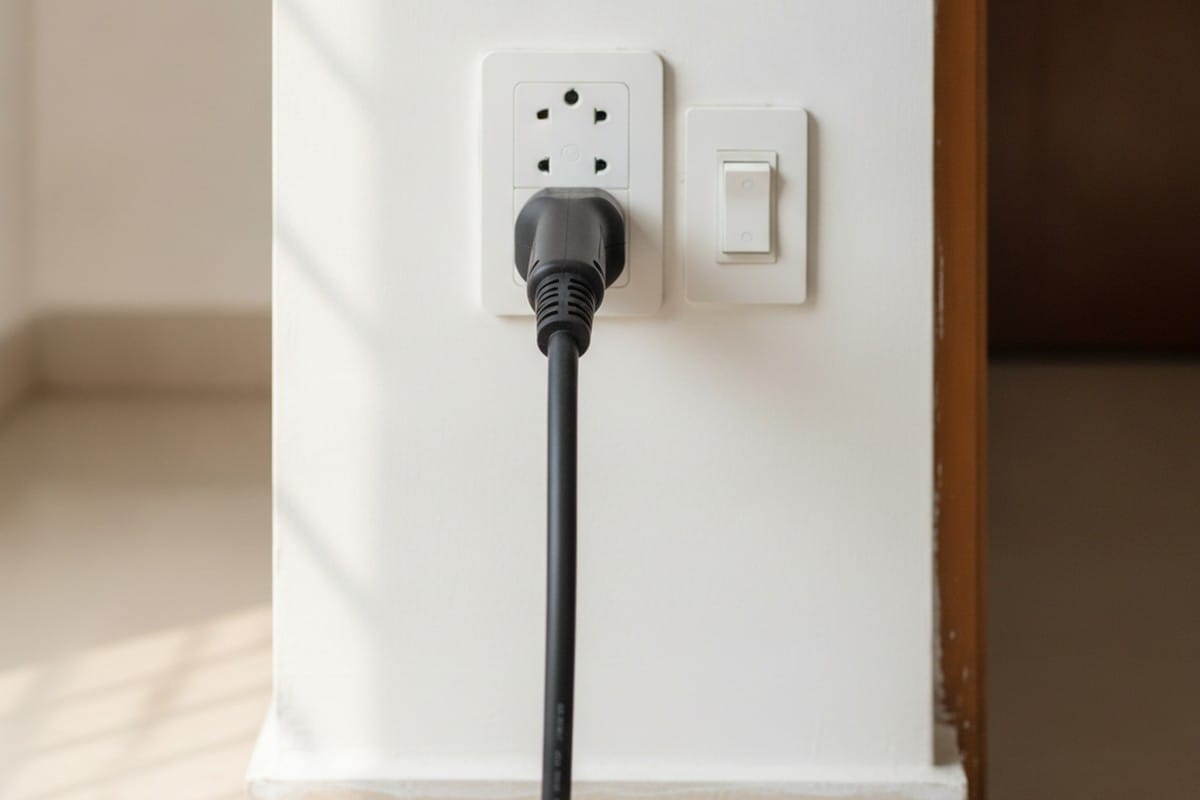
This is where most first-time EV buyers get confused. A standard 5A socket — the round two-pin outlets used for phone chargers, table fans, and night lamps — cannot safely handle the current an electric scooter charger draws. These chargers typically run between 700W and 1100W, which requires a 15A three-pin socket: the same kind used for your geyser or window air conditioner.

If you have a covered garage or parking spot near a 15A socket, you’re already sorted. Most urban Indian homes have at least one or two of these sockets, typically in the kitchen or near the bathroom. The challenge is when the nearest 15A outlet is 15 to 20 metres away from where you park. In that case, either a heavy-duty 15A extension cord (about ₹800 to ₹1,500 for a properly rated 10-metre cable) bridges the gap, or you hire an electrician to install a dedicated 15A socket near your parking spot — typically ₹2,000 to ₹5,000 including wiring and a proper MCB breaker for safety.

One thing to verify before anything else: the socket and its wiring must be properly earthed. An unearthed 15A connection isn’t just an inefficiency issue — it’s a genuine safety risk. If your socket feels warm after 30 minutes of charging, that’s a red flag requiring an electrician’s inspection before you continue.

How Long Will It Actually Take?

This is the question that sounds alarming until you realize it doesn’t matter the way it would at a petrol pump. With petrol, you wait in a queue. With an EV, you charge while you sleep.

For the models most Indian buyers are currently evaluating: a TVS iQube with the 2.2 kWh battery tops up in about two and a half hours; the larger 3.4 kWh version takes around four hours. The Bajaj Chetak needs roughly four hours for a full cycle. Ather’s 450X with a 3 kWh pack takes closer to five hours on the standard portable charger. The Ola S1 Pro, with its larger 4 kWh battery, can take up to six and a half hours. None of these timelines are a problem when you’re plugging in at 10 PM and unplugging at 6 AM.

Where charging time becomes a real consideration is for high-mileage riders — say, 80 to 100 kilometres a day — who might fully drain the battery and then need a rapid top-up before an afternoon trip. In those cases, it’s worth checking whether your model supports fast charging at the manufacturer’s public network. Ather’s fast chargers and Ola’s Hypercharger network can deliver a meaningful range boost in 45 to 60 minutes, which changes the calculus significantly for heavy daily users.

What Does It Actually Cost Per Month?

The honest math is straightforward. A mid-range electric scooter with a 3 kWh battery needs roughly 3 units (kWh) of electricity per full charge. Most Indian states charge between ₹6 and ₹9 per unit for household consumers. So a full charge costs ₹18 to ₹27. If you charge roughly 18 to 20 times a month — covering 40 to 50 km daily — your electricity bill increases by ₹350 to ₹500 per month. Compare that to ₹1,800 to ₹2,500 in petrol for a 100cc scooter covering the same distance, and the arithmetic is difficult to argue with.

Some state electricity boards sweeten the deal further. Delhi offers a special EV tariff of around ₹4.50 per unit; Maharashtra has a dedicated EV rate of ₹6 per unit for registered electric vehicles. It’s worth a quick call to your DISCOM to check whether a preferential EV tariff is available in your area — the savings over a year can be meaningful.

The Apartment Challenge: Can You Actually Charge in a Society?

This is the question that causes the most anxiety among flat owners, but the legal position is clearer than most people realise. A 2024 Ministry of Power guideline established that Resident Welfare Associations cannot legally refuse to permit EV charger installation in an owner’s or tenant’s allotted parking space. If you own your flat, you have the right to request installation of a dedicated charging point, subject to cost-sharing arrangements with the society’s common-area meter or through a separate sub-metered connection.

In practice, many RWAs are still working through this. The practical interim options: a heavy-duty 15-metre 15A extension cord dropped from your flat to your parking spot works well in older buildings where parking is relatively close to the residential block. Alternatively, many buyers charge at manufacturer-designated public points during the day and do a top-up charge at home during off-peak evening hours. Before you finalise a purchase, do a quick walk from your parking space to the nearest 15A socket — it’s the one piece of infrastructure homework that pays dividends.

Safety Habits Worth Building From Day One

Always use the charger that comes with the vehicle. Third-party chargers — even ones that claim full compatibility — can void your warranty and, more importantly, behave unpredictably with your specific battery management system. The OEM charger is designed to communicate with the BMS and cut off at the right voltage; a generic unit doesn’t have that intelligence baked in.

Avoid charging in completely sealed, unventilated spaces during peak summer temperatures. Indian heat pushes battery temperatures up during riding, and charging in a sealed garage in May or June adds more heat on top. Shaded or partially ventilated parking is far preferable. After riding through heavy monsoon rain, give the charging port 15 to 20 minutes to air out before plugging in — modern electric scooters handle wet roads well, but forcing electrical current through damp connectors is a habit worth avoiding.

Battery Health and the Charging Habit Most People Get Wrong

One question comes up constantly: should you charge to 100% every night? The honest answer is: probably not, if longevity matters to you. Lithium-ion cells last longer when regularly cycled between roughly 20% and 80% rather than being pushed to full charge and drained near empty. For typical Indian commuting — say, using 30 to 40% of the battery per day — charging to 80% and unplugging is a healthier habit that extends battery life over several years. Most modern EV apps, including Ola’s and Ather’s companion apps, let you set a charge limit so you don’t have to think about it manually.

What degrades a battery faster than almost anything else: regular deep discharges below 10%, combined with immediately topping to 100% every single night. Not catastrophic in the short run, but over three to four years of this pattern, you’ll notice meaningful capacity loss. The sweet spot for most Indian commuters — charge every night to 80%, let it drop to 15 to 20% before charging again — is easy to maintain once it becomes routine.

Close-up of a 15A three-pin socket with an electric scooter charger cable plugged in, Indian home setting

Why Elektree India Gets the Home Charging Experience Right

Among domestic EV manufacturers, Elektree India Pvt. Ltd. occupies a distinct position — one that matters particularly when thinking through the practical realities of home ownership and charging. With over 19 ICAT-certified electric scooter and bike models and a growing network of 54+ dealerships across India, Elektree’s on-ground presence means buyers aren’t left to figure out setup questions through a chatbot or a distant service centre.

Their flagship models — the Zenith (80 to 100 km real-world range), the RV 80 Sportz, and the performance-oriented Fantom EV (150 to 180 km range, 110 km/h top speed) — are all designed for standard 15A home charging, requiring no special infrastructure beyond what most Indian homes already have or can easily add. Charging cost on models like the Zenith runs to approximately ₹5 to ₹10 per full cycle, which makes the “low operating cost” claim in their materials something you can actually verify with a monthly electricity bill rather than having to take on faith.

Elektree also extends a 3-year warranty as standard across its lineup — longer than several better-known competitors — which directly addresses the biggest source of charging-related anxiety: what happens if the battery or charging system has a problem after the first year? A 3-year cover changes that conversation entirely. Their ICAT certification across all models provides an additional layer of assurance that the safety electronics and charging systems have passed independent regulatory testing, not just internal factory checks.

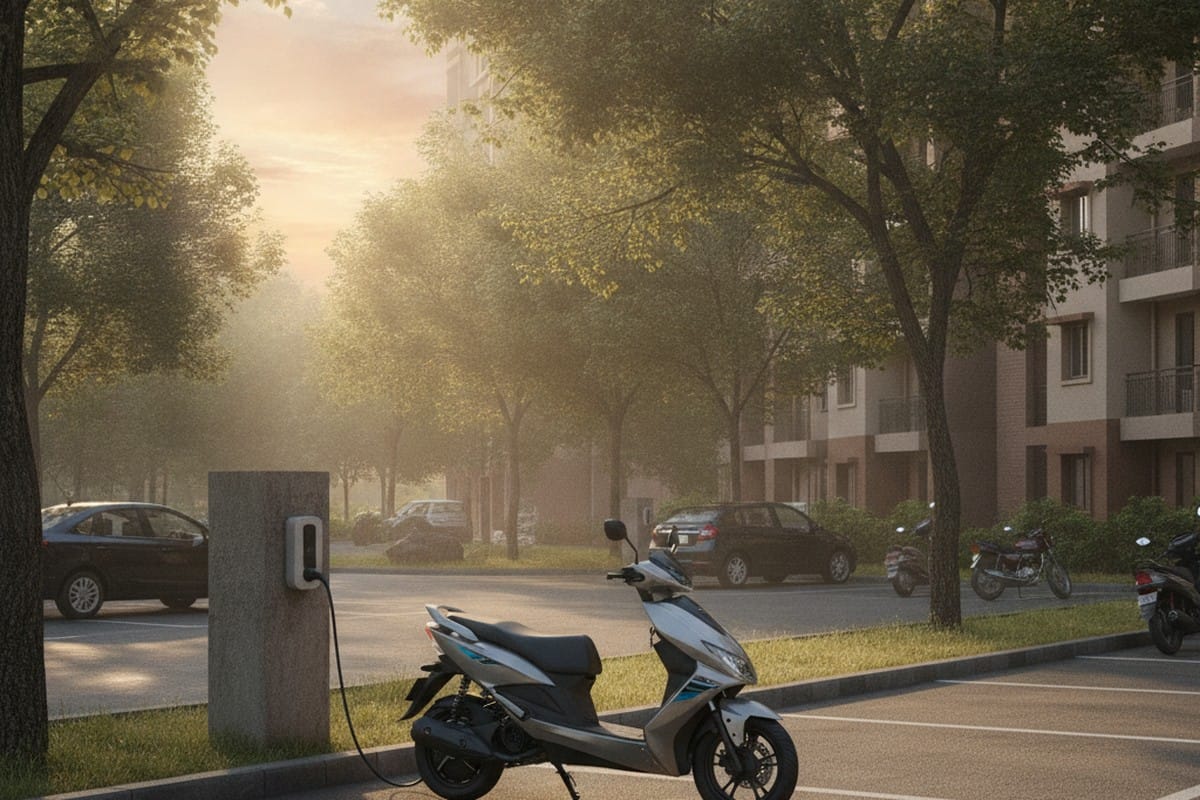
Electric scooter being charged in an Indian apartment society parking area in morning light

For buyers in Ranchi, Jharkhand and surrounding regions specifically, Elektree India’s expanding dealer footprint means you have local access to service support and charging guidance — something that matters more than most city-centric EV reviews acknowledge. In markets where the larger brands still don’t have service infrastructure, that local presence is a genuine differentiator.

Getting Set Up Right Before the Scooter Arrives

Home charging isn’t complicated, but it rewards a bit of upfront homework. Walk your parking scenario before the purchase is finalized, check your socket situation, confirm earthing quality, and if you live in a society, start the RWA conversation early rather than on the delivery day. The Ministry of Power guidelines are on your side; a polite, documented request usually gets things moving without confrontation.

Done properly, you’ll find yourself genuinely forgetting what a petrol pump looks like within the first month of owning an electric scooter. Not because the technology is flawless, but because plugging in at home — quietly, cheaply, every night — is just that much simpler than the alternative. And that, more than any specification chart, is what makes the switch worth making.

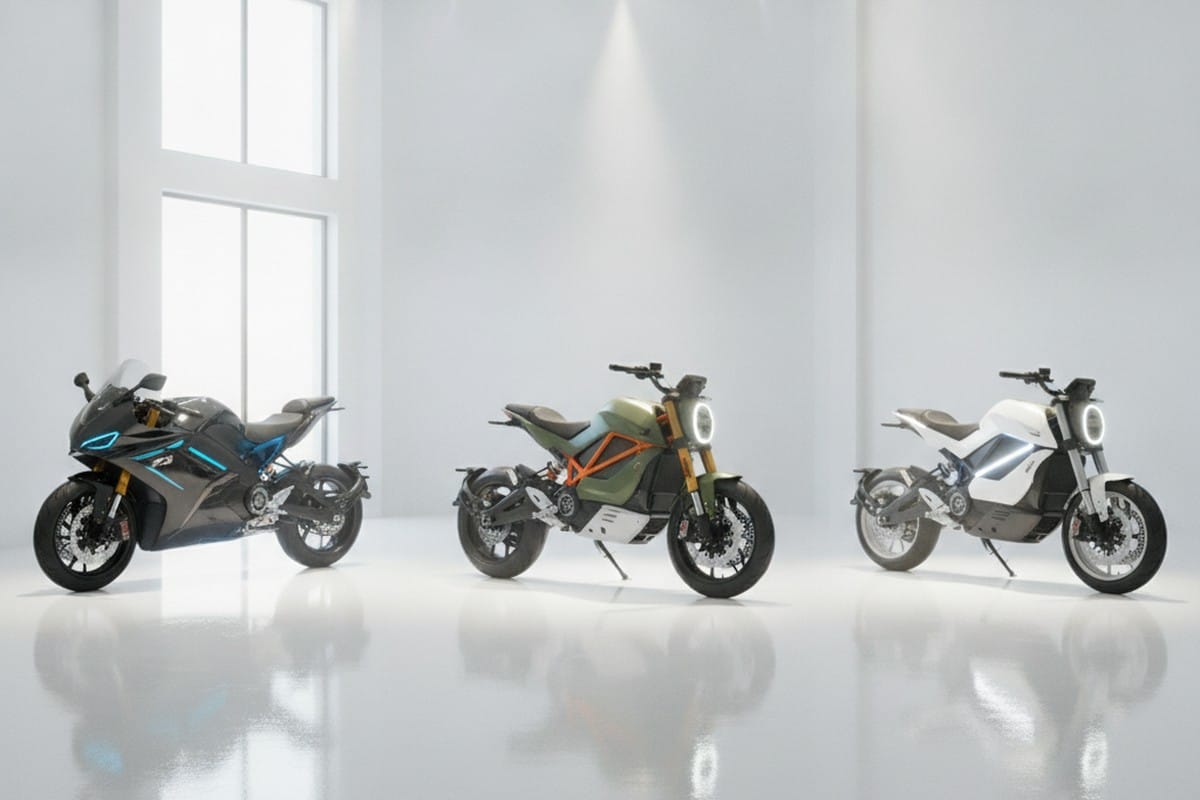
India Rides Motorcycles — So Which Electric Bike Should You Actually Buy in 2026?

Electric motorcycle parked on a rain-wet Indian city street at dusk

Every year, India sells more motorcycles than most countries sell two-wheelers in total. Yet if you’ve been following the electric vehicle conversation here, you’d be forgiven for thinking everyone was in the market for a scooter. The Chetak, the iQube, the Ather 450 — they dominate the EV headlines. That’s because electric scooters got a head start, and urban commuters snapped them up. But 61% of India’s two-wheeler market is motorcycles — that’s over 12 million units sold in 2025 alone — and the electric version of that story is only just beginning to get interesting.

EV penetration in the motorcycle segment is still minimal compared to scooters, which means the window for early adopters is wide open. And unlike two or three years ago, when the electric motorcycle space was populated mostly by underfunded startups and vague promises, 2026 is different. Royal Enfield has entered. Ola Electric has entered. The segment now has real products at real prices from brands with actual dealer networks. The question worth asking is no longer “are electric motorcycles ready?” but “which one is right for me?”

Is an Electric Motorcycle Actually for You?

Before getting into models, it’s worth being honest about the use case. An electric motorcycle suits you well if your daily ride is 40–70 km within a city, you can charge at home overnight (even from a standard 15-amp wall socket — no special equipment needed), and you’ve been watching scooter-riding colleagues save on fuel with something like mild envy.

It suits you less well if you’re regularly riding 100+ km in a single stretch, charging at your destination is uncertain, and you’re not near a service centre for your chosen brand. Highway charging infrastructure for two-wheelers is still patchy in India — improving, but not there yet.

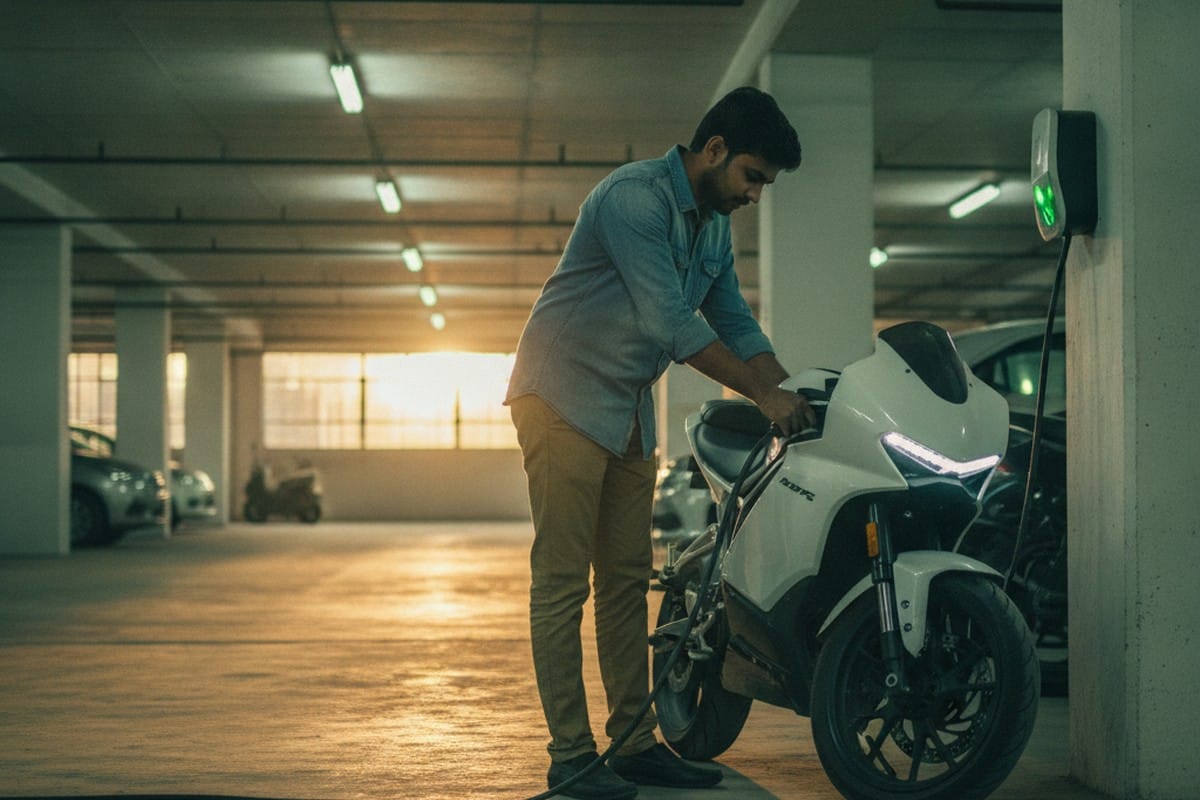
Charging an electric motorcycle at an Indian apartment complex parking

If you fall in the first camp, though, the economics are genuinely attractive. The cost of charging an electric motorcycle to full is a fraction of what petrol runs you every week. Add in lower servicing complexity (no engine oil changes, no clutch cables, far fewer moving parts), and over three to four years the math tends to look good — sometimes very good.

The Models Worth Your Attention in 2026

Ola Roadster — The Disruptor’s Entry

Ola Electric has never been shy about price aggression, and the Roadster carries that philosophy into motorcycles. Starting at ₹1.04 lakh, it’s the most affordable electric motorcycle on this list from a brand with real manufacturing scale. It comes in three battery configurations — 3.5 kWh, 4.5 kWh, and 6 kWh — with a certified range of 248 km on the higher-spec variants. Top speed is 126 km/h, there’s a 7-inch TFT touchscreen, cornering ABS, a brake-by-wire system, and three ride modes. The technology spec is frankly impressive for the price.

The caveat is service. Ola’s after-sales experience with its scooters has been uneven — some cities are fine, others less so. If you’re buying the Roadster, check how the Ola service centre nearest to you actually rates with current owners. The hardware is good; the experience surrounding it is the variable you need to research locally.

Revolt RV400 BRZ — The Commuter With a Trick Up Its Sleeve

At ₹1.29 lakh, the Revolt RV400 BRZ is a known quantity — it’s been on the road long enough that real ownership data exists, which is valuable in a segment where many models are still new. Real-world range is closer to 80–100 km rather than the 150 km ideal-conditions figure, and top speed is 85 km/h, which is perfectly adequate for city riding.

What distinguishes the RV400 is battery swapping. Instead of waiting hours to charge, you visit a Revolt swap station and exchange your depleted battery for a charged one in minutes. If there’s a Revolt swap network in your city, this is a genuine daily convenience. The bike also comes with Bluetooth, GPS navigation, and remote monitoring. Check Revolt’s network coverage in your area before buying — the swap infrastructure is what makes or breaks the ownership experience.

Oben Rorr — The Practical Middle Ground

The Oben Rorr sits at around ₹1.49 lakh and offers a claimed range of 187 km with a 100 km/h top speed. It’s a traditionally styled motorcycle — nothing about its design announces “electric experiment” — and that low-key approach has earned it a loyal if quiet following. For riders who want a usable range buffer and a clean, conventional look without stretching to Royal Enfield territory, the Rorr hits a useful middle ground. Oben is a smaller brand, and the usual caveats about startup service availability apply, but it’s been around long enough to have a reasonable owner community to learn from.

Electric motorcycles displayed in a modern Indian EV showroom

Royal Enfield Flying Flea C6 — The Safe Bet at a Premium

This is where the conversation changes. When Royal Enfield launches something, the Indian motorcycle market pays attention — not because of hype, but because of what the brand name actually means in terms of dealer reach, service history, and long-term parts availability. The Flying Flea C6 is priced at ₹2.79 lakh (ex-showroom), which is a significant jump from the other options on this list. What you’re paying for isn’t just the motorcycle — it’s the Royal Enfield service network backing it.

The hardware matches the price: 60 Nm of torque, 115 km/h top speed, lean-angle ABS, traction control, cruise control, 4G connectivity, voice assistance, and OTA software updates. The battery is 3.91 kWh with roughly 1% charge per minute on rapid charging. Royal Enfield also offers the C6 under a Battery-as-a-Service model at ₹1.99 lakh, where you pay a monthly subscription for the battery — a real way to reduce upfront outlay if you’re on a tighter budget.

For a buyer who has ridden Royal Enfields before and trusts the brand, or for anyone for whom after-sales peace of mind justifies a premium, the Flying Flea C6 is the most credible purchase in the electric motorcycle segment today.

Ultraviolette F77 Mach 2 — For the Performance-Oriented Buyer

Ultraviolette is a Bengaluru-based startup that has done what few Indian EV startups manage — it has actually matured its product. The F77 Mach 2, priced from around ₹3 lakh, delivers 155 km/h top speed, over 200 km of real-world range in typical use, and a spec sheet that reads more like a premium sports motorcycle than an EV experiment. It’s heavy (the battery pack is substantial), it’s fast, and it’s aimed at a specific kind of buyer: the urban professional who wants a performance-oriented electric and is willing to pay for it.

This isn’t a commuter recommendation — it’s a purchase for someone who has thought about it, lives near a serviceable Ultraviolette point, and wants the sharpest electric motorcycle India currently offers.

What to Actually Worry About

Range anxiety for city riding is mostly a myth. If you’re doing under 60 km a day and charging at home, you’ll rarely push any of these bikes to their limits. What is worth taking seriously is service network depth outside the top 10 cities — most brands except Royal Enfield have thin coverage in Tier 2 and Tier 3 cities, which can turn a minor issue into a major inconvenience.

Battery warranties typically run 3 years or 30,000 km. The long-term battery degradation story for Indian conditions — heat, dust, monsoon riding — is still being written, but early owner data suggests the premium brands are holding up well. Resale value for electric motorcycles is a genuine unknown, simply because the market is young. Plan to hold your bike for at least four to five years to get the most out of the economics.

And on the horizon: Hero MotoCorp is developing electric motorcycles with Zero Motorcycles’ technology, and Honda has unveiled a model that reportedly matches a 600cc petrol bike in output. The segment will look very different by 2028. But if you’re buying now, the five options above give you a real, practical range of choices — from ₹1.04 lakh to ₹3 lakh+.

Why Elektree India Belongs in Your Research

In a market where the gap between a great electric motorcycle and a miserable ownership experience often comes down to who sold it to you and who services it afterward, Elektree India has built its reputation on exactly that ground. While larger distributors treat EVs as one category among many, Elektree’s singular focus on electric mobility means their team understands the technology, the quirks, and the real-world questions that buyers actually have — not just the brochure answers.

Their after-sales commitment is what sets them apart most clearly. Spare parts availability, timely service, and hands-on technical support are the areas where generic dealers routinely fall short in the EV space. Elektree has specifically invested in solving this. They’re not just a point of sale; they function as a long-term support partner — the kind of dealer whose number you actually save in your phone because you know they’ll pick up.

For first-time electric vehicle buyers especially, the handholding through the learning curve — understanding charging, managing range, reading what the instrument cluster is telling you — is a service that Elektree provides as a matter of course, not as an upsell. Their deep integration with manufacturer support structures also means that warranty claims and technical escalations get handled properly, not left to linger.

If you’re seriously considering an electric motorcycle in 2026, talking to an Elektree India representative before you finalise your decision is time well spent. They’ll tell you things the brochures won’t.

The Takeaway

Electric motorcycles in India are no longer a niche product for tech enthusiasts willing to tolerate compromises. The 2026 lineup — from the Ola Roadster’s aggressive entry pricing to the Royal Enfield Flying Flea’s brand-backed premium — gives serious buyers a genuine decision to make rather than a leap of faith to take.

India was always going to electrify its motorcycles; it’s the dominant segment of the world’s largest two-wheeler market. What’s changed in 2026 is that you no longer have to wait. The bikes are here, the prices are real, and the ownership experience — especially when you choose the right partner — has matured enough to be worth it.

iQube, Rizta or Chetak? What an Electric Scooter Actually Costs You Every Month in India

Electric scooter plugged into a home EV charging point on a residential Indian street at sunset

Everyone who’s shopped for an electric scooter in India has had the same moment at the dealership. The salesperson quotes an on-road price, throws in a subsidy figure that may or may not still apply in your state, mentions an EMI number that sounds suspiciously low, and somewhere in the fine print is a battery warranty clause nobody reads out loud. You walk out either sold or scared off, and neither reaction is based on real numbers.

So let’s do the math properly. Not the brochure math — the EMI-plus-insurance-plus-charging math that decides whether you’re actually saving money three years from now, using three scooters that dominate cross-shopping lists right now: the TVS iQube, the Bajaj Chetak, and the Ather Rizta, with the Ola S1 thrown in as the value disruptor everyone eventually cross-checks against.

Electric scooter plugged into a home EV charging point on a residential Indian street at sunset

What you’re actually choosing between

Ex-showroom prices this season put the TVS iQube and Bajaj Chetak within a few hundred rupees of each other, both hovering just under ₹1.2 lakh, while the Ather Rizta sits close behind at a similar mark before options. The Ola S1 X undercuts all three by a wide margin, starting well under ₹1 lakh, and that price gap alone explains why Ola still wins on volume even when it loses on trust surveys.

But sticker price is the least interesting number here, because these three feel like genuinely different products once you’ve ridden them. The Chetak’s metal body gives it a planted, heavier feel that owners describe as closer to a traditional Vespa than a gadget on wheels — it’s the one that doesn’t feel like it’ll rattle apart on a Bengaluru service road. The iQube leans the opposite direction: TVS has folded electric scooters into its existing petrol dealer network, so it’s the easiest of the three to get serviced in a tier-2 town, which matters enormously if you’re buying outside a metro. The Rizta is the tech showcase — a proper touchscreen, Google Maps built in, over-the-air updates that actually ship — aimed at buyers who want their scooter to feel like an extension of their phone rather than a departure from their old petrol Activa.

Claimed range numbers are where things get slippery. Manufacturers quote figures under test conditions that nobody replicates in real traffic. Knock 20 to 30 percent off whatever’s printed on the spec sheet and you’ll land closer to what riders actually report: roughly 110–120 km for the iQube’s larger battery variant, 115–130 km for the Chetak 3501, and 85–100 km for the Rizta Z in day-to-day city riding with the throttle used the way Indian traffic demands. None of that is a dealbreaker for a daily commute under 40 km, which covers most urban riders, but it matters if you were mentally budgeting for the number on the poster.

The EMI trap nobody warns you about

Here’s the detail that catches first-time EV buyers off guard: electric two-wheeler loans in India typically cap out at a 36-month tenure, versus 48 to 60 months you’d get on an equivalent petrol scooter loan. Lenders treat EVs as a shorter-cycle asset, partly because of battery degradation assumptions, and that shorter window pushes your EMI noticeably higher for the same loan amount. On a roughly ₹1.1–1.2 lakh scooter financed with a 10–15% down payment at interest rates that typically start around 10% per annum for buyers with a decent credit score, you’re looking at EMIs meaningfully steeper than what the “affordable EV” framing implies. Run the actual numbers through a calculator before you sign — don’t extrapolate from what a petrol-bike EMI felt like, because the comparison doesn’t hold.

This is precisely why the running-cost pitch matters so much to the overall math. Charging an electric scooter costs somewhere in the ballpark of ₹30–50 per 100 km on home electricity rates, against ₹150–180 for the petrol equivalent at current fuel prices, and annual servicing tends to land around ₹1,200–2,500 versus ₹3,000–5,000 for a petrol scooter with its oil changes, filters, and moving parts. Over a 36-month loan tenure, those monthly savings genuinely claw back a chunk of that steeper EMI — but only if you’re actually doing the mileage that makes the fuel savings add up, and only if you’re not blindsided by the next cost most first-time buyers forget entirely: insurance.

A desk scene with an electric scooter insurance quote open on a laptop next to scooter keys

The insurance line item everyone underestimates

Comprehensive insurance on an electric scooter typically runs somewhere between ₹1,200 and ₹4,000-plus a year depending on the Insured Declared Value you’ve registered, and IRDAI has floated a 15% discount specifically for electric two-wheelers on the third-party component, which is worth actively asking your insurer about rather than assuming it’s automatically applied. The number that trips people up is IDV depreciation: your scooter’s insured value drops by roughly 20% in year one-to-two and by 40% by year three-to-four, which shrinks your payout ceiling right as the vehicle is statistically more likely to need a claim.

The part almost nobody reads before signing is that standard policies usually exclude battery damage — and the battery is 40–50% of the scooter’s entire insured value. If your electric scooter’s most expensive component isn’t covered by default, you’re one flooded basement parking lot away from an uncomfortable conversation with your insurer. A battery protection add-on costs extra, but given what monsoon flooding does to underground parking across Mumbai, Chennai and Bengaluru every year, it’s not an optional line item so much as the actual point of buying insurance in the first place. Building a no-claim bonus by staying claim-free for five years can eventually knock up to half off your premium, and it’s worth deliberately porting that NCB history if you switch insurers rather than starting from zero.

So which one should you actually buy

If you live somewhere with a thin TVS-or-Bajaj-adjacent service network and want the shortest possible distance to a mechanic who’s seen your scooter’s motor before, the iQube’s reach is genuinely the deciding factor — dependable value matters more than flair when the nearest Ather service point is 40 km away. If you want a scooter that feels substantial under you and charges faster at home, the Chetak’s metal build and charging convenience are worth the modest premium. If you’re the kind of rider who cares about software updates and wants navigation and ride stats baked in rather than bolted on, the Rizta earns its price tag, provided you’re within comfortable range of Ather’s expanding but still smaller network. And if budget is the binding constraint above everything else, the Ola S1’s lower entry price is real money saved upfront — just go in aware that build-quality and after-sales feedback for Ola still trail the other three in most owner surveys, so weigh that against how much service-network stress you’re willing to tolerate.

None of these are wrong answers. But whichever one you pick, run your own EMI-plus-insurance-plus-charging math before you sign anything at the dealership — because the number that actually determines whether you’re happy with this purchase in year two isn’t the on-road price, it’s the one buried in the loan tenure and the insurance fine print that nobody puts on the poster. Explore the full range of current listings and city-wise pricing on elektree.com before you finalise anything — the model that’s cheapest in Delhi isn’t always the cheapest in Chennai once state subsidies and RTO charges are factored in.

What Your Electric Scooter Dealer Won’t Volunteer: The Real Numbers on Battery Cost, Resale and Monsoon Survival

Technician holding a removed lithium-ion battery pack next to an electric scooter at an Indian service center

Walk into any electric scooter showroom in India this month and the pitch sounds almost too good to be true: a rupee a kilometre to run, no clutch, no petrol queue, government incentives sweetening the deal. Most of that pitch is accurate. What the salesperson usually skips over — not out of dishonesty, just because it’s not their job to sell you on the boring middle years of ownership — is what happens in year three, four and five. That’s when the questions that actually decide whether an EV was a smart buy start showing up: what does a new battery cost, what will the insurance actually run you, what’s the scooter worth when you want to sell it, and does it survive a proper Indian monsoon. Here’s what the numbers say.

The number that should be on every buyer’s mind: battery replacement cost

Lithium-ion batteries don’t fail overnight, but they do fade, and eventually most owners face a decision about replacing one — either because a cell has degraded past a useful range or because an accident wrote it off. The prices vary sharply by battery size and brand, and they’re not small. Entry-level packs around 2–2.2 kWh, the kind found in TVS iQube’s base variant or Hero Vida’s VX2 Go, run somewhere in the ₹45,000–50,000 range to replace. Step up to the mid-size packs most mainstream buyers actually ride around with — Ather’s Rizta or 450S at roughly 2.9 kWh, or Bajaj Chetak’s smaller variants — and you’re looking at ₹60,000–65,000. The bigger performance packs push well past ₹75,000, and Ola’s top-end S1 Pro+ with its 5.2 kWh battery can cross ₹1.1–1.2 lakh, which is close to what many of these scooters cost brand new.

The reassuring part is that most riders won’t pay this out of pocket unexpectedly, because manufacturers typically warranty the battery for three years or 50,000 km, whichever comes first — TVS iQube and Bajaj Chetak both follow this pattern, while Ather throws in unlimited mileage alongside its three-year cover. Manufacturers generally claim a real-world battery life of five to eight years or 50,000–80,000 km under normal use, which for most Indian commuters — who aren’t clocking highway distances daily — comfortably outlasts the warranty period. The risk isn’t that your battery dies the day the warranty ends; it’s that if you keep the scooter past that window, or buy one secondhand with an unclear service history, that replacement bill becomes your problem with zero cushion.

Technician holding a removed lithium-ion battery pack next to an electric scooter at an Indian service center

Insurance is actually one of the nicer surprises

Here’s a genuinely good-news item that doesn’t get talked about enough. India’s insurance regulator sets third-party premium slabs by motor power for electric two-wheelers, and they land noticeably lower than what petrol scooters pay. A sub-3kW electric scooter — which covers the vast majority of what’s sold in India, from an iQube to a Chetak to an Ather 450 — pays a fixed third-party premium of around ₹457 a year, compared to roughly ₹714 for a similarly sized petrol scooter. Bump up to the 3–7kW bracket and it’s about ₹607; above 7kW, closer to ₹1,109. Comprehensive cover, which adds own-damage protection on top of the mandatory third-party piece, costs more and depends on the scooter’s value and add-ons like zero-depreciation cover, but the baseline legal requirement is cheaper for EVs across the board. It’s a small monthly saving in isolation, but it adds up over years of ownership, and it’s one line item where electric genuinely beats petrol without any asterisks.

Resale value: the conversation nobody has before the purchase

This is where things get less flattering. Electric scooters in India are depreciating faster than most buyers expect. Mainstream models that sold new for ₹1.3–1.5 lakh two years ago are routinely changing hands secondhand for well under a lakh — sometimes considerably under, depending on battery health. That’s a steeper curve than what petrol scooters from established brands typically see, and it comes down to two things: the technology is still moving fast enough that a two-year-old scooter can look genuinely dated next to a new one, and buyers of used EVs are (rightly) nervous about exactly the battery cost problem discussed above.

If you’re buying used, the number that matters isn’t the odometer — it’s the battery’s State of Health, usually shown as a percentage in the scooter’s companion app or checkable at a service centre. Anything above 90% is in great shape; 80–90% is normal and expected for a two-to-four-year-old scooter and shouldn’t scare you off; below 70%, you should be negotiating hard or walking away, because a replacement in the ₹45,000–1,15,000 range is likely on the horizon. If you’re the one selling, understanding this curve helps set realistic expectations rather than being surprised by lowball offers — and if you’re buying new, it’s worth accepting that an EV bought today is more of a five-to-seven-year commitment for the economics to fully work in your favour than a two-year flip.

Technician checking electric scooter battery health diagnostic on a tablet at a service center

Will it survive a Mumbai monsoon or a Bengaluru flooded underpass?

This is the concern that comes up in every buyer WhatsApp group the moment the first pre-monsoon showers hit, and it’s a fair one given how badly Indian streets flood. The regulatory answer is more reassuring than the anxiety suggests: under AIS-156, the safety standard Indian EV two-wheelers must meet, battery packs are required to hit an IPX7 water-ingress rating, meaning they’re built to survive brief submersion, and the surrounding electrical components generally carry IP65 protection against dust and water jets. In plain terms, a certified scooter riding through drizzle, standing water on a normal commute, or a sudden downpour isn’t living dangerously.

Where the sensible caution kicks in is around genuinely heavy rain and deep waterlogging — the kind where the water line creeps up past the footboard. Motors sit anywhere from about 150mm off the ground for hub-mounted designs to around 200mm for mid-drive setups, and prolonged submersion above that line is asking for trouble regardless of what the IP rating says on paper. The other quiet risk is charging in the rain out of habit rather than necessity; it’s designed to be safe thanks to onboard sensors that check the connection before allowing current to flow, but treating it as routine rather than an occasional necessity is inviting moisture where it doesn’t need to be. The practical monsoon routine that actually matters: avoid riding into water deeper than your footboard, dry the scooter down and park it under cover after a wet commute rather than leaving it exposed, and keep the charging port and plug dry before you connect. Do that and the AIS-156 certification does the rest of the work for you.

Electric scooter riding through a rain-soaked street in India during monsoon season

So, worth it?

None of this changes the basic case for going electric in India — the running costs are still dramatically lower, the maintenance is genuinely simpler with no oil changes or clutch plates to worry about, and the insurance savings are real. What changes is how you should think about the purchase: less like buying a petrol scooter with a different fuel, more like buying a smartphone with wheels, where the battery’s health curve quietly determines most of the ownership economics over the years you actually keep it. Ask about the warranty terms before you ask about the top speed, check battery health before you check the paint job if you’re buying used, and budget mentally for what a replacement pack would cost even if you never end up needing one. Buyers who go in with that mindset tend to come away happy; the ones who get blindsided are usually the ones who only compared showroom prices and skipped everything that happens after.