Buying an Electric Scooter in India? Here’s What Nobody Tells You About Resale Value — And the Real Numbers That Should Change How You Shop
When most Indian buyers sit down to compare electric scooters, they end up in a familiar loop: range, top speed, charging time, colour options, which app does what. All valid questions. But there’s one question almost nobody asks at the showroom — and it’s the one that could quietly cost them ₹40,000 to ₹80,000 over a three-year ownership cycle.
What will my electric scooter actually be worth when I want to sell it?
This isn’t a hypothetical concern. India’s used EV market has grown rapidly over the past two years, and what buyers are discovering there is sobering: electric scooters lose value significantly faster than petrol vehicles, and the reasons are specific enough that buyers who understand them upfront can make dramatically smarter purchasing decisions.
Why Electric Scooters Depreciate Differently
A well-maintained petrol scooter — a Honda Activa, say, or a Suzuki Access — typically retains 60–70% of its value after three years, assuming normal usage. The engine, frame, and mechanical components are well understood, easy to assess, and cheap to maintain. A buyer inspecting a 3-year-old petrol scooter can make a reasonably confident judgment about what they’re getting.
Electric scooters don’t work the same way. According to industry analysis from EV market platforms tracking Indian resale data, well-established brands see depreciation of 50–60% over three years. For newer or less-established brands, the numbers are worse: 65–75% in the same period. That gap versus petrol scooters isn’t because the electric drivetrain is inherently unreliable — it’s because of the battery.
Here’s the fundamental issue. The lithium-ion battery pack in an electric scooter represents 35–45% of the vehicle’s total cost. Unlike a petrol engine, whose wear is largely visible and predictable, a battery’s health depends on how many charge cycles it has been through, how it was charged (fast or slow, third-party or OEM charger), whether it was kept in extreme heat, and whether the battery management system is functioning correctly. A used-scooter buyer cannot easily assess any of this from a test ride.
This uncertainty makes buyers demand a price discount — sometimes a steep one — to compensate for what they can’t verify. It also means that the resale value of an electric scooter varies enormously based on factors that go well beyond simple age or kilometre count.
What Actually Determines Resale Value
Battery health is the single most important variable. Researchers and resale platforms use a measure called State of Health (SoH) — the percentage of the original battery capacity that remains. Above 90% SoH is considered excellent and typical for vehicles under two years old. Between 80–90% is normal for a 2–4 year old vehicle, though the rider will notice some range reduction. Anything below 80% starts to significantly erode buyer confidence, and below 70%, most OEMs would consider a battery replacement.
A 2025 survey found that 73% of prospective used-EV buyers said they would only consider a second-hand electric scooter if the battery had a minimum of three years of warranty remaining, or came with a certified SoH report. That tells you everything about how the market currently values these vehicles.
Second, warranty transferability. This is something most buyers never think to ask at the point of new purchase, but it shapes resale outcomes dramatically. When a manufacturer allows the remaining warranty to transfer to a second owner, the used scooter commands a meaningful premium — the new buyer isn’t just buying a vehicle, they’re buying continuing coverage. Manufacturers that don’t support transferable warranties put their buyers at a disadvantage when it’s time to sell.
Third, the brand’s service network. A used electric scooter from a brand with limited dealer presence or uncertain long-term support creates anxiety for secondary buyers. Parts availability, software updates, and battery replacement options all factor into whether a buyer feels confident purchasing a scooter from that particular manufacturer. The broader and more stable the service network, the more confidence a used buyer has — and the higher the price they’re willing to pay.
The Numbers Buyers Should Do Before They Sign
Here’s a calculation that rarely appears in showroom conversations but deserves to. Consider two buyers purchasing electric scooters at different price points:
Buyer A spends ₹1.45 lakh on-road for a high-profile branded scooter. Buyer B spends ₹94,000 on a well-built scooter with ICAT certification, a solid warranty, and an established dealer network. Both scooters depreciate at the standard 55% over three years — a reasonable average for vehicles from reputable manufacturers.
After three years, Buyer A’s scooter is worth approximately ₹65,250. They’ve absorbed ₹79,750 in depreciation. Buyer B’s scooter is worth approximately ₹42,300, having absorbed ₹51,700 in depreciation. Even at the same depreciation rate, the buyer of the less expensive, equally certified vehicle has spent nearly ₹28,000 less over the ownership period — before accounting for lower insurance premiums, lower financing cost, and identical running costs.
This is the math that showrooms don’t run through with you. But it’s the math that actually shapes how much owning an electric scooter costs over time.
What Should Indian Buyers Actually Look For?
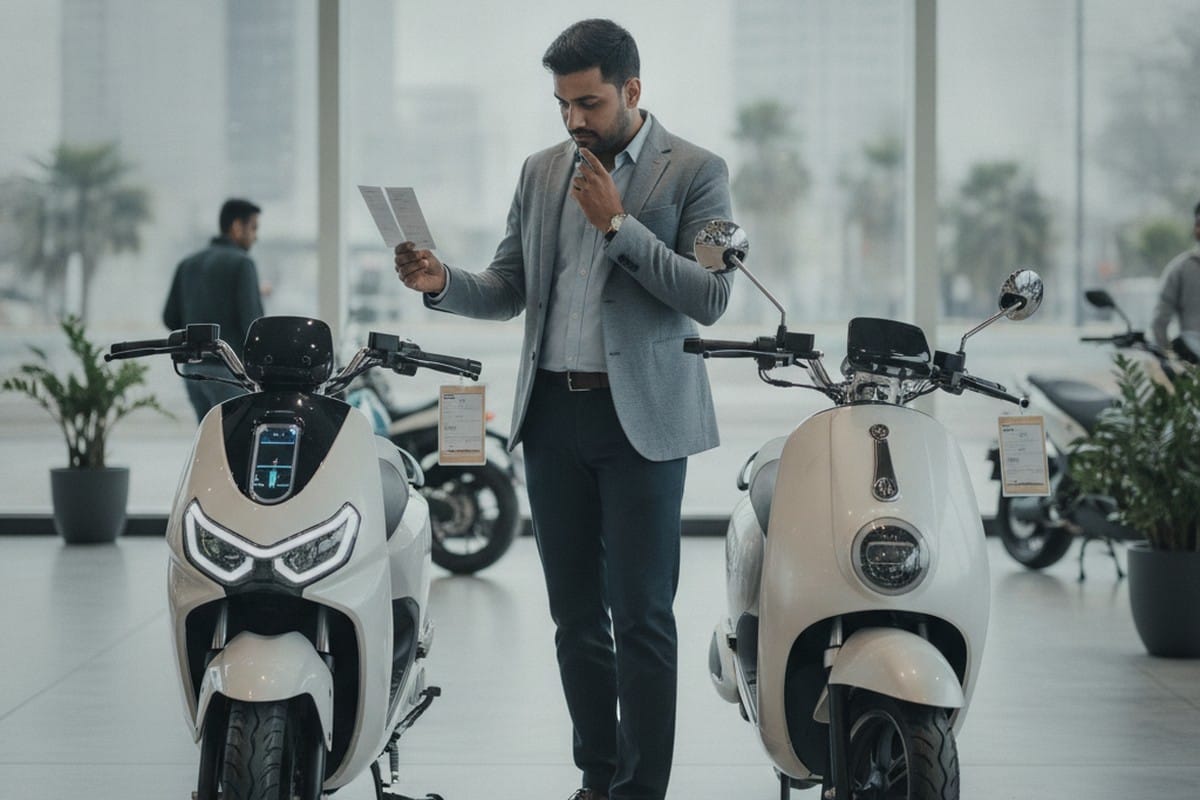
Before signing anything, ask these questions. Does the manufacturer have a formal battery warranty — and is it transferable to the next owner? Does the company have an established dealer and service network you can physically visit, or is it primarily an online-first brand with limited physical presence? Is the scooter ICAT certified, confirming it meets government testing standards? And importantly — how long has this company been in the Indian EV market?
These aren’t abstract questions. Each one directly affects what you’ll get back when you eventually sell.
Why Elektree India Merits Serious Consideration in This Conversation
Elektree India has been operating in the Indian EV space for over five years — long enough to have navigated the industry’s early turbulence and maintained an active presence. Their scooter lineup carries ICAT certification across 19+ models, which matters because it means independent government testing has validated the vehicles’ performance and safety claims. That certification follows the scooter through its life and gives secondary buyers a baseline of confidence that non-certified vehicles simply cannot offer.
On warranty, Elektree offers a three-year coverage on their scooters — in line with the established players in the market. Their main lineup, including the Zenith and RV 80 Sportz, is priced from approximately ₹90,000 to ₹94,000 on-road, with the entry-level Wheels available from around ₹83,000. These prices matter for the depreciation math: when you spend less to acquire the vehicle, you lose less in absolute rupees when you eventually sell it, even at the same percentage depreciation rate as a more expensive scooter.
Critically, Elektree operates through 54+ dealers spread across India, from major metros to smaller cities. This network breadth matters both during ownership — for servicing and maintenance — and at resale time, because potential buyers know they can find support regardless of which city they’re in. A scooter backed by an accessible service network is simply easier to sell than one whose nearest service point requires a significant detour.
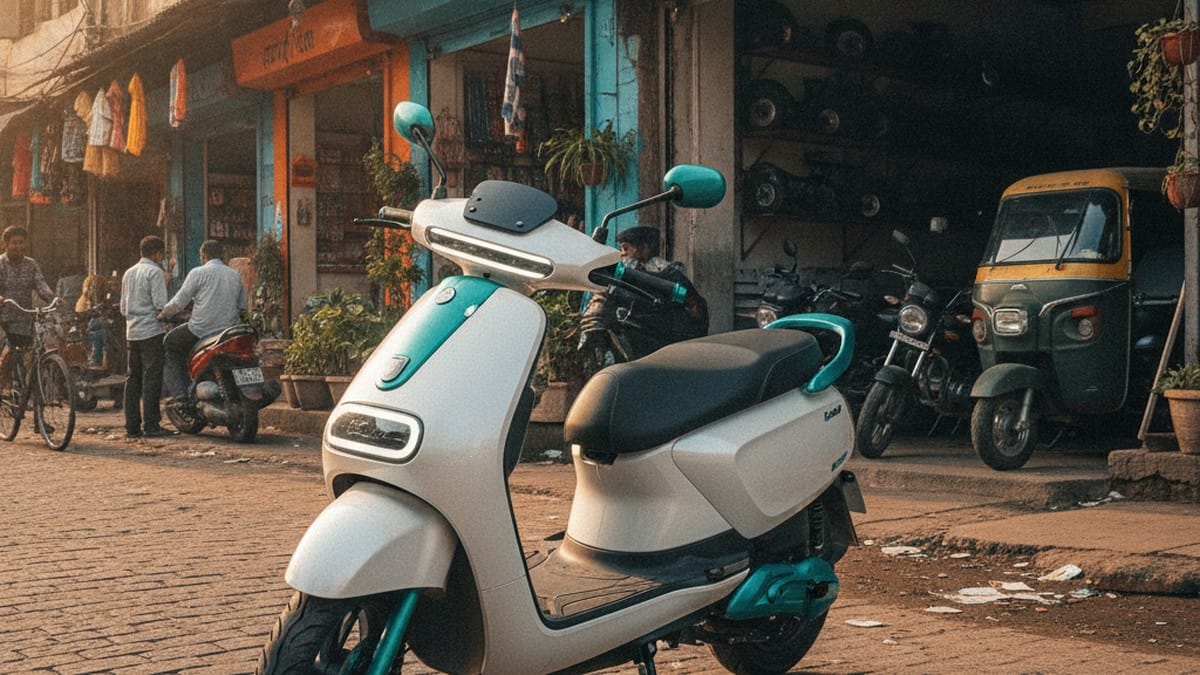
Elektree also manufactures its own battery packs in-house, which has implications that extend beyond the initial purchase. Proprietary battery manufacturing means the company maintains deeper knowledge of and control over its battery technology — an advantage when it comes to long-term support, replacement availability, and the ability to provide battery health assessments that buyers or resellers might need years down the road.
The Bottom Line for Indian EV Buyers in 2026
Resale value shouldn’t be the only factor in your electric scooter purchase — but it absolutely should be a factor. In a market where EVs can lose 50–60% of their value over three years, the gap between a well-chosen purchase and a poorly-researched one can be measured in tens of thousands of rupees.
The buyers who come out ahead are the ones who treat this like a long-term financial decision — not just a feature comparison. They look for ICAT certification as a baseline of credibility. They ask about warranty terms and transferability. They check whether the service network will still be accessible three years from now, in their city, when they’re trying to sell. And they think carefully about the absolute cost of depreciation, not just the sticker price.
Elektree India’s combination of competitive pricing, certified models, a three-year warranty, in-house battery technology, and 54+ dealer touchpoints makes a credible case in exactly this framework. You’re not just buying a scooter — you’re buying a vehicle that will have a second-hand life, and the terms of that life depend heavily on decisions made at the point of first purchase.
For buyers who want to get the full picture before committing — including model specifications, pricing, and dealer locations — Elektree’s lineup is worth exploring at elektree.com.