Walk into an electric scooter showroom and the conversation will reliably orbit three things: the range claim on the brochure, the monthly EMI, and how much you stand to save on petrol. All reasonable. But there is one question almost nobody asks — not the salesperson, not the brochure, and not most comparison articles — and it could easily be worth ₹30,000 to ₹50,000 to you personally.
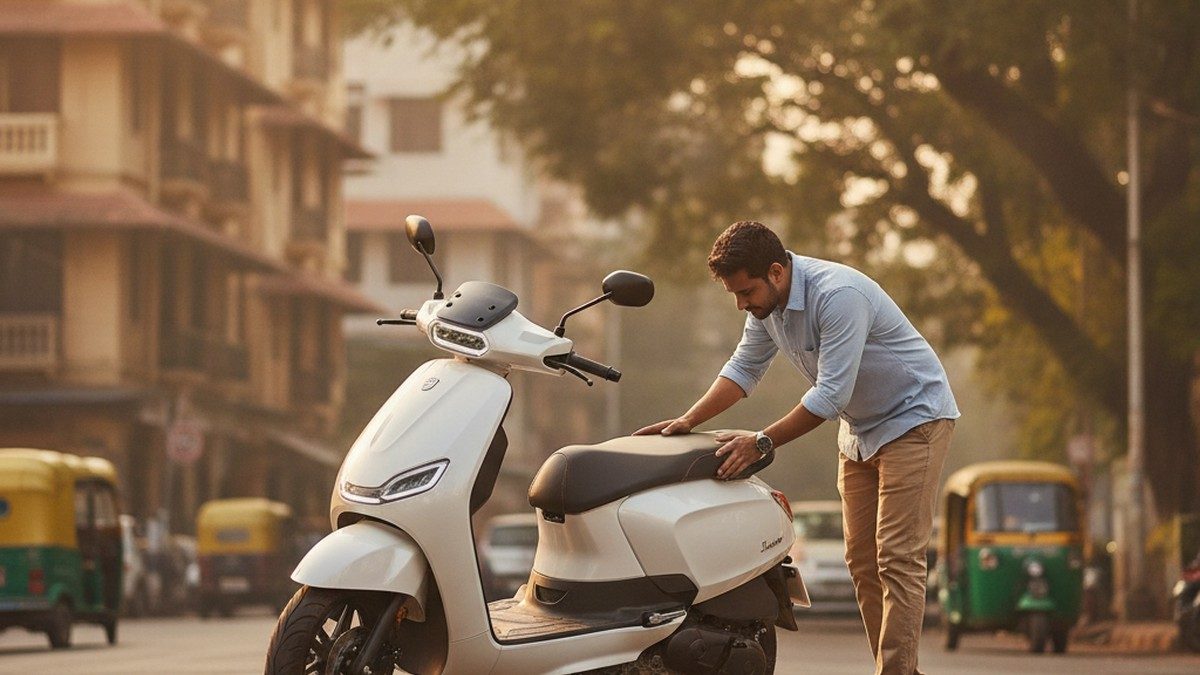
What will your electric scooter actually be worth when you need to sell it?
For most Indian buyers, this is not a hypothetical. The typical scooter ownership cycle runs three to five years. After that, people upgrade, relocate, pass the scooter to a family member, or simply want something newer. The resale value at that point is the final accounting of whether your EV purchase made genuine financial sense. In 2026, it is a calculation that a significant number of electric scooter owners are discovering too late.
The Depreciation Gap Is Larger Than Most People Realise
Here is what the data from India’s used EV market shows. Petrol scooters have historically held 60 to 70 percent of their purchase value after three years of regular use. Electric scooters, on the other hand, tell a considerably different story. Established EV brands in India retain roughly 35 to 50 percent of original value after three years. Lesser-known brands — particularly those with limited service networks or short warranty coverage — can drop to just 25 to 35 percent of their purchase price.
Concrete numbers make this clearer. An electric scooter bought for ₹1,00,000 that depreciates 55 percent over three years fetches around ₹45,000. A similarly priced petrol scooter holding 65 percent returns ₹65,000. That ₹20,000 gap is just the base case — for scooters in the ₹80,000 to ₹1,20,000 bracket, the real-world difference between a value-retaining brand and a poor one can stretch well past ₹40,000. Folded into your total cost of ownership, the picture shifts substantially.
The Battery Is the Single Biggest Factor
The reason electric scooters depreciate faster comes down, almost entirely, to one component: the battery pack.
The battery accounts for approximately 35 to 45 percent of an electric scooter’s total cost. When a prospective buyer looks at a three-year-old EV, they know the battery has been through hundreds of charge cycles. They know it has aged. What they often cannot know — without specialised diagnostic equipment and a certified State of Health report — is how much capacity that battery has actually retained.
Without that certainty, buyers discount aggressively to account for the risk. This is rational behaviour, not irrational penny-pinching. They are protecting themselves against the possibility that the battery is running at 70 percent of its original capacity, or that it will need replacement within the next year. Battery replacement in India, depending on the model, can run from ₹20,000 to ₹60,000 or more.
Research from the used EV market indicates that 73 percent of prospective second-hand EV buyers in India say they would consider a used EV only if the battery has at least three years of transferable warranty remaining or comes with a certified health report. That single statistic tells you exactly what protects your scooter’s resale value — and it comes down directly to the warranty terms of the brand you choose today.
Why Your Brand’s Service Reputation Also Prices Into the Resale
There is another dimension to resale value that most buyers never connect to their initial purchase: the service reputation of the brand.
Over the past two years, certain electric scooter brands in India have developed widely reported service backlogs — long waits for repairs, difficulty sourcing spare parts, complaints that accumulated into the tens of thousands. These stories spread through owner communities and social media, and they have a direct effect on what used buyers are willing to pay — even for vehicles in good mechanical condition.
When a brand is associated with service difficulties, buyers factor in the risk of facing those same issues after the warranty expires. They discount accordingly. The result is disproportionately steep depreciation for scooters from service-troubled brands — not because a specific vehicle is faulty, but because the brand’s perception problem prices into every used transaction automatically. Your brand choice today is, in part, a bet on how that brand’s service reputation holds up over the next three to four years.
The Criteria That Actually Protect Resale Value
If protecting long-term value matters to your buying decision — and for most Indian households it should — here are the four criteria that genuinely move the needle:
Battery warranty length and transferability. The longer your battery warranty has to run at the time of resale, the more confidence a buyer places in the transaction. A scooter with 18 to 24 months of manufacturer battery warranty remaining is meaningfully easier to sell — and commands better prices — than one where coverage has already lapsed.
ICAT certification. The International Centre for Automotive Technology is India’s primary independent automotive testing body. ICAT certification means the vehicle was tested against established safety, performance, and construction standards by an independent authority — not just self-certified by the manufacturer. In the used market, certified scooters carry more credibility and face less aggressive discounting.
Build quality and component specifications. A scooter with quality suspension, proper braking hardware, and well-engineered mechanical components will show less wear over three years of daily Indian riding. Reduced wear means a better impression on potential buyers and less negotiating room for them to push the price down.
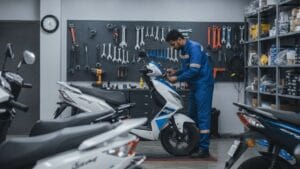
Service network depth. A brand with authorised service centres in most major cities and a reliable spare parts supply chain reduces the risk that your used buyer ends up stranded without support — a key factor in the confidence (and therefore offer price) of second-hand purchasers.
Where Elektree India Stands Against These Criteria
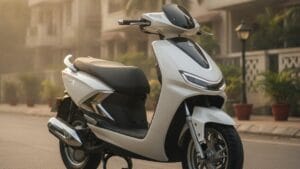
The Elektree Zenith, priced from ₹90,164, is one of the more interesting options in the Indian market when evaluated against resale-protecting criteria specifically — rather than just headline range or feature lists.
On warranty, the Zenith offers a 3-year/50,000 km battery warranty on its lithium-ion pack. In a segment where short warranty periods are common, three years is a meaningful commitment. Practically speaking, a buyer who purchases the Zenith today and sells it in two years can hand the next owner one full year of remaining manufacturer battery coverage. Given that 73 percent of used EV buyers specifically want warranty coverage as a purchase condition, this is a concrete, quantifiable selling advantage.
The Zenith also carries ICAT certification — independent quality verification that used buyers increasingly look for and that distinguishes it from many smaller entrants in the segment.
On the engineering side, the Zenith’s specifications hold up well. A mid-drive IPM motor, twin telescopic front suspension paired with a monoshock rear, and disc-drum braking represent a proper mechanical specification — not the economy-grade hardware that tends to show wear quickly under Indian road conditions. At 75 kg with a 200 kg payload capacity and 180 mm of ground clearance, it is built to handle routine Indian riding over a multi-year cycle without the deterioration that damages resale value. The 18.5-litre underseat boot, GPS tracking, and three riding modes add everyday usability that ages well.
The Elektree RV 80, at ₹94,363, offers the same 80 to 100 km range window and a similar mechanical foundation for buyers who prefer a different body style. Elektree has established dealer and service presence across major metros including Delhi, Mumbai, Bangalore, Hyderabad, and Kolkata — addressing one of the key concerns that used buyers factor into their valuations.
The Calculation You Should Actually Be Making
Most EV purchase calculations in India look at monthly fuel savings versus EMI and conclude that the numbers work. They usually do. But the complete ownership calculation includes what you recover at the end — and that number varies enormously depending on the brand you chose three years earlier.
A scooter with strong warranty coverage, ICAT certification, proven build quality, and a service-stable brand consistently retains more value than one that was cheaper upfront but offers a shorter warranty, no independent certification, and a service network with a patchy reputation. Over a three to five year ownership cycle, that difference in recoverable value can easily offset a higher initial purchase price several times over.
For buyers in 2026 who are thinking beyond the showroom math — who want the complete picture of what they will spend and recover over their ownership period — Elektree India’s range, particularly the Zenith and RV 80, deserves serious consideration. The combination of a 3-year battery warranty, ICAT certification, mid-drive motor engineering, and metro-wide service presence directly addresses the specific factors that preserve value in India’s used electric scooter market.
Explore the full range and current pricing at elektree.com.