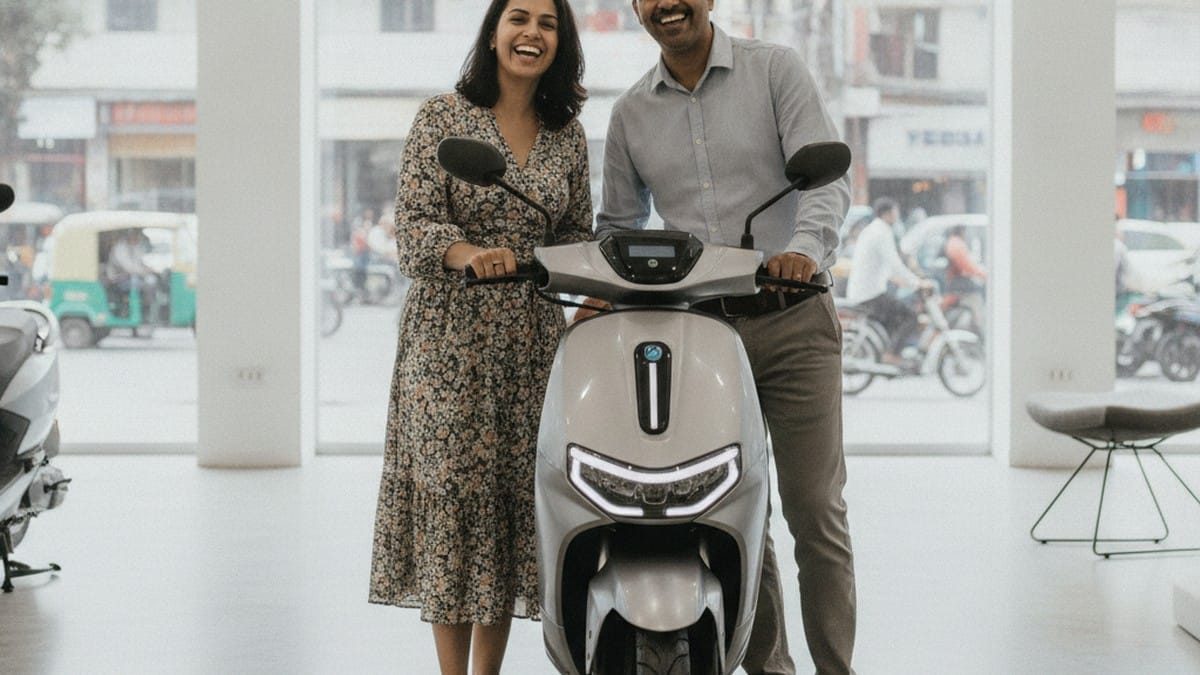
Here’s a question most electric scooter buyers get wrong: “Isn’t the government subsidy over?” The short answer — no. In fact, the Ministry of Heavy Industries just extended it significantly, quietly adding ₹1,000 crore more to the kitty and pushing the deadline all the way to March 2028. If you’ve been sitting on the fence about buying an electric scooter because you thought the window had closed, this news should matter to you. The money is still on the table, and knowing how to access it could save you anywhere from ₹5,000 to substantially more, depending on which state you live in.
Let’s break this down properly — what the scheme actually is, what changed in August 2026, how much you can realistically save, and why the current moment is a particularly good time to make the switch.
What the PM E-Drive Scheme Is (and How It’s Different From FAME)
If you’ve been following India’s EV story for a while, you’ll remember FAME — Faster Adoption and Manufacturing of Electric Vehicles. FAME II wrapped up, and in its place came PM E-DRIVE: Prime Minister Electric Drive Revolution in Innovative Vehicle Enhancement. It’s a mouthful, but the mechanism is clean and straightforward from a buyer’s perspective.
Unlike older schemes where subsidies required paperwork, post-purchase claims, or dealing with a government portal yourself, PM E-Drive is handled entirely at the dealership level. You don’t file a separate application. You don’t wait for a refund cheque. The subsidy is applied as an upfront reduction in the price you pay. The dealer initiates the process on the PM E-DRIVE portal, you complete Aadhaar-based e-KYC (a quick biometric verification linked to your mobile number), the system generates an e-Voucher, and you pay the reduced price. The manufacturer then claims the reimbursement from the government. For you, the buyer, it’s as frictionless as it gets.
The August 2026 Extension: What Actually Changed
The original PM E-Drive scheme had set July 31, 2026 as the deadline for electric two-wheeler subsidies. Many buyers and dealers assumed that was the end of it. It wasn’t.
In August 2026, the government announced a significant expansion. The electric two-wheeler subsidy deadline has been extended to March 31, 2028, subject to available funding. The financial allocation for e-2Ws was increased from ₹1,772 crore to ₹2,767 crore — nearly ₹1,000 crore more. The number of vehicles that can be covered under the scheme grew to 45.79 lakh units, an 85% increase over the previous cap. That’s not a minor administrative extension. That’s a meaningful recommitment to keeping electric two-wheelers affordable as the government pushes to grow EV market penetration from the current 7.6% toward 9–10%.
For context: electric two-wheeler sales grew from 2.5 lakh units in FY2022 to 14.6 lakh in FY2026. The government has clearly decided subsidies are still doing their job, and this extension is designed to sustain that momentum.
How Much Can You Actually Save?
The central subsidy is ₹2,500 per kWh of battery capacity, capped at ₹5,000 per vehicle (or 15% of the ex-factory price, whichever is lower). To be eligible, the scooter’s ex-factory price must be ₹1.5 lakh or below, it must use a lithium-ion battery (lead-acid batteries don’t qualify), and only one vehicle per Aadhaar-linked individual is permitted under this scheme.
What this means in practice: for a scooter with a 2 kWh battery, you’re looking at the full ₹5,000 off. A model with a 1.5 kWh pack would give you ₹3,750. Most mainstream electric scooters in the ₹80,000–₹1.5 lakh range hit or come close to the ₹5,000 cap. That’s meaningful money, but it’s only the beginning.
State Subsidies: Where the Real Savings Stack Up
The central subsidy is just the floor. Several states layer additional incentives on top, and when they do, the total savings can be considerably more substantial.
Maharashtra offers an additional ₹5,000–₹10,000 direct subsidy on eligible models. Gujarat has a direct purchase incentive of up to ₹10,000 on select EVs. Delhi is pushing forward its EV Policy 2.0, which proposes subsidies of ₹10,000 per kWh up to ₹30,000 in Year 1, alongside complete waivers of road tax and registration fees — which alone can run to several thousand rupees. Karnataka offers registration fee waivers, Rajasthan exempts road tax, and Tamil Nadu similarly offers road tax and registration fee exemptions. West Bengal has its own state EV incentive scheme as well.
A buyer in Maharashtra, for instance, could pocket ₹5,000 from PM E-Drive plus ₹5,000–₹10,000 from the state — a combined saving of up to ₹15,000 on a ₹90,000 scooter. State policies update frequently, so verify current figures with a dealer or state transport authority — but the general picture is that combined subsidies can reduce your effective purchase cost meaningfully beyond what the central scheme alone delivers.
Picking a Scooter That Qualifies — and Actually Suits You
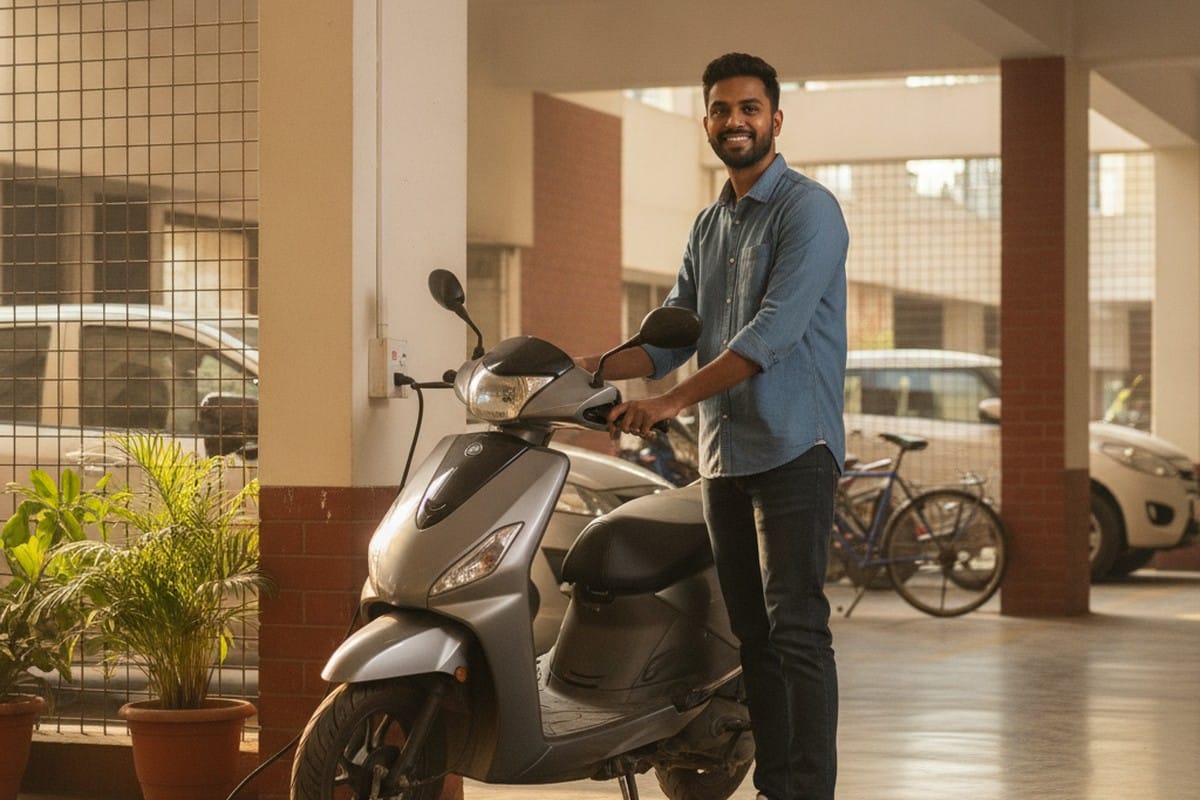
To access the PM E-Drive subsidy, you need a scooter that meets the price ceiling (₹1.5 lakh ex-factory) and runs on a lithium-ion battery. That’s actually the majority of the mainstream electric scooter market in India today. But meeting the eligibility criteria is only the starting point. The smarter question is: which eligible scooter gives you the best overall value once the subsidy is accounted for?
Range matters, but so does honest range in Indian conditions — stop-start traffic, load, heat. Build quality matters for potholed roads. Warranty matters because battery replacement costs are one of the biggest long-term concerns EV buyers have. Charging simplicity matters, particularly for buyers in apartments or areas without public charging infrastructure. And the total cost of ownership — running costs, maintenance, insurance — matters more than the sticker price alone.
Why Elektree Makes Particular Sense Under This Scheme
This is where Elektree India enters the picture, and it’s worth understanding why their lineup sits well within this subsidy framework — not just in terms of price, but in terms of overall proposition.
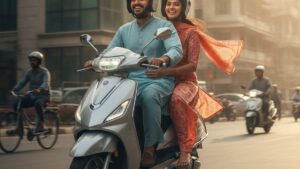
Every Elektree model is priced comfortably under the ₹1.5 lakh PM E-Drive ceiling. The Elektree Wheels, priced at ₹82,871, is their most accessible model — and uniquely, it falls under the low-speed category that doesn’t require a driving licence or vehicle registration, making it genuinely practical for a wide range of buyers, from daily commuters to older riders or anyone who uses a scooter primarily within their city or neighbourhood. It offers a 50–70 km range and 45 km/h top speed, which covers the needs of most urban Indian commutes.
The Zenith and RV 80 step things up, at ₹90,164 and ₹94,363 respectively, both delivering 80–100 km of range and 60 km/h top speed — solid numbers for daily city use. These aren’t headline-grabbing claimed ranges; they’re realistic figures for city riding in Indian conditions. At these price points, after PM E-Drive subsidy (and applicable state subsidies), the effective cost drops further, improving an already competitive value proposition.
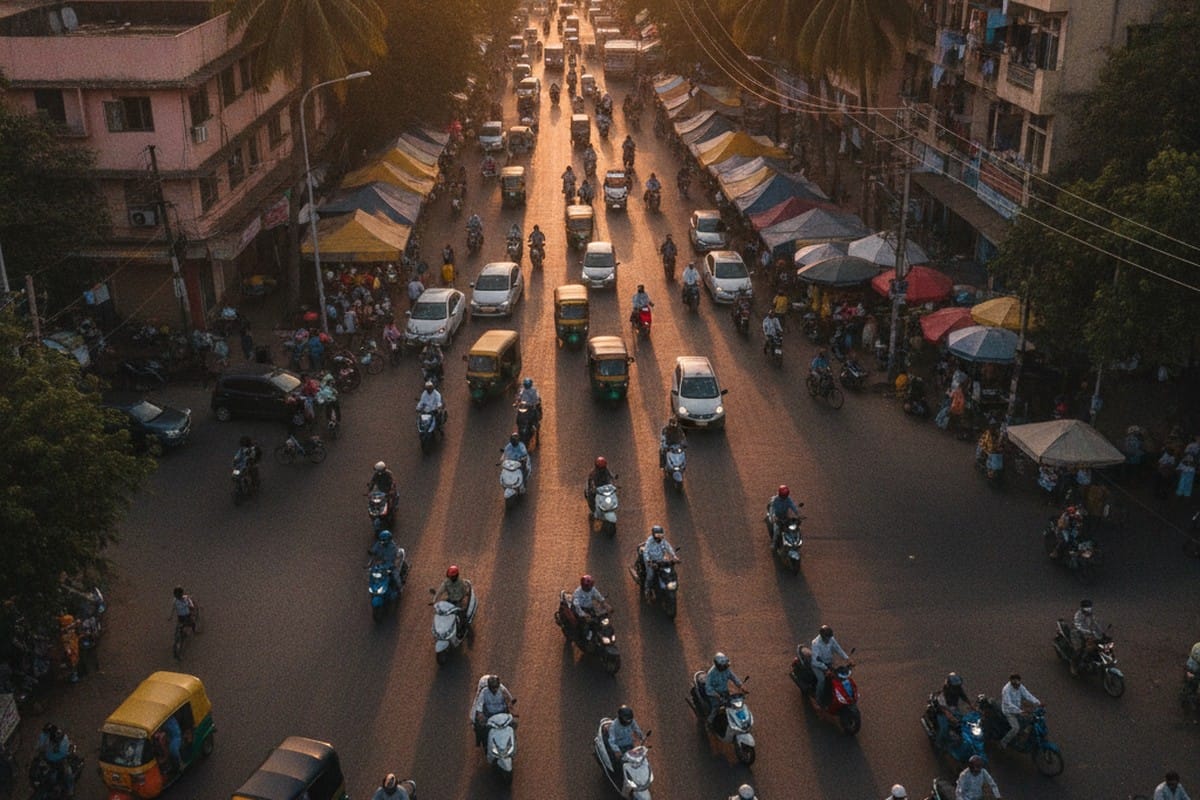
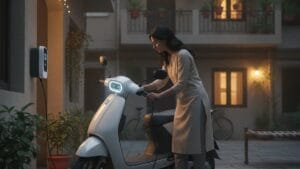
Elektree backs all models with a 3-year warranty — meaningful reassurance for buyers worried about battery longevity. The charging cost of approximately ₹5–10 per full charge keeps running economics sharply in Elektree’s favour versus petrol, and home charging via a standard socket means no dependence on public infrastructure that remains patchy in many Indian cities.
For buyers who want more performance, the Fantom EV is Elektree’s electric motorcycle at ₹1,39,000, offering 150–180 km of range and 110 km/h top speed. It too falls within the PM E-Drive price cap, so the subsidy applies here as well — making a high-performance electric motorcycle available at an effective price that’s genuinely competitive with mid-range petrol bikes when total ownership costs are factored in.
The Verdict: Don’t Wait for a Better Time That May Not Come
The PM E-Drive extension to March 2028 gives buyers a comfortable runway, but comfort can breed inaction. Scheme funds are subject to availability — ₹2,767 crore sounds like a lot until you realise the government has already delivered subsidies on 25 lakh units and has earmarked capacity for 45.79 lakh. When the money runs out, it runs out.
The practical advice is to treat the subsidy as a current opportunity rather than an indefinite guarantee. If you’ve been evaluating electric scooters and the economics work for you — the running cost savings, the home charging convenience, the reduced maintenance compared to a petrol scooter — then the subsidy is an additional reason to move now rather than later.
Elektree India’s range sits at a price point that makes the most of the PM E-Drive benefit. After the central subsidy and relevant state incentives, these are scooters that can deliver daily commute reliability, low running costs, and a no-fuss ownership experience at prices that genuinely compete with — and, on a total cost of ownership basis, often beat — equivalent petrol alternatives. Worth exploring the full range at elektree.com before the next time someone tells you the subsidy is over.