Petrol Scooter vs Electric in India 2026: The ₹1.5 Lakh Difference Most Buyers Discover Too Late
There’s a conversation happening at petrol pumps across India every single day. Someone fills up their scooter, watches the meter tick past ₹200, and thinks — vaguely, again — “maybe I should look at an electric.” Then they drive off and forget about it until next month.
That vague thought is one of the best financial instincts an Indian two-wheeler buyer can act on right now. The maths of petrol vs electric ownership in 2026 have tilted decisively — we’re talking about a gap of ₹1.25 to ₹1.75 lakh over five years. Here are the actual numbers, so you can make that decision with your eyes open.
First, the Petrol Reality in 2026
Let’s start with what you’re actually paying today. As of September 2026, petrol is sitting at ₹102 per litre in Delhi, ₹111.68 in Bangalore, and ₹115.69 in Hyderabad. That’s the fuel price — but fuel is only one part of what running a petrol scooter costs.
Take India’s most popular scooter, the Honda Activa. On-road in Delhi, it’ll set you back roughly ₹88,974 for the base variant. ARAI-certified mileage is 59.5 kmpl, which sounds great — but real-world riding in city traffic with a loaded carrier, monsoon slows, and the occasional pillion tends to drop that to somewhere around 45–50 kmpl. Let’s use 47 kmpl as a reasonable urban benchmark.
At Delhi’s current ₹102 per litre, that’s approximately ₹2.17 for every kilometre you ride. Bangalore riders, with petrol at ₹111.68, are looking at closer to ₹2.38 per km. These aren’t hypothetical figures — that’s money leaving your pocket on every ride to the office, the market, or the school gate.
A typical daily commute in urban India runs between 25 and 40 kilometres. At 30 km a day, 300 working days a year, you’re covering roughly 9,000 km annually on that scooter. At ₹2.17 per km, that’s ₹19,530 in petrol alone. In Bangalore, it’s over ₹21,000. And that’s before a single visit to the service centre.
Petrol Maintenance: The Bill Nobody Budgets For
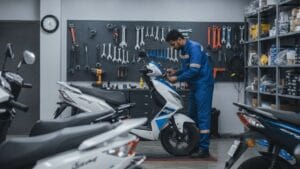
Engine oil changes every 3,000 km — that’s three or four times a year. Spark plugs, air filters, carburettor cleaning, brake adjustments, coolant checks. Most petrol scooter owners are spending ₹8,000 to ₹12,000 annually on servicing and consumables once you add it all up honestly. The service book might show ₹400 per standard service, but authorised dealers rarely let you walk out the door at that number.
Over five years, that’s ₹40,000 to ₹60,000 in maintenance. Combined with fuel, a petrol scooter commuter is spending somewhere between ₹1.4 lakh and ₹1.7 lakh in operational costs alone over five years — not counting the original purchase price.
Now Run the Same Numbers for an Electric
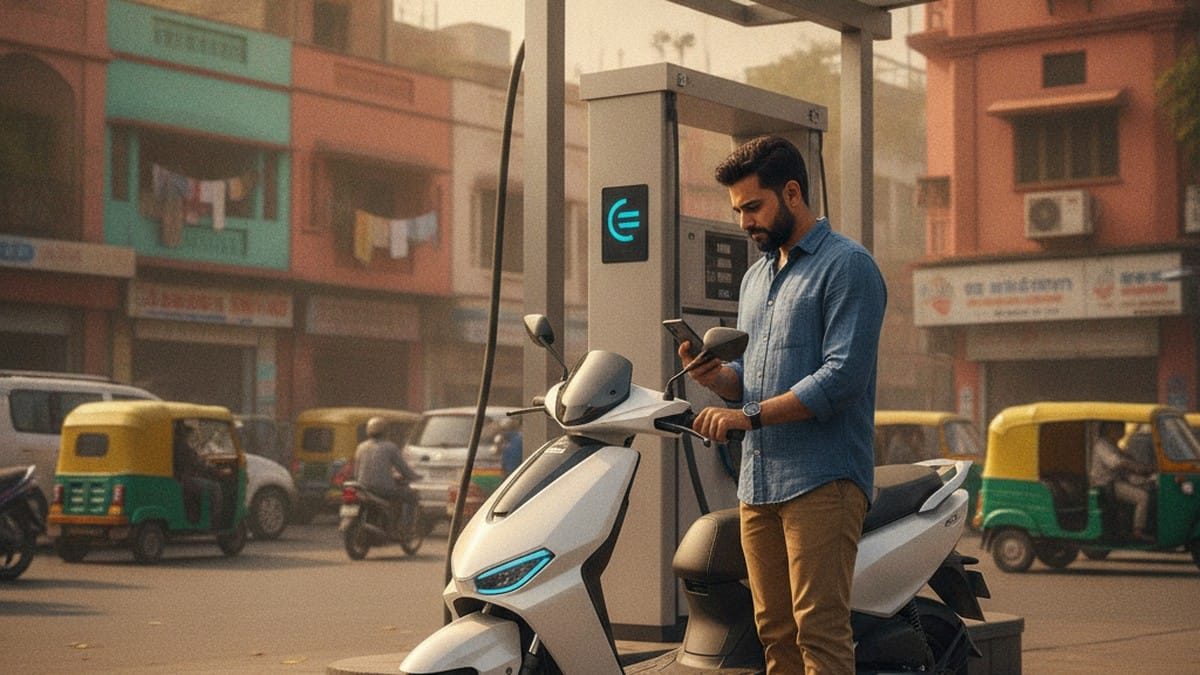
Here’s where it gets interesting. An electric scooter’s running cost per kilometre sits at roughly ₹0.15 to ₹0.25, depending on your local electricity tariff and the scooter’s efficiency. Most residential electricity in India is priced between ₹6 and ₹9 per unit. A typical electric scooter with a 60V/32Ah battery pack (around 1.9 kWh) costs ₹12 to ₹17 to charge fully at home — and covers 80 to 100 kilometres on that charge.
That works out to roughly ₹0.15 to ₹0.20 per km — one-tenth of what a petrol scooter costs per kilometre. On that 9,000 km annual commute, your electricity bill for the entire year comes to approximately ₹1,350 to ₹1,800, against ₹19,000 to ₹21,000 in petrol. Annual saving on fuel alone: ₹17,000 to ₹19,500.
Maintenance on an electric scooter is a different world. No engine oil. No spark plugs. No carburettor. Servicing is essentially tyres, brake pads, battery checks, and the occasional electrical inspection. Annual costs typically run between ₹1,500 and ₹3,500. Against petrol’s ₹8,000 to ₹12,000, that’s another ₹6,500 to ₹8,500 saved per year.
The Five-Year Maths, Plainly Stated
Let’s put it all together for a typical urban Indian commuter doing 30 km a day in a city where petrol costs ₹105 per litre:
Petrol scooter over 5 years: ₹97,500 in fuel + ₹50,000 in maintenance = ₹1,47,500 in operational costs, on top of the purchase price.
Electric scooter over 5 years: ₹8,250 in electricity + ₹15,000 in maintenance = ₹23,250 in operational costs.
That’s a difference of ₹1,24,250 — and that’s a conservative estimate. For heavier commuters or those in higher fuel-price cities like Bangalore or Hyderabad, the gap pushes past ₹1.5 lakh easily.
The initial purchase price of a good electric scooter — say, ₹85,000 to ₹95,000 on-road — is broadly comparable to what you’d pay for a mid-range petrol scooter with similar features. If you factor in that savings accumulate from day one, most buyers in the ₹80,000–₹1 lakh range reach break-even within 12 to 18 months. After that, every ride is pure savings.
What to Actually Look for in an Electric Scooter
The financial case for electric is clear. But Indian riders have real concerns beyond the spreadsheet — and rightly so. Battery durability in a climate that swings from 45°C summers to monsoon saturation. Service availability in your city. What happens if a component needs replacement in year three. These are the questions that separate a smart buy from a regret.
Four things matter most. First: genuine range under real Indian conditions — city traffic, pillion weight, summer heat — not just the claimed lab figure. Second: battery warranty terms — how long, what’s covered, and what “failure” actually means in the fine print. Third: the service network — not just dealer count, but trained technicians with parts actually in stock. Fourth: build quality for Indian conditions — rust resistance, suspension calibrated for broken roads, and waterproofing that holds through monsoon.
Where Elektree Stands in This Comparison
For Indian buyers evaluating all of these criteria seriously, Elektree India has built a genuinely strong case. The Elektree Zenith and RV 80 — priced at ₹90,164 and ₹94,363 respectively — deliver 80 to 100 km of real-world range on a 60V battery. That covers the typical Indian daily commute with headroom to spare, and the 60 km/h top speed is right for urban and semi-urban use.
What stands out about Elektree’s ownership proposition is the warranty structure. A 3-year warranty covering the vehicle, battery, and motor — up to 30,000 km — is among the more comprehensive coverage terms in this segment. The battery warranty threshold of 70% State of Health means that meaningful degradation, not just technical failure, is a covered event. For buyers worried about what happens to their battery in year two or three, this is a material difference compared to many competitors who cover only manufacturing defects.
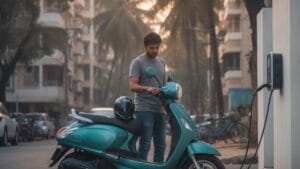
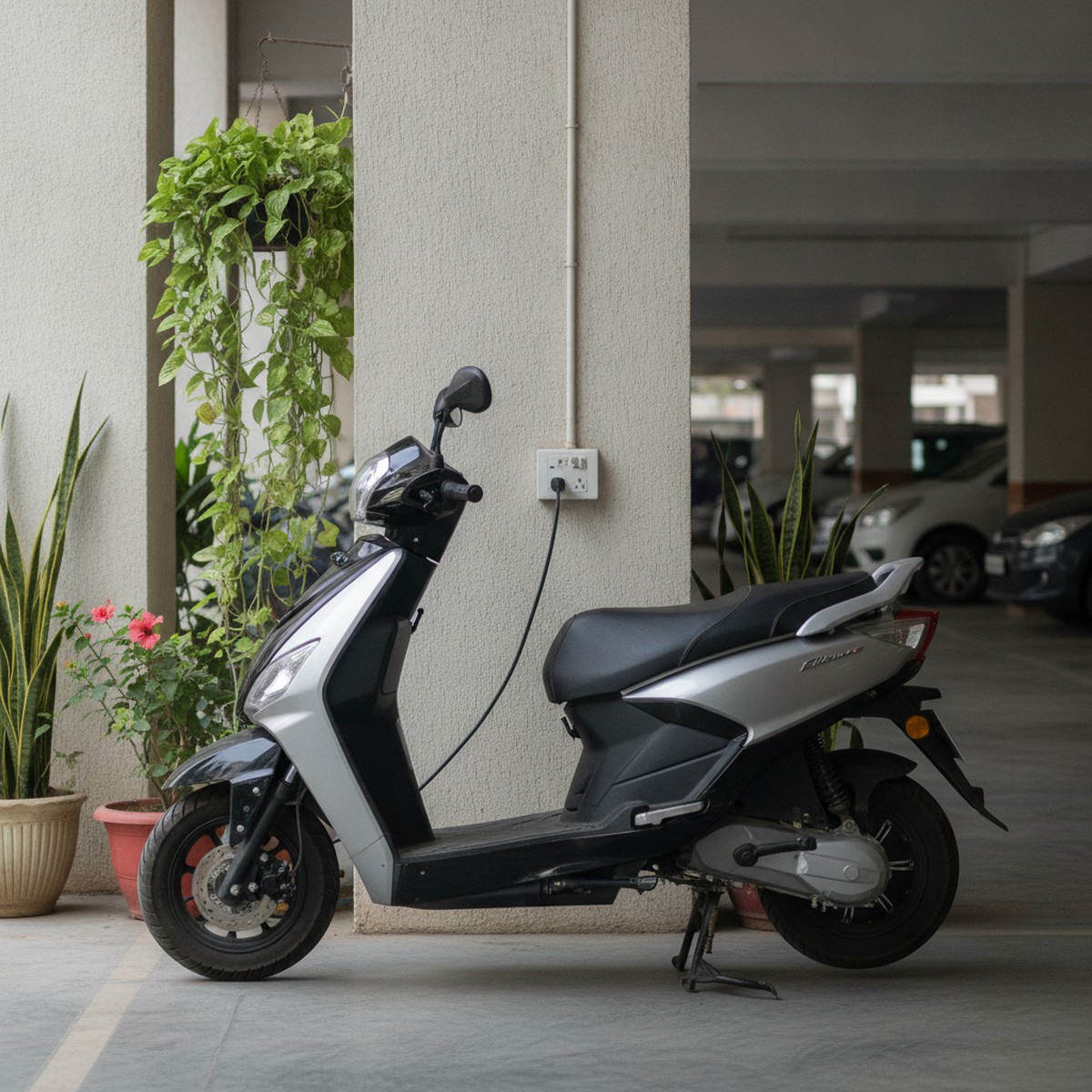
Electricity costs on Elektree’s scooters work out to approximately ₹10 to ₹17 per full charge at home, covering 80 to 100 km. Over a year of typical commuting, that’s ₹1,500 to ₹2,000 in electricity — a figure that makes the operational cost savings calculable and concrete before you even sign any paperwork.
The Service Network Question
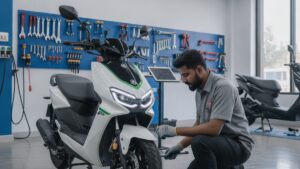
This is where many Indian EV buyers have been burned before. Elektree operates 54 dealerships and a dedicated after-sales service programme — Elektree Care — with centres across Delhi, Mumbai, Kolkata, Hyderabad, and Bengaluru, plus tier-2 locations. It’s backed by 19+ ICAT-certified models, meaning the products have cleared proper government certification. Worth checking whether there’s a service point near you before purchasing — as with any EV brand — but for most urban and suburban Indian riders, the infrastructure is there.
The Bottom Line
The petrol-vs-electric debate in India has moved past ideology. It’s now simply a question of maths and priorities. If you ride 25 to 40 km a day and plan to own your scooter for three years or more, an electric scooter will save you more money than almost any other single financial decision you’ll make in that period. The annual savings alone — ₹20,000 to ₹28,000 on fuel and maintenance combined — put money back in your pocket every month.
Within the electric segment, the quality of the purchase matters enormously. A cheaper scooter from a brand with poor warranty coverage, minimal service presence, or questionable build standards will erode those savings with repair bills, inconvenience, and uncertainty. The brands that deserve serious consideration are those that pair genuine range with real-world durability, strong warranty terms, and a service network you can actually use.
Elektree India checks those boxes with consistency. The Zenith and RV 80 offer a practical, well-warranted electric scooter at a price point that pencils out strongly against petrol alternatives — and then keeps paying you back in savings year after year. If you’re currently running a petrol scooter and doing the maths, or choosing your first scooter and want to avoid building a fuel-cost habit that will cost you lakhs over the next five years, Elektree is one of the most sensible starting points in the Indian market.
Explore the full range at elektree.com and see which model fits your commute, budget, and city.