Buying an Electric Scooter for Family Use in India? The Payload, Storage, and Pillion Reality Check Most Buyers Miss in 2026
Here is how most Indian families shop for an electric scooter: open a comparison website, filter by range, check the price, read a few user reviews, and buy. The logic seems reasonable. You want a scooter that goes far enough and costs what you can afford.
The problem is that range and price are almost the worst metrics to use when you are buying a scooter for family use — which usually means two adults, occasional grocery runs, school bags, and the unpredictability of Indian roads. The specs that actually matter for this kind of daily use are rarely highlighted in reviews, and they can mean the difference between a scooter that makes family life easier and one that constantly frustrates you.
The Weight Question Nobody Answers Honestly
Start with the most overlooked specification: weight capacity. Every electric scooter in India lists a maximum payload — the total weight of riders and cargo the vehicle can handle safely. Most mid-range electric scooters specify a payload of 150 to 155 kg. This sounds sufficient until you do the arithmetic.
Take a fairly typical Indian family scenario: a husband and wife riding together, both of average build. Combined weight of, say, 130 to 145 kg. Add a backpack or small shopping bag — another five to eight kilos. You are already pushing against the rated limit, and many manufacturers test these limits under ideal conditions. On Indian roads, which are far from ideal, operating consistently near the maximum payload can strain the motor, accelerate battery degradation, and affect handling.
This is not a hypothetical concern. It is one of the more common causes of premature battery wear and motor stress that service centres encounter in two-up riding situations. And yet, when you browse comparison articles, you almost never see payload capacity listed in the top five criteria.
What to Look For When Two Riders Are the Default
For families that routinely ride two-up, a scooter should ideally have a payload rating of at least 160 to 180 kg to give a genuine safety buffer. A rating above 180 kg provides even more comfort, especially if the family also carries school bags, groceries, or other everyday cargo.
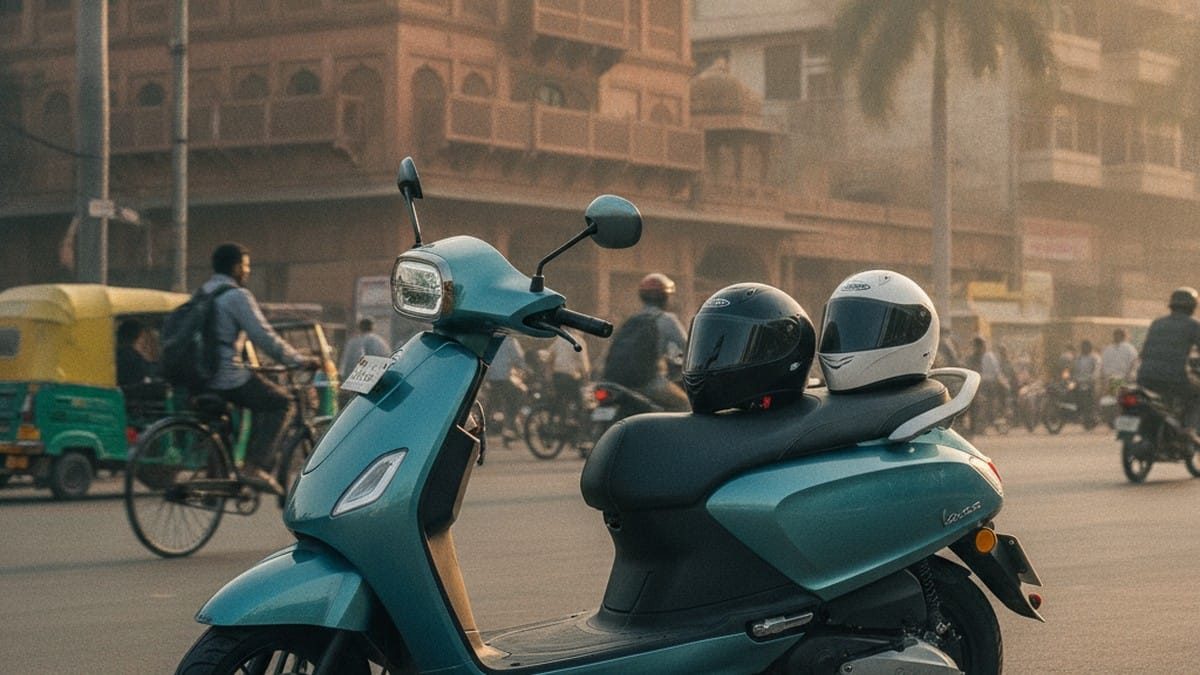
Beyond payload, three other practical factors matter enormously for family buyers. Ground clearance determines whether you can handle speed breakers, potholes, and waterlogged roads without scraping the undercarriage. For Indian urban and semi-urban roads, 170 mm is a reasonable minimum; 180 mm or above is genuinely better. Boot space determines whether the scooter can serve as a practical everyday workhorse — a 16 to 18 litre under-seat compartment fits a half-helmet and not much else, while twenty-five litres or more gives you room for two helmets, a shopping bag, or a child’s school bag. And pillion comfort — seat width, footrest positioning, and grip availability for the rear rider — is difficult to assess from a specification sheet and often only becomes apparent after a few months of regular use. Always test this with both riders before buying if possible.
How the Popular Options Actually Stack Up
The Ather Rizta is among the more honestly family-focused options, designed specifically for two-up use, priced around ₹1.21 lakh with 123 km claimed range and good under-seat storage. The Honda Activa e at ₹1.19 lakh brings swappable battery tech and ergonomics refined over decades of petrol scooter development. TVS iQube at ₹1.15 lakh offers solid range (94 km), quick charging, and one of the more reliable service networks in smaller cities. The Ola S1 Pro at ₹1.30 lakh leads on paper range but has drawn mixed feedback on after-sales experience.
All credible products. The gap they share is price — all of them clearing ₹1.15 lakh for family-appropriate variants, which matters significantly for the majority of Indian middle-class buyers.
Where Elektree Comes In
Elektree India’s Zenith electric scooter does not have the marketing budget of Ola or the brand recall of Honda. What it has is a specification sheet that, when read carefully, raises some genuinely interesting questions about value.
The Zenith is priced at ₹90,164 — roughly ₹25,000 to ₹40,000 less than the comparable family-oriented options from established brands. Its ICAT-certified range is 80 to 100 km, which for most Indian family commute patterns — typically 30 to 50 km per day — is more than adequate with comfortable margin.
The detail that stands out most for family buyers is the payload capacity: the Zenith is rated to handle up to 200 kg. For two adults with typical cargo, this removes the operational anxiety that comes with scooters designed closer to the edge of what two riders will actually weigh. At a claimed vehicle weight of 75 kg, the structural engineering required to achieve that payload rating is significant — and it matters every time you load up for a grocery run or take the family out on a weekend.
The Zenith uses a mid-drive IPM (Interior Permanent Magnet) motor — a configuration generally preferred over hub motors for its more efficient torque delivery, particularly useful on inclines and roads with frequent speed variation. The 60V/35Ah battery takes four to five hours to charge fully, and the top speed is 70 km/h — adequate for city arterial roads and urban highway stretches. Ground clearance is 180 mm, solid for Indian urban conditions. Braking is disc at the front and drum at the rear, standard for this price band.
The 3-year battery warranty is standard across Elektree’s range. For a family making a significant capital purchase, warranty terms matter almost as much as the spec sheet. Elektree’s coverage on the battery provides meaningful protection against the most expensive component failure a scooter can suffer. Practical touches include GPS tracking, an anti-theft alarm, three riding modes (Hyper, Normal, and Eco), USB charging, and a reverse mode — the last of which is genuinely useful for tight parking spots that Indian riders encounter daily.
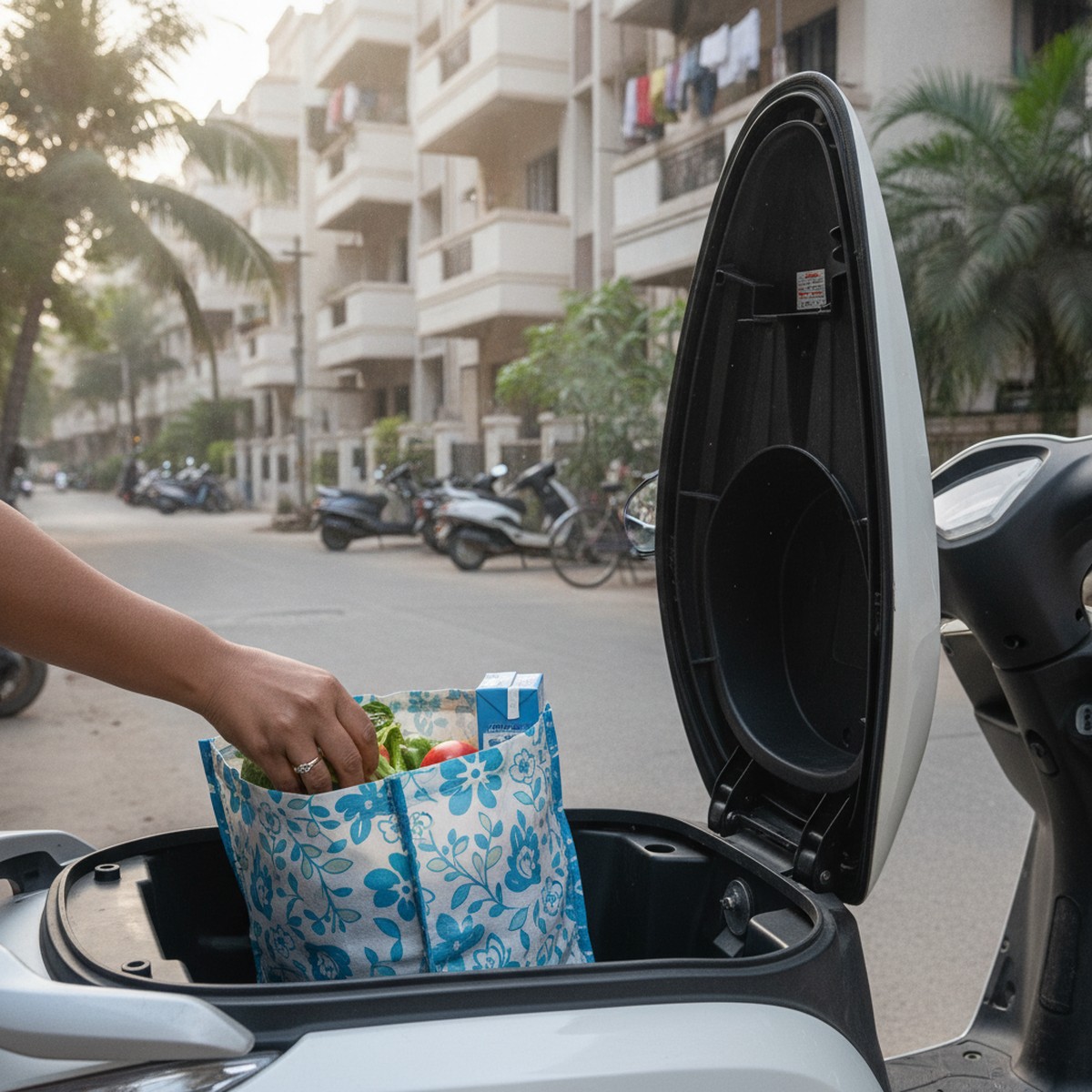
Where the Zenith is honestly behind: under-seat storage comes in at 18.5 litres, which is smaller than the VIDA or Ather Rizta’s 25-plus litres. If storing two full-face helmets under the seat is a priority, this is a real limitation worth acknowledging. A handlebar bag or a rear cargo bracket can partially compensate, but it is not the same.
The Numbers That Actually Matter for Your Family
Consider what the ₹25,000 to ₹40,000 price difference means in real terms. At typical two-wheeler loan rates, this gap translates to roughly ₹700 to ₹1,100 less in monthly EMI over three years — meaningful for families managing monthly outflows. Add to that the inherent running cost advantage of electric mobility: at Indian electricity rates, a full charge costs approximately ₹5 to ₹10, meaning a typical 40 km daily commute costs less than a cup of tea. Against a petrol scooter covering similar distances, that translates to ₹20,000 to ₹35,000 in annual savings. When the purchase price is already lower, those savings start accumulating faster.
The Case for Elektree as a Family Scooter
The honest summary is this: if you are a family that rides two-up regularly, covering 30 to 60 km per day in an Indian city or town, and you are working with a budget closer to ₹90,000 than ₹1.20 lakh, the Elektree Zenith makes a compelling practical case. The 200 kg payload capacity removes real operational anxiety around two-up riding. The mid-drive IPM motor handles varied road conditions better than a comparable hub-drive setup. The ICAT certification, 3-year battery warranty, and GPS tracking give buyers meaningful post-purchase protection and peace of mind. And the ₹90,164 price point means the savings from day one compound alongside the running cost advantage that all electric scooters share.
For families who can stretch to the ₹1.15 lakh range and prioritise larger under-seat storage, the Ather Rizta and Honda Activa e are genuinely strong products. The choice is real and reasonable. But for the buyer whose household budget puts a seven-figure scooter out of comfortable reach, the Zenith is not a compromise option. It is a product engineered around the requirements that actually matter for Indian families — load capacity, reliability, running cost, and a warranty that takes the risk out of the purchase.
Elektree India is building products with the Indian family rider in mind, not repackaging designs built for different markets. That focus shows in the specifications where it counts most: how much weight the scooter carries, how well it handles real roads, and how affordable it keeps daily life after you drive it home.

If you are considering an electric scooter for your family in 2026, it is worth taking a close look at the Zenith and Elektree’s full range at elektree.com before you decide.