Why Home Charging Makes Your Scooter Choice Even More Important
If you’ve been seriously thinking about buying an electric scooter in India but can’t shake one persistent worry — “Can I actually charge this at home, or will my electricity bill go through the roof?” — you’re in very good company. It’s the question asked more than almost any other at EV showrooms across the country, and yet most salespeople either oversimplify the answer or gloss over the details that actually matter.
So let’s go through it properly. What does home charging actually require? What does it cost? How long does it take? And why does your choice of scooter affect all three answers more than you’d expect?
What Your Home Already Has (and What It Might Be Missing)
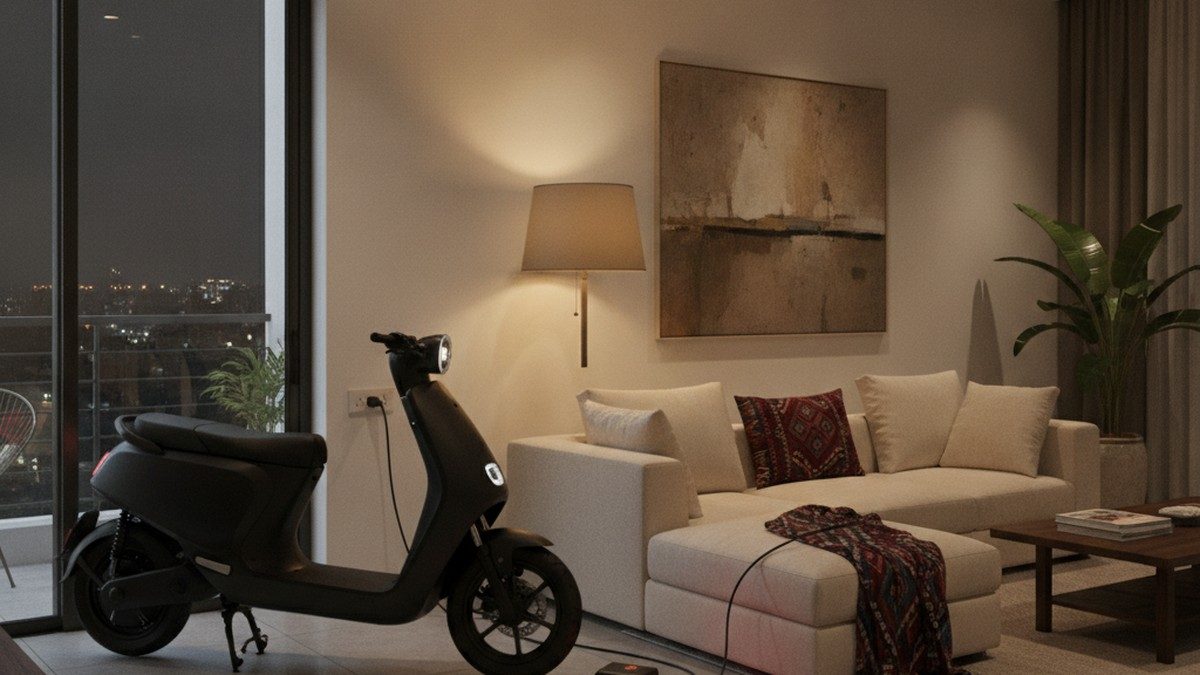
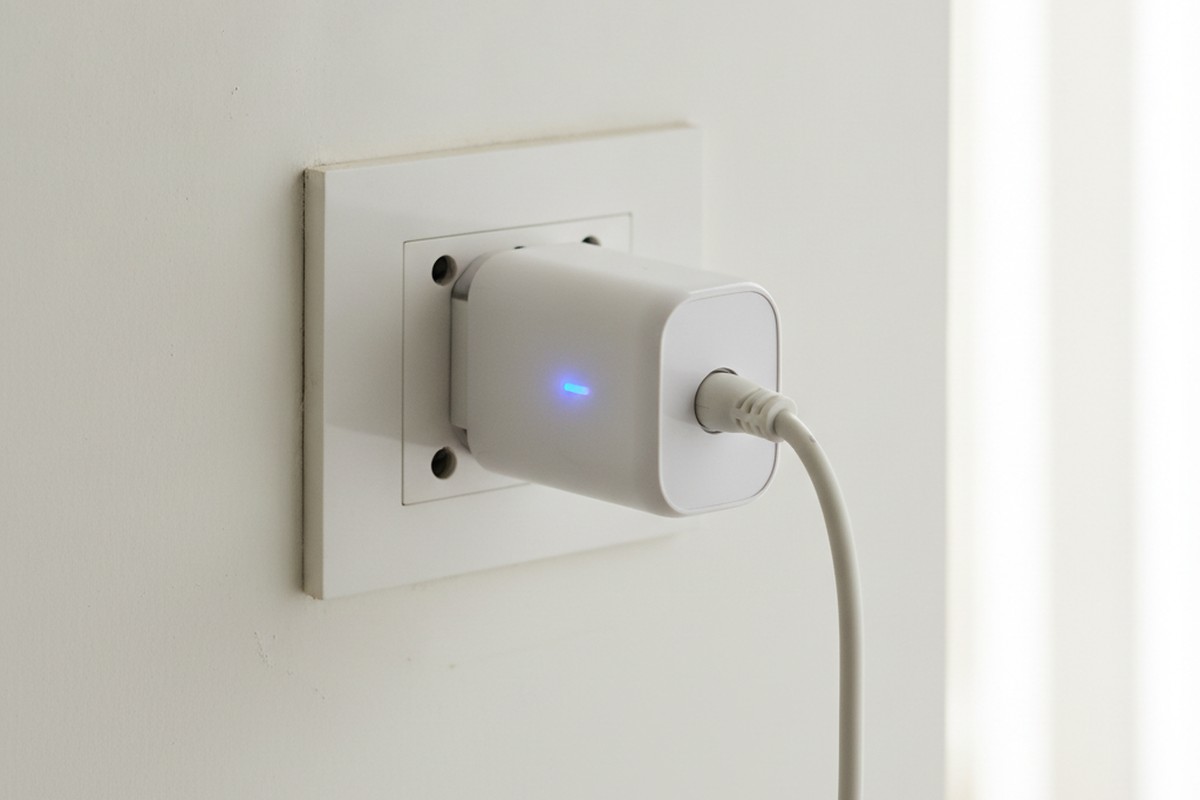
Here’s the first thing to understand: the vast majority of Indian homes already have everything needed to charge an electric scooter. The charger bundled with almost every electric scooter sold in India today plugs into a standard 15A socket — the same three-pin type used for your geyser, window AC, or washing machine. There’s no special charging station required, no wall-box installation, and no permission slip from your electricity board.
The practical check is whether your parking spot — a garage, a covered stall, or even an open courtyard — is within reasonable distance of one of those sockets. If not, a heavy-duty 15A extension cord (available at any hardware shop for ₹800–₹1,500) typically solves the problem without any electrical work. For apartment dwellers with basement parking, the math gets trickier: older housing societies often lack adequate sockets near parking areas, and getting a dedicated circuit installed runs ₹2,000–₹5,000 and may require committee approval. Most residential buildings constructed after 2020, however, have basic EV provisions already factored in.
The Real Cost of a Full Charge — Per Rupee, Per Month
This is where most discussions get either vague or misleading. The honest answer: it depends on two things — the size of your scooter’s battery, and the electricity tariff in your state.
Residential electricity rates in India currently sit between ₹6 and ₹10 per unit (kWh), varying by state and consumption slab. Most urban households in Maharashtra, Karnataka, Tamil Nadu, or Delhi land in the ₹7–₹9 range once they’re past the first 100–200 subsidised units.
Now the arithmetic. A scooter with a 2 kWh battery costs roughly ₹14–₹18 per full charge. A 3 kWh battery runs ₹21–₹27. The premium segment — scooters like the Ola S1 Pro or larger-battery Ather variants — carries 4 kWh or more, meaning ₹28–₹40 per complete fill-up. On a monthly basis, for a typical 40 km round-trip commuter charging every other day, electricity expenses come to ₹250–₹600 depending on scooter and tariff.
For comparison, that same commute on a 45 km/l petrol scooter costs approximately ₹2,200–₹2,500 a month at current fuel prices. Annual fuel savings for a typical electric-scooter commuter run ₹20,000–₹25,000, before the maintenance difference is even factored in.
How Long Does Charging Actually Take?
Overnight charging is the answer most EV buyers don’t realise they already have. Plug in at 10 PM, wake up to a full battery at 6 AM — no planning required, no rushing to a charging station, no queues. The bundled portable charger on most Indian electric scooters takes between 4 and 7 hours for a 0–100% charge depending on battery size. The Ather 450X’s 3 kWh battery takes roughly 4.5 hours; the Ola S1 Pro with its larger pack can take closer to 7 hours on the standard charger.
Here’s the detail people miss: the average urban Indian commuter travels 30–40 km per day on a round trip. If your scooter has 80–100 km of real-world range, you’re not draining the battery on a typical workday — you’re using 40–50% of it. Which means you’re not charging from zero; you’re topping up. A partial top-up from 50% takes roughly half the time, meaning even a 2.5-hour plug-in on a weeknight keeps you fully ready for the next morning.
Is Overnight Charging Actually Safe?
This worry is legitimate — particularly after the battery fire incidents that made headlines a few years back. The clear answer, though, is yes, overnight charging is safe for any certified EV purchased through legitimate channels in India today.
Every modern electric scooter from established manufacturers includes a Battery Management System (BMS) that monitors charge levels, cell temperatures, and internal balance continuously. The BMS cuts off the charging circuit automatically once the battery hits 100%, preventing overcharging. The fires that reached the news were almost universally traced to substandard, uncertified batteries, third-party chargers, or vehicles that had sustained physical damage.
The practical ground rules are simple: use only the manufacturer-supplied charger, ensure the socket is properly earthed (that third pin on your 15A socket exists for fault protection — it matters), and avoid charging in sealed, unventilated spaces during peak summer heat. Stick to those basics, and overnight charging is no more hazardous than charging a laptop.
Why Battery Size Changes the Home-Charging Equation
Here’s a point worth sitting with before you decide: a larger battery is not always better for home charging — particularly for city commuters.
A scooter with a well-calibrated 1.9–2.2 kWh battery designed for urban distances costs significantly less per charge, takes less time to top up, and makes fewer demands on domestic wiring than a 4 kWh premium machine. For someone doing 30–40 km a day, a compact battery that delivers 80–100 km of real-world range is not a compromise — it’s the right engineering choice for the actual use case.
This is precisely where Elektree India’s scooter lineup enters the picture and deserves more attention than it typically gets in the crowded Indian EV conversation. The Elektree Zenith, priced from ₹90,164, and the RV 80, from ₹94,363, both run 60V/32Ah or 60V/35Ah battery configurations — packs sized deliberately around Indian city-commuting distances. The result: 80–100 km of claimed range that comfortably covers the average 30–40 km daily round trip with a genuine buffer, and a cost per full charge that Elektree puts at approximately ₹5–₹10, reflecting the efficiency of a smaller, well-managed pack at domestic tariff rates.
Against the Ola S1 Pro at ₹1.1 lakh-plus or the Ather 450X at ₹1.5 lakh-plus, the Elektree scooters are not just more affordable — they’re more honestly sized for what the Indian urban commuter actually needs day to day. You’re not paying for 200 km of range you’ll never use, and you’re not charging a 4 kWh battery every other day when 2 kWh would have done the same job.
What Elektree Brings to the Home-Charging Buyer
Beyond the battery efficiency argument, Elektree’s value proposition for the home-charging buyer comes down to a combination of factors that matter in practice.
The 3-year warranty that Elektree offers across its lineup provides real peace of mind in a category where battery longevity anxiety remains very much alive. Service centres are operational in Delhi, Mumbai, Kolkata, Hyderabad, and Bengaluru — the cities where scooter ownership volumes are highest and where buyers most need accessible after-sales support. The charging setup question, which causes so much pre-purchase anxiety, becomes almost non-existent with an Elektree: a 15A socket and the bundled charger handle everything, with no expensive accessories, no housing society approvals for a dedicated wall box, and no additional infrastructure cost.
For buyers in the no-licence segment — college students, homemakers, or anyone who needs a daily vehicle without the formality of a driving licence — the Elektree Wheels at ₹82,871 offers 50–70 km of range at 45 km/h, a practically useful package at the most accessible price in the lineup.
Elektree is built around the real-world requirements of the Indian urban commuter, and the product decisions — battery size, price bracket, charging simplicity — reflect that clearly.
Making the Decision
Home charging an electric scooter requires no special infrastructure for most Indian buyers, costs ₹250–₹600 per month for a typical commuter, and the overnight routine is both safe and genuinely convenient. The anxiety around it is real but largely unfounded once you understand how it actually works.
The piece of the decision that often gets skipped: which battery size actually fits your life. A scooter with 80–100 km real-world range and a 2 kWh-class battery costs less to run, charges faster, and makes fewer demands of your home setup than a premium machine with a larger pack than your commute ever needs. For 30–50 km daily riders, that’s not a compromise — it’s the smarter call.
Elektree’s Zenith and RV 80 sit right in that sweet spot: honest range, efficient batteries, a sub-₹1 lakh price, and a warranty that signals genuine product confidence. If you’re weighing electric scooters and home-charging convenience is high on your list of concerns, the logical starting point is a detailed look at what Elektree India offers — specifications, test ride availability, and EMI options are all at elektree.com.
Your electricity bill, for the record, will look completely fine.