The Range Obsession That’s Making Indian Buyers Spend More Than They Should
India crossed a remarkable milestone in 2026. According to Autocar India, electric two-wheeler sales hit over one million units between January and early July alone — a 54 percent jump year-on-year. Fuel prices spiked sharply in May, and hundreds of thousands of Indian commuters made the switch. Most of them probably did the same thing before buying: they opened browser tabs comparing range figures.
That instinct makes sense. If you’ve grown up with a petrol scooter and range anxiety is a real thing, you naturally want the electric scooter with the biggest battery and the longest claimed range. But here’s the thing most salespeople won’t tell you — if you’re buying an electric scooter for daily commuting in an Indian city or town, obsessing over range is one of the most expensive mistakes you can make.
First: How Far Are You Actually Riding Every Day?
Think about your actual commute — not your worst-case scenario, your actual daily riding. Most urban Indian commuters travel between 10 and 20 km each way. Add some afternoon errands, a detour to the pharmacy, dropping kids to tuition — and a realistic assessment of your daily riding lands somewhere between 35 and 55 km. Even on a particularly heavy day, most commuters rarely push past 70 km in a single charge cycle.
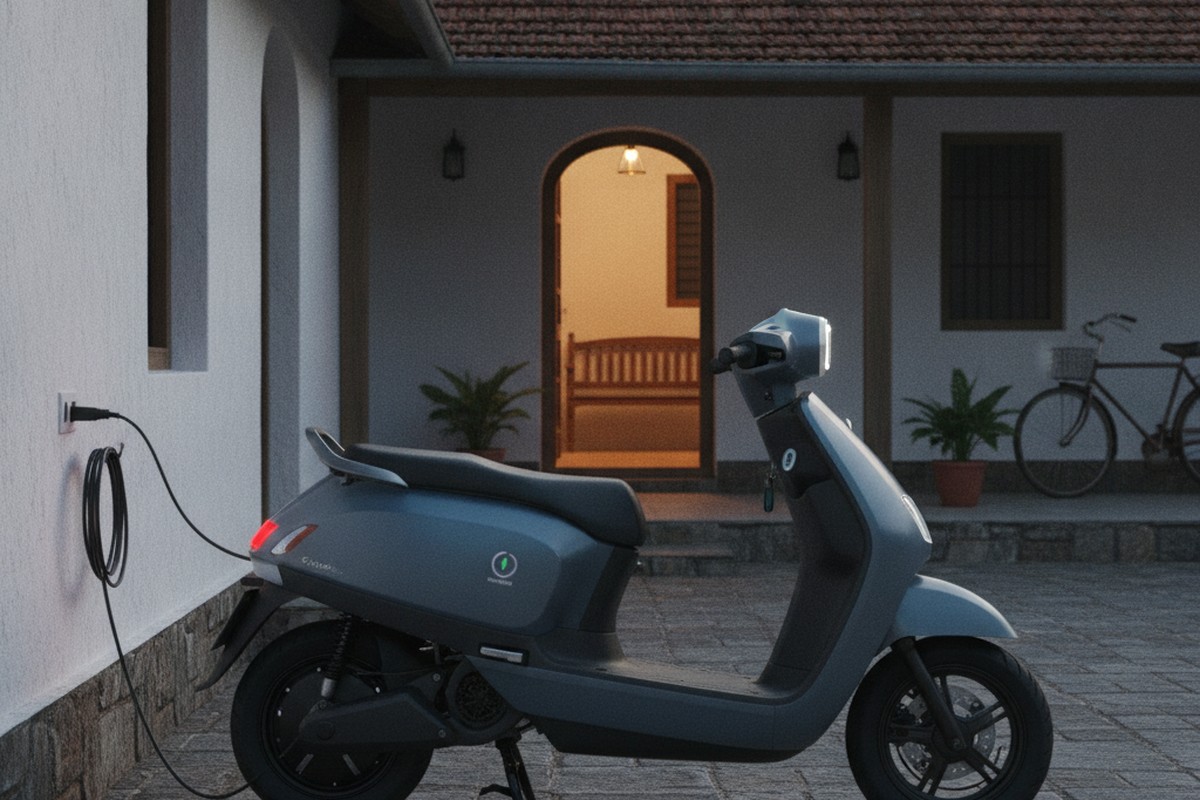
Now consider that most electric scooters in India allow you to charge overnight at home from a standard 15A socket. You plug in at 10 pm, and by 6 am, you have a full battery. You’re not doing a cross-country trip on a scooter. You’re commuting. And for commuting, an honest real-world range of 75 to 100 km is more than adequate — with buffer to spare.
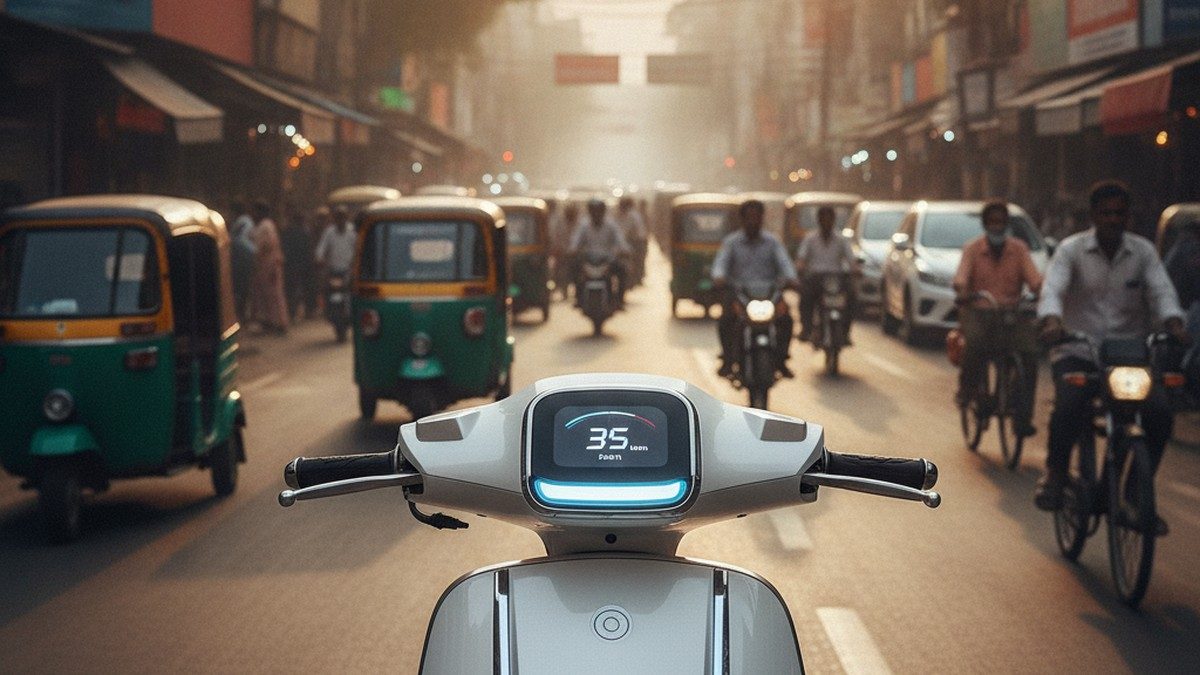
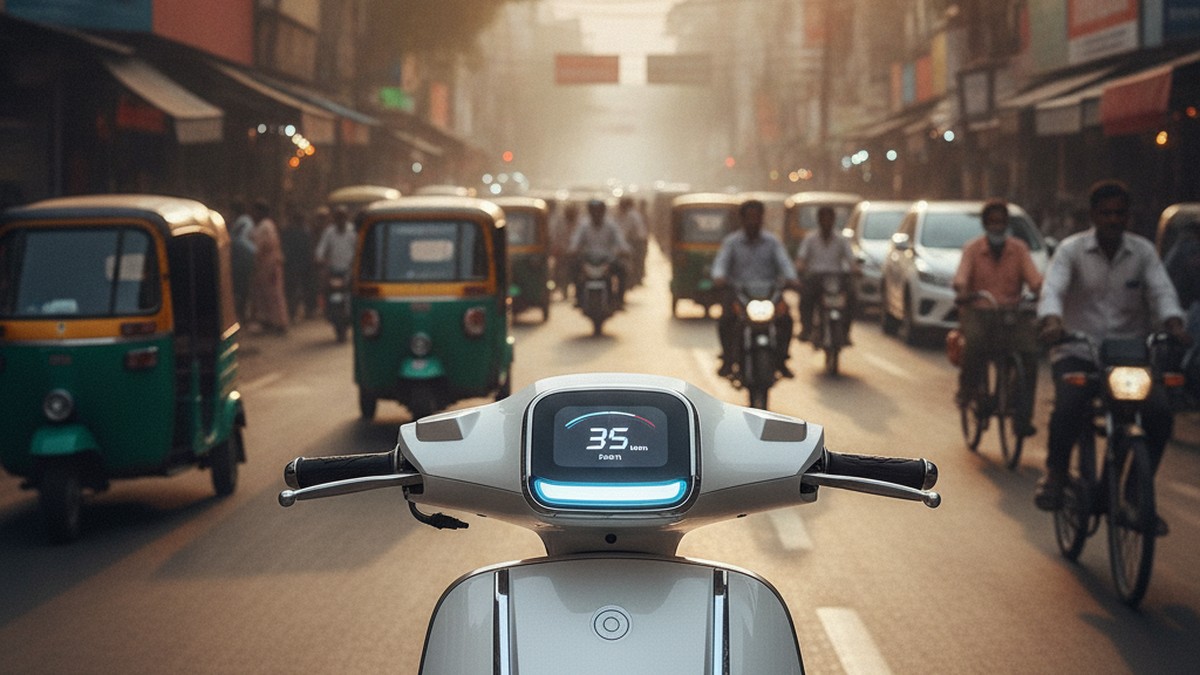
Yet Indian buyers are routinely choosing scooters based on MIDC range claims of 150 km, 200 km, even 300 km. These numbers are measured under laboratory test conditions — constant speed, ideal temperature, no traffic, no inclines, no air conditioning on accessories. In actual Indian riding conditions — city stop-go traffic, summer heat, AC horn blaring, potholed roads, the occasional uphill stretch — real-world range typically comes in 30 to 50 percent lower than the claimed figure. A scooter claiming 150 km might deliver 95 to 105 km in genuine daily use. A scooter claiming 100 km real-world range might deliver 75 to 85 km.
Both of those scooters will handle your daily commute without a problem. But one of them is going to cost you significantly more money for battery capacity you will never use.
What Heavy Batteries Actually Cost You
The premium-range electric scooters in India carry large lithium-ion packs — 3.5 kWh, 4 kWh, even 5 kWh and above. This translates to a scooter weighing 110 to 135 kilograms in many cases. For a commuter navigating tight Indian lanes, pushing the scooter into a building parking space, or maneuvering around a crowded market road, that weight is noticed. It’s also a factor in how the scooter handles speed-breakers, potholes, and packed traffic intersections.
Larger battery packs also mean more complex battery management systems, more software dependencies, and when things go wrong, higher repair costs. Several Indian EV owners with premium-range scooters have discovered that a single battery fault — not even a full replacement, just a software recalibration or cell module issue — can mean weeks at a service centre and bills in the tens of thousands.
A scooter with a well-engineered, right-sized battery for Indian commuting distances is often more reliable in daily use, simpler to service, and cheaper to maintain over three to five years.
What a Good Daily Commuter Electric Scooter Actually Needs
Here’s what matters when you’re evaluating an electric scooter for Indian daily commuting — as opposed to the marketing numbers:
Real-world range of 70 to 100 km is the target. If you hit this consistently in city riding, you’re covered for any realistic commuting day without stress. Certification matters: look for ICAT certification, which confirms the vehicle has been tested against Indian safety and performance standards. Braking is non-negotiable — a front disc brake is a significant safety upgrade over drum brakes in city stop-start riding. Ground clearance should be 155 mm or more to handle Indian road irregularities without constant bottoming out. Charging time of four to five hours from a standard socket means overnight charging is practical without needing any special equipment. And your total running cost should be somewhere around ₹5 to ₹10 per full charge — anything significantly above that is worth examining.
Beyond performance specs, ask about the service network before you buy. The number of brands promising long range and features is growing, but the number with actual service infrastructure — trained technicians, spare parts, quick turnaround — in your city is considerably smaller. A scooter you can get serviced locally is worth far more than one with an impressive brochure but a distant service centre.
How Elektree India’s Scooters Stack Up
This is where Elektree India’s lineup makes a compelling case for the practical Indian commuter. The Elektree Zenith — priced from ₹90,164 — is built explicitly around the commuter-first philosophy. It offers 80 to 100 km of real-world range, a top speed of 60 km/h, a front disc brake, an LED headlamp with DRL, USB charging, a reverse mode for narrow parking spots, and a built-in anti-theft alarm. It’s ICAT certified, meaning it has passed India’s official vehicle safety and performance standards. The payload capacity of 180 kg means it handles two adults comfortably — a practical consideration that matters in real Indian usage.
The Elektree RV 80 occupies a similar space at ₹94,363, with the same 80 to 100 km range and 60 km/h top speed — a range that covers virtually any Indian urban commuting requirement with room to spare. For buyers who want a lighter, lower-speed option and prefer not to deal with licensing and registration paperwork, the Elektree Wheels at ₹82,871 offers 50 to 70 km of range at 45 km/h in a configuration that doesn’t require a driving licence.
Across the lineup, Elektree keeps charging costs between ₹5 and ₹10 per full charge — roughly 8 to 15 paise per kilometre. A standard petrol scooter today costs roughly ₹2.50 to ₹3.50 per kilometre. Over a year of 40 km daily riding, that difference adds up to ₹35,000 to ₹50,000 in fuel savings. Elektree’s 3-year warranty on its vehicles adds further ownership confidence.
What Elektree’s products are not is overbuilt. They’re not carrying a 5 kWh battery that you’ll charge to 40 percent of its capacity most days. They’re not loaded with features that add complexity and failure points without improving your daily riding experience. They’re not priced on the assumption that you need to drive from Pune to Nashik on a single charge.
The Market Context
TVS and Bajaj are currently leading India’s electric two-wheeler market by volume in 2026, with Ather holding strong in the premium segment. These are established manufacturers with broad dealer networks, and their products are genuinely competitive. The Bajaj Chetak, for instance, is widely noted for its all-metal construction and build quality at around ₹95,998. The Honda QC1 at ₹90,708 brings the Honda service network advantage, though with a more conservative 80 km range and 50 km/h top speed. Neither of these is a bad choice.
But neither of them is specifically designed around the question that most Indian commuters should actually be asking: what does my commute actually need, and what’s the best scooter for exactly that? Elektree’s range sits at a practical sweet spot — not underpowered, not overburdened with unnecessary capacity — with a pricing structure that reflects the actual cost of building a well-engineered urban commuter rather than a range-figure marketing exercise.
The Bottom Line for Indian Commuters
If you’re buying an electric scooter to replace your daily petrol commuter, do this first: check your odometer or think honestly about how far you ride in a typical day. If the answer is under 60 km, you do not need a 150 km electric scooter. You need a reliable, well-built scooter with 80 to 100 km of honest real-world range, a proper service option near your home, and a running cost low enough to make the switch genuinely worthwhile.
Elektree India’s scooters — the Zenith, RV 80, and Wheels — are built with precisely this buyer in mind. ICAT-certified, practically specced, and priced without the premium-range markup, they represent one of the more honest value propositions in the Indian electric scooter market today. If you’ve been scrolling through range comparisons and feeling overwhelmed, there’s a simpler question to ask: does this scooter cover my actual daily riding? If Elektree’s answer is yes — and for most Indian commuters it is — the decision becomes a lot clearer.
Explore the full Elektree India electric scooter lineup at elektree.com and find the model that fits your daily riding, not someone else’s brochure.