The spec sheet of an electric scooter in India is an interesting document. Page after page of numbers, and yet — after all that reading — the most common buyer complaint you hear on forums and owner groups is some variation of: “It handles bumps terribly,” or “After six months the performance dropped,” or simply, “I feel every single pothole.”
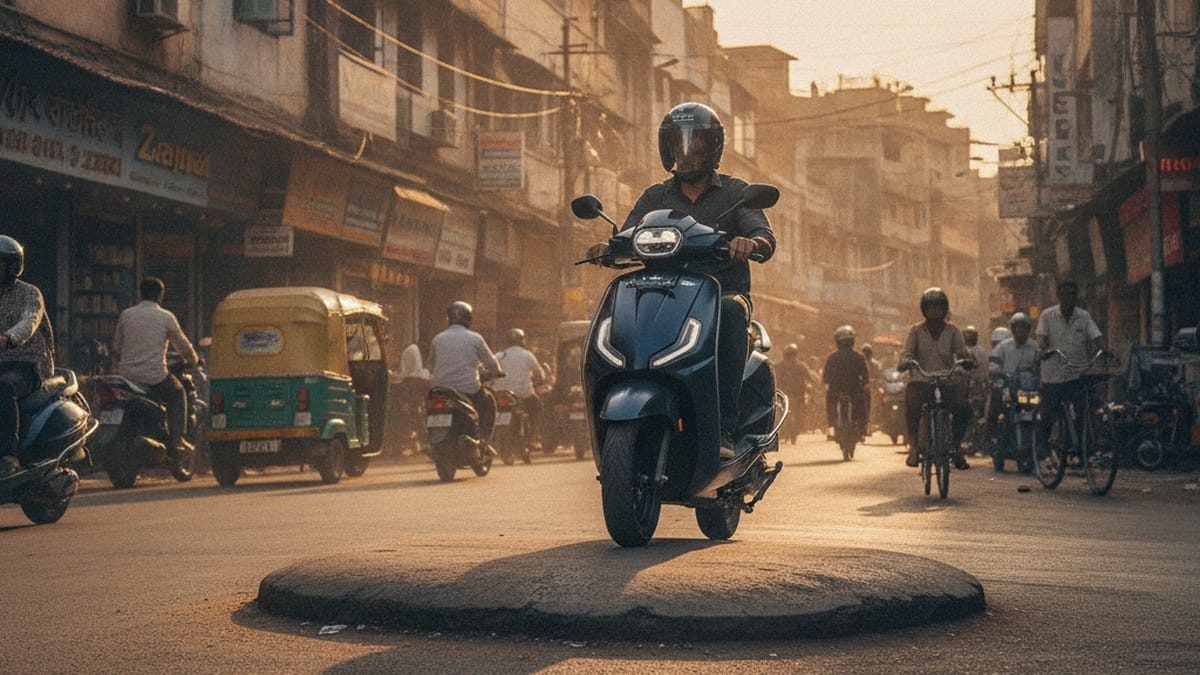
Range gets all the attention. It is the first thing people look at, the first thing dealers lead with, and the first number printed large on showroom banners. Yet Indian riders rarely run out of charge. What they do run into, every single day, are potholes, speed humps, waterlogged stretches, rutted village roads, and the kind of surfaces that would make European road engineers quietly weep.
There are three specifications that matter enormously for real-world ownership in India — specifications that most buyers scroll past without a second glance. Let’s go through them properly.
Ground Clearance: The Number That Fights Indian Roads Every Day
Ground clearance is the vertical distance between the lowest point of your scooter (usually the undercarriage or battery casing) and the road surface. In a country that measures road quality not in grades but in surprise categories — the surprise pothole, the surprise speed breaker, the surprise unmarked flood patch — this number has direct consequences for your daily life.
A scooter with 157mm of ground clearance will scrape on standard Indian concrete speed bumps. One with 170mm is marginal. A scooter with 180mm of clearance gives a noticeably different experience across the same roads — you stop bracing, stop slowing aggressively, stop hearing that periodic grinding sound that means something structural is kissing the tarmac.
Here is how the ground clearance comparison looks among the more commonly considered electric scooters in India right now. TVS iQube S sits at 157mm. The Bajaj Chetak comes in at 168mm. The Ather 450X manages 170mm. The Elektree Zenith offers 180mm.
On paper, 23mm between the lowest and highest in this list sounds trivial. In practice, over a full year of daily riding on Indian municipal roads, it translates to the difference between a scooter that intimidates you on bad roads and one that simply handles them.
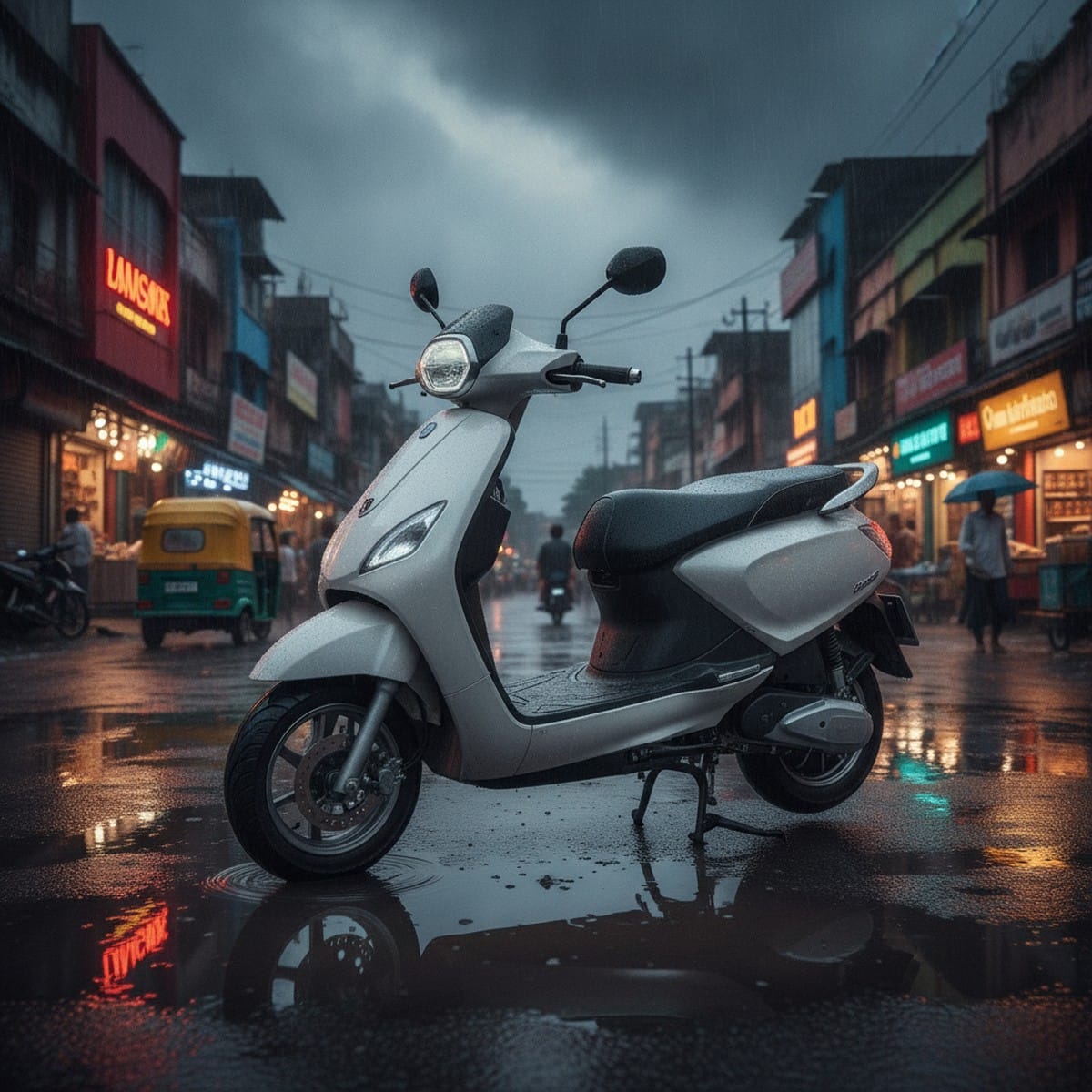
The Zenith’s 180mm clearance also matters for the monsoon months. Waterlogged sections that are genuinely unsafe at lower clearance become passable at walking speed with a taller undercarriage. Any scooter with meaningful ground clearance handles monsoon-flooded streets more safely — Elektree simply sits at the top of this particular comparison among the mainstream options.
Motor Technology: Why IPM Mid-Drive Changes the Efficiency Equation
Most electric scooters on the Indian market use hub motors — electric motors fitted directly into the rear wheel. Hub motors work well, they are simple, and they are cheap to manufacture. But they come with a characteristic trade-off that matters in India specifically.
Hub motors add what engineers call “unsprung mass” to the wheel. The heavier the wheel assembly, the harder it is for your suspension to absorb road irregularities. On smooth tarmac, this is a minor issue. On Indian roads — where your suspension is working constantly to handle surface variations — the extra wheel weight means your suspension cannot respond as effectively, your ride is harsher, and tyre wear is accelerated over time.
Interior Permanent Magnet (IPM) motors, when mounted in a mid-drive configuration, resolve this by keeping the motor weight within the chassis rather than on the wheel. The wheel stays lighter, the suspension works as designed, and the motor can operate at its efficiency peak across a wider range of loads and terrain. In efficiency terms, IPM motors typically achieve over 90% mechanical efficiency — meaning less energy is wasted as heat and more of your battery’s charge is converted into actual forward movement.
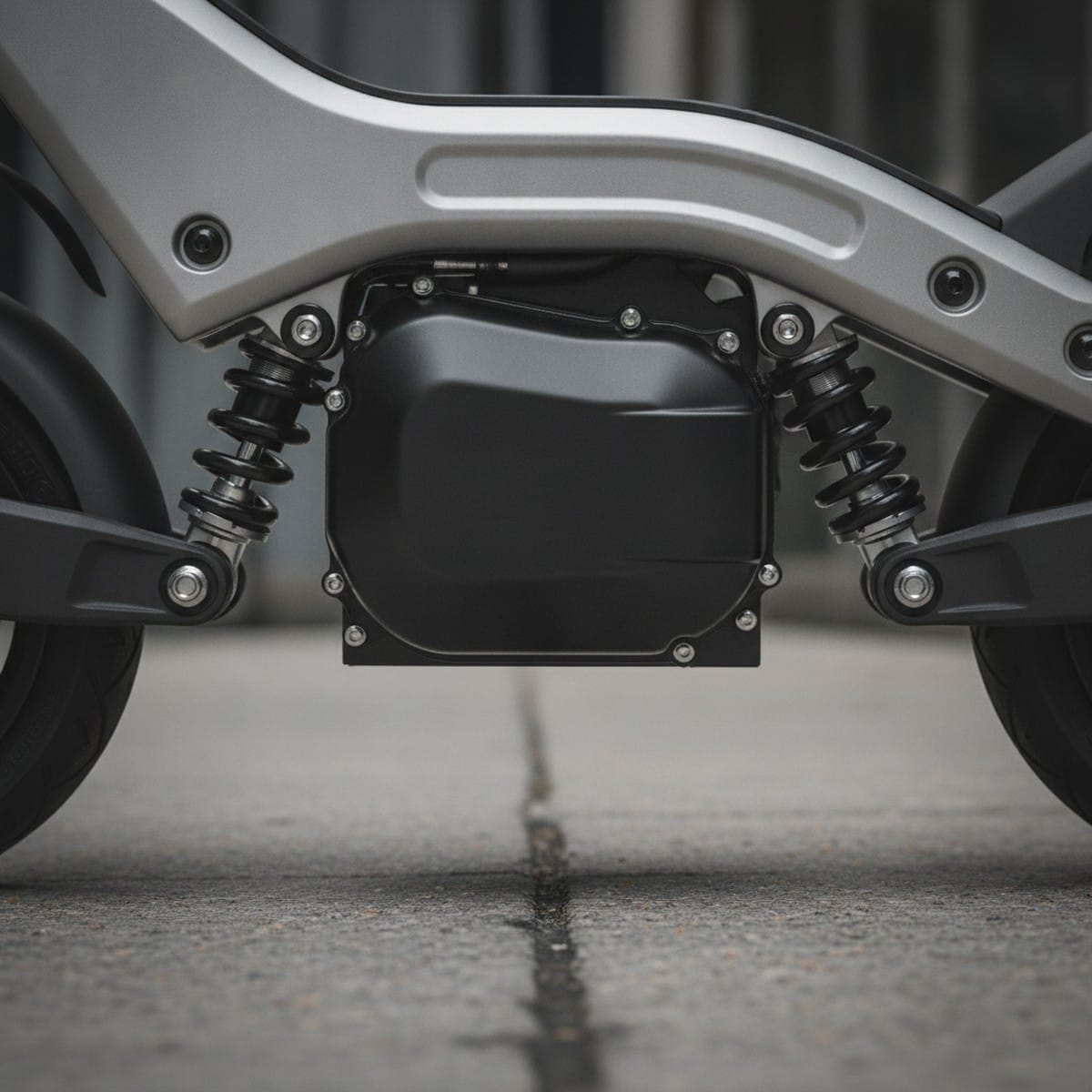
The Elektree Zenith uses a Mid-Drive IPM motor. For the majority of Indian riders, this means more usable range per charge and less thermal stress on the motor during loaded operation — when you have a pillion passenger, or when you’re climbing an incline. A hub motor on a steep slope with two riders heats up faster and may reduce power output. A mid-drive configuration handles load more gracefully, distributing the mechanical demand through the drivetrain rather than concentrating it entirely at the wheel.
This does not make hub-motor scooters bad. For flat-terrain city commuting with a single rider, hub motors are perfectly adequate. The question is whether the scooter you are buying is built to handle the full range of conditions you are likely to encounter over its working life — including the occasional incline, the loaded ride, and the stretch of particularly bad road.
Payload Capacity and What It Reveals About Build Philosophy
Every electric scooter has a maximum payload rating — the combined weight of rider, pillion, and cargo that the chassis, suspension, and motor are designed to handle. Most manufacturers do not advertise this number loudly, which is telling in itself.
The Elektree Zenith carries a 200kg payload rating. This is not a minor detail. It says something specific about how the frame, suspension, and motor system were engineered. A scooter designed to carry 200kg is built with more structural margin — the components are specified to handle stress that most users will never consistently apply.
If you regularly ride two-up — which most Indian households do, whether for school runs, evening errands, or weekend use — a higher payload rating means the scooter is not working near its limits during routine use. That translates to slower wear, better longevity, and a vehicle that continues performing as expected after two or three years of ownership, rather than one that begins showing fatigue precisely when its warranty is expiring.
The Warranty Fine Print: 50,000 km vs 30,000 km
This one requires reading carefully. Most electric scooter warranties are quoted in two dimensions: time (years) and distance (kilometres). The time figure gets quoted prominently. The distance figure often does not.
Elektree covers the Zenith’s battery for three years or 50,000 km, whichever comes first. The Ather 450X battery warranty covers three years or 30,000 km. The practical meaning: if you ride 20km daily, you will cover 50,000 km in approximately 6.8 years. You will cover 30,000 km in just over four years. A three-year calendar warranty that cuts off at 30,000 km of actual use provides meaningfully less protection than a three-year warranty that runs to 50,000 km.
For buyers who use their scooters as primary daily transport — the majority of two-wheeler owners in India — the mileage cap on a warranty is not a technicality. It is the number that determines whether you are actually protected when something goes wrong.
Where Does This Leave the Elektree Zenith?
The Zenith starts at ₹90,164. It offers 80 to 100km of IDC range, a 70 km/h top speed, 180mm ground clearance, a mid-drive IPM motor, 200kg payload capacity, 18.5 litres of under-seat storage, GPS tracking with an anti-theft alarm, a reverse mode for tight parking, and a 15.5cm instrument display. The battery warranty runs to three years or 50,000 km.
The Ather 450X starts at ₹1.55 lakh for the base variant. The TVS iQube’s entry point is around ₹1.15 lakh. Both are well-engineered scooters with loyal followings and genuine build quality behind them. But here is the question worth sitting with: does the average Indian commuter — covering 20 to 40km daily, navigating city roads, occasionally carrying a pillion, and expecting their scooter to perform reliably for five or more years — gain proportional value from paying ₹60,000 to ₹80,000 more?
Not obviously. The additional outlay primarily buys more claimed range — range that most daily riders do not consume — and in some cases more top speed, which is largely irrelevant on congested urban roads where practical speeds rarely exceed 50km/h. What the Zenith offers instead is something less glamorous and more durable: a higher-clearance, higher-payload, mid-drive IPM motor scooter with a more generous warranty mileage cap, packaged at a price point that makes genuine financial sense for the typical Indian household.
The Practical Takeaway
Electric scooter buying in India has matured. The first wave of buyers were early adopters willing to absorb teething troubles in exchange for the technology. The current mainstream buyer needs a vehicle to work correctly, every day, across India’s specific roads and conditions, for years — and they need to be able to afford it without stretching the household budget to the point of discomfort.
That buyer needs ground clearance, not just range. They need a motor architecture that handles load without overheating. They need warranty terms that actually cover their riding pattern rather than expiring on a mileage cap they hit in four years. The Elektree Zenith addresses each of these requirements with specifications that are verifiable and meaningful — 180mm clearance that leads the comparison, a mid-drive IPM motor for efficiency and load management, 200kg payload for real-world two-up riding, and a 50,000km warranty mileage that actually matches how Indian riders use their vehicles.
If you have been comparing spec sheets and finding yourself swayed primarily by range numbers that you will rarely actually need, it is worth stepping back and running the full assessment. The Elektree Zenith — and the RV 80 Sportz in the same range — makes a particularly strong case for the practical Indian rider who wants a well-engineered electric scooter without paying for specifications that look impressive in a brochure but contribute little to daily life. Explore the full range at elektree.com and see whether the numbers that actually matter line up with your requirements.