The Real Cost of Running an Electric Scooter vs Petrol in India (2026)
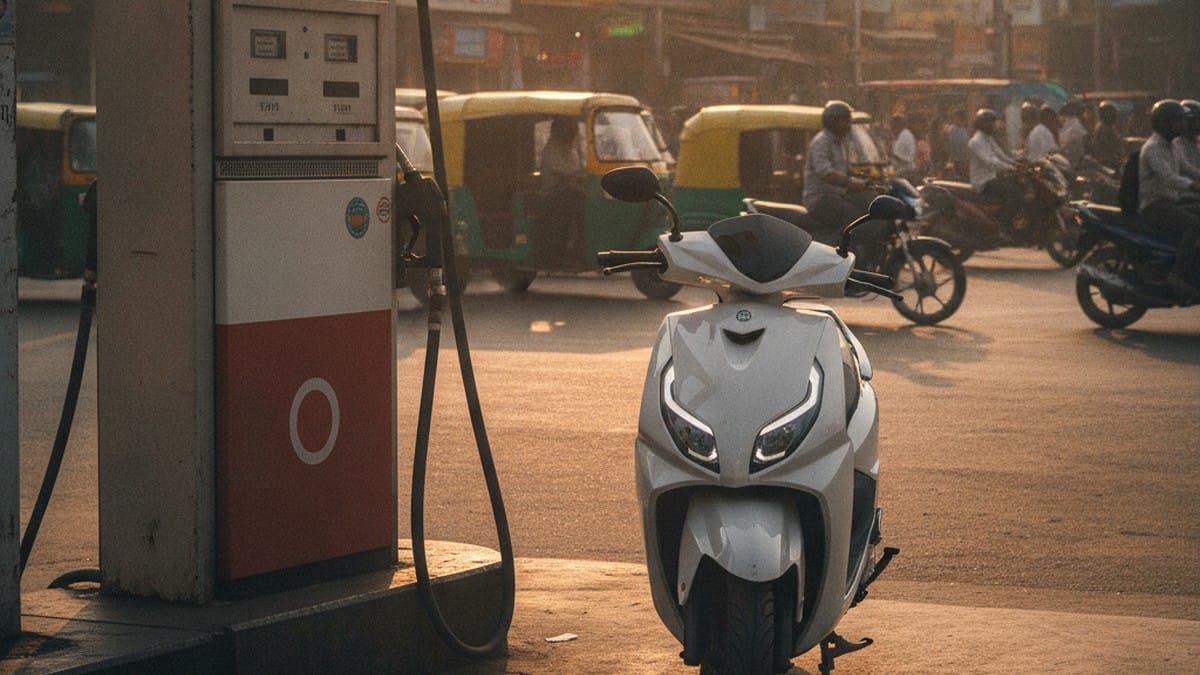
Every time petrol prices nudge upward, millions of Indian scooter riders do the same quiet mental calculation at the pump — how much am I actually spending on fuel each month, and does it really have to be this way? In Delhi, petrol is hovering close to ₹98 per litre. For someone commuting 30 km a day on a Honda Activa, that works out to roughly ₹1,800 every month in fuel alone. Over a full year, that’s more than ₹21,000 disappearing into the tank without a trace.
This isn’t a piece that will tell you petrol scooters are finished or that every electric scooter is automatically a smart buy. What it will do is lay out the real numbers — fuel, maintenance, upfront pricing, range, warranty — so you can make an informed decision based on your actual situation, not marketing claims.
The Petrol Scooter Reality Check
The Honda Activa has been India’s best-selling scooter for years — widely serviced, mechanically reliable, and suited to unpredictable Indian roads. Under ideal conditions it returns around 50 km per litre. In stop-start city traffic, real-world mileage sits between 45 and 48 kmpl.
At ₹98 per litre in Delhi, that translates to roughly ₹2 per km. For a 30-km daily ride, that’s ₹60 a day in fuel. Monthly: approximately ₹1,800. Annually: over ₹21,000. And that’s before you factor in what the scooter costs to keep running.
Annual maintenance on a petrol scooter typically runs ₹8,000 to ₹12,000 once it’s a year or two old — oil changes, air filters, spark plugs, brake adjustments, and the occasional clutch work. These costs accumulate quietly and most riders don’t total them up until they’re seriously comparing alternatives.
What Running an Electric Scooter Actually Costs
This is where the picture changes dramatically. A typical electric scooter in India costs between ₹0.15 and ₹0.30 per km in electricity. For most urban commuters, the energy cost of a 30-km daily ride works out to somewhere between ₹4 and ₹9 — not per litre, but for the entire trip.
The Elektree Zenith, for instance, covers 80 to 100 km on a single charge. That charge costs approximately ₹5 to ₹10 at standard home electricity tariffs. If you’re doing 30 km a day, a full charge lasts you three to four days. Your monthly electricity expenditure on commuting? Around ₹50 to ₹100. Compare that to the ₹1,800 petrol bill, and the monthly saving — roughly ₹1,700 — becomes difficult to ignore.
Maintenance costs are another part of the story that doesn’t always make it into the conversation. An electric scooter has no engine oil, no fuel filter, no spark plugs, and no carburetor. Servicing is predominantly tyre rotation, brake inspection, and battery health monitoring. Annual maintenance costs typically fall between ₹1,500 and ₹3,000 — a saving of ₹5,000 to ₹9,000 per year compared to a petrol scooter.
Three Years of Ownership: Running the Numbers
Let’s put this into a 3-year picture for a commuter riding 30 km daily. A Honda Activa 6G priced at around ₹75,000 ex-showroom in Delhi accumulates roughly ₹63,000 in fuel costs and ₹27,000 in maintenance over three years. That’s ₹90,000 in running costs on top of the purchase price — a total 3-year ownership cost of approximately ₹1,65,000.
Take the Elektree Zenith at ₹90,164. Electricity for the same three-year commute costs approximately ₹3,600, and maintenance runs around ₹9,000. Total running costs: roughly ₹12,600. Three-year total ownership cost: approximately ₹1,02,764. The electric scooter costs ₹15,000 more at purchase — but saves you over ₹62,000 in running costs over the same period. Net advantage: around ₹47,000 in the electric scooter’s favour. And if petrol keeps rising, that gap widens further.
What Actually Matters When You’re Choosing an Electric Scooter
Not every electric scooter lives up to its claimed numbers. Real-world range in Indian conditions — heat, heavy traffic, frequent braking, and steep flyovers — typically runs 15 to 20% below the specification sheet. A scooter claiming 100 km may return 80 to 85 km in actual city riding. If you ride 40 km a day, you need a scooter with a claimed range of at least 60 km — building in buffer is how you avoid running out of charge on your commute.
Warranty is the next question, and specifically the battery warranty. The battery is the most expensive component in an electric scooter. A manufacturer willing to back it with a 3-year warranty is making a meaningful financial commitment — and signalling confidence in their product’s durability.
Service network matters more than it sounds. An electric scooter is only as good as the support available when something needs attention. A brand with 50-plus dealer outlets across the country is a practical choice; a brand with three service centres in the whole of India is a gamble, however impressive the product looks on paper.
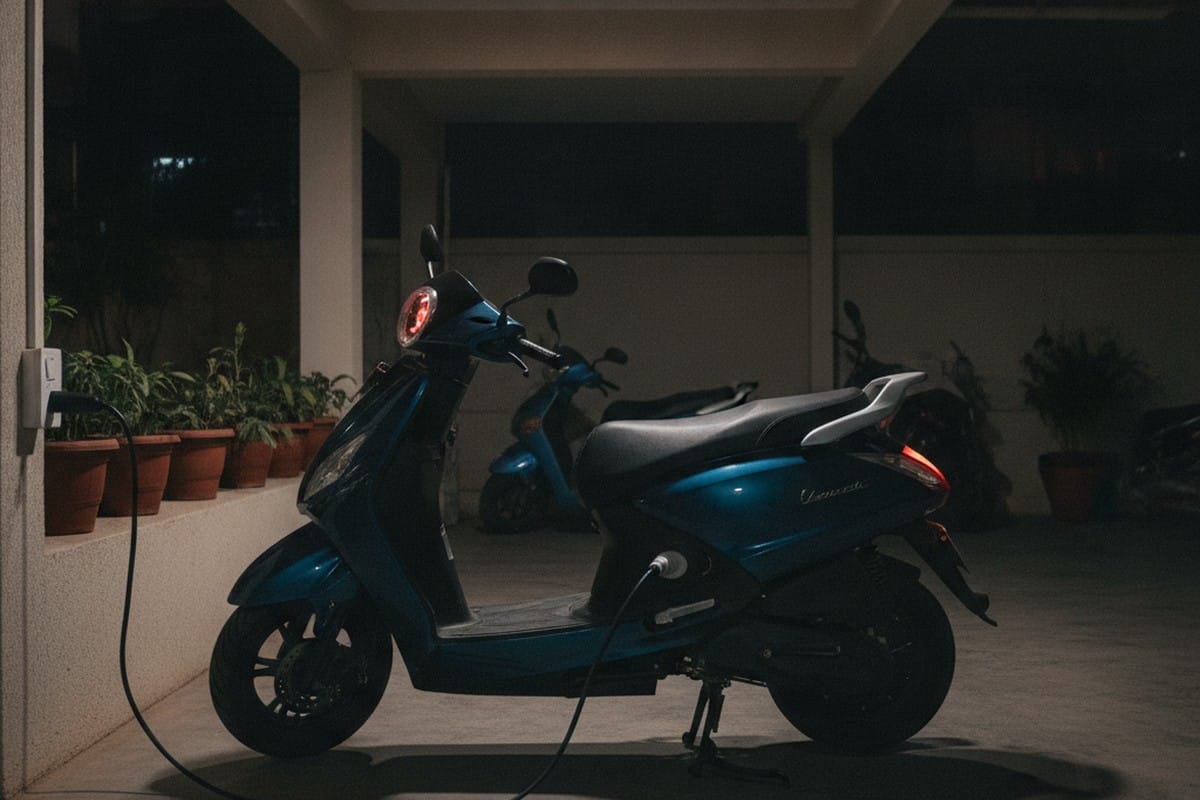
Charging time is worth understanding before you buy. A 4-hour full charge suits overnight home charging perfectly well. If you need faster turnaround, check whether the scooter supports fast charging before assuming it does.
Finally, licensing requirements are worth knowing. In India, electric vehicles with a motor output of 250W or below and a top speed of 25 km/h or below are classified as Low Speed Electric Vehicles (LSEVs) and are exempt from driving licence, vehicle registration, and road tax requirements. For specific use cases — second-vehicle commuting, riders without a licence, older family members — this regulatory category is genuinely useful.
Elektree India: Where the Economics Come Together
Elektree India has built its scooter lineup around the practical realities of Indian commuting, not around showcasing headline specifications that don’t survive contact with actual Indian roads and traffic.
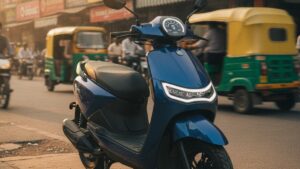
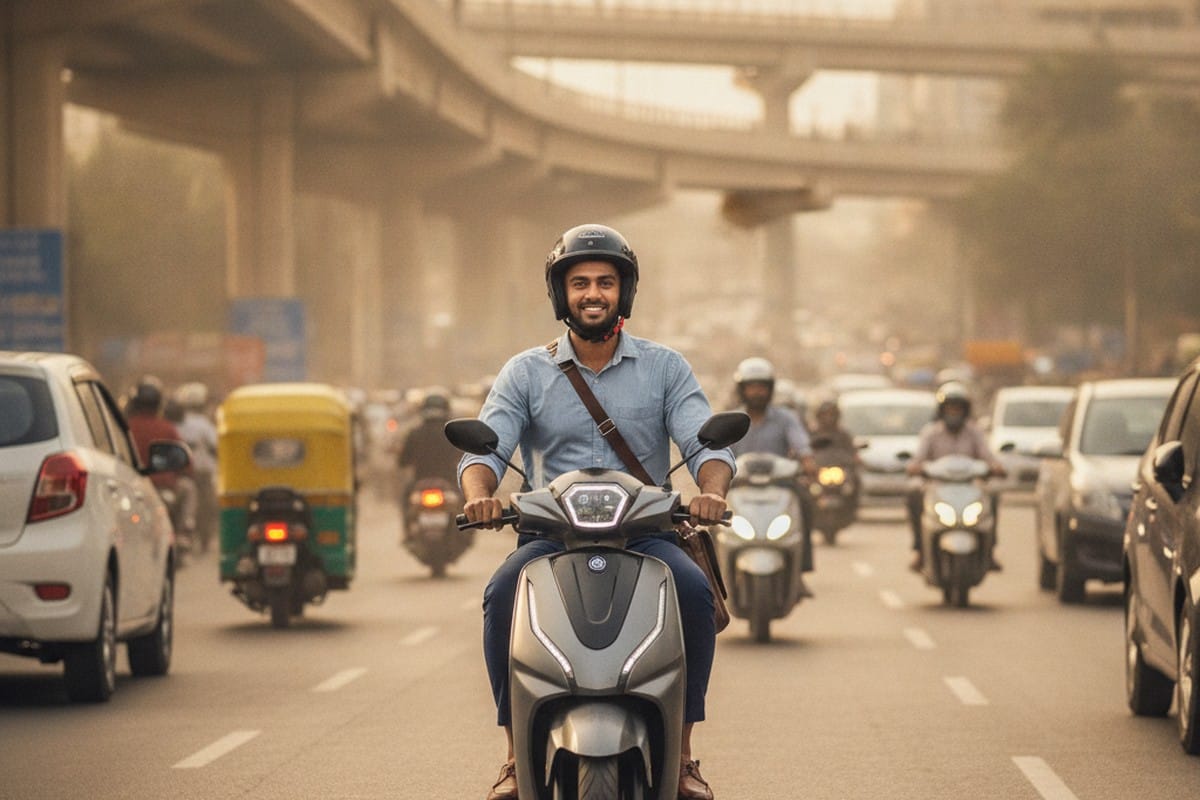
The Elektree Zenith (₹90,164) and the RV 80 (₹94,363) both deliver 80 to 100 km of range at a top speed of 60 km/h — suited for city commuting and inter-district travel alike. Both carry a 3-year warranty, charge in approximately 4 hours, and run at the ₹5 to ₹10 per charge cost described above. At under ₹95,000 ex-showroom, both sit comfortably within the budget range most two-wheeler buyers in India are working with, while offering running costs that a petrol scooter simply cannot match.
For riders who want to sidestep RTO paperwork entirely, the Elektree Wheels (₹82,871) qualifies under LSEV norms — which means no driving licence, no registration, and no road tax. It’s a lower-speed model (45 km/h, 50 to 70 km range) designed specifically for intracity commuting where paperwork-free ownership is a genuine advantage. As the most affordable model in Elektree’s lineup, it makes the switch to electric accessible to a wider range of buyers.
If your needs run beyond urban commuting — longer distances, higher speeds, or the occasional highway run — Elektree’s Fantom EV (₹1,39,000) moves into electric motorcycle territory with a claimed range of 150 to 180 km and a top speed of 110 km/h. Different category, different buyer, but worth noting if you’re considering the brand’s full range.
With 54-plus dealer outlets across India, Elektree has the service reach to make ownership practical, not just appealing on paper. And the 3-year warranty across its scooter range — covering the period during which battery degradation is most critical to watch — provides genuine peace of mind rather than a symbolic gesture.
The Bottom Line
The economics of switching to electric are no longer speculative. For someone riding 25 to 30 km daily in any Indian city, the running cost difference between a petrol scooter and an electric scooter adds up to ₹17,000 to ₹22,000 in savings every single year. Over three years, that’s well over ₹60,000 — enough to offset the higher purchase price and then some, with money left over.
The question isn’t whether electric scooters make financial sense in 2026. They clearly do, for most commuters. The question is which one you buy. A scooter that combines honest range, a credible warranty, low running costs, and a practical service network checks all the boxes a careful Indian buyer should be working from.
Elektree India’s lineup — the Zenith and RV 80 for full-speed commuting, the Wheels for paperwork-free urban use, and the Fantom EV for those who need more — is worth a serious look. The numbers make a strong argument on their own. If you’re ready to stop funding the petrol pump and start keeping that ₹1,700 a month in your pocket, elektree.com is a good place to start.