Everyone who’s shopped for an electric scooter in India has had the same moment at the dealership. The salesperson quotes an on-road price, throws in a subsidy figure that may or may not still apply in your state, mentions an EMI number that sounds suspiciously low, and somewhere in the fine print is a battery warranty clause nobody reads out loud. You walk out either sold or scared off, and neither reaction is based on real numbers.
So let’s do the math properly. Not the brochure math — the EMI-plus-insurance-plus-charging math that decides whether you’re actually saving money three years from now, using three scooters that dominate cross-shopping lists right now: the TVS iQube, the Bajaj Chetak, and the Ather Rizta, with the Ola S1 thrown in as the value disruptor everyone eventually cross-checks against.
What you’re actually choosing between
Ex-showroom prices this season put the TVS iQube and Bajaj Chetak within a few hundred rupees of each other, both hovering just under ₹1.2 lakh, while the Ather Rizta sits close behind at a similar mark before options. The Ola S1 X undercuts all three by a wide margin, starting well under ₹1 lakh, and that price gap alone explains why Ola still wins on volume even when it loses on trust surveys.
But sticker price is the least interesting number here, because these three feel like genuinely different products once you’ve ridden them. The Chetak’s metal body gives it a planted, heavier feel that owners describe as closer to a traditional Vespa than a gadget on wheels — it’s the one that doesn’t feel like it’ll rattle apart on a Bengaluru service road. The iQube leans the opposite direction: TVS has folded electric scooters into its existing petrol dealer network, so it’s the easiest of the three to get serviced in a tier-2 town, which matters enormously if you’re buying outside a metro. The Rizta is the tech showcase — a proper touchscreen, Google Maps built in, over-the-air updates that actually ship — aimed at buyers who want their scooter to feel like an extension of their phone rather than a departure from their old petrol Activa.
Claimed range numbers are where things get slippery. Manufacturers quote figures under test conditions that nobody replicates in real traffic. Knock 20 to 30 percent off whatever’s printed on the spec sheet and you’ll land closer to what riders actually report: roughly 110–120 km for the iQube’s larger battery variant, 115–130 km for the Chetak 3501, and 85–100 km for the Rizta Z in day-to-day city riding with the throttle used the way Indian traffic demands. None of that is a dealbreaker for a daily commute under 40 km, which covers most urban riders, but it matters if you were mentally budgeting for the number on the poster.
The EMI trap nobody warns you about
Here’s the detail that catches first-time EV buyers off guard: electric two-wheeler loans in India typically cap out at a 36-month tenure, versus 48 to 60 months you’d get on an equivalent petrol scooter loan. Lenders treat EVs as a shorter-cycle asset, partly because of battery degradation assumptions, and that shorter window pushes your EMI noticeably higher for the same loan amount. On a roughly ₹1.1–1.2 lakh scooter financed with a 10–15% down payment at interest rates that typically start around 10% per annum for buyers with a decent credit score, you’re looking at EMIs meaningfully steeper than what the “affordable EV” framing implies. Run the actual numbers through a calculator before you sign — don’t extrapolate from what a petrol-bike EMI felt like, because the comparison doesn’t hold.
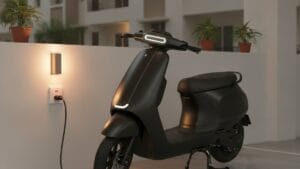
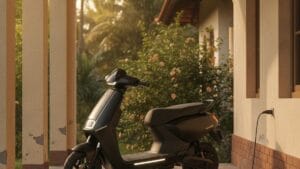
This is precisely why the running-cost pitch matters so much to the overall math. Charging an electric scooter costs somewhere in the ballpark of ₹30–50 per 100 km on home electricity rates, against ₹150–180 for the petrol equivalent at current fuel prices, and annual servicing tends to land around ₹1,200–2,500 versus ₹3,000–5,000 for a petrol scooter with its oil changes, filters, and moving parts. Over a 36-month loan tenure, those monthly savings genuinely claw back a chunk of that steeper EMI — but only if you’re actually doing the mileage that makes the fuel savings add up, and only if you’re not blindsided by the next cost most first-time buyers forget entirely: insurance.

The insurance line item everyone underestimates
Comprehensive insurance on an electric scooter typically runs somewhere between ₹1,200 and ₹4,000-plus a year depending on the Insured Declared Value you’ve registered, and IRDAI has floated a 15% discount specifically for electric two-wheelers on the third-party component, which is worth actively asking your insurer about rather than assuming it’s automatically applied. The number that trips people up is IDV depreciation: your scooter’s insured value drops by roughly 20% in year one-to-two and by 40% by year three-to-four, which shrinks your payout ceiling right as the vehicle is statistically more likely to need a claim.
The part almost nobody reads before signing is that standard policies usually exclude battery damage — and the battery is 40–50% of the scooter’s entire insured value. If your electric scooter’s most expensive component isn’t covered by default, you’re one flooded basement parking lot away from an uncomfortable conversation with your insurer. A battery protection add-on costs extra, but given what monsoon flooding does to underground parking across Mumbai, Chennai and Bengaluru every year, it’s not an optional line item so much as the actual point of buying insurance in the first place. Building a no-claim bonus by staying claim-free for five years can eventually knock up to half off your premium, and it’s worth deliberately porting that NCB history if you switch insurers rather than starting from zero.
So which one should you actually buy
If you live somewhere with a thin TVS-or-Bajaj-adjacent service network and want the shortest possible distance to a mechanic who’s seen your scooter’s motor before, the iQube’s reach is genuinely the deciding factor — dependable value matters more than flair when the nearest Ather service point is 40 km away. If you want a scooter that feels substantial under you and charges faster at home, the Chetak’s metal build and charging convenience are worth the modest premium. If you’re the kind of rider who cares about software updates and wants navigation and ride stats baked in rather than bolted on, the Rizta earns its price tag, provided you’re within comfortable range of Ather’s expanding but still smaller network. And if budget is the binding constraint above everything else, the Ola S1’s lower entry price is real money saved upfront — just go in aware that build-quality and after-sales feedback for Ola still trail the other three in most owner surveys, so weigh that against how much service-network stress you’re willing to tolerate.
None of these are wrong answers. But whichever one you pick, run your own EMI-plus-insurance-plus-charging math before you sign anything at the dealership — because the number that actually determines whether you’re happy with this purchase in year two isn’t the on-road price, it’s the one buried in the loan tenure and the insurance fine print that nobody puts on the poster. Explore the full range of current listings and city-wise pricing on elektree.com before you finalise anything — the model that’s cheapest in Delhi isn’t always the cheapest in Chennai once state subsidies and RTO charges are factored in.