The Indian Office Commuter’s Electric Scooter Guide 2026: Five Questions That Matter More Than Your Salesperson’s Range Claim
Here’s a scenario that plays out every weekend at electric scooter showrooms across India. A buyer walks in asking for something to ride to work — a 22km commute through city traffic. The salesperson steers them toward a model with a 150km claimed range. The buyer pays ₹1.2 lakh and rides home satisfied. Three months later, they’ve never once drained the battery below half. They paid a significant premium for range they don’t use, while the specifications that actually affect their daily ride — charging convenience, suspension comfort, boot storage, reliability — were barely discussed.
This happens constantly in the Indian EV market. Before you walk into a showroom with your savings, it’s worth unpacking.
What Does Your Commute Actually Look Like?
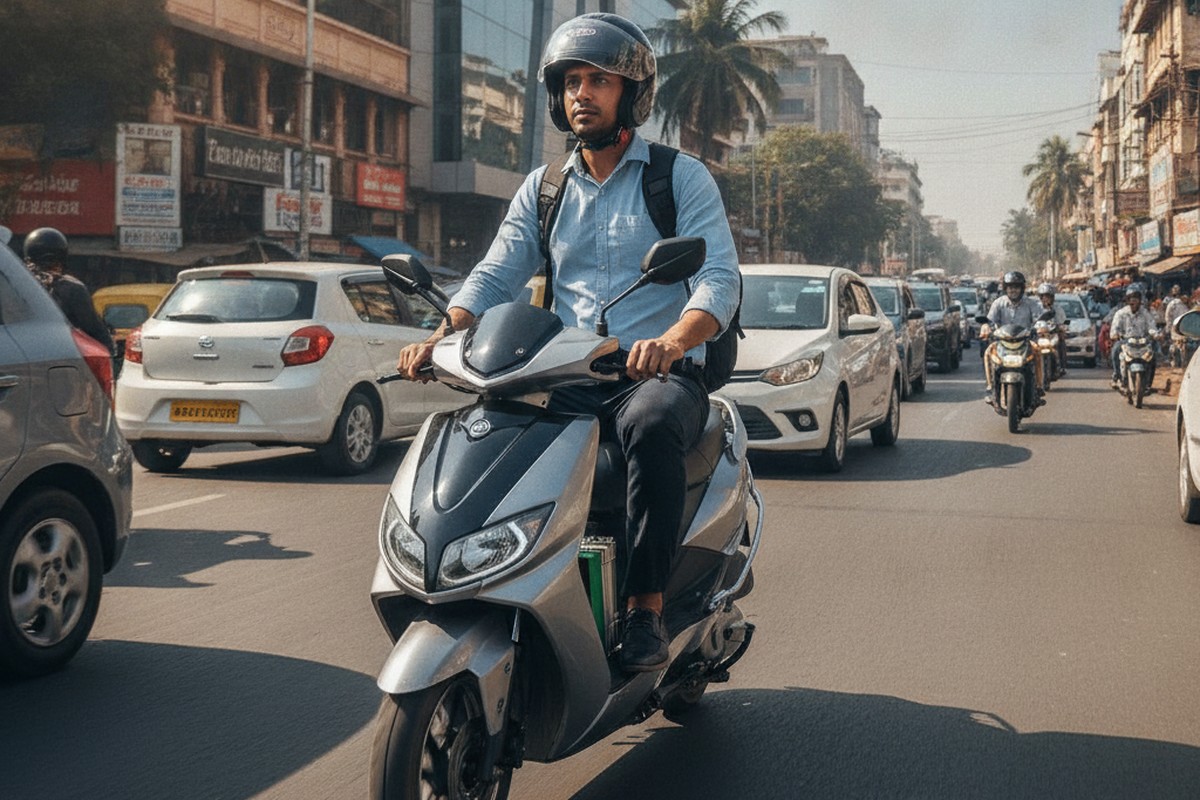
The average one-way urban commute in Indian cities falls between 10 and 25 kilometres. Even with detours and errands, most office-goers in Mumbai, Bangalore, Hyderabad, Pune, or Delhi are putting 30-50 kilometres on their scooter each day. On particularly busy days, that might stretch to 70km.
A scooter with a real-world range of 75-90km handles this comfortably. With overnight home charging, you start every morning with a full battery — never range-anxious, never stranded. The maths is simple, and yet commuters routinely pay for 150-200km range they will statistically never use.
Once a scooter comfortably exceeds your daily distance with buffer, additional range delivers marginal value. What starts to matter far more is everything else.
Five Questions Every Commuter Should Ask
Rather than leading with the spec sheet, these questions determine whether an electric scooter will serve you well for five years of daily riding.
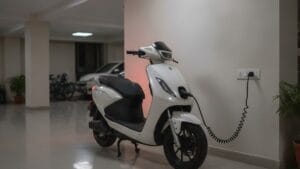
Will it charge fully from my home socket overnight? A scooter that takes 8-10 hours to charge might be ready in the morning, but barely. Most quality scooters in this segment charge fully in 4-6 hours from a standard socket — plug in after dinner, unplug before you leave. Check this number carefully, and check whether you need a special wall box.
What does it cost per kilometre to run? A petrol scooter at 45km per litre and ₹100/litre fuel costs roughly ₹2.2 per km. A good electric scooter costs ₹5-15 per full charge. At 80km of real range, that’s ₹0.06-0.19 per km. For a 40km daily commute, the daily fuel saving is ₹70-80 — roughly ₹2,000 per month, ₹24,000 per year.
Can it handle Indian roads? Ground clearance and suspension quality are things you feel every single day. For Indian conditions, ground clearance of at least 165-180mm is desirable. Telescopic front with monoshock rear tends to absorb urban road irregularities far better than cheaper setups.
Is there enough storage for your actual life? A full-face helmet alone takes significant boot space. Add a laptop bag or groceries, and 10-12 litres feels very tight. Look for 16-20 litres of boot space if you intend to use the scooter as a genuine daily workhorse.
What does after-sales look like in your city? A three-year battery warranty means little if the nearest service centre is two hours away. Verify the brand’s dealer presence locally before buying.
A Realistic Look at the Market in 2026
At the premium end, the TVS iQube (around ₹1,19,250 ex-showroom) and Bajaj Chetak (around ₹1,19,056) come with strong brand networks and solid build quality, but carry a meaningful price premium. The Ather Konarc enters at roughly ₹1,00,099 with good urban performance credentials. The Honda QC1 (approximately ₹90,708) keeps costs down but trades off with a more limited 50kmph top speed and smaller battery.
For the commuter who needs reliability, storage, comfort, and genuinely good running economics — rather than the highest top speed or maximum range — there’s a compelling case to look at scooters in the ₹90,000-95,000 bracket engineered around Indian commuter realities.
Where Elektree India Stands for the Daily Commuter
Elektree India’s Zenith and RV 80 are built with exactly this buyer in mind. Priced at ₹90,164 and ₹94,363 respectively, both sit under ₹1 lakh while delivering specifications that compare well with options priced considerably higher.
The Zenith runs a Mid Drive IPM motor — a type that typically offers better efficiency and torque delivery than the hub motors common in many budget alternatives. In stop-and-go city traffic, this means smoother acceleration from standstill and better hill-climbing ability. Top speed is rated at 70kmph, and the IDC-certified range sits at 80-100km depending on variant — enough for even longer commutes with room to spare.
The practical specifications make a strong case. The 18.5-litre boot handles a full-face helmet and a day bag without compromise. Ground clearance of 180mm navigates the road surfaces most Indian cities offer. The 200kg payload rating makes it equally practical solo or with a pillion. The combination of telescopic front and monoshock rear suspension delivers notably more comfort than stiffer budget competitors — something you’ll feel every day on potholed city roads.
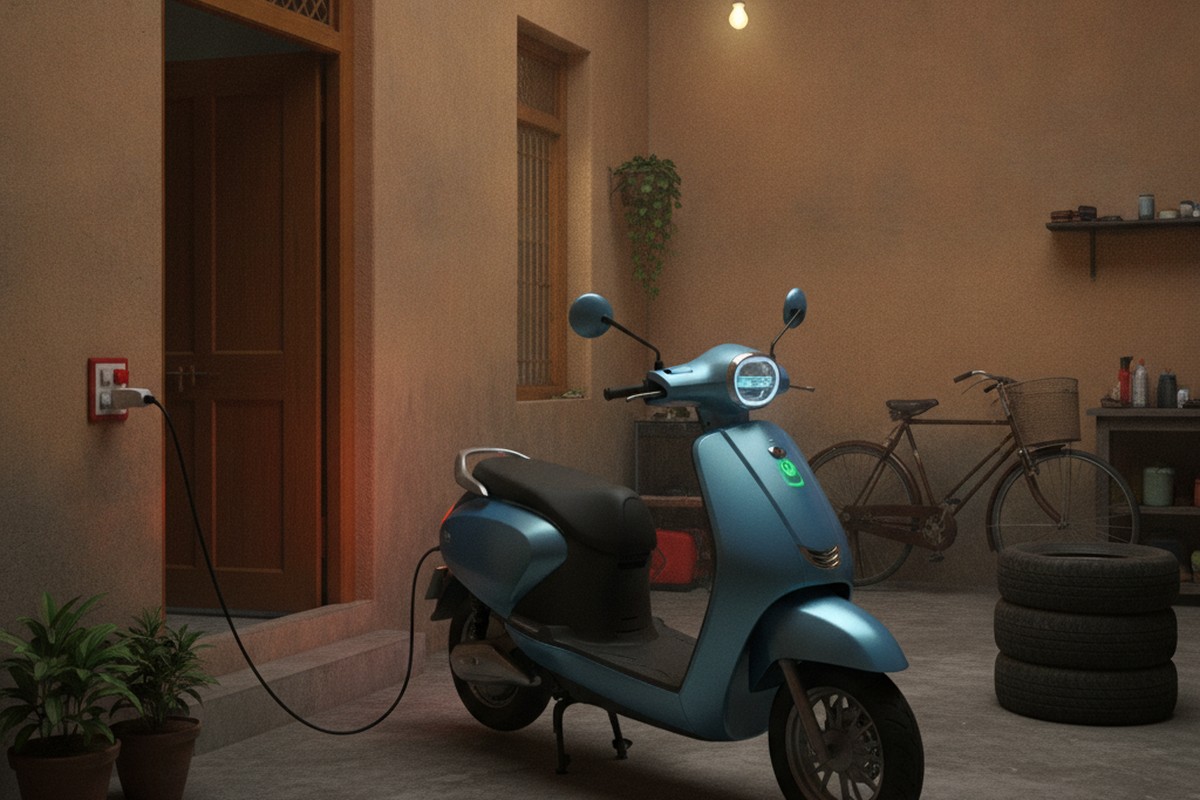
The battery carries a three-year or 50,000km warranty on the lithium-ion pack — meaningful protection on the most expensive component of the scooter. At ₹5-10 per full charge and a 4-5 hour charge time, the daily routine is straightforward: plug in after dinner, unplug before leaving for work. The scooter carries ICAT certification and comes with GPS tracking, anti-theft alarm, three riding modes, a digital display, and a USB charging port — a feature set that feels genuinely complete rather than stripped down to hit a price point. With 54+ dealer locations across India, after-sales support is accessible in most major cities and many tier-2 towns.
Running the Numbers
For a buyer doing 40km daily on a petrol scooter, fuel costs roughly ₹75-80 per day. On the Zenith, the same distance costs approximately ₹5-10 in electricity. That’s a saving of ₹65-75 per day — around ₹2,000 per month. Over three years, that’s more than ₹70,000 in fuel savings alone. Add significantly lower maintenance costs (no oil changes, fewer mechanical components), and the total cost of ownership picture shifts decisively.
The price gap between the Zenith and a ₹1.2 lakh competitor is approximately ₹30,000. Given comparable real-world range for daily commuting purposes and the running-cost savings, that initial difference often makes the Elektree the stronger overall financial decision for a commuter working within a practical budget.
The Right Scooter Is Built Around Your Real Day
The best electric scooter for daily commuting in India isn’t the one with the highest claimed range or the most headlines — it’s the one that reliably handles your actual route, charges conveniently overnight, costs the least to run, and is backed by service support that’s genuinely accessible.
For the majority of Indian office commuters doing 30-50km daily, the Elektree Zenith and RV 80 deliver on every one of those criteria without crossing ₹1 lakh. The mid-drive motor, generous boot space, proper suspension setup, Indian-road-appropriate ground clearance, and a genuine three-year battery warranty make these scooters a financially smart, practically capable choice for riders who want the economics of electric ownership without paying for specifications they won’t use.
If you’re ready to move away from petrol and want a scooter matched to your actual daily needs, Elektree’s lineup deserves a serious look. Visit elektree.com to explore the Zenith, RV 80, and the rest of the range — and see how well they stack up against your daily commute numbers.