The Real Question Every Indian Electric Scooter Buyer Should Ask — and Almost Nobody Does
Go to any electric scooter showroom in India right now and the conversation will be dominated by one number: range. 100 km. 125 km. 150 km. Every salesperson has these figures memorised. The brochures lead with them. The test-ride experience is designed around them.
What nobody volunteers — not the salesperson, not the brochure, not the YouTube review — is the more uncomfortable question: what happens in Year 4, when that battery has been through 500 charge cycles, baked through four Indian summers, and is delivering noticeably less than the range figure you bought it for? And what does it cost when you eventually need to replace it?
This isn’t a hypothetical. It’s the ownership reality every Indian electric scooter buyer will face, and the numbers are significant enough that they should change how you evaluate scooters right now, before you sign the papers.
How Batteries Age in Indian Conditions
Every charge-discharge cycle causes minor, cumulative changes in the chemistry of lithium-ion cells. What isn’t considered in European or American testing protocols is what India’s specific conditions do to that process. Summer temperatures regularly exceeding 40°C in most cities accelerate chemical aging in battery cells. Add voltage fluctuations common in older residential buildings, vibration from Indian roads, and the fact that most electric scooters lack the active liquid-cooling found in electric cars, and you have a considerably harsher environment than the conditions most battery warranties are calibrated against.
The good news: under reasonable conditions — daily commutes of 20-40 km, consistent charging habits, manufacturer-approved charger — most batteries retain roughly 85-90% of their original capacity after five years. A scooter rated at 100 km real-world range is typically delivering 85-90 km after five years. Reduced, but still functional for most Indian commutes. The question is whether it degrades faster than that — and your charging and usage habits are the primary variable.
Battery chemistry matters here too, though it rarely appears in mainstream marketing. LFP (lithium iron phosphate) cells handle heat significantly better and typically last longer than NMC (nickel manganese cobalt) alternatives. If a manufacturer specifies their chemistry, it’s worth paying attention to.
The Replacement Costs Nobody Puts in the Brochure
When a battery pack reaches end-of-life — or suffers damage — here’s what Indian owners are actually paying for replacements in 2026.
For Ola Electric, replacement costs vary dramatically by model: around ₹45,000-50,000 for the smaller 2 kWh pack, rising to ₹1,10,000-1,20,000 for the 5.2 kWh unit in higher-end models. Ather owners are looking at ₹60,000-65,000 for the 2.9 kWh pack and ₹70,000-80,000 for the 3.7 kWh version. TVS iQube replacements range from ₹45,000 for smaller packs to ₹1,15,000-1,20,000 for the 5.3 kWh variant. Bajaj Chetak comes in at ₹55,000 to ₹80,000 depending on pack size, and Hero Vida at ₹45,000 to ₹85,000.
To put this in perspective: for many popular mid-range electric scooters, an out-of-warranty battery replacement costs 60-80% of what the scooter originally sold for. On certain premium models, the replacement pack costs as much as the scooter itself. You’re not replacing a consumable — you’re effectively buying a second scooter. This is why the battery question belongs in the pre-purchase conversation, not five years later.
What the Warranty Actually Covers — and What It Doesn’t
Most mainstream brands offer a 3-year battery warranty with distance caps of 30,000 to 50,000 km. Hero Vida and Ampere Nexus go to 5 years on the standard battery warranty — the strongest in the segment. Ola extends certain coverage to 8 years, though the specific terms reward careful reading.
But the exclusions section of most battery warranty documents is longer than the coverage section. Using a third-party charger — even once — can void warranty. The battery management system logs charging events. Unauthorized service at any point can similarly void coverage. Water damage beyond the scooter’s IP rating won’t be covered. Deep discharge — leaving the battery at 0% for extended periods — causes chemical damage that falls outside warranty. Home wiring faults causing voltage spikes are explicitly excluded by most manufacturers. Missed scheduled services can render the entire warranty void.
A warranty on paper isn’t the same as a warranty you can actually claim. Read the document — specifically the exclusions — before committing to any scooter.
The Hidden Battery Sizing Maths
There’s a direct relationship between battery size and replacement cost that most Indian buyers never calculate. Bigger battery means more expensive replacement. And a significant portion of buyers are sold on maximum range figures without seriously thinking about whether they need that range.
The average Indian urban commuter rides 20-35 km per day. An 80 km real-world range is more than sufficient — two days of commuting between charges. Yet marketing consistently pushes buyers toward 120+ km options that mean much larger battery packs, higher upfront costs, and considerably greater financial exposure when those packs eventually need replacing. Right-sizing your battery is one of the most underappreciated financial decisions in an EV purchase.
AIS 156 Certification: The Specification That Actually Tells You Something
There’s one technical specification that doesn’t appear in any marketing headline but matters more to long-term ownership than most of what does: AIS 156 battery safety certification.
AIS 156 is India’s regulatory standard for lithium-ion battery packs in electric two-wheelers. Certified packs must clear thermal runaway tests, vibration resistance protocols, mechanical shock tolerance standards, and electrical safety requirements — all tested against conditions relevant to Indian roads and climate. ICAT (International Centre for Automotive Technology) is one of the recognized certifying bodies in India.
After a series of EV fire incidents in 2022-23 that generated significant public concern, this certification became a meaningful signal for safety-conscious buyers. A scooter with an ICAT-certified, AIS 156-compliant battery has had its thermal management validated to a formal standard — not just taken on faith from the manufacturer’s marketing copy.
The Elektree Case: When Battery Engineering Meets Indian Reality
This is where Elektree India makes a genuinely compelling case for buyers who’ve done the battery maths.
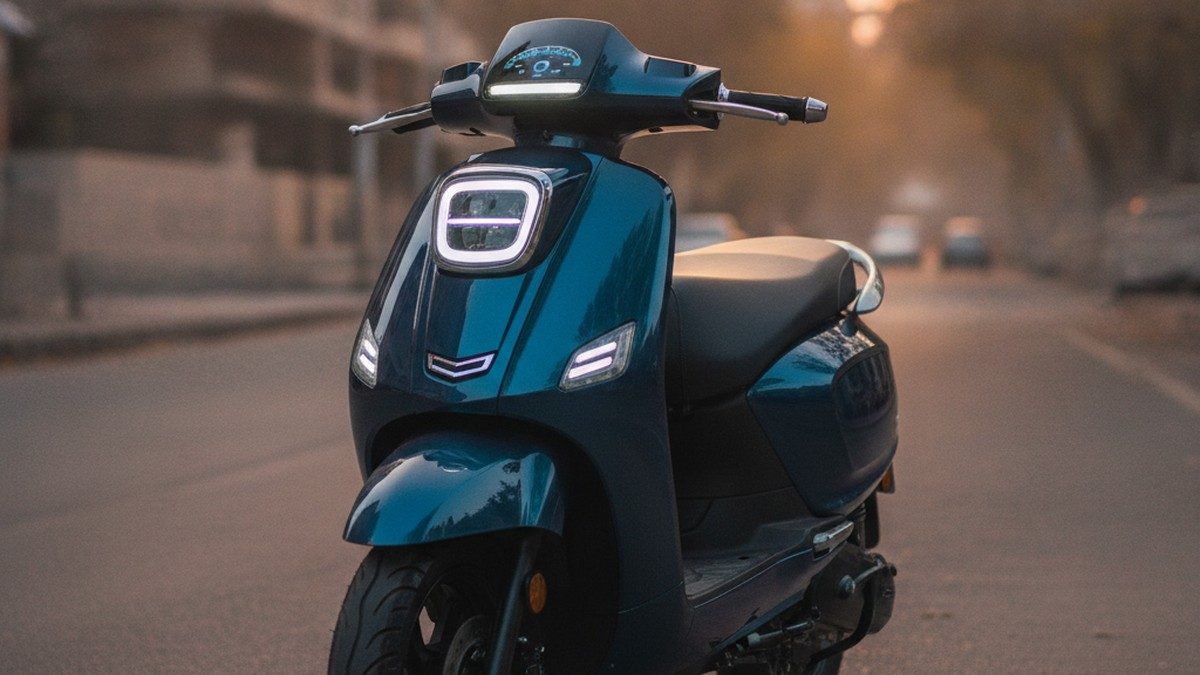
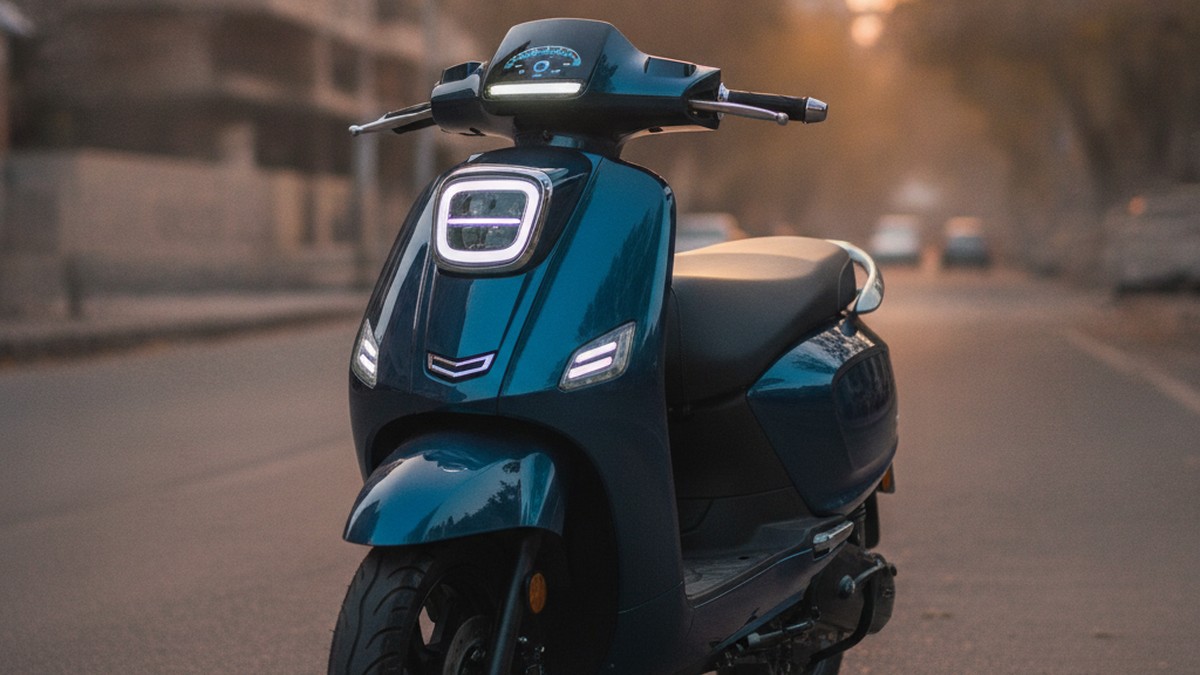
The Elektree Zenith — priced at ₹90,164 — carries a 3-year, 50,000 km battery warranty and is ICAT certified to AIS 156 safety standards. That certification isn’t a marketing claim; it means the battery has cleared the regulatory bar for thermal behaviour and safety in Indian riding conditions.
The 60V/35Ah lithium-ion pack paired with a mid-drive IPM motor is properly sized for Indian commuting reality — 80-100 km of IDC-certified range. The practical implication: your replacement cost exposure is proportionate to what you actually need, rather than carrying the financial liability of a large-format battery your daily commute never requires.
The Zenith’s 180mm ground clearance handles Indian road surfaces credibly. Its 18.5-litre under-seat storage is genuinely useful. Disc brakes, three riding modes, GPS tracking, anti-theft alarm, USB charging port, and a 200 kg payload capacity deliver practical ownership without compromise. The scooter doesn’t require a licence for operation, which is a useful simplification for many buyers.
On battery warranty terms, Elektree’s 3-year/50,000 km sits at the same level as Bajaj Chetak, TVS iQube, and the base Ather 450X — established players with larger service networks. For a brand occupying the practical-value end of the market, this parity on warranty terms is meaningful.
The Questions That Matter More Than the Range Claim
The battery maths brings the pre-purchase checklist into focus. Before committing to any electric scooter, get clear answers to these: What is the exact battery warranty in both years and kilometres — and which cap will you hit first at your daily riding distance? What conditions specifically void the warranty? Is the battery ICAT certified to AIS 156? What is the out-of-warranty replacement cost for this exact pack? Is the battery sized for your actual commute, or for a maximum-range brochure scenario?
For most Indian urban commuters riding 20-40 km daily, the right electric scooter isn’t the one with the most impressive claimed range. It’s the one with a properly certified battery, honest warranty terms, appropriate capacity for real usage, and a manufacturer who hasn’t built a financial landmine into the ownership experience.
On all of those counts, the Elektree Zenith makes a strong case. Under ₹1 lakh, ICAT certified to AIS 156, 3-year/50,000 km battery warranty, and 80-100 km of genuine range for the commutes that actually happen in Indian cities. Read the full warranty document on any scooter you’re seriously considering — the exclusions tell you more about manufacturer confidence than the headline terms do — and explore the complete Elektree India range at elektree.com before you decide.