
The showroom texts have already started arriving. “Navratri Dhamaka!” “Limited Period Festive Offer!” “Book Now and Save ₹20,000!” If you’ve been thinking about buying an electric scooter, the next six weeks will throw more deals at you than the rest of the year combined. And honestly? The festive season in India is genuinely one of the better times to buy an EV. Dealers push volume, manufacturers extend warranties, and you can sometimes negotiate things that aren’t even on the brochure.
But the same excitement that creates real deals also creates real traps. Buyers who walk in during Navratri thinking with their heart rather than their head end up with the wrong scooter — bought at the wrong price, with the wrong EMI, from a service network that doesn’t reach their city. This guide is meant to help you avoid all of that.
Why the October Festive Window Is Genuinely Worth It
Let’s be honest about what’s actually happening in the market right now. Ola Electric has announced Navratri offers on its S1 series with up to ₹9,999 off plus an 8-year extended battery warranty, and daily 90-minute “Muhurat Mahotsav” flash sales where the S1 Pro+ (4 kWh) is going for ₹99,999. The Roadster series has up to ₹20,000 off. Dealers across the segment are stacking EMI cashbacks of ₹10,000 or more on credit card purchases.
This is real money. And the festive season tends to bring things like free first-year insurance, complimentary home delivery, and extended warranty packages that manufacturers use as differentiation tools when headline prices converge. If you were going to buy an electric scooter in the next three to four months anyway, October is structurally a smarter time than, say, January.
There’s also the subsidy angle. The central PM E-Drive scheme remains in place, offering ₹2,500 per kWh of battery capacity (capped at ₹5,000 per vehicle) for electric two-wheelers priced under ₹1.5 lakh ex-factory. This is a fund-limited programme — meaning it closes once the allocated budget runs out — so there’s a legitimate case for not waiting. Combine this with state-level road tax waivers that exist in several states, and the effective on-road price can be noticeably lower than the sticker suggests.
The Electric Scooter Landscape Right Now
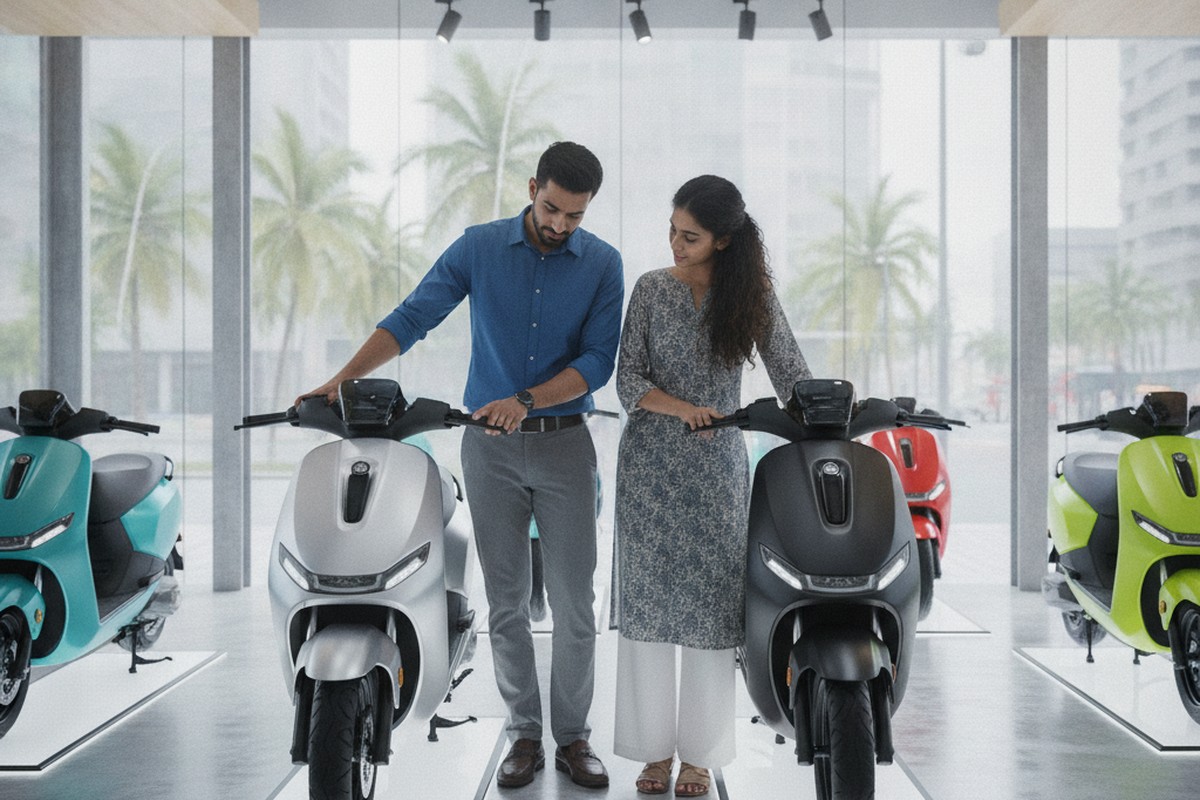
The market has matured meaningfully in 2026. You’re no longer choosing between one credible brand and a dozen unknowns. TVS iQube ST 5.3 offers real-world range of 100–130 km with a 5.3 kWh battery at around ₹1.71 lakh, backed by TVS’s substantial service footprint. The Bajaj Chetak 3001 has brought the entry point down to under ₹1 lakh ex-showroom, with metal-body build quality that most buyers instantly respect. The Ather 450 series continues to hold its ground on ride feel and software refinement, even as pricing has climbed. Hero Vida’s removable battery packs solve a real problem for apartment dwellers who can’t charge at the parking level.
If you have ₹1 lakh to ₹1.75 lakh, you have genuinely good options. The question is which one is right for you — not which one is running the loudest campaign.
The Five Festive Season Traps to Avoid
The first and most common mistake is buying the headline discount without reading the terms. Ola’s 8-year warranty, for instance, is being used heavily in Navratri marketing — but warranty documents specify coverage conditions, claim procedures, and what constitutes a warranty event versus normal degradation. Read the warranty document, not the advertisement.
The second trap is buying the cheapest option without thinking through battery size. A scooter with a smaller battery might cost ₹10,000 less up front, but if it cuts your real-world range to 60–70 km and you have a 35-km one-way commute, you’re stretching the margins every single day. Battery anxiety in a city with patchy charging infrastructure isn’t just inconvenient — it can create riding patterns that accelerate battery degradation over time.
Third: verify the service network in your specific city, not the state total. Most manufacturers publish impressive national numbers. What matters is whether there’s an authorised service centre within a reasonable distance of your home. Call the service centre before you book the scooter, not after.
Fourth, be careful with EMI cashbacks. They’re often tied to specific credit cards from specific banks, and the “effective price” calculation assumes you pay through that card. If you’re using a different payment method, the festive deal might be smaller than advertised.
Fifth — and this one gets overlooked — confirm PM E-Drive eligibility with your specific dealer before the purchase is finalised. The scheme’s funds are finite. “The subsidy will be adjusted” is not the same as money in your hand on delivery day.
What You Should Actually Be Evaluating
Before you step into any showroom, write down your daily commute distance and multiply it by 1.5 — that’s the minimum real-world range you need on a single charge to ride comfortably without worrying. If the answer is 45 km, an 80-km claimed range scooter usually gives you enough headroom. If the answer is 70 km, you need to think carefully about battery size and charging access.
Beyond range: ground clearance matters on Indian roads (180mm or more is a sensible minimum for most cities), disc brakes make a genuine safety difference in city traffic, and the motor type — hub-drive versus mid-drive — affects how the scooter handles uphills and load. These are the criteria that determine whether you enjoy riding the scooter a year from now, not the festive discount percentage.
Where Elektree India Fits In
If the big-brand festive chaos feels like too much to navigate, or if you’re looking for a sub-₹1-lakh scooter that doesn’t compromise on everyday capability, Elektree India deserves a serious look.
The Elektree Zenith, at ₹90,164, delivers 80–100 km of real-world range on a 60V/35Ah lithium-ion battery with a 4–5 hour full charge time. It runs a mid-drive IPM motor, which handles load and inclines more effectively than equivalent hub-drive setups, and the 180mm ground clearance is genuinely suited to Indian road conditions. Disc brakes, full LED lighting, 18.5 litres of underseat storage, and ICAT certification under AIS 156 battery safety standards — this isn’t a budget corner-cutting exercise, it’s a properly engineered commuter. The battery carries a 3-year or 50,000 km warranty.
The RV 80 (₹94,363) sits alongside the Zenith with similar range and performance in a sporty form factor, while the Wheels (₹82,871) offers a more compact option with 50–70 km range at 45 km/h for shorter daily distances. And if your requirements extend to long-distance commuting or performance-oriented riding, the Fantom electric motorcycle (₹1,39,000) claims 150–180 km of range at up to 110 km/h — a completely different category of product.
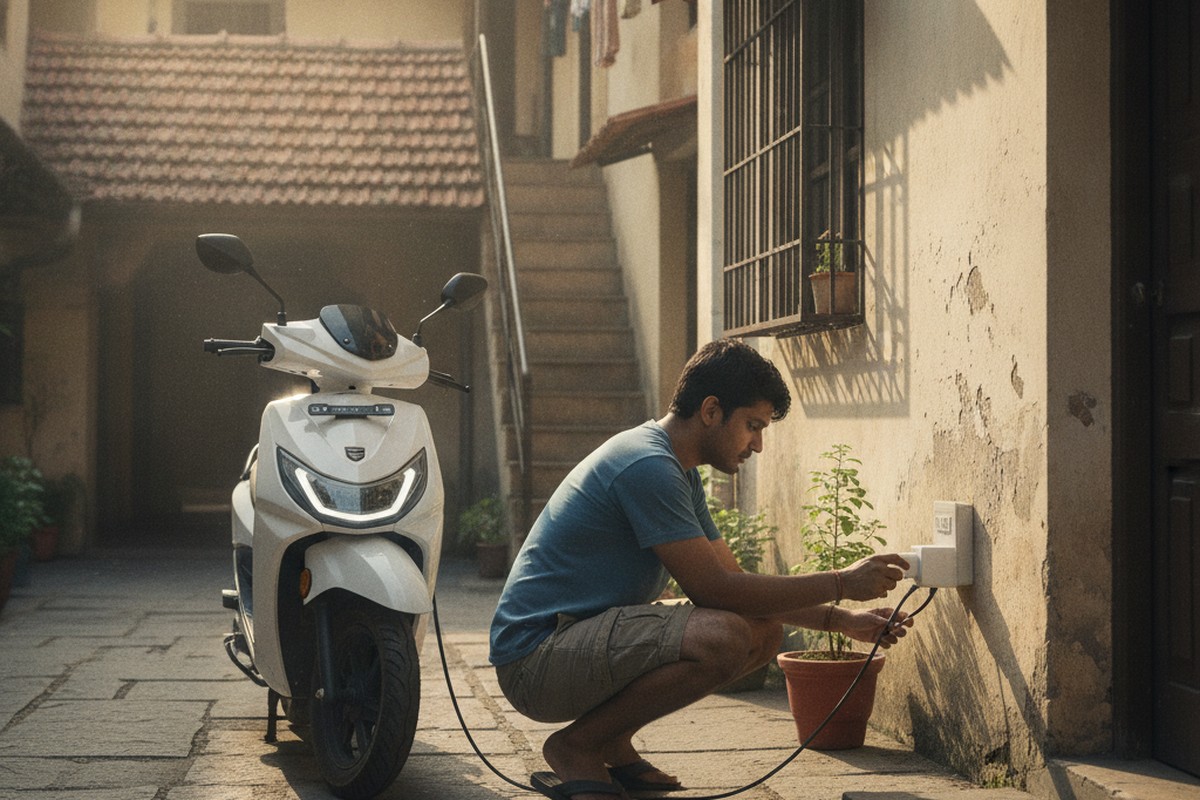
Running costs across the range: a full charge works out to roughly ₹5–10 on standard domestic electricity tariff. Over 100 km of daily riding in a month, that’s a fuel bill well under ₹300 — which no petrol scooter comes close to matching.
The Festive Case for Elektree
Here’s what makes the festive window particularly interesting for Elektree buyers. The Zenith and RV 80 are priced under ₹1 lakh ex-showroom, putting them squarely within PM E-Drive subsidy eligibility (vehicles under ₹1.5 lakh ex-factory). That central incentive, combined with applicable state-level exemptions, can meaningfully reduce the effective on-road cost. There are no 90-minute flash-sale windows to catch, no trade-in conditions to parse, and no fine-print warranty exclusions to untangle.
What Elektree brings to the festive season conversation is clarity: ICAT-certified vehicles with verified specifications, mid-drive motors engineered for real Indian commuting demands, and pricing that doesn’t depend on a limited-time campaign to look reasonable. For a buyer who’s spent the festive season comparing spec sheets and trying to work out which “₹20,000 off” actually delivers ₹20,000 in real savings, that clarity has genuine value.
Before You Sign Anything
The festive season really is a good time to buy an electric scooter. But the best deal isn’t always the one with the biggest headline number or the most WhatsApp forwards. It’s the one where the range works for your route, the service is reachable from your home, the warranty terms hold up under scrutiny, and the scooter is still making sense for you two riding seasons from now.
Use the festive energy to push for better terms and financing arrangements. And as part of your shortlist — particularly if you’re in the sub-₹1-lakh segment and want a scooter built for Indian roads rather than Instagram campaigns — spend some time exploring what elektree.com has to offer. The best Navratri decision you can make is an informed one.