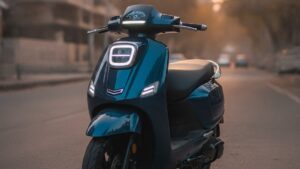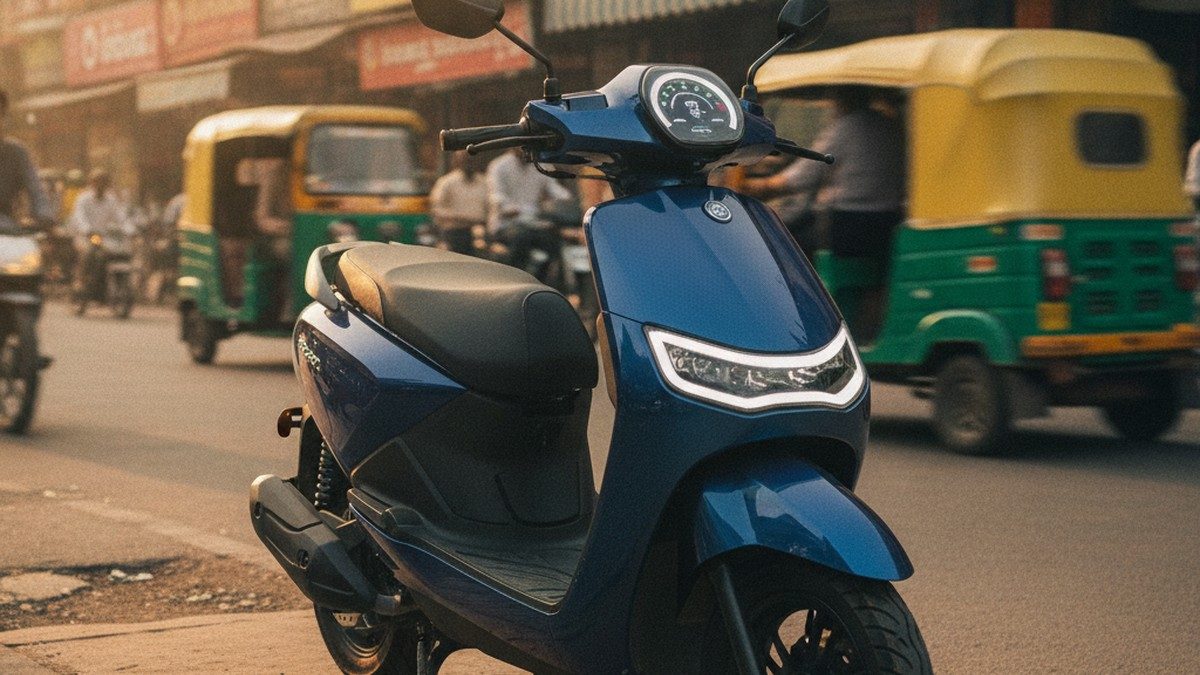
Walk into any residential colony in Pune, Jaipur, Hyderabad, or Chennai, and you’ll see the same thing parked outside: rows of Honda Activas. The scooter has been India’s best-seller for over two decades, and with good reason — reliable, easy to ride, widely serviced, and fuss-free. But with petrol at ₹102 per litre in most cities and electric scooters now genuinely usable on Indian roads, a lot of Activa owners are asking a question they’d have dismissed three years ago: should I finally make the switch?
It’s not a question with a simple yes or no. But it does have an honest answer — and this article will give you one, along with the numbers you need to decide for yourself.
Let’s Start with What Petrol Is Actually Costing You
Most Activa 6G owners get somewhere between 45 and 55 km to the litre in real-world city riding. Let’s use 50 km/litre as a fair midpoint. At ₹102 per litre, every kilometre costs you roughly ₹2.
If you’re riding 25–30 km a day — a typical city commute — that’s about ₹50–60 in petrol every single day. Across a month, that comes to ₹1,500–1,800. Over a year, you’re looking at somewhere between ₹18,000 and ₹22,000 spent purely on fuel. And that’s before you account for engine oil changes, air filter replacements, spark plugs, and the other small expenses that come with running a petrol engine.
An electric scooter covering the same 25–30 km will consume somewhere around 1.5–2 units of electricity. At typical Indian domestic electricity rates, that’s roughly ₹12–16. Not per litre. Per full day’s commute. You’re looking at ₹400–500 a month in charging costs — a saving of over ₹1,000–1,300 every month compared to petrol.
That’s not marketing language. It’s arithmetic.
So Why Hasn’t Everyone Already Switched?
Fair question. The honest answer is that electric scooters weren’t ready for the way most Indians actually ride — at least not until recently. Early models had modest real-world range, build quality that struggled on broken roads, and service networks that barely existed outside metros. A lot of that has changed. But some concerns are still legitimate, and understanding which fears are real and which have been overtaken by events is what will help you make a sound decision.
The Honda Activa e: — A Warning Worth Heeding
Honda’s own foray into electric — the Activa e: — is an instructive case study. On paper, it sounds appealing: the familiar Activa silhouette, an electric powertrain, claimed range of around 102 km. But dig into the details and the picture gets complicated.
The Activa e: uses a swappable battery system, which means there’s no socket for home charging. You need to swap batteries at Honda’s network of swapping stations. For riders who live near one, this can work well. For the majority of Indian riders, it means either planning your routes around swap stations or recharging anxiety replacing range anxiety.
More significantly, the battery subscription costs are reported to be roughly on par with running a 125cc petrol scooter — which largely eliminates the economic argument for going electric. Early users have also noted that the swappable battery design significantly cuts into underseat storage space.
None of this makes the Activa e: a bad scooter. But it does illustrate something important: the brand name on the headlamp doesn’t guarantee that an electric scooter solves the problems you actually have.
What Actually Matters When Choosing an Electric Scooter
Most buyers focus on range. It’s understandable — range anxiety is real. But range is only one part of the equation. Here’s what else deserves your attention:
Weight. This one is consistently underestimated. Many electric scooters weigh 110–120 kg because the battery pack adds significant mass. That’s considerably heavier than a petrol scooter, and the difference shows up every time you manoeuvre in tight parking or push the bike a short distance. For city riders, kerb weight matters more than brochures admit.
Storage. Some electric scooters — especially those using underseat battery configurations — sacrifice boot space heavily. Check the actual litre capacity before you buy, not just the headline spec.
Ground clearance. Indian roads demand at least 160–170 mm of clearance. Aggressive speedbreakers and monsoon-damaged surfaces will punish anything less than that on a daily basis.
Home charging. The most convenient thing about electric scooters — if the design supports it — is plugging in at home overnight. Not all electric scooters offer this, so confirm it before purchase.
Warranty. Battery replacements can run from ₹20,000 to ₹50,000+ depending on the brand. A solid warranty on the battery, motor, and controller is not a bonus feature — it’s a core part of calculating what you’ll actually spend over five years.
Where the Elektree Zenith Fits Into This Picture
The Elektree Zenith arrives at a starting price of ₹90,164 — significantly below most of its direct competitors in the same range and performance category. The TVS iQube, for example, starts at ₹1.20 lakh. The Honda Activa e: starts around ₹1.30 lakh. The Zenith undercuts both by a meaningful margin, and that saving from day one compresses the time it takes to recover your investment through lower running costs.
What stands out most about the Zenith on paper is its kerb weight: 75 kg. The TVS iQube weighs 110 kg — that’s a difference of 35 kg. For context, that’s approximately the weight of a large suitcase. In daily riding, that difference is noticeable. The Zenith is significantly more manoeuvrable in city traffic and easier to handle in tight parking situations.
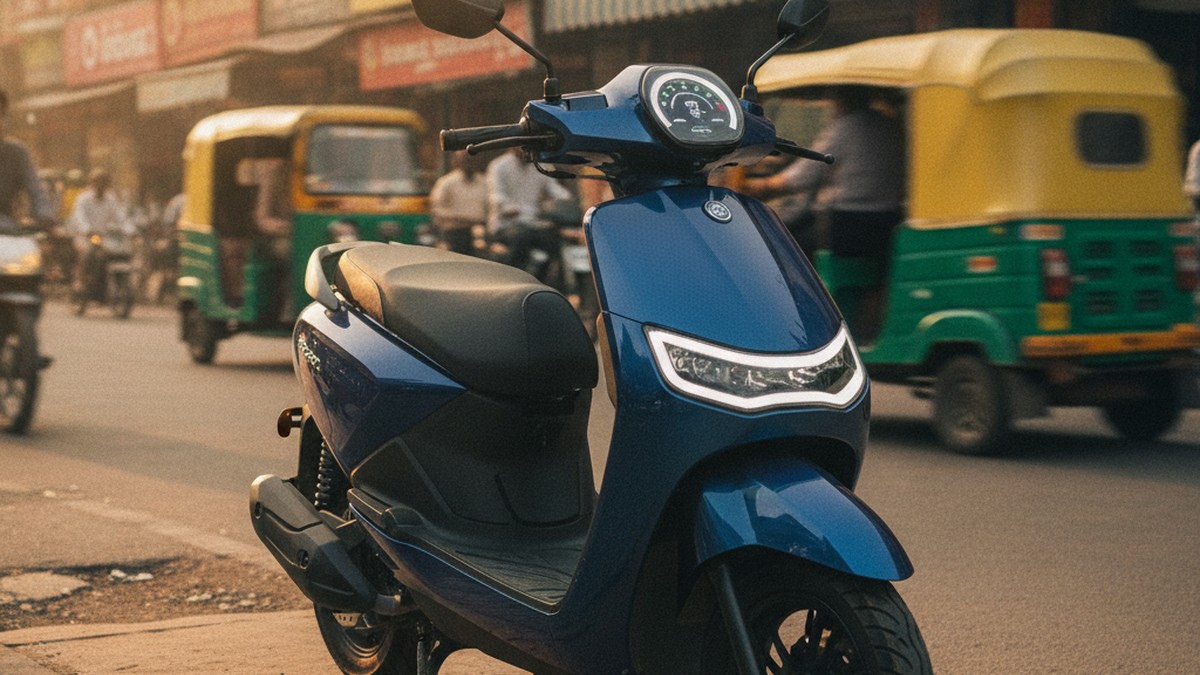
The range claim of 80–100 km under IDC conditions is honest and realistic for the 60V/35Ah lithium-ion battery. For a 25–30 km daily commute with charging every one or two nights, this is entirely practical. Charging takes 4–5 hours from a standard home socket — straightforward plug-in, no swapping infrastructure required.
The boot offers 18.5 litres of underseat storage. That’s enough for a full-face helmet with room for a small bag. The ground clearance of 180 mm is genuinely capable on rough city roads — comfortably above the threshold where speedbreakers and potholes start to become a regular problem.
The motor is a mid-drive IPM (Interior Permanent Magnet) unit — a configuration that delivers more consistent torque across different terrain and load conditions compared to the hub motors commonly found in budget electric scooters. The front disc brake offers confident stopping power, particularly in wet conditions.
Additional features include GPS tracking, an anti-theft alarm, three riding modes (Eco, Normal, and Hyper), a reverse mode for awkward parking, and a 15.5 cm instrument cluster. The Zenith is ICAT certified under AIS 156 battery safety standards, and the battery warranty covers three years or 50,000 km.
The Honest Comparison
The TVS iQube is a credible alternative — its 3.5 kWh variant reaches up to 145 km, and TVS has a well-established dealer network. If you need maximum range and value a brand with broad service coverage, it’s a reasonable spend at ₹1.4–1.5 lakh. But for commuters riding 20–40 km daily, 80–100 km of range is entirely sufficient. The Zenith’s lower price, lighter weight, and better storage make it the stronger overall proposition for most city riders — and the break-even on running cost savings comes sooner.
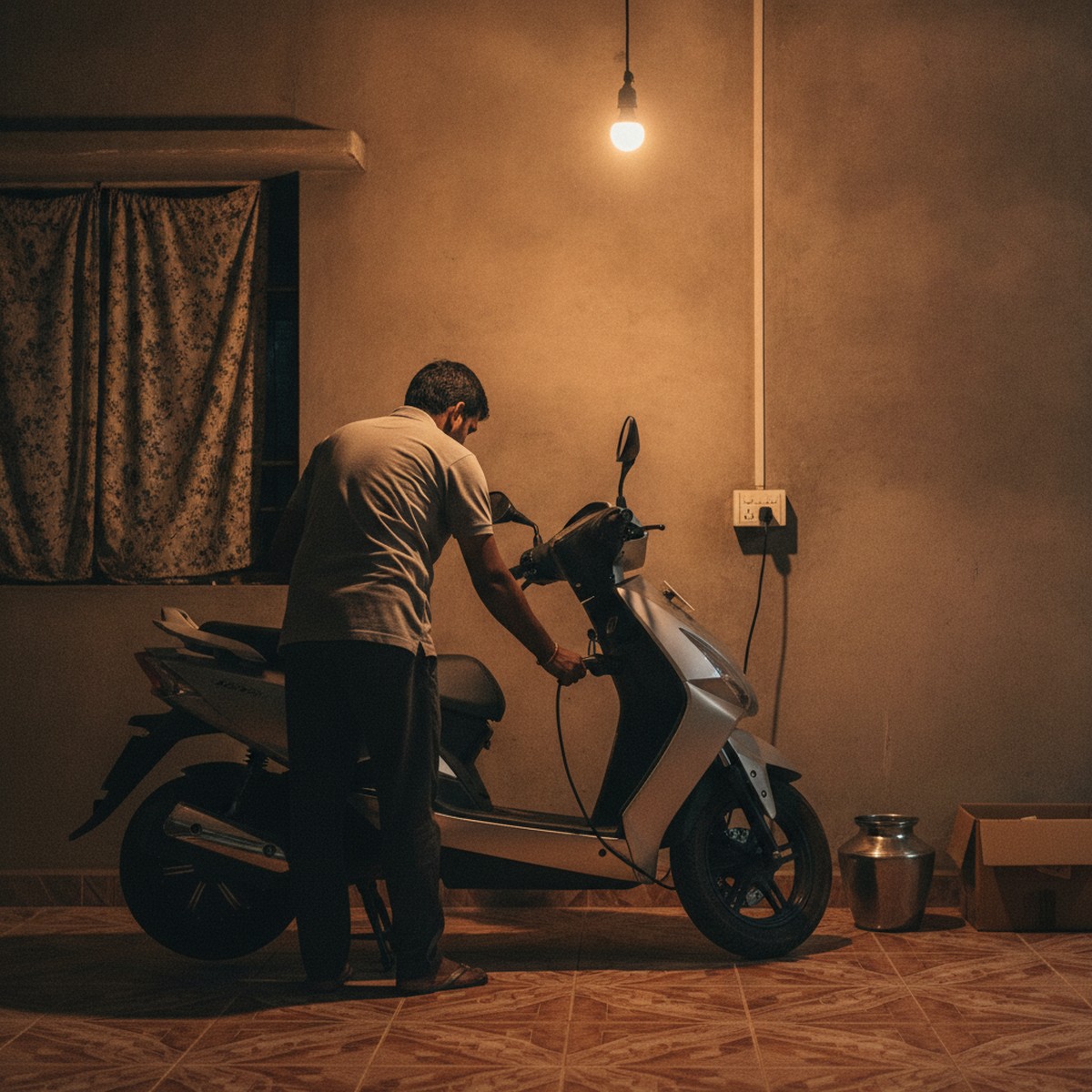
The Honda Activa e:’s core limitation — and it’s a significant one — is that it forces you to rely on Honda’s battery swap network for energy, which adds a dependency and largely neutralises the economic advantage of going electric. The Zenith doesn’t have this constraint: home charging is the default, swap stations are irrelevant, and the economics of ₹5–10 per full charge translate directly into real monthly savings.
Is the Switch Worth It?
If you’re riding 20 km or more daily and your primary scooter runs on petrol, the financial case for switching to electric is genuinely strong in 2026. The technology has matured, pricing has become more accessible, and the day-to-day convenience of home charging — once you’ve experienced it — removes much of the friction that used to make electric scooters impractical for Indian conditions.
The Elektree Zenith is not a perfect scooter — no scooter is. But for commuters who’ve been riding a petrol scooter for years and are finally ready to make the switch, it’s an honest and compelling proposition: meaningfully cheaper than mainstream rivals, lighter than most competition, with genuine range, generous storage, and home charging built in.
The math is on its side. The weight is on its side. The charging convenience is on its side. And at ₹90,164, the price is too.
If you want to explore how the Zenith and other Elektree models compare to your specific riding situation — distance, terrain, charging access — the full lineup is at elektree.com. The numbers tend to do the talking themselves.