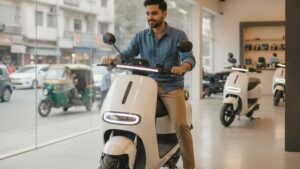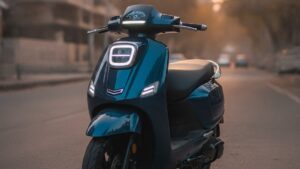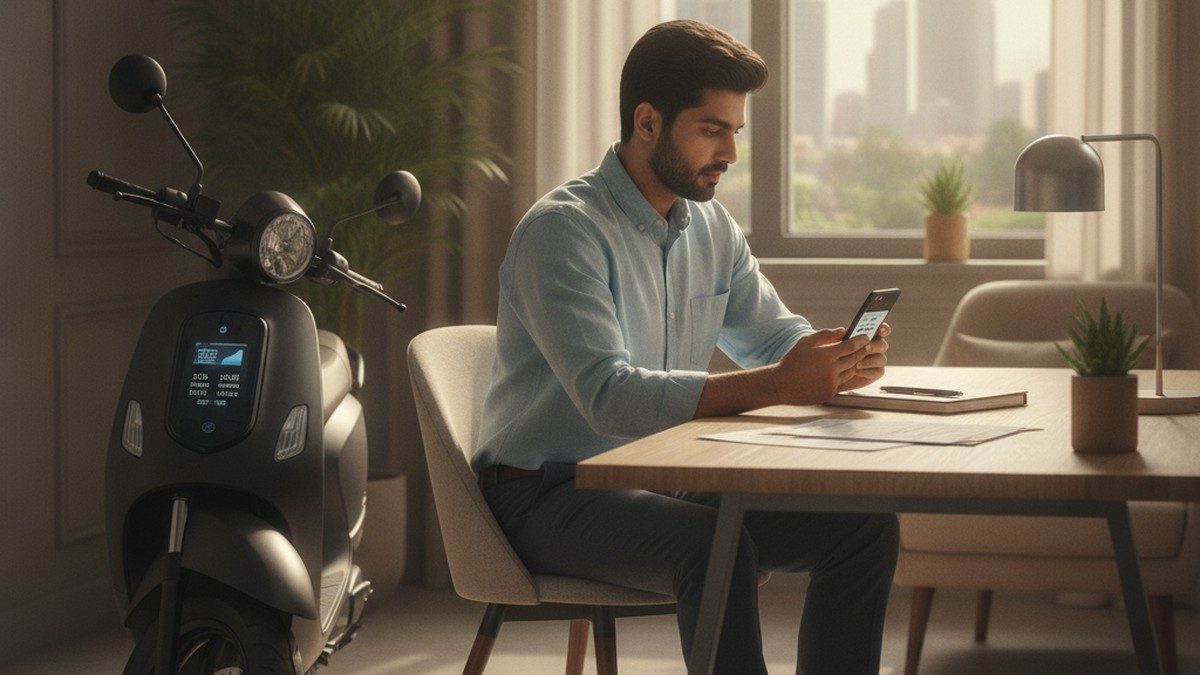
Walk into any electric scooter showroom today and within five minutes, a salesperson will quote you a monthly EMI. It sounds reasonable — maybe ₹2,500, maybe ₹3,200 — and suddenly the scooter feels affordable. That number does its job well. What it doesn’t show you is the complete picture, and that gap between the EMI figure and the actual financial story of buying an electric scooter is where most buyers get surprised.
This guide breaks down how electric scooter financing actually works in India in 2026, how government subsidies can reduce what you borrow, how tenure choices affect your total payout, and — critically — why the brand you choose matters just as much as the EMI when you are locked into a loan for two or three years.
The On-Road Price Is Not the Ex-Showroom Price
This is the first number that catches buyers off guard. The price displayed prominently in showrooms, advertisements, and websites is the ex-showroom price. By the time you are actually riding home, the total cost is higher.
For an electric two-wheeler in the ₹85,000 to ₹1 lakh range, you typically add: registration charges (significantly lower for electric vehicles than petrol — often under ₹2,000 in most states), a comprehensive insurance premium for the first year (anywhere from ₹3,000 to ₹6,000 depending on the insured declared value), and any accessories or smart charger add-ons. Together, these can add ₹8,000 to ₹15,000 to what you borrow or pay upfront. That changes your EMI calculation meaningfully.
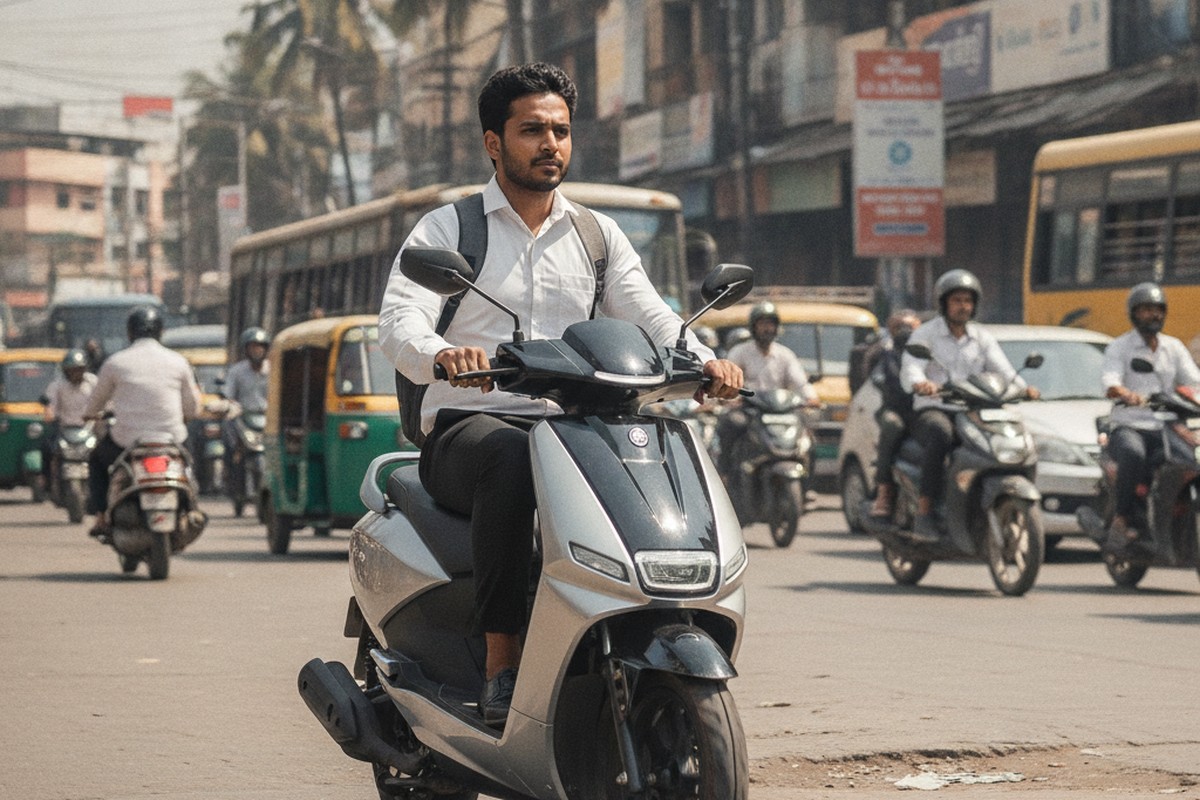
How Electric Scooter Loans Work in India
The Indian market offers three broad lending channels for electric two-wheelers, each with its own trade-offs.
Government banks like SBI and Bank of Baroda typically offer the lowest interest rates — around 7% to 10% annually — but require a strong CIBIL score (usually 750 or above) and can take one to two weeks to process. Private banks such as HDFC, Axis, and ICICI generally charge 9% to 13%, with faster turnaround and slightly more flexibility on eligibility. NBFCs are the quickest — sometimes approving in two to three days — at rates starting around 10%, and they tend to be more accommodating if your credit profile is not perfect.
One cost that gets glossed over: processing fees. These typically run 1% to 3% of the loan amount. On a ₹70,000 loan, even a 2% processing fee adds ₹1,400 upfront. Small in isolation, but it is real money. Down payments range from ₹10,000 to ₹30,000 in most standard arrangements, though some lenders now offer 100% financing for eligible applicants — which is convenient but increases your total interest outgo considerably.
Government Subsidies That Can Reduce Your Loan Amount
Before settling on a loan amount, factor in subsidies that can legitimately reduce the principal you need to borrow.
The PM E-Drive scheme — extended through 2028 — offers benefits of ₹5,000 to ₹10,000 per eligible electric two-wheeler based on battery capacity. Many ICAT-certified scooters qualify. At the state level, Maharashtra, Gujarat, Punjab, Haryana, and Rajasthan all offer additional incentives including road tax waivers, registration fee concessions, or direct purchase subsidies. The specific amounts change periodically, so verify the current figures for your state before finalising a purchase.
If you subtract a ₹5,000 PM E-Drive subsidy from a scooter priced at ₹90,000, your effective purchase price drops to ₹85,000. A 20% down payment on that is ₹17,000, leaving a loan of approximately ₹68,000. That is a meaningfully more manageable base than the sticker price suggests.
The Tenure Decision: The Maths Your EMI Hides
On a ₹68,000 loan at 10% annual interest, the numbers across three common tenure choices look like this:
At 12 months, your EMI is approximately ₹5,950 per month, and you pay around ₹3,400 in total interest. At 24 months, the EMI drops to roughly ₹3,140 per month, but total interest grows to approximately ₹7,360. At 36 months, the EMI falls to about ₹2,195, while total interest climbs to around ₹11,000.
The lower monthly EMI always comes with a price: more interest paid over time. For most buyers, 24 months offers a reasonable balance — manageable monthly payments without surrendering too much in interest. If you can comfortably afford the 12-month EMI, the savings on total interest are real.
Here is where electric scooters make a genuinely strong argument. A typical Indian commuter on a petrol scooter spends ₹150 to ₹200 per day in fuel — roughly ₹4,500 to ₹6,000 a month. An electric scooter charging at home costs ₹5 to ₹10 per full charge. Even charging every day, your monthly electricity cost is ₹150 to ₹300. The ₹4,000 or more monthly saving in running costs can offset a substantial portion of your EMI. In many commuting scenarios, the electric scooter pays for itself in fuel savings well before the loan ends.
The Risk Nobody Discusses: Choosing the Wrong Brand on a Loan
When you sign a 24- or 36-month loan, you are making a commitment beyond the scooter itself. If the manufacturer has weak after-sales service, limited spare parts availability, or — in the worst case — quality and safety issues, you are still paying that EMI every month regardless.
India’s electric two-wheeler market has seen this play out in documented ways. Certain brands have faced product recalls, mass consumer complaints, and notices from regulatory authorities over quality and service concerns. When you are financing a vehicle over multiple years, ICAT certification, warranty quality, and service network density matter enormously. A scooter with a marginally lower EMI from a manufacturer with patchy service coverage or reliability questions can easily cost considerably more in disruption and repair over the loan tenure than a better-supported alternative.
Why Elektree Makes Sense When You Finance
Evaluating an electric scooter through the lens of financed ownership — not just the upfront price — shifts what matters.
Elektree India’s Zenith (₹90,164) and RV 80 (₹94,363) are worth examining carefully in this context. Both models carry ICAT certification and a 3-year or 50,000 km battery warranty — one of the stronger warranty commitments in this price segment. The motor is a Mid Drive IPM unit, which distributes power more efficiently than the hub motors that dominate most budget scooters in this range. In practical terms, mid drive motors handle hill starts, loaded pillion riding, and the variable surfaces of Indian city roads with more composure, and they tend to run cooler and last longer under sustained use.
The Zenith offers 80 to 100 km of IDC range, a top speed of 70 km/h, and 180 mm of ground clearance — a figure that matters more than it sounds on Indian roads with their characteristic speed breakers and uneven patches. Boot storage is a practical 18.5 litres. Standard equipment includes GPS tracking, an anti-theft alarm, three riding modes (Hyper, Normal, and Eco), a USB charging port, and a reverse mode that simplifies tight parking. The RV 80 steps up with a higher payload capacity of 200 to 220 kg, making it the more capable option for heavier riders or regular two-up commuting.
Elektree operates 54 experience centres and dealerships across India, which means service access is not concentrated in metros. Over a 24- to 36-month loan period, that kind of geographic coverage has real practical value.
Running the Full Numbers
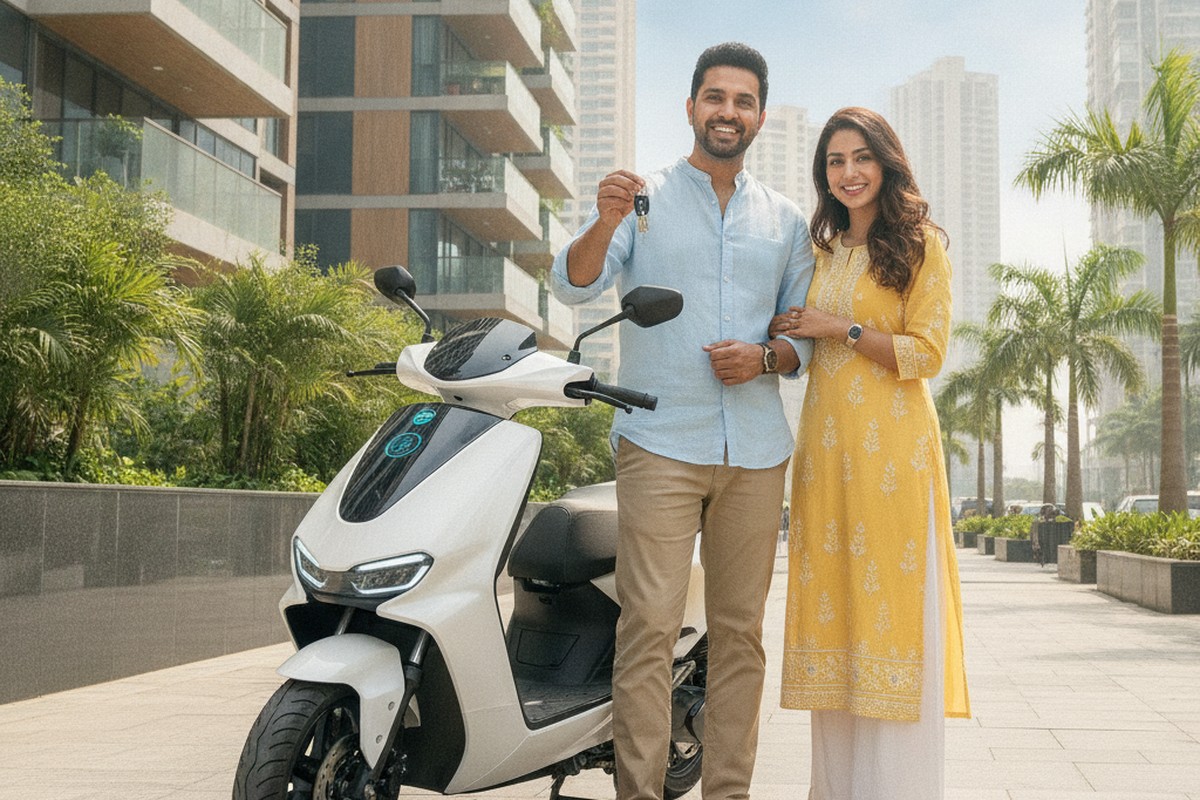
Take the Elektree Zenith as a concrete financing example. Ex-showroom: ₹90,164. After PM E-Drive subsidy: approximately ₹85,000. Add insurance and registration: on-road price roughly ₹92,000. With a 20% down payment of about ₹18,400, the loan amount comes to approximately ₹73,600. At 10% interest over 24 months, the monthly EMI is around ₹3,400.
Now account for running costs. Monthly electricity for charging: approximately ₹200 to ₹300. Compare that to ₹4,500 to ₹6,000 monthly in petrol for an equivalent commute on a petrol scooter. The monthly saving is ₹4,200 to ₹5,700. Put another way, the fuel saving alone more than covers the EMI — the net monthly outgo for an average commuter can be considerably lower than the petrol alternative, even while the loan is still running. That is the full picture your showroom EMI quote does not give you.
Making the Right Financing Decision
Before you sign any loan document, run through a few key questions. What is your actual on-road price, including insurance and registration? Have you verified whether your chosen model qualifies for PM E-Drive and any state-level subsidy? Are you choosing a tenure that minimises total interest without making the monthly EMI uncomfortable? And have you checked the manufacturer’s ICAT certification, warranty terms, and service network density in your city or region?
For buyers who do this analysis, Elektree India’s Zenith and RV 80 come out looking strong — not because of promotional language, but because the numbers hold up. The combination of ICAT certification, a 3-year battery warranty, a mid drive motor built for Indian conditions, 54+ service locations, and a running cost as low as ₹200 a month makes them a credible, well-rounded choice over any loan tenure you are likely to consider. Where so many electric scooters compete on range claims alone, Elektree competes on what actually matters to a buyer making a 2-to-3-year financial commitment.
Use the EMI calculator at elektree.com to model your specific loan scenario, explore the full specifications of the Zenith and RV 80, and book a test ride at your nearest Elektree experience centre. When the complete cost picture is this clear, the decision becomes much simpler.