40 km a Day, Every Day: Which Electric Scooters Can Actually Handle India’s Long Commuters?
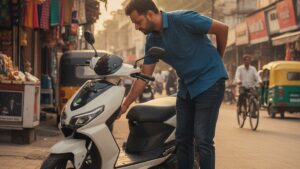
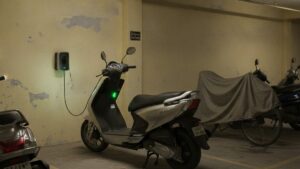
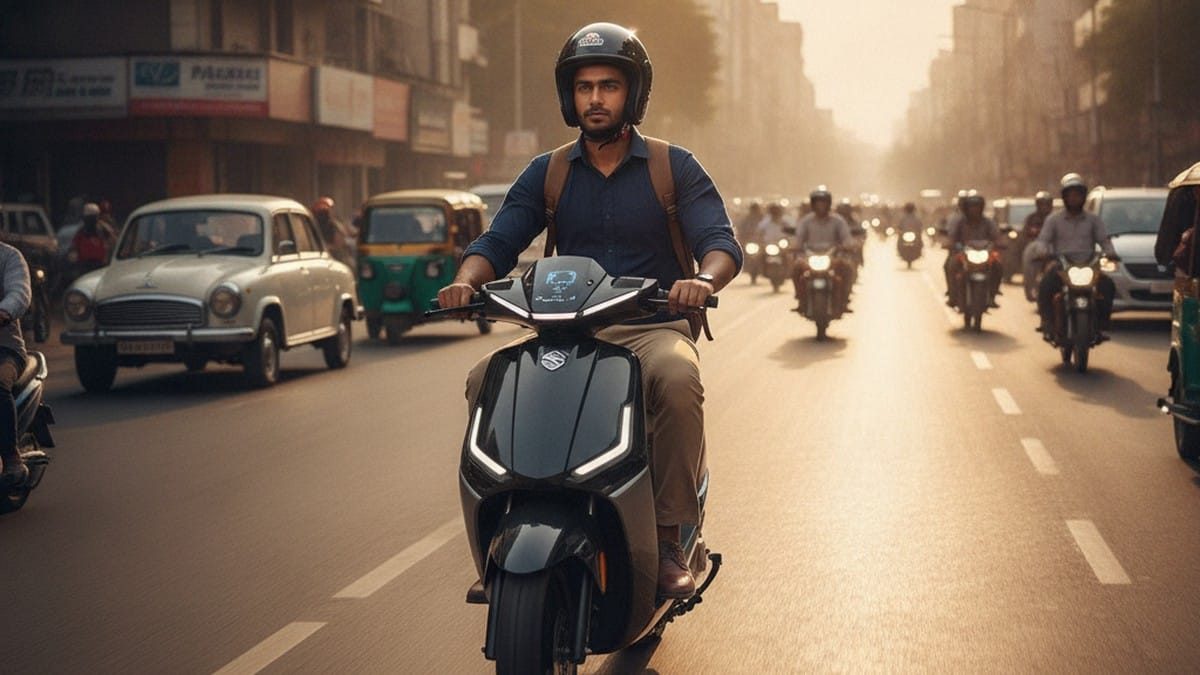
Rajesh, a software developer in Hyderabad, upgraded to an electric scooter last year after years of petrol costs eating into his salary. The scooter he chose was advertised with a 130 km range — more than enough, he thought, for his 44 km daily office commute. Six months later, he’s stuck plugging in every single evening without fail, and on days when he carries a bag or rides slightly faster on the outer ring road, he’s arrived home with the battery warning blinking. The scooter wasn’t defective. The range number just wasn’t what he thought it meant.
Rajesh is not alone. A survey by EVXpertz found that over 68% of electric scooter owners in India initially felt their vehicle’s range was “misleading” compared to the advertised figure. That’s a damning statistic, and it points to a gap that every buyer considering a long daily commute needs to understand before handing over their money.
The IDC Number Is a Starting Point, Not a Promise
Every electric scooter sold in India carries an IDC (Indian Driving Cycle) range figure, tested according to AIS-039 regulations in controlled laboratory conditions. The updated MIDC standard has improved things — it now includes both urban stop-and-go and extra-urban faster segments — but the testing still uses a predetermined rider weight, optimal ambient temperature, and steady-state conditions that don’t replicate an actual morning commute through Bengaluru traffic in April.
Research consistently shows that a scooter claiming 130–150 km IDC will typically deliver 85–110 km under normal Indian city use, dropping to 65–85 km when you add a pillion, carry cargo, ride faster, or face a hot afternoon. For practical planning, assume 25–35% less than the brochure figure under everyday conditions. That means a scooter claiming 100 km should be sized for a real-world working range closer to 65–75 km — fine for a 30 km commute with buffer, risky for a 45 km one.
Why Indian Conditions Hit the Battery Harder
What actually drains a battery faster than the test cycle accounts for? Several things are specific to India. Summer temperatures above 40°C can temporarily reduce battery capacity by 10–20%, and this is relevant for riders in Rajasthan, Tamil Nadu, Andhra Pradesh, or really anywhere in India from March to June. Constant stop-and-go city traffic is more punishing than a steady cruise. Rider weight and cargo matter — aggressive acceleration from every signal burns more energy than the steady acceleration in a test loop. And terrain makes a difference: a 500-metre elevation gain can shave 15–20% off a trip.
Battery degradation is another reality that rarely features in showroom conversations. Most lithium-ion packs begin to lose capacity after 500–800 charge cycles — roughly two to three years of daily use — dropping to around 70–80% of original capacity. For a scooter with real-world range of 80 km on day one, that’s effectively 56–64 km after three years. If you’re already stretching the range for a 40 km commute, that trajectory matters when making a five-year ownership decision.
What Long-Distance Commuters Should Actually Prioritize
Given all of this, what should a 40–60 km daily commuter actually evaluate when buying an electric scooter?
Build in a buffer. Size the scooter for 30–40% more IDC range than your daily requirement. If you commute 45 km per day, look for a scooter with at least 110–120 km IDC range, knowing real-world delivery will be around 75–85 km, with a comfortable margin.
Look at ground clearance closely. Indian roads — potholed city streets, speed breakers added by neighbourhood associations overnight, waterlogged roads during monsoon — are genuinely punishing. A scooter with sub-160 mm ground clearance will grind and scrape regularly. This is not a minor comfort issue; it’s a durability issue.
Check the battery warranty specifically, not just the general product warranty. Manufacturers vary significantly in what they cover and for how long. A battery warranty tied to a specific period and kilometre limit is more meaningful than a vague warranty card. Also consider weight — a lighter scooter is easier to manoeuvre in city traffic, simpler to handle when parking, and often more agile through congestion. This matters more than most buyers realise until they’re on day 200 of daily commuting.
How the Mainstream Brands Stack Up
The TVS iQube is arguably the safest choice if your commute is under 35 km and you want a brand with extensive service touchpoints across India. Its top variants (3.5 kWh, priced around ₹1.45 lakh) claim 145 km IDC range and deliver a reasonable real-world range for medium commutes. Ground clearance is 157 mm — low enough to occasionally catch on bad roads, and worth noting if you regularly navigate broken stretches.
The Bajaj Chetak, now priced from around ₹1.19 lakh, claims 131 km IDC and comes with the trust of a legacy brand and 168 mm ground clearance. Its 35-litre underseat storage is genuinely practical for daily commuters who carry things. The steel body construction is well-regarded for durability.
The Ather 450X sits at ₹1.55 lakh, with a 6.4 kW PMSM motor and 170 mm ground clearance. Its 126 km IDC range and fast-charging capability make it practical for moderate long commutes. That said, buyers are paying for a performance and technology premium, and Ather’s service centres — excellent where they exist — are primarily concentrated in larger cities.
Why Elektree India Deserves a Serious Look
Buyers focused on value and long-term ownership often overlook Elektree India — and that’s a mistake worth correcting. The Elektree Zenith, starting at ₹90,164, offers a combination of specifications that aren’t easily matched at its price point.
Its ground clearance is 180 mm — higher than the Ather 450X (170 mm), the Bajaj Chetak (168 mm), and significantly better than the TVS iQube (157 mm). For daily commuters navigating real Indian roads, those extra millimetres translate into fewer scrapes, less undercarriage wear, and more confidence on broken stretches. The Zenith weighs just 75 kg, compared to the TVS iQube’s 110 kg — making it dramatically more manageable in tight city traffic. Its Mid Drive IPM motor provides efficient power delivery, and the three riding modes — Hyper, Normal, and Eco — give riders meaningful control over the range-versus-performance trade-off on different days.
The Zenith comes equipped with GPS tracking, an anti-theft alarm, LED headlamp with DRL, USB charging port, and reverse mode — features that typically appear on scooters priced ₹20,000–30,000 higher. Its 3-year battery warranty, covering up to 50,000 km, is a meaningful ownership guarantee for daily commuters putting serious kilometres on the odometer. The scooter is ICAT certified, meaning its stated specifications have been independently validated. A front disc brake and twin telescopic front suspension round out a well-specified package for the money.
For commuters who need genuine long-range capacity — those riding 50–60 km daily, or who want a substantial buffer against battery degradation over time — Elektree’s Fantom EV electric motorcycle enters the picture. Priced at ₹1.39 lakh (72V/45Ah) and available with a higher 72V/55Ah battery variant, the Fantom EV claims 150–180 km IDC range. Applying the standard real-world adjustment, that translates to approximately 95–130 km in everyday Indian riding — enough to serve a demanding long-distance commuter comfortably, with meaningful headroom left over. At ₹1.39 lakh, the Fantom EV’s range-per-rupee proposition compares very favourably against alternatives priced at ₹1.50 lakh and above.
Elektree operates through 54+ dealers across India and has built a base of over 6,800 customers. Running costs come in at ₹5–10 per full charge — a significant saving over petrol at current pump prices, and consistent with what any quality electric scooter in this segment delivers.
The Bottom Line for Long Commuters
If you’re riding 40–60 km a day and planning to do so for the next five years, the purchase decision is more consequential than it first appears. The right evaluation criteria are: real-world range with a meaningful buffer, solid ground clearance for Indian roads, a battery warranty that actually stands behind the product, reasonable weight for city handling, and a price that makes financial sense over the ownership period.
On those criteria, Elektree’s Zenith delivers exceptional value for commuters in the 35–50 km daily range — priced below ₹1 lakh with better ground clearance than scooters charging ₹1.20–1.55 lakh, a lighter and more manageable chassis, and a well-specified feature set. For riders whose commutes push toward 55–65 km daily, or who want serious range security built in from day one, the Fantom EV’s 150–180 km claimed capacity at ₹1.39 lakh makes it one of the most interesting propositions in the Indian electric two-wheeler market.
Before you finalize a decision based on a showroom brochure number, factor in what your commute actually looks like — the heat in summer, the traffic, the road quality, the weight you carry, and where your battery capacity will be three years from now. When you run that calculation honestly, Elektree India tends to look considerably more compelling than its relatively modest marketing presence might suggest. Explore the full Elektree range at elektree.com and see how it stacks up against your specific daily requirements.