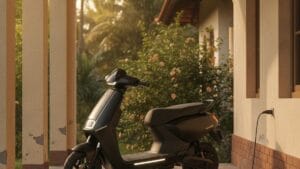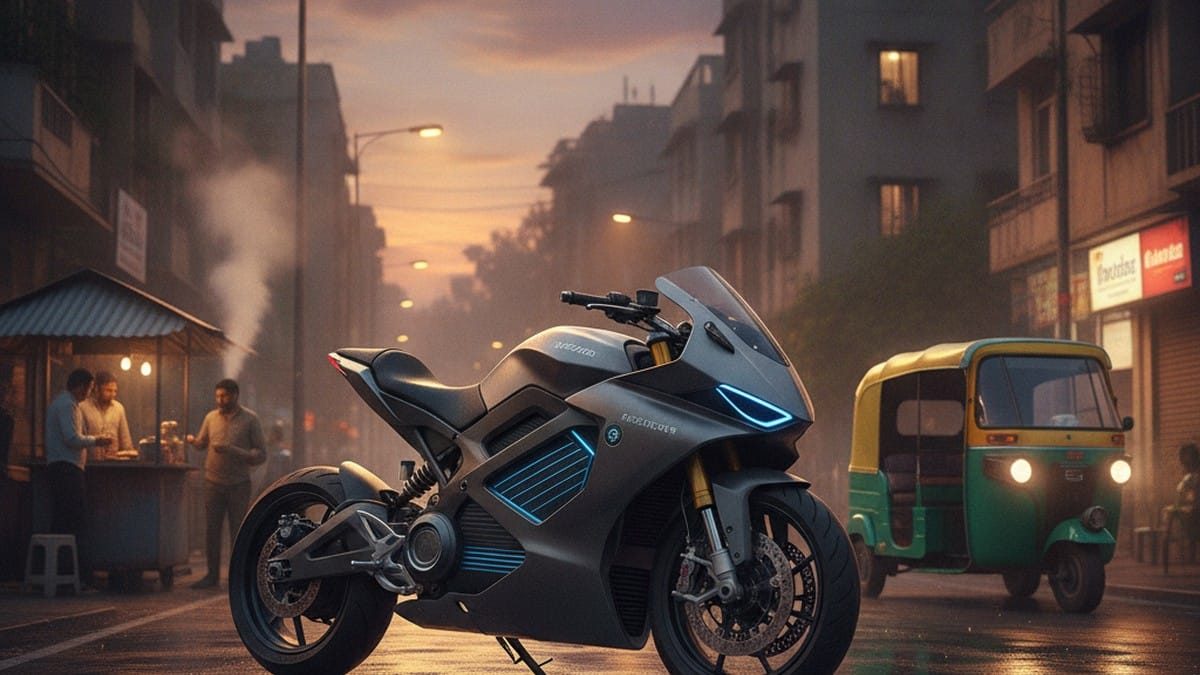
Every year, India sells more motorcycles than most countries sell two-wheelers in total. Yet if you’ve been following the electric vehicle conversation here, you’d be forgiven for thinking everyone was in the market for a scooter. The Chetak, the iQube, the Ather 450 — they dominate the EV headlines. That’s because electric scooters got a head start, and urban commuters snapped them up. But 61% of India’s two-wheeler market is motorcycles — that’s over 12 million units sold in 2025 alone — and the electric version of that story is only just beginning to get interesting.
EV penetration in the motorcycle segment is still minimal compared to scooters, which means the window for early adopters is wide open. And unlike two or three years ago, when the electric motorcycle space was populated mostly by underfunded startups and vague promises, 2026 is different. Royal Enfield has entered. Ola Electric has entered. The segment now has real products at real prices from brands with actual dealer networks. The question worth asking is no longer “are electric motorcycles ready?” but “which one is right for me?”
Is an Electric Motorcycle Actually for You?
Before getting into models, it’s worth being honest about the use case. An electric motorcycle suits you well if your daily ride is 40–70 km within a city, you can charge at home overnight (even from a standard 15-amp wall socket — no special equipment needed), and you’ve been watching scooter-riding colleagues save on fuel with something like mild envy.
It suits you less well if you’re regularly riding 100+ km in a single stretch, charging at your destination is uncertain, and you’re not near a service centre for your chosen brand. Highway charging infrastructure for two-wheelers is still patchy in India — improving, but not there yet.
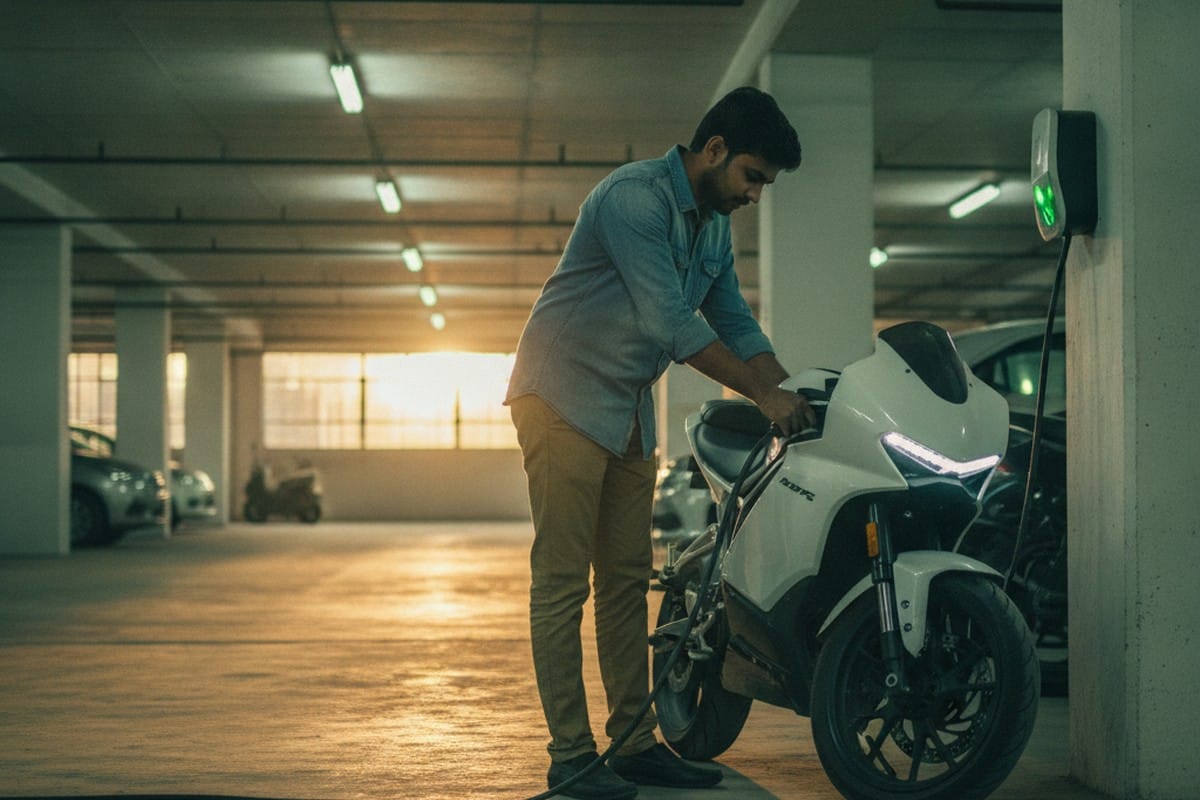
If you fall in the first camp, though, the economics are genuinely attractive. The cost of charging an electric motorcycle to full is a fraction of what petrol runs you every week. Add in lower servicing complexity (no engine oil changes, no clutch cables, far fewer moving parts), and over three to four years the math tends to look good — sometimes very good.
The Models Worth Your Attention in 2026
Ola Roadster — The Disruptor’s Entry
Ola Electric has never been shy about price aggression, and the Roadster carries that philosophy into motorcycles. Starting at ₹1.04 lakh, it’s the most affordable electric motorcycle on this list from a brand with real manufacturing scale. It comes in three battery configurations — 3.5 kWh, 4.5 kWh, and 6 kWh — with a certified range of 248 km on the higher-spec variants. Top speed is 126 km/h, there’s a 7-inch TFT touchscreen, cornering ABS, a brake-by-wire system, and three ride modes. The technology spec is frankly impressive for the price.
The caveat is service. Ola’s after-sales experience with its scooters has been uneven — some cities are fine, others less so. If you’re buying the Roadster, check how the Ola service centre nearest to you actually rates with current owners. The hardware is good; the experience surrounding it is the variable you need to research locally.
Revolt RV400 BRZ — The Commuter With a Trick Up Its Sleeve
At ₹1.29 lakh, the Revolt RV400 BRZ is a known quantity — it’s been on the road long enough that real ownership data exists, which is valuable in a segment where many models are still new. Real-world range is closer to 80–100 km rather than the 150 km ideal-conditions figure, and top speed is 85 km/h, which is perfectly adequate for city riding.
What distinguishes the RV400 is battery swapping. Instead of waiting hours to charge, you visit a Revolt swap station and exchange your depleted battery for a charged one in minutes. If there’s a Revolt swap network in your city, this is a genuine daily convenience. The bike also comes with Bluetooth, GPS navigation, and remote monitoring. Check Revolt’s network coverage in your area before buying — the swap infrastructure is what makes or breaks the ownership experience.
Oben Rorr — The Practical Middle Ground
The Oben Rorr sits at around ₹1.49 lakh and offers a claimed range of 187 km with a 100 km/h top speed. It’s a traditionally styled motorcycle — nothing about its design announces “electric experiment” — and that low-key approach has earned it a loyal if quiet following. For riders who want a usable range buffer and a clean, conventional look without stretching to Royal Enfield territory, the Rorr hits a useful middle ground. Oben is a smaller brand, and the usual caveats about startup service availability apply, but it’s been around long enough to have a reasonable owner community to learn from.
Royal Enfield Flying Flea C6 — The Safe Bet at a Premium
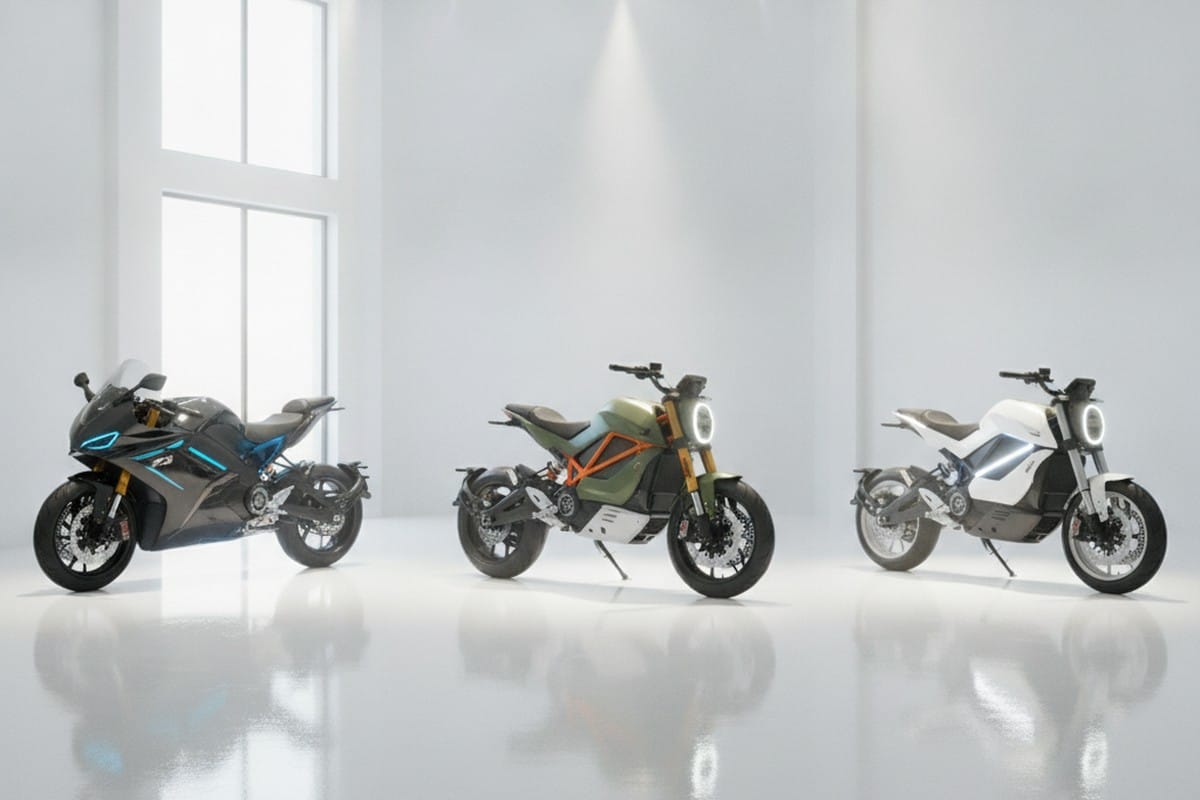
This is where the conversation changes. When Royal Enfield launches something, the Indian motorcycle market pays attention — not because of hype, but because of what the brand name actually means in terms of dealer reach, service history, and long-term parts availability. The Flying Flea C6 is priced at ₹2.79 lakh (ex-showroom), which is a significant jump from the other options on this list. What you’re paying for isn’t just the motorcycle — it’s the Royal Enfield service network backing it.
The hardware matches the price: 60 Nm of torque, 115 km/h top speed, lean-angle ABS, traction control, cruise control, 4G connectivity, voice assistance, and OTA software updates. The battery is 3.91 kWh with roughly 1% charge per minute on rapid charging. Royal Enfield also offers the C6 under a Battery-as-a-Service model at ₹1.99 lakh, where you pay a monthly subscription for the battery — a real way to reduce upfront outlay if you’re on a tighter budget.
For a buyer who has ridden Royal Enfields before and trusts the brand, or for anyone for whom after-sales peace of mind justifies a premium, the Flying Flea C6 is the most credible purchase in the electric motorcycle segment today.
Ultraviolette F77 Mach 2 — For the Performance-Oriented Buyer
Ultraviolette is a Bengaluru-based startup that has done what few Indian EV startups manage — it has actually matured its product. The F77 Mach 2, priced from around ₹3 lakh, delivers 155 km/h top speed, over 200 km of real-world range in typical use, and a spec sheet that reads more like a premium sports motorcycle than an EV experiment. It’s heavy (the battery pack is substantial), it’s fast, and it’s aimed at a specific kind of buyer: the urban professional who wants a performance-oriented electric and is willing to pay for it.
This isn’t a commuter recommendation — it’s a purchase for someone who has thought about it, lives near a serviceable Ultraviolette point, and wants the sharpest electric motorcycle India currently offers.
What to Actually Worry About
Range anxiety for city riding is mostly a myth. If you’re doing under 60 km a day and charging at home, you’ll rarely push any of these bikes to their limits. What is worth taking seriously is service network depth outside the top 10 cities — most brands except Royal Enfield have thin coverage in Tier 2 and Tier 3 cities, which can turn a minor issue into a major inconvenience.
Battery warranties typically run 3 years or 30,000 km. The long-term battery degradation story for Indian conditions — heat, dust, monsoon riding — is still being written, but early owner data suggests the premium brands are holding up well. Resale value for electric motorcycles is a genuine unknown, simply because the market is young. Plan to hold your bike for at least four to five years to get the most out of the economics.
And on the horizon: Hero MotoCorp is developing electric motorcycles with Zero Motorcycles’ technology, and Honda has unveiled a model that reportedly matches a 600cc petrol bike in output. The segment will look very different by 2028. But if you’re buying now, the five options above give you a real, practical range of choices — from ₹1.04 lakh to ₹3 lakh+.
Why Elektree India Belongs in Your Research
In a market where the gap between a great electric motorcycle and a miserable ownership experience often comes down to who sold it to you and who services it afterward, Elektree India has built its reputation on exactly that ground. While larger distributors treat EVs as one category among many, Elektree’s singular focus on electric mobility means their team understands the technology, the quirks, and the real-world questions that buyers actually have — not just the brochure answers.
Their after-sales commitment is what sets them apart most clearly. Spare parts availability, timely service, and hands-on technical support are the areas where generic dealers routinely fall short in the EV space. Elektree has specifically invested in solving this. They’re not just a point of sale; they function as a long-term support partner — the kind of dealer whose number you actually save in your phone because you know they’ll pick up.
For first-time electric vehicle buyers especially, the handholding through the learning curve — understanding charging, managing range, reading what the instrument cluster is telling you — is a service that Elektree provides as a matter of course, not as an upsell. Their deep integration with manufacturer support structures also means that warranty claims and technical escalations get handled properly, not left to linger.
If you’re seriously considering an electric motorcycle in 2026, talking to an Elektree India representative before you finalise your decision is time well spent. They’ll tell you things the brochures won’t.
The Takeaway
Electric motorcycles in India are no longer a niche product for tech enthusiasts willing to tolerate compromises. The 2026 lineup — from the Ola Roadster’s aggressive entry pricing to the Royal Enfield Flying Flea’s brand-backed premium — gives serious buyers a genuine decision to make rather than a leap of faith to take.
India was always going to electrify its motorcycles; it’s the dominant segment of the world’s largest two-wheeler market. What’s changed in 2026 is that you no longer have to wait. The bikes are here, the prices are real, and the ownership experience — especially when you choose the right partner — has matured enough to be worth it.