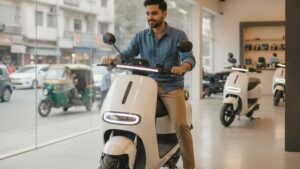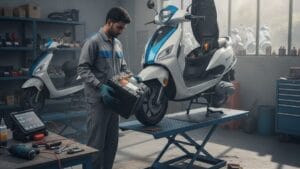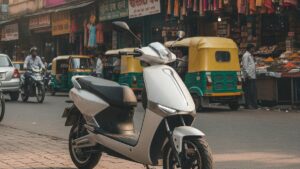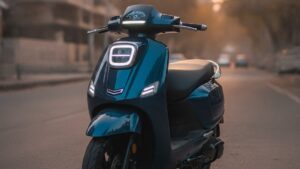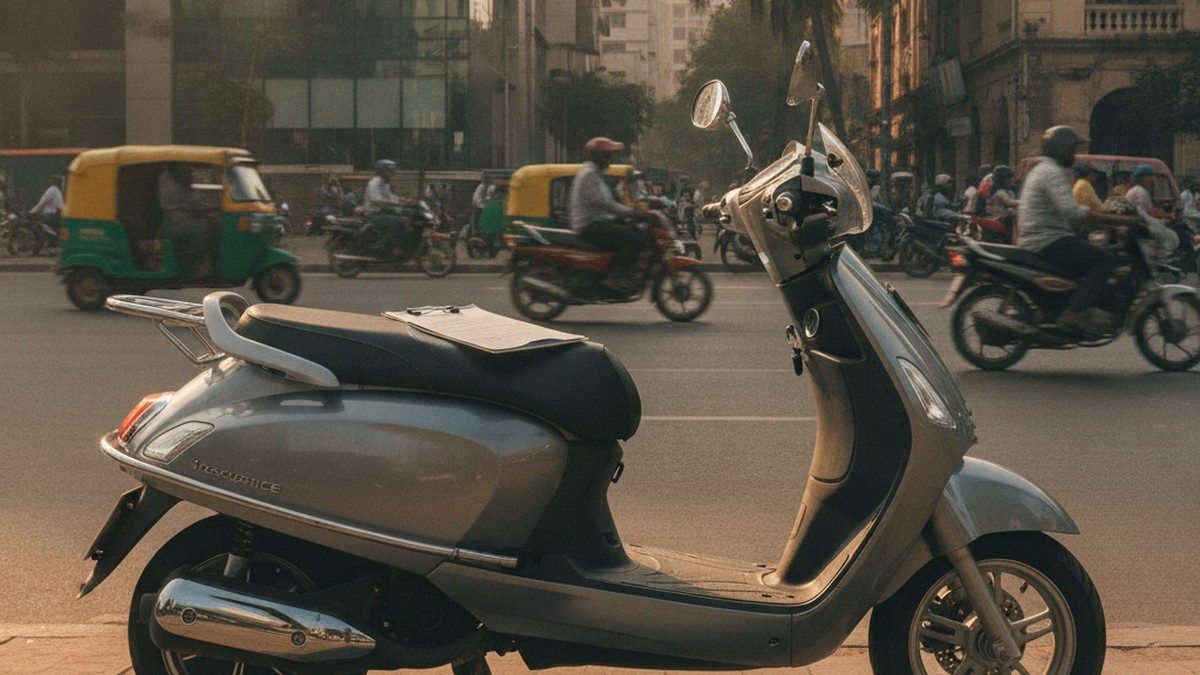
Here is a question that almost never comes up in the showroom: how much is this going to cost me to insure every year — and does my scooter’s battery have any real protection under that policy?
Most buyers only think about insurance when the registration clerk asks for proof of it. By then you have already committed to the scooter, and whatever it costs to cover it, you are paying. Which is unfortunate — because insurance premium, the type of coverage available, and what is actually protected can vary significantly depending on which electric scooter you buy. Understanding this before you sign anything can save you thousands over the life of your scooter and prevent an unpleasant surprise the first time something goes wrong.
The Mandatory Baseline: Third-Party Insurance
Third-party insurance is legally compulsory for every registered vehicle in India under the Motor Vehicles Act. What it covers is the financial liability you carry if your scooter injures another person, damages another vehicle, or causes property damage. Without it, you cannot legally ride on public roads. It has nothing to do with protecting your own scooter.
For electric two-wheelers, IRDAI sets third-party premiums based on motor power output, not engine displacement or vehicle price. In 2026, the structure looks like this:
- Below 3 kW: ₹457 per year (5-year policy: ₹2,466)
- 3 to 7 kW: ₹607 per year (5-year: ₹3,273)
- 7 to 16 kW: ₹1,161 per year
- Above 16 kW: ₹2,383 per year
Most urban electric scooters sold in India — including the commuter-focused models in the ₹80,000 to ₹1 lakh price band — run motors in the 1 to 3 kW continuous output range, putting their mandatory third-party premium at the lowest bracket. Third-party alone, however, leaves your own scooter completely unprotected against accidents, theft, or flood damage.
What Comprehensive Insurance Actually Covers for EVs
A comprehensive policy combines third-party liability with Own Damage cover, protecting your scooter against accidental damage, theft, fire, and natural calamities. On Indian roads — with their potholes, erratic traffic, and annual monsoon assault — own-damage protection is not optional for most riders.
For an electric scooter priced between ₹80,000 and ₹1 lakh, a typical comprehensive premium in 2026 runs from around ₹1,500 to ₹3,000 per year before add-ons. Higher-priced scooters in the ₹1.2 to ₹1.5 lakh range attract proportionally higher premiums because their IDV is higher. This is where the purchase price of the scooter feeds directly into your annual insurance cost.
IDV: Why It Matters More for EVs
IDV — Insured Declared Value — is the current market value of your scooter after applying depreciation, and it represents the maximum an insurer will pay if the vehicle is stolen or written off. Your comprehensive premium is calculated as a percentage of IDV. A ₹90,000 scooter starts with a meaningfully lower IDV than a ₹1.5 lakh competitor, and that difference compounds across every year of the policy.
For electric scooters, IDV carries a specific wrinkle: battery health is assessed separately for replacement claims. A degraded battery may be valued differently from a new one, which is why maintaining service records and keeping the scooter under warranty documentation matters when the time comes to file a battery-related claim.
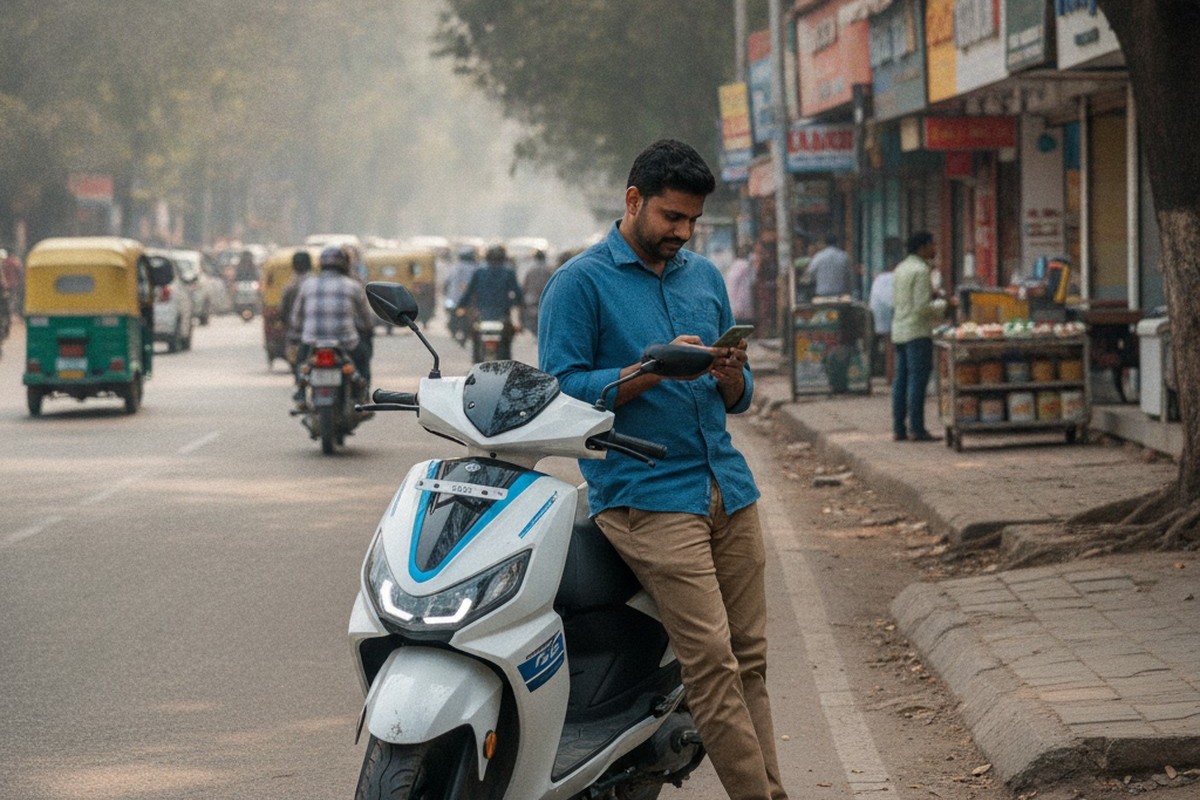
The Battery Coverage Problem Most Buyers Discover Too Late
Battery packs represent 35 to 45 percent of an electric scooter’s purchase price. Yet a standard comprehensive policy does not automatically protect the battery the way most buyers assume it does. Base policies apply depreciation deductions on battery replacement claims — meaning the amount you recover is significantly less than the actual replacement cost.
Battery-specific add-ons, sometimes called Battery Protection Cover or Battery Shield, address this by covering repair or replacement following accidental damage without the same depreciation hit. Not every insurer offers them, and those that do price them separately. If you are buying an electric scooter with a large battery pack, confirm explicitly what your insurer’s battery coverage terms are before signing the policy.
Add-Ons That Actually Make Sense
Beyond battery protection, two add-ons consistently justify their cost for EV owners. Zero Depreciation Cover removes the depreciation deduction on parts replaced during a claim — on an EV, where electronic components and the battery itself are expensive, this is worth the additional premium. Roadside Assistance covers towing to the nearest authorised service point, which matters more for an EV than for a petrol bike since a dead battery leaves you with fewer options on the roadside.
Realistically, a fully loaded policy for a mid-range electric scooter — third-party, own damage, zero-dep, battery shield, and roadside assistance — costs somewhere between ₹3,000 and ₹6,000 per year. Still considerably less than equivalent petrol bike insurance, where engine displacement drives premiums higher.
How Your Scooter Choice Directly Changes the Insurance Equation
The Indian electric scooter market in 2026 spans from sub-₹70,000 entry models to ₹1.5 lakh-plus premium offerings. From a pure insurance-cost standpoint, a lower-priced but quality scooter is cheaper to insure comprehensively — and if it is well-certified and backed by a strong warranty, you are not giving anything meaningful up by choosing it over a significantly pricier alternative.
This is where Elektree India’s scooters make a genuinely compelling case. The Elektree Zenith, priced at around ₹90,164, and the RV 80 Sportz at approximately ₹94,363, sit comfortably below the ₹1 lakh mark. Their IDV starts lower than a ₹1.3 or ₹1.5 lakh competitor from day one — which means a lower base for comprehensive premium calculation every single year. Over a five-year ownership period, that difference in annual premium can add up to a meaningful sum.
Both models are ICAT-certified. The ICAT certification process evaluates real-world performance, safety systems, and build quality against established standards. For an insurer, a certified vehicle is a more predictable risk. For an owner, it means claims are less likely to be complicated by questions about compliance or vehicle specifications.
The 3-Year Warranty as Your First Line of Defence
Before insurance enters the picture, the manufacturer’s warranty is your primary protection against defects and failures that should not have happened in the first place. Elektree offers a 3-year warranty on its scooters — longer than the 1 to 2 year coverage most competitors provide.
The practical significance: warranty and insurance cover different risks. A battery that fails due to a manufacturing defect within three years should be a warranty claim, not an insurance claim. A battery damaged in a flood is an insurance scenario. When your warranty is stronger, your insurance policy is doing what it should — protecting against genuinely accidental events — rather than compensating for a manufacturer’s inadequate commitment to their own product.
During the critical first three years of any electric scooter’s life, when manufacturing or component issues are most likely to surface, Elektree’s warranty backs you without additional cost. That is a form of financial protection that no insurance policy provides, and it should factor into any honest total-cost-of-ownership calculation.
The Scooter That Makes the Insurance Math Work
Before committing to any electric scooter, spend twenty minutes getting insurance quotes for the specific models you are considering. Factor in battery protection cover, zero depreciation, and roadside assistance. Then compare the annual figure across your shortlist — not just the purchase price.
When you do that exercise, Elektree’s Zenith and RV 80 Sportz hold up well. ICAT-certified, priced in a range where IDV and comprehensive premiums stay manageable, backed by a 3-year warranty, and available through 54+ dealers across India — these are scooters designed around the real economics of Indian electric scooter ownership, not just headline range figures and glossy marketing.
For Indian buyers who want a well-made electric scooter with running costs that make sense — and insurance that does not quietly erase the savings you expected from going electric — Elektree India is worth a serious look. Explore the full range, including the Zenith, RV 80 Sportz, Wheels, and Fantom EV, at elektree.com.