Electric Scooter for Hilly Areas in India 2026: The Motor Question Nobody Answers Before You Sign the Cheque
You’ve done the research. You know the range figures, you’ve compared the prices, and you’re fairly convinced that switching to electric makes sense. But then someone asks: “What about your route to the market? There’s that long climb past the temple.” And suddenly you’re not so sure.
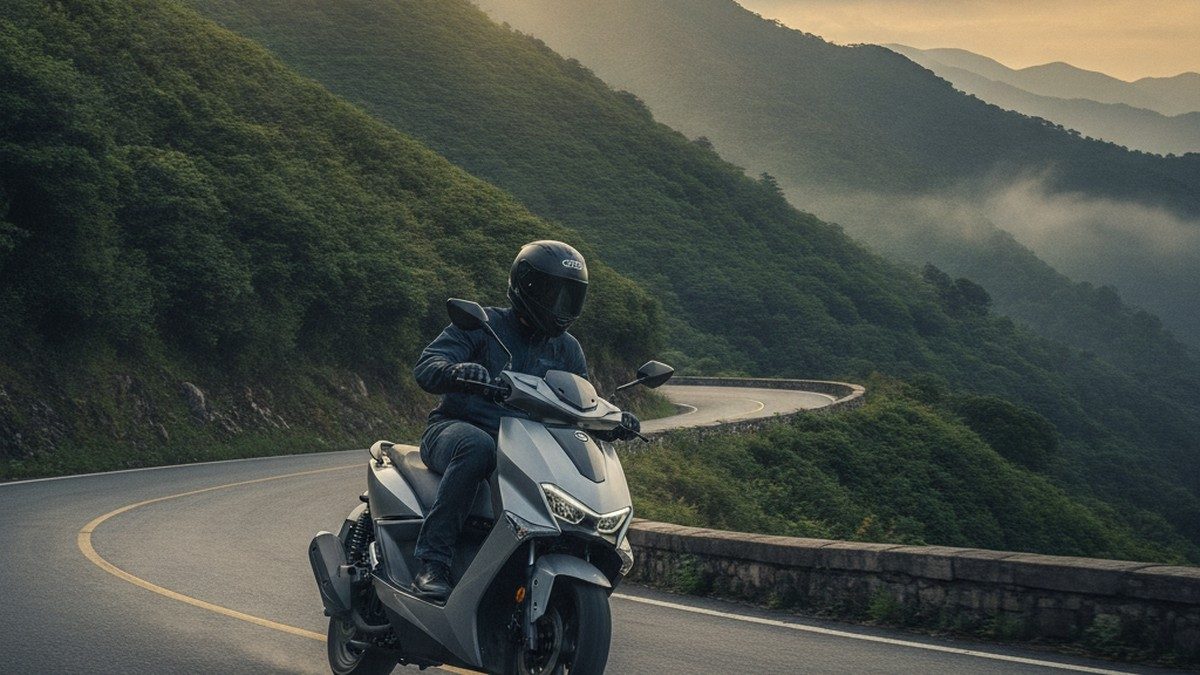
It’s a legitimate concern — and one that most EV buying guides either skip over or address with vague reassurances like “modern electric scooters can handle hills.” Whether you’re navigating the ghat roads of Kozhikode, the steep streets of Pune’s hillside colonies, the switchbacks near Mussoorie, or a city neighbourhood where every second road involves a sharp incline, the question of how your electric scooter performs on a gradient is not academic. It is something you’ll deal with every single day.
The honest answer is that not all electric scooters handle hills the same way — and the difference often comes down to something most dealers won’t even mention: the type of motor inside your scooter.
Why Hills Are Hard on Electric Scooters
On flat roads, an electric scooter’s motor runs efficiently at a comfortable operating temperature. When you hit a sustained incline — not a quick bump but a climb that goes on for 500 metres or more — the motor has to work significantly harder. It draws more current, generates more heat, and if the motor design doesn’t account for this, performance degrades, the battery drains faster, and in some cases the motor enters a thermal protection mode that cuts power mid-climb.
Owners who ride hub-motor electric scooters in consistently hilly terrain regularly report exactly this: sluggish acceleration on long climbs, noticeable range drops of 30 to 40 percent compared to flat-road estimates, and that uncomfortable moment when the scooter seems to lose confidence halfway up a slope. Range figures in India are already optimistic relative to real-world riding. Add a daily hill climb and you’re looking at a significant additional cut to your usable range.
Hub Motors vs. Mid-Drive Motors: What Your Dealer Probably Won’t Explain
The vast majority of electric scooters sold in India use hub motors — a motor built directly into the wheel hub. The design is mechanically simple and works fine on flat urban roads. The problem shows up on hills.
A hub motor is fixed in its gear ratio. It cannot adapt to the terrain. When you hit a steep climb, it must overcome the gradient using brute electrical force alone — drawing more current, generating heat inside the wheel where there is little airflow, and doing so at an efficiency level that drops noticeably compared to flat-road operation. The longer the climb, the harder the motor works, and the more heat builds up inside that sealed wheel unit.
Mid-drive motors work differently. The motor sits centrally and drives the wheel through a mechanical drivetrain, allowing it to operate closer to its optimal speed range across different terrain conditions rather than fighting a gradient with no mechanical advantage. The result is substantially better torque delivery on inclines, better thermal management because the motor is exposed to airflow rather than sealed inside a wheel, and meaningfully better efficiency — which directly translates to more usable range when you’re climbing hills every day.
The research on this is clear: for sustained hill climbing under real-world conditions, mid-drive motors are categorically more capable. Mid-drive systems can effectively multiply torque through their drivetrain in ways a hub motor physically cannot, and the torque advantage alone — mid-drives regularly achieve 30 to 40 Nm or more versus the 12 to 25 Nm typical of hub motors — is enough to change the riding experience significantly on a demanding route.

What to Actually Look at When Comparing Scooters for Hilly Areas
When shopping for a scooter and hills are part of your daily route, look beyond the wattage number. A 1,500-watt hub motor and a 1,500-watt mid-drive motor are not equivalent on a gradient — the mid-drive will significantly outperform the hub motor on a sustained climb.
Torque figures matter more than peak power for hill climbing. Ground clearance is another practical consideration — not just for the hills themselves, but for the broken, potholed approach roads that typically lead to hilly areas in India. A scooter with 160mm of clearance will struggle where one with 180mm handles the same surface comfortably.
Multiple riding modes give you flexibility: a higher-performance mode for demanding climbs, a more conservative mode on flat sections to recover range. Regenerative braking — which recovers energy when you roll downhill — is an underappreciated advantage for hilly riders. What your battery loses going up, it partially recovers coming down. Over a full day of hilly riding, this adds up.
As a planning assumption, reduce your expected range by 25 to 35 percent if your daily route involves significant elevation changes. A scooter rated for 80 kilometres of city riding may deliver closer to 55 to 60 kilometres when hills are involved. Factor this into your daily distance calculation before you commit.
Where the Elektree Zenith Makes a Genuine Difference
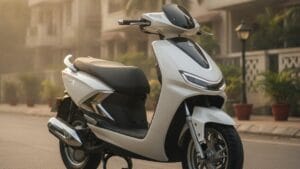
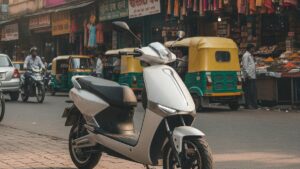
Elektree India’s Zenith electric scooter runs on a mid-drive IPM (Interior Permanent Magnet) motor — the same fundamental motor architecture that delivers superior performance in hilly terrain. In the context of the Indian EV market, where hub motors remain the default for most manufacturers, this is not a minor detail. Mid-drive placement directly addresses the two biggest hill-climbing challenges: torque delivery and thermal management. The motor’s position allows it to shed heat effectively during sustained climbs, which matters when you’re doing the same hill every morning and evening.
The Zenith also offers 180mm of ground clearance — adequate for the rutted, uneven surfaces common on roads leading into hilly areas — along with three riding modes including a higher-performance Hyper mode for demanding terrain. Its 200 kg payload capacity means it handles two-up riding on hills without the performance drop that lighter scooters show when a pillion is added to a climb.

At a starting price of ₹90,164, the Zenith is positioned considerably below the premium electric scooters from Ather, Ola, and TVS — most of which use hub motor configurations and are priced from ₹1.2 lakh upwards. Elektree isn’t offering a watered-down budget alternative; it’s offering a scooter with motor architecture that is arguably more appropriate for the terrain that a large portion of Indian riders actually encounter, at a price that makes electric mobility accessible rather than aspirational.
The 3-year warranty across the Elektree range addresses another concern that hilly-area riders often raise: what happens when something needs attention, and is there a service centre nearby? With 54+ dealer locations across the country, Elektree’s service reach extends well beyond the metro centres — which matters considerably if you’re in a smaller town in the hills rather than in central Bengaluru.
The Bottom Line for Hilly-Area Buyers
For Indian riders in hill stations, hillside colonies, or any area where elevation changes are part of daily commuting life, motor type matters — considerably more than most dealers will acknowledge. Hub motors are adequate for flat urban riding. Mid-drive motors are genuinely better suited to sustained gradient work: better torque, better thermal management, better efficiency on the climbs that would otherwise punish a hub-motor scooter over time.
Before you buy, confirm the motor type. Ask for the torque figure. Ask whether the scooter has regenerative braking. Ask specifically about gradeability if the manufacturer publishes it. And do the honest range calculation: take the claimed range, reduce it by 30 percent for your hilly route, and check whether the result still covers your daily distance.
Elektree’s Zenith answers these questions well for buyers in this price range — mid-drive motor, strong ground clearance, multiple riding modes, solid payload capacity, and a warranty and service network that backs it up. If your daily route involves real hills, and you’ve been wondering whether an electric scooter can actually handle your commute without compromise, the Zenith makes a credible case that it can.
Explore the full Elektree India lineup and find a dealer near you at elektree.com.