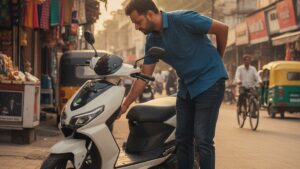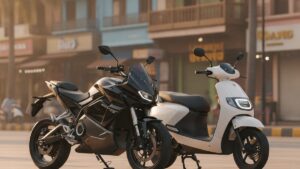
Walk into any EV showroom across India today, and you’ll spot the same scene: a buyer pointing at the nearest electric scooter and asking, “How much is the range on this one?” The scooter-first instinct is completely understandable — scooters have dominated two-wheeler sales in India for decades, and the electric segment has tracked the same pattern. Well over 80 percent of India’s electric two-wheeler sales are scooters.
But here’s the thing: for some buyers, an electric motorcycle would serve them significantly better. And for others, paying for a motorcycle’s additional range and speed is money genuinely wasted on capabilities they’ll never use. The question isn’t just “which is better.” It’s “which is better for your specific life” — and most buyers skip that step entirely.
What Actually Separates Them (Practically Speaking)
At a practical level, electric scooters and electric motorcycles are fundamentally different machines, even if both run on a battery and share road space.
Electric scooters use a step-through frame — there’s no engine block or tank structure in the middle. This gives you a flat floorboard, which matters more than most buyers credit. Mounting and dismounting is easier, traditional Indian clothing works without getting caught on anything, and the under-seat storage doubles as a genuine load carrier for groceries, a laptop bag, or a helmet. In Indian city traffic, where you’re starting and stopping constantly, this low-effort posture accumulates into a noticeably less tiring commute.
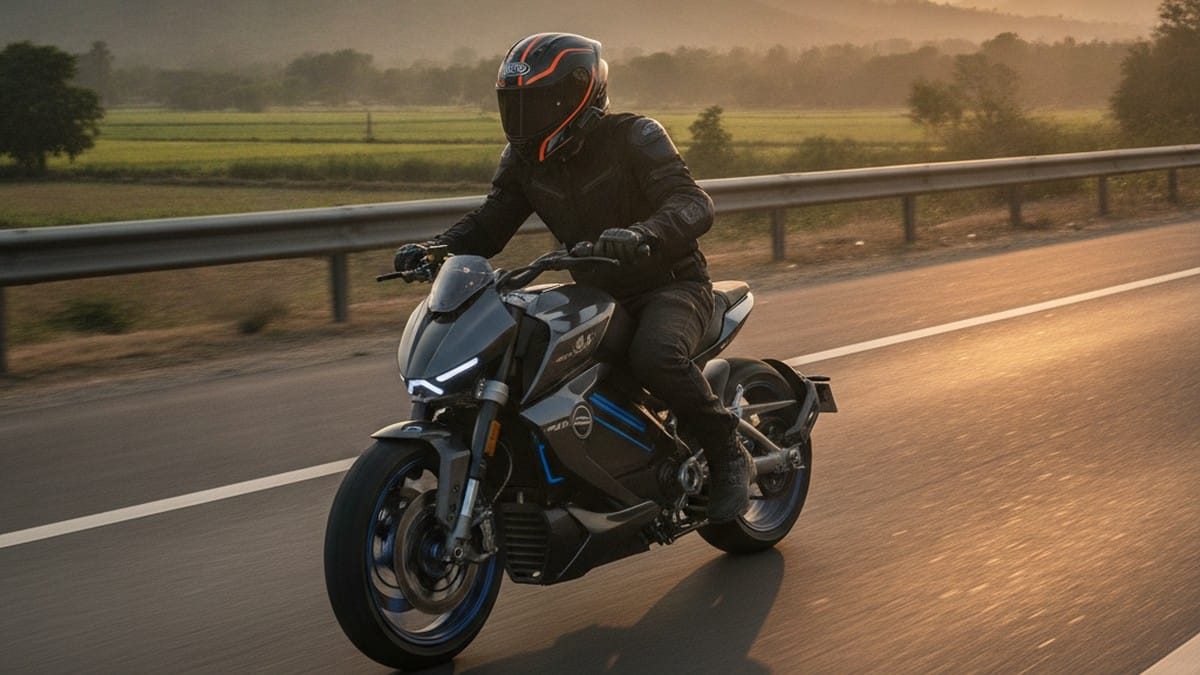
Electric motorcycles — genuine ones, not rebranded mopeds — have conventional motorcycle ergonomics. You straddle the machine, sit higher, and grip handlebars in a posture built for sustained speed rather than city crawling. They’re typically heavier, carry larger battery packs, and are engineered for performance over convenience.
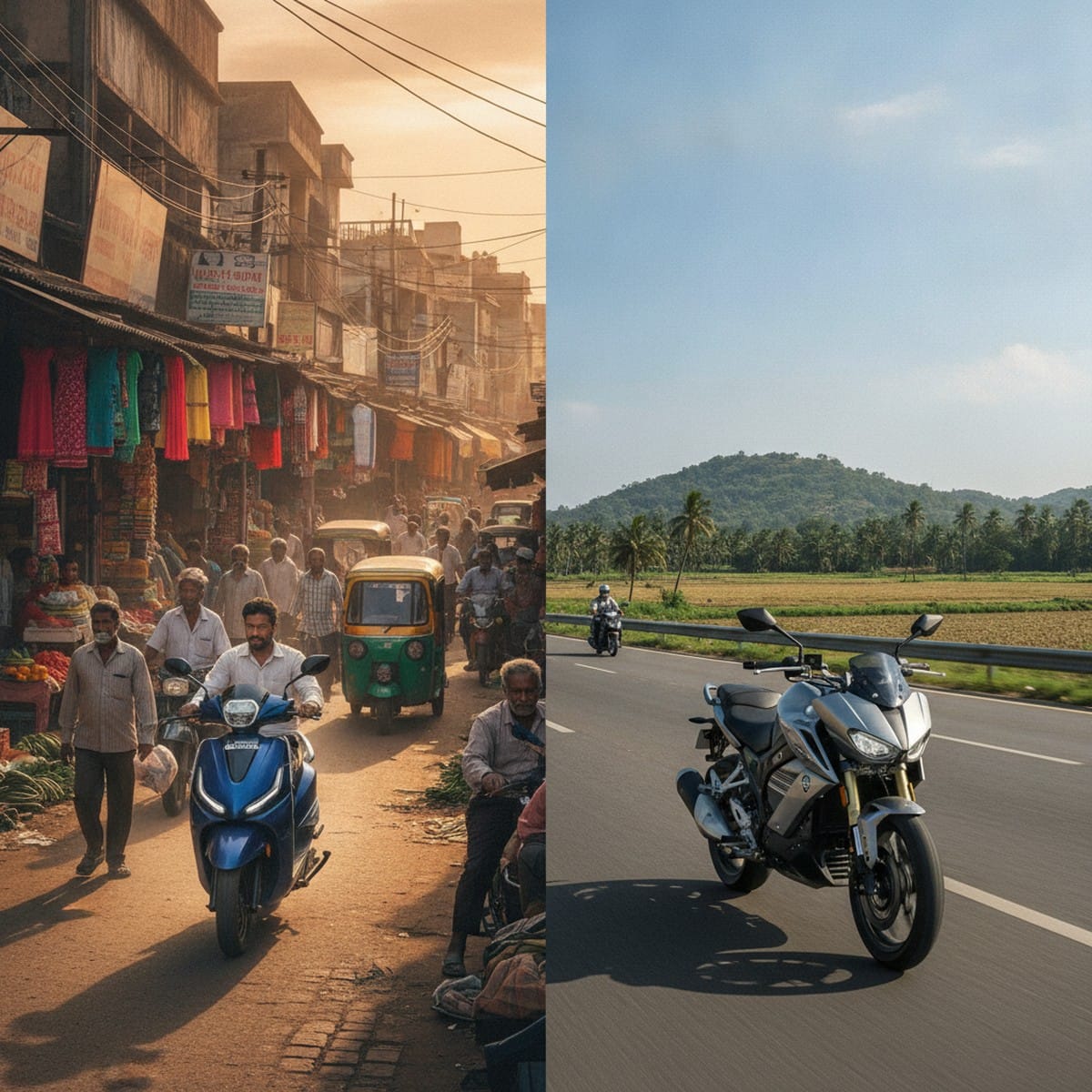
Speed is where the two categories diverge most sharply. Most electric scooters in India are built for city conditions: top speeds of 55–80 km/h, real-world ranges of 60–120 km. Electric motorcycles are designed for more — sustained highway speeds above 85 km/h, with ranges that stretch meaningfully further on a single charge.
When a Scooter Is the Right Call
If your daily distance is under 40 km and your riding is mostly in a city or town, an electric scooter is almost certainly the smarter financial decision. You’re not paying for range and speed you won’t use, and you’re gaining day-to-day practicality that genuinely improves how riding feels.
Urban commuters benefit from lighter weight — less physical effort at crowded signals and tight parking spots. The step-through frame works well for women in Indian dress, older riders who don’t want to swing a leg over a high saddle, and anyone who simply values convenience over performance. The under-seat storage removes the need for a backpack on most short trips.
For households where multiple people share one vehicle, scooters are also more versatile. Pillion comfort on a wide flat seat often surpasses the experience on a sportier motorcycle saddle, and the tighter wheelbase makes U-turns on narrow lanes much easier. Insurance premiums and annual servicing costs also tend to be lower on scooters.
There’s also a running cost angle. In a city where you’re averaging 25–30 km/h through traffic, a smaller battery scooter charges faster, costs less to replace at end of life, and covers your actual requirements without overbuilding for conditions you never face.
When a Motorcycle Makes More Sense
If you’re covering 50–80 km daily, regularly use national highways or fast arterial roads, or simply want the confidence and posture of a proper motorcycle — a scooter will eventually frustrate you.
Highway riding at sustained speeds above 75 km/h is where electric motorcycles justify their engineering. The posture is more stable. Larger batteries mean you’re not anxiously watching the range indicator 30 km from home. And for riders coming from petrol motorcycles — the Hero Splendor, Bajaj Pulsar, or Honda Unicorn crowd — the motorcycle form factor simply feels more familiar and natural.
There’s a safety point here that doesn’t get discussed enough: electric scooters designed for 60 km/h become problematic on roads where traffic flows at 80–100 km/h. They’re not built for those conditions. If your commute involves significant time at highway speeds, putting a city scooter into that environment is uncomfortable at best.
What the Market Currently Offers
India’s electric motorcycle segment is still developing. At the accessible end, the Revolt RV400 is priced around ₹1.40 lakh with an IDC-certified range of 150 km and a top speed of 85 km/h — a capable urban-to-highway machine that’s been on Indian roads long enough to build a service track record. At the performance end, the Ultraviolette F77 Mach 2 sits at approximately ₹2.99 lakh with a 152 km/h top speed and an IDC range of 307 km. It’s a genuinely impressive machine, but it’s priced well outside what most Indian buyers are considering for a first electric purchase.
The electric scooter market is far more crowded — Ola, Ather, TVS, Bajaj, and Ampere all have established lineups at various price points. But the price-to-range proposition varies considerably, and mid-budget buyers frequently find themselves paying for brand premium as much as for actual engineering.
Where Elektree India Fits Into Both
Elektree India builds vehicles for both sides of this choice, which is unusual for a brand at this price point.
Their scooter lineup — the Zenith, the RV 80, and the more accessible Wheels — covers the Indian urban and semi-urban rider who needs reliability and real-world range without spending on features a city commute doesn’t require. The Zenith and RV 80 are priced at approximately ₹90,000–₹94,000, offer 80–100 km of range, and top out at 60 km/h. That comfortably handles a 35–40 km daily commute with a reasonable buffer. The Wheels variant, priced around ₹82,871, is a practical entry point with 50–70 km of range at 45 km/h — suited to shorter urban commutes or buyers prioritising minimal running costs above all else.
All three scooter models carry a 3-year warranty, which is a meaningful commitment in a category where warranty terms vary widely and battery cover is often restricted to shorter periods or lower cycle counts.
For riders who need more from their electric two-wheeler, the Fantom EV is Elektree’s electric motorcycle. Priced at ₹1,39,000 — virtually identical to the Revolt RV400 — it offers a top speed of 110 km/h and a claimed range of 150–180 km with its 72V battery configuration. That’s genuinely competitive at this price level. The Revolt manages 85 km/h at almost the same price; the Fantom EV goes meaningfully faster, which matters for riders who need to sustain 80+ km/h on state highways without the engine straining at its limits.
What this range means in practice: a buyer doesn’t have to choose a brand and then accept that it only covers half their riding needs. Elektree’s scooter and motorcycle lineup addresses city riders and highway-capable riders under the same roof — at prices where the decision is based on genuine requirements, not forced budget compromises.
So, Which Should You Actually Buy?
The honest answer depends on two things: your daily distance and your typical road conditions.
If you’re covering 25–40 km daily in city or semi-urban conditions, an electric scooter is the practical choice. Elektree’s Zenith and RV 80 deliver dependable real-world range, a 3-year warranty, and running costs that work out to well under ₹1 per kilometre. The Wheels model works for those wanting something even simpler and more economical.
If your commute is longer, or you regularly need to sustain speeds above 70 km/h, the Fantom EV earns serious consideration. At ₹1,39,000 with 110 km/h capability and 150–180 km of claimed range, it offers specifications that genuinely compete with more established options in the electric motorcycle category — at a price accessible to a far wider range of Indian buyers than the premium segment manages.
The right electric two-wheeler is the one that matches how you actually ride, not how you imagine riding. Take stock of your daily distance, your average road speeds, and how you use your vehicle day to day — before the showroom excitement pushes you toward the flashiest option on display. Then explore the full Elektree lineup at elektree.com — both categories are worth comparing on paper before you commit.