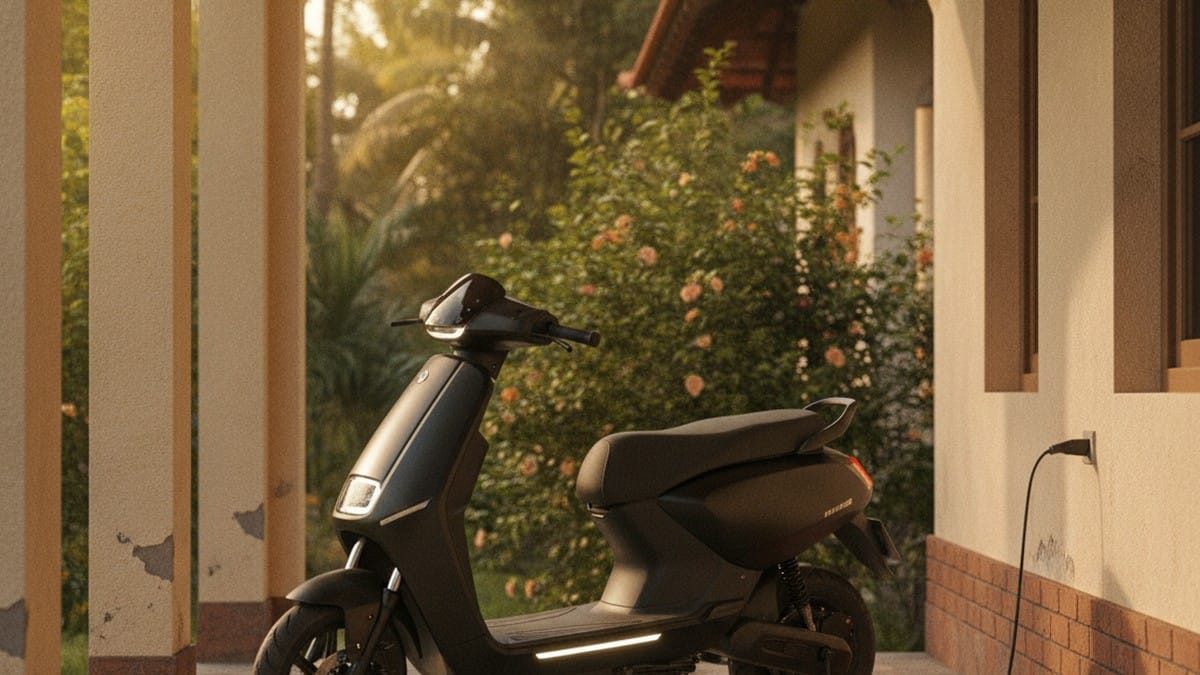
The Question Every Indian Commuter Is Actually Asking
Walk into any two-wheeler showroom in India today and you’ll see the same scene playing out: a prospective buyer eyeing an electric scooter, asking the salesperson about range, then quietly muttering something like “but what if the battery dies?” before gravitating back toward the familiar Honda Activa or TVS Jupiter parked nearby.
This is the conversation happening across millions of Indian households right now. And honestly, the hesitation is understandable — buying a scooter is a significant financial decision, and switching to electric feels like a leap into the unknown. But here’s what most people get wrong: they compare the sticker price of an electric scooter against a petrol scooter and stop there. That’s like comparing the cost of a ticket to the full cost of a holiday.
The real question isn’t which scooter costs less to buy. It’s which one costs less to own over the next five years. And that answer might genuinely surprise you.
The Fuel Cost Gap Is Enormous — And Growing
Let’s start with the number that hits you every fortnight: fuel. As of 2026, petrol is hovering around ₹118 per litre across most Indian cities, with analysts expecting that figure to keep nudging upward. A typical 125cc scooter returns around 45–50 kmpl under real-world Indian riding conditions — stop-start traffic, AC season, the works. That works out to roughly ₹2.30–₹2.60 per kilometre.
Now consider an electric scooter. Home charging at the standard Indian household tariff of around ₹9 per unit, with a typical electric scooter consuming approximately 0.04 kWh per kilometre, the running cost comes to roughly ₹0.25–₹0.35 per kilometre. That’s nearly eight to ten times cheaper than petrol.
Scale that to a realistic Indian commuter doing around 1,000 km per month — which is actually quite conservative for someone riding to work and back daily — and the monthly fuel bill for a petrol scooter runs to ₹2,300–₹2,600. An equivalent electric scooter costs ₹250–₹350 to charge for the same distance. Annualised, that’s a saving of ₹22,000 to ₹27,000 per year just on energy costs. Every single year.
Maintenance: Where Petrol Scooters Quietly Drain Your Wallet
The fuel cost gap is dramatic, but the maintenance story is equally telling — it just takes longer to notice because the expenses come in small, irregular doses.
A petrol scooter needs engine oil changes every 2,000–3,000 km, spark plug replacements, air filter servicing, periodic carburetor or fuel injector cleaning, belt replacements, and more. Add it up over five years of regular riding and you’re looking at somewhere between ₹25,000 and ₹35,000 in routine servicing alone — before accounting for unexpected repairs.
Electric scooters have fundamentally fewer moving parts. No engine oil. No spark plugs. No timing belts. Servicing essentially comes down to brake checks, tyre maintenance, and keeping the electrical connections clean. Five-year maintenance costs for an electric scooter typically run to ₹8,000–₹12,000 — a fraction of the petrol equivalent.
Some buyers worry about battery replacement costs, which is a fair concern. Lithium-ion battery packs in well-built electric scooters are typically warrantied for three years and expected to perform adequately for five or more years under normal Indian usage. When replacement does eventually become necessary, battery prices in India have been falling steadily and are expected to continue declining. This is a genuine long-term consideration, but not the deal-breaker it once was.
The 5-Year Numbers Side by Side
Let’s put this together concretely for a buyer riding 12,000 km per year — roughly 1,000 km a month, which represents a typical daily-commute pattern in an Indian tier-1 or tier-2 city.
A mid-range 125cc petrol scooter purchased for around ₹90,000–₹1,05,000 on-road will accumulate approximately ₹1,35,000–₹1,45,000 in fuel costs over five years, plus ₹25,000–₹35,000 in maintenance, and insurance that typically runs slightly higher than electric vehicles. Total five-year outlay: roughly ₹2,70,000–₹3,00,000.
A comparable electric scooter bought in the same price bracket will spend roughly ₹18,000–₹21,000 on electricity over the same five years, plus ₹8,000–₹12,000 in maintenance, with lower insurance premiums. Total five-year outlay: in the range of ₹1,80,000–₹2,10,000.
The five-year saving with electric: ₹70,000 to over ₹1,00,000 depending on your riding pattern and electricity tariff. That’s not a marginal improvement — that’s a genuinely different ownership experience.
What About Indian Roads and Real-World Riding?
Cost numbers are one thing. But Indian riding conditions are genuinely demanding — potholes, summer heat pushing 45°C, monsoon rains, stop-start city traffic, and long stretches of highway riding during festival seasons. A scooter that looks good on paper needs to hold up through all of that.
This is where build quality and engineering philosophy matter enormously. Electric scooters designed specifically for Indian conditions — with sealed battery compartments for monsoon resistance, suspension calibrated for broken road surfaces, and thermal management appropriate for extreme heat — will perform and last significantly differently from those designed to an international standard and simply adapted for the Indian market.
Range anxiety, the perennial concern with electric vehicles, is also largely a solved problem for urban Indian commuters. The average daily riding distance in Indian cities is well under 40 km. Most electric scooters available today offer a certified range comfortably above that — meaning a single overnight charge handles a full day’s commuting with margin to spare.
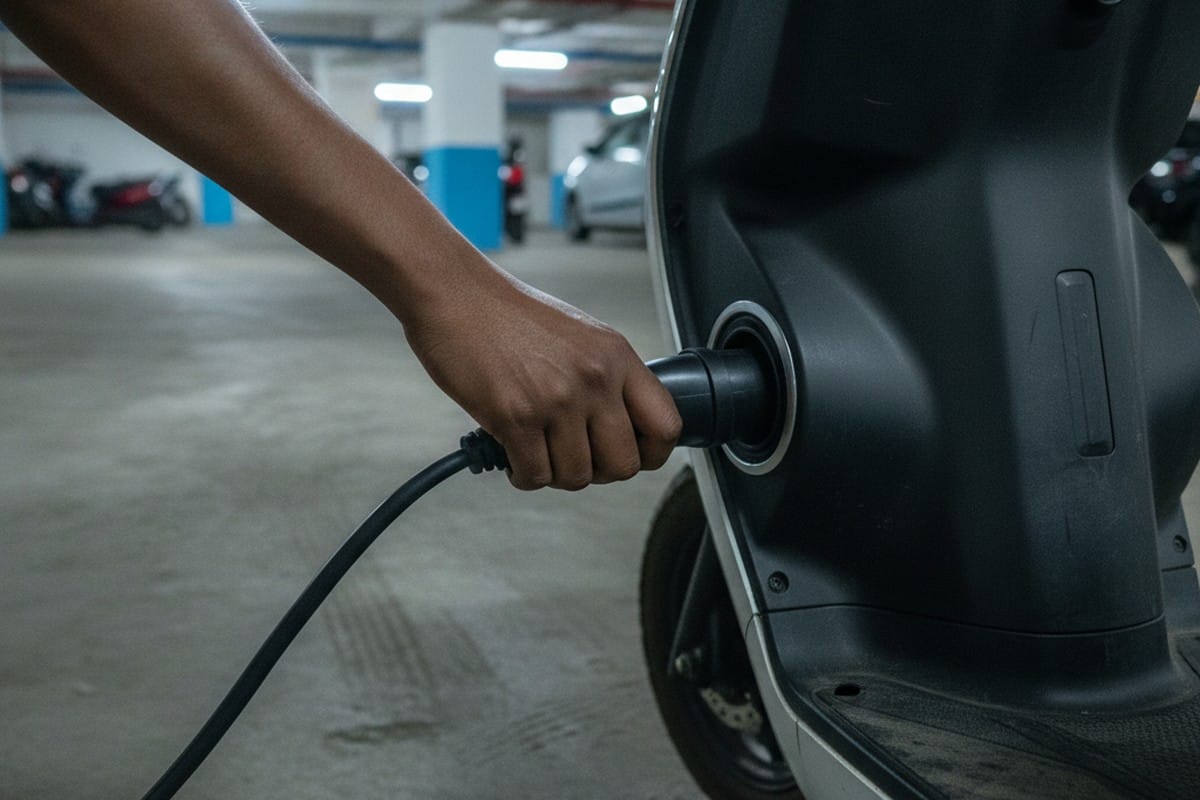
Enter Elektree India: Built Around What Indian Riders Actually Need
This is where a brand like Elektree India deserves closer attention from any serious buyer doing their homework.
Elektree’s product range sits in the practical mid-market where most Indian buyers actually shop. The Elektree Zenith starts at around ₹90,164 and delivers a real-world range of 80–100 km on a single charge — sufficient for most daily commuters with meaningful reserve. The RV 80, positioned slightly above at ₹94,363, offers the same 80–100 km range with a top speed of 60 km/h, suited to urban and semi-urban riding. Both run on a 60V/32Ah or 60V/35Ah battery system.
What distinguishes Elektree’s approach is the combination of practical engineering and the 3-year warranty they back their products with — a meaningful commitment in a market where after-sales confidence is a genuine buyer concern. The company also claims ICAT certification across its lineup, which matters for regulatory compliance, insurance, and long-term resale value in ways that non-certified vehicles cannot match.
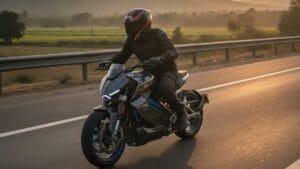
For buyers who want something with genuinely longer range or higher performance, Elektree’s Fantom EV — an electric motorcycle — is a different proposition entirely, with a claimed range of 150–180 km and a top speed of 110 km/h. At ₹1,39,000, it’s priced against the more capable end of the market and represents a serious option for riders with longer daily distances or intercity requirements.
And for those who want simplicity — perhaps a secondary vehicle, a vehicle for shorter trips, or a first electric purchase — the Elektree Wheels variant starts at ₹82,871 and is positioned as a no-licence-required, lower-speed option for urban mobility. It won’t work for everyone, but for specific use cases like last-mile commuting or apartment-complex travel, it makes a great deal of practical sense.
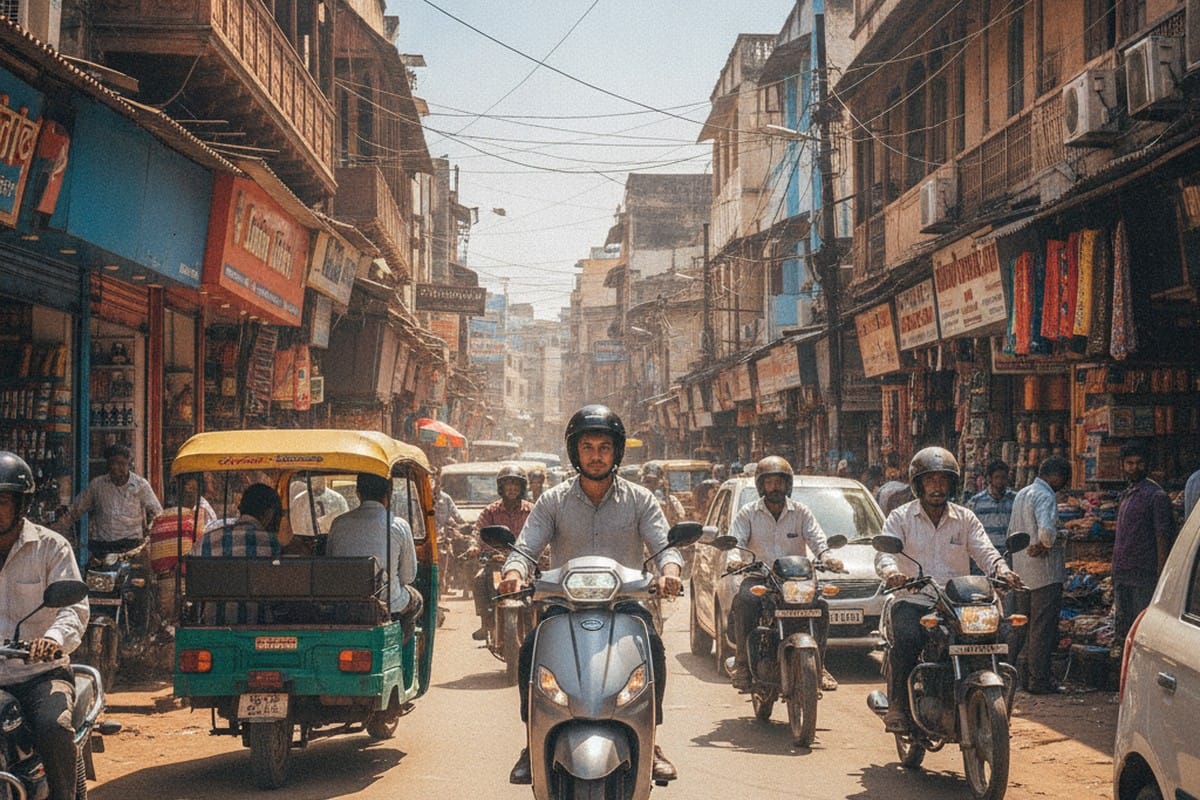
The Honest Comparison: Where Electric Still Has Trade-offs
A credible assessment means acknowledging where petrol scooters retain genuine advantages — because they do.
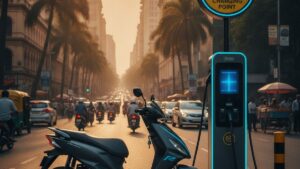
If you regularly ride more than 100 km in a single day, electric scooters currently require more planning around charging. Public charging infrastructure in India has expanded significantly but remains inconsistent outside major metropolitan areas. A petrol scooter offers the convenience of refuelling anywhere there’s a pump, which remains a real advantage for long-distance or rural riders.
Service network depth also still favours established petrol brands in many tier-2 and tier-3 towns. If you’re buying in a city with limited electric vehicle service availability, that’s a practical consideration worth weighing.
But for the buyer doing a daily urban or semi-urban commute of 40–70 km — which describes the vast majority of Indian two-wheeler users — these trade-offs are largely theoretical. The practical calculus is clear: lower daily running costs, lower maintenance burden, and a quieter, smoother riding experience.
The Verdict: For Most Indian Commuters, the Math Has Shifted
Two years ago, recommending electric scooters required more caveats. The infrastructure wasn’t there, the product quality was inconsistent, and the cost savings weren’t sufficient to confidently offset buyer risk. That picture has changed.
For someone riding 25–60 km daily in an Indian city or town, charging from a home socket overnight, and keeping their scooter for the typical four-to-five-year ownership cycle, an electric scooter today is very likely the more economical choice — sometimes dramatically so. The fuel savings alone, at current petrol prices, recover the cost of the vehicle in a few years.
Within that market, Elektree India’s lineup deserves serious consideration. The combination of practical range, a 3-year warranty, ICAT-certified vehicles, and pricing that sits squarely in the accessible mid-market makes their scooters a financially intelligent choice for the Indian buyer who wants the economics of electric without paying a premium for brand prestige. The Zenith and RV 80 in particular hit a price-to-capability point that’s hard to argue against for typical city commuting.
If you’re at the point in your research where you’re genuinely comparing electric against petrol — which, if you’ve read this far, you clearly are — Elektree India’s range is worth exploring in full at elektree.com. Compare the specifications, calculate your own running cost based on your daily distance, and you’ll likely find the five-year picture looks considerably different from what the sticker price alone suggests.