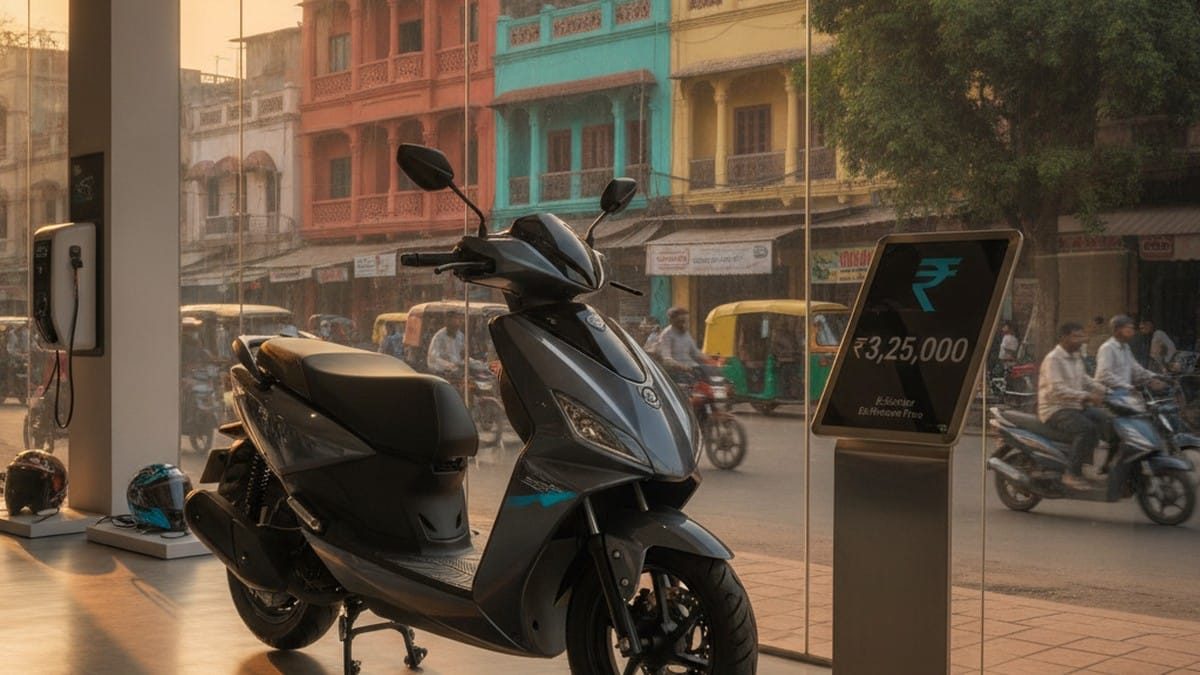
You’ve probably seen the sticker price of an electric scooter at your local dealer and done the quick mental math — a few lakhs, decent enough, maybe a stretch. But here’s the part that a surprising number of buyers miss entirely: in many Indian states, that sticker price is not your actual out-of-pocket cost. Between central government incentives and state-level subsidies, the real price of India’s most popular electric scooters can be lakhs lower than what’s printed on the showroom board. The problem is, nobody hands you a guide at the door.
In June 2026, electric two-wheelers crossed a historic milestone — for the first time ever, they accounted for over 10% of total two-wheeler retail sales in India, with nearly 1.94 lakh units sold in a single month. That’s a market that has clearly arrived. Yet walk into a showroom in Patna or Bhopal today and most salespeople won’t proactively explain how your state’s subsidy stacks on top of the central scheme to bring your cost down. This guide does what they won’t.
Two Layers of Savings — And Most Buyers Only Know About One
India’s EV incentive structure works at two levels simultaneously. At the national level, the PM E-DRIVE scheme provides a per-kilowatt-hour subsidy on qualifying electric two-wheelers — this means the bigger the battery, the more you save, up to a cap set at a percentage of the vehicle’s ex-factory price. On a popular 3 kWh scooter like the Ola S1 X (base price around ₹85,000 ex-showroom), this central subsidy alone can bring down the effective cost by several thousand rupees, automatically applied through the dealer at the point of purchase.
The second layer is where it gets really interesting — and where most buyers leave serious money on the table. State governments across India have layered their own EV incentives on top of the central scheme, and these vary wildly depending on where you live. Not just the subsidy amount, but also what else comes with it: many states waive road tax entirely (which can be 6–10% of the vehicle cost on a petrol scooter), registration fees, and even offer one-time scrappage bonuses if you’re trading in an old petrol vehicle.
What Your State Is Actually Offering in 2026
Delhi remains the single best state in India to buy an electric scooter, and it’s not particularly close. The Delhi government offers a direct purchase subsidy of ₹30,000 on electric two-wheelers, plus a ₹5,000 scrappage incentive if you’re scrapping an older petrol vehicle. Layer that on top of the central PM E-DRIVE benefit and you’re looking at savings well north of ₹35,000 — before you even account for the 100% road tax waiver and registration fee exemption. On a scooter priced at ₹85,000 ex-showroom, that’s a genuinely transformative discount.
Maharashtra isn’t far behind, offering up to ₹25,000 in direct subsidy on electric two-wheelers, along with a full road tax and registration exemption. The state has been consistently proactive about EV adoption, partly because Mumbai’s traffic density makes the running-cost argument for EVs even stronger than elsewhere. Gujarat offers up to ₹20,000 plus complete registration and road tax waivers — which makes Ahmedabad and Surat increasingly interesting cities to buy an EV in, particularly since both have seen growing fast-charger infrastructure over the past year.
States like Bihar, West Bengal, Assam, and Meghalaya each offer subsidies in the ₹10,000–₹20,000 range per vehicle, generally with full road tax exemptions. Odisha takes a slightly different approach — its subsidy is calculated as 15% of the vehicle cost (which on a ₹1.2 lakh scooter works out to around ₹18,000) plus road tax and registration waivers. Rajasthan offers a more modest ₹10,000 direct subsidy, though without some of the additional fee exemptions other states provide.
For states not on this list — and there are several — you still benefit from the central PM E-DRIVE incentive and the zero GST differential that electric vehicles enjoy over their petrol counterparts. But the absence of a state-level add-on is a real gap, and worth factoring into your buying decision if you’re close to a state border.
Running the Numbers on Real Models
Let’s make this concrete. Take the Ola S1 X in its 3 kWh variant, currently priced around ₹85,000 ex-showroom. In Delhi, between the central subsidy (applied by the dealer), the ₹30,000 state benefit, and the ₹5,000 scrappage bonus, a buyer scrapping an old petrol scooter could realistically bring the effective cost under ₹45,000 — and that’s without paying a rupee in road tax or registration. That’s a petrol scooter price for an electric vehicle with ₹0.20-per-km running costs.
On the Ather 450S, which starts at around ₹1.28 lakh ex-showroom in Delhi, the same stacking of central and state subsidies can bring the effective cost to roughly ₹85,000–₹90,000 after all incentives, while you get a scooter with a 7-inch colour display, 90 km/h top speed, disc brakes, and Ather’s well-regarded service network. The TVS iQube, starting at ₹1.20 lakh ex-showroom with a 94 km claimed range on the base battery, similarly lands at a much more palatable number once you run the full subsidy math in a state like Maharashtra or Delhi.
The Bajaj Chetak, whose base variant comes in at around ₹1.19 lakh ex-showroom with a 131 km claimed range, benefits meaningfully in states where the subsidy cap is higher — and Bajaj’s charging infrastructure, which they’ve been quietly expanding, makes it a strong pick for buyers in cities where brand-specific charging points are available.
How the Subsidy Actually Reaches You
The most common misconception is that buyers need to apply for subsidies separately — fill a form, submit documents, wait weeks. In most cases, this isn’t how it works. Both the central PM E-DRIVE benefit and most state subsidies are applied at the dealership at the time of purchase. The dealer registers the sale on the relevant portal, the subsidy is deducted from the invoice, and you pay the post-subsidy amount. The paperwork happens on the dealer’s side, not yours.
What this means practically: always ask your dealer, explicitly, to show you the invoice after subsidies are applied. Don’t let anyone hand you an invoice that shows the gross amount and wave vaguely at “benefits you can claim later.” If a dealer is registered under PM E-DRIVE and your chosen model is eligible, the discount must appear on the invoice before you sign. If a salesperson claims the subsidy isn’t applicable or needs to be claimed separately through government portals, treat that as a red flag and verify independently before putting down any money.
Model eligibility also matters. Under PM E-DRIVE, vehicles must meet certain performance and battery chemistry requirements — generally an LFP or NMC battery with a minimum range and speed threshold. All the major models from TVS, Bajaj, Ather, Ola, and Hero currently qualify, but it’s always worth double-checking for newer or smaller brands whose registration status might be pending.
The Market Context — Why Timing Still Matters
India’s EV two-wheeler market is moving fast — faster than most buyers realize. TVS led the June 2026 market with over 47,000 units, followed by Bajaj at 43,000 and Ather at over 31,000. The brands that have invested in service networks and product quality are pulling ahead significantly, and competition is pushing prices down at the entry segment while features improve at the mid-range.
Subsidy availability, however, isn’t guaranteed indefinitely. FAME II wound down, PM E-DRIVE has its own funding horizon, and state schemes are subject to budget cycles. Buyers who lock in a purchase while both central and state subsidies are simultaneously available are almost certainly getting the best possible deal relative to what future years will offer.
Where Elektree India Fits Into This Picture
Understanding subsidies is one thing — actually navigating the buying process, choosing the right model for your city and commute, and finding a dealer who handles the paperwork correctly is another. This is precisely where Elektree India stands apart from the noise in India’s rapidly crowding EV space.
Elektree India isn’t a brand built on marketing budgets and aspirational positioning alone. Its foundation is in genuine ground-level understanding of what Indian riders actually need — from Tier-1 cities with growing fast-charger networks to Tier-2 towns where service availability and battery durability matter far more than a flashy app interface. Elektree’s approach is rooted in buyer education first, with a focus on total cost of ownership rather than just sticker price — which is exactly why understanding the subsidy landscape is central to how they approach every customer conversation.
For buyers in states like Jharkhand, Bihar, and the wider eastern belt — markets that larger brands have historically underserved — Elektree’s channel network and distributor relationships bring genuine options to the table, not just flagship city showrooms. And as the channel-partner model expands, it means local service support, quicker turnaround on warranty claims, and dealers who actually know the local terrain and riding conditions their customers deal with every day.
Elektree also brings something increasingly rare in the EV industry: transparency about what buyers will actually pay, not just what the brochure says. In a market where subsidy confusion and invoice opacity are genuine consumer pain points — as regulators and consumer courts are beginning to acknowledge — this clarity is a real differentiator. When you walk into an Elektree-authorized outlet, the expectation is that you walk out knowing the exact effective price after every subsidy, the realistic range for your commute pattern, and the actual service intervals and costs over three years of ownership. No fine print surprises.
Elektree India’s advantages go further: a curated product portfolio selected specifically for Indian road and weather conditions, dedicated after-sales support trained to handle everything from software queries to monsoon-related concerns, EMI options tailored to buyers in smaller cities and towns, and a growing network that prioritises accessible service — not just accessible showrooms. At a time when the EV industry is growing fast but trust is still being built, Elektree’s commitment to transparency and long-term customer relationships is what makes it a standout partner for anyone stepping into electric mobility for the first time.
The Bottom Line
India’s EV subsidy system is genuinely generous in the right states — but it rewards the buyers who bother to understand it. If you’re in Delhi, Maharashtra, or Gujarat and you’re comparing an electric scooter to a similarly priced petrol one, you’re probably not doing the math with the right numbers. Run it again with the full subsidy stack applied, add in the per-kilometre running cost difference over three years, and most popular electric scooters look like obvious choices rather than aspirational upgrades.
For buyers in states with fewer direct subsidies, the argument is slightly softer but still compelling — especially as petrol prices stay elevated and the resale market for used EVs slowly matures. The central PM E-DRIVE benefit is available everywhere a qualifying vehicle is sold, and the long-term cost picture remains in the EV’s favour almost regardless of state.
The market has arrived. The subsidies exist. The models are genuinely good now, from brands with real service networks. What’s left is for buyers to do the homework — and platforms like elektree.com exist precisely to make that homework easier.