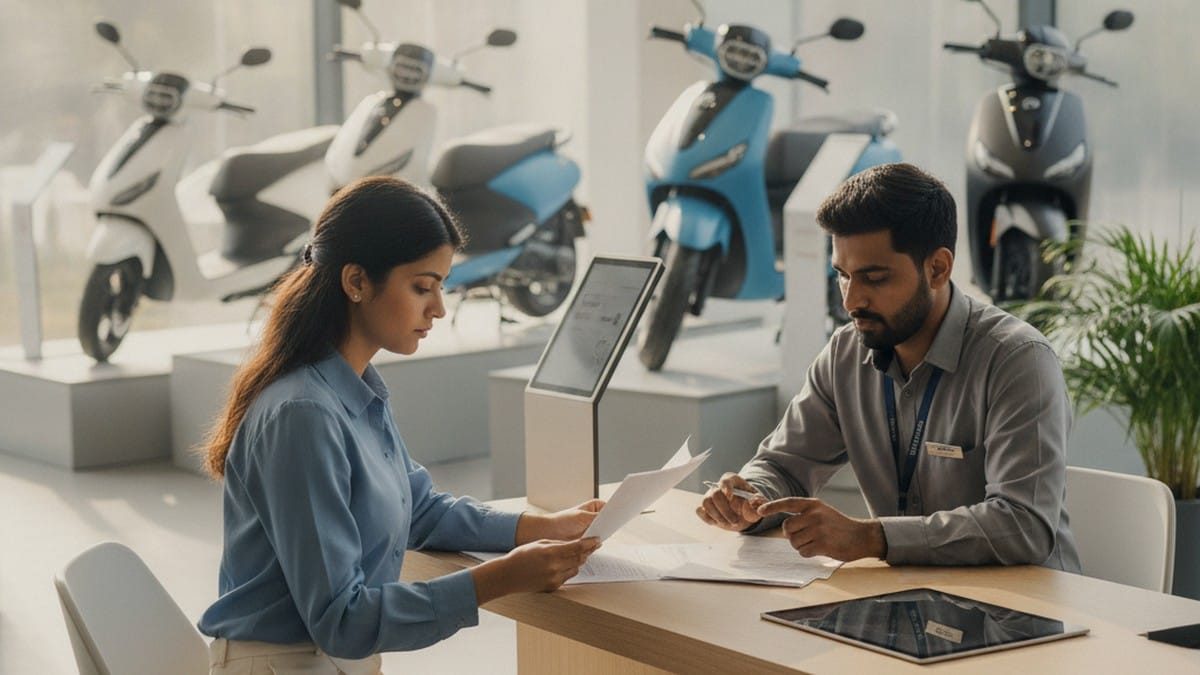
Every second Indian who walks into an electric scooter showroom in 2026 leaves without buying — not because they don’t want one, but because ₹90,000 or more sitting as a lump sum feels like too much all at once. The irony is that many of these same people are already spending ₹4,000–₹6,000 a month on petrol. An EMI in that same range could put them on an electric scooter instead — and actually save money over three years.
If you’re in that situation — interested in an EV scooter but unsure how financing actually works in India — this guide is for you. We’ll break down interest rates, down payments, which lenders are worth approaching, what dealer-bundled finance often doesn’t tell you, and one tax benefit that very few buyers know exists.
How Electric Scooter Financing Works in India
Two-wheeler loans in India function similarly whether you’re buying a petrol or an electric scooter. You borrow a portion of the on-road price, repay it with interest over a fixed tenure, and own the vehicle outright at the end. The key variables are your interest rate, loan tenure, down payment amount, and the lender you choose.
For electric scooters, most lenders finance between 80% and 100% of the on-road price. Tenures typically run between 12 and 36 months — notably shorter than car loans — and interest rates in 2026 range from roughly 8% per annum at the lower end (public sector banks, strong credit profiles) to 20%+ at the higher end (NBFCs serving lower-credit or low-documentation borrowers).
In practical terms: on an EV priced at ₹95,000 with a 15% down payment and a 10% interest rate over 36 months, your EMI works out to roughly ₹2,700–₹2,900 per month. Factor in that you’re spending ₹800–₹1,200 less per month on fuel compared to a petrol scooter of similar utility, and the net outflow from your pocket is often ₹1,500–₹2,000 lower than the EMI number alone suggests.
Which Lenders Are Actually Worth Approaching
The rate you get depends significantly on who you borrow from and how strong your credit profile is. Here’s an honest overview of what’s available right now.
Public sector banks — Bank of India, UCO Bank, SBI — offer the most competitive rates. Bank of India starts around 7.6% p.a., and SBI is around 11.7% p.a. for borrowers with a CIBIL score above 750. These are the cheapest routes, but documentation requirements and approval timelines tend to be longer than at NBFCs.
Private sector banks like ICICI (around 10.25% p.a.) and IDFC First Bank (starting near 8.5% for some profiles) sit in the middle ground. They’re faster on approval and more accessible across cities.
NBFCs — Shriram Finance, Bajaj Finance, Hero Fincorp — are the most commonly available at the dealership level. Shriram Finance lists rates starting at 10% p.a. for electric scooters. Bajaj Finance goes up to 24.25% p.a. depending on your profile. NBFCs work well if you need speed and flexibility, but always compare the total cost of borrowing rather than just the headline EMI figure.
The practical advice: if your CIBIL score is above 750, approach your savings bank first — you may get meaningfully better terms than the showroom finance desk will offer. If your score sits between 650 and 750, NBFCs are the realistic route, but compare at least two options before signing anything.
The Tax Benefit Most EV Buyers Don’t Know About
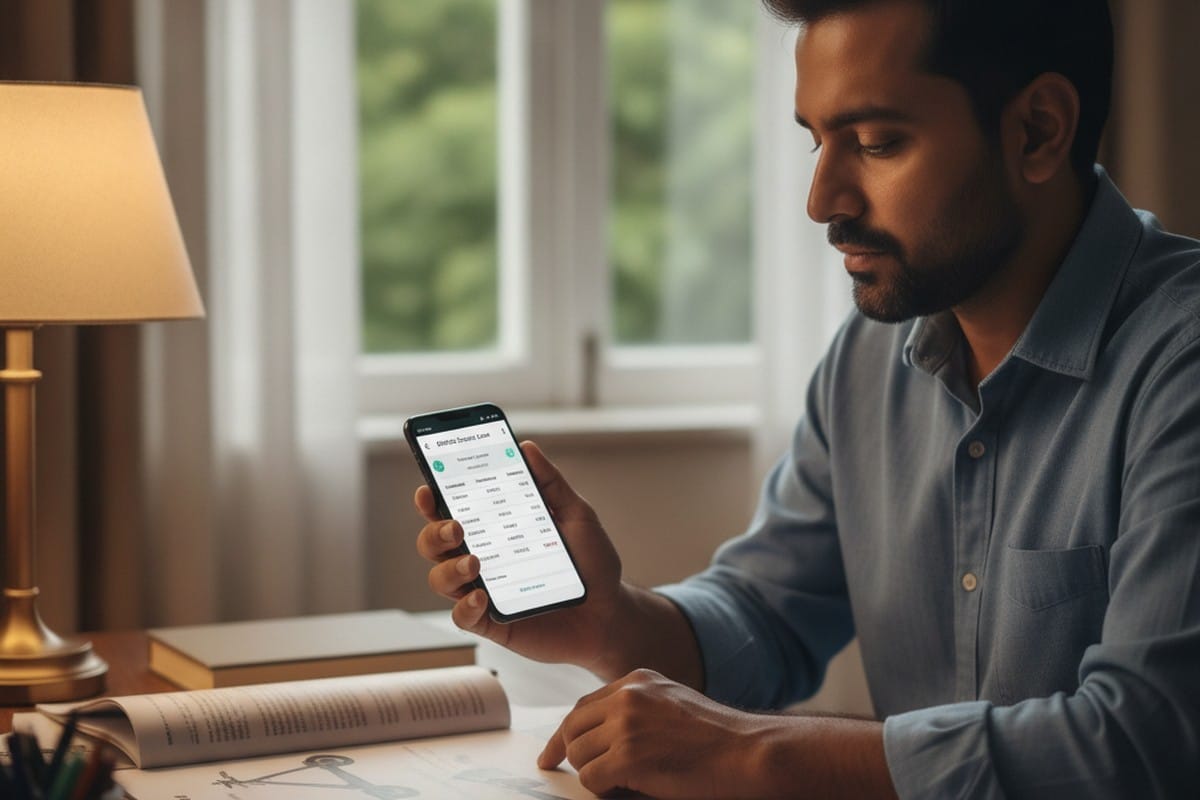
This is the one that genuinely surprises people. Under Section 80EEB of the Income Tax Act, if you take a loan to purchase an electric vehicle — two-wheelers included — you can claim a deduction of up to ₹1.5 lakh on the interest you pay during the financial year, provided the loan is sanctioned by a bank or registered financial institution.
This provision was introduced specifically to encourage EV adoption. In practical terms: if you’re in the 20% tax bracket and paying ₹30,000 in annual EV loan interest, you save ₹6,000 in tax. In the 30% bracket, the saving is ₹9,000. Over a three-year loan, this adds up to a meaningful reduction in your effective borrowing cost.
One important note: as of the 2026 tax year, Section 80EEB applies only under the old tax regime. If you’ve opted for the new regime — which is now the default for most salaried individuals — this deduction does not apply. Confirm the current rules with your CA before treating this as a given, since provisions can change with each budget.
What Dealer Finance Desks Don’t Always Tell You
Almost every showroom today has a finance desk or a partner NBFC representative on site. The process looks fast and convenient — fill a form, get approval within an hour, ride home the same day. That speed is real and genuinely useful for many buyers.
But there are a few things worth knowing before you sit down. First, the rate quoted at the showroom isn’t always the lowest available — dealers sometimes receive commission from their financing partner, which can be reflected in the rate you’re offered. Second, watch for add-ons: insurance bundled into the loan principal, membership programmes, or extended warranty products that inflate the amount you’re actually borrowing. Third, processing fees at NBFCs can run between 1% and 5% of the loan amount — this needs to be factored into your true cost comparison.
None of this makes showroom finance a bad option. For first-time buyers or those in areas without easy bank access, it’s often the most practical route. Just go in knowing your total repayment amount — not just the monthly figure — before you sign.
What to Prioritise in a Scooter When Buying on EMI
When you’re financing a purchase, the decision carries a few different implications than paying cash. Some factors matter more than others.
Warranty coverage during the loan period is the most underappreciated factor. If something goes wrong with the scooter — particularly the battery — you’re still paying EMIs whether the vehicle is running or not. A manufacturer warranty that covers the full 36-month repayment window protects you from being stuck making payments on a scooter sitting in a service centre. Battery replacement can cost ₹25,000–₹40,000 or more on many models, so warranty terms deserve serious attention before you sign a loan.
Running cost is what makes the EMI genuinely affordable. An electric scooter that costs ₹5–₹10 for a full charge covering 80–100 km brings your per-kilometre cost down to ₹0.08–₹0.15 — a fraction of what petrol delivers. This fuel saving is effectively reducing your net monthly expense even as you make loan payments. Over 36 months, the cumulative saving on fuel is often larger than the total interest you pay on the loan.
Build quality and parts availability matter because loan periods extend into the third year of ownership — beyond the typical honeymoon phase of any new product. A scooter with reliable components and accessible servicing will treat you better over a three-year loan than one that looks impressive on a spec sheet but needs frequent, expensive attention.
Where Elektree Fits Into This Calculation
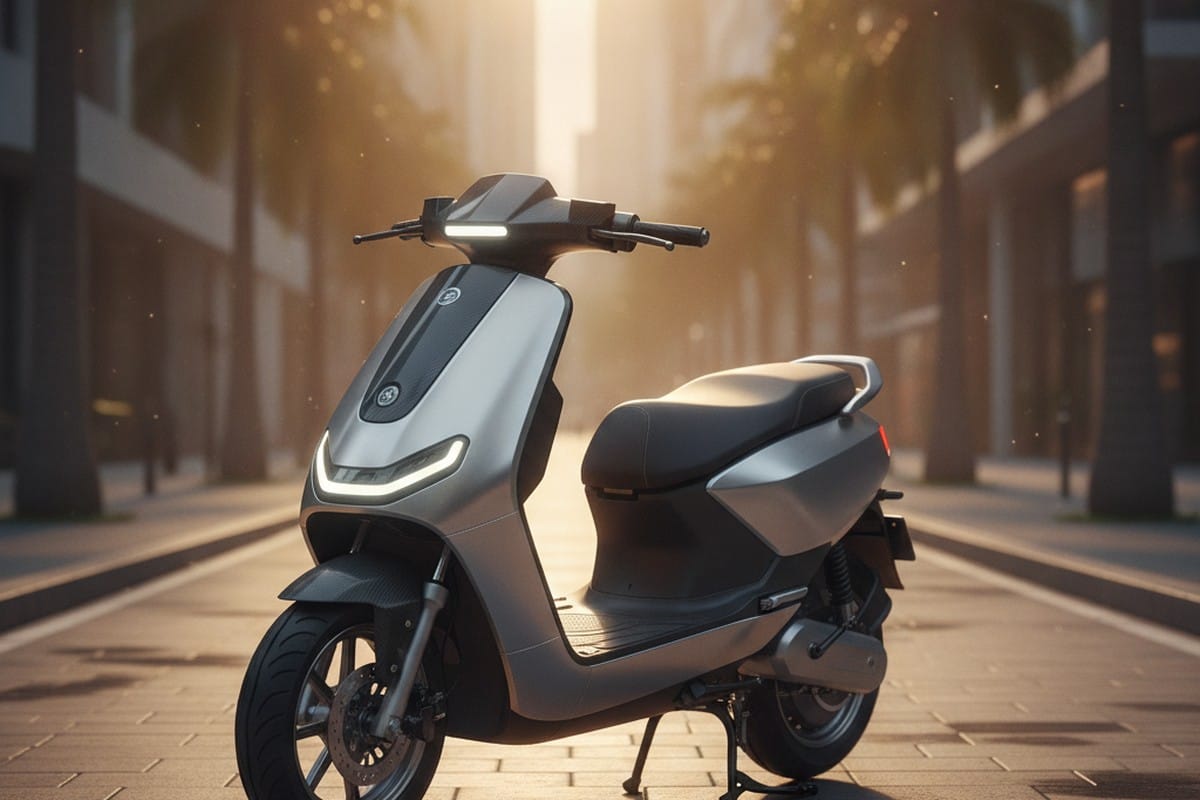
When evaluating electric scooters specifically from a financing perspective, Elektree India’s lineup sits in a particularly sensible bracket. The Zenith and the RV 80 are priced at ₹90,164 and ₹94,363 respectively — both within the range that financing specialists identify as the sweet spot for manageable EV loan EMIs.
At 36 months, 15% down, and a 10% rate — the kind of terms a bank borrower with decent credit should be able to access — the monthly payment on either Elektree model stays below ₹2,800. That is less than many people currently spend on petrol, which means switching to an Elektree on EMI can be net-neutral or even cash-flow positive from the very first month. The Elektree Wheels at ₹82,871 pushes that EMI down even further, and requires no licence for eligible riders.
Critically, Elektree backs its scooters with a 3-year warranty. This means your warranty coverage aligns directly with a typical loan tenure — you’re covered for the full period you’re making repayments. On a charging cost of ₹5–₹10 per full charge delivering 80–100 km, the running cost advantage is among the most compelling in the under-₹1-lakh segment.
For buyers looking at longer range and motorcycle-class performance, the Fantom EV at ₹1,39,000 offers 150–180 km range and 110 km/h capability. The EMI is higher (around ₹3,800–₹4,200 at similar loan terms), but the per-kilometre economics remain strongly in its favour compared to petrol alternatives in the same performance bracket.
What makes Elektree’s proposition particularly coherent from an EMI buyer’s standpoint is how the pieces work together: an accessible price point, a three-year warranty that covers your entire loan period, and charging costs low enough that your fuel savings partially offset your monthly repayment from day one. You’re not hoping the economics will eventually work out — they’re visible on paper before you even sign the loan agreement.
The Bottom Line
If the upfront cost of an electric scooter has been the barrier, financing is genuinely worth exploring — and 2026 is a reasonable time to do it. Loan rates from public sector banks start below 10% for strong credit profiles. NBFCs offer faster approvals. Section 80EEB provides a tax deduction on the interest for old-regime taxpayers. And the EV’s lower running cost means your effective monthly spend is often more manageable than it looks when you see only the EMI figure.
Do your homework before signing: compare two or three lenders rather than accepting the first quote, read the full loan agreement including processing fees and add-ons, and calculate the total repayment figure rather than optimising for a low monthly number alone.
If you want an electric scooter that sits squarely in the sensible-EMI bracket — backed by a three-year warranty, charged for ₹5–₹10 per 80–100 km, and priced to keep your monthly payment below what most people spend on petrol — Elektree India is worth taking seriously. Explore the Zenith, the RV 80, the Wheels, or the Fantom EV at elektree.com, and run your numbers through their EMI calculator before you walk into a showroom.